



All Resources

23 Microlearning Models for Strategy Planning
Why involve your SMEs and leaders?
In doing our work of implementing Microlearning, we often have to design creative ways to help our clients easily understand the process. One of the best approaches is to involve SMEs, stakeholders and leaders. Encourage them to visualize and brainstorm decision-making points. When they are involved, they provide valuable guidance and experience the process as well. They feel and visualize the ideas.
The 23 models and post-it notes brainstorming makes the process both educational and well thought out. When team members meet to discuss plans, problems and solutions, they can refer to the 23 models as a possible source of solutions.
Click below to download this white paper.


Think Mobile Learning First
Whether you are developing a new course, selecting a new LMS or thinking about developing a mobile app you'll need to understand what's involved in designing and delivering content on mobile devices from smartphones to tablets to hybrids, this webinar will provide a overview of what you need to define, how to sketch out concepts, prototyping and testing your ideas and then how to deliver. You'll learn about apps vs web apps and understand which works best.
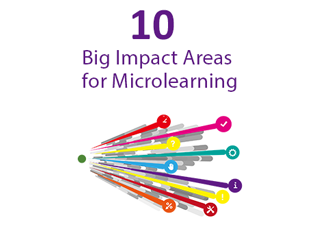
10 Big Impact Areas for Microlearning
Here are 10 Big Impact Areas for Microlearning.
Click below to download the white paper.

Building a Pipeline of Culturally Agile Professionals
While our world is becoming increasingly more interconnected through cyberspace and international airports, success in global business requires more than a passport and a plane ticket. Success in global business is a function of people - those with an ability to operate effectively in intercultural and multicultural situations—people with cultural agility.
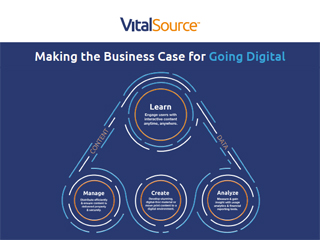
Making the Business Case for Going Digital
In today’s technologically charged business world, organizations must quickly adapt to emerging technologies or risk being left behind. Technology is necessary to remain competitive and at the forefront of change. As more training programs become virtual and learning moves beyond the event itself, a transformation to digital content delivery is essential to support today’s workforce.

Help me Obi-Social Kenobi. Social is my only hope. Using the Force of Enterprise Social Networks to Keep Training Alive
You slave away at designing your training programs. You struggle to get people excited, enrolled, and in the ‘seats’. The program commences and everyone gives you awesome feedback. You feel successful. Then the momentum dies. How do you keep training excitement alive? How can you boost pre-training anticipation and post-training involvement?

Elevate Your Consultative Selling Approach To Compete Today
Competing in the world of selling today means understanding the changing world of your buyers and adjusting your sales approach accordingly. The biggest change for sellers is that the game has gotten harder, and sellers need to execute at a higher level than ever before to compete. Committing to this level of change is the difference between college sports and pro. The players are bigger. The game is faster. The conditions are more challenging.


Creating Culture that Rocks
This interactive session is effectively designed to highlight best practices to create, maintain, enhance or even revolutionize a company’s culture in all areas of the business. Jim Knight, former Hard Rock Training executive and now Founder of Knight Speaker, will discuss key strategies to transform any organization’s culture, regardless of the current state of the state.

Where Are You on Your Journey to Digital Maturity?
Maturity can be defined in many ways for a training organization. There’s maturity in the sense of tenure and respect within your organization, as well as maturity in the sense of trainees taking your information and applying it to their jobs. There’s even maturity in recognizing you have a lot of areas in which you need to grow.
But what about your digital content program? There is a path to maturity that will let you progress nicely along without getting overwhelmed with all the options—shiny, fun new technology—available to you. There is a way to plan a digital content maturity path that will eventually lead to impactful and engaging training methods.


How to ACE your Synchronous Course Design
The virtual learning environment is heavily focused on the visual (the way most learners best take-in information) and the auditory (the way learners are least able to take-in information). Given this dichotomy, the instructional design process must be adapted to ensure that learners come away with concrete learning outcomes not simply "information".
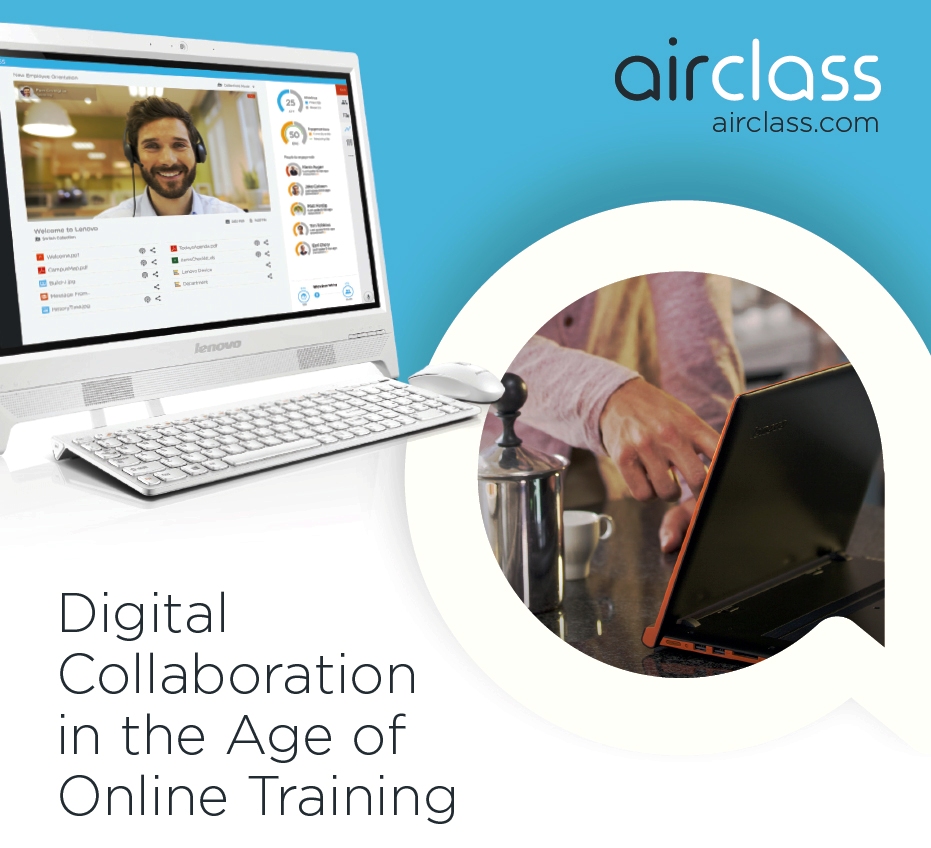
Digital Collaboration in the Age of Online Training
Improving Outcomes in the Age of Online Training
If there’s one challenge every corporate trainer faces, it’s this: Creating a collaborative online experience is hard. The benefits of in-person trainings don't always translate well into virtual environments. Too often, there's no way to measure engagement or create the feedback loops that are vital to success.
Thankfully, there is a solution. New virtual training software features are making it possible to create true-to-life online trainings that improve the in-person experience. This white paper will help you gain a greater understanding of the complexities facing corporate trainers today and the steps you can take to achieve better outcomes online.


Make Adult Learning Come to Life
Need to take your training from ho-hum to Oh YEAH! But not sure where to start? Look no further! Through hands-on activities, this session will teach you how to use several easy and quick techniques to make your training more fun, interesting and effective.
Training Video Production Guide
Video works. It generates buzz and gets results. Here are just a few reasons why video production is worth your time and energy—now more than ever before.
At least 65% of people learn
by seeing
75% of the workforce will be
Millennials by 2025*
70% of Gen Z watches more
than 2 hours of YouTube daily
*Millennials are some of the heaviest consumers of video as a medium to date.
WHAT’S IN THE GUIDE:
A brief business case for microlearning videos
Typical training video production roles
What to expect during pre-production, production, and post-production
Terminology you’ll hear throughout the process


Leveraging HTML5 for Learning Delivery - Challenges & Best Practices
As HTML5 is gaining ground as a standard for rich browser based applications, training departments now face the challenge of converting their legacy flash based elearning to HTML5. The steady inroads made by iPad as a tool for corporate content consumption has left many companies with no option but to move towards HTML5. So what should you watch out for when you either build content using HTML5 or migrate your flash content to HTML5?

Winning The Team Sale
Team selling today is no longer required just for blockbuster business-to-business sales pitches. Whether you are in consulting, investment banking, or technology or are a financial advisor, home remodeler, or lawyer, pivotal meetings with customers and prospects now often involve more people — on both sides of the table. In fact, according to Harvard Business Review, "…the number of people involved in B2B solutions purchases has climbed from an average of 5.4 two years ago to 6.8 today."


Micro-Scenarios: Affordable and Easy to Build
Learning is best achieved when learners are pushed to the edge and provoked to think and make decisions. Scenarios can effectively engage and draw them into the learning process. However, these can be costly and challenging to develop. After hours of toil, you may still end up with weak and unappealing scenarios.

Binge-worthy Learning: How to Engage and Entertain Audiences
With the next full season of your favorite show just a click and a mindless weekend away, what could that mean for learning? If binge-watching is the new norm, is binge-learning next?
Organizations know they need to do a better job of providing rich and interactive learning experiences.
Download the whitepaper for tips on taking the characteristics of binge-worthy TV and applying them to your learning programs, including:
Five simple steps to keep learners engaged and coming back for more
How to determine the right formula for the length and delivery method of your learning and development programs
Tips for enlisting a stellar cast of characters to deliver the lesson


Knowledge Capture: How to Use Video and Online Presentations to Share What your Subject-Matter Experts Know
The subject matter experts in your organization are in demand. The more they know, the more they're asked to share that knowledge. And the harder it is to do their "day job".
15 Ways To Enhance Employee Onboarding With Video
You’ve found your team’s next superstar — that new hire with the right mix of expertise and enthusiasm with a ton of potential to help your business do great things. But unlocking all that promise takes more than just handing them a laptop and assigning them a desk.
More compelling than a handbook and more cost-effective than on-location events and seminars, video is one of the best employee onboarding investments a company can make. With the right video platform and onboarding program in place, employees learn more, feel more connected and remain loyal longer — all at a significant cost savings to the company. Find out more in this new free guide to using video to support employee onboarding!


Anytime, Anywhere: Flexible Learning for the Workplace of Tomorrow
New technology, virtual and decentralized workforces, and changing employee preferences are just a few of the challenges facing training departments as they adapt to the changing workplaces of tomorrow.

Masters Series Webinar Resource - xAPI - Things are Starting to Heat Up
xAPI - The training industry is about to get a lot more exciting. And it’s about time. Every other function in our organizations has better data than the training department does. Manufacturing, sales, marketing, finance and logistics all have rich datasets to mine about the leading and lagging indicators of success. Over here in training, we have completions, test scores & questions, and time spent in training, and maybe data from a few other isolated tools. The Experience API, or xAPI (perhaps you know it as the Tin Can Project), affords us the opportunity to leap-frog this situation, giving us not only better data but industry-wide interoperable data like no other function has.


Secrets to Harnessing Powerful Employee Performance
Gone are the days of top down leadership - the pace of change makes this model obsolete. Today
leaders at every level are needed to drive innovation and profitability which create subtle, but significant shifts in how we view employee performance.
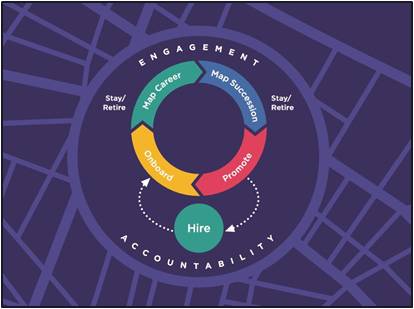

Career Map Template
Your journey and career can seem confusing and hard to define. Think about where you are and how you got there, and you’ll see that career paths tend to be crooked and accidental. Each person is unique and will have interest in their career, changing over time. No one can guarantee their future, but laying out a Career Map primes the pump and changes the way everyone sees opportunities. Use this fillable template to strategically and intentionally think about your Talent GPS career.
Presented by:
Lou Russell, Director of Learning, Russell Martin & Associates
(a division of Moser Consulting)
Click here to order.

Let Go and Replace Very Old LMSs that Do Not Support New Learners and Business Needs
Sometimes discarding or letting go of seemingly efficient LMSs which significantly fail to meet business needs, provides a fresh start and changes the game to produce far better returns. Studies have shown that companies are systematically changing LMSs into newer and better suited learning systems to support newer learner needs and business demands.

