eBooks, Guides, Templates and White Papers
|
The world of workplace learning and career development continues to evolve. Many organizations now offer a blended approach to learning with instructor led training as well as online courses to keep their workforce on the cutting edge. However, as outlined in this new research brief, great learning experiences don’t always equal great outcomes. So, what is the real problem with workplace learning? Hint: it’s not content.
At Providence St. Joseph Health, the Learning and Development team provides award-winning learning content to their workforce - however, engagement still proves to be low. In order to boost learner engagement, PSJH describes the need to transform their programs to provide a more learner-centric experience.
This brief follows the journey from identifying key challenges in today’s approach to workplace learning, to finding unique, innovative solutions that improve career development strategies and save the organization millions of dollars annually. Specifically, the team at Providence St. Joseph Health investigates three learning disruption case studies in this brief, asking, "What if…"
Learning was nano-sized?
Learning was shareable and personalized?
Learning Design was based on data?
Download this brief to learn more about how innovative technology is improving workplace learning and impacting business results.
|
|
Onboarding is your opportunity to create a strong first impression and set your new hires up for success from day one. But there's so much to accomplish during onboarding, so how can you create an effective and engaging experience that doesn't leave everyone exhausted? You can take your onboarding program from overwhelming to outstanding by breaking it down into phases!
In this infographic, you'll learn how you can balance paperwork, relationship-building, compliance, and culture immersion by creating an easy-to-follow checklist for every phase of onboarding.
You'll also learn:
-Key elements of a well-rounded onboarding experience
-What you can accomplish before a new hire's first day
-How to incorporate culture and values into onboarding
-Simple to-dos to make new hires feel welcome
|
|
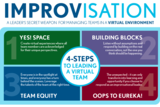
Download this helpful infographic as a reminder of the 4 steps for leading virtual teams.
Outcomes of using Improv techniques to manage virtual teams
Greater trust within virtual teams
Speed to deliver on business outcomes
Radical collaboration = quicker turnaround
Balance accountability with autonomy
Accountability and engagement on tough projects
Practical skills to manage difficult or negative conversations in a positive way
Techniques to improve empathy and patience
|
|
No "learning culture" is born overnight. For a learning culture to become part of your brand, you must involve both the leaders and the employees every step of the way. The process is demanding but leads to a tremendous pay-off through higher employee retention, higher quality performance from your employees, and an increase in revenue.
This eBook discusses key elements of building a culture of learning, including:
How to design training for measurable ROI
Best practices in training design strategy
Tips for custom eLearning development
The role of analysis and performance consultants
How to utilize managers and mentors
|
|
Today’s business world seems enamored with design thinking. The popular problem-solving and innovation approach has generated widespread discussion and acclaim; it’s been credited for disrupting traditional markets, sparking groundbreaking ideas in flagging industries and positioning companies to achieve unprecedented growth.
But what exactly is design thinking? And does it really live up to its reputation?
|
|
Colorful post-its. Wacky visuals. Funky rooms. What technique of innovation is better known than brainstorming? What word solicits more eyerolls in the real world?
Brainstorms are frequently unproductive. There are two main reasons why, and they’re related:
● People evaluate others’ ideas ("Neat, so how much would that cost?").
● People evaluate their own ideas before they’ve even shared them. They censor out the most unusual ones for fear of being judged as silly or dumb.
Analysis and evaluation are critical skills. We’re rewarded for quickly evaluating situations, diagnosing errors, and finding practical solutions in nearly every aspect of our lives. Rightly so.
|Brainstorming is harder than it looks because it requires us to temporarily suspend these instincts.
The purpose of a brainstorm is to come up with as many different options as possible to delight our users. The greater the number and variety of options, the higher the odds of a valuable idea.
A properly run group brainstorm is your most useful tool to generate game changing ideas. It requires skill and preparation to be effective. Here’s what we think are the most impactful steps you can take to make your next brainstorm as productive as it can be.
|
|
We are in the midst of massive workforce disruption. The need for resilience at organization, team, and individual levels has never been greater. This report reveals why HR leaders are turning to coaching to help people thrive during change.
Download the report to get BetterUp’s research on 5 data-proven ways coaching builds employee resilience, and how resilient people and teams drive business results.
|
|
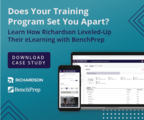
Richardson, a global sales training company, had a problem: their eLearning modules, which were once considered state-of-the-art, had grown outdated. They needed to improve their sales training program fast to address their biggest challenges:
Effectively engaging their learners with a new approach
Delivering a unique, scalable training solution
Administering a seamless go-to-market rollout of an overhauled training program
How did Richardson quickly overcome these challenges and deliver a game-changing training solution?
By using a modern, configurable online learning platform.
In this case study you'll learn how to:
Deliver a consistent, intuitive, and clean learner experience at a global scale
Leverage blended learning and robust analytics to create a more impactful training program
Transform existing training and education experiences for learners, resulting in new levels of efficiency, engagement, and success
|
|
With so many ideas and initiatives to invest in, you're probably asking why you should devote your dollars to training. The way we work has changed, and employees are facing new challenges. They've had to adapt, adjust, and learn new skills, and it's important to provide them with the tools they need to succeed.
But the truth is these challenges didn't start with a pandemic, and they won't end with it either. Your employees are always having to adjust, adapt, and learn new skills as they start a new project, use a new software, or encounter difficult situations with teammates. Training can certainly be helpful in times of crisis, change, and uncertainty, but training can also help you overcome everyday business challenges, get a competitive edge, reduce turnover, upskill your workforce, and so much more.
In this ebook, you'll learn why investing in employee training is a smart move, and you'll get all the facts, figures, and stats you need to convince leadership to invest in employee training.
You'll also learn:
-Why you should invest in training
-What ROI you can expect from training
-How to maximize training effectiveness with online learning
|
|
The world as we know it is changing, and the approaches companies use to support their team's learning and development initiatives have had to change drastically in order to keep pace, and will likely continue to do so as new societal norms and health and safety precautions become integrated into standard business operation protocols and practices. In today’s professional landscape, the safety, convenience, and wellbeing of your learners must be top priority in order to ensure your team is confident, well-equipped, and can drive organizational success - regardless of whether they are working from home or in an office.
eThink has created this Remote Work eBook to help organizations create engaging and sustainable remote workplace eLearning programs that can support learner needs and workplace practices as they continue to evolve. In this guide, we’ll discuss the growing trends in the workplace, strategies and solutions to revolutionize digital L&D, and how to ensure your organization is prepared to effectively support the success of your teams for years to come.
|