eBooks, Guides, Templates and White Papers
|
In the modern era, learners have access to knowledge like never before. But as learning professionals, we need to ensure they’re developing the skills and knowledge they need to perform their jobs at a high level. That leaves a critical question: how can we design programs that help learners achieve true mastery?
Newer, more robust approaches, including continuous delivery of learning, richer content, and skill-based certifications, are delivering the outcomes that enterprises are looking for. This report discusses the need to shift from legacy learning approaches to a modern outcome and skill-based approach that we call mastery-based learning.
In this analyst report you will learn:
The key trends driving the shift to mastery-based learning
The best technologies to enable a mastery-based approach to training
Best practices for deploying mastery-based learning programs
|
|
As a program manager, so much of your time is spent creating and facilitating plans to develop other people, so your own development often falls by the wayside. After all, who is going to train the training program manager? But prioritizing your own development can actually help you create a better and more effective training program.
For example, developing your data management skills can help you find and share meaningful statistics with leadership to improve buy-in, or brushing up on your communication skills can help you have more productive needs analysis conversations.
In this ebook, you'll learn to develop skills and competencies that can help you create a strategic and successful training program.
You'll also learn:
Characteristics of top training programs
How to develop and analyze training goals and metrics
A framework for conducting a needs analysis
|
|
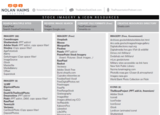
PowerPoint MVP Nolan Haims provides for TMN members the fantastic list of stock imagery and icon resources used at Nolan Haims Creative.
|
|
The learning ecosystem is rapidly evolving, and the changing technologies and growing resources available to help individuals learn is likely a bit overwhelming for your Learning and Development team. With the only guarantee being that change is inevitable, how do you build a training solution that will meet your organization’s needs 6, 12, or 24 months down the road?
Discover how open-source technology can help you create a flexible and future-proof training program for your organization.
In this White Paper, you'll learn:
The evolving role and capabilities of the Learning Management System (LMS) within the larger learning ecosystem
The leading open-source learning platforms and how to determine which is the right fit for your needs
How to maximize the interoperability of open-source to extend and future-proof your learning program
|
|
COVID-19 forced many organizations to transition to remote work in just a few days. But now that many employees have been working remotely for weeks, employers are beginning to realize the benefits of remote work, and many organizations will continue working remotely at least part of the time. Even though your teams might not be in the office, you still need to train your workforce on compliance topics like appropriate behavior or how to stay safe online. And because employees are encountering new challenges, you might also want to consider offering training on other topics, like productivity, effective remote leadership, software, and communication. The good news is that you can do all of this with online employee training. Now more than ever, it's important to make tools and resources readily available for your employees, no matter where they are.
In this infographic, you'll learn how you can deliver a consistent and seamless training experience to your dispersed and virtual workforce.
You'll also learn:
Tips for sourcing content
When to create your own content
How to maximize training effectiveness
The most impactful delivery methods
|
|
We’ve been socialized to believe learning ends when we finish school or university or an e-course. But we’re wrong. With the half-life of skills at 5 years, everyone needs to be constantly upskilling to keep up with the pace of technology—they need continuous learning.
And while many organizations are aware of the learning sciences needed to propel their programs forward, they are unsure how to turn these great ideas into digital learning that drives results.
This eBook explores why learners need continuous learning to achieve mastery--and what you can do about it to grow revenue and improve learning outcomes.
Download this free eBook to learn:
Why professional learners need continuous learning to reach mastery
Four models to build and scale your business with continuous learning
How to choose the right model for your learning program
|
|
According to the 2018 Gallup Report, 67% of workers are experiencing some sort of work disengagement. Gallup looked deeper into managers’ impact on employee engagement and found:
77% of employees believe their manager needs to improve the meaningfulness of the feedback they currently provide
74% of employees believe their manager needs to more directly relate feedback to their job performance
79% of employees believe their manager needs to improve how they manage their
employee’s performance to motivate them to excel in their position
BUT all is not lost; This gap represents an opportunity. To discover more about the opportunity, click to download this paper.
|
|
Employee training and development is not an "event" it's a process. Training in the 21st century needs to be ongoing, agile, and one that is personalized to individual needs.
And with the growing remote workforce, evolving and advancing technologies, where do you begin? Traditional employee development methods are being replaced by:
micro-learning
simulations
gamification
AI and more
Download this complimentary guide, The Definitive Guide to Upskilling, to learn about the 4 essential strategies for building and refining an upskilling program with personalized content and hands-on training that aligns with your company.
|
|
Companies around the globe have canceled sales meetings and training sessions and are enacting work from home policies to help prevent the spread of COVID-19. Yet sales enablement professionals must get new hires up to speed and keep teams on track in a world where face-to-face meetings are impossible.
Traditional training and sales enablement approaches won’t solve this challenge. But building a virtual training program when you’ve relied on in-person sessions can feel like an overwhelming task. Fortunately, there are proven tactics that organizations can employ to train across geographies and time zones.
Use this guide to learn how the right strategy and technology can help you manage high-performing virtual teams.
|
|
No matter what web conference platform you use, you’ll find the mindset and the tactical tools described here will help you get better results in your next web event.
P.S. While you’re reading, notice the additional resources referenced and be sure to download these helpful tools for your virtual tool kit.
|
.png?1591213312)