



eBooks, Guides, Templates and White Papers
|
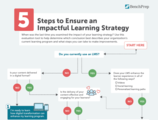
When was the last time you examined the impact of your learning strategy? Use this evaluation tool to help determine which conclusion best describes your organization’s current learning program and what steps you can take to make improvements.
|
|
Technical and on-the-jobs skills are important, but many organizations often overlook training on a skill set that could be their secret to getting ahead: soft skills. In fact, the growing soft skills gap in the workforce is one of the biggest challenges facing organizations today.
Prioritizing soft skills training has a number of benefits. Not only can it help close skill gaps in your existing workforce and in new hires, it can give your organization a competitive edge, help you hang on to your top talent, and improve your bottom line. When you train your employees on skills like problem solving, communication, and social intelligence, they have better relationships with co-workers and customers. This translates into less turnover, improved productivity, and increased profitability.
Working to close soft skill gaps can feel overwhelming and a bit arbitrary. It's hard to know where to begin and where to focus your efforts. In this ebook, you'll learn how to tackle closing the soft skill gaps at your organization in a manageable and effective way through training.
You'll learn:
How to identify where soft skill gaps exist in your organization
What roles need what skills
Which training methods are most effective at closing soft skill gaps
What soft skills other organizations are training on
|
|
Download research that shows how high performing organizations are getting results from coaching.
The Real Benefits of Coaching:
Productivity Gains
Employee Engagement
Knowledge Transfer
ROI
|
|
Applying behavioral science principles to learning strategies can drive learner engagement and optimize learning outcomes. But where do you start?
Use this step-by-step guide to supercharge your learning strategy with easy-to-apply principles from neuroscience.
Click below to download.
|
|
As an L&D leader, you know that the business impact of learning and development is undeniable. In fact, a study by Bersin found that companies with high-impact learning programs generate, on average, three times higher profit growth than their peers.¹
Ongoing learning and development has the power to grow your employees, the business, and the results of your L&D programs. But all too frequently, it does not live up to its full potential. Why? Because in order to deploy effective employee learning and development, L&D professionals need to have a deep understanding of what motivates and inspires their people.
L&D leaders that effectively shape their learning programs around the intrinsic needs, wants and motivators of their people - rather than expecting employees to adapt to a one-size-fits-all approach to learning - can improve employee engagement, learning retention and learning adoption.
In this step-by-step guide, you'll learn the foundations behind three neuroscience principles of motivation - emotion, loss aversion, and social storytelling. You'll get the hands-on guidance you need to turn theory into practice and start applying these concepts to your L&D strategy immediately to boost learner engagement and learning outcomes.
Download the guide today to get started designing a scientifically-driven learning experience that engages and motivates your people!
|
|
Being able to assess employee performance is critical, but are you also articulating clear expectations for their advancement? Talent spotting is all about identifying potential over performance.
In this white paper, get answers to questions like:
What is talent spotting and why is it so important to get it right?
How can hiring managers and HR departments get talent spotting right?
What it takes for talent spotting to be successful?
|
|
Traditionally, succession planning has been a lengthy process: identifying top talent early, grooming candidates for promotion and then moving employees through jobs to prepare them for future opportunities over many years. Today’s workers, however, may be unlikely to remain with a company long enough for a slow-paced succession plan to succeed.
How can organizations plan for filling future leadership positions in this environment of fast change and job mobility? Is traditional succession planning a thing of the past? Find out more in this white paper.
|
|
There's a lot that goes into developing and delivering a training program. For starters, you have to get buy-in, and then you have to determine what methods to use, what topics to train on, and who should be involved in training. So how do you go about presenting your case and making these decisions?
Just trying to determine which methods will be most effective can be an overwhelming task on its own. You don't have endless hours to research or weigh the pros and cons of every modality, but training is too much of an investment to guess what works. Instead, following best practices and using facts and data will help you build and deliver a strong and effective training program.
In this ebook, you'll learn compelling facts and figures to help you make your case, focus your initiatives, and maximize your training efforts. You'll also learn:
Why training is linked to higher profitability
Specific examples of the most effective ways to deliver training
How to use multiple modalities to maximize your training efforts
Ways to beat the forgetting curve and boost learning retention
|
|
Bonus resources from Bob Kelleher's session in the Masters Series Webinar on Transformational Leadership
Click "Downloads" to access all 4 bonus resources.
1) Introduction and How to Use the BEST Profile Candidate Evaluation Form
2) Introduction and How to Use The Interview Questions for BEST Profile
3) Interview Questions - Best Profile
4) Best Profile Candidate Evaluation Form
|
|
Investing in the development of your employees is critical to staying competitive in the current globalized marketplace. Yet, research suggests that up to half of the investment your organization is making in development is being wasted. Employees lose up to 75% of the information they receive1 through traditional approaches to learning and development (including learning management systems, episodic trainings, and workshops) — an effect known as the training transfer problem2.
Click below to download this White Paper.
|






.png?1578093439)
.pdf_-_Adobe_Acrobat_Reader_DC_2019-12-18_10.47.37.png?1576695468)

