



All Resources

Turn Organizational Learning into a Strategic Advantage
Continuous learning is critical to the professional success of adults, whether they're learning about the latest innovations in their industry, updating their sales skills, receiving customer service training, developing their leadership abilities, or simply getting onboarding training as few hires. Today, using technology to aid in learning is critical.
For some organizations, training provided by a basic learning management system (LMS) is sufficient if you just need to launch and track completion of canned content. But if you want to drive knowledge throughout your workforce, your organization requires more.

Effective Sales Process Execution
Sales is in an effectiveness crisis, with 47% of sales professionals failing (according to CSO Insights studies). It's easy to blame outside factors. But the truth is, if we're going to turn sales performance around, we have to take a good, hard look at sales process.
To achieve consistent results, your sales team needs an actionable and measurable sales process consisting of your best practices. It needs to be repeatable and easy to follow.
Download this white paper to:
Learn why mapping out a formalized sales process is worth the effort.
Get practical guidance on how to do it successfully.
Learn how technology makes effective execution achievable for any sales organization.
See inside an organization that increased their profit margin by 50% by better executing their sales strategy.

Creative Musing - Workshop Tip #72
Recursive learning and Creativity
Learning is a creative process. We start with a question, a challenge, a problem, an opportunity or possibly simple or complex tasks. Then we go back to asking more questions. Because of what we want to do, accomplish or learn, our minds go through discovery and creativity.
The focus of this tip is on Recursive Learning and Creativity. People learn recursively. We connect past experiences, with new experiences, and formulate new insights.
These then, become part of our new and improved expertise. Doing these repeatedly help us build skills, mastery and expertise.
The compounding effect of incremental insights show us where our interest areas are,
and where our vocation and our passion lie. People tend to do things that give them pleasure. What gives them pleasure allows them to pursue interests. Eventually and along the way, our expertise is rooted in our passions and vocations, whether we are consciously
or just unknowingly pursuing them.
Generating insights is normal and common. But deepening insights which is a creative process requires some level of intensity and penetration of desire. Is it difficult to attain? Not really.
It is easily provided when it is incremental - thinking through your insights as it happens
is where the epiphany is. It is like when you eat really great food at a 5-Star Michelin restaurant. It is at the moment when your taste buds savor the flavor - at that moment - where experience is highest. This is the moment of ecstatic insights, sometimes euphoria or the Aha! moment. This is similar to the feeling when one generates fresh ideas to change a product and improve services in order to achieve organizational goals. This is similar to the Aha! moment when one discovers the connection between two previously unrelated concepts.
According to David Jones, "Aha! moments may be sudden, but they probably depend on an unconscious mental process that has grown slowly." Jones argues further that we can't truly have new ideas, rather, we can connect existing facts or notions by observing others.
The Social Component of Creativity
Creativity does not occur in a vacuum. Experts agree that while creativity or insight is a personal experience, "creative thinking is not so much about an individual trait but rather a social phenomenon involving interactions among people within their specific group or cultural settings."
By curating and sharing back to the community "prompt questions," members find it easier or faster to direct their attention to answers and therefore facilitate discovery and insights.
The most intriguing part about prompt questions is that it sends or kicks off learners into an automatic recursive learning process. When we ask questions, our minds go on autopilot to find what we already know, then search outside to discover what else we can learn about. This allows us to reflect and gain insights -- this is recursive learning or creative musing in action. This happens in milliseconds. Although this is most often unconscious, it is most effective in learning and gaining insights.
Prompt Questions Facilitate Thinking
To help members in TrainingMagNetwork.com, we provided a prompt-question-driven search engine. It starts with "I want to learn about__________." After members search a phrase, the results go beyond showing a list of resources. It also presents related prompt-question search outcomes. See the list under "Also try..." (See Image - 1) Furthermore, when the member clicks "See all questions", a list of prompt questions appear in a categorized format. See Image-2) Both these steps facilitate the learners’ "creative musings."
We introduced the process called "Path2X trending" which means that as you add and record insights, you are able to see your "crumbs" - where you have been and what you have been thinking aloud, and the interests you are pursuing and the knowledge and learning that you are accumulating. In essence you are building expertise, but instead of a whimsical and tentative way, we allow members to see the trends of their insights. Here are the two phases of creative musing:
1. Generative phase - During this phase, one tends to generate different solutions to a given problem. Also known as the divergent phase, the creative mind is in a brainstorming mode and tries to consider a variety of ways in which a problem can be approached and a solution can be had. This is what we commonly call "out of the box" thinking.
2. Exploratory/Evaluative phase - Also known as the convergent phase, during this phase the creative mind tends to focus on the best solution to the problem. No longer is the mind brainstorming ideas, rather, with surgical precision, it decides on what to do and faces the problem head on.
According to Robert L. DeHaan, "During the generative process, the creative mind pictures a set of novel mental models as potential solutions to a problem. In the exploratory phase, we evaluate the multiple options and select the best one."
Conclusion
Creativity is the result of incremental and recursive learning. While we tend to think of it as an innate talent, it cannot be separated from the social context. As a matter of fact, it is enhanced by social interaction as observed from the curated "prompt questions" by TMN members. With "Path2X trending," members can focus and see the trend of their creative musings.
Training Videos - Becoming a Learning Organization
Training is not a one and done event. There has to be a refresh component to counter the forgetting curve. And also, there has to be an overall transfer of learning process surrounding the training, including follow-up and coaching. But with all this, we're just talking about training on specific skills. There's a higher-level strategic issues surrounding training that we also need to discuss. This is more than one training topic or even a series of programs. You need to be thinking about how training is driving the overall competitive capabilities of your organization.

Lou Russell - The Mental Game of Projects
The Mental Game of Projects
Tiger Woods will be remembered as an exceptional golfer. His legacy may also be that he made a big mistake and never returned back to his greatness - time will tell. Why do you think he still remains so far from his earlier abilities? His clubs? His coach? His health issues? Everyone I ask says "it’s all in his head".
Masters Details
Virtual Session: Friday, April 22, 2016
Time: 8:00 AM Pacific / 11:00 AM Eastern
*
*To request a notice when registration opens please, send us a message.

What's in a Name? Training Matters
Although emotions around names run strong and high, empirical evidence supporting the shift from training to any of these other names is thin. This study explores two issues. First, the researchers wanted to see the extent to which the additional responsibilities associated with different names -- such as analyzing performance problems and offering career development and organizational development services -- actually characterized the work of people in the training field. Second, the researchers wanted to explore which terms participants use to describe their work and which terms they prefer to call their work.

Coaching Skills for Managers and Leaders
What are the obligations of managers? The answer to this question varies from organization to organization based upon a number of factors such as industry, culture, department, skill level of the team, etc. Regardless of the organization, at the very heart of this question lies a dilemma. If you need compliance, or supervision of employees, the things your organization needs managers to do well has a clear, well-delineated set of guidelines and boundaries. On the other hand, if the answer leans towards the successful achievement of goals, the things you need managers to do well are probably less defined.
The objective of this eBook is to offer some insight into what we see as emerging principles in employee coaching for managers. The marketplace is changing, and so are our workplaces. While many traditional coaching models provide excellent guidance, they may not fully prepare our managers for success, without some modifications, for successful coaching experiences with today's workforce.

Why Motivating People Doesn't Work... And What Does
Thought leaders (from John Dewey to Jay Cross to Seymour Papert to Jane Hart to Roger Schank) advocate for more informal learning. If you are inclined towards informality, are you certain about what it is and what it means for your enterprise? What about the far less popular and overwhelmingly more prevalent, formal learning? What are these forms really and in what circumstances are they most appropriate?

A Reason For Learning Every Season
As a training program manager, you likely spend a significant amount of time thinking about how to increase employee participation to ensure impact, value, and return on investment. Check out BizLibrary's "A Reason For Learning Every Season" resource to foster marketing & awareness for learning and development, so you can help your people take it upon themselves to learn something new and improve efficiency.
Click below to download this White paper.
The Unbounded World of Learning - Workshop Tip #73
This is the second installment of of my five-part blog series on helping members of TrainingMagNetwork understand their expertise better.
We believe in unshackling our thinking and providing learners as much access to content and this is what this post is about.
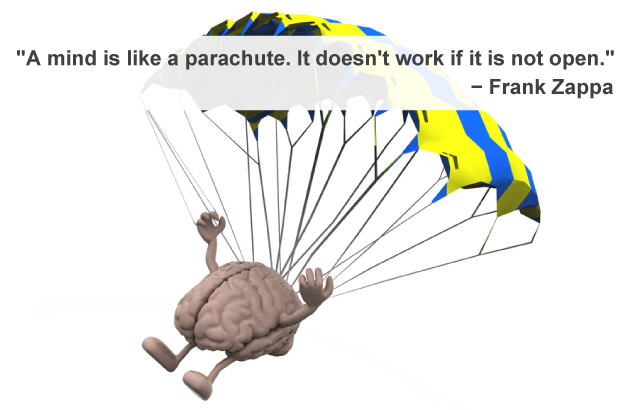
Trainers and content developers can no longer hold back learners from using other sources of knowledge. There is a breaking away from control as these new discoveries continue to sprout like mushrooms. This allows them to accelerate learning. It is in this openness that we encourage the learners to explore, create and develop.
The Proliferation of Open Learning
We have witnessed the dramatic increase in open learning. If you have been following the online trends, you will have noticed the popularity of sites like Coursera, edX and other spinoffs. The dramatic decrease in cost of producing learning materials contributes to the proliferation of open learning.
According to Caswell, Henson, Jensen, and David Wiley, "This marked decrease in costs has significant implications and allows distance educators to play an important role in the fulfillment of the promise of the right to universal education. At relatively little additional cost, universities can make their content available to millions. This content has the potential to substantially improve the quality of life of learners around the world."
But the cost is just one aspect. While technology made open learning easy, it is the current attitude requiring more flexibility and collaboration in learning that made this possible. Rigid and traditional approach to learning is a thing of the past.
According to Liyanagunawardena, Adams, and Williams, "Connectivity is usually provided through social networking, and a set of freely accessible online resources provides the content or the study material... For example, MOOC participants may create their own blog posts discussing aspects of the MOOC in different spaces and/or may use microblogs such as Twitter to express themselves."
eLearning pioneers like Jay Cross are advocating informal learning wherein unofficial and impromptu encounters between learners and people in the know take place. Jay posts that "formal training and workshops account for only 5% to 20% of what people learn from experience and interactions."
If you are a lifelong learner, you can find free and open courses at Harvard Open Learning. Are you looking for a new recipe to cook for lunch? You can just head to Youtube, watch a video and turn yourself into an instant chef.
We haven't witnessed this level of openness before and this is just the tip of the iceberg. With technological development mostly done in the open, the high level of interactivity required to respond to modern challenges and the attitude of modern learners all converge to spice up Open Learning. The concept of Open learning is far more vast than what we have witnessed and I believe the best is yet to come.
The Philosophy Behind TrainingMagNetwork's Open Learning
Richard Baraniuk shares his vision of open learning which led to the creation of OpenStax, an open-source, online education system which allows teachers to share and modify course materials freely and globally.
Different programs have varied degrees of openness and diverse implementations of the concept of Open Learning.
Over 50,000 (growing) blogs, white papers, articles, webinar recordings, live webinars, case studies, special reports, and many more
At TrainingMagNetwork.com, we allow the members to search over 50,000 blogs and resources (growing each day). We believe we can only serve the learners by enabling them to access quickly, assist them to search with prompt questions and discover what they want in the abundance of content. They drive the learning - not us nor the designers, or any form of formal structure. In fact, we don't have a hierarchical learning design that is typical of other associations and learning providers.

Ray Jimenez, Ph.D. - The New Bold World of Small-Bites Learning
The New Bold World of Small-Bites Learning
There is a big shift toward small-bites learning. New methods are slowly moving away from highly structured and controlled learning environments to more open modes of learning. Instructional approaches use mobile tools to harness the power of latest learning technologies that benefit learners on-the-go. With a click of a button, you get quick answers to your questions that need immediate answers. Small-bites learning is the way to go and you will learn it here in this Masters series with Ray!

Part 1: How Much Do You Know about Learning Technologies?
A recent Training magazine survey found that participants have a firm grasp on purchasing learning technologies used for courses and similar e- and m-learning projects. But grasp of technologies used to manage various aspects of the training function is more mixed.

Allen Interactions - Operation Lifesaver
Operation Lifesaver consisted of multiple modalities including a promotional video trailer, the interactive e-learning course, a traffic signs gamelette, and an integrated marketing plan with various tactics.


Employee Engagement for Dummies - Chapter 7
On July 30, author and keynote speaker Bob Kelleher will present a webinar for Training Mag Network members and our guests based upon his research and findings on the topic of his new book, Employee Engagement.
Bob has generously provided several chapters of the book for you to download as a preview. We start with Chapter 7.
Chapter 7
People Who Lead People: Engaging Employees through Leadership
In This Chapter:
Differentiating between management and leadership
Identifying leadership‐based engagement drivers
Knowing why top leaders must buy in
Identifying behaviors and traits of engaged leaders
Training engaged leaders
Recognizing the importance of coaching
Identifying leadership best practices

Help Them Grow or Watch Them Go: Career Conversations Employees Want
Despite economic conditions, unemployment levels, or any other business factor imaginable, your best employees - the ones you need most - want one thing from you, plain and simple: to support their growth and development. Study after study confirms that development is the single most powerful tool managers have for driving engagement, retention, productivity, and results. Yet, HR leaders know that career development is frequently the thing that gets sidelined unless or until the organization demands that some form be submitted during regular review cycles.
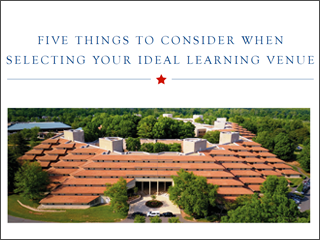
5 Things to Consider for Ideal Learning Venues
It’s common for venues to claim to be one-size-fits-all, but most are equipped for one type of event and ill-suited for others. So how do you find the ideal venue for your group’s needs? To help you navigate the labyrinth of offerings, the expert planning team at The National Conference Center has put together a comprehensive list of key factors any planner should consider when selecting a venue for a meeting, training or event.
Click below to download this White paper.

Follow the Crumbs of Insight - Workshop Tip #74
This is the third installment of the five-part blog series about the The All-New TrainingMagNetwork.com Open Learning Environment.
At Training Magazine Network, we capture the crumbs of insights as they happen. This level of self-awareness enables our members to keep track of their train of thought. While in webinars, reading white papers, watching videos, etc., members can quickly record the ripple of their insights. They also encourage real-time noting, sharing and tracking of other members' insights.
Savor the moment. As members go through all types of content that they find interesting through the help of a powerful search engine, they are constantly encouraged to record their insights as it happens. The key idea is to allow them to document what piqued their interest at the moment. Their learning preferences and interest areas are captured by the system. This provides them a unique perspective of their pursuit of expertise.
Why Evaluate Insight?
The idea behind evaluating one's insight is established by a huge quantum of studies. Organizations discover that giving appropriate feedback enhances personnel's ability to grow. As a matter of fact, neglecting a good evaluation or feedback mechanism is a recipe for disaster. According to Jane Bozarth "We often treat evaluation as an afterthought, focus on measures that offer little real information, or, when the effort looks difficult, just don't do evaluation at all. In looking at evaluation strategies, choose those that will get you what you need. Are you trying to prove results, or drive improvement? And above all, remember: some evaluation is better than none."
A founder of Triad Consulting Group and a lecturer at Harvard Law School, Sheila Heen delivers a talk on the importance of feedback. Giving the right kind of feedback takes center stage in sharing and tracking of other people's insights.
Technology-Enhanced Feedback Mechanism
There are a lot of advantages in using technology as a feedback mechanism. First of all, the time and distance constraint is easily overcome. A good LMS (Learning Management System) can easily incorporate feedback mechanisms like forums where learners can discuss the ripples of insight.
Through this mechanism, peer learners can easily assess and give feedback on each other's ideas. This can be personalized even in a large group. On top of that, real-time tracking of feedback is easy with fast data transfer.
Insights Leading to Path to Expertise (Path2X)
The Training Magazine Network just released the first-of-its-kind member service we call Path to Expertise or Path2X. It incorporates a technology-enhanced feedback mechanism.

Megan Torrance - Leading the Instructional Design Team
Leading the Instructional Design Team
As the leader of an instructional design, development and delivery team, you’re expected to juggle a wide variety of workstyles, demands from competing stakeholders, shifting project management challenges and the growth and development of the team itself. At the same time that our industry is undergoing huge shifts in underlying technology platforms, the organizations we serve are demanding more and faster and better from us. How can you best position yourself and your team for success?
Masters Details
Virtual Session: Friday, July 15, 2016
Time: 8:00 AM Pacific / 11:00 AM Eastern
*
*To request a notice when registration opens please, send us a message.

Part 2: Purchasing Learning Technologies
Continuing Training magazine's exploration of awareness of learning technologies, this report looks at survey results on how trainers prepare for and participate in the purchasing process.

TorranceLearning – Define the Scope
This short video is part of LLAMA, an Agile project management method. TorranceLearning has taken the best of Agile project management and added a few brilliant instructional design techniques to create LLAMA: the Lot Like Agile Methods Approach. LLAMA gives our clients the flexibility to keep up with changing business needs while creating amazing learning experiences.
Employee Engagement for Dummies - Chapter 10
On July 30, author and keynote speaker Bob Kelleher will present a webinar for Training Mag Network members and our guests based upon his research and findings on the topic of his new book, Employee Engagement.
Bob has generously provided several chapters of the book for you to download as a preview. Here is Chapter 10.
Chapter 10
Brandy, You’re a Fine Girl: Driving Engagement through Branding
In This Chapter:
Looking at the relationship between branding and engagement
Defining who you are through your employee value proposition
Branding internally and externally
Using tri-branding to your advantage

What Every Learning Leader Should Know About Online Video
As organizations globalize and transform themselves for a connected, 24/7, just-in-time world, online learning has risen dramatically in importance. And over the last few years, no learning medium has grown faster than online video.

The Beginner’s Guide to Using Video for Employee Training
Bringing Everything into View
As today’s organizations stare down the challenges of ever-increasing compliance regulations, unpredictable turnover, and rapidly expanding cultural and learning style changes among employees, companies are looking for new ways to automate and scale their training efforts.
More and more, they’re finding that help in video. Adaptable to both formal and informal learning needs, video overcomes today’s most common training challenges. It helps instructors increase training quality, speed and effectiveness — all while significantly lowering program costs.
But of course, today’s learning and development professionals already understand the potential that technology can offer in the modern training environment.
Their real challenge? Convincing their organizations to do more.
In this paper, we help L&D practitioners tackle that challenge head-on, including:
• 5 benefits that help convince your decision makers to use video in more ways
• 14 ideas for supporting and scaling formal and informal learning with video
• 1 technology — the video platform — that simplifies the use of video for L&D
Video training is no longer a novel idea. It’s the new normal. Make sure your organization isn’t missing out.
Click below to download this White paper.
Insight Sharing - How They "Meet and Mate" - Workshop Tip#75
Have you ever shared your thoughts with someone? On a grander scale, have you tried sharing your work or a potential masterpiece with like-minded people? Sharing your work simply means that it is where your mind is at. It is where your expertise can be found. The patterns of your insights showcase your expertise areas.
Of course you can imagine the satisfaction you get when you receive the approval of people you respect. But the approval of like-minded people is not the only thing. Rather, it's making your work bigger than yourself that matters.
In this fourth installment of my five-part blog series about The All-New TrainingMagNetwork.com Open Learning Environment, I'm going to talk about the importance of sharing your work. The Internet and a good portion of its supporting technology has been the result of open sharing of ideas.
Inevitability of Sharing Insight
Apart from the climate of openness, we can't expect to enjoy what many would consider to be the greatest invention of modern times. Buzzwords like "open source," "collaboration," and "crowdsourcing" are all synonymous to the sharing of ideas and the climate of openness that
it entails.
Although the effort to share one's ideas is not something recent, modern development made it easier to collaborate. According to Josh Lerner and Jean Tirol in their book The Simple Economics Of Open Source, "While media attention to the phenomenon of open source software has been recent, the basic behaviors are much older in their origins. There has long been a tradition of sharing and cooperation in software development. But in recent years, both the scale and formalization of the activity have expanded dramatically with the widespread diffusion of the Internet."
On a more limited scale, programmers have been sharing source codes as early as the '60s and the '70s and this has been called "sneakernet" due primarily to the actual movement of files through people wearing sneakers. I'm sure you can imagine the inconvenience but you get the picture. There is no way ideas can be prevented from getting shared.
The Power Behind Sharing Insight
Matt Ridley shows that the great progresses experienced by human history have been the result of collaboration or the "meeting and mating" of ideas.
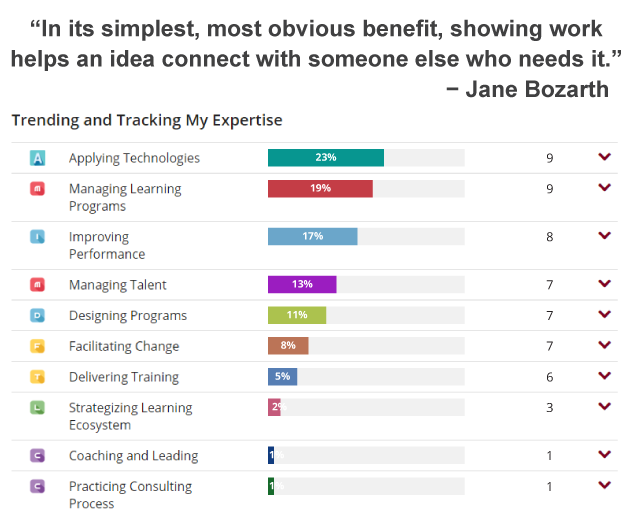
I like the book Show Your Work by Jane Bozarth. It suggests a profound change of our outlook. When we share our work, we actually learn a lot better.
I recall a story from a toxic waste company client about how they apply "Chalk Talk." After each training they ask participants to use chalk and blackboard (may be flipcharts, white boards and markers) to talk about what they have learned.
This is a powerful self-learning process that enables the learners to articulate what they know and correct themselves along the way. Let's call this the digital tracker.
At TMN we allow members to capture trends and patterns. They discover and learn and track what they are good at and they show it off in the "Trending Report."
How is Openness Beneficial to Organizational Performance
The advantages of collaboration to organizations are enormous. Bozarth opined, "Showing work offers increased efficiencies, the possibility of innovation and increased ability to improvise, and promises correction of longstanding deficits in organizational communication."
In another study, Martine R. Haas and Morten T. Hansen proposed that, "An organization's capacity to share knowledge among its individuals and teams and apply that shared knowledge to performing important activities is increasingly seen as a vital source of competitive advantage in many industries."
While it's nice to think about the solo working genius, it's undeniable that we are at a time when certain problems are just too big for the individual to solve alone. We need the insights of other like-minded people whose expertise are in other areas.
Conclusion
The pattern of your insight is a clear predictor of where your expertise lies. While the solo genius presents an attractive picture, sharing these insights expands your horizons. It is only through openness that ideas take on a new life because they meet and mate with other ideas. Innovation becomes possible and inevitable when ideas are shared. Problem-solving is facilitated by not one person but through the contribution of others.

