Blogs
|
Written by Jessica Batz View and download the webinar slides. View the webinar recording. Building a Performance-Based Culture - Webinar 04.17.14 from BizLibrary
Chris Osborn
.
Blog
.
<span class='date ' tip=''><i class='icon-time'></i> Jul 14, 2015 02:21pm</span>
|
|
CLICK HERE to View!PASSION TO TRANSFORM?Are you an educator (Professor, lecturer, teacher, corporate trainer, etc.) with PASSION TO TRANSFORM education in Malaysia? Using Twitter, too? If so, please add yourself or add an educator that should be on this list! HOW TO JOIN?Voting has been disabled to encourage every passionate and inspiring educator in Malaysia to join (without being worried about their ranking!). The newest addition will be shown first on the list (cool!). To add yourself or others (refer to the picture above):Click 'Add to List' Listly login required. Account created using Facebook, Twitter, LinkedIn or Google+ login.Add your Twitter ID URL Click 'Enter link', add URL and then Click 'Go!'. It will then automatically add your picture and Twitter data, which you can update again if needed.Add a Brief Profile What you do, where you work and URLs to your website/blog or other social media stuff that you want to share.Add Your Level and Location Level(s) = University, College, Polytechnic, School, Corporate (could be more than one) Location = Selangor, Kuala Lumpur, Penang, etc. The state in where you work or located most of the time (could be more than one).Click 'Save'Welcome to the team of Malaysian Super Heroes in Education (using Twitter) ready to serve the Nation to improve education at all levels!IMPORTANT NOTICE If you are not on Twitter, then please create a Twitter account to join the Malaysian education super heroes force. You will not be added to the (moderated) list until you have a Twitter ID. WHY TWITTER?99.99% of top educators and learning professionals around the world using technology to transform education are on Twitter. It is and has been the No. 1 learning tool in the world for several years. Of all the social media tools out there, it is (based on my experience) the best tool to connect with awesome educators around the world, share discoveries and ideas, and importantly unite people for a super heroes mission. FACEBOOK?Please join our Learning Innovation Circle (LIC) :)THE MALAYSIAN SUPER HEROES IN EDUCATIONHere we go: Top Educators in Malaysia on TwitterView more lists from Zaid Ali AlsagoffLet's connect, network and unite forces to transform Malaysian education in all possible areas, and empower locals and the world to experience engaging and inspiring learning with a Malaysian flavor too delicious to resist :)
Zaid Ali Alsagoff
.
Blog
.
<span class='date ' tip=''><i class='icon-time'></i> Jul 14, 2015 02:21pm</span>
|
|
by Jennie Ruby
One grammar and punctuation rule that is violated left and right is the use of a colon after an incomplete statement. The rule states that a colon must be preceded by a complete sentence, like this:
We discussed the following topics:
Budget
Advertising
Programming
However, in every place I teach, I find people routinely using colons like this:
We discussed:
Budget
Advertising
Programming
This week, I'm looking for your opinion. Should we continue to hold out for that complete sentence? Or is this a rule we should drop from the books? Post your comments below.
***
Answers to the challenge on possessives with identifiers are brought to you by Katrina Del Vecchio. I have also included alternative answers by other respondents, as noted below. Thanks everyone! The variety of rewrites is fun to see!
Margie, my sister in Baltimore's house has a sump pump.
My sister Margie's house, which is in Baltimore, has a sump pump.
My sister Margie's house in Baltimore has a sump pump. [Geri Moran]
My sister, Margie, lives in Baltimore. Her house has a sump pump. [Marilyn Flax]
My sister, Margie, has a sump pump at her house in Baltimore. [Matthew Hundley]>
The tree with the hanging swing's strong limb is beginning to bend.
The hanging swing is beginning to bend the tree's strong limb.
The strong limb on the tree with the hanging swing is beginning to bend. [Christine Pass]
The day on which her son is to graduates's date is May 30.
Her son's graduation date is May 30
Her son will graduate on May 30. [Elisia Getts]
The cabin with the gravel driveway's fishpond overflowed last week.
Last week, the fishpond overflowed at the cabin with the gravel driveway.
The fishpond at the cabin with the gravel driveway overflowed last week. [Kay Honaker]
The golf cart with the broken wheel's driver was not injured in the crash.
The crash did not injure the broken-wheeled golf cart's driver.
The driver of the golf cart with the broken wheel was not injured in the crash. [Karen L. Jones]
Icon Logic Blogs
.
Blog
.
<span class='date ' tip=''><i class='icon-time'></i> Jul 14, 2015 02:21pm</span>
|
|
I’m becoming a huge fan of infographics, they are everywhere. Infographics provide an aesthetically-pleasing way of presenting complex information quickly, clearly and cleanly. Recently a number of companies have come out with tools, that enable us to create these cool graphics with little knowlege of design, my favorite is http://infogr.am/. Check it out when you have a chance, it’s simply awesome.
One of the questions I hear often with regards to mobile learning (mLearning) is whether companies should consider building mobile apps or developing mLearning that can be consumed by learners via browsers on mobile devices. Like anything else there are pros and cons, so it depends.
I ran into the infographic below, and while it compares Apps vs building a website, I believe the principles here are still applicable for deciding how to go about building and delivering learning experiences on mobile.
On the one hand, mobile apps provide more possibilities because developers can make use of features like location services, camera, gyroscope, accelerometer, etc., however they are more expensive to build and companies have to account for so many platforms, each with different programming languages, including iOS, Android, Windows Phone, RIM and others.
This can quickly become time consuming and very expensive. Not to mention the fact that you may need to go through store approval, just ask the makers of the OnLive app, who has been waiting for Apple’s approval for 6 months.
I’m not saying this will happen to your learning app, as it may be for internal deployment, in which case your app may never need to go through the App store, but hopefully you get my point here.
Having said that, I personally think that going the mobile web route is a better way to go for mLearning. As technologies around HTML5 get more powerful and we continue to see what’s possible with Responsive Web design, I’m convinced we can create great learning experiences that adapts to different screen sizes, and can consumed my learners everywhere, including the desktop and mobile devices, all while using a single codebase.
Check out the infographic below and share your thoughts by commenting or by voting below. And if you find this interesting, hit the Tweet button at the top and share with your Twitter followers.
What do you think? Mobile Native Apps for mLearning, the Mobile Web or both?
Note: There is a poll embedded within this post, please visit the site to participate in this post's poll.
The decision between building a mobile website or a mobile application is ultimately a decision unique to your business. If possible, companies should develop both in order to leverage these two powerful platforms. If only one can be chosen, business must first assess their goals and resources, then closely consider the differences detailed in the infographic and the audience they want to reach. Only then can a business truly tell which mobile method will provide more value, advantages, and opportunities with the massive mobile market.
Infographicby MDG Advertising
via Mobile App or Mobile Website Development? | Which Has Better Long-Term Value? | An infographic by MDG Advertising.
RJ Jacquez
.
Blog
.
<span class='date ' tip=''><i class='icon-time'></i> Jul 14, 2015 02:20pm</span>
|
|
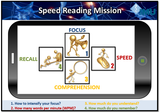
Looking forward to visiting Universiti Sains Malaysia (USM) again and unleashing a new learning adventure to unlock the real 'Da Vinci Code' for creative super learning. I got 3 Hours (seminar/workshop) to do it (30 May, 2014)! The impossible is possible, Insya-Allah!WARNING!I am still discovering creative super learning at an alarming and disruptive rate! So, my insights, knowledge, skills (especially juggling) and opinions will continue to evolve as I discover and learn. And that is great news for people who want learn from or discuss with me this topic. DESCRIPTIONImagine if you could read a 200-page book in 20 minutes? In today’s information overloaded disruptive world driven increasingly by innovation, we are required more than ever to transform the way we learn and think in terms of speed and creativity.In this 3-Hour interactive crash course, we will explore some of the things that we can do to stimulate and empower our brains and senses to be more focused, learn faster, and think more creatively. It fuses the latest in neuroscience about how the brain learns, technology, and instructional design to awaken and empower educators to design more effective and engaging learning content and environments.The most important message is that our brains can be rewired to be ‘Creative Super Learners’ at any age.LEARNING OUTCOMESAt the end of this workshop, you will be able to:Discuss how the brain learns.Use at least 2 techniques to optimize your learning mindset and senses.Use at least 3 techniques to increase your reading speed with comprehension.Use social curation tools to discover, collect, organize, and sharing learning resources. Use at least 2 techniques to improve your memory.Use at least 2 tools to empower creative and critical thinking.SLIDESHere we go (Don't tell anyone before after the seminar): Becoming Creative Super Learners at USM! from Zaid Alsagoff SPEED READING TESTDon't be scared to find out...Source: Staples eReader DepartmentCLICK HERE or the image above to do the speed reading test (Alternative test without quiz).Are you ready to unleash your amazing LEARNING POWER? :)
Zaid Ali Alsagoff
.
Blog
.
<span class='date ' tip=''><i class='icon-time'></i> Jul 14, 2015 02:20pm</span>
|
|
The Big Question this month is Workplace Learning in 10 Years: If you peer inside an organization in 10 years time and you look at how workplace learning is being supported by that organization, what will you see? What will the mix of Push vs. Pull Learning; Formal vs. Informal supported by the organization? Are there training departments? What are they doing? How big are they as compared to today? What new departments will be responsible for parts of workplace learning? What will current members of training departments be doing in 10 years? The answers to this have been very interesting. I like that the predictions are all over the place. Some people are suggesting getting rid of training departments and starting fresh. Others, including myself, don't believe training departments will go away any more than educational institutions will no longer exist. There will always be some level of training/education required. ut I think it's fair to say that most every response expects the role of training to either diminish or to change significantly in the next 10 years. But there was another significant trend in the answers… Learning and Work Converge In a world where Knowledge Work and Learning is Inseparable, finding ways to support and improve work is the same as finding ways to support and improve learning. Jay Cross in Ten Years After puts it: In a knowledge society, learning is the work. Who in an organization is responsible for supporting and improving work? Isn't that the definition of management. Well not quite, but it is pretty dang close to the definition of Management Consulting in Wikipedia: Management consulting refers to both the industry of, and the practice of, helping organizations improve their performance, primarily through the analysis of existing business problems and development of plans for improvement. In this world, you can't really distinguish the mandate of Management Consulting from the mandate of: Enterprise 2.0 Knowledge Management Learning & Development I do think there's a slightly different historical mind set and skill set, but Training Departments are going to need to think and act quite different or they will be marginal. Take a look at some of the responses with this context in mind. Supporting Concept Workers In The Future of the Training Department by Harold Jarche and Jay Cross, they discuss how work models are changing. This is very similar to what I discuss around Concept Workers and Work Literacy but they attack the change based on complexity - which is truly why concept workers are so important. The main objective of the new training department is to enable knowledge to flow in the organization. The primary function of learning professionals within this new work model is connecting and communicating, based on three core processes: * Facilitating collaborative work and learning amongst workers, especially as peers. * Sensing patterns and helping to develop emergent work and learning practices. * Working with management to fund and develop appropriate tools and processes for workers. …redeploying training staff as mentors, coaches, and facilitators who work on improving core business processes, strengthening relationships with customers, and cutting costs. In 2019: A workplace learning odyssey Performance support will be built into the workflow and take the form of online tools, networks and coaching. In Minute Bio's Post - We will see much more informal learning and knowledge management. There will be a need for trainers and/or knowledge managers who will guide, coach, be a catalyst for, and monitor social media and informal learning. In The Big Question the folks from Bottom Line Performance say: The challenge for instructional designers is no longer finding some relevant information on an obscure topic. Wikipedia does that for us. The challenge becomes identifying the most important content, the facts and information that will best support the performance the organization needs to drive business results. Ruth Clark tells us that people learn more from a short description of how something works than from a longer description of how something works. Learning professionals can weed through the nice to haves and create a program that best meets the needs of the business and the learner. Matt Moore in an article Learning & Knowledge = ? (PDF) and his associated blog post Learning + Knowledge = ? L&D and KM share something simple: an interest in improving the performance of an organisation through increased capability. Jacob McNulty responds in a comment - The KM + L&D merger is bound to happen - they’re both fundamentally about ensuring people have the information they need to perform…whether that’s obtained through a knowledge network or rapid elearning shouldn’t matter. In my post Corporate Training I do think that each and everyone one of us should be out understanding the ways in which you can support concept workers to be better at their work and learning. We should be looking to shift some resources within our corporate training department in that direction. Changing our Understanding of Management After thinking through what I expect to see inside organizations in 10 years, I think there's a very interesting change that's going to occur. Drucker told us that productivity of the knowledge worker would be the primary challenge of the 21st century. I'm not quite sold on the term productivity, but if you put in performance and change it to the concept worker then it sounds right: Performance of the concept work is the primary challenge of the 21st century. But if learning and work are inseparable for a concept worker, then Effective learning is part of the definition of performance. This is central to the very definition of how to make organizations more effective. Individual work and learning will be the focus of all levels of management. When I look at the definition of management, I don't really see this called out. In Wikipedia, it's defined Management comprises planning, organizing, staffing, leading or directing, and controlling an organization or effort for the purpose of accomplishing a goal. In 10 years, this definition is either going to change or it will include support for concept work and learning. Workplace Learning in 10 Years If you peer inside an organization in 10 years time and you look at how workplace learning is being supported by that organization, what will you see? The idea that work and learning are inseparable will be mainstream and CEOs will have spread responsibility for workplace learning far and wide. It will be part of management. What will the mix of Push vs. Pull Learning; Formal vs. Informal supported by the organization? There will still be Push/Formal, but most of the real learning will be Pull and Informal. Heck it's what everyone is doing every day. Are there training departments? What are they doing? How big are they as compared to today? Training Departments will still exist. They are responsible for delivering content that is for large audiences at a novice level. They are smaller and marginal players. What new departments will be responsible for parts of workplace learning? This is going to start with interesting new departments that focus on things like community management or enterprise 2.0. But since this becomes central to management, there will be other kinds of services within the organization that focus on particular needs. Management will be the primary owner. What will current members of training departments be doing in 10 years? Half of the current members of training departments will still be there. The others will have first jumped into these new departments. These will be the individuals who focus on performance, who get informal/pull learning, and who take the lead on understanding the role of technology. I would predict that this half becomes some kind of management consultant within the next 10 years. Hence my overall prediction - 50% of Workplace Learning Professionals will call themselves Management Consultants in 10 Years eLearning Technology
Browse eLearning Content
Tony Karrer
.
Blog
.
<span class='date ' tip=''><i class='icon-time'></i> Jul 14, 2015 02:20pm</span>
|
|
Overview of the ADA The Americans with Disabilities Act (ADA) bars discrimination against the disabled. The term disability means having a physical or mental impairment that substantially limits one or more major life activities of such individual, having a record of such an impairment, or being regarded as having such an impairment. Managers are allowed to tell a job applicant that the job he/she is pursuing has certain physical or mental requirements and they must do so for all applicants for the same position. Managers can then ask the applicant if he/she is willing and able to perform those duties. Most companies today make every effort to accommodate the needs of the disabled, considering it a vital part of their role as responsible members of the community. Why Managers Need To Be Careful The ADA contains many traps for managers, it’s virtually impossible to list them all here. It’s also tempting to make a common training and education mistake in training your managers about the ADA - try and teach them the law. Don’t do that. The best way to ensure your managers keep your organization in compliance with the ADA is to do the following: Teach sound management and supervisory fundamental skills Establish AND follow clear and easy to understand procedures for reporting employee absences and requests for time off. Part of such a process MUST include recording the reasons provided by the employee for asking for time off, AND for reporting these requests to HR. Train and educate HR on the intricacies of the ADA Set and follow clear procedures for effective follow-up when employee absences or requests for time off MIGHT involve a request in which the ADA might come into play. Recommended Resources eBOOK: 7 HR Law Training Topics for New Managers This eBook discusses the main legal pitfalls that new managers need to avoid and what their legal responsibilities are as a manager, the challenges faced by new managers, the risk and costs associated with not training managers on employment law, and legal responsibilities of managers. VIDEO: HR Law for Managers Series This video is part of The HR Law for Managers Series. This series provides a comprehensive resource that will orient managers to components of key employment laws; provide details, relevant to managers, for each of these laws; and explain in practical terms, how to apply the laws in context with specific situations as relate to a manager’s duties.
Chris Osborn
.
Blog
.
<span class='date ' tip=''><i class='icon-time'></i> Jul 14, 2015 02:20pm</span>
|
|
by Kevin Siegel
Last week I told you about the great enhancements you'll see in Adobe Captivate 8 when it comes to image buttons. This week, I'm going to show you a few more improvements that I think you'll love.
Sample Projects/Tutorials
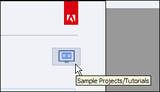
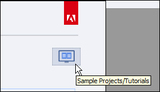
The first thing you'll see when you start Captivate is the Welcome screen. From this position, you can create a new project, record a software simulation/demonstration, or access recent projects. But take a look in the upper right of the Welcome screen and you'll see an awesome addition: Sample Projects/Tutorials (shown below, it's located in the upper right of the Welcome screen).
Granted, the icon to access the projects and tutorials is easy to miss; but once clicked, a dialog box opens and you'll have access to some really nice sample projects. The sample projects are shown first, followed by several tutorials.
If you have already opened or created a project, you will find a Sample Projects/Tutorials icon via the top of the Captivate window (to the right of the Help menu).
However, clicking the icon from here is different than clicking it on the Welcome screen. If you click the icon while in a project, you'll be taken online to Adobe KnowHow, where you'll find some free and pay-for-access training videos.
Characters and Agents
I love the Characters feature added to Captivate a few years ago, which allows you to insert images/guides within a project. And I was delighted to see that not only did Adobe keep Characters in Captivate 8, they've added quite a few. To add a Character, choose Media > Characters. Select a Category, select a character, and then double-click a pose to insert the character onto a slide.
Lastly, check out the Speech Agents (via Audio > Speech Management). Previous versions of Captivate included five Text to Speech Agents. You'll be happy to see that Captivate 8 bumps that number up to seven. New to the team are James and Yumi. I was particularly impressed with how good James sounded... a nice upgrade from Paul (sorry Paul). And Yumi covers you if you need audio for Korean eLearners.
***
Looking for instructor-led training on the top eLearning tools? We offer live, online training on Adobe Captivate, Articulate Storyline, Adobe Presenter, and TechSmith Camtasia Studio. We can also bring the same great training onsite to your facility. Interested? Contact us for details.
Icon Logic Blogs
.
Blog
.
<span class='date ' tip=''><i class='icon-time'></i> Jul 14, 2015 02:20pm</span>
|
|
Can't wait to facilitate my first workshop that is dedicated to Speed Reading at the International Medical University (IMU) on June 25, 2014.If you need someone to buzz your staff and students to speed up their reading habits, so that they can focus more on being creative and innovative....Please buzz me, if you like what you see below! WORKSHOPImagine if you could read a 200-page book in 20 minutes? Did you know that there are people in this world that can do just that? How about you? In today’s fast-paced knowledge and innovation driven economy, speed-reading is increasingly becoming an essential to master. In this half-day interactive crash course on speed reading, we will explore several techniques we can apply to read faster and smarter with comprehension.Once completed, you should be able to increase your reading speed by 200 - 300 percent. As you practice, your comprehension rate will improve with your newly acquired speed reading pace. As you increase your reading speed, you will have more time to focus on people engagement, quality, creativity and innovation, which are key essentials to succeed with education, work and life for the 21st century.OUTCOMESAt the end of this workshop, you will be able to:Use at least 3 techniques to increase your reading speed;Apply the SQ3R method for better comprehension; Use at least 2 memory techniques to remember more of what you have read;Increase your reading speed by 200 - 300 percent; andUse various digital tools to measure and improve your speed reading skills. SLIDESHere we go: Speed Reading at the International Medical University (IMU)! from Zaid Alsagoff SPEED READING TESTDon't be scared to find out...Source: Staples eReader DepartmentCLICK HERE or on the image above to do the speed reading test (Alternative test without quiz).Speed reading test, which you can print out to assess your reading speed on a hardcopy:Speed Reading Test by Zaid Ali Alsagoff Speed reading is not enough! Strive to BECOME CREATIVE SUPER LEARNERS! I am still rewiring my brain, too...A lifetime process :)
Zaid Ali Alsagoff
.
Blog
.
<span class='date ' tip=''><i class='icon-time'></i> Jul 14, 2015 02:19pm</span>
|
|
Written by Jessica Batz View and download the webinar slides. View the webinar recording. 5 Keys to Social Leadership Development - Webinar 04.23.14 from BizLibrary
Chris Osborn
.
Blog
.
<span class='date ' tip=''><i class='icon-time'></i> Jul 14, 2015 02:19pm</span>
|