Blogs
|
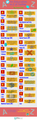
10 Awesome Totara LMS Features Infographic
Totara LMS is an open source distribution of Moodle developed for the corporate and government market. Putting emphasis on the person not the course, Totara LMS allows you to better manage performance right across your organisation. This is a solution for aligning talent development with organisational strategies to meet the challenge of moving towards a performance management culture. The 10 Awesome Totara LMS Features Infographic showcases the top 10 features of Totara Learning Management System.
1. Learning and Performance Management
Give your learners constructive feedback so that they can improve the quality of their work. Company goals and/or individual goals are defined and may be assigned to learners based on the position they hold, the organisation they work in or other factors.
Personal and organisational goals feed into the learners development plan where both can be reviewed via the online appraisal or 360 tools.
2. Competency Management
Assign courses to competencies, and competencies to a particular job role or part of the organisation. A user’s learning plan can then automatically pull in all competencies and courses assigned to their organisation and job role. The Competency hierarchy allows you to set up one or multiple frameworks within Competency structures. These then define the skills, knowledge and behaviour used to assess staff performance.
3. Audiences
Totara LMS gives you more than just position and organisational hierarchies. With the Audiences features, you can create and target custom groups via dynamic rules and events.
Define, edit, and manage user groups using rules defined in other organisational data sources. Define audiences based on key events e.g. logins or completions. You can even define audiences based on other audiences!
4. Program Management
The Totara Program Management feature allows you to create learning paths by defining sets of courses and their dependences. These act as stepping stones for your learners and give order and flow of the course completion. Program Management also includes the ability to set up recurring courses, ensuring compliance and removing manual admin tasks. This feature also links with certification.
5. Certification
Site administrators create a new certificate with two paths: the original certification path and a recurring recertification path. The original path can be automatically reused as the recertification path or a separate path can be defined. To ensure compliance, automatic alerts and mails can also be configured to inform learners about refresher training.
6. Reporting and Dashboards
Totara LMS allows you to manage your reporting requirements, with the inbuilt Report Builder, a powerful and flexible tool that allows you to build custom reports on users, course progress and competency achievement across your business.
Graphical reports can be built by the system administrator with access controlled by system role and where in the organisation the user is.
7. Visibility Manager
Visibility Manager allows you to limit the catalogue so only specific learners can see courses, programs and certifications applicable to them based upon the audiences they are enrolled in.
8. Integration with HR and other business systems
To better manage and develop your talent, it’s essential your LMS connects with key business information systems. Maximize your return on investment and minimize your data entry tasks with HR Sync.
Totara LMS also integrates with every enterprise Single Sign On (880) and Shibboleth.
9. Highly customizable
Customising the look and feel of your Totara LMS is easy, and can be branded exactly the way you need it to look. Improve learner engagement by having your LMS look like an extension of your website, other internal systems or intranet sites. Learning Pool also offers a fully responsive theme, meaning learners can access the system on any device, any time, any place.
10. Growing roadmap of enhancements
Totara LMS released version 2.7 in March 2015. With a growing roadmap, Totara LMS typically release once a year adding more great features each time with heavy focus on usability and accessibility. As a Platinum Partner, Learning Pool offers free upgrades to our Totara LMS customers. We also work in partnership with Totara LMS to develop further enhancements and features.
That’s not all…
Learning Pool offers Totara LMS as a complete solution with total support for admins and end users throughout the length of your subscription. There are also four innovative add-ons exclusively available for Learning Pool customers:
Classroom Connect: Synchronise classroom training with online training and give your users full control of their face-to-face training as well as reducing the administration around organising classroom events.
Encore: Encore is our mobile learning app that provides learners with content that is time delayed from the moment they take the initial learning. Based on the concept of Spaced Practice, Encore significantly improves learner retention.
Shopping Basket: Shopping Basket seamlessly integrates with Totara LMS giving learners a self-contained experience using valid payment gateways like PayPal or Sage Pay.
Knowledge Bank: Deliver policies, best practice and frequently asked questions to thousands of users, reducing the demand on HR teams.
Via: www.learningpool.comThe post 10 Awesome Totara LMS Features Infographic appeared first on e-Learning Infographics.
eLearning Infographics
.
Blog
.
<span class='date ' tip=''><i class='icon-time'></i> Jul 15, 2015 01:54pm</span>
|
|
As Quincy Jones once remarked, "I’ve always thought that a big laugh is a really loud noise from the soul saying, "Ain’t that the truth."
That said, Edu-fun Friday is a series devoted to adding some humor to the lives of teachers who visit this blog. Even though it’s summer, there’s still nothing better than ending the week on a positive note! Plus, do we have some of the best topics to provide us with some comic relief or what?
I don’t know about you, but I love summer. And not having to write lesson plans is very liberating!
Thanks to the UClass blog for sharing this meme! BTW—UClass is a a really useful lesson plan exchange and resource center for educators. Check it out here!
Edutech for Teachers team
.
Blog
.
<span class='date ' tip=''><i class='icon-time'></i> Jul 15, 2015 01:54pm</span>
|
|
The Edgar Dale Myth recently resurfaced in a TED Talk, indicating that TED talks--though doing a great job preparing the speaker to be engaging--don't fact check.
Here is the offending TED Talk, with the erroneous information starting at 5:48.
http://www.youtube.com/watch?v=u8ecQDX1XOw
As chronicled on this blog since 2006, and on a precursor website since 2002 (12 years ago), the Edgar Dale Myth is pernicious, dangerous, and seemingly immortal. See the following link for the original post:
http://is.gd/EdgarDaleMyth
Special thanks to JC Kinnamon, PhD for pointing out the offending video to me. JC has been a long-time compiler of the Edgar Dale Myth, and I thank him for his continued efforts!
Crazy Thought
Perhaps there is a silver lining in the continued resurfacing of these myths. For years, I've seen these myths as completely detrimental to our field--something to squash with crusader-like zealotry.
But the speaker in the TED video got me thinking. Perhaps these myths have social value. Perhaps when a myth surfaces, we are receiving an important signal that the conveyor of the myth is a lightweight--that it is very likely that he or she (or they) really don't understand learning at a deep level.
One of the things I hope everybody in the learning field understands is that, first, there is good research and there is bad research; and second, that people who cite research fall into two categories. Some people seek the truth in the research and report what they find. Other people seek research to prop up their previously-held beliefs, to "demonstrate" the benefits of their products or services, or to cast themselves in an aura of credibility.
Yes, it's complicated! And everybody suffers somewhat from unintentional confirmatory bias, but caveat emptor, we as professionals have to be careful in assessing research claims. Science is built on skepticism. Professional practice should utilize a healthy dose of skepticism as well.
The speaker at the TED talk showed that he couldn't be trusted to know learning at a deep level by his use of this phony Edgar Dale "research." And then he double-confirmed it by asking his audience to play word bingo. He gave everybody a bingo card with words on it. Then he had people keep track of the words he was saying. When someone got all the words in a row, column, or diagonal he had them stand up and say BINGO, with applause from the audience. Anybody who knows learning knows that his word-bingo game distracted the audience from the main points of his message, hurting learning.
The use of the Edgar Dale myth by the speaker was an accurate portrayal of his lack of deep knowledge. He may have had some valuable things to say otherwise, but how could we be sure--indications were not good.
Is there a silver lining in the re-occurance of these myths? I've tried to convince myself in writing this that there might be some benefit, but the benefit comes only to those who know that the myths are myths!!! And, for the benifits to accrue, those of us who are out there trying to squash the myths must continue to proselytize and educate. Indeed, for our field to maximize its positive influence, each and every one of us must be hungry hunters of good research, skeptical assessors, and eager communicators.
So, send this blog post to those who are open to continuous improvement. SMILE
Will Thalheimer
.
Blog
.
<span class='date ' tip=''><i class='icon-time'></i> Jul 15, 2015 01:54pm</span>
|
|
I've been an observer of elearning for almost 30 years. I've seen brilliant, compelling, effective elearning. I've built some pretty damn good elearning too. And yet, after four decades of human effort to improve elearning, there's still way, way, way too much mediocre elearning created each year.
A lot of us have been grumbling about the sorry state of elearning for a long time. Michael Allen, Clark Quinn, and Julie Dirksen and I have had numerous discussions through the years. Finally, having become so uncomfortable with the unmovable status quo of elearning--and feeling a responsibility to do something, anything--we got together last year to strategize on how we could bend the curve of elearning, to help elearning fulfill its promise.
Next Wednesday, we will reveal the result of our efforts.
You can get a little hint of what we've come up with by the name of the effort's website.
eLearningManifesto.org
In a very real sense, Michael, Julie, Clark, and I are mere compilers of the research and work of many. What we've done is to channel the wisdom of scientific researchers, world-class elearning designers, and elearning thought leaders. We have developed a set of values and principles that great elearning--what we're calling Serious eLearning--should possess. We've reality-checked these principles through the feedback of a representative sampling of the world's best elearning--and learning-and-performance--advocates.
Below, I will share our list of Trustees, but let me conclude by sharing my hopes for this effort:
That a serious, persistent, and meaningful conversation begins.
That more-and-more of us take responsibility to improve elearning.
That elearning developers have a guide for elearning design and deployment.
That elearning buyers have a set of guidelines to help them procure effective elearning.
That graduate schools emphasize the highest levels of elearning design principles.
That trade organizations certify at the highest levels of elearning competency.
That elearning lives up to its incredible promise for transforming the lives of students, employees, and citizens of the world.
Trustees: (listed in alphabetic order)
Clark AldrichManaging DirectorClark Aldrich Designs, LLCCammy BeanVP of Learning DesignKineoMohit BhargavaPresidentLearningMate Solutions (Canada) Ltd.Tony BinghamPresident and CEOASTDJane Bozarth, PhDELearning CoordinatorState of North Carolina, USABryan ChapmanChief Learning StrategistChapman AllianceTamar Elkeles, PhDChief Learning OfficerQualcommJoe GanciCEOeLearning JoeJudith A. Hale, PhD, CPTCEOThe Institute for Performance Improvement, L3CJane HartFounderCentre for Learning & Performance TechnologiesDavid S. HolcombePresident & CEOThe eLearning GuildLarry Israelite, PhDVice President & ManagerCorporate Learning and DevelopmentJohn C. Ittelson PhDProfessor EmeritusCSU Monterey BayPhilip G. JonesVP, Managing PartnerTraining MagazineKarl M. Kapp, EdDProfessor of Instructional TechnologyBloomsburg University, Bloomsburg, PATony Karrer, PhDCEO/CTOTechEmpowerConnie MalamedLearning Strategy ConsultantThe eLearning CoachM. David MerrillEmeritus ProfessorUtah State UniversityCathy MooreTraining Design ConsultantBob MosherChief Learning EvangelistAPPLY SynergiesKoreen PaganoLearning ConsultantMarc J. Rosenberg, PhDMarc Rosenberg and AssociatesDr. Allison RossettProfessor Emerita, Educational TechnologySan Diego State UniversityRoger SchankJohn Evans Professor Emeritus, Northwestern UniversityCEO, Socratic ArtsPatti Shank, PhD, CPTAuthor, President, Learning Peaks LLCDirector of Research The eLearning GuildEric ShepherdCEOQuestionmarkClive ShepherdLearning TechnologistOnlignment LtdRoderick Sims, PhDDesign AlchemistKnowledgecraft, AustraliaBrenda Sugrue, PhDChief Learning OfficerKaplan Performance SolutionsDonald H. TaylorChairmanLearning and Performance InstituteSivasailam Thiagi ThiagarajanResident Mad ScientistThe Thiagi GroupReuben TozmanCEOSlideJar Inc.Ellen WagnerPartner and Senior AnalystSage Road Solutions LLC
Will Thalheimer
.
Blog
.
<span class='date ' tip=''><i class='icon-time'></i> Jul 15, 2015 01:53pm</span>
|
|
Andy Jefferson, Roy Pollock, and Cal Wick have done it again--written a book on how to ensure training transfer and business results--and they're going to preview their book (AND OFFER A 20% DISCOUNT) in two webinar's next week.
Book details:
This all-new book was developed in response to readers' and participants' requests for additional cases, tools, and "how-to" guides for maximizing the value of training and development. It contains 43 cases from a wide range of industries and training types from five continents.
More information and the table of contents are available on Amazon.
No-cost webinars:
March 17th at noon EST and March 18th at 9:00 pm EST.
Register here --> https://the6ds.webex.com
Attendees will receive a 20% discount code on the book from Wiley.
Will Thalheimer
.
Blog
.
<span class='date ' tip=''><i class='icon-time'></i> Jul 15, 2015 01:52pm</span>
|
|
So, it’s that coveted time of year again in the life of a teacher—summer vacation! Time to chill and participate in some much needed and well-deserved recreational activities to recharge those batteries. In addition to sinking those feet into the sand while sipping on fruity umbrella beverages, hanging out at a campfire with friends or doing whatever it is that you do to unwind, the next few months can also be used to acquire and/or hone digital skills necessary to transform teaching and learning in your classroom.
Hopefully, you have set a few goals of your own for the upcoming year focusing on technology integration. If not, here are a few suggestions that can surely help to power up your knowledge:
» Attend an edtech event and/or follow one from afar via Twitter. For example, the ISTE Conference is being held in Atlanta on June 28-July 2. Can’t make it? Participate virtually with ISTE Live or follow the official hashtag: #ISTE2014.
» Register for a face-to-face course or workshop. If you live in the Pittsburgh, PA area, consider participating in the Alice Institute being held at the Carnegie Mellon University School of Computer Science at the end of June. It should be a great learning experience for those interested in teaching programming/coding skills to students. I know I’m super excited to participate!
» Can’t attend the Alice Institute? No problem. You can still teach yourself to utilize a coding tool or app so you can share this knowledge with your students. In the process of learning programming languages, students acquire many other important skills—mathematical and computational concepts, problem solving strategies, and new ways to write "stuff" such as interactive games, animations and simulations. In other words, Computer Science isn’t just about jobs at tech companies, it provides foundational learning for a wide variety of careers. Plus, it’s the new literacy for the 21st Century. Just think— you could be responsible for shaping the next Mark Zuckerberg!
OK, take a deep breath. It’s really not as scary as it sounds, especially if you experiment with one or more of the endless programming tools available online. A few of my favorites include Codecademy and Code.org but if you’re interested in becoming a hacker, check out 40+ tools compiled by EdSurge here . Another great resource for locating resources to teach students coding can be found on the Educational Technology and Mobile Learning blog.
There are also several popular apps that can teach kids to code—Hopscotch, Daisy the Dinosaur and Cargo-Bot are a few fan favorites. Check ‘em out using the links provided.
And one more thing: Some of the latest studies indicate that the number of jobs for programmers and computer scientists in our society is growing rapidly, with demand far outpacing supply. Just sayin’!
» Join the latest edtech movement by enrolling in a MOOC (Massive Open Online Course). This relatively new phenomenon is becoming increasing popular among both adult learners and high school students. Check out Coursera, a platform that offers 400+ courses created by the world’s top educational institutions such as Stanford, Yale and the University of Michigan to name a few. Want to get really adventurous? Build your very own MOOC using iTunes U. Not only can you share this course with your students, but it can be made available for anyone who lives on the planet. Wouldn’t that be cool?
» Take the Thinglink Challenge, a free, self-paced, online summer professional development opportunity designed to help teachers transform classroom learning and e-learning with interactive images created via the Thinglink web tool. Don’t miss your chance to experience a digital makeover using media-rich instructional resources while interacting with a super awesome facilitator and edtech guru, Susan Oxnevad.
» Become more savvy with a mobile device such as a phone or tablet and then…
Select an app to highlight cool summer events—vacations, picnics, activities, etc.—then use this same app for a classroom integration activity. For instance, create a pretty nifty medley of trip pics utilizing the PicCollage app (one of my faves). Use this same tool to design a collection of images and text to demonstrate knowledge of a historical place or figure. Check out the 9 Powerful (and FREE) Tools to Boost Summer Learning article by Lisa Johnson (TechChef4u) for additional extracurricular and instructional examples that will surely prove to become digital treasures for the upcoming school year. Great minds think alike!
» Speaking of apps—If you live in PA, consider registering for an iPads in Education course offered by Eduspire. I’ll be co-facilitating one of these awesome PD sessions at IU16 on July 8 with Jim Gates, one really happening edtech guy I’ve admired since becoming involved in the Classrooms for the Future initiative several years ago. Yeah, so I’ll be living the dream for at least four days this summer! You should consider joining us. If these days don’t work, check out other options—as well as additional course offerings—here.
» Collect information and resources to plan a "flipped" lesson—one in which students first study a topic themselves via video lessons and then apply the knowledge in class by solving problems and completing practical work. Need more info about flipped learning? Google it! Seriously, you will find anything you could ever imagine in order to make it happen—explanations, examples, rationale and much more!
» Become a digital hoarder. OK, just kidding! But you really should consider becoming a curator of digital content found on the web using a tool such as Scoop.it. It’s an excellent way to visually collect and share a variety of useful resources. Check out my 21st Technology Integration collection here.
» Build a PLN on various social media sites—Twitter, Facebook, Google+, LinkedIn—in order to stay in tune with the latest tech trends. In addition to some of the individuals I’ve already mentioned, your edtech starter kit should definitely include Richard Byrne, Aunty Tech, Med Kharbach, Gwyneth Jones and Martin Burrett to name a few. The info that can be gleaned from following and/or interacting with these superstars and their respective blogs and sites is invaluable.
» Read a tech integration book. I highly recommend checking out Untangling the Web by Steve Dembo and Adam Bellow.
» Subscribe to the Edutech for Teachers blog by clicking the "Follow" button located to the right!
» Follow Edutech for Teachers on Twitter and Facebook!
So, there you have it—some recommendations for transforming yourself into an edtech rock star for the upcoming school year! No excuses—just tech the plunge! Trust me, you’ll be glad you did—and so will your students!
Edutech for Teachers team
.
Blog
.
<span class='date ' tip=''><i class='icon-time'></i> Jul 15, 2015 01:51pm</span>
|
|
Yesterday March 13, 2014 (25 years and 1 day after the internet was born) the Serious eLearning Manifesto was released. As one of the "authors" of the Manifesto, I am overwhelmed by the outpouring of passion around the issue of elearning's unrequited promise. Below I will share some of the endorsement statements so that you can see first-hand the dedication of folks in the elearning field.
The Manifesto
The Manifesto is an attempt to provide people and organizations in the elearning industry a lever to radically raise the effectiveness of elearning.
Helping elearning buyers (CLO's, training managers, CEO's, Deans, School Superintendents) demand better elearning, by pointing to the Manifesto's 22 principles as ideals to be achieved or worked towards.
Helping elearning designers and developers by providing design and deployment guidance.
Helping elearning vendors guide clients to better elearning designs.
Helping elearning shops find the leverage to get resourcing and support for truly effective elearning.
Helping graduate schools provide guidance on curriculum decisions.
Helping trade organizations develop credentials, provide workshops, and make programming decisions.
To read the manifesto or to become a signatory and endorse it:
eLearningManifesto.org
To see the Manifesto release video:
Manifesto Release Video
First-Day Endorsements by Signatories
You can read these and more--and see who wrote them--by clicking here.
"I wholeheartedly agree with, and endorse this manifesto. This is what is needed to turn the eLearning industry around and on it’s head, so that eLearning can be meaningful and appropriate to meet the needs of users and their educational requirements."
"This Manifesto finally puts what the eLearning professional strives for into a concise format that can be used as a daily commitment to quality."
"It is important that each of us, in our own organizations as well as our own personal commitment, strive to improve our industry and set higher standards. The Manifesto is a step towards this goal."
"What really speaks to me are the principles that have been outlined. There are many ideals here that I have tried to live up to, then there are those I want to live up to, and a few that I haven’t yet thought of to explore. In a time when budgets often are the first thing that matter in organizations, it’s more and more important to prove and show your worth and value to an organization. Implementing these principles into each of the solutions that we create for our organizations will and can only solidify our true value."
"The work we do in helping people learn is ‘sacred’ work. If we just create content heavy, learning poor courses we fail in our responsibility."
"The manifesto is based on solid, empirical evidence that supports what we should be doing when we build our e-learning."
"It’s not about training - it’s about performance. I agree with the manifesto."
"People know what lawyers and accountants do and how to buy from them as providers of professional services. e-learning is a younger and far more misunderstood industry. The manifesto codifies what good practice looks like and I hope that we can build from this to giving learners great experiences that shift organisational performance."
"I commit to developing eLearning that falls in line with the Serious eLearning Manifesto. I also commit to encouraging others on my immediate team and in my organization to commit to these principles."
"I endorse the principles of the eLearning Manifesto and believe the importance of using these principles to ensure eLearning meets the amazing potential available for real learning to solve real problems."
"Bravo! Finally an ‘agile manifesto’ for the eLearning community. These principles will help all of us focus on performance rather than design ephemera…and stay relevant."
"These principles and guidelines are helpful to not only remind eLearning designers and developers of the important aspects of creating effective eLearning. It also helps us by providing support when we need to explain our new designs to clients."
"The eLearning Manifesto represents a step forward for the field of eLearning. It accurately reflects the vision we, as eLearning developers, need to adopt in order to move away from ineffective practice and towards the realization of eLearning’s full potential."
"Exquisitely concise and pragmatic! Implementing even a fraction of the ideas in the Manifesto will make a dramatic difference in the kind of eLearning coming into the world."
"I heartily endorse this manifesto. It supports the research that is available and the 22 guiding principles will definitely lead us as practitioners to develop higher quality learning events."
"I’ve been frustrated with bad eLearning for years. If clients, stakeholders and subject matter experts agree to follow our lead and accept these principles we can finally improve performance. Furthermore, my hope is that the authoring tools we use adopt these principles in the development of their software."
"I’m a TV producer new to the eLearning industry and every single point you’ve made is exactly what we’ve been saying to our clients. It’s fantastic to see these values backed up by industry heavyweights who have done the background research to prove their points. The eLearning industry SO needs to be disrupted because so many content suppliers seem to have an attitude that says, "Hey, I know the courses we’re building are based on tech levels from the 70s but that’s what the buyers want. And we’re making pretty good dough, so ix-nay." Really? Thank you so much for calling out the complacency in the eLearning industry. Long live the Manifesto."
"The eLearning Manifesto provides a solid foundation on which all eLearning content should be created. If you’re wondering why your eLearning is not producing positive results - odds are you are not following the guiding principles in the Manifesto."
"I am a television and online video producer and new to the elearning world. My first task was to investigate current standards and what I found transported me twenty years into the past to the dawn of Power Point. The manifesto is clearly needed for learners, the end users, the audience, those that are here to be engaged by the content we design and create for them to improve their lives. Thank you for your dedication to a positive elearning experience and creating a manifesto that puts elearning on a new path to a bright and exciting future."
"I vow to hold the Serious eLearning Manifesto as the new standard for all eLearning modules produced by our eLearning team. We are committed to interactive, real life scenarios and simulations for improved performance on the job. Now, the Manifesto will help us make our design and development more powerful in our workplace!"
"It is tremendous that four great practitioners took time to formulate these principles and best practices! In addition, the list of Trustees is a "Who’s Who" of eLearning. This initiative will be a great boon to set standards of quality in our field!"
"The Serious eLearning Manifesto says in writing what we’ve all been whispering to our industry peers for years: eLearning is broken! We’ve had the awareness, knowledge, and skills to fix it for some time, but this coordinated effort and the Manifesto’s principles will boost our desire to act through shared accountability and best practice."
"I have longed to see some recognition of the sorry state of current eLearning. Certainly there are shining examples of what it can be, but so many examples exist that illustrate how utterly woeful the norm has become. We can do better in meeting the promise that online technology presents us with. The Principles associated with the eLearning Manifesto reflect what we need to start implementing if eLearning is to reach it’s potential. Performance, not content; context, not generic; and consequences, not canned feedback are some of the principles we need to start incorporating as best we can within the constraints imposed in work and education. I wholeheartedly endorse this effort for the sake of this profession."
Will Thalheimer
.
Blog
.
<span class='date ' tip=''><i class='icon-time'></i> Jul 15, 2015 01:51pm</span>
|
|
Have you ever said something out loud that results in that "Have you seriously lost your mind?" look? If not, then you’ve probably never told a group of colleagues that one of the best forms of professional development is—drum roll, please—Twitter. And yes, I’m so totally serious!
I’ve been fortunate to have had the opportunity to attend some of the best edtech conferences, workshops and trainings on the planet with some of the biggest names in the edtech world—all of which have been very beneficial. Yet, my go-to place for continual learning of invaluable information highlighting best practices, innovative thinking, instructional strategies and the integration of technology is this uber popular social media platform.
Call me crazy, but I honestly learn more and more every day about how to improve my craft by reading the tweets the members of my PLN (the professional learning network which consists of individuals I follow) share across this network—articles, thoughts, opinions, inspiration, quotes, images, and more!
And the best part? It’s quick (with a 140 character max per tweet), free, available 24/7 and you can connect, collaborate, discuss, exchange and even debate all sorts of ideas with your virtual colleagues—all in your PJs (or bikini) if you want!
Chances are that if you’re reading this blog, you’re probably already aware of the value of Twitter. And that means you’re either most likely an addict like me (Hey, it could be worse, right?) or a wannabe tweeter who’s not quite sure how to enter the dark side. Either way, these super cool resources—The A-Z of Twitter for Educators Infographic by UKEdChat and the The Educators’ Ultimate Twitter Guide - 2014 compliments of Sue Waters and The Edublogger—will certainly either reinforce what you already know to be true, teach you a new trick, or kickstart that urge to become a hashtag fanatic!
Classroom Connection:
Educators need to be consumers of information—constant seekers of current and relevant content in order to avoid becoming stagnant or complacent in our profession, but most importantly, to become the best we can be for our students. That said, use this post and the resources provided to build a PLN using Twitter—one that will most definitely deliver a plethora of links and recommendations for teaching and learning.
Twitter Image Attribution: Twitter for Education wikispace. Check out this resource for additional materials and info!
Edutech for Teachers team
.
Blog
.
<span class='date ' tip=''><i class='icon-time'></i> Jul 15, 2015 01:50pm</span>
|
|
My friend, Jonathan Kaye, elearning-guy-extraordinaire, has posted the first parody of the Serious eLearning Manifesto--and I am proud to share it with you. Read his dLearning Manifesto principles (in this blog post) to get a LOL experience.
Will Thalheimer
.
Blog
.
<span class='date ' tip=''><i class='icon-time'></i> Jul 15, 2015 01:49pm</span>
|
|
As Quincy Jones once remarked, "I’ve always thought that a big laugh is a really loud noise from the soul saying, "Ain’t that the truth."
That said, Edu-fun Friday is a series devoted to adding some humor to the lives of teachers who visit this blog. Even though it’s summer, there’s still nothing better than ending the week on a positive note! Plus, do we have some of the best topics to provide us with some comic relief or what?
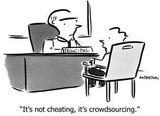
They think of every angle, don’t they!
A shout out to cartoonist Mark Anderson for sharing this edutech humor!
Edutech for Teachers team
.
Blog
.
<span class='date ' tip=''><i class='icon-time'></i> Jul 15, 2015 01:49pm</span>
|