Blogs
|
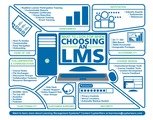
What To Look For When Choosing an LMS Infographic
Choosing a Learning Management System is a complicated process and can be very time consuming and overwhelming for organizations since there are many different aspects to consider, not to mention that the LMS is usually the most expensive component of the online learning ecosystem. The What To Look For When Choosing an LMS Infographic has been developed to show organizations the main features and most important functionalities that they should look for during their search for the perfect LMS.
Functionality
SCORM / AICC
Tin Can API
Analytics
Scalable
Features
Course Design
Instructional Design Tools
Course Creation Tools
Content Development
Course Feedback
Assessment
Realtime Learner Participation Tracking
Customizable Reports
Printable Cerificates
Group Reporting
External Training
Event Tracking
Collaboration & Communication
Course Notes
File Exchanges
Discussion Groups
Collaboration Features
Resource Management
Accessibility
24/7/365
Web-Based
Tablet Accessible
Assignable Privileges
Easy to Use
How-to-Guides
Customizable
Easy Navigation
Onboarding
Customer Support
Help Desk
Vendor Support
Online Support Hub
User Groups
Security
Privacy Controls
Server Locations
Automatic Backup System
Read also:
Checking Under the Hood: Choosing a Learning Management System
How To Choose The Best Learning Management System
Can Your LMS Do This? 8 Questions You Need To Answer
11 Tips for Choosing The Best Learning Management System
Via: cypherworx.comThe post What To Look For When Choosing an LMS Infographic appeared first on e-Learning Infographics.
eLearning Infographics
.
Blog
.
<span class='date ' tip=''><i class='icon-time'></i> Jul 15, 2015 01:57pm</span>
|
|
This article first appeared in my Newsletter in the October 2013 issue. You can sign up for my newsletter by clicking here.
--------------------------------------------------------------------------
Onboarding is ubiquitous. Every organization does it. Some do it with great fanfare. Some make a substantial investment. Some just let supervisors get their new hires up to speed. Unfortunately, most organizations make critical mistakes in onboarding—mistakes that increase turnover, raise costs, weaken employee loyalty, and lower productivity.
Fortunately, recent research highlights onboarding best practices. If organizations would just use the wisdom from the research, they’d save themselves money, time, and resources—and employees in those companies would have to deal with many fewer headaches.
Key Outcomes
Recent reviews of the research suggest that there four key outcomes that enable onboarding success:
New hires have to quickly and effectively learn their new job role.
New hires have to feel a sense of self-efficacy in doing their job.
New hires have to learn the organizational culture.
New hires have to gain acceptance and feel accepted by their coworkers.
Enabling Factors
Recent research suggests that the following factors are helpful in ensuring onboarding success:
What New Hires Can Do
Be proactive in learning and networking
Be open to new ways of thinking and acting
Be active in seeking information and getting feedback
Be active in building relationships
What the Organization Can Do
Ensure that managers take a very active and effective role
Provide formal orientations that go beyond information dissemination
Provide realistic previews of the organization and the job
Proactively enable new hires to connect with long-tenured employees
Five Biggest Mistakes (In Reverse Order of Importance)
5—Providing an Information Dump during Orientation
The research shows that employee orientations can facilitate onboarding. However, too many organizations think their orientations should just cram tons of information down the throats of employees. Even worse are orientations that have employees sit and listen to presentation after presentation. Oh the horror. New employees are excited to get going. Putting them into the prison of listening—even to great content—is a rudeness that shouldn’t be tolerated. The best orientations help build relationships. They get employees involved. They prepare new hires for how to learn and grow and network on their own. They help new hires learn the organization culture—both the good and the bad. They share the organization’s vision, passions, and its strategic concerns.
4—Thinking that Training is Sufficient
Training can be essential to help get new employees competent in their new roles, but it is NEVER sufficient on its own. Training should be supported by prompting mechanisms (like job aids), structures and support for learning on the job, reinforcement and follow-through, and coaching to provide feedback, set goals, and lend emotional support.
3—Forgetting the Human Side of Onboarding
New hires are human beings, and, just like the rest of us, they too are influenced by the dynamics of social interaction. They don’t just learn to do a job. They also learn to love and trust a company, a work unit, or a group of coworkers—or they don’t. In return, new hires are either trusted and respected by their coworkers or they’re not. The research is very clear about this. One of the keys to successful onboarding is the strength of the relationships that are built in the first year of a person’s tenure. The stronger the bonds, the more likely it is that a person will stay and bring value to the organization.
2—Considering Onboarding as Something that Can Be Done Quickly
Some companies offer a one week orientation and then cut loose their new hires to sink or swim. Enlightened companies, on the other hand, realize that onboarding is like relationship-building—it takes time. It takes time to really learn one’s job well. It takes time to integrate into the organizational culture. It takes time to connect with people. Realistic estimates suggest that onboarding can take 6 months, 12 months, or even 18 months to fully integrate a person into a new organization.
1—Not Preparing Supervisors
Supervisors are the single most important leverage point for onboarding success. You’ve probably heard it said that people don’t quit their companies, they quit their supervisors. Well, the flip side can also be said. People don’t join a company, they join a supervisor and his/her workgroup. Unfortunately, most supervisors just have no idea about the importance of onboarding and how to do it correctly. Where best practices give supervisors training and an onboarding checklist, too many supervisors just wing it. The real tragedy is that the investment in onboarding training and a checklist for supervisors is quite small in the greater scheme of things.
Final Thoughts on Onboarding
As a workplace learning-and-performance consultant, when I’ve been called in to advise companies on their onboarding programs, I often see incredibly dedicated professionals who are passionate about welcoming new people into their organizations. Unfortunately, too many times, I see organizations that have the wrong mental models about what makes onboarding successful. It’s a shame that our old mental models keep us from effectiveness—when the research on onboarding now gives us sound prescriptions for making onboarding successful.
Will Thalheimer
.
Blog
.
<span class='date ' tip=''><i class='icon-time'></i> Jul 15, 2015 01:57pm</span>
|
|
As Quincy Jones once remarked, "I’ve always thought that a big laugh is a really loud noise from the soul saying, "Ain’t that the truth."
That said, Edu-fun Friday is a series devoted to adding some humor to the lives of teachers who visit this blog. Even though it’s summer, there’s still nothing better than ending the week on a positive note! Plus, do we have some of the best topics to provide us with some comic relief or what?
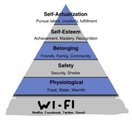
Wouldn’t Maslow be so proud of the addition to his hierarchy of basic human needs! I know I can’t live without my "we-fee" (as my mother calls it). How ’bout you?
Thanks to the Live and Breathe blog for sharing this image!
Edutech for Teachers team
.
Blog
.
<span class='date ' tip=''><i class='icon-time'></i> Jul 15, 2015 01:57pm</span>
|
|
Enrollments are open for my first Workout-Workplace Workshop on the World Wide Web (w6).
Fittingly, it will cover the most significant improvement in smile-sheet design in a generation--The Performance-Focused Smile Sheet.
Click for details...
Will Thalheimer
.
Blog
.
<span class='date ' tip=''><i class='icon-time'></i> Jul 15, 2015 01:57pm</span>
|
|
How Classroom Design Impacts Learning and Engagement Infographic
To complementary studies conducted by The University of Salford have shown that classroom design has a profound influence on learning and engagement. The How Classroom Design Impacts Learning and Engagement Infographic presents the key areas in which the built environment can influence student progress.
The studies, which were conducted at a number of schools across the UK, recorded the variations in student progress when exposed to different classroom designs and layouts. The How Classroom Design Impacts Learning and Engagement Infographic above covers classroom lighting, design, colour and personalisation - with a number of useful tips teachers and schools can use to reduce the negative consequences of poor classroom design and improve the learning environment for their students.
Interesting Findings
Researchers found that 75% of the variation in pupil performance can be explained by the built environment - with lighting, air quality, colour and noise disruption cited as the primary factors effecting student engagement.
Did you know that a classroom’s environment can affect student progress by as much as 25% throughout the academic year? Or that fluorescent lighting has been linked to hyperactivity and a lack of attention among some pupils? Even the way that we furnish our learning spaces can have an impact - certain layouts of a classroom can enhance learning, improve concentration, and encourage better behaviour.
Via: www.innova-solutions.co.ukThe post How Classroom Design Impacts Learning and Engagement Infographic appeared first on e-Learning Infographics.
eLearning Infographics
.
Blog
.
<span class='date ' tip=''><i class='icon-time'></i> Jul 15, 2015 01:56pm</span>
|
|
More and more training departments are considering the use of the Net Promoter Score as a question--or the central question--on their smile sheets.
This is one of the stupidest ideas yet for smile sheets, but I understand the impetus--traditional smile sheets provide poor information. In this blog post I am going to try and put a finely-honed dagger through the heart of this idea.
What is the Net Promoter Score?
Here's what the folks who wrote the book on the Net Promoter Score say it is:
The Net Promoter Score, or NPS®, is based on the fundamental perspective that every company’s customers can be divided into three categories: Promoters, Passives, and Detractors.
By asking one simple question — How likely is it that you would recommend [your company] to a friend or colleague? — you can track these groups and get a clear measure of your company’s performance through your customers’ eyes. Customers respond on a 0-to-10 point rating scale and are categorized as follows:
Promoters (score 9-10) are loyal enthusiasts who will keep buying and refer others, fueling growth.
Passives (score 7-8) are satisfied but unenthusiastic customers who are vulnerable to competitive offerings.
Detractors (score 0-6) are unhappy customers who can damage your brand and impede growth through negative word-of-mouth.
To calculate your company’s NPS, take the percentage of customers who are Promoters and subtract the percentage who are Detractors.
So, the NPS is about Customer Perceptions, Right?
Yes, its intended purpose is to measure customer loyalty. It was designed as a marketing tool. It was specifically NOT designed to measure training outcomes. Therefore, we might want to be skeptical before using it.
It kind of makes sense for marketing right? Marketing is all about customer perceptions of a given product, brand, or company? Also, there is evidence--yes, actual evidence--that customers are influenced by others in their purchasing decisions. So again, asking about whether someone might recommend a company or product to another person seems like a reasonable thing to ask.
Of course, just because something seems reasonable, doesn't mean it is. Even for its intended purpose, the Net Promoter Score has a substantial number of critics. See wikipedia for details.
But Why Not for Training?
To measure training with a Net-Promoter approach, we would ask a question like, "How likely is it that you would recommend this training course to a friend or colleague?"
Some reasonable arguments for why the NPS is stupid as a training metric:
First we should ask, what is the causal pathway that would explain how the Net Promoter Score is a good measure of training effectiveness? We shouldn't willy-nilly take a construct from another field and apply it to our field without having some "theory-of-causality" that supports its likely effectiveness. Specifically we should ask whether it is reasonable to assume that a learner's recommendation about a training program tells us SOMETHING important about the effectiveness of that training program? And, for those using the NPS as the central measure of training effectiveness--which sends shivers down my spine--the query than becomes, is it reasonable to assume that a learner's recommendation about a training program tells us EVERYTHING important about the effectiveness of that training program?Those who would use the Net Promoter Score for training must have one of the following beliefs:
Learners know whether or not training has been effective.
Learners know whether their friends/colleagues are likely to have the same beliefs about the effectiveness of training as they themselves have.
The second belief is not worth much, but it is probably what really happens. It is the first belief that is critical, so we should examine that belief in more depth. Are learners likely to be good judges of training effectiveness?
Scientific evidence demonstrates that learners are not very good at judging their own learning. They have been shown to have many difficulties adequately judging how much they know and how much they’ll be able to remember. For example, learners fail to utilize retrieval practice to support long-term remembering, even though we know this is one of the most powerful learning methods (e.g., Karpicke, Butler, & Roediger, 2009). Learners don’t always overcome their incorrect prior knowledge when reading (Kendeou & van den Broek, 2005). Learners often fail to utilize examples in ways that would foster deeper learning (Renkl, 1997). These are just a few examples of many.
Similarly, two meta-analyses on the potency of traditional smile sheets, which tend to measure the same kind of beliefs as NPS measures, have shown almost no correlation between learner responses and actual learning results (Alliger, Tannenbaum, Bennett, Traver, & Shotland, 1997; Sitzmann, Brown, Casper, Ely, & Zimmerman, 2008).
Similarly, when we assess learning in the training context at the end of learning, several cognitive biases creep in to make learners perform much better than they would perform if they were in a more realistic situation back on the job at a later time (Thalheimer, 2007).
Even if we did somehow prove that NPS was a good measure for training, is there evidence that it is the best measure? Obviously not!
Should it be used as the most important measure. No! As stated in the Science of Training review article from last year: "The researchers [in talking about learning measurement] noted that researchers, authors, and practitioners are increasingly cognizant of the need to adopt a multidimensional perspective on learning [when designing learning measurement approaches]." Salas, Tannenbaum, Kraiger, & Smith-Jentsch, 2012).
Finally, we might ask are there better types of questions to ask on our smile sheets? The answer to that is an emphatic YES! Performance-Focused Smile Sheets provide a whole new approach to smile sheet questions. You can learn more by attending my workshop on how to create and deploy these more powerful questions.
The Bottom Line
The Net Promoter Score was designed to measure customer loyalty and is not relevant for training. Indeed, it is likely to give us dangerously misguided information.
When we design courses solely so that learners like the courses, we create learning that doesn't stick, that fails to create long-term remembering, that fails to push for on-the-job application, etc.
Seriously, this is one of the stupidest ideas to come along for learning measurement in a long time. Buyers beware!! Please!
Will Thalheimer
.
Blog
.
<span class='date ' tip=''><i class='icon-time'></i> Jul 15, 2015 01:56pm</span>
|
|
I just read the following research article, and found a great mini-review of some essential research.
Hagemans, M. G., van der Meij, H., & de Jong, T. (2013). The effects of a concept map-based support tool on simulation-based inquiry learning. Journal of Educational Psychology, 105(1), 1-24. doi:10.1037/a0029433
Experiment-Specific Findings:
The article shows that simulations—the kind that ask learners to navigate through the simulation on their own—are more beneficial when learners are supported in their simulation playing. Specifically, they found that learners given the optimal learning route did better than those supplied with a sub-optimal learning route. They also found that concept maps helped the learners by supporting their comprehension. They also found that learners who got feedback on the correctness of their practice attempts were motivated to correct their errors and thus provided themselves with additional practice.
Researchers’ Review of Learners’ Poor Learning Strategies
The research Hagemans, van der Meij, and de Jong did is good, but what struck me as even more relevant for you as a learning professional is their mini review of research that shows that learners are NOT very good stewards of their own learning. Here is what their mini-review said (from Hagemans, van der Meij, and de Jong, 2013, p. 2:
Despite the importance of planning for learning, few students engage spontaneously in planning activities (Manlove & Lazonder, 2004).
Novices are especially prone to failure to engage in planning prior to their efforts to learn (Zimmerman, 2002).
When students do engage in planning their learning, they often experience difficulty in adequately performing the activities involved (de Jong & Van Joolingen, 1998; Quintana et al., 2004). For example, they do not thoroughly analyze the task or problem they need to solve (Chi, Feltovich, & Glaser, 1981; Veenman, Elshout, & Meijer, 1997) and tend to act immediately (Ge & Land, 2003; Veenman et al., 1997), even when a more thorough analysis would actually help them to build a detailed plan for learning (Veenman, Elshout, & Busato, 1994).
The learning goals they set are often of low quality, tending to be nonspecific and distal (Zimmerman, 1998).
In addition, many students fail to set up a detailed plan for learning, whereas if they do create a plan, it is often poorly constructed (Manlove et al., 2007). That is, students often plan their learning in a nonsystematic way, which may cause them to start floundering (de Jong & Van Joolingen, 1998), or they plan on the basis of what they must do next as they proceed, which leads to the creation of ad hoc plans in which they respond to the realization of a current need (Manlove & Lazonder, 2004).
The lack of proper planning for learning may cause students to miss out on experiencing critical moments of inquiry, and their investigations may lack systematicity.
Many students also have problems with monitoring their progress, in that they have difficulty in reflecting on what has already been done (de Jong & Van Joolingen, 1998).
Regarding monitoring of understanding, students often do not know when they have comprehended the subject matter material adequately (Ertmer & Newby, 1996; Thiede, Anderson, & Therriault, 2003) and have difficulty recognizing breakdowns in their understanding (Ertmer & Newby, 1996).
If students do recognize deficits in their understanding, they have difficulty in expressing explicitly what they do not understand (Manlove & Lazonder, 2004).
One consequence is that students tend to overestimate their level of success, which may result in "misplaced optimism, substantial understudying, and, ultimately, low test scores" (Zimmerman, 1998, p. 9).
The research article is available by clicking here.
Final Thoughts
This research, and other research I have studied over the years, shows that we CANNOT ALWAYS TRUST THAT OUR LEARNERS WILL KNOW HOW TO LEARN. We as instructional designers have to design learning environments that support learners in learning. We need to know the kinds of learning situations where our learners are likely to succeed and those where they are likely to fail without additional scaffolding.
The research also shows, more specifically, that inquiry-based simulation environments can be powerful learning tools, but ONLY if we provide the learners with guidance and/or scaffolding that enables them to be successful. Certainly, some few may succeed without support, but most will act suboptimally.
We have a responsibility to help our learners. We can't always put it on them...
Will Thalheimer
.
Blog
.
<span class='date ' tip=''><i class='icon-time'></i> Jul 15, 2015 01:55pm</span>
|
|
As I’ve mentioned before—it is not only important for educators to encourage students to push the technological envelope, but it’s equally essential that we teach them to navigate the digital world in a responsible manner. But in order to do so, we must first become familiar with copyright rules and fair use guidelines ourselves—a task that can seem very daunting and frustrating at times.
If you’ve ever used online materials for teaching and learning, then I’m sure you have wondered one or more of the following: Do I need permission to use this image? Can I share this video on my classroom web site? Would it be best for my me and/or my students to create my/their own media?
Well, it may not answer all of your burning questions, but the copyright flowchart shown below will surely help with some of the confusion surrounding this very relevant and significant topic.
Thanks to Silvia Tolisano, author of the Langwitches blog, for designing and sharing this useful resource! For more information about this infographic, check out the original blog post here.
Classroom Connection:
Unfortunately, some educators and students (as well as people in general) have the tendency to ignore the fact that media is regulated and requires compliance of copyright rules and fair use guidelines. That said, both teachers and students need to learn that just because media is accessible, downloadable and free that this does not necessarily mean it’s acceptable to use or reuse without possible restrictions.
That said, this very cool flowchart can serve as a great resource for assisting with properly locating and/or using media obtained from the Internet as well as creating your own.
Edutech for Teachers team
.
Blog
.
<span class='date ' tip=''><i class='icon-time'></i> Jul 15, 2015 01:55pm</span>
|
|
As a learning consultant, I've been called into workplaces to do work-learning audits specifically focused on safety. Unfortunately, what I've seen too often are poor safety-learning practices. People often talk a good game of safety, but their practices are just not effective. Let me give you one example. I was at a manufacturing plant and was told that all team meetings talked about safety. However, what I saw at actual team meetings was a perfunctory exhalation about safety that was likely to have zero effect on actual safety outcomes. Seriously, many team leaders would say something pithy like "10 fingers, 10 toes" and that would be it!!
To be truly effective, safety messages have to follow the principles of all good learning design. Specifically, safety messages have to be context-based. They have to refer to actual workplace situations, and get employees to visualize and anticipate safety-critical situations and the actions that are needed in those situations. Safety messages also have to prompt employees to retrieve these situation-action links and do that in a manner that is repeated in various ways over time.
Recently, while teaching a workshop, one of the participants told a great story about how General Electric has built a set of cultural expectations that propel safety. The author--who wants to remain anonymous--wrote up the following overview of what he/she observed at GE.
I have had the pleasure to conduct training for the field service organization at GE. One key aspect of the field service organization is safety. A seemly simple task of lifting a heavy object with a crane can easily result in fatality by a shift in the chain causing the object to swing out of control. During my work I was impressed with the relentless focus on safety, which was not just in words, but in action. I thought it would be useful to share an example of how safety is built into their culture.
Each day of a training session, or any meeting for that matter, always started with a safety moment. This discussion focused on the potential safety issues that could come up, and precautions that need to be followed. I would start the training by having the hotel facility manager come in and cover the emergency procedures. If I failed to start any training session in this manner, a participant would, without exception, come to me during the first break indicating that we forgot the safety briefing. Unlike other organization where I would be asked to show a safety video, and people would count sheep until it ended, this safety briefing was seen as important to all the participants.
At the start of each training day, and after lunch, a participant would be assigned to share a safety moment in their work that enabled someone to avoid a potential injury. There was never a problem getting participants to accept responsibility for conducting one of these safety moments. In fact, after sharing their experience, there was always a round of applause from the other participants. This consistent practice, and positive reception by individuals of all levels helps to foster a strong safety culture within the organization.
In talking with the author of this observation, I was amazed at how deeply ingrained a culture of safety was in this GE environment. From this example, here are lessons learned--many of which will be relevant even to those who are not dealing with safety, but who are focused on performance-improvement in general.
They focused on specific safety issues and situations.
They focused on safety ubiquitiuosly, not just in training and not just when it was "safety time."
People bought into the importance of safety--they didn't just go through the motions.
There were expecations that safety discussions were scheduled into everything.
Many people wanted to volunteer to lead safety discussions--not just people designated as safety officers.
People really appreciated the safety discussions--and they showed their appreciation.
Management was not the only driver of safety.
Safety messages were repeated, and spaced over time.
Special thanks to the anonymous author and to GE for demonstrating that safety can be inculcated into workplace practice.
Will Thalheimer
.
Blog
.
<span class='date ' tip=''><i class='icon-time'></i> Jul 15, 2015 01:55pm</span>
|
|
MOOC's don't have to suck. The 4% to 10% completion rates may be the most obvious problem, but too many MOOC's simply don't use good learning design. They don't give learners enough realistic practice, they don't set work in realistic contexts, they don't space repetitions over time.
But after reading this article from Thomas Friedman in the New York Times, you will see that there is one thing that MOOC's do really well. The get learning content to learners.
Really, go ahead. Read the article...
Why is "Exposure" one of the Decisive Dozen learning factors?
Many people have wondered why I included "Exposure" as one of the most important learning factors. Why would exposing learners to learning content rank as so important? Friedman's article makes it clear in one example, but there are billions of learners just waiting for the advantage of learning.
I got the idea of the importance of exposing learners to valid content by noticing in many a scientific experiment that learners in the control group often improved tremendously--even though they were almost always outclassed by those who were in the treatment groups.
By formalizing Exposure as one of the top 12 learning factors, we send the message that while learning design matters, giving learners valid content probably matters more.
And yes, that last sentence is as epically important as it sounds...
It also should give us learning experts a big dose of humility...
MOOC's will get better...
Most MOOC's aren't very well designed, but over time, they'll get better.
Will Thalheimer
.
Blog
.
<span class='date ' tip=''><i class='icon-time'></i> Jul 15, 2015 01:54pm</span>
|