Blogs
|
Slideshare has silently become another one of my go to sites for research, design inspiration, and ideas on a particular subject over the last few years. Since 2006, I have almost uploaded 100 slide decks of my own to be able to embed and share them online.
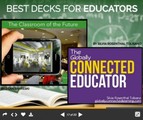
I am honored that Slideshare.net has selected The Globally Connected Educator as one of the best slide decks in 2014.
4.4 billion views. 4.2 million uploads. SlideShare had its best year yet, thanks to users like you. What’s perhaps most astounding, though, are the powerful stories, insightful data, forward-thinking thought leadership, and big ideas that were shared this year.
Take a peek at the other categories and selections. The Globally Connected Educator shares the spotlight, in the "Best Decks For Educators" with Dean Shareski ‘s The Classroom of the Future (on slide 17).
The Must-Read SlideShares of 2014 from SlideShare
Silvia Rosenthal Tolisano
.
Blog
.
<span class='date ' tip=''><i class='icon-time'></i> Jul 16, 2015 06:39am</span>
|
|
Someone monolingual is one who speaks one language. Someone bilingual is fluent in two languages, trilingual is fluent in three languages and someone multilingual is fluent in multiple languages.
Speaking one language connects us to other speakers and the culture of that language. We are able to communicate, discuss and learn of different perspective through face to face interactions, literature, books, blog posts, newspaper or journal articles, videos, images and other online resources
It is not a secret that being bilingual or mulitlingual has its benefits. From being better at multi-tasking, decision making, sharper reasoning, holding off the onset of Alzheimer and being able to see or read about situations from a different perspective or cultural point of view . Larry Ferlazzo has in incredible resource page if you want to learn more about the advantages of being bilingual or multilingual.
Especially in the age of global business, the value of employees being able to speak more than one language has increasingly been highlighted over the last few years by pointing out that multilingual employees earn more money and have "practical benefits in a globalized economy".
Reality is though, that many American are monolingual. With many foreign language programs in the US being delayed (until students are older), reduced or directly cut, not everyone is or will be bilingual in the foreseeable future in the US. Unfortunately many still don’t see the personal need for a native English speaker to go outside their language capability (Why? Examples: "I have everything I need in my language". "I don’t travel much to countries who don’t speak English". "I expect everyone else to speak English".)
I am continuing to examine how the concept of what literacy has been and is continuing to evolve. Does literacy include a certain degree of language competence beyond our native comfort zone?
How can a monolingual still take advantage of gaining multiple perspectives, amplified resources and be part of a global conversation?
In dem Google Zeitalter, ist es einfacher als je, trotz Sprachunterschiede und Beherrschungsgrad zu kommunizieren und miteinander zu lernen. Es is wichtig Sprachfertigkeiten im digitalen Zeitalter zu erweitern, um Perspektiven und Zusammenhänge ausserhalb seiner Sprachkenntnisse zu sehen und erkunden zu können.
Interested in what the quote above said? Why not copy and paste the above into Google Translate and find out in what language it was written in and what it means?
Three things need to happen:
1. Monolinguals need to be AWARE of one-language limitations, the options open to them as well as the need and benefits by extending their available resources, voices, opinions in languages OTHER THAN their mother tongue.
2. Ability to use tools, which will simulate as best as possible the logistical language translation component of being multilingual (I am not aware of a technology yet, that will "translate" the cultural component of being able to speak another language)
3. Increased fluency in using and switching between situation-appropriate tools to understand and communicate in a variety of languages
In case, you continued reading and did not choose to have your browser, website or app translate the quote in German above, here is the translation side by side.
While it is not a perfect translation, I believe Google Translate did a decent job in communicating the meaning of the quote. One would realize that a native speaker did not write it, but for the purpose of understanding content, Google Translate can be an invaluable tool to amplify one’s reach outside of one’s comfort language. How far are monolinguals developing the skills of reading text in languages other than English and for comprehension in their own language ,when the text came digitally translated? Is this a natural skill all monolinguals possess or one that needs to be practiced and developed similar to the way younger students are being taught?
What will it take for all of us (monolinguals and multilinguals) to REGULARLY and FLUENTLY go beyond the comfort zone of our native languages and tap into the resources of the network of speakers of other languages?
Challenge:
Choose an article written in another language than one you speak or choose one of the articles listed below.
Translate the article into your own language
Read the article for content and mean (ignore grammar, phrasal verbs, expressions or sayings that don’t make sense translated, etc.) Use another online dictionary, app or translator for individual words, if necessary
Write a short reflection on your own blog, linking to the original article to:
raise awareness of expanding our language horizon to our readers
break down skills of using tools to overcome "not speaking the language" the article is written in
ask yourself, how do we translate these language competence into our classrooms?
Articles:
Cultiver son réseau d’apprentissage personnel, comme un jardin by Jacques Coole - (French)
Leitmedienwechsel und Lernpraxis by Torsten Larbig (German)
10 años de estar juntos: En lo bueno y en lo malo by Juan Carlos Guerra (Spanish)
????? ????? ?????? ???? ?-21 ( Adapting the Education System for the 21st Century) by Seham - (Hebrew)
Resources:
An interesting article about using Google Translate to learn from news articles written in different languages Getting Lost in Translation by Ann Michaelson
An experiment with Google Translate by Steven Wenz
Silvia Rosenthal Tolisano
.
Blog
.
<span class='date ' tip=''><i class='icon-time'></i> Jul 16, 2015 06:39am</span>
|
|
Readers of the Langwitches blog know the passion I have for sharing my work and own learning path around of 21st century, modern, contemporary, the "now" literacies with educators and students from around the world. Specifically, I am interested in contemporary upgrades and amplification of the curriculum, documenting for learning (from digital portfolios, digital storytelling, new forms of teacher observations, to building institutional memory), blogging as pedagogy, visualize learning and developing & maintaining a Personal Learning Network as a transformational professional development practice.
I have been fortunate to be able to combine that passion with traveling and connecting schools, teachers and administrators globally.
Now is the time to think about working with me for the 2015/2016 school year. Especially, if you are interested in going beyond "drive by" workshops, but are looking at a long term coaching relationship to support and mentor your faculty in contemporary learning (collaborative, connected, social, global, amplified, digital media infused self-directed, self-motivated) with evidence of learning from their classrooms.
Contact me to schedule a (free) initial consultation.
To view the full range of my keynote, workshop, blended coaching and webinar offerings, please take a look at my consulting website: http://www.globallyconnectedlearning.com, my work here on the Langwitches Blog or on Twitter.
Keynote, Workshops and Conferences
I have been a presenter and keynote speaker around the world on a variety of topics in the areas of 21st century contemporary teaching and learning, heutagogy, blogging as pedagogy, personal learning networks, digital storytelling, world language teaching, presentation design, visual literacy and globally connected learning.
Keynotes: Let me help set the tone or kick off your conference or professional development day by sharing not just the big picture of the educational paradigm shift, but also concrete examples from the classroom.
Workshops: Teachers need to live the new type of learning we wish for our students to experience. In my workshops, educators will get exposed to hands-on learning experiences with selected tools and modern literacy pedagogy.
Contact me, if you are interested in having me speak or conduct a workshop at your next conference or in-house Professional Development day.
Blended Coaching Model
Schools are struggling to keep up with the demands of curriculum design and upgrades to prepare students for modern skills and emerging literacies. Professional Development needs to offer opportunities for teachers to transform traditional experiences and redefine their own learning and in consequence their teaching practices.
This consulting framework includes onsite consulting, job embedded instructional coaching and workshops, blended with online coaching, workshops and feedback in the areas of modern learning skills and literacies.
Research, as well as anecdotal and personal evidence, has proven that a reflective learning culture is one of the best indicators to increase student learning. The blended coaching model uses" Blogging as Pedagogy" as a deeply reflective year long learning opportunity to allow teachers to experience a shift in their learning and make documentation, reflection and sharing part of their practice. Embedded in this process are learn-by-doing technology skills that support the shift into a blended learning environment for ongoing lifelong learning habits and mindset.
The model relies heavily on self-directed and self motivated professional learners to put new learning practices into action, document, reflect, receive feedback, and keep redefining learning in and out of the classroom. Cohort participants will be building a learning network, share their practices, successes and failures to benefit the school community, including parents, colleagues and students.
Contact me, if you are interested in a finding out more about the possibility of starting to work with a cohort of educators at your school.
Webinar & Video Conferences
For a cost effective alternative to bringing in a consultant, consider inviting me to support your teachers online.
I am available for online 1:1 coaching, small group or large group professional development in the areas of modern teaching & learning.
Please contact me, if you are interested in webinars or video conferencing via Skype, Facetime or Google Hangout.
Take a look at a variety of topics I offer and schedule a (free) initial consultation. We will discuss your learning needs and customize a one-time coaching session or a series of online conferences to support your faculty’s learning journey.
Blended Coaching Model
Pedagogical Documentation
Strategic Documentation for Coaches and Consultants
Social Media & Networking Assistance
Download Globally Connected Learning Flyers as a PDF
Silvia Rosenthal Tolisano
.
Blog
.
<span class='date ' tip=''><i class='icon-time'></i> Jul 16, 2015 06:38am</span>
|
|
C.M. Rubin from the The Huffington Post just published The Global Search for Education: Our Global Top 12 Teacher Blogs.
It’s a New Year Teachers! Are you ready to start that new blog? Want some tips from some pros around the world on how to make it a great one?
Everybody was blogging in 2014, and especially teachers. After all, blogging is an incredible way for teachers to share first hand knowledge with their peers. We asked The Global Search for Education editorial team and our blogging advisors to submit their favorite teacher blogs and blog posts from around the world. We reviewed many great blogs. These 12 were our favorites.
I was honored to be one of the twelve teacher blogs mentioned, along Karen Lirenman, Vicki Davis, and Craig Kemp among others. Time to check out some of the other blogs, I have not been aware of and adding them to my RSS Reader.
Silvia Rosenthal Tolisano
.
Blog
.
<span class='date ' tip=''><i class='icon-time'></i> Jul 16, 2015 06:38am</span>
|
|
Living in the USA (in certain regions), it is sometimes easy to forget that NOT EVERYONE speaks English, or is comfortable with English as a foreign language.Even hanging out on Twitter, the bloggersphere or other social media platforms, it can be easy to become complacent and forget or just assume that everyone speaks English.
We speak of global network, conversations across timezones and borders, global collaboration and global amplification, but what we truly mean is a global "English speaking" network, conversations across timezones and borders of "English speakers", global collaboration among "English speaking" partners and global amplification within the "English speaking" world.
I recently blogged about Literacy: Language Competence Beyond Our Comfort Zone to bring awareness of the possibility to listen in on conversations of languages other than your own by taking the extra step of using online translators for example.
In the past I have been thrilled when my work, which I license under Creative Commons, inspired other multilinguals to build upon my work by translating it into another language in order to make the content easier accessible to speakers of languages other than English.
It’s All About Sharing and Collaborating, a post I wrote about a Russian educator who had translated material from Langwitches into his language in order to SHARE the content with his colleagues who spoke no English. Alec Couros, told the Amazing Story of Openness and his diagram of the Networked Teacher as it has been translated into many languages now. It am tremendously honored, when my work gets AMPLIFIED into other languages, reaching educators, I would not have reached otherwise. Dico Krommenhoek contacted me a few days ago via Twitter. I was thrilled to give permission, without hesitation, when he asked to translate the iPad App Evaluation checklist into Dutch. It gives me a sense of COLLABORATION across time, space and language, when I can "teach" via my work and materials without ever speaking the same language or meeting these teachers face to face. This is a beauty of CREATIVE COMMONS and an amazing story of openness (as Alec Couros puts it).Read more at: http://langwitches.org/blog/2013/02/10/further-amplification-other-languages/ | Langwitches Blog
I believe this is important to truly work on global collaboration and engage in global conversation. We should not underestimate the relationship between creative commons work, multilinguals and their willingness to contribute their time and energy to amplify content and conversation to a whole new world of other-language speakers.
I am thrilled to be able to add another chapter in [language] amplification via collaboration when Monica Maramotti contacted me via this blog to ask permission to translate my infographic about Blogging in the Classroom into Italian.
Thank you Monica for the new Infographic below which will hopefully inspire more Italian speaking educators to take the plunge of blogging with their students.
Download Blogging in Classe (Italian) as a PDF
Silvia Rosenthal Tolisano
.
Blog
.
<span class='date ' tip=''><i class='icon-time'></i> Jul 16, 2015 06:38am</span>
|
|
Next month, at the beginning of the school year in South America, I will be starting a year long blended coaching relationship with the Asocación Escolar Goethe, The German School in Buenos Aires. I will be working with a small cohort of educators to coach them in" learning how to learn", the "now" literacies, documenting for learning and peer coaching.
[I am extremely excited, since the school is MY high school. I graduated with the Bachillerato en Sciencias y letras (Argentinean High School Diploma) and the German Abitur (German High School Diploma).]
My graduate degree in Education was completed in the US, which is also the educational system that I have worked in and with my entire adult life. In preparation of the work ahead, I am sprucing up my German and Spanish vocabulary in the educational content area around modern literacies and competencies.
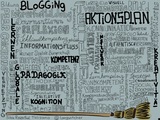
I chose to combine my sketchnoting practice of typography with my educational keyword research of German terms.
An observation worth mentioning, especially to World Language teachers and students, is that the time spent in sketching and arranging the words, seemed to better cement the words in my mind and allowed for better recall.
Silvia Rosenthal Tolisano
.
Blog
.
<span class='date ' tip=''><i class='icon-time'></i> Jul 16, 2015 06:38am</span>
|
|
I have been a fan of Visible Thinking Routines which were developed by Project Zero from Havard, for a while now. I have used these routines with students, as blogging routines and in professional development workshops.
The Visible Thinking Routines website explains that:
Routines exist in all classrooms; they are the patterns by which we operate and go about the job of learning and working together in a classroom environment. A routine can be thought of as any procedure, process, or pattern of action that is used repeatedly to manage and facilitate the accomplishment of specific goals or tasks.[…] Classrooms also have routines that structure the way students go about the process of learning
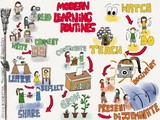
As I am trying to make 21st century, modern, contemporary or "now" learning visible, it seemed a natural step to point out "Modern" or "Now" Learning Routines.
Here are my 5 routines that promote modern learning:
1. Read > Write> Comment
Read as much as you can on your subject. Read books, blog posts, tweets, news articles, RSS feeds, etc.
Write about what you read, write about connections you are making between the content you have read, write about things you wonder about and write your reflection of your thoughts. What did you think about? What does that make you want to explore further? Why do you agree? Why don’t you agree? What steps will you take, now that you learned about something new?
Comment or annotate on the things you read. Leave a public comment on things you read online, annotate on the margins of physical reading material with sticky notes, highlighters or pencil. Make your mark by leaving your initial reaction or thoughts and connections visibly in the space.
2. Learn > Reflect > Share
Learn the way you learn best, listen to a lecture, watch a demonstration, write and organize your knowledge in a mindmap, discuss an area of interest with a friend, watch a movie, go to a workshop, attend a university class, etc.
Reflect about an experience, be cognizant of what and how you are thinking, be aware of where you are coming from, of different perspectives, influences that are and have guided your thinking and choices. Jon Dewey said: " We don’t learn from experience, we learn when we reflect on our experience."
Share your learning and your reflection with others. Make a conscious effort to not only reflect quietly in your own mind , but make your reflecting visible and shareable, preferable in digital form. The digital form can be archived, duplicated and amplified beyond a limited amount of face to face colleagues.
3. Contribute > Feedback > Grow
Contribute to the learning of others, add value by answering questions, share your expertise, bring in another perspective or a different point of view, Contribute by sharing examples of what works and doesn’t work in education. Be a building block for others to remix and build upon your work, so we can transform learning together, across time zones and geographic borders.
Be open to receiving (and giving) Feedback by being transparent with your work. Take feedback into consideration to see your work through different eyes. Let feedback push your train of thought in a different direction or receive affirmation that you have been looking in the same direction. Feedback will allow you to gauge interest of others in your area of interest. Connections that you make via feedback (left by you or for you) will help you build your learning network.
Grow from critical feedback you receive. Grow your learning network by giving more than you take. Learning is a process, where you will be in a different place from where you started out from. Grow by achieving goals that you had set for yourself and grow from the experience in overcoming obstacles.
4. Watch > Do > Teach
Watch someone use a tool, you have never used to learn before. Observe someone take a traditionally taught lesson and transform it by using technology to amplify learning. Watch how students take ownership of their own learning as you watch a video of another teacher documenting a lesson from their classroom. Watch how a mentor skypes into your classroom and co-teaches virtually. Watch a coach model a lesson about digital citizenship for your students. Watch a consultant share workshop material.
Do, try it out, test it, experiment with what you saw to make it your own. It does not have to be perfect the first time you DO (Remember: FAIL means "First Attempt In Learning"). See what works and what does not in your individual situation.
Teach it to others. Aristotle already proclaimed: Teaching is the highest form of understanding. One of Alan November’s Digital Learning Farm jobs is that of a Tutorial Designer. In order to be able to teach a concept or content to someone else, higher level of understanding of content knowledge is required.
5. Document > Present > Disseminate
Documenting FOR Learning is a supporting piece for the study of self-determined learning (Heutagogy) and a strategic approach and technique to facilitate learning (Pedagogy). Document learning as it is happening. Use different media (text, images, audio, video) to archive what you are teaching, what your students are creating. Document the timeline of events. Document student voices and understanding. Make the process visible for others. Documentation allows teachers to share best practices with colleagues and to make teaching available for students outside of classroom hours. Documenting is a tool to inform further instructions and a way for teachers to reflect on their own lesson plans, delivery and teaching pedagogy. Documentation allows teachers and students to build their footprint in a digital world.
Present your documentation in a form that makes it easy to share and is visually appealing to others. Become the lead storyteller of your learning. Create slide decks that "readers" can view in their own time. Show process by creating a visual timeline. Allow others to be a fly on the wall in your classroom by making a video of learning taking place. Create a video that summarizes your learning, easy for others to take a look at. Create infographics to visual represent numbers that tell a story. Create a space online (website, blog, Instagram account, Facebook, etc.) to be able to give others access to what you are presenting. Apply and present at conferences (face to face and virtual ones) to share with other educators and students.
Disseminate your documentation. The movie quote from Field of Dreams: "If you build it, they will come…" is NOT true. Simply documenting and presenting your work on a public platform will not necessarily bring in the masses to give you a global audience. It takes strategic action to disseminate your work. Send out a tweet, leave a comment with a link on a relevant post. Create a visual with a relevant quote to disseminate with a link. Create video trailers or teasers to make others interested in your work. Write a guest post on someone else’s blog. Write an article for a journal or magazine. Write a book. Offer to be interviewed. Create work capable to be disseminate on different media platforms (Images, audio, video, slide decks, infographics, etc.)
Silvia Rosenthal Tolisano
.
Blog
.
<span class='date ' tip=''><i class='icon-time'></i> Jul 16, 2015 06:38am</span>
|
|
I am currently in Argentina getting ready to work with a cohort of teachers at a German school here in Buenos Aires.
Andrea Hernandez, a former colleague of mine and current 4th and 5th grade Language Arts teacher from the Martin J. Gottlieb Day School, in Florida has traveled with me.
Her current students (some of them my former students) have been following her travels by staying in contact via email and their classroom Twitter accounts (4thMJGDS / 5thMJGDS).
This post is a documentation of a Twitter conversation and a Skype call and our reflection of authentic assessment of these 9/10 year olds in the area of modern skills and literacies.
What a pleasant surprise this afternoon when the student in charge of being the Twitterer (Global Connector) of the week, tweeted me asking if we could connect via Skype. [Reminder: These students were with a substitute teacher, as their teacher Andrea was here in Argentina with me!]
I immediately responded with a Twitter reply and a conversation started.
Skills & literacies observed:
awareness of global connectedness
network literacy: what type of platform is best suited for what type of conversation or connection
communication skills: Twitter grammar, syntax, etiquette
critical thinking: problem solving of fluently and quickly switching to new Skype account when the teacher one was not available, then searching for and finding my Skype username to send a connection request. [ Again… student driven]
digital citizenship: following school guidelines in not using last names in social media
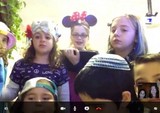
Within a few minutes, my Skype account rang and we connected with their class, who had a wonderful day celebrating "hat day" at their school.
The kids were excited when we took the webcam outside to show the summer blue skies over Buenos Aires. We quickly talked about Argentina’s geographic location and reverse seasons, compared temperatures (38 F in Florida vs 95 F in Buenos Aires). We gave them a quick challenge when we asked what the time difference was between our two locations. Their time was 3:35 pm while we gave the clue of 17:35 as our time. Not a problem for these information literate students as they quickly googled the time in BSAS and converted military time to am/pm to know that we were 2 hours apart.
It was not a long Skype call, but reassured their teacher Andrea, that her students were able to transfer skills learned with her in the classroom to fluently and independently take advantage of authentic opportunities when they presented themselves.
This fluency of modern skills and literacies did not happen overnight or come naturally to these students. They have been blogging for a minimum of 4 years. Their teachers have strategically been bringing in Skypportunities, and starting in 4th grade they earn the right to ownership of a classroom Twitter account to make global connection and build a learning network. [With teacher supervision… with embedded digital citizenship lessons throughout the year as well as taking advantage of every teachable moment…with trust relationshop between the teacher and her students]
Take a look at the Twitter profile of 4th and 5th grade.
4th grade students using Twitter to thin the classroom walls. This Twitter account is 100% student owned and operated
We are a 5th grade class interested in sharing our learning & connecting with other clases. This Twitter account is 100% student owned & operated.
Students are learning to reach out and make connections with other classroom Twitter accounts.
Silvia Rosenthal Tolisano
.
Blog
.
<span class='date ' tip=''><i class='icon-time'></i> Jul 16, 2015 06:38am</span>
|
|
What a catching blog post title. It might have caught your attention because of the keywords "the most significant" and "innovations" and the promise of a guide to the future. Taking into consideration that devices, such as the iPhone, which changed the entire culture, did not exist 10 years ago, I am venturing to say that there is no accurate answer to this blog’s question. I will disappoint you if you were looking for short, easy to follow instructions. Especially in education, planning for a "moving target" leaves us anxious, eager, and willing to give our ear to anyone who promises us guidelines for that future we so desperately are looking for. I can only offer my best educated guess.
My vote for the most significant classroom innovation yet-to-come is an increasing ability for students and teachers alike to "learn how to learn". Possessing this ability will give us the ability to grow in a world with an exponentially increasing rate of change.
Learning how to learn builds off of the skills of self-directeness and self-motivation. It requires seeing oneself as a life-long learner with a growth mindset and being ready to flourish in a world with ever-changing tools, platforms, networks and external innovation.
We are looking at becoming fluent in a work- and learnflow as a process to be able to flourish in a world with ever changing tools, platforms, networks and external innovations that will have a significant impact in the world of education.
Learning how to learn will mean being able to find, filter, evaluate, categorize, store, remix and create information… no matter how much information is available or in what format, media, or language it is available.
Learning how to learn will mean being able to work and learn with (not just about) people at a global scale… no matter what geographic distance, time zone, culture or language.
Learning how to learn will mean being able to understand the different purposes of a variety of tools and platforms and being able to harness the power of these tools and networks so you can fluently switch between them or combine them … no matter how new or old the platforms or tools.
Learning how to learn will mean to adapt to new forms of media… no matter if this means letting go of nostalgic attachments or customary workflows or routine habits in reading, writing and communicating.
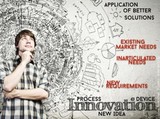
Although we don’t know exactly how the world will look like in 10 years, what (as reads the Wikipedia definition of innovation) "new requirements, inarticulated needs, or existing market needs" it will have—we do know that it will be different than our world today. The only way to prepare for that world is to possess the ability to adapt to change, have a growth mindset and be prepared to continue learning to learn.
Silvia Rosenthal Tolisano
.
Blog
.
<span class='date ' tip=''><i class='icon-time'></i> Jul 16, 2015 06:37am</span>
|
|
As I was working with teachers at the Goethe Schule in Buenos Aires, Argentina today, supporting them in creating their own new blogs for professional development and to document their learning. I wanted to show them that I did not start out with the Langwitches blog the way it is today.
I felt my way around with what to write…
How to write with an audience in mind… yet not knowing if anyone was reading
Not receiving any feedback in form of comments
I was not used to writing in English
I had never heard or experimented with hyperlinked writing
I was not fluent in creating, inserting, embedding different forms of media as part of a blog post to be able to communicate and model
I pulled up my first blog entry to realize that I had started Langwitches exactly 9 years ago, February 20th, 2006.
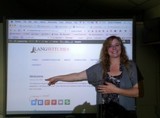
Image taken by Marisa Gonzalez. Used with permission
It was interesting to see that I already had a vision of documenting and sharing since the beginning. It was satisfying that exactly 9 years later, I was indeed working with teachers, who teach German or Spanish to many second language learners here in Argentina and supporting them to set up their blogs
Langwitches Blog, February 20, 2006
This Blog is an experiment. I am fascinated by the possibilities of blogging in the foreign language classroom. I will document what I have learned and hopefully inspire other language teachers to try their own blogs.
Silvia Rosenthal Tolisano
.
Blog
.
<span class='date ' tip=''><i class='icon-time'></i> Jul 16, 2015 06:37am</span>
|