Blogs
|
The idea of Document FOR Learning is occupying my mind more and more… puzzle pieces of different strategies and needs in modern teaching and learning are coming together if I look at them through the lens of teachers, students and school communities documenting their work.
I see intentional documenting FOR learning as:
serving a metacognitive purpose
a creative multimedia expression (oral, visual, textual) a component of reflective practice
taking ownership of one’s learning
a memory aid
curation
professional development
being open for feedback
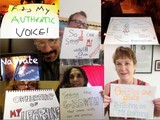
In order to raise awareness about the potential of documenting for learning in education and bring in different perspectives from other educators, I decided to take a selfie, holding a piece of paper with keyword(s) of what documenting for learning is mainly about for me.
Thank you @dwsteven, @edtechworkshop, @jon_mitzmacher, @mumbaimaggie , @dkuropatwa and @sewilkie for being the first ones to answer the call and contributing to the hashtag #document4learning
Ready to participate in crowdsourcing more perspectives?
write down what you believe #document4learning is all about in education and contribute visually by
snapping a selfie with you holding up a keyword
upload the image to Twitter using the hashtag #document4learning (to add your image to all the other contribution and voices).
PS… This type of crowdsourced-selfie-activity is a great way to have students participate in summarizing their learning, make a prediction, make it visible (you could use a Visible Thinking Routine, ex. CSI), or as an exit ticket.
Silvia Rosenthal Tolisano
.
Blog
.
<span class='date ' tip=''><i class='icon-time'></i> Jul 16, 2015 06:45am</span>
|
|
I will be traveling to Venezuela this week to share and learn with educators at EVAC2014 in Maturin, Venezuela.
The talk about modern literacies… about becoming a globally connected educator… and having your students collaborate with peers from around the world is great…. BUT how do you actually DO it? I will be elaborating this with the participants in one of my sessions.
If you are reading this… walk the talk…. leave a comment with your ideas and contact info on this blog post, if you are looking to connect with educators and students from 4 International Schools in Venezuela.
6 Steps to start collaborating among schools:
1. Build a Professional Development Hub
2. Document
3. Share
4. Feedback
5 .Connect
6. Learn Together
Silvia Rosenthal Tolisano
.
Blog
.
<span class='date ' tip=''><i class='icon-time'></i> Jul 16, 2015 06:45am</span>
|
|
I am excited to share ( ) the keynote I am presenting at EVAC2014 in Maturin, Venezuela.
Looking at the "Now" literacies, , including digital, media and global literacy, we are preparing students for a time when what they know is not as important, in comparison, to what they can do with what they know. We are becoming a society where consumers have become producers and increasingly are required to being contributors. How does this translate into the classroom? What does this mean in terms of professional development and continued learning for teachers? How do we become leaders in the NEW literacies and make them NOW literacies in our schools?
We are looking at these NOW literacies through the lens of SHARING. How can we use the power of networks to raise awareness and support our students in experiencing these skills? What would happen if no one shared?
Silvia Rosenthal Tolisano
.
Blog
.
<span class='date ' tip=''><i class='icon-time'></i> Jul 16, 2015 06:45am</span>
|
|
Otra presentación que compartí en la conferencia EVAC 2014
El mundo en que vivimos ha cambiado! Will Richardson, exclamó: " Si ustedes no se sientan un poquito incómodo de ser un docente o estar en ámbito educativo, entonces no están prestando atención."
Trabajando en una escuela y en educación, a veces nos pone en una burbuja, lejos del mundo real. Tenemos un microorganismo como funcionan las cosas. El mundo educativo no ha cambiado en mucho tiempo. Los padres esperan que sus hijos serán educados de una forma similar a ellos. ¿Porqué no? Fue una education buena para ellos.
Los invito a tomar otra mirada al mundo alrededor de nosotros que esta cambiando de una forma impresionante, sin forma de comparar. ¿Cómo preparamos a nuestros hijos y estudiantes para un futuro en este mundo?
Silvia Rosenthal Tolisano
.
Blog
.
<span class='date ' tip=''><i class='icon-time'></i> Jul 16, 2015 06:44am</span>
|
|
The Connected Educator Month is about to start in less than two week. Educators around the world are connecting to learn and grow together as professionals.
The Connected Educator Month is an opportunity to give teachers the chance to show and experience self-directed and self-motivated learning as they are participating and contributing to the learning of others from around the world.
Take your professional development and learning into your own hands. Choose what and when you want to learn. Make global connections that will continue supporting you and your students long after the month of October is over.
Take a look at the sites and calendar of events from the following countries (remember you can participate virtually in any of the events from afar).
Connected Educator Month: USA
Connected Educator Month: Australia
Connected Educator Month: New Zealand
Connected Educator Month: Norway
I am adding my two cents by being part of the Connected Educator month in a variety of forms and my hope is that this blog post inspires you to take action FOR your own learning: participate, contribute and connect beyond your zip code!
Virtually, I will be part of Connected Educator Month New Zealand as an online panelist (Date and Time still to be determined and announced… so far the first week of October)
Ng? kaupapa m? 2014
As part of the global Connected Educator efforts to distribute ownership of the event out to the community, all participating organisations were asked to nominate and vote on thematic choices, and hundreds of organisations and/or their representatives cast their ballots.
As a result, this year’s CEM themes will include:
Blended Learning
Collaboration and Capacity-Building
Diversity, Inclusiveness, and Global Connected Education
Educator Professional Development and Learning
Leadership For Change
Student Agency, Student Voice, and the Maker Movement
Whole Community Engagement (Parents,Teachers, Students, Community Members)
Physically, I will be traveling to Oslo, Norway to be one of the keynote presenters (with Shelly Sanches Terrell, Kristina Alexanderson and Michael Furdyk) at the Connected Educator Month Conference.
Hint: Copy and paste the text below into Google Translate in case you don’t speak Norwegian
"Connected educators month" i Norge
I oktober lanserer vi "Connected Educators Month" i Norge. Bak dette prosjektet står NHO, Norsk senter for IKT i utdanning, IKT Norge, Itslearning, NDLA, TV 2 Skole, Elevorganisasjonen, Utdanningsforbundet og Sandvika vgs. Det er Sandvika vgs som er initiativtaker og leder prosjektet.
Selve ideen er hentet fra USA, som arrangerer dette for 3 gang nå i år. Initiativet kom fra kunnskapsdepartementet som så behovet for å få flere lærere på nett. President Obama støttet initiativet og deltok på noen av arrangementene. Mer informasjon om dette finnes på deres hjemmeside «Connected Educator Month»: connectededucators.org.
I år ønsker Usa å synliggjøre at dette er et globalt prosjektet og de har derfor oppfordret andre land til deltagelse. Resultatet er at Australia, New Zealand og Norge deltar i dette globale prosjektet.
Mål for arrangementet:
Få flere lærere og skoleledere på nett slik at de ser nytten av å bruke sosiale medier til å dele, lære og bedre egen praksis
Få flere lærere og skoleledere til å se hvordan digitalt innhold og tjenester kan øke elevenes læringsutbytte.
Dele gode eksempler ved instruksjonsvideoer, webinarer og ressurser skolene kan nyttiggjøre seg på planleggingsdager og i etterutdanning av lærere.
Støtte og oppmuntre innovasjon og nytenkning på dette området
Støtte, oppmuntre og anerkjenne eksisterende ildsjeler
I flere land har man nå fått øynene opp for hvordan vi kan lære i fellesskap ved hjelp av teknologi. Vi ser en voldsom vekst i online kurs, såkalte MOOCs som tilbys fra universitet og høyskoler. Flipped classroom og ressurser på nett hjelper elevene i sin læring og kan gjøre skolehverdagen enklere for læreren. Det handler selvsagt om elevenes læring og deres resultater. Når diskusjonene rundt på arbeidsplassene er sentrert rundt elevenes læring øker sjansen for at elevene oppnår gode resultater. Samfunnet for øvrig er i en konstant endring og skolene ved rektor og lærere plikter å holde seg oppdatert.
Silvia Rosenthal Tolisano
.
Blog
.
<span class='date ' tip=''><i class='icon-time'></i> Jul 16, 2015 06:44am</span>
|
|
Experimenting with sketchnoting as note taking and as visual summaries and slide design has been an area of intense interest for me over the past six months.
Completely inapt, as an analog "artist" on paper, the use of a stylus and the iPad Paper app by FiftyThree, have allowed me to experiment with color, form, design, and typography.
The process of sketchnoting
… has made jotting down ideas, connecting them, visually representing the brainstorming, thoughts and visions as I am creating visuals for blog posts or designing presentation slides, a more metacognitive process
… has allowed me to think through a concept, as I am drawing it out
….made me consider options, perspectives of interpretation and points of view more intensely
… helped my recall by remembeing my thoughts at the moment of sketching, even weeks later
Sketching has been a solitary task for the most part. That is not a bad thing, possibly even necessary to be able to take full advantage of the thinking process unfolding when doodling. I have drawn my sketches and sketchnotes, organized them in journals within the Paper app, then exported them as images. The social network aspect of sketchnoting has not gone further than uploading these images to my blog or use them as a visual tweets disseminated to and receiving feedback from my network. In one incident, my network even prompted the creation of a sketchnote as another aspect of a concept.
In comes Paper’s new platform Mix, that changes the game and the possibilities completely.
Get inspired—Getting started is often the hardest part of doing anything creative. With Mix, you’ll find a well of inspiration from creators around the world, both in Paper and on mix.fiftythree.com. Whether you’re skilled at drawing, or just comfortable coloring and doodling, you’ll be inspired to create and learn on Mix.
No more blank pages—Professionals don’t start from scratch, and neither should you. On Mix you’ll find templates, outlines, and ideas ready to be remixed and transformed into something new. Say goodbye to the blank page.
Get and share feedback—Mix is a big, visual conversation, and some of the best conversations happen when people are invited to tell their own stories. Mix is about leaving open spaces for people to fill in, and letting ideas evolve in unexpected ways.
Embedded in the app and connected to the Mix website, are now creators (or in Facebook and Twitter lingo, "friends", " followers and followees). You will receive the sketches, they chose to share, in your stream. On the left is a stack of "papers" that you designed and have made available to everyone else on the Mix website.
On the right, you will also have a stack of sketches that you starred (on the website) and are now able to edit in the Paper app on your iPad. You can simply click on any of the images and your trusted Paper palette with your tools and colors will slide up from the bottom.
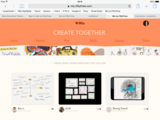
Browsing on the Mix website, allows you to choose between a Learn, Sketch, Play, Write, Design and Think category. Featured creators invite you to check their stacks out or you can browse individually recently shared sketches in chronological order. Once you found a sketch that you feel inspired by, you can find the original creator and see all the other sketches the original one has inspired so far. It is truly a feast to see the creativity and different interpretations one sketch has inspired in others (ex. Ur Story by Brad Ovenell-Carter) . Brad Ovenell-Carter, my personal mentor for starting to sketchnote, is already thinking about the implications for social sketchnoting in education In the following post, First Thoughts on @FiftyThree ‘s Fantastic New #Mix, he wonders
It’s more challenging than it sounds: I can easily capture what I learn from the keynote and almost as easily leave room for what I know I don’t know-a point I missed or term that needs defining or elaborating, for example. But how do I leave room for what I don’t know I don’t know-those infamous unknown unknowns? Where do I leave space? I think that instead of seeing my notes as a sort of record, I have to see them as an invitation. What does that look like?
I am envisioning, sharing with students:
visual prompts to encourage, bring out and express their creativity
their interpretation of a thinking prompt
their visualization of a metaphor or concept
crowdsourced brainstorm items
how to come up with their own "inspirations" that others in their network would like to add to
how social networking is about adding value, broadening horizons and building on each others
The 5 random facts about…. by roav, makes me wonder how different a book character analysis would turn out, if we asked students to choose and visually represent these facts in a social platform such as Mix? How would their classmates be inspiring each other and build upon their interpretations. Are these types of assessment "googleable"? Can students "cheat" and copy from each other to show evidence of their understanding?
By moving you mouse over or tapping on the three dots to the left of the star, you can click or tap on "Go to Inspiration", which allows you to get to the template. Just start the template and open it on your iPad to edit.
With a click on the heart under the original inspiration you can see all the "spin-offs" it has inspired.
For a moment, consider the thinking that you would put into the task of showing your interpretation of creating a visual to demonstrate a sum from the simple prompt below by 2urn. What would you come up with?
Need some inspiration? Check out the remixes already being shared on Mix!
Mauro Toselli has already taken advantage of his fellow creators on the Mix platform and shared his ideas on visualizing the term "teaching" hoping to inspire others to add their visual interpretation of teaching to the pool. How would you represent teaching? As you were considering your options and drawing them out, what types of thoughts would you have? What would you be thinking as you would consider sharing your drawing?
Rafa Pagés shared a wall of frames, which seems to be begging other creators to add their touch to the wall. What if we were to ask students reading The Giver to put themselves in the shoes of Jonas and choose what memories they would display on their wall? What if a history teacher would ask their students to take a famous person in history and create a hall of fame for them?
I believe that the team at FiftyThree has truly giving us a platform to re-think how we expose to, connect with and allow our students to experience creative, collaborative and connected thinking. They have coupled the tool to facilitate visualized thinking, taking advantage of the metacognitive learning in the process.
What are your first thoughts of the potential of such a platform? How would you add? What would you contribute? How would you take advantage of the possibilities to transform learning for your students?
Silvia Rosenthal Tolisano
.
Blog
.
<span class='date ' tip=''><i class='icon-time'></i> Jul 16, 2015 06:44am</span>
|
|
The Connected Educator Month is around the corner. Norway, Australia, New Zealand and the USA have organized hundreds of events for educators to learn, connect and collaborate.
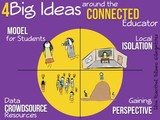
As I am preparing to be part of a panel on October 2, 4 pm (USA EST)/October 3rd, 9am (NZ time) and keynote in Oslo, Norway on October 21st, I am looking at 4 big ideas around the connected educator through the lens of connected professional learning.
I think about the isolation of a teacher within their classroom walls and how connectedness to a global network of experts and peers could expose and add multiple perspectives to their world view and professional practice. I am amazed every time by the transformative nature of teaching and learning, when harnessing the power of a network to crowdsource authentic data, resources, connections and collaborators. Last, but not least, the idea of being able to model for our students what connected learning in an interconnected world means is a moral imperative for educators who are charged to prepare our kids for their future.
Local Isolation as an Educator
Interesting, that when thinking about being connected, my first thoughts turn to the opposite, of being isolated as a teacher. How to break out of the loneliness one can feel as a learner, reflective practitioner and someone looking for feedback when spending most of one’s work day inside a classroom with the doors closed. Traditionally, teaching has been and is one of the most isolating professions.
Isolated in a physical classroom.
Isolated as the only Spanish teacher in the entire school building.
Isolated as the only member on a non existing grade level team.
Isolated by being surrounded with children the entire day without speaking to another adult.
Isolated when only hearing oneself speak when lecturing to a roomful of students, class period after class period, repeating the same lecture over and over again.
6 Ways to Avoid Feeling Isolated in the Classroom by Rebecca Alber (Edutopia)
Being Exposed and Gaining Perspective
How can teachers open up the walls of their classroom and become connected to experience and gain perspectives from other educators around the world? Being connected to other educators and experts gives teachers, for the first time the exposure of multiple perspectives and constant opportunities to access different points of view.
Opportunities from someone who does not live in one’s zip code
Opportunities to connect with someone of a different country, culture and language
Opportunities to learn from people regardless of stereotypes of age or sex
Opportunities to learn from newbies and experts.
Opportunities to see through the eyes of eye witnesses
Take Advantage and Harness the Power of the Network
Once connections are established, trust has been given and received, the network machine has started to function. It is the moment when sending a "shout-out" into your network is not just met with silence. A shout-out is met with a response, an answer, a re-tweet, a comment, feedback, a push back, added value, etc. This goes far beyond traditional face to face network connections though. Traditionally one expected the response from a few people.
Crowdsourcing though"is the process of obtaining needed services, ideas, or content by soliciting contributions from a large group of people, and especially from an online community". The response could easily be co-created by fifty, hundreds or even thousands of people contributing. Part of network literacy is the understanding of and harnessing this type of network intelligence. As David Weinberger in his book "Too Big to Know" stated "The smartest person in the room is the room". It is the exponential potential that makes being a connected educator transformational.
Crowdsourcing for authentic data collection
Crowdsourcing for multiple points of view and perspectives
Crowdsourcing to collect resources
Crowdsourcing to gather different approaches to solve problems
Crowdsourcing to increase efficiency
Crowdsourcing to assemble individual pieces to make a whole with small contributions of each individual
Crowdsourcing to participate in and collaborate on projects
The Moral Imperative to Model Network Literacy and Learning for our Students in an Interconnected World.
One of the modern literacies is Network Literacy. In the Harvard Business Review, Eric Hellweg, outlines 4 key attributes to this network literacy. The capabilities to
Obtain a basic understanding of network technology.
Craft your network identity.
Understand network intelligence.
Understand network capabilities
I strongly believe that if we want globally connected students, we need to have globally connected teachers.
Students need teachers who model connected learning and not just talk about it.
Students need teachers who have experienced connected learning in order to translate and tweak that experience into their classrooms.
Students need connected teachers, who can connect them with an authentic global audience, peers and experts.
Students need teachers to model building an academic learning network.
Students need teachers who are adept in applying global pedagogy (approaches, strategies and techniques to facilitate learning) to their curriculum.
When you think of connected educators, what are your big ideas that surface? Connect your thoughts, come out of your isolation, share your perspective, add to a crowdsourced collection of global pedagogy examples and how you model connected learning for your students.
Connected Educator Month New Zealand
Connected Learning: Plotting pathways, navigating mazes
Much is made of the opportunities that digital technologies offers both educators and students in terms of opening up possibilities for collaboration and learner-centred design. We must also keep our eyes open to the challenges and ask the big questions about why we design learning as we do. This session will debate the issues, gains and challenges for learning in a digital work.
With special guests, Audrey Watters (@audreywatters/Hack Education), Silvia Tolisano (@langwitches/), Tom Barratt (@tombarrett/NoTosh) and Togi Lemanu (@TogiLemanu/CORE Education), hosted by Karen Melhuish Spencer (@virtuallykaren) and Phoebe Davies (@rukuwai).
Connected Educator Month Oslo, Norway
The Connected Educator: Beyond Plugging in Towards Global Pedagogy
With the increasingly interconnected nature of our global society and the need for a very different kind of literacy for our students, extending teaching and learning beyond the walls of our classrooms is especially vital in this digital age.
If you want globally connected students, you need globally connected teachers who are capable of communicating, collaborating and connecting to experts and peers from around the world. These educators are harnessing the power of global connections for their own learning in order to bring the world to their students.
What does collaboration, communication and connections mean in a connected world? What are the steps in becoming a globally connected educator? How do we move from being consumers to producers and contributors? How do we modernize and globalize our classroom practices while expanding our professional learning network to include colleagues from around the world?
Silvia Rosenthal Tolisano
.
Blog
.
<span class='date ' tip=''><i class='icon-time'></i> Jul 16, 2015 06:44am</span>
|
|
I am excited to be sharing global pedagogy in the world language classroom with educators from NJAIS (New Jersey Association of Independent Schools). How do we make world language teaching more relevant for our students in the US? How do we move, as Jason Cummings pointed out, towards oral fluency and interpersonal communication through global connections?
Global skills, literacies, and capacities need to push our teachers and students to not just talk about the world, but learn, speak, and collaborate with the world (HT to Vicky Davis). Globally connected students NEED globally connected teachers. Let’s explore examples and ideas to connect to experts, mentors, and peers from around the world as a way of teaching and learning.
the amplified possibilities of global connections to move beyond your classroom,
a global learning network at your disposal,
using your imagination to bring the world (language and
culture) to your students,
opportunities to support and embed 21st century skills and
literacies in your curriculum,
a showcase of examples from the World Language
classroom.
Global Pedagogy in the World Language Classroom from Silvia Rosenthal Tolisano
Silvia Rosenthal Tolisano
.
Blog
.
<span class='date ' tip=''><i class='icon-time'></i> Jul 16, 2015 06:44am</span>
|
|
From the moment in my first year of teaching, when a colleague told me that she thought I was bragging when I was sharing my work, I have been stumped that "sharing" among educators was not something given, not inherent to a… well… a teacher… I have written many blog posts from It’s All About Sharing & Collaborating, There is a responsibility of sharing among Educators, Sharing in Education- Is it Changing? to What Do You Have to Lose?
I do want to understand WHY some educators choose to not share. I want to understand their point of view… I chose to crowdsource answers to that question. I consider crowdsourcing as one of the transformative big ideas around being a connected educator.
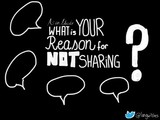
Taking advantage of Mix by FiftyThree, a new platform for Sketchnoting, I uploaded the following image below with the question: As an Educator, What is YOUR Reason for NOT sharing?
Once uploaded to Mix, the sketch is visible to other members of the Mix network. Members can choose to star the sketch, then open it on their iPad Paper app and remix it, which then gets shared back to the platform.
Looking at the responses, I am gaining answers from the different perspectives I was looking for.
Jonathan shared back that "sometimes nobody understands."
Chris shared his reasons "being judged as a teacher’s pet", "I’m shy", "I have no self-confidence" and "people whisper about me".
Mika is being held back from sharing, because of judgement, expectations, fear and feeling that she is not being smart.
Brandon, changed the variable from "educator" to "creator" and lists as his reason holding him back from sharing as: fear, doubt, shame, etc.
Levi adds to general fear, his handwriting, spelling errors and "having no imagination" to the reasons holding him back from sharing.
These are just a few samples of the sketches that have been remixed from my original. In addition the following reasons were also given by several remixers why one does not share:
haters
bullies
What is the point?
experimenting
people may not like it
" I don’t know"
Thank you for "sharing" your reasons why educators might not "share". It is painting a bigger picture for me, beyond my own perspective. I am amazed a the crowdsourcing capabilities of the Mix platform.
Beyond that, the thinking behind creating a slide/image that invites others to add their perspective, their creativity to "the mix" is complex. I am trying to learn from other images that have inspired hundreds of remixes. What sparks inspiration to add in some, but not in others?
How can I make the "variables" (the ones I want others to remix/add to) more obvious? In the above example, I would have liked others, in addition to adding their reasons, to change my signature "@langwitches" with their own Twitter handle and ( as Brandon did) change "educator" for another noun (ex. As a Creator). Just as we help our students "write for an audience", how do we teach and learn to "draw and/or write for a crowd"?
What are your thoughts?
Silvia Rosenthal Tolisano
.
Blog
.
<span class='date ' tip=''><i class='icon-time'></i> Jul 16, 2015 06:44am</span>
|
|
Transforming traditional conference experiences?… learning collaboratively in physical spaces…socially… synchronously… face to face… experiences that spill over into asynchronous learning over geographic distances, time zones and time periods?…. conference archives… conference (Institutional) memories…
Those thoughts and questions have been floating around in my head for a while now and it is interesting to see how, since 2010, they have evolved and developed.
Attending a Conference in 2010
Twittering at a Conference
Documenting Conferences: Blog and Twitter Styl
New Forms of Learning: How to Participate in a Conference 2.0 Style?
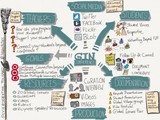
As part of the AASSA team, I will be traveling to the GIN conference (Global Issues Network.) being hosted by Asociacion Escuelas Lincoln in Buenos Aires, Argentina.
GINs are groups of students and teachers, working internationally, to develop solutions for global issues. GINs challenge students and teachers to immerse themselves in a chosen issue and to interact with peers and other international collaborators to create networks, think and act critically, creatively, and innovatively toward creating solutions to address real-world global issues. The key ideas are based on the book High Noon- 20 Global Problems, 20 Years to Solve Them by Jean Francois Rischard
My job, as the Social Media Coordinator, will be to "cover" the conference. I will be tweeting, blogging and documenting the work, collaboration, vision and learning taking place during the three days in Buenos Aires.
The job of a Social Media Coordinator at an educational conference (for teachers or students) is a new concept. I am sure that many participants and even organizers are not quite sure what my role is about?
Goals
One goal is to share resources and what is going on with students and schools who are not physically present in order to connect them and their projects.
The documentation part is also at the forefront to make sure that the conference workshops, film festival and connections made do not end and are not limited to the actual days and people present. How will students take back what they learned, created and planned? How will what happens AFTER the conference be shared and connected?
Continued connections beyond the conference
Documentation and curation ("Digital curation is the selection, preservation, maintenance, collection and archiving of digital assets. Digital curation establishes, maintains and adds value to repositories of digital data for present and future use." via Wikipedia)
Making thinking and learning at the conference visible
Resources
Resources shared and produced at the conferences need to be curated (searched for, selected, tagged, categorized, archived and made accessible)
links (external/internal links)
embedding media (of produced and shared content)
pdf
background info
Production
Create/produce by using and remixing a variety of media
images
videos
interview
curation platform (tweet, blog,
Conference Documentation
tweet
storify
blog
multimedia
sketchnotes
I am also looking at documenting and archiving the conference from the following angles:
Teachers
How can teachers model for, support students and share their own unique perspective of the conference with students and other educators?
How do teachers prepare their students to be successful participants at the conference?
How can teachers support students at the conference?
How will teachers help connect their students beyond the conference with other students, experts, organizations and a global authentic audience?
Students
Students are part of the overall conference crowdsourced documentation team to connect with and disseminate to each other and a global audience via social media
Students contribute their unique perspective.
Students voice representation.
Students start building a global network beyond a face to face network.
Students document in a variety of media in order to contribute to a larger pool of resources
Students see an amplified vision of an "awareness-research-learn-present-action" process that does not end with the end of the physical conference, but continues to play a significant role with follow-up documentation and connections.
What are some other considerations and examples for educational conference documentation? How do we answer the questions I started out with?
How do we transform traditional conference experiences through Social Media, documentation and archiving?
How can physical conference learning experiences spill over into asynchronous learning over geographic distances, time zones and time periods?
How do we produce conference archives (as part of a crowdsourced effort) and conference (Institutional) memories?
Silvia Rosenthal Tolisano
.
Blog
.
<span class='date ' tip=''><i class='icon-time'></i> Jul 16, 2015 06:44am</span>
|