Blogs
|
Sometimes I am still amazed that not more Language Arts teachers have taken a good look at blogging. It seems such a match made in heaven:
giving students an authentic audience for their writing…
incorporating modern skills of writing & reading in digital spaces… (hyperlinking, transmedia, research, etc.)
platform designed for feedback
It surprised me even more (in a good way), when I saw a Math teacher starting to take advantage of the primarily thought of "blogging is about writing- hence for a writing class" platform.
The Math teacher instinctively understood that blogging is not just about writing. It is about "presenting" your work, your thoughts and products to a large audience FOR feedback. Blogging is a platform that allows students to think about their Math work.
In a previous blog post, Telling a Story with Data, you read about Laurel Janewicz‘ upgrade of her traditionally taught lesson of data analysis, graphing and misleading graphs. Laurel was also the teacher, you read about in Making Thinking Visible in Math regarding her work on metacognition in her sixth grade Math classroom.
Blogs played a major role in the upgrade. As the process of creating the data story presentations unfolded, students started to test and recommend various graph-generators or presentation tools. Laurel created a post on her classroom blog to share the recommendations that students shared with her. She then opened the post up for her students to add further links in the comment section. [Note the times students posted to appreciate the extended schedule to share and receive ideas/support for their project development.]
Students had created a presentation, analyzing and articulating a story of the data they had been presented, Part of the learning cycle was to share these presentations on their blogfolios. This could be accomplished by inserting images (screenshots) of their presentation with text, by embed a slidedeck, movie or other presentation platform with an embed code.
The rubric for the blog post had included the following requirements:
Include a title to hook the reader
original data
measure of central tendency
all graphic displayed
complete analysis
complete list of resources
Students were then assigned to look at, view and listen to 2-3 other classmates’ presentations. Keeping the rubric in mind, the teacher had distributed at the beginning of the project, students were to give "helpful" feedback beyond a short "Cool presentation" comment.
At the beginning of class, Laurel gave students clear instructions regarding her expectations of quality comments. She stressed that feedback is designed to make a product better and it was meant to be addressed and responded to when someone had taken the time to leave it.
What about the blog post title hooked you? Are there any suggestions you have for it?
How did the presentation of the data keep you interested and engaged?
What inferences can you make or what conclusions do you draw about the actual data that are different from the project creator’s?
How would you extend the story, meaning what would the next episode be about? (e.g. What data would you want to survey and collect? Who would you want to collect it from? Share it with?)
Think about all of the elements of the graphs, including the misleading ones: title, colors, axes titles, legends, readability. What comments do you have?
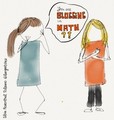
Natasha, who graciously allowed me to use her image, demonstrated great presentation design and digital citizenship on her blog post,You can Never Go too deep When it Comes to Data , when she decided to take her own photo to match the topic of her blog post, instead of having to search for a Creative Commons or Public Domain one or infringe on copyright by using one she had goggled.
Laurel shared the following three blog posts that stood out in her own mind as examples:
Do You Take Time on Weekends to Do More Than Just Be on Your Phone? by Paula
I just think she does a great job of having the data tell a story in an engaging, interesting way. She is the first to have shared her project with me for feedback and I used it to share as an exemplar with classes.
Are you free this weekend? by Mariana
The title hooks me. Her analysis from different perspectives is quite good.
Come to Graded by Jack
Jack incorporates a student and parent interview as a way to provide their perspective of the data.
Still surprised that a Math teacher is using blogging with her students? Learning how to read, write and communicate in different Media in Math is another puzzle piece in making Math more authentic and less abstract for students. Adding and amplifying an audience for students adds engagement and perspectives as well as improves quality of the work as it is transparently shared.
Heidi Hayes Jacobs supports a more language based Math instructions with technology tools. She has also long advocated to teach Math as a foreign language. In an interview with Visual Thesaurus in 2010 she shares the importance of students to internalize Mathematical vocabulary and to be able to use them when one is speaking.
"If Maria cannot say the words fraction, numerator, and denominator, then she certainly can’t read them, let alone carry out her fourth grade math assignment." [...] Mary White from Harvard did a study on decibel levels in comparative levels of math classes in Japan and in our country, and they were significantly higher in Japanese math classes because they have kids speak out loud about what they’re doing. You can’t even ask a question about math if you can’t say the words, polynomial or fraction, for that matter, let alone read them.
Using blogging as a pedagogy, as a method and practice of teaching, in the Math class supports Heidi’s claim of treating the teaching of Math as a World Language instruction. Get the students talking, communicating their ideas, receiving and giving feedback and having conversations…. about Math!
How are you using blogging in Math instruction?
Reading through commenting examples from our students:
I am seeing the process of blogging unfold.
I am seeing students being exposed to receiving and giving feedback.
I am seeing students seeking and responding to feedback and incorporating it to tweak, improve and share their updates (feedback loop)
I am seeing the transparency of creating and sharing lead to improvement
I am seeing the amplification on an author’s own perspectives by the addition of a commenter’s point of view
I am seeing students exposed to more than their own work (ideas, interpretation, creativity, execution, etc.) and feedback from one teacher
Silvia Rosenthal Tolisano
.
Blog
.
<span class='date ' tip=''><i class='icon-time'></i> Jul 16, 2015 06:49am</span>
|
|
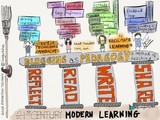
Blogging should not be an add-on, not an isolated project, but should be seen as PEDAGOGY.
Ann Davis shared a definition of Pedagogy beyond a simple "method of teaching" (unfortunately I was not able to find a source of the definition… it seems to be floating around in so many spaces without a common attribution or source.)
The strategies, techniques, and approaches that teachers can use to facilitate learning.
Blogging can support the strategies, techniques and approaches to facilitate the learning in your classroom no matter what grade level, age group and subject area. Blogging supports four primary areas:
Reading
Writing
Reflecting
Sharing
In each one of these areas, blogging can be a strategy to facilitate learning
Reading
in digital spaces support students’ skills in our increasingly digital reading environment
becomes a personalized content experience versus one size fits all approach
turns into a collaborative and connected experience
in digital spaces supports organization via archiving, categorizing and tagging of information
blogs is the start that continues to deepen with writing on blogging platforms
is part of research with non- linear platforms
is an essential component of content curation
supports content annotation which links to future writing
Writing
is about more than text (how do we communicate in a variety of media forms?)
gives students choices to communicate ideas in different media platforms
on a blog is writing for an audience
is about a conversation through commenting
becomes multi-layered and non-linear by using hyperlinks to connect ideas, concepts and resources
in digital spaces give students skills for our increasingly digital world
Reflecting
can’t be just for reflection sake, but needs to drive improvement
is the basis of re-evaluating your teaching and practices
techniques can be supported by Making Thinking Visible Routines
is part of a meta-cognitive (thinking about your thinking) process
Sharing
is part of the feedback loop
is an integral part of the process of learning
is how you disseminate your students’ work to a global audience
as a technique of building and maintaining a digital footprint
is the foundation of a remix culture
How are you using blogging as a strategy, a technique and an approach to facilitate learning? Let’s make it visible for others contemplating blogging with their students?
Silvia Rosenthal Tolisano
.
Blog
.
<span class='date ' tip=''><i class='icon-time'></i> Jul 16, 2015 06:49am</span>
|
|
As I am preparing to leave Brazil to return to home base in Florida, many goodbyes are slowly being exchanged. We said goodbye to our students on the last day of the school year today…we have had several goodbye dinners with friends and colleagues…
I don’t do well with goodbyes… too many of them as a Third Culture Kid with a mobile family stretched around the globe.
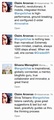
Yesterday my colleagues from Graded-The American School of São Paulo, have truly showered me with a wonderful goodbye present. They have collaborated and written their goodbyes in 140 characters or less, connected them with #hashtags and shared them with me at the year end party. Special thanks go out to Claire Arcenas, Silvana Meneghini and Laurel Janewicz for even sharing and amplifying the snippets live on Twitter.
Compliments are often hard to swallow, but as one friend keeps reminding me, sometimes I just need to accept them and say Thank You!
So, thank you to all my colleagues at Graded. I will miss you as well. The true test of our learning together will be if when we continue to collaborate and learn across distances, no matter where we are…in Brazil, Japan, USA, Luxemburg, England or India….We have the tools… we have the connections… we are not defeated by distances…
A special "Tweetout" to our own Silvia Tolisano @langwitches…you will be missed…
@langwitches is a citizen of the world with a heart as big as this world. Tender and caring, Silvia guides our thinking forward #inspire
Silvia Tolisano @langwitches is inspirational, globally connected, a mentor, blogfolio guru, true collaborator and innovator, a great friend
@langwitches is an amazing teacher coach who always fights for what she believes in. She made me a better teacher! #rolemodel
Silvia Tolisano @langwitches listens carefully, gives great suggestions & last but not least, gracefully guides us thru the thinking process
@langwitches is nothing less than marvelous! Extremely open-minded, creative, always 1000 steps ahead. When we call, she comes @GradedBR
Powerful, revolutionary. A mobile, integrated thinker. @langwitches is high-performance, ground-breaking and configured to order #innovative
Tweeter extraordinaire @langwitches is supportive and resourceful. A true collaborator who is cutting edge in her field #globalleadership
Risk-taker. Passionate. Advocate. GURU. @langwitches actively makes her thinking visible and pushes others to do the same #VisibleThinking
@GradedBR will miss Silvia for everything she is and for everything she makes us be. All the very best @langwitches in your next adventure!
Love,
@gradedBR #MSfarewell
Silvia Rosenthal Tolisano
.
Blog
.
<span class='date ' tip=''><i class='icon-time'></i> Jul 16, 2015 06:49am</span>
|
|
It is the responsibility of all educators to model good digital citizenship for their students. Especially when it comes to copyright, plagiarism and intellectual property. The waters are murky. Not being familiar with online digital rights and responsibilities (hey, teachers did not grow up with the Internet being around), educators are wading through uncharted waters (hey, I did not know that I could not just google an image to use. If someone puts it up online it is free for the taking). That does not mean they can close their eyes and pretend life is the same or that the same rules apply to online versus offline use of copyrighted material with their students.
It is every educator’s responsibility to become familiar , observe and model for their students! It is also every educator’s responsibility to not lump in all educational use of copyrighted material under the claim of Fair Use (hey, I am using it in school, I am not making money off of it…) . It is not that simple…
I have written about copyright on this blog many time. Some highlighted posts are:
Bringing Copyright Awareness to the Surface
How to Cite Images on Your Blog
Citing an Image is Not Enough!
So…You Want to Claim Fair Use?
So… You Want (Have) To Create Something?
No! You Can’t Just Take It!
The waters are murky, it is not an easy topic. While there are some clear cut rules about copyrighted material, Creative Commons and Public Domain content, Fair Use in Education are supported by GUIDELINES, not clear cut rules!
Together with the Academic Technology Team at Graded- The American School of São Paulo, the importance of developing a school policy in regards to copyright was discussed. It was not just about developing a policy, but also about:
raising awareness of copyright issues in a digital world
bringing relevance to classroom teacher at all levels and subject areas in understanding copyright in digital education spaces and seeing it not just as part of the domain of a ‘technology person"
helping teachers shift from previous practices regarding copyrighted material in an analog world
internalize ethical behavior regarding intellectual property available in an online environment
We did our due diligence in researching and gain a better understanding of how other educational organizations were dealing with copyright policy creation, teacher education and support.
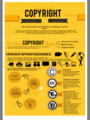
Meryl Zeidenberg, the school’s library coordinator, and I started working on taking the gathered research to inform the development, articulation and design of an "If this… Then that…"type flowchart to better support teachers in making decision when using different types of media in teaching, blogging, presentations or projects.
We have ubiquitous digital access, ease of duplication and distribution of information. We encourage students and faculty alike to write, record, and film for global audiences, thus ushering in a new era of copyright consciousness.
The following infographic chart was developed with an introduction of a New Era of Copyright Consciousness and a suggested simplified flow to follow:
create your own media (then you don’t have to worry about infringing on someone else’s copyright)
search for public domain media (then you don’t have to worry about copyright, since it has been voluntarily released or has expired. No worries about giving proper attribution or citing the source either)
search within the Creative Commons domain (make sure you double check requirements under the license: attribution?, non-derivative? non-commercial? etc.)
determine if your use of the copyrighted material can fall under Fair Use?
[The flowchart is an attempt in creating a clear route to follow to something that is not as clear cut in nature. If you choose to use it, please do so in the spirit of such disclaimer.]
Silvia Rosenthal Tolisano
.
Blog
.
<span class='date ' tip=''><i class='icon-time'></i> Jul 16, 2015 06:49am</span>
|
|
I have written about curation before using Twitter as a Curation Tool and about the importance of helping our Students Becoming Curators of Information. Sue Waters also just published a very comprehensive Curation: Creatively Filtering Content on her blog.
According to Heidi Cohen
Content curation requires more than just the selection of information. It’s the assembling, categorizing, commenting and presenting of the best content available.
I want to take a look at curation through the lens of blogging. How can educators and students use their blogs to become their own information curators and content curators for others in their learning community. Previously , I listed four uses for Twitter as a Curation Tool
Curator:
Consciously becoming the curator for others for a particular niche, area of expertise or interest. Disseminate resources with added value, put in perspective, create connections, present in a different light/media/language.
This is the difference that separates the "collectors" from the "curators". Establish yourself as an expert, by sharing selected quality information freely. This is when YOU become the trusted member of a network that funnels QUALITY / FILTERED information to others.
Information
Collecting, organizing, connecting, attributing, interpreting, summarizing the vast amount of information that comes across your desk/ feed /books/articles/etc. for YOURSELF!
Network
Taking advantage of a network of curators working for you (building your own customized network), consuming their curated information.
In Real Time
Real time curation allows you to be part of an event, that you physically might not be attending or being on the opposite end allows you to be the bridge for others to participate at an event where you are present, but your network is not.
The same uses apply to blogging as a curation tool with the difference that blogging allows you greater freedom in terms of length, presentation formatting and design, as well as connecting and hyperlinking.
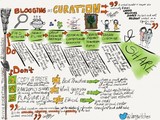
As a blogger, I have found the following workflow as a curator:
Find & Acquire Find information, do research, use RSS, social or traditional media channels. I read mostly via RSS feeds and my Twitter Network
Select & Filter Analyze, evaluate, choose, select, discrd, read, look at and decide…I read… I choose…I tweet…, I "pocket"…, I diigo…, I pin…
Group, Organize & Arrange Group content to specifications, topics, similarities, opposites, specific criteria. Arrange content in a new light. Use tags and categories on blog, to group similar posts together I start a blog post in draft and add as I go along, as my train of thought moves, as a find more resources. I copy /paste and re-arrange quotes, links, etc.
Editorialize, Contextualize & Annotate Share your opinion on content, not just restate or simple reshare a resource. Put selected content in context for readers. Annotate resource through your lens of expertise. I try to connect resources, add value with another perspective, through a different lens, I try to make what I think and see visible to others
Create, Present, Transform & Remix Use selected content ethically to remix, add value and transform the original. Add value to your network by contributing original work. I try to create something new for every post: a mindmap, a sketchnote, an image, a slide deck, an infographic, a video, etc.
Engage & Customize Know the needs of your readers. Create and arrange your content to engage readers to be part of the conversation and learning. Although my blog is primarily a platform for my own writing, learning, organizing, archiving and processing of information, I do write with an audience in mind: educators. I try to engage readers to contribute, add value and connect their own learning as part of a crowdsourced effort of redefining learning and teaching.
Share I believe in Sharing and Amplification Ripple Effect
Some Don’ts for Curators:
Don’t simply copy and paste entire articles from other sites with the intent of "collecting" interesting and relevant work from many different sources in one place. It is not considered best practice among the blogging community. A better way would be to choose a relevant, short portion (quote) of the original work and link to the original author and blog to encourage readers to click in order to read more.
Rohit Bhargava reminds us that
a content curator is someone who continually finds, groups, organizes, shares the best and most relevant content on a specific issue online
I constantly rely on specific curators for certain topics or issues in my network to feed me quality and RELIABLE information.
Don’t andomly sharing a large amount of links in a rapid fire sequence or in a looong bulleted list of links is collecting, not curating. Most of the time, it is seems that "link collectors" just skim over the titles and at most a few sentences of the resources without reading, nor digging deeper into the content. It is by sharing quality and relevant content and by adding value to make me see connections, new background information or a different perspective I had not considered, that curators will gain my trust.
How do you use your blog as a curation tool? What is your niche? How do you become a trusted curator for your area of expertise in your learning network?
Silvia Rosenthal Tolisano
.
Blog
.
<span class='date ' tip=''><i class='icon-time'></i> Jul 16, 2015 06:48am</span>
|
|
Friend and colleague, Andrea Hernandez, filmed and edited the following video. The video is a smorgasbord of thoughts regarding the possibilities of blogging with your students.
You will hear Andrea and my thoughts, as well as students sharing their learning experiences abou blogging and
connecting to the world
quad-blogging
blogging to improve quality writing
transforming the writing process
writing with a purpose
authentic feedback and conversation
global awareness and perspectives
communication skills
student engagement
creative expression
practice platform
digital citizenship
The success of a globally connected student blog largely depends on "how connected their teacher is…". What do you think about my statement of "the teacher has a responsibility to make connections for them"? Does this apply to all grade levels and age groups? When do we hand that responsibility over to the students? How do we guide them in building their own personal learning network?
Silvia Rosenthal Tolisano
.
Blog
.
<span class='date ' tip=''><i class='icon-time'></i> Jul 16, 2015 06:48am</span>
|
|
I am a documenter, I have always been… maybe it is in my blood…
…from keeping diaries from an early age on, being the family letter writer, to taking pictures to document our lives, vacations, family and friends… even when it was tedious… (taking 24 or 36 exposures at a time, then taking it to a photo store to develop them and waiting a week to being able to pick them up).
I am the family historian, creating family albums, chasing and writing down family tree connections….I am the storyteller… repeating family stories… so my children and grandchild(ren) will know where they came from…to not let voices of the past quiet down and disappear…
…so maybe it is in MY blood…but… even if it is not in YOUR blood… as an educator… take another look at the purpose and effect of documenting FOR learning…in my opinion, documenting serves a larger…big picture purpose in education…
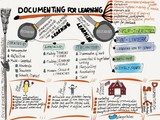
Documenting FOR Learning is:
a supporting piece for the study of self-determined learning-> Heutagogy
a strategy, approach and technique to facilitate learning-> Pedagogy
I see documenting as:
a process of intentional documenting serves a metacognitive purpose
a creative multimedia expression (oral, visual, textual)
a component of reflective practice
taking ownership of one’s learning
a memory aid
curation
professional development
being open for feedback
While I have, until now, primarily seen and used documentation for my own and other’s professional learning by documenting student learning and learning/teaching strategies, one of the take-aways from a workshop I attended recently with Ben Mardell, Making Learning Visible, was that documenting student learning in the classroom is an integral component to inform the direction further instruction and content is to take.
Intentional educational documenting is multi-layered and can serve teachers, students and schools/districts:
Teachers
to share best practices with colleagues
to make teaching available for students outside of classroom hours
to inform further instructions
to reflect on their own lesson plans, delivery and teaching pedagogy
to gather and showcase their teaching portfolio over time
to evaluate student progress, growth and for assessment
Students
to articulate (via different forms of media) and showcase their learning
to become aware of their own learning growth
to gather and archive their digital work via E- portfolios
to build their footprint in a digital world
Schools/ District
to a certain degree in their marketing efforts
in parent / community communication
to attract like minded potential employees
to provide Professional Development
provide documentation and examples to linked curriculum maps
I use the following types of tools for documenting:
Video
Photos
Sketchnotes
Notes (traditional/annotated)
Tweets
Backchannel
Blogs
Slide deck
Screenshooting and - casting
Mindmaps
A very interesting article, titled Pedagogical Documentation (pdf) from the Ontario’s Capacity Building Series by The Student Achievement Division supports the notion that pedagogical documentation helps students take ownership of their learning, challenges teachers to
"see children differently. Different kinds of demonstrations of learning moved us all beyond what we had come to expect, and led us to a place of valuing each child’s contribution. What was made visible was the learning process of children , their multiple languages, and the strategies used by each child."
When googling "pedagogical documentation", many hits are returned regarding the Reggio Emilia teaching approach in early childhood.
In Reggio Emilia, teachers make records of events in the life of the school as a tool for research. This has come to be known as ‘pedagogical documentation’ because of the important role it has in supporting reflective practice. (Dahlberg et all. 1999: 144). Pedagogical documentation consists of records that are made for the purpose of pedagogical research.
Pedagogical documentation could be described as visible records (written notes, photos, videos, audio recordings, children’s work) that enable teachers, parents and children to discuss, interpret and reflect upon what is happening from their various points of view, and to make choices about the best way to proceed, believing that rather than being an unquestionable truth, there are many possibilities.
Beyond the benefits in early childhood, I did not find much in regards to Documenting for Learning with older students (K-16) and adult learners as part of their professional development.
What are your thoughts? What type of research have you come across? Have you conducted action research in your own classroom? With your PD? What are the benefits/disadvantages? Should documenting have an "official place" in our overall learning toolbox? Should documenting be part of every work-and learnflow?
Silvia Rosenthal Tolisano
.
Blog
.
<span class='date ' tip=''><i class='icon-time'></i> Jul 16, 2015 06:48am</span>
|
|
A couple of days, Dan McCabe mentioned me in a Tweet… I took a look at the conversation preceding the "challenge" to "sketch it".
Below is the result and another example of the power of our network to collaborate, to add value and to share… an example of a network work- and learnflow.
Silvia Rosenthal Tolisano
.
Blog
.
<span class='date ' tip=''><i class='icon-time'></i> Jul 16, 2015 06:48am</span>
|
|
I presented Global Pedagogy, Not Just a Project at BLC 2014- Building Learning Communities in Boston, MA.
It’s time to move beyond the "wow" factor of a global project designed to connect your students with other kids who happen to live halfway around the world. Most of these projects don’t go beyond students working parallel to each other, contributing their perspective, data or participating in Q & A sessions via synchronous or asynchronous technology platforms.
Global skills, literacies and capacities need to push our teachers and students to not just talk about the world, but learn, speak and collaborate with the world. Let’s explore examples and ideas to connect to experts, mentors and peers from around the world as a way of teaching and teaching.
Silvia Rosenthal Tolisano
.
Blog
.
<span class='date ' tip=''><i class='icon-time'></i> Jul 16, 2015 06:48am</span>
|
|
I had the pleasure of meeting Bob Greenberg, the mind behind The Brainwaves Channel at BLC14 in Boston. Bob has been traveling the US and the world to film and connect educators who share their own thoughts, perspectives, experiences and ideas on education.
"The Brainwaves" is a video anthology. Here you will meet the thinkers, dreamers and innovators; some of the brightest minds in education. This series is meant to inspire and engage the viewer to dig deeper and learn more. In the words of Georges Melies, (The Invention of Hugo Cabret) "Now sit back, open your eyes and be prepared to dream."
I am honored to have been asked to share my thoughts on globally connected learning along side a fantastic list of friends, colleagues and mentors in the field of education.
These short videos (about 4-10 minutes long) are thought starters for any self-directed educator and conversation starters for learning communities and professional development.
Sample Videos from the list of over 65 videos (and growing)
Yong Zhao, "World Class Learners: Educating Creative and Entrepreneurial Students" http://youtu.be/Wk-J3E8yqc
Tony Wagner "Creating Innovators" http://youtu.be/IE6-u6N5oE8
Heidi Hayes Jacobs "Mastering Global Literacy" http://youtu.be/S3Hhd8K6KM4
Pasi Sahlberg, "Finnish Lessons: What can the world learn from educational change in Finland?" http://youtu.be/__fPKinzHCg
Alan November "Who Owns the Learning? Preparing Students for Success in a Digital Age" http://youtu.be/NOAIxIBeT90
Silvia Rosenthal Tolisano
.
Blog
.
<span class='date ' tip=''><i class='icon-time'></i> Jul 16, 2015 06:48am</span>
|