Blogs
|
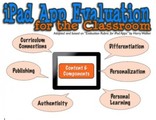
I wanted to take a closer look at the iPad Evaluation I previously blogged about in Evaluating Apps with Transformative Use in Mind. The section of Content and Components deserved a closer look and explanation.
You can download the PDF file of the iPad App Evaluation for the Classroom with the following sections of evaluation included:
Considerations
Content & Components
Logistics
Fluency
Substitution vs Transformation Model (based on SAMR model of Ruben Puentedura and Alan November‘s work)
Evidence of Learning (based on conversation with Stephen Wilmarth)
After looking at iPad apps through the lens of Gardner’s Multiple Intelligences, November’s Digital Learning Farm, 21st century Upgrades, let’s take a closer look at the content and components of these apps.
It is important to remind ourselves that shiny visuals and audio not automatically translate into pedagogical value of the program. It is our job, as educators, to assure that by using specific apps, the learning goal for our students is supported. A selection, combination and variation of the above six characteristics should be evaluated in the assessment process for learning. In addition, as you are strategically evaluating the content particular apps provide, these components will serve as critical support consideration as they are being brought up to your school, district or decision makers for potential app purchases. These considerations will also provide a wealth of support in speaking with parents or other stakeholders to articulate the value of iPads as a tool for learning.
After each component consideration, I am going to put the Book Creator app (By RedJumper Studio- ) through the test, as an example, to see how it stacks up against the evaluation of its content and components.
Curriculum Connections
Using an app for the thrill of the bells and whistles any particular app under the educational umbrella promises, is not a good enough reason for adding it to your app library. Careful examination is in order if the app supports or practices skills and literacies that are strongly connected to your curriculum content, standards and your individual student ‘s needs.
Start out by looking at your standards, lesson/unit goals and objectives. Where do your students need to be supported and given time to investigate new content, analyze, apply what they have learned or give evidence of their knowledge and understanding? Can a product created by your students with a particular app be used as an assessment of curricular objectives?
While there are apps that are geared to be replacement for textbooks or worksheets and bring in a myriad of multimedia support of a specific subject or topic, does the amount of content they provide justify the cost or use of the app? Is the content static in nature or does the app allow dynamic information flow (via RSS feed for example)? Is there an option of adding your own content? Is the app flexible enough for you to find, import, insert, tweak or create your own curriculum related content?
The BookCreator app does not come with a pre-loaded content geared towards a specific grade level, subject area or proficiency level. It is an app that allows for complete freedom to create an eBook about any subject, topic, genre, level, etc. Any standards, from research skills to content knowledge (history, science, math, language arts, foreign language, etc.), writing for an audience, multi- and transmedia skills, design elements and more can be addressed. The app molds to any content requirement you are in need of.
Authenticity:
Too many times, students do not know why they are filling out this worksheet or completing that assignment. "Why do I have to do that?" and "I will never use this again" are sentiments we are hearing too often in our schools.
Be aware of apps that are specifically designed for the educational arena. Ask yourself, would someone outside of school use this app? Is there a genuine purpose for this app outside a school environment?
Strategically chosen apps can help students not only learn and practice skills in case they will need them one day, but are targeting skills that are practiced in an authentic format and are part of just- in- time solutions. The app is not a simulation of a process, but allows students to get hands on time to do real world work like creating products with tools that are used outside of school, gaining important digital literacy skills in the process.
The BookCreator app is not designed for a school environment only. The ability of creating your own eBook and publish the book for others to download and read fulfills an authentic need for the world outside of the classroom as well. The era when book publishing was in firm hands of publishing companies, editors and agents are gone. The skills to be able to produce and publish our own content is real, relevant and desirable.
Personalization
We live in a time when customization is king in business and our personal lives. We all are used to, including our students, to be treated as individuals. From the special laté we order at Starbucks to the movies we watch on Netflix, the personalized T-shirts or shoes we order, the targeted ads on Google or the customized recommendation list we receive from Amazon, based on our previous browsing and purchasing history and yes, also the way we outfit our smartphones with apps and customized covers. We are individuals and don’t want to settle for "one size fits all".
In order for an app to earn high marks in the personalization department, it should be able to offer options to import our own images or videos to personalize the content. Personalization can mean, the app supports streaming content of our own choosing, allowing RSS feeds from a variety of sources. The app also contributes to organization and curation of the user’s learning and facilitates personalized workflow, by connecting easily or automatically to photo gallery, research, content and preferred input or dissemination channels.
The BookCreator app allows for an easy and complete personalized experience. Users create eBooks with their own content, images, audio and/or video. Formatting options for background, colors, fonts and size are left to be customized for the user. Organization of the content and easy access to personal content are present.
Differentiation
According to Wikipedia (http://en.wikipedia.org/wiki/Differentiated_instruction ) , differentiation in education is defined as
"a framework or philosophy for effective teaching that involves providing different students with different avenues to learning (often in the same classroom) in terms of: acquiring content; processing, constructing, or making sense of ideas; and developing teaching materials and assessment measures so that all students within a classroom can learn effectively, regardless of differences in ability."
Comparing differentiation with the other component of personalization, differentiation deals with the teaching component, while personalization is closely related to the learning aspect.
Applying the above definition of differentiation to the context of apps, the app should offer flexibility to alter the settings to meet individual students’ needs. "One size does not fit all", applies to both sides. An app that does support differentiation does not impose any limits to grow skills and to create. It seamlessly allows each individual learner to be challenged their strengths and support their weaknesses.
The BookCreator app gives ample flexibility for customization of differentiated expected results of the final product for each student. It also has the capability to address and accomodate preferred learning styles to give evidence of knowledge and learning.
Personal Learning
Personalized learning is about using our own content, such as text, images, video or audio, while personal learning is about the learners’ interests and passions. An app that supports personal learning supports the flow of receiving, organizing, annotating, adding value to, remixing, creating and connecting to these areas of interests and passions. The app could allow users to add feeds that filter information by their personal chosen requirements and is set up in the "just perfect" way to make the learn flow of the individual learner smooth and fluent.
An iPad, as a personal learning device, contains specific apps, that together support the individual’s pursuit of the just right amount of desired information, delivered in the preferred media of choice, capable of allowing the user to use, add, remix, create and disseminate.
The BookCreator app encourages the creation of eBooks to publish and share with others about any desired topic. Users could use the app to become the expert and author of a book about their chosen interest or passion.
Publishing
The learning environment in and outside of schools has and is continuing to drastically change. While learners once were only passive recipients of knowledge, learners have now become active participants and creators of knowledge, collaborating and contributing to a worldwide network of learners. The boundaries of experts and learners are blurring more and more and the transparency of sharing one’s work with the world is possible and is becoming the norm for the new generation.
The ability of an app to support the publishing and dissemination process of created content is an important component to consider. Be aware of the degree of ease to export or embed the product in a variety of formats and directly to various platforms (Ex. blog, wiki, Facebook, twitter, Flickr, YouTube, etc.)
The BookCreator app allows for export as a ePub file, by sending the file via email to a recipient. It can be directly sent to iTunes, be opened up in a variety of other apps, that support the ePub file extension or it also give the user the choice to print the book on paper. I
Silvia Rosenthal Tolisano
.
Blog
.
<span class='date ' tip=''><i class='icon-time'></i> Jul 16, 2015 06:57am</span>
|
|
I might be (very) late to the party around the popular YouTube Channel from the Fine Brothers and their series of Kids React, but I just made a connection to student blogfolios and student led conferences.
In the beginning of each episode of Kids React, kids are being presented with an object or videos (artifact) and are being filmed reacting to these. They are asked to "think out loud" without any further instruction. Kids are articulating questions that are popping up in their head, they are narrating out loud how they are trying to make sense of what they are seeing, how these things fit into their world view or trying to make them work. Next comes a section called "Question Time", where they are being asked guiding questions. Again they are being filmed as they are trying to answer these questions according to the background knowledge, their perspective and ability to communicate their answers. "Kids React Facts" are short snippets of background knowledge that the Fine Brothers overlay as text titles to specific video sections.
How do I think these videos are related to student blogfolios and student led conferences?
We are asking our students to think out loud, when sharing their learning and reflection on their blog. Documenting their learning, requires students to ask: Where have I been? What have I done, Where am I now? How does this fit in with what I already know?
By asking students to use Visible Thinking Routines and giving them guiding questions to consider and address in their blog posts, there are making their understanding of the learning process, their thinking path and learning strategies, their position (in this moment in time) in relationship to the learning targets visible to us and their blog readers. Leaving comments or creating links to add
The blog platform documents and shares the students’ understanding, point of view and journey. It is a platform that allows all different types of media to be embedded and inserted to be able to communicate student thinking to a potential global audience. These documentation is archived and organized for later retrieval.
During student led conferences, we are asking students to orally share their learning with their parents. They are using artifacts which they created and that demonstrate evidence of their challenges, successes, process and learning.
The following remix of snippets from the 100th episode is an opportunity to see the participating kids (over the last 4 years) grow and see their thinking and communication skills evolve. It is my hope that the blogfolios with the documentation of students’ learning and thinking evolve in the same kind of timeline that allows to see that growth happen before our eyes as well.
Silvia Rosenthal Tolisano
.
Blog
.
<span class='date ' tip=''><i class='icon-time'></i> Jul 16, 2015 06:57am</span>
|
|
I get asked all the time about the name of my blog: Langwitches.
So here is the story…
It’s a cultural thing… Some cultures see "witches" as a normal part of human history and playing an ongoing role in literature throughout different time periods. Other cultures don’t have a place for witches or see them as heathens and evil. I grew up in Germany, where witches don’t seem to have a negative connotation or at least not one I was aware of when growing up. My father’s nickname for me was "Hexe" (German word for witch) and we have had over the years two dogs named "Hexe". In Germany, there are plenty of witch related knick knacks being offered in the stores or street markets, from porcelain dolls, puppets, erasers, pens, books, films, etc.
Over 10 years ago, I maintained a website (in German) called Sprachhexen.
Sprachhexen started in 1999 as a resource for German families living abroad trying to raise bilingual children. Since then Sprachhexen has grown to address also the needs of foreign language educators who are looking to find support and ideas from other teachers in teaching bilingual children as well as as second language. Through examples, concrete lesson plans, recommendations, and relevant links Sprachhexen wants to fill the need for quality resources which many foreign language teachers lack, due to professional isolation from colleagues.
I wrote the following as an explanation for my liking for witches. See translation in English below…
Unsere Vorliebe fuer kleine Hexen…
Es ist kein Geheimnis ! Meine Kinder und ich lieben kleine Hexen. Egal, ob sie in Buechern, Filmen oder Spielen vorkommen.
In unserer Familie lebten schon zwei Hunde, die den Namen "Hexe" trugen, mein Vater nannte mich als Kind seine "Hexe" und auch noch heute habe ich eine Vorliebe fuer Marionetten- Hexen und Hexen-Puppen und anderen Hexen-Schnick-Schnack. Kein Wunder, dass dieses Online -Projekt der Unterstuetzung zweisprachig erziehender Eltern auch "Sprachhexen" getauft wurde. Immerhin habe ich ja drei kleine Sprachhexen zu Hause. Aus Spass an der Freude wollen wir nun auf Sprachhexen spezielle "Hexenseiten" vorstellen.
Warum finden wir kleine Hexen ueberhaupt so suess und interessant?
Böse Hexen gibt es in Kinderbüchern kaum mehr. Die letzte wirklich gruselige Hexe, die meinen Kindern Angst einjagte war die Stiefmutter von Schneewittchen.
Die Hexen in der heutigen deutschen Kinderliteratur sind auf pädagogisch wertvoll getrimmt und nicht dazu da den Kindern Angst einzujagen wie in den alten Maerchen.
Die meisten kleinen Hexen sind ganz normale Menschen im Alltagsleben, die zufällig extra Kräfte haben und diese eigentlich zum Guten oder vielleicht gerade mal zum Unsinnmachen nutzen. Die Hexen aus den aktuellen Kinderbüchern gehen genau wie alle anderen Kinder zur Schule, muessen lernen, treiben Sport, haben Freunde und ähnliche Problme wie ihre Nicht-Hexen Leser und Leserinnen.
Die Anzahl der deutschen Bücher, die von kleinen und grossen Hexen handelt, beweist ihre Beliebtheit unter den Kindern ( und auch Erwachsenen) im deutschsprachigen Raum. Der Erfolg der Harry Potter- Bücher und des Filmes zeigt dies derzeit am Besten.
Der Klassiker aller Hexenbücher ist und bleibt für uns "Die kleine Hexe" von Otfried Preussler. Auch hier ist die Hexe dafür da, den Lesern eine Moral beizubringen. Gute Taten sind besser als schlechte.
Natuerlich kann man Bibi Blocksberg nicht vergessen. Die kleine Hexe aus Neustadt , die mit ihrem gruenen Kleidchen und ihrem heissgeliebten Besen "Kartoffelbrei" das Herz kleiner Maedchen von 3-13 Jahre hoeher schlagen laesst.
Fuer uns im Ausland Lebenden ist es manchmal schon ein zweischneidiges Schwert mit unserer Vorliebe fuer kleine Hexen. Nachbarn schauen schon ab und zu komisch, wenn die Kinder als kleine Hexen verkleidet, spielend auf ihrem Besen durch die Strasse fegen (und nicht nur an Halloween) und wir sind andererseits erstaunt, wenn der Schuldistrikt hier in Jacksonville die beruehmten Harry Potter Buecher in der Schulbibliothek verbieten moechte.
Our fondness of little witches
It is not a secret! My children and I love little witches. It does not matter if they appear in books, movies or games. In our family, already two dogs bore the name "Witch", my father called me as a child his little witch and still today, I have a fondness of puppet witches and witch dolls and other witch related memorabilia. No wonder that I named my online project to support parents of bilingual children "Sprachhexen" (witches of the languages), since I also have three little bilingual children at home. Out of fun, we are presenting dedicated Witch pages on the website.
Why do we find little witches cute and interesting?
Evil witches barely appear in children’s books these days. The last creepy witch my children were afraid of, was the mean stepmother in Snow White. Witches in today’s German children literature are geared towards pedagogical values and not to scare young children like in old fairy tales. Most modern witches in German literature are normal humans living a normal day-to-day life. They use their extra powers to do good or at its worse to make nonsense. Witches, in modern children books, go to school like normal children, they have to learn, they do sports, they have friends and similar problems like their non-witch readers.
The amount of existing German books who deal from little to big witches show the popularity among children (and also adults) in the German speaking regions. The success of Harry Potter films and books supports this as well.
Among the classics of all witch books, our favorite is "The little Witch by Otfried Preussler. In the book, the witch is there to present the moral of the story.Good deeds are better than bad ones. Of course, one can’t forget Bibi Blocksberg either. The little witch from Neustadt, who with her green little dress and her beloved broom "Kartoffelbrei" wins over the hearts of all girls between the ages of 3-13 years.
For us, who are living abroad, it sometimes can be a double edged sword with our fondness of little witches. Neighbors give us funny looks, when the children dress up as witches and use our kitchen broom to play on the street (and not necessarily only during the Halloween season). We, on the other hand, are surprised when the local school district bans books like Harry Potter from the school libraries.
As my children grew, as part of my Master’s Degree in Instructional Technology, I created a website for Using Technology in the World Language classroom (geared towards educators). The new was an extension of the original Sprachhexen site (geared towards parents). It was a logical extension to name the new site a direct translation into English "Witches of the Languages", which then became the play on words of "Langwitches".
Silvia Rosenthal Tolisano
.
Blog
.
<span class='date ' tip=''><i class='icon-time'></i> Jul 16, 2015 06:57am</span>
|
|
Today, April 22, 2014, NASA is crowdsourcing Global Selfies.
NASA astronauts brought home the first ever images of the whole planet from space. Now NASA satellites capture new images of Earth every second. For Earth Day we are trying to create an image of Earth from the ground up while also fostering a collection of portraits of the people of Earth. Once those pictures stream around the world on Earth Day, the individual pictures tagged #GlobalSelfie will be used to create a mosaic image of Earth — a new "Blue Marble" built bit by bit with your photos.
Need an idea of what kind of picture to take? Get outside and show us mountains, parks, the sky, rivers, lakes — wherever you are, there’s your picture. Tell us where you are in a sign, words written in the sand, spelled out with rocks — or by using the printable signs we’ve created that are available at the bottom of this page.
The Earth mosaic image itself and a video using the images will be put together and released in May.
My students at the American School of Sao Paulo and I have participated. How about you? There is still time.
Post your photo to Twitter, Instagram or Google+ using the hashtag #GlobalSelfie, or post it to the #GlobalSelfie event page on Facebook or the #GlobalSelfie group on Flickr. You can also join the #GlobalSelfie Google+ event page.
Silvia Rosenthal Tolisano
.
Blog
.
<span class='date ' tip=''><i class='icon-time'></i> Jul 16, 2015 06:57am</span>
|
|
If you are blogging with your students, you have been exposed to them. You have been exposed to hundreds of unimaginative, cloned, generic and uninspiring BLOG TITLES. When opening your...
Silvia Rosenthal Tolisano
.
Blog
.
<span class='date ' tip=''><i class='icon-time'></i> Jul 16, 2015 06:56am</span>
|
|
Humanities teacher, Shannon Hancock, at Graded, the American School of São Paulo, read and worked through The Alchemist by Paulo Coehlo with her 8th grade students.
Not only did they read the text, learn about literary elements, but also learned to articulate and discuss in a professional manner the text with their peers. Shannon chose to use the Socratic Method, specifically a Socratic Seminar (Inner/Outer Circle Fishbowl) to hand the learning over to her students. She stressed to them: " Educators don’t need to have all the answers, it is about asking the right questions." Wikipedia explains the Socratic Seminar as follows:
This approach is based on the belief that participants seek and gain deeper understanding of concepts in the text through thoughtful dialogue rather than memorizing information that has been provided for them. While Socratic Circles can differ in structure, and even in name, they typically involve the following components: a passage of text that students must read beforehand and two concentric circles of students: an outer circle and an inner circle. The inner circle focuses on exploring and analysing the text through the act of questioning and answering. During this phase, the outer circle remains silent. Students in the outer circle are much like scientific observers watching and listening to the conversation of the inner circle. When the text has been fully discussed and the inner circle is finished talking, the outer circle provides feedback on the dialogue that took place. This process alternates with the inner circle students going to the outer circle for the next meeting and vice versa. The length of this process varies depending on the text used for the discussion. The teacher may decide to alternate groups within one meeting, or they may alternate at each separate meeting.
Shannon prepared her classroom by physically arranging the desks in an inner and outer "circle"…
… and prepared her students with the Socratic Seminar Norms for the discussion.
We tweaked the traditional format of the Socratic Seminar to include a backchannel. A backchannel is a parallel discussion, a collectively shaped comment on some ongoing conversations, not that different than the outer circle described in the Socratic Seminar. The backchannel in this case was the secondary digital discussion of the literary text. One student was the backchannel moderator in charge of making sure that Today’s Meet was projected and refreshed properly on the screen.
Watch the video below to catch a glimpse into Shannon’s classroom and their use of a backchannel for the first time.
Reflection of the Backchannel as part of the whole class text discussion:
All students had opportunity to contribute to the conversation (even the "silent" outside circle)
(Shy) Students who had a harder time articulating orally their opinions in the "inner" circle were able to contribute in written form
The skills to listen, observe, document, contribute, read, write, add value, ask questions and respond to others in the backchannel, all at the same time, is not a skill we are born with. It requires exposure and practice.
The backchannel log, gives an opportunity to review and assess individual students beyond the "in-the-moment". It also gives students an opportunity to review and reflect on the experience.
The backchannel exposes students to a collaborative writing environment.
Possible extensions: Assign a student (or a group of students) to be the "Backchannel Cleanup", responsible for saving, copying and pasting the log into a shared document. They then edit and format the log by deleting duplicate, unrelated or non-comprehensible comments. They can also organize the comments according to topics.
Analysis of the Backchannel Log:
There were many different layers going on in the Backchannel.
Observation and comments about the Socratic Seminar behaviors
Observations of literary discussion elements
Documentation of inner circle discussion
Added commentary of own opinions.
Parallel conversation going in backchannel and inner circle.
Please note that the screenshots below are not in chronological order. They are shown to illustrate some of the points of the reflection and thoughts about the use of the backchannel.
I must admit, that I was in complete awe of the students and their teacher of how well prepared they were to come together and have a serious literary discussion round. The Socratic Seminar lesson could have stood on its own without adding any further layer facilitated by technology. It was the quality of the teaching and learning already present that allowed the backchannel to add another quality layer.
I can’t help myself, but I am already dreaming of further amplification.
What if ..
What if the class connects with another class who is reading the same book.
What if the one of the class can potentially contribute yet another perspective (possibly due to culture or geographical location) to the understanding and comprehension of the text. (Ex. Could our Brazilian class not contribute the perspective of the controversy of the Alchemist book here in Brazil to a class located in Sweden, for example, reading the same book?)
What if half of the inner circle (the fish) is in one class and half of the inner circle is participating via Skype or Google Hangout from a different class? (Synchronous)
What if the backchannel is comprised of students from BOTH classes (synchronous (Today’s Meet) and asynchronous (Google Document)?
Interested? Let’s dream up another layer of collaborative reading, writing and discussing literary text.
Silvia Rosenthal Tolisano
.
Blog
.
<span class='date ' tip=''><i class='icon-time'></i> Jul 16, 2015 06:56am</span>
|
|
7 Billion Others… There are seven billion other humans living on our planet. How do they live? What is important to them? What makes them tick? Do they live similar than me? Are they different than me? How?
These questions intrigued Ana Paula Cortez, one of our Portuguese teachers at Graded, the American School of São Paulo, and compelled her to explore them with her students.
Inspiration: 7billionothers.org
In 2003, after The Earth seen from the Sky, Yann Arthus-Bertrand, with Sybille d’Orgeval and Baptiste Rouget-Luchaire, launched the 7 billion Others project. 6,000 interviews were filmed in 84 countries by about twenty directors who went in search of the Others. From a Brazilian fisherman to a Chinese shopkeeper, from a German performer to an Afghan farmer, all answered the same questions about their fears, dreams, ordeals, hopes: What have you learnt from your parents? What do you want to pass on to your children? What difficult circumstances have you been through? What does love mean to you?
Forty-five questions that help us to find out what separates and what unites us. These portraits of humanity today are accessible on this website. The heart of the project, which is to show everything that unites us, links us and differentiates us, is found in the films which include the topics discussed during these thousands of hours of interviews.
Objective: Raise awareness of culture and interconnectedness of common themes/threads that connect humans no matter of their cultural origin. Take advantage of our multilingual students to share and connect speakers of different languages.
Students: 7th & 8th grade Portuguese Language Learners
Project Idea: Middle School students create a video (testimonies, journal type) responding to pre-set prompts from 7billionothers.org (love, happiness, work).
Future extension idea: personalize the prompts by tweaking to address specific middle school topic…. friends, family, what do you want to be when you grow up….)
Process:
1. Discuss video filming techniques.. observe the ones recorded on 7billionothers.org
Framing
Angle
Stability
Background
2. Watch Testimony videos (students get to choose)
3. Discuss and record prompts
students answer the same prompts (practice orally with a partner (ex. dreams, family, country, happiness, fears)
record the video talking about the specific prompt (keep it short 15 -50 seconds). Students get to choose in which language (Portuguese/English/Mother tongue)
add subtitles in Portuguese/English/Mother tongue depending on the language they chose to record the video in
upload and embed to their blogs
write a reflection about the chosen prompt (not on video technique) and publish (Ex. Gaetano, Clara, Ivanna, Seo-Hyun, Laura, Francisco, Jason, Juan Pablo, Andrew )
4. Amplify original prompts and videos
brainstorm additional prompts ,what would same age kids in other countries be interested in hearing their opinions about?
finalize and choose new prompt to film
record thoughts (less than 30 seconds) Language: your choice
Add subtitles in Portuguese/English/Mother tongue
upload and embed to blog, publish
Future Idea (next school year starting August 2014):
having example videos, invite classes from around the world to contribute to the same prompts
Looking for Global Partner Classes
Are you up for it?
Can you see how your students could articulate, communicate and contribute to a more global understanding of "What separates us? What divides us?" How are we different? How are we the same? from the perspective of a Tweens and Teens?
How can you connect this to your curriculum objectives and standards? World languages, Technology standards, Media Literacy, Global Literacy, Network Literacy, Information Literacy…
Leave a comment (make sure you receive notification of follow up comment and/or fill out your email box in the comment form) if you are interested and want to be notified next school year to be part of the amplified project.
Silvia Rosenthal Tolisano
.
Blog
.
<span class='date ' tip=''><i class='icon-time'></i> Jul 16, 2015 06:55am</span>
|
|
What Do You Have to Lose? was a blog post I wrote 4 years ago…
It is a new idea for many classroom teachers/students to move from writing, reading and "doing" work, not only for themselves, supervisors/parents or for a monetary compensation/grade, to share their work openly and freely with others. The idea of putting oneself "out there on the internet" (on a larger scale than the teacher lounge) and publicly "brag" about successes, admit failures, ask for help or document one’s learning and teaching process, feels unnatural and even scares many of them.
A lot of water has gone under the bridge, a lot has changed in terms of technology… It has been 4 years and my belief in sharing to amplify teaching and learning has grown stronger, even when the work I share gets taken, plagiarized and used for profit by others.
I am continuing to make the benefits of documenting (for reflection, metacognition and connection purposes) visible, but the documentation can not be the end all. The next step must be sharing and disseminating that documentation. It is about sharing conversations, resources, model lessons, student work, reflections, innovative ideas, action research, etc. Sharing in service of benefiting the educational community and advancing eduction. Sharing in order to be part of a network that supports each other and and pushes thinking forward. Without individual parts, there is no network. The more parts, the larger and stronger the potential network.
In the last few weeks, there have been many examples at Graded, the American School of São Paulo, that show the power of sharing and the ripple effect it created:
Teaching others you will never meet
Authentic audience
Feedback
Personal Branding
Remix & Added Value
Building a Personal Learning Network
Let me share three specific example when educators reached far beyond the walls of their classroom, school, direct colleagues and students.
Claire Arcenas, started her own professional learning blog to document, share and grow her understanding of Visible Thinking across subject areas. Not long after she started blogging, Ron Ritchhart’s (one of the authors of the book) on the Making Thinking Visible Facebook page shared the link to one of her blog posts, validating to a certain degree her work in the classroom and demonstrating that her work is being read by others.
Shannon Hancock allowed me to video record her as she was facilitating a Socratic Seminar and a Backchannel. Through blogging and sharing the video and the lesson via the Langwitches blog, Shannon taught and reached many teachers (around the world) and colleagues (at school) who did not have come into her room to observe the lesson. In turn through them, she reached many students beyond her own classroom.
Re-tweets or posts on Twitter or "sharing counters"on blog post as well as blog reflections like the one Terry Eichholz shared on What would Socrates do? help demonstrate the ripple effect started by simply sharing.
Even if you do not have enough digital devices to exactly replicate Shannon’s lesson, I encourage you to take a look at the article, which includes a wonderful video of the class in action, as well as examples of comments made on the backchannel. I love the way Shannon introduces the lesson, as well as her encouragement of the students to collaborate by having a short discussion with partners at the half-way mark.
Watching Shannon Hancock inspires me to work harder to make our classroom Socratic Circles more meaningful and deep, whether we use technology or not.
This kind of evidence of dissemination and inspiration to others are helpful in receiving feedback of our own teaching and learning, as well as gauging interest on a particular topic or discussion and finding potential educators to grow your PLN and to connect and collaborate with in the future.
The third examples is from a Math teacher, Laurel Janewicz, who did action research about Metacognitive thinking in her Math class. Sharing the student created screencast videos about making their thinking visible as well as documenting the process in the classroom created far reaching ripple effects. Not only did she present her work at the AASSA conference (Association of American Schools in South America), but her work was also retweeted by Scott McLeod , someone with over 30,000 Twitter followers. Think of the reach such "seismic network dissemination wave" of a resource can have.
A few days ago, another school in Brazil having read the blog post, contacted our principal to ask if it would be possible to come and visit our school in order to talk with Laurel about her work. Laurel’s sharing is producing waves in thinking and action, inside and outside of her classroom.
In the spirit of sharing and amplifying…
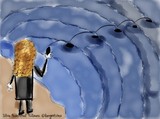
I am sharing with you the image of the ripple effect below, before, I added my perspective and interpretation of amplification by sharing.
Download it, remix, reuse and re-share your thoughts and ideas of a ripple effect in education. Leave a link in the comment section to your new image.
PS. I used the iPad Paper app to draw the ripple effect background and Perfect Captions app to add the text to the image.
Silvia Rosenthal Tolisano
.
Blog
.
<span class='date ' tip=''><i class='icon-time'></i> Jul 16, 2015 06:55am</span>
|
|
Mark Engstrom. 8th grade Geography teacher and Assistant Principal at Graded- The American School of São Paulo, has redesigned his entire course.
Students move through the modules of this blended learning course on Geography at their own pace. They build out content knowledge using a Personalized Map (through google maps) and the content delivered through this Digital Learning Farm method will be curated so that they can build out multiple pins on their map. This content is then used as content knowledge to increase their understanding of the region.
He wanted to experiment with a different type of note taking to add to students’ documentation of gaining subject specific content knowledge.
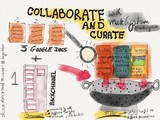
The class was divided into 3 groups. Each group contained one person responsible to contribute by :
taking notes on one google doc- each has a column
adding raw data (statistics, facts, charts, graphs, etc.)
adding images that visualized what was being talked about
writing on the backchannel
asking questions
linking to the course’s Essential Questions
Take look at the following video summarizing the class.
It is incredibly insightful to be going through and analyzing the backchannel chat after the class is over. It gives you a better understanding of:
what students heard
what students felt was important to capture
the discussion that evolved in the backchannel alone
the connections students made and shared
It was now back into each individual student’s court to CURATE their own notes. Students had access to all documents from each group as well as the backchannel. It was up to them to go trough the information and take the pieces that they deemed important to add to their content knowledge.
Digital curation
is the selection, preservation, maintenance, collection and archiving of digital assets.Digital curation establishes, maintains and adds value to repositories of digital data for present and future use.This is often accomplished by archivists, librarians, scientists, historians, and scholars. Enterprises are starting to utilize digital curation to improve the quality of information and data within their operational and strategic processes
Curating information has become a critical skills as part of information literacy. The ability of finding, evaluating, analyzing, remixing, organizing and archiving information is more important than ever in the information overload era. The amount of information we are confronted with and that is being thrown at us is exponentially growing with no sign of stopping nor slowing down. We need to find ways to support students in becoming curators of information.
One of the students, Ben, observed the following as he was going through the notes from the Backchannel group:
I found these very interesting because Florens and Tibet really try to link what is happening in India to our life in São Paulo which for me is a smarter way to learn things; by comparing them with your everyday life.
Silvia Rosenthal Tolisano
.
Blog
.
<span class='date ' tip=''><i class='icon-time'></i> Jul 16, 2015 06:54am</span>
|
|
There can never be enough examples from the classroom to share. The benefits are many, from creating a ripple effect of digitally documenting and sharing to a glimpse in someone else’s classroom by having the opportunity to be a fly on the wall via a video clip.
I have shared the Excitement of Learning that can unfold with a Mystery Skype call before. The following video clip is from David Jorgensen’s 8th grade Humanities class (São Paulo, Brazil), recorded during their first Mystery Skype with a class from rural Iowa, USA.
Take a closer look at the collaboration, roles of each student (based on Alan November’s Digital Learning Farm), and their practice of questioning techniques.
Silvia Rosenthal Tolisano
.
Blog
.
<span class='date ' tip=''><i class='icon-time'></i> Jul 16, 2015 06:54am</span>
|