Blogs
|
I am working hard at being a "connector" at my new school. I want to help shift the culture to thinking differently about learning. Bringing in experts from around the world to make a topic and content come alive, to answer questions and taking learning off the pages of a book is a critical component of modern learning. I don’t want a Skype call to be an isolated incidence, but to be part of:
how we learn
how we dig deeper into information
how we research, analyze and evaluate information
how we become aware of different perspectives
One of our 7th grade Humanities class is on to something BIG! They are STORYTELLERS. They are developing a story that soon the entire Graded community and the WORLD will share. Shhhh…. I can’t and don’t want to give too much away, but be prepared… it is BIG
Just a tiny clue…
In order to prepare, they have called in an expert, Christine Weitbrecht, a transmedia storytelling specialist, to answer some of their immediate questions and guide them as they are developing their storyline.
Students were well prepared for the Skype interview (which makes THE difference between a Skype call and a LEARNING call) and shared the responsibilities to introduce our school, the project, give an overview of the storyline so far and then dig deeper into questions.
These 7th graders articulated their questions:
How can we best introduce the story to others? What would be the best way to start? What should the timeline be?
What about interactivity? Will the audience have a say in how the story continues?
Why does Ms. Weitbrech feel that transmedia is the future of storytelling and marketing?
On my school blog, I have posted the following questions to the students after the Skype call:
What were the advantages of bringing in an expert via Skype to the classroom?
Could students have learned the answers to their questions simply from a book?
Will the Skype interview support and shape students’ future work on their project?
What are some other opportunities in school, when bringing in an "expert" via Skype could help students learn?
What do you think?
If you can spare a moment read their comments and maybe even leave them a reply. I do want to highlight a few excerpts of the comments for you here though.
Mr. Beck (teacher):
[...] I think the skype conference with Christine took this project to a new level. Without her expertise, we would have been guessing rather than being deliberate in our decisions on how to actual tell a story using the interactive power of transmedia. As a teacher I learned that even if you don’t fully understand new developments in your field, you can reach out to experts in the real world who can not only serve as excellent facilitators for student learning, but can also be inspirational.
Juan Carlos:
Since she was an expert and we were just starting to learn about trans-media, we learned a lot of things that we needed to know but before we didn’t know. She gave ideas and suggestions that by ourselves I think we couldn’t have come up with. I also think that some of the answers to our questions couldn’t have been answered by a book. For example the question " Why does Ms. Weitbrech feel that transmedia is the future of storytelling and marketing ? " couldn’t have been answered by a book because it has to be her own opinion
Ji Won
[...] I think that this Skype interview would be way better than reading off of a book. Although, books are an amazing way of learning and educating, this Skype interview with Christine, an expert, would be much helpful because we got to ask questions unlike a book. Also, books have a limit of information. It only teaches us what is written in it, but an interview is more "interactive." She gave us suggestions in how we could start our project. Since this project is based on a new type of story, it helped us a lot in how to manage it while it is running. A Skype interview with an expert helped a lot because Christine is an expert in Transmedia and we were beginners. I think that a Skype interview would really support and shape students’ future work. [...]
Will
[...] She gave us information to improve on our story, and to really give it that "push" that it needs to get of the ground. Also I think that it was useful to talk to her because most of us are not used to writing a story like this. We can wright essays or papers and maybe even a short story. Were as she helped us out with something we had not experienced before.[...]
I am asking YOU the same questions than we asked the students. How have you, as an educator, taken learning off the pages of a book by bringing in "experts" via video conferencing? What are some other opportunities in school, when bringing in an "expert" via Skype could help students learn?
Silvia Rosenthal Tolisano
.
Blog
.
<span class='date ' tip=''><i class='icon-time'></i> Jul 16, 2015 07:19am</span>
|
|
If you want globally connected students, you need globally connected teachers who are capable of communicating, collaborating and connecting to experts and peers from around the world. These educators are harnessing the power of global connections for their own learning in order to bring the world to their students.
What does collaboration, communication and connections mean in a connected world? What are the steps in becoming a globally connected educator?
The presentation below attempts to answer these questions in addition to debunking the myth that "global learning" is occurring when teachers or schools hold international days for their students complete with food, dances and cultural "dress up". Teachers need to ask themselves if they are globally connected educators (learners & teachers) BEYOND
teaching at an IB school
reading an email listserve with members from several countries
using books in a foreign setting or written by an author from another culture
living abroad and teaching at an International school
travel (for their own pleasure or as part of going-abroad student trips)
What steps are YOU taking in becoming globally connected as a learner and as a teacher? What are some strategies for making your classroom a global communication hub?
If you are interested in the topic, Eduplanet21 has just released the Globally Connected Educator’s learning path I authored.
With the increasingly interconnected nature of our global society and the need for a very different kind of literacy for our students, extending teaching and learning beyond the walls of our classrooms is especially vital in this digital age. Through a blend of authentic examples, hands-on activities, and engaging social learning experiences, this learning path will guide you through the process of modernizing and globalizing your classroom practices while expanding your professional learning network to include colleagues from around the world.
I also contributed a chapter on the globally connected educator in Heidi Hayes Jacob’s upcoming book (available in November 2013) titled Mastering Global Literacy.
Silvia Rosenthal Tolisano
.
Blog
.
<span class='date ' tip=''><i class='icon-time'></i> Jul 16, 2015 07:18am</span>
|
|
Thank you to Larry Ferlazzo for sharing the following Infographic on his blog.
by floydworx.
Explore more infographics like this one on the web’s largest information design community - Visually.
Silvia Rosenthal Tolisano
.
Blog
.
<span class='date ' tip=''><i class='icon-time'></i> Jul 16, 2015 07:18am</span>
|
|
Connected Educator Month is only a few days away.
Seeking to build on this success, the Department of Education has called together a second Connected Educator Month, to be held (by educator request) in October, 2013. This year’s event will have a special emphasis on helping districts promote and integrate online social learning in their formal professional development.
Other goals include:
Getting more educators "connected" (to each other)
Deepening and sustaining learning of those already connected
Stimulating and supporting collaboration and innovation in professional development.
Looking at the goals, I want to take a closer look at "getting more educators connected". I see Twitter profiles of educators every day who have "jumped on board" by joining "The Twitter". I wonder if these newbies are network literate? Where do they receive the support to grow? Who supports them?
A typical profile might look like the one below. No tweets and tentatively starting to follow random people.
Or it might look like this one, with already a few tweets under the belt and a growing number of people to follow.
At this point I am following over 5000 educators. That might seem a lot and very overwhelming to many. I acknowledge the point of view of many others who have unfollowed everyone on their Twitter list, to handpick few they wanted to follow. Others have a large disproportionate difference between the number of people that follow them and the one they follow. These methods work for them.
Twitter is about building, growing and maintaining your network for YOU. It has to work for YOU! My network would not necessarily work for someone else. I would not get the same benefits out of someone else’s network. That is why it is called PERSONAL.
@langwitches
I am also fiercely protective of the kind of educators I follow. I will unfollow people as my own interests change, grow and evolve. I unfollow people, when THEY interests and the things they tweet about change.
I am a "connector" though. I work with colleagues from all subject areas and different grade levels. I want to be able to curate and funnel resources to the Art teachers as well as to the Math teachers. I might be looking for collaboration partners, peers or experts who can bring in different perspectives, authentic feedback and serve as primary sources. My role as a connector is facilitated when I receive a constant stream of ideas and resources, I did not even know I was looking for them. I don’t want to rely on people specifically having to @mention my username to make me aware.
Creating a Twitter account (or starting your own blog) is only the first step in building a PLN (Personal/Professional Learning Network). Your network won’t build or grow itself. I am on a constant lookout to STRATEGICALLY add members to my Twitter network that will enhance the QUALITY of content of my feed.
Here are some strategies that work for me.
Be clear about what you want out of your network.
information filter?
resource curation?
support for your learning?
potential collaborators?
global audience?
controversial discussions?
stimulating discussions?
opportunities to read and write in other languages?
multiple points of view?
preaching to the choir?
answers to burning questions?
tech support?
…and what you will or will not tolerate
non-educational related issues (sports scores? illnesses? family affairs?, etc.)?
foul language?
bullying?
self-promotion?
Once you have an idea of how your network will help your specific learning needs it is time to actively and strategically grow.
Become a detective
by reading blog posts
Blogs are great spaces to intentionally be looking for twitter handles of educators that are involved, transparent and willing to share. Reading blogs about your specific interests and learning needs will yield new additions to your network. Read the posts with the intention to look for connections. Does the author mention other collaborators or resources? Does he/she include additional Twitter handles in the post? Follow these links! Check to see if the mentioned twitter user feeds match your criteria of quality followers for your purposes?
In the example below, I found the link to a Math blog on Twitter, which in turned shared the Twitter handles of various connected Math educators. Bingo, for the connector, who wants to support her Math teachers with resources, ideas and potential members for their learning network.
@Trianglemancsd, @bobloch, @mbosma8, @LukeSelfwalker, @ddmeyer, @fawnpnguyenAs you are reading blogs, take the time to check if the blog author is on Twitter. Most blogs will should have Social Network buttons displayed in one of their sidebars or as a link in the top navigation bar. Click on the link, check out their Twitter feed and, if interesting, follow them.
by taking advantage of people using personal brands
Sometimes, unfortunately, bloggers don’t easily display a link to their Twitter feed. It requires a little more detective work. In the example below, you will see a blog about TCKs (Third Culture Kids), that I am a reader of. The name of the blog is DrieCulturen, but I was having trouble finding a direct link to a Twitter account.
It was worth a shot to hope that the author was thinking about personal branding and was using the same username "DrieCulturen"on Twitter. Bingo… I was able to find the Twitter feed and start following them.
@drieCulturen
by commenting and following up on blog posts
When you leave comments (make sure you also include your Twitter handle) on blog posts that are of interest to you, it is worthwhile checking back to see who else has left a comment and contributed to the conversation. Follow the breadcrumbs to check out their blog and/or Twitter feed.
by exploring twitter followings
When I find a Twitter feed that is especially interesting, I wonder who inspires that person? Where do they get their resources? Collaboration or discussion partners? I check out the list of people THEY follow to be able to harvest potential quality contributors to MY feed.
@edtechworkshop
by exploring twitter lists
Twitter allows users to create public or private lists of specific users they follow. Once I find an educator who contributes significantly to my learning, I take a look if they have taken the time to organize the people they follow into a specific lists. I can also see, the lists that they have have subscribed to an are a member of, which will give me further people to explore.
@allanahk
@jefflippman
regularly check who has started following you
Make it a habit to check who has started following you. Take the time to click yourself through to their profile and their last tweets in order to make a strategic decision to follow them back or not. Once someone looks interesting, digg deeper by following some of the strategies mentioned above.
pay attention who @mentions you on Twitter
People who take the time to interact with you on Twitter (not the spamming kind of mentions) are always worth to check out. These twitterers have already shown that they are interested in connecting and contributing.
@mmreesescott
harvest #hashtags
Hashtags are the threads that string together a Twitter conversation about a specific topic. Looking for someone interested in a particular subject or topic. Find an appropriate hashtag and follow the conversation to see who is also interested. Below you can see a snippet of people participating in a connected conversation thread of the Connected Educator Month via the hashtag #CE13
tweet out specific requests
Looking for resources or collaborators? Just tweet it out and see who response as well who gets recommended to check out.
@kidsilkhaze
@LesothoJohn
What are some of your strategies you use to grow your network? How do you read online with a lens of network literacy? As you make your own thinking visible, HOW are we going to teach these strategies to our student ? Is anyone teaching them?
Silvia Rosenthal Tolisano
.
Blog
.
<span class='date ' tip=''><i class='icon-time'></i> Jul 16, 2015 07:18am</span>
|
|
Vicki Davis, the coolcatteacher, had invited me to chat about connecting your classroom to the world for an episode on BamRadio’s show "Every Classroom Matters".
You can play the episode in your browser or listen to it via iTunes.
Silvia Rosenthal Tolisano
.
Blog
.
<span class='date ' tip=''><i class='icon-time'></i> Jul 16, 2015 07:18am</span>
|
|
Connected students need connected teachers. Connected teachers need backing from connected administrators. Connected administrators create and support connected schools!
What do I mean by connected?
I am looking beyond the traditional meaning of being connected. It is not as simple as looking at traditional networking… belonging to a Rotary Club…going to educational conferences… knowing your colleagues and staff… attending the local area school network days… I mean being connected to people (who you most likely will never meet) who inspire, support and amplify your LEARNING.
It is an intentional connection for specific purposes not merely a passive "knowing the right people". Being connected means reaching out for diverse perspective, conversation partners, collaborative or crowdsourcing opportunities as part of your everyday work and learn flow. The following short video shares what being connected means to several educators who are living the "connected life" as a professional educator.
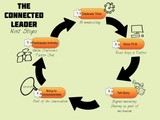
What are some next steps for administrators to become connected leaders and learners?
Next Steps:
Dedicate time: minimum 15 minutes a day
Grow your PLN: read blogs and Twitter
Tell a story: Go beyond marketing for your school, but see sharing as part of the mechanism of your network.
Bring connected learning to the consciousness of your learning community
Participate actively: Seek out online conference, Twitter chats or follow Twitter hashtags around an interesting conversation
As a connected learner, I look to my network to:
gather resources I had not seen (see 1 below)
have a conversation about the topic I am exploring or wrapping my mind around (see 2)
listen to points of view I had not considered (see 3)
get inspiration (and sometimes a laugh) from people who are so much more creative than I am (see 4)
be part of a crowdsourcing experience (see 5)
1) Using the #ce13 hashtag or reading customized magazine style RSS readers, I am connected to a constant flow of resources and conversations going on. I came across the following blog post by George Couros- Isolation is Now a Choice Educators Make.
2) By tweeting the link, @cmtmalvern responded with an intriguing statement and a short, spontaneous and instantaneous conversation had started.
3) I also had a face2face conversation with my Director of Technology, Mike Dunlop, who was questioning (as I was developing the image of the Connected Leader above) that I was heavily leaning towards Twitter and Blogging as the preferred platform FOR connecting. I am guilty as charged. I am biased towards twitting and blogging, since these are the platforms that I am most familiar with and primarily use for connecting. I DO agree with him though that they are NOT the only choices for becoming a connected administrator or leader.
LinkedIn?
Take a look at The American School of Bombay and their statement on LinkedIn.
"Aligned with our Mission, Core Values, and Strategic Objectives, ASB uses LinkedIn to support and develop:
Professional connections within the ASB Community
Connections to potential speakers for the classroom, division, or at the school-wide level
Associations and partnerships with organizations in support of school initiatives
Relationships with local, national, and international governmental and education institutions"
Pinterest?
Pinterest is quickly developing into a viable source for inspiration and connections to other educators I found the Singapore American School’s presence on Pinterest visually connecting and "" Celebrating all things SAS!"
Facebook?
3) & 4) My friend and colleague, Mike Fisher, responded to a question (What to say when an administrator asks WHY do I need to be connected?) I posted on Twitter (but which gets automatically posted to my Facebook page.
"Anything that is unplugged won’t work. Want to be electric? Bright? Productive? Plug in!"
5) I am extremely intrigued by the transformational learning experience of crowdsourcing. Transformational… because it simply would not have been possible to create and learn in this amplified way before the existence of technology and our connections and network.
Sheryl Nussbaum Beach asked her network to contribute to a document as she wondered where to best begin to authentically build the connected school? Take a look… what do you wonder about?
This is a collective wondering by educational leaders in Northern Ontario. Feel free to help us build collective intelligence by adding your ideas to their questions. Just start by typing below the question with your resources, blog, experiences, answers or suggestions. Maybe extend the wondering with questions of your own. Be sure and include your Twitter name so they can follow you and follow up.
Not only do we learn from people who otherwise we would never have been in contact with, but as Joan Young points out in her blog post 7 Ways My Classroom is Better Because I Connect
I learn from the collective wisdom of the crowd. We promote the idea that students should develop skills by observing others as they learn and make mistakes. Surely it makes sense for us to connect and learn vicariously through the lives and work of other teachers. If another teacher has used a process or tool and has shared what worked or didn’t work, this can save enormous time and energy. My students then have a teacher who is not as exhausted, but continuously inspired by stories of "what really works."
How do you interpret the shift of what a connected educator means? How is it different? Are we talking at cross purposes when we think of being connected?
Further Resources:
Connected Educators Official Site
Langwitches Diigo Bookmarks "Connected Educator"
Connected Principals
The Connected Educator Culture by Tom Whitby
What Connected Education Looks Like New York Times Article
11 Ways for Fostering an Innovative Culture by George Couros
Silvia Rosenthal Tolisano
.
Blog
.
<span class='date ' tip=''><i class='icon-time'></i> Jul 16, 2015 07:18am</span>
|
|
I have been using the words workflow and learnflow in conjunction with learning in the modern world.
Workflow is defined by Wikipedia as:
The sequence of industrial, administrative, or other processes through which a piece of work passes from initiation to completion.
In an iPad classroom environment, a workflow takes on the shape of having a strategically selected toolkit of apps available and knowing what app to use for specific purposes. When a workflow exists, students and teachers know what steps to take to
receive information
edit, format, remix and create information (sometimes using several apps to obtain the desired results)
save information
share, send and disseminate information
For example a screencasting workflow on the iPad using and app, such as Explain Everything, would look as follows:
import selected images needed
add annotations (text, arrows, shapes) as well as audio recordings to explain concept
save the movie
share the movie by emailing it or uploading it to video sharing site
A learnflow is when the individual steps of a workflow are not viewed as individual steps, but are rendered unconsciously, smoothly and effortlessly.
The learnflow is part of the fluency, the iPad user has attained in order to not see using individual apps as a goal, but their use have become merely a tool in the pedagogical aim of learning.
The path of learning takes me smoothly from reading information to evaluating then curating to effortlessly manage the information. As I learn, I unconsciously reflect, share and amplify my thoughts. My learning is intrinsically connected to a cycle of connecting, communicating, collaborating and publishing. It has become my learnflow.
Silvia Rosenthal Tolisano
.
Blog
.
<span class='date ' tip=''><i class='icon-time'></i> Jul 16, 2015 07:17am</span>
|
|
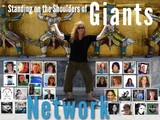
In honor of Connected Educator Month, I wanted to pay tribute to educators who inspire me and I learn from daily, virtually and in person. They feed my professional soul, they are conversation partners and they keep me excited about being a teacher. I am standing on the shoulders of giants, aka my network. My work is a direct result of their curation effort, their ability to trigger my imagination, their contribution to help me make sense of things I never thought or dreamed about and the pool of past experiences each one brings as an educator.
I am not an original, I am a remixer of the collaborative experience and knowledge building network, that technology allows us to access, connect with, learn from, reflect about and then continue to share.
Thank you all.
Just in case you want to play detective and grow your network, I have added the following members of my network (in no particular order of importance) to this list for you to consider.
@whatedsaid
@joycevalenza
@wfryer
@mumbaimaggie
@joedale
@lindayollis
@ryanbretag
@suewaters
@dogtrax
@courosa
@heidihayesjacob
@adambellow
@braddo
@plugusin
@fisher1000
@surreallyno
@julielindsay
@tracywatanabee
@chicfoote
@rmbyrne
@jackiegerstein
@edtechworkshop
@sarahwilkies
@coolcatteacher
@smenegh
@mscofino
@teachwatts
@thecleversheep
@bernajeanporter
@lparisi
Silvia Rosenthal Tolisano
.
Blog
.
<span class='date ' tip=''><i class='icon-time'></i> Jul 16, 2015 07:17am</span>
|
|
6th Grade Middle School humanities teacher, Emily Vallillo, was ready to add another layer to her literature circle discussion. Her learning targets for the literature circles were clear.
Learning Target
I can participate in high-quality, text-based literature circle discussions
I can support my claim with relevant and specific evidence
Below you will find an "Official Scribe" post (authored by me as an observer) to their classroom blog, documenting the process.
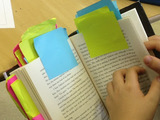
Students prepared for their literature circles by going over the chapter read and were writing their questions down on a sticky note.
Literature Circle Protocol
Read Norms
Transition
Clarifying Questions
Deep Discussion
Transition
Debrief/Reflection
Shareout
Each student wrote down a goal their literature circle. Ex. Keep people on topic more often
The class went over the previously agreed upon Norms
Come prepared
share the flow
you can read ahead, but don’t talk ahead
stay on topic
follow protocol
be respectful
discussion centers
be responsible for everyone’s knowledge
Everyone got into their literature circles groups and prepared a camera to film the group. The purpose of the recording is to have evidence of their discussion skills and literary analysis of a text.
Students used the rubric below to rate their participation in the group.
Students got into their literature circle groups and got to work.
Here are some things that were overheard:
"I have a deep discussion questions. What made me think of it was…" (showing evidence of claim)
"I think it is on page 1 … " (showing evidence of claim)
"What if he could…" (fuel discussion, look at different points of view)
"But how can he see the future without bamboo?" ( fuel discussion)
"Guys, we have to focus". (responsible for learning of all)
"What else? Do you have anything?" (Inclusion)
"In the book, it said…right?….yes, the there is also evidence earlier in the book…." (looking or evidence in book)
"I have a counter argument…" (listening to others and fueling discussion)
"This is off topic" (Owning your learning, staying on task)
"I still don’t understand why they left him? It is still confusing…" (asking further questions)
Back in class, students debriefed by writing a blog post about their take away and learning of today’s discussion questions.
The class ended with each group uploading their video from their recording devices to the computer to be edited and annotated.
Sooo, now it was time to take already very well planned, structured and executed lesson in helping students practice and develop skills of a good reader and add another level…. to be continued…
Silvia Rosenthal Tolisano
.
Blog
.
<span class='date ' tip=''><i class='icon-time'></i> Jul 16, 2015 07:17am</span>
|
|
In Part 1 of Literature Circle Discussions, I shared 6th Grade Humanities teacher, Emily Vallillo‘s well structured and organized Literature Circle lesson.
Literature circles are a way to support students in becoming critical readers. Beyond spelling it out for students in a rubric, modeling and practicing good behavior that leads to developing good reading habits, how do we make students aware of the strategies and their own behaviors when reading?
We saw an opportunity to add another layer to meta-cognitive practices and to make students’ behavior, observations and discussion of text visible.
Emily developed guidelines to support students in becoming aware of high- quality text based discussion components and being able to recognize these behaviors in their discussion.
Students recorded their Literature Circle discussion and then edited the video in groups. They were asked to "annotate" the video by overlaying "text" at specific parts on the video, when they saw literary analysis behavior exhibited.
I have been intrigued by the development and usage of annotexting in education. Mike Fisher and Jeanne Tribuzzi have written previously on Langwitches about ANNOTEXTING. They defined annotexting as:
Annotexting is a process that involves the collection of thoughts, observations and reactions to reading that show evidence of critical thought. These annotations, rather than being on paper, can be collected with different web tools so that students can collaborate, both locally and globally, around the conclusions that they will ultimately draw from their reading. [...]
Expecting students to read deeply and draw meaningful conclusions is at the heart of the Common Core ELA standards. Students are asked to read closely, cite evidence, and make evidence based inferences when they read. They are expected to deepen their learning by valuing textual evidence and reading critically. Annotating text is one way students can cite textual evidence, infer and deepen meaning as they read..
While Mike and Jeannie were primarily talking about reading TEXT, we started transferring the concept to "reading" VIDEO. The traditional notion of reading was being expanded to include "hearing" and "seeing".
Here is the video with a few snippets from completed student annotexted videos.
Find Emily’s plan for the Literature Circle Video Analysis below:
Your task is to digitally analyze your literature circle discussion. With words, images, and quotations from the text, you will show evidence of how your literature circle discussion met or exceeded expectations, as well as give constructive comments. Finally, you will create a blog post that reflects on your own participation in the literature circle discussion in which you will embed this annotated video as an artifact.
General Guidelines
___ Cut out "dead air" (this is when no one is speaking and nothing productive is happening related to literature circle discussions)
___ Do not use anyone’s last name (only use first names)
___ Use LARK (The goal is not to police or embarrass anyone, do not annotate "There is Emily goofing off again!")
___ Constructive criticism is good
Literature Circle Literary Analysis
___ Clearly identify the segments of discussion: Clarifying Questions and Deeper Discussion
___ Highlight and annotate the video when you do something that is part of a high-quality, text-based discussion:
___ Evidence from the text is used to support a claim
___ Quotes from the text are used to spark discussion or ask a question
___ Questions are asked that fuel discussion
___ Questions are asked to clarify something confusing
___ Claims, inferences, opinions, connections, or predictions are made
___ Highlight and annotate the video when you are exhibiting good discussion behaviors:
___ Tracking the speaker with your eyes
___ Actively listening
___ Inviting others to join the discussion
___ Highlight and annotate the video when you notice there are places for improvement. Make sure to explain exactly how you would improve that moment in a constructive way.
Self-Reflection Blog Post
___ Explain what your Literature Circle Video Analysis is and why it will help you improve and reflect upon your literature circles.
___ Reflect upon your own participation in the literature circles, what you did well and what you can improve on, based upon the video.
___ Embed the video into your blog post as an artifact.
___ Choose an engaging and relevant title for your blog.
___ Check punctuation and spelling.
___ Check professionalism - does this blog post look professional or have you done something like this (MY VIDEO iS sO aWesOmE!!!!!!! XOOXOXOXOXOX!!!!!!!!!)
Here is the rubric developed by the teacher for the discussion analysis and video creation.
Download Literature Circle Analysis Video Rubric as PDF
Two samples of student blog reflections:
Gabriel wrote a reflection after editing and embedding the video analysis on his blog:
Literature circles is a when we make small groups and then we need to read chapters and after we get again together and discuss about what we read. In my literature circle I think I went really well because I always participated and I always added to what other people said and there thoughts. Things you would hear me say are: I liked how you said that but I would also like to add that… I disagree because… Some discussion behaviors I did were listening to what other people said and adding to their comments. Also in a good discussion you don’t interrupt others. A good literature circle discussion requires that you pay attention and talk a lot so the discussion takes more time and stays more interesting.
GianLuca wrote:
Something very important that I had done on the literature circle so that I could had accomplished my tasks was to, mostly, participate! But participating in a specific way, not just participating in the way of, well, participating! I participated in a way that I didn’t just expressed my thoughts, (talked) but I also participated in a way that I also writed "stuff" in a way that I also participated on the discussion, but in an "un-verbal" way, coming up with a simple word called: writing. Actually it is five words: Expressing my thoughts by writing. Or even maybe seven words: Expressing and communicating my thoughts by writing.
I used this "ability" to participate on a literature circle before in all of the discussion, but every discussion we had, I "evoluted" this ability, making me better every time. I also will use this skills again not only in literature discussion, but yes, in life! (So I can communicate with people all over the world! That’s also my core value: communicator).
I think that something that I still could had improved on my participation on the literature discussion was to use the book just a bit more, because I simply fell that the amount of times that I used the book on the discussion wasn’t enough for my group. That is because there wasn’t enough information about the book that I told the group, but yes, instead of information, I expressed thoughts and questions for the group, which made the discussion more interesting and "fueled" until it ended. So I came up with a solution. For next time, I’ll improve my "ability" of participating by, well, using the book a little more often!
Continuing to amplify learning
Students and teachers are getting a taste of and are being reminded that learning in a connected world is never over… The simple fact of documenting and taking the time to publish "what we are doing in class"… is connecting us to a world of learning opportunities.
After the publishing of Part 1 of the Literature Circle discussion blog post, Author, founder and co-director of Habits of Mind, Bena Kallick commented to me in a private email:
"I cannot help but comment on the Habits of Mind that are being displayed here:
-listening with understanding and empathy
-questioning and problem posing
-thinking interdependently
What an opportunity!! I could not resist and asked Bena, if she would be interested in skyping into our 6th graders classroom here at the American School of Sao Paulo? ….and she said YES!
We are now in the process of setting up and preparing students for the Skype call with our expert… so stay tuned for Part III of Literature Circle- Adding (yet) another layer of learning!
Are you using Literature Circles with your students? What layers are you adding to amplify learning and supporting your students critical analysis of "text"? Please connect and share your experiences and ideas…
Silvia Rosenthal Tolisano
.
Blog
.
<span class='date ' tip=''><i class='icon-time'></i> Jul 16, 2015 07:17am</span>
|