Blogs
|
Joe HarlessNewnan GA Times Herald
I learned late yesterday that Joe Harless, who listed himself on LinkedIn as "independent think tank professional," died on October 4th. (Here’s a report in the Newnan, Georgia Times Herald.)
I don’t know how widely known Joe was outside the world of ISPI, the International Society for Performance Improvement, prior to his semi-retirement from that arena. (Later in life, as the Times-Herald article explains, he was involved in improving the impact of high school education near his home in Newnan and throughout the state.) I’m pretty sure it wasn’t widely enough, which is a shame for people who worked in what used to be called the training and development field.
That’s because Joe, like many of his colleagues, realized that the real goal of that field should not be doing training. Here’s Joe in 1992, writing in the ISPI journal, then called Performance and Instruction:
My behaviorism roots conditioned me to observe what people do, rather than what they say they do.
Tom Gilbert taught me to give more value to what people produce (accomplishment) than what they do or know.
I learned from observations of other technologies (medicine, engineering, plumbing, building the Tower of Babel, etc.) the wisdom of common purpose and agreeing on definitions….
I get confused when people say they are Performance Technologists but always produce training / informational / educational type interventions for every project. This confuses me because examination of more that 300 diagnostic front-end analyses done by cour company and our clients shows the information / training / education class of intervention was the least frequently recommended.
More than 30 years ago, I attended JAWS - the Job Aid Work Shop that Joe developed. I’d been working for Amtrak, developing training for ticket clerks, reservations agents, and others. JAWS provided me with a systematic way of looking at how people accomplish things on the job and figuring out where it made a lot more sense to create a job aid then to try (usually fruitlessly) to have them memorize the information that the job aid contains.
A side benefit of JAWS was getting to know Joe, a man serious about his work, gracious in his dealings with others, and good-humored in his presentation. Like an old-time Southern preacher, he’d become Reverend Joe and say things like, "An ounce of analysis is worth a pound of objectives."
(Meaning: it’s terrific to have sound, behavioral objectives for your training-but maybe the problem you’re dealing with is not one that training can solve.)
He also nudged ISPI toward a name change by saying that "the National Society for Performance and Instruction" was the equivalent of "the National Society for Transportation and Bicycles."
Again from that 1992 article:
Trainers sell training. They are usually commanded to do so, and are rewarded for the volume of training developed and delivered. Educators are conditioned to teach "subject-matter," not to impact performance. Most vendors hawk a given product, not a process. Buyers typically want to buy things, not analysis. Our letterheads read Training Department, or Education Center, or Learning, Inc., etc. The names of our organizations do not imply: performance improvement sold here.
I took a number of Joe’s workshops, including ones on instructional design and on front-end analysis. As he began working on what became his Accomplishment-Based Curriculum Development system, he invited a number of people like me, who’d used his workshops in our own organizations, to participate in a tryout for one of the new components. He was especially eager to hear our candid opinions. He knew what he was doing, but he was pretty sure he didn’t know everything.
I attended my first professional conference around 1978, when ISPI (then NSPI) met in Washington DC, where I was working (no travel cost!). After one session, I was speaking with Stephanie Jackson, an experienced practitioner, when Joe Harless came up-Stephanie had worked for him previously. We three talked for a bit, and it was clear to me that these two were good friends. Joe said to Stephanie, "Let’s get a beer." I said something about letting them catch up with each other, to which Joe responded, "Don’t you like beer?"
In my career, I’ve learned a lot from many people, but Joe Harless was the right person at the right time for me, opening doors and sharing ideas, hearty and enthusiastic and curious. What he did was to make concrete for me ways to enable other people to produce better results on the job. He combined analytical skills with openness to new ideas and an interest in other fields that has inspired me always.
We once talked about the job aid workshop, which I gave any number of times at Amtrak and GE. At one point, he had a segment where he’d present examples of good job aids and bad ones. "Not any more," he told me. "Now I put ‘em all out and let the participants figure out which ones are good and why."
I had a conversation on Twitter yesterday with Guy Wallace of EPPIC. I said that for me, "It’s practically hero worship, but you know how Joe would have laughed at that."
I was holding back, I think, because of the immature connotation of "hero worship." But Joe has had more direct influence on my career than anyone I can think of. I learned from his ideas, I was energized by his search for data as evidence, and although it was probably true for many people, I loved that he called me "Cousin Dave."
If someone’s influence in your life makes you want to do better, if his work and his interaction inspire you to dig deeper and reach further, then that person’s a hero.
You could do a lot worse that hear Joe himself talk about performance-on-the-job accomplishment-as the heart of the matter. Guy has a number of videos on YouTube, including a 90-minute one from a discussion in Toronto earlier this year at ISPI’s 50th anniversary. I’ve set this link to start at the 8-minute mark, when Joe begins speaking. You might find it worth a few minutes of your time, even with some of the callouts to old friends and inside jokes. I’ve included a few comments here as highlights, all of which come in the first seven minutes of Joe speaking.
…Even in the heyday of programmed learning in the Sixties there were some of us who were arguing that we should be about developing instructional technology, not just programmed instruction, if we truly wanted to revolutionize training and education.
…Not willing to let good enough alone, there were some of us who were then arguing that we should be about the development of what? Performance technology, that would subsume instructional technology and have as its process, at the beginning, a process that was like medical diagnosis. I called my version of the diagnostic process Front End Analysis…
The genesis of my front-end analysis was the confounding realization that many of the training- the training that we developed for our clients didn’t seem to make any difference in the on the job situation, even after the trainees, the learners, successfully acquired the knowledge we so carefully taught them. I don’t know — a rough analogy, I suppose, is that we gave them good medicine but it didn’t cure the disease….
We conducted follow-up investigations with the aid of some of our cooperative clients…. In a shocking number of cases, we found that a lack of skill and knowledge was not the predomination cause of the non-job-performing situations…. Thus all the training in the world would do little to help the performance.
I’m going to miss Joe a lot. I do already.
Dave Ferguson
.
Blog
.
<span class='date ' tip=''><i class='icon-time'></i> Aug 19, 2015 05:00pm</span>
|
|
Part of an email I received yesterday; I’ve changed a few [specifics] for privacy’s sake:
My friend [Veronica], a retired lawyer, has just started training as a part-time [Stratosphere Airlines] ticket agent at [Overcrowded Airport].
She has started with some computer-based self instruction that seems to dump lots of info on students before any application, like memorizing the airport codes for cities that Stratosphere flies to. She says there will be interaction-role-playing-like simulations of conversations and problems a ticket agent will predictably experience.
She said the trainer has confessed to her that the info dump without application is neither his own preference nor his design. It is imposed.
I’ve never worked for Stratosphere Airlines; I’ve hardly ever flown them. But I recognize this situation and this approach, because they’re a direct flight to 1975, when this dull-witted, learn-X-before-Y approach was pandemic in the travel industry. It’s how I started learning what was Amtrak’s reservation system at the time: memorize a trainload of facts.
One of the many unfortunate assumptions is the value of such memorization. Like Latin or limp broccoli in your school lunch, it’s supposed to be good for you. In the context of becoming competent as a ticket agent, though, it’s as misguided as memorizing the name of every street along your 25-mile commute, rather than learning the most sensible route and then useful variations, like when to avoid driving past the high school.
The assumption in Veronica’s training program is that you have to know the city code before you can look up a schedule. The reality is that you have to have the code, which isn’t the same thing. Let me demonstrate with an example from based on Amtrak’s old reservation system:
Use the A (Availability) entry to find the schedule between two cities.
Here’s how to check availability between Chicago (CHI) and Los Angeles (LAX) on July 5th:
A 5JUL CHI LAX
(don’t use spaces; they’re here just to make the example clear)
How would you check the schedule for May 9th from San Francisco (SFO) to Portland (PDX)?
The odds are that 80% of people, given that example, will come up with one of the two correct answers(A9MAYSFOPDX or A09MAYSFOPDX-the leading zero in the date is optional). Which means that for them an instructor or course can respond, "That’s right" and then show what the reservation system would show: the schedule from San Francisco to Portland on May 9th.
I’m skipping some nuance here, like taking note of the leading zero if the person uses it (and pointing out it’s optional). I’m also skipping what a good instructor or course would do with what I call expected wrong answers-someone using the correct city codes in the wrong order, or using a code from the example.
To me, this example is a bite-sized authentic task: it’s a small accomplishment that makes sense in a workplace context. Your customer asks what the schedule is from Point A to Point B, and you find out. Looking up city codes is a useful, even essential skill (if you don’t have the city code for Moose Jaw, you can’t find a flight that goes there), but it’s just one component in a cluster of authentic tasks.
What’s more, I can put together a logical sequence of such bite sized tasks into a complete customer transaction suited to a novice ticket agent. And I can then expand parts of that sequence to give practice in applying the system’s power (which is to say, its complexity) to meet a customer’s requests. "Is there a flight that will get me to Moose Jaw by 3? Can I leave Moose Jaw on Saturday morning? Is there a discount fare when traveling with small children on the weekend?"
I worked in an Amtrak ticket office for four years, and no customer ever asked me for a city code. We used them all the time-but our practice was to teach ticket agents to look them up at first, and not guess. We also has job aids for frequently-requested cities-storing the information in the job aid instead of trying to cram it into someone’s head. The training-wheels effect would kick in, so that after a week or two on the job in Detroit, you did memorize the code for Jackson, Michigan (JXN), a destination people requested from us far more often than they did Jacksonville, Florida (JAX) or Jackson, Mississippi (JAN).
There’s an awful lot of stuff to learn in a railroad or airline reservation system. I often use ticket-agent training as an example of a potential drawback to using only informal learning approaches. Yes, it’s true, if I dropped you in the middle of Budapest with a tattoo on your forehead that said "Kérem, ne beszélj velem angolul" ("Please don’t speak to me in English"), you’d probably start picking up Hungarian quickly. Depending on your interests, though, a scenario-based course on Hungarian for Travelers-focused on realistic situations that made sense to you-might be a better idea.
It’s almost certainly a better idea than beginning by studying verb conjugations. You’ll need those, eventually, but you can probably find out what time the flight arrives without having to study the subjective first. Except, maybe, if the Stratosphere Airlines flight from 1975 were to arrive.
CC-licensed image by Robert Huffstutter.
Dave Ferguson
.
Blog
.
<span class='date ' tip=''><i class='icon-time'></i> Aug 19, 2015 04:59pm</span>
|
|
I’m in Toronto this week, at the Canadian Society for Training and Development’s conference. (On Thursday I’m giving a session: Using Job Aids: How, When, Why.)
I’ve been wanting for some time to rethink how I present examples of job aids, and after some experimentation at Whiteboard Labs, I’m launching Dave’s Ensampler.
"Ensample" is an archaic word with the same root as "example." A long time ago, I saw a collection of organizing diagrams that Sivasailam Thiagarajam made, giving them the title An Ensampler of Hierarchical Information.
The job aids at the Ensampler have more consistent tagging, and I have a page that automatically displays the titles by category. This is new, and it’s a work in progress-for example, I’m trying out a way to have a tab in the menu here at the Whiteboard link directly to the Ensampler. If that works (or works well enough) I’ll put a similar tab up at the Ensampler to teleport back here.
Let me know what you think.
Dave Ferguson
.
Blog
.
<span class='date ' tip=''><i class='icon-time'></i> Aug 19, 2015 04:59pm</span>
|
|
I had a conversation via Twitter the other day with Connie Malamed. I had been following her elearningcoach identity on Twitter but had forgotten (or not realized) her visual communication / information design interest.
This is how things started:
(I’ve linked that image to the URL she was sharing from @justdesign.)
Connie and I chatted a bit about the design of tables because of the decision-table example on my Ensampler blog, and she shared these guidelines for designing tables.
Thanks to another link she shared, I learned about Dana Chisnell’s Civic Design site, which features a number of field guides developed to improve the quality of citizen participation through things like the design of ballots and of support materials for poll workers. (More on this in a future post.)
Chisnell’s work resonates with me; I’ve worked as an election judge (the Maryland term for a precinct worker). And I’ve sat through my county’s training program for election judges four times.
Not from a political viewpoint, but from an understanding-of-information frame of mind, I’ve been thinking about all those electoral-vote maps, especially those seen (on television or online) on election day and the day after. Perhaps I don’t get around enough, but I rarely saw a map showing a proportional view of the states-they were all geographic.
Side trip in case you don’t understand how electoral votes work but are mildly curious:
Each state’s vote in the Electoral College is equal to its total representation in Congress (Senators plus members of the House). So the smallest possible number of electoral votes is 3, which is true for the seven smallest states in terms of population, plus (thanks to the 23rd amendment) the District of Columbia. The most populous state, California, has 55 electoral votes (due to 53 House members and two Senators)-one more than the 14 smallest states and DC combined.
(I wouldn’t weep too much for those small states, who have a total of 28 Senators to California’s two.)
48 of the states award their electoral votes on a winner-take-all basis: if you get 50.1% of the vote in California (as inTexas, Maryland, Florida,Illinois, and so on), you get all of the state’s electoral votes. The two exceptions are Nebraska (5 electoral votes) and Maine (4), which each award two of their votes on a statewide basis (representing the senatorial portion of the electoral vote) and the remainder on a congressional-district basis. In 2008, John McCain won 4 of Nebraska’s 5 votes, while Barack Obama won 1.
So here, from Wikipedia, is a typical depiction of the electoral results: numbers on a geographic map:
From Wikipedia commons
This is the wide-open-spaces approach. On a geographic map, Kansas (where I lived when I was first old enough to vote) is seven times the size of Maryland (where I now live)-but Maryland has 4 more electoral votes.
In contrast, here are the results on a map where the size of each state is proportional to its number of electoral votes:
From Wikipedia commons
Regardless of my own preference for president, I think the proportional map is a better way to depict this information, which is ultimately based on population. If more states awarded their votes by congressional district, you’d simply mark the individual squares accordingly, with two in each state for the statewide winner.
(I had seen a similar map showing the makeup of the House of Representatives-each state proportional to its size in the House, and each district marked according to party-but I didn’t bookmark it and can’t find it now. If I do find one, I’ll add it here.)
Dave Ferguson
.
Blog
.
<span class='date ' tip=''><i class='icon-time'></i> Aug 19, 2015 04:59pm</span>
|
|
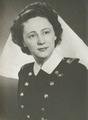
As a girl from a small town in Nova Scotia, my mother had to go a long way for her professional development. It’s 1,200 miles (and they were miles back then, not kilometers) from Inverness to St. Michael’s Hospital in Toronto, where she did her nurse’s training, just before the outbreak of World War II.
Apart from a belated recognition of Remembrance Day, the Canadian term for what the U.S. calls Veterans Day, it’s as good a way as any to mention Toronto (known in the Victoria era as "Toronto the Good," for its alleged propriety). I spent a week there recently at the CSTD Conference there and led a session called Building Job Aids: How, When, Why.
I have some biases regarding job aids.
One is that an awful lot of people who call themselves instructional designers like to design instruction. So they write objectives and plan activities and encourage discovery and structure experiences. Some of them go on to embalm these things in SCOs. All in pursuit of that elusive transfer of learning.
A corollary to that bias: it never seems to occur to some of these people to not design instruction. For example, they don’t create job aids. They don’t see job aids as a way of reducing or eliminating the need for formal training, nor as a tool that people use on the job and thus should practice using during formal training.
Instead, job aids get crammed to the back of the cognitive closet, next to the icebreakers and under the smile sheets. Besides, you can’t track job aid use in an LMS, so how good can they really be?
Guys: if people don’t use it on the job, it’s not a job aid.
I kid because I love. Actually, I kid because I’m puzzled by the non-use of so practical a tool. So, in part because I’d like to make myself better known in Canada, I created a session that I thought would appeal to people who’d thought about job aids, or wondered about them, and who were interested in finding out if job aids made sense for the workplace problems they grapple with.
I included lots of examples of job aids, which I’ve been adding to my show-and-tell blog, Dave’s Ensampler. I included an exercise in which people would describe to a partner some task they knew about, with the listener assessing that task’s suitability to job-aiding using questions that I’ve discussed here before (When to Build a Job Aid).
What I did not do was to first walk them through-which, let’s face it, often means talk them through-that process. Given their likely backgrounds, people in my session were likely capable of putting a decent job aid to use on their own.
So: this allowed more time for the exercise, since I wasn’t going on about the exercise. Second, it provided a clear albeit small demonstration of a job aid taking the place of instruction. If people could get through the task-assessing exercise without my telling them how, even though they hadn’t made this sort of analysis before, then it’s pretty clear you don’t have to train people just because you’ve uncovered a skill-and-knowledge gap.
We discussed the decision questions afterward, and if you can imagine such a thing, there was very little puzzlement or confusion about what goes into the decision and why.
So then I did talk a bit, showing how a good task analysis is whispering very loudly that certain tasks would be great to job-aid. My experience is that this would be a new concept to many, so I demonstrated with a short example, and using that example showed some features common to all job aids.
At that point, we went into a second hands-on exercise. The day before my presentation, I created this as a replacement for what I’d originally planned to do. As I had been rehearsing, I felt that people weren’t getting enough opportunity to do things for themselves.
Why not have them try to create a decision table? From the web site of the Superior Court for King County, Washington, I copied instructions on how to file for a protection order (an anti-harassment protection order, a domestic violence protection order, and so on). I chose this topic to emphasize that job aids can apply to important real life tasks and not just to refunding a store purchase.
Participants started with a set of descriptions (created by me based on the court’s actual guidelines), along with a job aid for creating decision tables. For an exercise at 4:15 in the afternoon, less than an hour before conference-sponsored drinks and snacks, people seemed very engaged-lots of talk within the table groups, not too many obvious signs of boredom or frustration.
Thanks to comments from participants both in the session and afterward, there are changes I’ll make. My original thought was that I needed to add a detailed demonstration before the exercise. A week later, though, I think that’s just my internal instructor dying to explain something again.
Instead what I’m going to create is a better job aid for how to build a decision table once you’ve analyzed a task like choosing which protection order a person needs. I think an example-a model of building such a table-makes a lot of sense, and it too will probably be a handout.
In other words:
Provide details for the task that’s going to be job-aided
Provide guidance in drafting a decision-based job aid
Provide the least amount of description / explanation / instruction possible
Then, get out of the way. Let people work with the tools. Let those synapses fire. Stand ready to respond to questions or comments, with the aim of helping people come to their own answer.
I’m grateful to CSTD for accepting my proposal, and I’m indebted to the people who participated in the job aids session. Thanks to them, I’m putting together what I think of as a workbench (rather than a workshop): an engagement of three days or so in which I work with clients to build up job aid skills and immediately apply them to real work challenges. I’ll act as a guide in the skill area and as a coach for the client’s own efforts to build job aids.
CC-licensed photo by Carlos Almendarez.
Dave Ferguson
.
Blog
.
<span class='date ' tip=''><i class='icon-time'></i> Aug 19, 2015 04:59pm</span>
|
|
I’ve just seen Jane Bozarth’s terrific column at Learning Solutions, Content Becomes Its Own Context. As she read David Byrne’s How Music Works, she writes, "I found I could pretty much substitute the word "content" for the word ‘music’ in many of his ideas." I don’t plan to summarize her article here, so you’ll have to read it for yourself.
I may have to read Byrne’s book. I certain enjoyed Daniel Levitin’s This is Your Brain on Music, which I wrote about almost five years ago. And like human languages, a phenomenon I use often to highlight the many possible meanings for "learning," music is both pervasive and evasive.
One of Jane’s insights in her comparison is that capturing tacit knowledge isn’t easy, in music or in the world of workplace learning. Yet it’s the tacit that raises music (or cognitive ability) above the merely routine. Or as Artur Schabel put it,
The notes I handle no better than many pianists. But the pauses between the notes - ah, that is where the art resides.
There’s a different sort of problem for exemplars like Schnabel, as he wrote in My Life in Music:
I am attracted only to music which I consider to be better than it can be performed. Therefore I feel (rightly or wrongly) that unless a piece of music presents a problem to me, a never-ending problem, it doesn’t interest me too much.
Part of what that says to me, in terms of learning, is that as a person’s capabilities increase, she’s often less and less interested in the mundane. Not that she won’t do mundane tasks-every job has some of them (says the guy who installed software and tinkered with file backup yesterday). I’d argue, though, that the person with a greater depth of job-related capability is less and less interested in being trained in the mundane.
The idea of people dying the death of a thousand cuts in some mandatory training experience is almost too common to draw notice. But you don’t get better as a musician by going through high-school marching band instruction again.
You might, as Pablo Casals did, choose to practice scales every day, but Casals played many other works as well, and I feel reasonably sure those weren’t the cellist equivalent of "Kitty on the Keys."
A month or so back, I had lunch with a colleague I hadn’t seen in far too long, and learned that his wife had taken up not the violin but the fiddle. So I sent him a couple of links to videos of Natalie MacMaster, a dynamo of Cape Breton fiddling. We all ended up at Natalie’s concert here in Maryland last week.
I mention her because it’s a good excuse to drop a video into a post, like this one where Natalie is performing with her uncle, Buddy MacMaster-and you won’t often get to hear two members of the Order of Canada playing fiddle like this.
Natalie and Buddy are exemplary musicians-but notice what’s going on in the video around the 2:00 mark: a whole stageful of musicians, ranging over at least a span of 60 years of age, takes up bows and dives into the music. No one’s tracking them in an FMS (Fiddle Management System); no one’s worried about the failure to capture and embed Shareable Audio Objects. People put time and effort into becoming better at an activity they find worthwhile.
Dave Ferguson
.
Blog
.
<span class='date ' tip=''><i class='icon-time'></i> Aug 19, 2015 04:59pm</span>
|
|
Today’s New York Times business section included Adam Bryant’s Corner Office interview with Karen May, vice president for people development at Google. The interview is short (the feature takes up a bit less than half a page), but well-focused, particularly on two topics: training and feedback.
Asked about common mistakes she’s seen with regard to training programs for employees, May says:
One thing that doesn’t make sense is to require a lot of training… If people opt in, versus being required to go, you’re more likely to have better outcomes.
Well, there goes the whole compliance-training industry, and a good percentage of elearning producers with them.
Yes, May seems to have in mind training-as-an-event, but I think that was implicit in the question. She’s clearly not an idealist:
Another "don’t" would be thinking that because some training content is interesting, everyone should therefore go to it.
I don’t know whether the other bigwigs at Google listen to her (I suspect, without evidence, that the proportion of formal training there is on the low side), but I can think of a few elsewhere who’d benefit from heeding this. How many large organizations plunge into some flavor of the month because of what was said on the golf course to the vice-president in change of things beginning with R?
Kay segues from training to feedback by talking about performance. "Don’t use training to fix performance problems," she says. I’ve said something similar (not that I’m a vice president for people development), though what she’s referring to is problems of individual performance.
In her view, managers will sometimes send a person to training if that person isn’t performing well.
I agree that’s generally a dumb idea-when the cause isn’t a skill deficit, and especially when no one’s looked for evidence of the cause.
May discusses the difficulty people have in giving candid feedback-especially "difficult feedback," which I take to mean feedback intended to help change current behavior. There’s the potential for great value in frank feedback, of course, and she believes it’s often realized:
People can do something with the feedback probably 70 percent of the time. And for the other 30 percent, they are either not willing to take it in, it doesn’t fit their self-image, they’re too resistant, in denial, or they don’t have the wherewithal to change.
(I do think she’s left out the possibility that the person giving the feedback is mistaken. That’s not necessarily a common situation, but it’s hell on the person who’s on the receiving end, because attempts to correct a misimpression can easily be seen as unwillingness, resistance, denial, what have you.)
May does say that many of the executives she’s coached needed help "in relationships with others, and understanding the impact they have on the people around them." Of the need for empathy, listening, and so on, she says, "It wasn’t usually from a lack of willingness to do those things, but they didn’t have a strong muscle."
Dave Ferguson
.
Blog
.
<span class='date ' tip=''><i class='icon-time'></i> Aug 19, 2015 04:59pm</span>
|
|
In a previous post, I talked about playing music as a form of tacit skill. I’ve also been thinking about accomplishment and assessment: what gets done, so to speak, and what value it has.
Tom Gilbert made a useful distinction between measurement and evaluation. Measurement is a description in terms of a more-or-less objective standard. A person’s height can be expressed in inches or centimeters, measures of length that people can agree on and verify. If you also measure the person’s weight, you can calculate yet another measurement, his BMI (body-mass index).
Evaluation comes when you compare the measurement with some set of criteria-e.g., a BMI number between 25 and 30 puts someone in the "overweight" range, while a number over 30 puts him in the "obese" range.
I chose BMI as an example because there’s disagreement about how useful an assessment it is. In other words, in that area where health, medicine, and personal fitness overlap, it’s not always an easy task to choose the best assessment.
I’d go further to say that there might not be a best assessment. The term "best" implies its own assessment: best on whose terms? Best under what conditions?
Which is why I found so intriguing two essays that accompany volume 4 of Traditional Fiddle Music of Cape Breton from Rounder.
The first, "‘Correctness’ in Cape Breton Fiddle Music," is by musicologist Kate Dunlay. She takes up the value that fiddlers down home place on "correctness" in playing a tune. What does that mean? How do they know it when they see (or hear) it?
At one time, Dunlay thought that in traditional or folk music, there would be "a great deal of variation, improvisation, and melodic freedom." She also thought that folk musicians wouldn’t be "musically literate" because traditional music couldn’t be learned from books.
Only later did I realize that although traditional music indeed cannot be learned from books, traditional tunes (including those composed by real known individuals!) can be learned from any source by musicians who know how to interpret them in a traditional style.
She found that Cape Breton fiddlers would tell her which books had the best settings-and that "best" usually meant "closest to what was played in Cape Breton."
Dunlay quotes folklorist Richard Bauman:
There is also ample evidence to show that rote memorization and insistence on word for word fidelity to a fixed traditional text do play a part in the performance system of certain communities…. the point is that completely novel and completely fixed texts represent the poles of an ideal continuum, and that between the poles lies the range of emergent text structures to be found in empirical performance.
Think about that in terms of non-musical fields. We’re prone, I think, to use absolutes-they’re simpler, they’re cleaner. This is the wellspring of prescriptive grammar ("Double negatives are wrong!" "Don’t end a sentence with a preposition!") and sometimes the potting soil for ritualistic belief and behavior. Just today I was reading about the "protocol" that requires orchestral soloists to perform without a musical score.
Why? Well, it’s…um… better? It’s… the way it’s been done?
Back to Dunlay, though. She talks about the differences between Irish and Cape Breton traditional music, noting that in Ireland a musician can vary a tune "more radically" than a Cape Bretoner can. That’s because the traditions treat their sources differently. As long ago as 1802, the Scots Niel and Nathaniel Gow sought explicitly to make their Complete Repository a standard reference.
The one stream isn’t better than the other; they’re just different. "Personal style is greatly valued in Cape Breton music," Dunlay writes, "but it is expressed in ways other than by creating variations of tunes."
In particular, she points out that since recorded music became common, in Cape Breton the accepted version of a tune is most likely the first recorded version, or some classic recording, rather than a particular book version.
"If the tune is judged to be better, the authority of the book has been overruled." As the highly regarded Winston Fitzgerald said of his version of "Miss Gordon of Park," "Nobody would play it the way it was in the book anymore… Never."
In fact, she says, "the term ‘bookish’ is sometimes used to describe music that is dry and uninteresting — too exact."
If you try, you might come up with other expertise-related situations in which too literal an approach yields less than satisfactory results.
Another shift that Dunay describes, interesting to me: at one time, an authoritative reference for the rhythm of a tune was puirt-a-beul ("mouth music"), a form of Gaelic singing in which the voice imitated the notes and rhythms of a tune (example here). As the use of Gaelic faded in Cape Breteon, recordings became more important.
Mark Wilson, in notes following Dunlay’s, touches on other facets of how "traditional" music evolves. He’s looking, to borrow Jane Bozarth’s term, at how the (very loose) community around Cape Breton fiddling looks at its own tradition and renders its judgments.
In our own research experience, the violin music native to a particular locality sometimes shifts rather dramatically over short intervals of time… many aspects of "folk culture"… have been shaped, to an extent not always recognized, by somebody’s conviction that ‘in the past, things must have been so…’
Wilson says that many Cape Bretoners believe their style closely resembles the way their pioneer forebears would have played, though there’s little evidence for this. In fact, fiddlers around Antigonish (a city on the Nova Scotia mainland less than 40 miles from Cape Breton), despite similar roots in Scotland, have a style "closer to a standard Scottish country dance group of the late 1920s."
In fact, despite the high regard that many fiddlers have for collections like James Scott Skinner’s Scottish Violinist, Wilson reports very little interest in how those tunes might have been performed. Skinner himself recorded tunes on wax cylinders as early as 1899. When Wilson played these for a Cape Bretoner who knew the collection by heart, the fiddler was "greatly surprised" by how Skinner played ("I found it kind of weird, you know") but not in the least troubled by the difference.
Wilson points out how Don Messer’s radio and TV broadcasts "homogenized" Canadian fiddle styles, in something of the way that bluegrass and the Grad Old Opry shaped the american country music scene in the 1950s. Cape Breton was an exception to this trend, he writes, partly because of a local audience who appreciated the music and partly because of the "large numbers of reluctant economic emigrés who would usually return to the island for lengthy summer vacations" and who would want to hear what my dad always called "good Scotch music."
If there’s a "so what" here, it might include these points:
Calling something an assessment doesn’t make it one.
Calling something a standard doesn’t make it one, and doesn’t mean it’s standardized.
Werner Heisenberg could have been talking about accomplishments.
Dave Ferguson
.
Blog
.
<span class='date ' tip=''><i class='icon-time'></i> Aug 19, 2015 04:59pm</span>
|
|
I’ve just read David Kelly’s post, What I’m Looking for More of in 2013. Like me, David’s not a fan of New Year’s resolutions. I’m not sure what his reasoning is; I know that despite all the social-media cheering for failure as a good thing, I’m not always prone to cheer for myself when I fail, particularly in the resolution-as-self-improvement realm.
One way that David’s working in that realm is to talk in public about things he wants to do more of this year. I certainly see the value in that; at the same time, because of my own tendencies, I’m often reluctant to discuss that kind of goal publicly. Falling short feels that much worse to me.
David lists four things he wants to do more of this year.
Read more
Write more
Do more
Help more
(Read his post for the details; this is the mini-summary.)
I’m particularly taken by what he says about "do more."
I hear a lot of talk from people, including myself, about the type of work we should be doing. We adapt the way it should be done to the way it can be done within an organization. Sacrifices are made; that’s just the way things work in organizational learning.
But the fact is, until there are more examples of the way it should be done actually being done, with examples of the benefits reached by doing things differently, our industry will continue this cycle of doing what we’ve always done.
So when I say "Do More", I’m really talking about opportunities to "Do Better". I’m looking to get involved in projects both inside my organization and outside my organization that provide an opportunity to produce more examples of the needle being moved.
I think the "we" here refers to people in the learning field, especially the organizational learning field. I’ve often encouraged people who are considering proposing their first presentation for a professional group-to me, that’s one of the best ways to clarify your own understanding of what you’ve been doing and what value you can uncover for someone who’s doing or interested in doing something similar.
Or, even better, who’s grappling with a similar problem that you’ve had some success with.
At the same time, I’m sometimes surprised at the number of people whose jobs seem mainly to involve going to conferences. Depending on my mood, that could be puzzlement, or just plain jealousy.
Sure, I’d like to go to a few more conferences myself; the potential for face-to-face interaction is pretty easy to realize when you’ve connected virtually ahead of time.
While I’m on this conference tangent, I admit in all honesty, I have a certain… well, if not skepticism, then doubtfulness, about "speakers." Hey, I like to speak. I know lots of words. I can talk, and I can even (though this might trigger your doubtfulness) be intentionally quiet.
My point is not to criticize many people I admire who have "speaker" listed on their site biographies. I just want to underscore David’s comment about doing. At a professional conference, I readily bail on keynote addresses; I want to hear from the practitioner.
David’s post came at a good time for me. This past year was not a roaring success, professionally, on many fronts. Frankly, I’ve been stuck for a while, feeling frustrated that X wasn’t happening and that Y turned out so poorly. This isn’t a useful way to proceed for very long.
So what positive goals will I set for myself?
Do more. David has his meaning for this; I have mine. I want to work on more projects, or longer projects. I want to connect with clients to help them achieve better results. I also want to help them avoid doing any more training than they have to, both because training usually isn’t the route to better results, and because so much of what’s done in the name of training just plain isn’t very good.
Connect more. I don’t comment or communicate with my professional colleagues as often as I’d like. In fact, for certain people whom I really admire, I tend not to connect; I don’t want to be taking up too much of their time. So I want to find opportunities to share more and collaborate more. In particular I want to find opportunities to collaborate in Canada.
Write more-and regularly. Were it not for Jay Cross helping me understand how blogs work, and Harold Jarche setting the example of thinking out loud about what interests me professionally, I would not have nearly 600 posts here on my Whiteboard. 2012 was a sporadic year for me, though. I want to rebuild the habit of posting regularly, which requires the habit of thinking regularly. The French verb réfléchir can be translated as to think about or to think over as well as to reflect.
Count more. This is just an offhanded way of saying I want to monitor what I’m doing and compare what’s going on to what I said I wanted to have going on.
About that monitoring: I’ve written a few times about weight, health, and performance management (as in this post from two and a half years ago). I weigh myself at the same time nearly every morning, and I track the data both in a food-diary app and on a spreadsheet. This routine has had the side benefit of making me very clear about normal variation. Small gains from one day to the next don’t bother me; small losses are more fun to see, but I don’t take them seriously in the absence of a trend.
There’s other stuff I’d like to get in there, but I know I’m better off focusing on four things than fourteen. So thanks to David both for sharing his ideas and for helping me tease out some of mine.
Dave Ferguson
.
Blog
.
<span class='date ' tip=''><i class='icon-time'></i> Aug 19, 2015 04:59pm</span>
|
|
This is my summary and reaction to the first part of Sharon Boller‘s whitepaper, Learning Trends, Technologies, and Opportunities. Boller is the president of Bottom-Line Performance, a learning design firm based in Indiana.
The 26-page whitepaper has two main sections:
Six truths about today’s learning environment.
Emerging trends and technologies
I think it’s well worth reading in its entirety. Here on the Whiteboard, I wanted to summarize some of those truths in part one, and add comments for which Boller has no responsibility whatsoever.
ILT is not dead.
When I read this, I tell you, you could have knocked me over with a smilesheet.
I’m not mocking Boller-far from it. Among the many useful features in her whitepaper are summaries of facts. For instance, ASTD said last year that 59.4% of companies reported using instructor-led classroom training, and another 13.3% use instructor-led by online or remote (such as video).
Self-paced online? 18.7%, and a whopping 1.4% are using mobile as a distribution method.
I looked at this summary from ASTD about the State of the Industry report that Boller mentions. While this isn’t the entire report, I found a comment about "content distribution" striking:
Technology-based methods have rebounded to account for 37.3 percent of formal hours available across all learning methods.
If I read that right, then non-tech methods (you know, like instructor-led classroom training) accounts for more than 60% of "formal hours available across all learning methods.
Even the phrase "learning method" is telling. I’m not the kind of fanatic who goes around correcting punctuation and menus; I can even hold a civil conversation with someone who uses "understand" as part of a training objective-because I’m inclined to see it as shorthand for something that can eventually be observed.
So I do understand that people in the industry use "learning method" for things that can only aspire to encourage learning. I do think it’s helpful to state that explicitly from time to time. Absolutely, you can design and create activities, experiences, exercises, games, what have you, that are aimed at supporting, encouraging, and so on, just as you can find recipes, buy ingredients, set a table,and prepare dishes. What you can’t do is guarantee that people will eat your food.
mLearning: lots of talk, little action
That ASTD report tells us that 1.4% of formal learning is delivered via mobile. Like Boller, I’m sure the current figure is higher. After all, an increase of nearly 50% would get you all the way up to 2.1% .
I can’t help wondering whether one serendipitously limiting factor is that you can’t easily cram a 300-slide barrage of PowerPoint onto a smartphone screen. Tablets are an easier target for this pumpkin-headed kind of leveraging, though, and are probably already plagued with far more legacy content than the Geneva Conventions should permit.
I want to underscore that in this first section, Boller’s talking about the way things are, not how they will or should be.
I confess that I’m a little leery of "mobile learning" in a learning-industry context. I fear it’ll be stacking and tracking: loading stuff up because it can go onto a mobile device, and then using ever-better software to track whatever somebody thinks ought to be tracked. It’s always easier to track a score on a quiz than the quality with which someone handled an actual problem from an actual customer.
Outside vendors matter.
One thing Boller says in this section is really about attitudes inside an organization:
Most companies are NOT in the L&D business; they are in business to do something else.
This ought to be obvious, but it’s sometimes only a ritual nod that L&D makes toward the reason there’s a organization at all.
Employees don’t get much formal training.
31 hours a year is the average in ASTD’s data, or 1.5% of a year’s worth of 40-hour weeks.
There’s a way in which much "formal learning" in the workplace is really "focused introduction with maybe a little practice." 31 hours is like a 2-credit course in college (which may explain my level of skill when it comes to History of Art).
Boller says she thinks of this time spent in formal training like driver’s education. "Would you rather have your kid spending more hours in the classroom… or more hours behind the wheel practicing driving with a qualified adult providing constant feedback?"
In Maryland, where I live, the formal training requirements for a new driver, regardless of age, include completing a standardized driving course with at least 30 hours of classroom instruction and 6 hours behind the wheel.
That’s the formal-training requirement. But obtaining a provisional license also requires 60 hours of driving with "a qualified supervising driver (parent, guardian, or mentor)" who completes and signs a practice log documenting those 60 hours.
I can picture the diagram in my driver’s ed textbook that explained how to parallel park. That was helpful, in the way that a dictionary definition of a word is helpful. But if your goal is more than "repeat the definition when asked," you’ve got to work up to fitting your car in between two others on the street.
That might not take 30 hours-but it will take spaced practice; it will take varying conditions; it will probably benefit from scaffolding (such as starting with a span of three empty spaces behind a parked car).
And that’s just the parking part of the driving-a-car set of skills.
Majority of eLearning "doesn’t match" what’s optimal.
I can’t possibly improve on what Boller says:
Clients ALWAYS say they want something that is "engaging" and not too content-heavy. Yet the stuff we routinely see looks very much "Text and Next" with tons of content and little relationship to any behaviorally-based outcomes. Sometimes this is the result of a subject matter expert who ruled with an iron fist in terms of focusing on content rather than outcomes. Other times it was the result of an internal person who decided to get Articulate or Captivate and started creating his or her own stuff - with no background in learning design.
Most of the people we talk to inside organizations HATE taking eLearning courses (including lots of folks who hire us to produce it). They hate it because most of it is boring, bad or it’s not really eLearning - it’s a communication piece squished into an eLearning shell so someone’s completion can be tracked via an LMS.
My only quibble is with the "not really eLearning" part. My hunch is that most people in organizations hate elearning because it’s far more about the E (as in ease of delivery and easily outsourced and easily tracked) than it is about the learning.
LMS: few pull data, but they all think they need it.
Boller says is that the majority of people "do not actually access or use the data available to them within an LMS."
This sounds so much like the SCORM evangelism I used to hear-"there’s so much good stuff in there; it’s just not implemented right."
To which my (occasionally spoken) reaction was, "No kidding."
There must have been places where SCORMification actually helped increase the likelihood that people learned on the job-but that’s a belief on my part, or perhaps a hope. My own experiences with projects where the management team included a SCORM hall monitor was that the fetishization of the SCO could overrule any argument based on ephemera like principles of learning or on-the-job relevance.
Just as with mainframe-based CBT back in the olden days, just as with the 12-inch laser disks and players grafted between the PC and its VGA monitor, just as with the nearly unavoidable audio response systems that have reanimated the multiple-guess question, there are convention-halls full of vendors eager to explain how their particular magic beans are just the thing you want to trade your corporate cow for.
CC-licensed image of bandwagon by Jed Sullivan.
Dave Ferguson
.
Blog
.
<span class='date ' tip=''><i class='icon-time'></i> Aug 19, 2015 04:59pm</span>
|