Blogs
|
How did everything begin? What makes us human? What is the self? How do I live a good life? What is love? We’ve all asked these questions, if only within our heads, and recently a series of BBC animations written by philosopher Nigel Warburton and narrated by a variety of celebrities have done their level best to answer them-or at least to point us in the direction of answering them for ourselves by not just telling but wittily showing us what great minds have thought and said on the issues before we came along. Most recently, they’ve taken on that eternal conundrum, "How can I know anything at all?"
The already philosophically inclined will have recognized this as the foundational question of epistemology, that formidable branch of philosophy concerned with what we know, how we know, and whether we can know in the first place. Many familiar names in the history of philosophy have stepped onto this field, including Ludwig Wittgenstein, with whose thoughts this series of extremely brief explanatory videos begins. It lays out his analogy of the beetle in a box, wherein each person holds a box containing what they call a "beetle," but nobody can look inside another’s box to confirm whether their idea of a beetle aligns with anyone else’s.
In Wittgenstein’s view, says actor Aidan Turner, "there can’t be more to the public meaning of a language than we’re capable of teaching each other, and the private ‘something’—the ‘beetle’—can’t have a role in that teaching, because we can’t get at it." The next video, in asking whether we should believe in miracles, brings in Scottish Enlightenment thinker David Hume, who thought that "if we follow the rule of proportioning our beliefs to the available evidence, there will always be more evidence that the eyewitness accounts were mistaken than not." Hume’s predecessor George Berkeley makes an appearance to weigh in on whether anything exists—or, more precisely, whether anything exists besides our minds, which convince us that we experience real things out there in the world.
Finally, the series lands on a method we can use to know, one science has relied on, with seeming success, for quite some time now: Karl Popper’s idea of falsification. "Rather than looking for supporting evidence, Popper argued that scientists go out of their way to refute their own hypotheses, testing them to destruction," leaving those that remain, at least provisionally, as knowledge. Though none of these videos exceed two minutes in length, each one, dense with both philosophical and pop-cultural references, will leave you with more knowledge about epistemology than you went in with—assuming they don’t leave you disbelieving in knowledge itself.
Related Content:
140 Free Online Philosophy Courses
What is Love? BBC Philosophy Animations Feature Sartre, Freud, Aristophanes, Dawkins & More
What is the Self? Watch Philosophy Animations Narrated by Stephen Fry on Sartre, Descartes & More
How Did Everything Begin?: Animations on the Origins of the Universe Narrated by X-Files Star Gillian Anderson
What Makes Us Human?: Chomsky, Locke & Marx Introduced by New Animated Videos from the BBC
How to Live a Good Life? Watch Philosophy Animations Narrated by Stephen Fry on Aristotle, Ayn Rand, Max Weber & More
How Can I Know Right From Wrong? Watch Philosophy Animations on Ethics Narrated by Harry Shearer
Colin Marshall writes on cities, language, Asia, and men’s style. He’s at work on a book about Los Angeles, A Los Angeles Primer, and the video series The City in Cinema. Follow him on Twitter at @colinmarshall or on Facebook.
http://www.openculture.com/2015/08/how-can-i-know-anything-at-all-bbc-animations-feature-the-philosophy-of-wittgenstein-hume-popper-more.html is a post from: Open Culture. Follow us on Facebook, Twitter, and Google Plus, or get our Daily Email. And don't miss our big collections of Free Online Courses, Free Online Movies, Free eBooks, Free Audio Books, Free Foreign Language Lessons, and MOOCs.
%%POST_LINK%% is a post from: Open Culture. Follow us on Facebook, Twitter, and Google Plus, or get our Daily Email. And don't miss our big collections of Free Online Courses, Free Online Movies, Free eBooks, Free Audio Books, Free Foreign Language Lessons, and MOOCs.
Open Culture
.
Blog
.
<span class='date ' tip=''><i class='icon-time'></i> Aug 26, 2015 01:04pm</span>
|
|
Neil Gaiman might just be the most beloved fantasy author out there. He writes weird, twisted, exhilarating tales about hidden realities and the bizarre, fanciful creatures that live in them. His works, like Sandman, Fragile Things and American Gods, are pure escapism and a blast to read. No doubt, that’s the major reason why the author has developed such a rabid fan base.
But perhaps another reason is that he is simply more available than most writers. Sure, other authors, like J. K. Rowling for instance, might have inspired an entire generation with her Harry Potter series but she prefers to keep a certain remove from her readership. Though she has a Twitter account, she uses it sparingly.
Gaiman, on the other hand, is seemingly always on Twitter - he has, as of this writing, tweeted at least nine times in the past 24 hours, interacting with fans, publishers and the press. This is the guy who once reportedly signed 75,000 copies of his book The Ocean at the End of the Lane, after all.
He has also posted a lot of his work for free up on the internet. Below is a list of Gaiman’s work that you can read, see or hear online. Many are read by Neil himself. If you know of any missing texts, please let us know and we’ll get them added to our list ASAP.
Above you can find videos of Gaiman reading the first chapter of his book Coraline, and also the story "The Man Who Forgot Ray Bradbury."
Audio & Video
Click-Clack the Rattle Bag - Free Video
Coraline - Free Video
"Harlequin Valentine" - Free Audio at Last.FM
"How to Talk to Girls at Parties" - Free MP3
"Orange" (read live) - Free Video
"Other People" (read live) - Free Video
"The Day the Saucers Came" - Free Video
"The Man Who Forgot Ray Bradbury" - Free Audio
The Truth Is a Cave in the Black Mountains - Free Audio
The Graveyard Book (a novel read live with illustrations) - Free Video
"A Study in Emerald" - Free iTunes
Text
"A Study in Emerald" - Read Online
"Bitter Grounds" - Read Online
"Cinnamon" - Read Online
‘Click-clack the Rattlebag’ - Read Online
"Down to a Sunless Sea" - Read Online
"How To Talk To Girls At Parties" - Read Online
"I Cthulhu" - Read Online
"The Case of the Four and Twenty Blackbirds" - Read Online
"The Day the Saucers Came" - Read Online
The Truth Is a Cave in the Black Mountains - Read Online
Related Content:
630 Free Audio Books: Download Great Books for Free
Neil Gaiman Reads "The Man Who Forgot Ray Bradbury"
Where Do Great Ideas Come From? Neil Gaiman Explains
Amanda Palmer Animates & Narrates Husband Neil Gaiman’s Unconscious Musings
Jonathan Crow is a Los Angeles-based writer and filmmaker whose work has appeared in Yahoo!, The Hollywood Reporter, and other publications. You can follow him at @jonccrow. And check out his blog Veeptopus, featuring lots of pictures of vice presidents with octopuses on their heads. The Veeptopus store is here.
http://www.openculture.com/2015/08/17-stories-novels-by-neil-gaiman-online-free-texts-readings-by-neil-himself.html is a post from: Open Culture. Follow us on Facebook, Twitter, and Google Plus, or get our Daily Email. And don't miss our big collections of Free Online Courses, Free Online Movies, Free eBooks, Free Audio Books, Free Foreign Language Lessons, and MOOCs.
%%POST_LINK%% is a post from: Open Culture. Follow us on Facebook, Twitter, and Google Plus, or get our Daily Email. And don't miss our big collections of Free Online Courses, Free Online Movies, Free eBooks, Free Audio Books, Free Foreign Language Lessons, and MOOCs.
Open Culture
.
Blog
.
<span class='date ' tip=''><i class='icon-time'></i> Aug 26, 2015 01:04pm</span>
|
|
Recently an older musician acquaintance told me he never "got into ‘Interstellar Overdrive’ and all that," referring to the "first major space jam" of Pink Floyd’s career and the subsequent explosion of space rock bands. I found myself a little taken aback. Though I was born too late to be there, I’ve come to see "’Interstellar Overdrive’ and all that" as one of the most interesting things about the end of the sixties—the coming of Captain Beefheart and the Magic Band, of The Soft Machine, of Hawkwind and other psychedelic warriors.
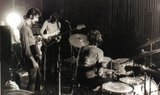
Too oft overlooked in the popular Woodstock/Altamont binary shorthand for fin-de-sixties rock and roll, these bands’ brand of prog/jazz/blues/psych-rock experimentalism got its due in Amougies, Belgium, in a 1969 festival meant as Europe’s answer to the three-day "Aquarian exposition" staged in upstate New York that same year. Sponsored by Paris magazine Actuel, "The Actuel Rock Festival" featured all of the bands mentioned above (except Hawkwind), along with Yes, Pharoah Sanders, Don Cherry, and many more. MC’ing the event, and serving as Beefheart’s manager, was none other than impresario of weird himself, Frank Zappa, who sat in with Floyd on "Interstellar Overdrive," bringing his considerable lead guitar prowess to their dark, descending instrumental.
Just above, hear that Zappa/Floyd performance of the song. The live audio recording is fuzzy and a bit hollow, but the playing comes through perfectly clear. Zappa, in fact, jammed with nearly all the artists on the roster, though only a few recordings have surfaced, like this one from an audience member. Of their collaboration, Pink Floyd drummer Nick Mason said in 1973, "Frank Zappa is really one of those rare musicians that can play with us. The little he did in Amougies was terribly correct." I think you’ll agree.
Dangerous Minds records many of Zappa’s recollections of the event, including a characteristically sardonic account he gave in an interview with The Simpsons’ Matt Groening in which he complains of feeling "like Linda McCartney" and about the scourge of "slumbering euro-hippies." Zappa apparently did not remember jamming with Floyd but "the photos don’t lie and neither does the recording." He does recall playing with Captain Beefheart, who says he himself "enjoyed it." You can hear Beefheart’s set with Zappa above.
According to a biography of founding Pink Floyd singer and guitarist Syd Barrett—gone by the time of the festival—footage of the Zappa/Floyd jam exists, part of an unreleased documentary of the event by Gerome Laperrousaz. That film has yet to surface, it seems, but we do have the film above—slipping between black-and-white and color—of Pink Floyd playing "Green is the Colour," "Careful With That Axe, Eugene," and "Set the Controls For the Heart of the Sun." It’s a must watch if only for Roger Waters’ bone-chilling screams in the second song.
The festival is notable not only for these early performances of the newly Gilmour-fronted Pink Floyd, but also for the appearance of Aynsley Dunbar, future Zappa drummer and journeyman musician extraordinaire. Allegedly Zappa met Dunbar at the festival and was quite impressed with the latter’s jazz chops (though Dunbar first joined Zappa’s band on guitar before moving to drums). You can hear Zappa jam with his eventual star drummer’s band, Aynsley Dunbar’s Retaliation, above.
Related Content:
Watch Frank Zappa Play Michael Nesmith on The Monkees (1967)
Frank Zappa Reads NSFW Passage From William Burroughs’ Naked Lunch (1978)
Psychedelic Scenes of Pink Floyd’s Early Days with Syd Barrett, 1967
Jimi Hendrix, Pink Floyd, Traffic & Other Bands Play Huge London Festival "Christmas on Earth Continued" (1967)
Josh Jones is a writer and musician based in Durham, NC. Follow him at @jdmagness.
http://www.openculture.com/2015/08/the-night-frank-zappa-jammed-with-pink-floyd-and-captain-beefheart-too-belgium-1969.html is a post from: Open Culture. Follow us on Facebook, Twitter, and Google Plus, or get our Daily Email. And don't miss our big collections of Free Online Courses, Free Online Movies, Free eBooks, Free Audio Books, Free Foreign Language Lessons, and MOOCs.
%%POST_LINK%% is a post from: Open Culture. Follow us on Facebook, Twitter, and Google Plus, or get our Daily Email. And don't miss our big collections of Free Online Courses, Free Online Movies, Free eBooks, Free Audio Books, Free Foreign Language Lessons, and MOOCs.
Open Culture
.
Blog
.
<span class='date ' tip=''><i class='icon-time'></i> Aug 26, 2015 01:03pm</span>
|
|
Just yesterday we were musing on perusing rock stars’ bookshelves, and today we learn it has become a reality, if you live in London. Polymath and all-around swell person David Byrne opened the 22nd annual Meltdown Festival this last Monday, and in the spirit of London’s Poetry Library (which is hosting this part of the event), the former Talking Heads frontman has shipped over 250 books to stock his own lending library for the duration of the festival, until August 30.
In his Guardian essay explaining his decision to let you rifle through his collection of music books—some of which were used as research for his own How Music Works—Byrne waxes about the library he loved in his teenage years in suburban Baltimore:
We were desperate to know what was going on in the cool places, and, given some suggestions and direction, the library was one place where that wider exciting world became available. In my little town, the library also had vinyl that one could check out and I discovered avant-garde composers such as Xenakis and Messiaen, folk music from various parts of the world and even some pop records that weren’t getting much radio play in Baltimore. It was truly a formative place.
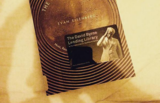
A full list of the books has yet to surface, but a few people are tweeting photos of titles, like Evan Eisenberg’s The Recording Angel: Music, Records and Culture from Aristotle to Zappa or Steve Goodman’s Sonic Warfare: Sound, Affect, and the Ecology of Fear. Squinting our eyes at the promotional photo of Byrne sitting in front of the shelves, we can spot Lester Bangs’ Psychotic Reactions and Carburator Dung, Eric Weisbard’s Listen Again: A Momentary History of Pop Music, Paula Court’s photobook New York Noise: Art and Music from the New York Underground 1978-88; and Thurston Moore’s Mix Tape: The Art of Cassette Culture. (Recognize some other titles? Please add them in the comments.)
Byrne has set up a free-to-borrow system with a credit card on file just in case you abscond with the book, although he does admit it may happen and "so be it." There’s also an added thrill:
Some of my books may have highlighted bits or notes scrawled in the margins. I hope nothing embarrassing.
Byrne’s programming for the Meltdown Festival can be seen here. Highlights include an a cappella workshop by Petra Haden, a showing of There Will Be Blood with live score by Jonny Greenwood and the London Contemporary Orchestra, the reappearance of Young Marble Giants, Young Jean Lee’s band Future Wife performing We’re Gonna Die with David Byrne as special guest; and many other selections of "Things David Thinks You Should Hear."
In the meantime, here’s a photo from the fest’s opening of Mr. Byrne riding a portable espresso shop on wheels.
Related Content:
Brian Eno Lists 20 Books for Rebuilding Civilization & 59 Books For Building Your Intellectual World
Patti Smith’s List of Favorite Books: From Rimbaud to Susan Sontag
David Bowie’s Top 100 Books
David Byrne: How Architecture Helped Music Evolve
Ted Mills is a freelance writer on the arts who currently hosts the FunkZone Podcast. You can also follow him on Twitter at @tedmills, read his other arts writing at tedmills.com and/or watch his films here.
http://www.openculture.com/2015/08/david-byrnes-personal-lending-library-is-now-open.html is a post from: Open Culture. Follow us on Facebook, Twitter, and Google Plus, or get our Daily Email. And don't miss our big collections of Free Online Courses, Free Online Movies, Free eBooks, Free Audio Books, Free Foreign Language Lessons, and MOOCs.
%%POST_LINK%% is a post from: Open Culture. Follow us on Facebook, Twitter, and Google Plus, or get our Daily Email. And don't miss our big collections of Free Online Courses, Free Online Movies, Free eBooks, Free Audio Books, Free Foreign Language Lessons, and MOOCs.
Open Culture
.
Blog
.
<span class='date ' tip=''><i class='icon-time'></i> Aug 26, 2015 01:03pm</span>
|
|
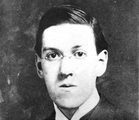
Horror writer Howard Phillips Lovecraft was a man who lived his life in fear—of people of other races and nationalities, of women, of reality itself. In a recent New York Review of Books write-up, Charles Baxter somewhat derisively characterizes Lovecraft as a disenchanted adolescent (and favorite of disenchanted adolescents), who "never really grew up. ‘Adulthood is hell,’ he once wrote in a letter." Yet his fiction depicts more than a tormented adult world, but an entire universe brimming with nameless ancient horrors—and occasionally named ones like the creature Cthulhu, whose likeness he once sketched out in a letter to a friend.
The cephalopod-faced monster crystalizes Lovecraft’s disgust with reality in all its strangeness and, for him, all its variety. It’s a perfect image of alienation (just this past week we saw tongue-in-cheek speculation over whether octopuses are aliens; a plausible conceit) and presents us with an elemental uncanniness that characterizes his entire body of work. "Fiction like Lovecraft’s can be brutally hypnotic," writes Baxter, "the young reader, intellectually undefended and easily shaken enters the writer’s fear-drenched universe and can’t easily get out of it."
The Call of Cthulhu - Part 1
The Call of Cthulhu - Part 2
Whether you discovered Lovecraft as a young reader or an older one, you may have found yourself similarly entrapped by the horrors of his imagination. And you could count yourself in the company of not only hermetic, misanthropic, death-obsessed young men in punk bands but also of media friendly, death-obsessed writers like Stephen King and Joyce Carol Oates. And, of course, thousands upon thousands of horror fans across the world, including a great many actors, writers, and directors who over the years have adapted Lovecraft’s fiction as old-fashioned radio drama of the kind the author himself might have consumed while isolated from the wicked world in his New England home.
You can hear some choice examples here: at the top of the post we have Richard Coyle’s reading of the novella At the Mountains of Madness. (You can also hear his reading of "The Shadow Over Innsmouth" here.) Next, we have a 1945 dramatization of "The Dunwich Horror," performed by Academy Award-winning actor Ronald Colman. And then hear the infamous "Call of Cthulhu," parts one and two, produced by the Atlanta Radio Theatre Company, who have recorded no small number of Lovecraft radio plays. Just above, listen to a reading of "Behind the Wall of Sleep" from old-time radio sci-fi readings archive Mind Webs (which we’ve covered in a previous post). Finally, below, listen on Spotify to the HP Lovecraft Radio Hour Vol 1, a collection of dramatized Lovecraft stories.
Should you happen to tear through these recordings and find yourself in desperate need of more to feed your Lovecraft obsession, fear not; you would have a very hard time exhausting all the options. The World’s Largest H.P. Lovecraft Audio Links Gateway, for example, delivers exactly what it promises. Should that expansive database somehow leave out a reading or dramatization, you’ll perhaps find it over at the H.P. Lovecraft Archive’s sizeable collection. And you must, if you’re a Lovecraft fan, visit the H.P. Lovecraft Historical Society, who host plenty of Lovecraft merch, and links to much more Lovecraft audio, including albums inspired by his work and a podcast.
And on the off chance you knew little or not at all of Lovecraft before reading this post, beware. You may, after listening to some of his weird tales of horror, come away a devoted Lovecraft cultist.
Related Content:
H.P. Lovecraft’s Classic Horror Stories Free Online: Download Audio Books, eBooks & More
H.P. Lovecraft’s Monster Drawings: Cthulhu & Other Creatures from the "Boundless and Hideous Unknown"
Lovecraft: Fear of the Unknown (Free Documentary)
Josh Jones is a writer and musician based in Durham, NC. Follow him at @jdmagness
http://www.openculture.com/2015/08/hear-dramatizations-of-h-p-lovecrafts-stories-on-his-birthday-the-call-of-cthulhu-the-dunwich-horror-more.html is a post from: Open Culture. Follow us on Facebook, Twitter, and Google Plus, or get our Daily Email. And don't miss our big collections of Free Online Courses, Free Online Movies, Free eBooks, Free Audio Books, Free Foreign Language Lessons, and MOOCs.
%%POST_LINK%% is a post from: Open Culture. Follow us on Facebook, Twitter, and Google Plus, or get our Daily Email. And don't miss our big collections of Free Online Courses, Free Online Movies, Free eBooks, Free Audio Books, Free Foreign Language Lessons, and MOOCs.
Open Culture
.
Blog
.
<span class='date ' tip=''><i class='icon-time'></i> Aug 26, 2015 01:02pm</span>
|
|
One often hears lamented the lack of well-spoken public intellectuals in America today. Very often, the lamenters look back to James Baldwin, who in the 1950s and 1960s wrote such powerful race-, class-, and sex-examining books as Go Tell It on the Mountain, Giovanni’s Room, and The Fire Next Time, as one of the greatest figures in the field. Though Baldwin expatriated himself to France for much of his life, he seems never to have let the state of his homeland drift far from his mind, and his opinions on it continued to put a charge into the grand American debate.
Upon one return from Paris in 1957, Baldwin found himself wrapped up in the controversy around the Civil Rights Act and the related movements across the south. He wrote several high-profile essays on the subject, even ending up himself the subject of a 1963 Time magazine cover story on his views. That same year, he went on a lecture tour on race in America which put him in close contact with a variety of student movements and other protests, whose efficacy he and Malcolm X debated in the broadcast above.
"While Malcolm X criticized the sit-in movement as passive," writes Rhonda Y. Williams in Concrete Demands: The Search for Black Power in the 20th Century, "Baldwin argued that ‘maintaining calm in the face of vitriol demands a tremendous amount of power.'" He goes on to say that "when the sit-in movement started or when a great many things started in the western world, I think it had a great deal less to do with equality than with power." This got him wondering about what he saw as the all-important distinction between "power and equality" and "power and freedom."
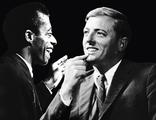
Two years later, Baldwin appeared in another high-profile debate with about as different an interlocutor from Malcolm X as one can imagine: Firing Line host William F. Buckley, across from whom every well-spoken public intellectual in America of that era must have sat at one time or another. They discussed whether the American Dream comes "at the expense of the American negro." Buckley, as Josh Jones wrote here in 2012, "had come out four years earlier against desegregation and Civil Rights legislation" and could ably defend his positions, but "Baldwin proved the more persuasive voice."
Dissecting the skills of Baldwin the debater, John Warner of Inside Higher Education writes that "Baldwin’s remarks display all the skill and moves of an expert persuader" such as "the attendance to audience, the acknowledgement of their needs, the combination of both emotional and logical argument." His arguments also have their roots not in "attitudes or beliefs, which are varied and changeable, but values, which are widely shared and immutable."
Baldwin, Warner continues, "reminds us that America is the land of the free, the home of the brave, that all men are created equal, that we are here to pursue life, liberty, happiness," but "while these values are powerful and timeless, our understanding of how they may be best achieved, the conditions under which they can be fostered change all the time." Whether on the air or in text, against Malcolm X, William F. Buckley, or anyone else, his performance in debate shows that "the best and most lasting persuasion is simply the act of reminding people of what they already believe to be true."
Related Content:
James Baldwin Bests William F. Buckley in 1965 Debate at Cambridge University
James Baldwin: Witty, Fiery in Berkeley, 1979
Malcolm X, Debating at Oxford, Quotes Shakespeare’s Hamlet (1964)
Malcolm X at Oxford University 1964
Colin Marshall writes on cities, language, Asia, and men’s style. He’s at work on a book about Los Angeles, A Los Angeles Primer, and the video series The City in Cinema. Follow him on Twitter at @colinmarshall or on Facebook.
http://www.openculture.com/2015/08/james-baldwin-debates-malcolm-x-1963-and-william-f-buckley.html is a post from: Open Culture. Follow us on Facebook, Twitter, and Google Plus, or get our Daily Email. And don't miss our big collections of Free Online Courses, Free Online Movies, Free eBooks, Free Audio Books, Free Foreign Language Lessons, and MOOCs.
%%POST_LINK%% is a post from: Open Culture. Follow us on Facebook, Twitter, and Google Plus, or get our Daily Email. And don't miss our big collections of Free Online Courses, Free Online Movies, Free eBooks, Free Audio Books, Free Foreign Language Lessons, and MOOCs.
Open Culture
.
Blog
.
<span class='date ' tip=''><i class='icon-time'></i> Aug 26, 2015 01:02pm</span>
|
|
Punk rock and its accoutrements—including the handmade, Xeroxed ‘zine—pass into history, replaced by Taylor Swift and Snapchat, or whatever. But as a piece of history, the ‘zine will always stand as a marker of a particular era, of the 80s/early 90s explosion of critical consciousness fostered by young kids reading Nietzsche, Foucault, and Camus, then forming their own bands, labels, and networks. Crucial to the period is the emergence of Riot Grrrl bands like Bikini Kill and their assault on oppressive gender politics, in punk rock and everywhere else. And crucial to many such punks’ understanding of gender was the work of critical theorist Judith Butler.
"Riot Grrrl didn’t herald the beginnings of third wave feminism," writes Sophia Satchell Baeza in Canvas, "we’ll give that to the emergence of post-structuralist Queer theory, and the work of Judith Butler—but it did help define it aesthetically as much as formally for a new generation of indignant feminists." An essential part of that aesthetic—the ‘zine—spread the tenets of Riot Grrrl anger, determination, and irony to cities far and wide. And, in 1993, a group of intellectual scenesters created the ultimate punk homage to Butler’s undeniable influence: Judy!, an honest-to-goodness Judith Butler fanzine, complete with murky, mimeographed photo spreads and serial killer typescript. (See the cover at the top, with photo of Judy Garland.) "Let’s talk about that real glamour gal of theory, Judy Butler," begins one free-form introductory essay.
She’s especially good to see live, if you can. Her performances are rife with witty repartee about her mom or whatever and the three times I’ve seen her, she’s been sporting little tailored black jackets. She’s a bit Gap but she’s still a fox.
This cavalier hipster tone hides the voice of a likely grad student, who mentions M.L.A. (the Modern Language Association’s conference), and other post-structuralist theorists like Gayatri Spivak, Eve Sedgwick, and Julia Kristeva. There are footnotes and references to Butler’s classic Gender Trouble amidst much more irreverent, catty rhetoric like "Judy is the number one dominator, and the only thing you or I can do is submit gladly." It’s great fun, if that’s what you’re into—and if you get the combo of ‘zine aesthetic and academic feminist theory. There’s even a quiz to test your knowledge of the latter’s high priestess professors and inscrutable argot: "are you a theory-fetishizing biscuithead?"
As much as it knowingly pokes fun at itself, in both form and content the artifact represents a perfect hybridization of streetwise mid-nineties punk rock and challenging mid-nineties high feminist theory. Central to the latter, Judith Butler challenges cultural norms in ways that very much inform our popular understanding of gender and sexuality today. And ‘zine culture, though it may appear mostly in museums and retrospectives these days, lives on in spirit in the work of hip, cultural mavens like Rookie’s Tavi Gevinson. Above, see Butler discuss her theory of gender performativity. And Read the entire issue of Judy!, the fanzine, here.
via Progressive Geographies
Read Chez Foucault, the 1978 Fanzine That Introduced Students to the Radical French Philosopher
44 Essential Movies for the Student of Philosophy
Josh Jones is a writer and musician based in Durham, NC. Follow him at @jdmagness.
http://www.openculture.com/2015/08/judy-1993-judith-butler-fanzine-gives-us-an-irreverent-punk-rock-take-on-the-post-structuralist-gender-theorist.html is a post from: Open Culture. Follow us on Facebook, Twitter, and Google Plus, or get our Daily Email. And don't miss our big collections of Free Online Courses, Free Online Movies, Free eBooks, Free Audio Books, Free Foreign Language Lessons, and MOOCs.
%%POST_LINK%% is a post from: Open Culture. Follow us on Facebook, Twitter, and Google Plus, or get our Daily Email. And don't miss our big collections of Free Online Courses, Free Online Movies, Free eBooks, Free Audio Books, Free Foreign Language Lessons, and MOOCs.
Open Culture
.
Blog
.
<span class='date ' tip=''><i class='icon-time'></i> Aug 26, 2015 12:59pm</span>
|
|
Little known fact, during his high school days, Stephen Colbert was the front man of a Rolling Stones cover band. And, appearing on Howard Stern on Tuesday, just weeks before taking over The Late Show, Colbert proved it, singing and doing a jig to "Brown Sugar." He moves like Jagger, and it’s fun to watch.
The Late Show with Stephen Colbert starts Tuesday, September 8th — right after Labor Day.
Related Content
Stephen Colbert & Neil deGrasse Break Down Our Awesome 3 Billion-Mile Journey to Pluto
Stephen Colbert Reads Ray Bradbury Classic Sci-Fi Story "The Veldt"
Stephen Colbert & Louis CK Recite The Gettysburg Address, With Some Help from Jerry Seinfeld
http://www.openculture.com/2015/08/karaoke-style-stephen-colbert-sings-and-struts-to-brown-sugar.html is a post from: Open Culture. Follow us on Facebook, Twitter, and Google Plus, or get our Daily Email. And don't miss our big collections of Free Online Courses, Free Online Movies, Free eBooks, Free Audio Books, Free Foreign Language Lessons, and MOOCs.
%%POST_LINK%% is a post from: Open Culture. Follow us on Facebook, Twitter, and Google Plus, or get our Daily Email. And don't miss our big collections of Free Online Courses, Free Online Movies, Free eBooks, Free Audio Books, Free Foreign Language Lessons, and MOOCs.
Open Culture
.
Blog
.
<span class='date ' tip=''><i class='icon-time'></i> Aug 26, 2015 12:59pm</span>
|
|
My pile of nightstand books at the moment includes Tim Ferriss’ The Four-Hour Chef (available as a free audiobook here), a flashy tome meant in part to teach the simplest cooking techniques that yield high degrees of versatility, impressiveness, and deliciousness. But its real interest lies in the subject of learning itself, and so it also covers reasonable-investment-high-return techniques for mastering other things, like languages. As I read Ferriss’ account of his own experience developing strategies to quickly learn the Japanese language right next to so many photographs of food and the preparation thereof, my brain couldn’t help but combine those two chunks of information — and then proceed to make me hungry.
I had a mind to go straight to Cookpad, Japan’s biggest general recipe site that we featured back in 2013, when it had just launched an English-language version. Now we have another rich recipe resource in the form of The New York Times Cooking database, an archive of 17,000 recipes, also accessible through its very own free iPhone app. Call up Japanese food, and you get a variety of appealing dishes and sauces from the simple and easy (chicken teriyaki, yakisoba, eggplant with miso) to the more elaborate (squid salad with cucumbers, almonds, and pickled plum dressing; and Jean-Georges Vongerichten’s fried sushi cakes) to the new-wave (miso butterscotch, Nakagawa’s California sushi, and Japanese burgers with wasabi ketchup). Above, we have a video that accompanies the Yakisoba With Pork and Cabbage recipe.
Have a look around, and you’ll see that the site also offers a number of useful functions for those who make a free account there, such as the ability to save the recipes you want to make later and a recommendation engine to give you suggestions as to what to make next. But still, even though sites like these guarantee that none of us will ever go hungry for lack of a recipe, we can only do as well by any of them as our actual, physical cooking skills allow. Fortunately, the Times also has our back on that: as we posted last year, you can get a handle on all of that with their 53 instructional videos on essential cooking techniques. And so we really have no excuses left not to learn how to make Japanese food — or any other kind. As for all those languages, now…
Related Content:
Cookpad, the Largest Recipe Site in Japan, Launches New Site in English
53 New York Times Videos Teach Essential Cooking Techniques: From Poaching Eggs to Shucking Oysters
Michael Pollan Explains How Cooking Can Change Your Life; Recommends Cooking Books, Videos & Recipes
MIT Teaches You How to Speak Italian & Cook Italian Food All at Once (Free Online Course)
Science & Cooking: Harvard Profs Meet World-Class Chefs in Unique Online Course
How to Make Instant Ramen Compliments of Japanese Animation Director Hayao Miyazaki
Colin Marshall writes on cities, language, Asia, and men’s style. He’s at work on a book about Los Angeles, A Los Angeles Primer, and the video series The City in Cinema. Follow him on Twitter at @colinmarshall or on Facebook.
http://www.openculture.com/2015/08/the-new-york-times-makes-17000-tasty-recipes-available-online.html is a post from: Open Culture. Follow us on Facebook, Twitter, and Google Plus, or get our Daily Email. And don't miss our big collections of Free Online Courses, Free Online Movies, Free eBooks, Free Audio Books, Free Foreign Language Lessons, and MOOCs.
%%POST_LINK%% is a post from: Open Culture. Follow us on Facebook, Twitter, and Google Plus, or get our Daily Email. And don't miss our big collections of Free Online Courses, Free Online Movies, Free eBooks, Free Audio Books, Free Foreign Language Lessons, and MOOCs.
Open Culture
.
Blog
.
<span class='date ' tip=''><i class='icon-time'></i> Aug 26, 2015 12:58pm</span>
|
|
For a certain period of time, it became very hip to think of classic tattoo artist Norman "Sailor Jerry" Collins as the epitome of WWII era retro cool. His name has become a prominent brand, and a household name in tattooed households—or those that watch tattoo-themed reality shows. But I submit to you another name for your consideration to represent the height of vintage rebellion: Maud Wagner (1877-1961).
No, "Maud" has none of the rakish charm of "Sailor Jerry," but neither does the name Norman. I mean no disrespect to Jerry, by the way. He was a prototypically American character, tailor-made for the marketing hagiography written in his name. But so, indeed, was Maud Wagner, not only because she was the first known professional female tattoo artist in the U.S., but also because she became so, writes Margo DeMello in her history Inked, while "working as a contortionist and acrobatic performer in the circus, carnival, and world fair circuit" at the turn of the century.
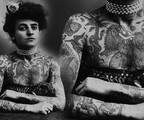
Aside from the cowboy perhaps, no spirit is freer in our mythology than that of the circus performer. The reality of that life was of course much less romantic than we imagine, but Maud’s life—as a side show artist and tattooist—involves a romance fit for the movies. Or so the story goes. She learned to tattoo from her husband, Gus Wagner, an artist she met at the St. Louis World’s Fair, who offered to teach her in exchange for a date. As you can see in her 1907 picture at the top, after giving her the first tattoo, he just kept going (see the two of them above). "Maud’s tattoos were typical of the period," writes DeMello, "She wore patriotic tattoos, tattoos of monkeys, butterflies, lions, horses, snakes, trees, women, and had her own name tattooed on her left arm."
Unfortunately there seem to be no images of Maud’s own handiwork about, but her legacy lived on in part because Gus and Maud had a daughter, given the endearing name Lovetta (see the family above), who also became a tattoo artist. Unlike her mother, however, Lovetta did not become a canvas for her father’s work or anyone else’s. According to tattoo site Let’s Ink, "Maud had forbidden her husband to tattoo her and, after Gus died, Lovetta decided that if she could not be tattooed by her father she would not be tattooed by anyone." Like I said, romantic story. Unlike Sailor Jerry, the Wagner women tattooed by hand, not machine. Lovetta gave her last tattoo, in 1983, to modern-day celebrity artist, marketing genius, and Sailor Jerry protégée Don Ed Hardy.
The cultural history of tattooed and tattooing women is long and complicated, as Margot Mifflin documents in her 1997 Bodies of Subversion: A Secret History of Women and Tattoo. For the first half of the twentieth century, heavily-inked women like Maud were circus attractions, symbols of deviance and outsiderhood. Mifflin dates the practice of displaying tattooed white women to 1858 with Olive Oatman (above), a young girl captured by Yavapis Indians and later tattooed by the Mohave people who adopted and raised her. At age nineteen, she returned and became a national celebrity.
Tattooed Native women had been put on display for hundreds of years, and by the turn of the 20th century World’s Fair, "natives… whether tattooed or not, were shown," writes DeMello, in staged displays of primitivism, a "construction of the other for public consumption." While these spectacles were meant to represent for fairgoers "the enormous progress achieved by the West through technological advancements and world conquest," another burgeoning spectacle took shape—the tattooed lady as both pin-up girl and rebellious thumb in the eye of imperialist Victorianism and its cult of womanhood.
And here I submit another name for your consideration: Jessie Knight (above, with a tattoo of her family crest), Britain’s first female tattoo artist and also onetime circus performer, who, according to Jezebel, worked in her father’s sharp shooting act before striking out on her own as a tattooist. The Mary Sue quotes an unnamed source who writes that her job was "to stand before [her father] so that he could hit a target that was sometimes placed on her head or on an area of her body." Supposedly, one night he "accidentally shot Jesse in the shoulder," sending her off to work for tattoo artist Charlie Bell. As the narrator in the short film below from British Pathe puts it, Knight (1904-1994), "was once the target in a sharp shooting act. Now she’s at the business end of the target no more."
The remark sums up the kind of agency tattooing gave women like Knight and the independence tattooed women represented. Popular stereotypes have not always endorsed this view. "Over the last 100 years," writes Amelia Klem Osterud in Things & Ink magazine, "a stigma has developed against tattooed women—you know the misconceptions, women with tattoos are sluts, they’re ‘bad girls,’ just as false as the myth that only sailors and criminals get tattoos."
Jesse Knight—as you can see from the Pathe film and the photo above from 1951—was portrayed as a consummate professional, and in fact won 2nd place in a "Champion Tattoo Artist of all England" in 1955. See several more photos of her at work at Jezebel, and see a gallery of tattooed—and tattooist—ladies from Mifflin’s book at The New Yorker, including such characters as Botticelli and Michelangelo-tattooed Anna Mae Burlington Gibbons, Betty Broadbent, the tattooed contestant in the first televised beauty pageant, and Australian tattoo artist Cindy Ray, "The Classy Lassy with the Tattooed Chassis." Now there’s a name to remember.
Related Content:
A Dazzling Gallery of Clockwork Orange Tattoos
Why Tattoos Are Permanent? New TED Ed Video Explains with Animation
Josh Jones is a writer and musician based in Durham, NC. Follow him at @jdmagness
http://www.openculture.com/2015/08/meet-the-first-female-tattoo-artists.html is a post from: Open Culture. Follow us on Facebook, Twitter, and Google Plus, or get our Daily Email. And don't miss our big collections of Free Online Courses, Free Online Movies, Free eBooks, Free Audio Books, Free Foreign Language Lessons, and MOOCs.
%%POST_LINK%% is a post from: Open Culture. Follow us on Facebook, Twitter, and Google Plus, or get our Daily Email. And don't miss our big collections of Free Online Courses, Free Online Movies, Free eBooks, Free Audio Books, Free Foreign Language Lessons, and MOOCs.
Open Culture
.
Blog
.
<span class='date ' tip=''><i class='icon-time'></i> Aug 26, 2015 12:58pm</span>
|