Blogs
|
With the possible exception of John Gray’s Straw Dogs, few works of philosophy confront the barrenness of human life in the modern world in bleaker terms than Theodor Adorno’s Minima Moralia. Taking its title from Aristotle’s Magna Moralia, or "The Great Ethics," Adorno’s book subverts the classical idea of the good life as a realistic aspiration in a world dominated by totalitarian systems of control and inexorable, grinding logics of production and consumption. "Our perspective of life has passed into an ideology which conceals the fact that there is life no longer," writes Adorno in his Dedication. The individual has been "reduced and degraded" by capitalism and fascism, flattened to mere appearance in the "sphere of consumption."
Adorno’s book—a philosophical memoir of his experience as an "intellectual in emigration"—reflects his pessimism not only in its title but also in its subtitle: Reflections from Damaged Life. How little he could have suspected—and how much he likely would have despised—the kinship between his own postwar angst and the neurotic anger of the American hardcore punk generation to come some thirty-five years later. Take, for example these lyrics to Black Flag’s "Damaged," from their 1981 album of the same name:
Right now look at me now
Look at me now
Just shadows
I’m just shadows of what I was
I just want another thing
I don’t even get by for that
One might make the case that Black Flag lyrics—and those of so many similar bands—play out Adorno’s thesis over and over: to quote a much less angry pop band from a later generation: "Modern Life is Rubbish."
Seizing on these pessimistic parallels between punk rock and critical theory, filmmaker and artist Brian J. Davis recorded an EP of readings from five chapters of Adorno’s book, set to blistering hardcore drums and guitars. (Anyone happen to know who is on vocals?) Above, hear "They, The People," and "This Side of the Pleasure Principle" and below, we have "UNmeasure for UNmeasure," "Johnny Head-in-the-Air," and "Every Work is an Uncommitted Crime."
As you’ll note, Adorno’s titles allude to well-known works of art, politics, folk song, and theory and—as the publisher’s note in my Verso edition puts it— "involve irony or inversion," primary rhetorical methods of his "negative dialectic." The hardcore punks who picked up, however unconsciously, on Adorno’s disaffected critique may have eschewed his self-consciously literary approach, but they were no less masters of irony, even if their targets happened to be much more pop-cultural.
Punk rock Adorno comes to us from WFMU’s Kenneth S as examples of "academic theory… sung by people who can’t sing." As Colin Marshall pointed out in a post yesterday, Goldsmith has made his own contribution to the genre, singing writings by Walter Benjamin, Ludwig Wittgenstein, and Sigmund Freud. And to even more humorous effect, we’ve previously brought you the work of M.A. Numminen, Finnish performance artist who turned Wittgenstein’s Tractatus into a bizarre comic opera.
For a much more serious look at Adorno and music—a subject he wrote passionately and controversially about—check out this post on his own avant-garde compositions, which turn out to be much less punk rock than one might expect given his social alienation and despondency.
Related Content:
The Theory of Walter Benjamin, Ludwig Wittgenstein & Sigmund Freud Sung by Kenneth Goldsmith
Ludwig Wittgenstein’s Tractatus Gets Adapted Into an Avant-Garde Comic Opera
Hear Theodor Adorno’s Avant-Garde Musical Compositions
Theodor Adorno’s Radical Critique of Joan Baez and the Music of the Vietnam War Protest Movement
Theodor Adorno’s Philosophy of Punctuation
Josh Jones is a writer and musician based in Durham, NC. Follow him at @jdmagness.
http://www.openculture.com/2015/08/theodor-adornos-seminal-critical-theory-text-minima-moralia-sung-as-hardcore-punk-songs.html is a post from: Open Culture. Follow us on Facebook, Twitter, and Google Plus, or get our Daily Email. And don't miss our big collections of Free Online Courses, Free Online Movies, Free eBooks, Free Audio Books, Free Foreign Language Lessons, and MOOCs.
%%POST_LINK%% is a post from: Open Culture. Follow us on Facebook, Twitter, and Google Plus, or get our Daily Email. And don't miss our big collections of Free Online Courses, Free Online Movies, Free eBooks, Free Audio Books, Free Foreign Language Lessons, and MOOCs.
Open Culture
.
Blog
.
<span class='date ' tip=''><i class='icon-time'></i> Aug 26, 2015 01:17pm</span>
|
|
Sir Arthur C. Clarke, the science fiction author best known for 2001: A Space Odyssey, started writing at the end of World War II and the beginning of the nuclear age, a time when technology promised to bring untold benefit to humanity and had the potential to utterly destroy it. So he wrote science fiction with some actual science in it, tales about space travel, alien encounters and human evolution.
The future was a continuing object of fascination for Clarke. He proved to be uncannily accurate at making divinations about the course of technology. Back in 1964, he predicted virtual surgery, 3D printers and the internet. Of course, he also predicted that we would have an army of monkey servants to cater to our every whim. You can’t always be right.
But thanks to the magic of one of his predictions - the internet - you can listen to Clarke read two of his most acclaimed works - Childhood’s End and "The Star."
The former tale, written in 1953, is about a mysterious alien race that brings the Cold War to a screeching halt and kick starts human evolution. But at what cost? Stanley Kubrick was reportedly interested in developing the book until he settled on 2001. Listen to Clarke read long excerpts from Childhood’s End at the top of this post.
The latter story, published in 1955, might very well be the best sci-fi Christmas story ever. It was adapted into a Twilight Zone episode that thoroughly freaked me out as a kid. Listen to "The Star" just above.
Related Content:
Arthur C. Clarke Narrates Film on Mandelbrot’s Fractals; David Gilmour Provides the Soundtrack
Isaac Asimov Predicts in 1964 What the World Will Look Like Today — in 2014
Free Science Fiction Classics on the Web: Huxley, Orwell, Asimov, Gaiman & Beyond
630 Free Audio Books: Download Great Books for Free
Jonathan Crow is a Los Angeles-based writer and filmmaker whose work has appeared in Yahoo!, The Hollywood Reporter, and other publications. You can follow him at @jonccrow. And check out his blog Veeptopus, featuring lots of pictures of vice presidents with octopuses on their heads. The Veeptopus store is here.
http://www.openculture.com/2015/08/arthur-c-clarke-reads.html is a post from: Open Culture. Follow us on Facebook, Twitter, and Google Plus, or get our Daily Email. And don't miss our big collections of Free Online Courses, Free Online Movies, Free eBooks, Free Audio Books, Free Foreign Language Lessons, and MOOCs.
%%POST_LINK%% is a post from: Open Culture. Follow us on Facebook, Twitter, and Google Plus, or get our Daily Email. And don't miss our big collections of Free Online Courses, Free Online Movies, Free eBooks, Free Audio Books, Free Foreign Language Lessons, and MOOCs.
Open Culture
.
Blog
.
<span class='date ' tip=''><i class='icon-time'></i> Aug 26, 2015 01:16pm</span>
|
|
Long before I started Open Culture I was a fan of The Great Courses, formerly called The Teaching Company. If you’re not familiar with them, the company travels across the US, recording great professors lecturing on great topics that will appeal to any lifelong learner. The courses are very polished and stimulating (I’ve personally purchased almost 20 courses over the years), and they have typically been sold in an "à la carte" fashion.
Now, The Great Courses is working on rolling out a new model, and Open Culture readers can give it an early test drive for free. The company will soon launch The Great Courses Plus, a new video subscription learning service that offers unlimited access to 5,000 lectures from a library of courses — courses covering History, Philosophy, Literature, Economics, Math, Science, Professional Development, Cooking & Wine, Photography and much more. Choosing what they want to watch, when they want to watch, subscribers can stream lectures on computer web browsers, mobile web browsers, and apps designed for Apple, Google Play, Kindle Fire, and Roku.
The general public won’t have access to this new service until the fall, but our readers (the first 250 1500) can sign up for a free beta test of The Great Courses Plus. To get your free subscription, visit www.TheGreatCoursesPlus.com; enter your email address and the code OPENCULTURE in the orange box on the home page; click ‘Submit;’ and then finish the sign-up process. [Note: the code OPENCULTURE is not case sensitive, I’m told.] The sign-up process does require a credit card to ensure you are a real person, but you will not be charged now or in the future. The beta is expected to last until late September. When the beta test is finished, your subscription will be cancelled and you will be under no obligation to join.
Again, The Great Courses has given us 250 1500 free slots, so if you’re interested, get cracking soon.
For more coverage of The Great Courses Plus initiative, see an article just published in USA Today.
Dan Colman is the founder/editor of Open Culture. Follow us on Facebook, Twitter, Google Plus and LinkedIn and share intelligent media with your friends. Or better yet, sign up for our daily email and get a daily dose of Open Culture in your inbox.
http://www.openculture.com/2015/08/get-a-free-subscription-to-the-beta-version-of-the-great-courses-plus.html is a post from: Open Culture. Follow us on Facebook, Twitter, and Google Plus, or get our Daily Email. And don't miss our big collections of Free Online Courses, Free Online Movies, Free eBooks, Free Audio Books, Free Foreign Language Lessons, and MOOCs.
%%POST_LINK%% is a post from: Open Culture. Follow us on Facebook, Twitter, and Google Plus, or get our Daily Email. And don't miss our big collections of Free Online Courses, Free Online Movies, Free eBooks, Free Audio Books, Free Foreign Language Lessons, and MOOCs.
Open Culture
.
Blog
.
<span class='date ' tip=''><i class='icon-time'></i> Aug 26, 2015 01:16pm</span>
|
|
As we highlighted a few days ago, recent findings by South African scientists suggest that William Shakespeare may have smoked pot, possibly composing some of his celebrated plays while under the influence. Their research is sure to spark controversy among Shakespeare scholars and historians alike, but it’s certainly a more interesting controversy than the tired debate about whether Shakespeare wrote his plays at all. Perhaps even more interesting than Shakespeare’s drug of choice for lovers of his language are debates about what Shakespeare’s plays might have sounded like to his original audiences. In other words, high or not, what might Shakespeare, his actors, and his audience have sounded like when they spoke the language we call English.
Of course they called the language English as well, but we might not recognize some words as such when hearing Shakespeare’s accent aloud. On the other hand, it might be surprising just how much the Bard’s original pronunciation sounds like so many other kinds of English we know today. In a post two years ago, we quoted Shakespearean actor, director, and writer Ben Crystal on Shakespeare’s original pronunciation, which, he says, "has flecks of nearly every regional U.K. English accent, and indeed American and in fact Australian, too." Hearing Shakespeare’s English spoken aloud, Crystal remarks, is hearing a sound that "reminds people of the accent of their home." You can test this theory, and hear for yourself the sound of Shakespeare’s English with the video and audio highlighted here, showcasing Crystal’s performance of the plays in original pronunciation (OP).
At the top, see Crystal recite an excerpt of Hamlet’s "to be or not to be" speech in a video promotion for a 2011 Kickstarter campaign to fund a film version of Hamlet in OP. And above, we have two audio clips of Richard III and King Lear, respectively, both from an OP Shakespeare CD Crystal recorded with several other actors. Crystal came by his version of original pronunciation honestly, and from a very reputable source, who also happens to be his father, David. The elder Crystal is perhaps the most highly-regarded linguist and scholar of the English language alive today, and in addition to publishing several books both scholarly and popular, he has worked with the Globe Theatre on producing plays in OP since 1994. Learn more about Crystal’s process at our previous post on his work. Below, in an excerpt from a much longer talk, see Ben Crystal describe and demonstrate the differences between "Received Pronunciation"—the "proper," generic form of British English—and Shakespeare’s pronunciation. He then discusses with his audience the ways Shakespeare’s English seems to roam all over the map, hewing to no particular British region or class.
Related Content:
What Shakespeare Sounded Like to Shakespeare: Reconstructing the Bard’s Original Pronunciation
Discover What Shakespeare’s Handwriting Looked Like, and How It Solved a Mystery of Authorship
A 68 Hour Playlist of Shakespeare’s Plays Being Performed by Great Actors: Gielgud, McKellen & More
Free Online Shakespeare Courses: Primers on the Bard from Oxford, Harvard, Berkeley & More
Josh Jones is a writer and musician based in Durham, NC. Follow him at @jdmagness
http://www.openculture.com/2015/08/hear-what-hamlet-richard-iii-king-lear-sounded-like-in-shakespeares-original-pronunciation.html is a post from: Open Culture. Follow us on Facebook, Twitter, and Google Plus, or get our Daily Email. And don't miss our big collections of Free Online Courses, Free Online Movies, Free eBooks, Free Audio Books, Free Foreign Language Lessons, and MOOCs.
%%POST_LINK%% is a post from: Open Culture. Follow us on Facebook, Twitter, and Google Plus, or get our Daily Email. And don't miss our big collections of Free Online Courses, Free Online Movies, Free eBooks, Free Audio Books, Free Foreign Language Lessons, and MOOCs.
Open Culture
.
Blog
.
<span class='date ' tip=''><i class='icon-time'></i> Aug 26, 2015 01:15pm</span>
|
|
Brian Eno Lists 20 Books for Rebuilding Civilization & 59 Books For Building Your Intellectual World
Artist and music producer Brian Eno wrote one of my very favorite books: A Year with Swollen Appendices, which takes the form of his personal diary of the year 1995 with essayistic chapters (the "swollen appendices") on topics like "edge culture," generative music, new ways of singing, pretension, CD-ROMs (a relevant topic back then), and payment structures for recording artists (a relevant topic again today). It also includes a fair bit of Eno’s correspondence with Stewart Brand, once editor of the Whole Earth Catalog and now president of the Long Now Foundation, "a counterpoint to today’s accelerating culture" meant to "help make long-term thinking more common" and "creatively foster responsibility in the framework of the next 10,000 years."
It so happens that Eno now sits on the Long Now Foundation’s board and has had a hand in some of its projects. Naturally, he contributed suggested reading material to the foundation’s Manual of Civilization, a collection of books humanity could use to rebuild civilization, should it need rebuilding. Eno’s full list, which spans history, politics, philosophy, sociology, architecture, design, nature, and literature, runs as follows:
Seeing Like a State by James C Scott
The Mind in the Cave: Consciousness and the Origins of Art by David Lewis-Williams
Crowds and Power by Elias Canetti
The Wheels of Commerce by Fernand Braudel
Keeping Together in Time by William McNeill
Dancing in the Streets by Barbara Ehrenreich
Roll Jordan Roll by Eugene Genovese
A Pattern Language by Christopher Alexander et al
The Face of Battle by John Keegan
A History of the World in 100 Objects by Neil MacGregor
Contingency, Irony and Solidarity by Richard Rorty
The Notebooks by Leonardo da Vinci
The Confidence Trap by David Runciman
The Discoverers by Daniel Boorstein
Mother Nature: A History of Mothers, Infants, and Natural Selection by Sarah Hrdy
War and Peace by Leo Tolstoy
The Cambridge World History of Food (2-Volume Set) by Kenneth F. Kiple & Kriemhild Coneè Ornelas
The Illustrated Flora of Britain and Northern Europe by Marjorie Blamey & Christopher Grey Wilson
Printing and the Mind of Man by John Carter & Percy Muir
Peter the Great: His Life and World by Richard Massie
If you’d like to know more books that have shaped Eno’s thinking, do pick up a copy of A Year with Swollen Appendices. Like all the best diarists, Eno makes plenty of references to his day-to-day reading material, and at the very end — beyond the last swollen appendix — he includes a bibliography, on which you’ll find more from Christopher Alexander, a reappearance of Rorty’s Contingency, Irony and Solidarity, and even Steward Brand’s own How Buildings Learn (on a television version of which the two would collaborate):
Best Ideas: A Compendium of Social Innovation edited by Nicholas Albery
A Foreshadowing of the 21st Century Art: The Color and Geometry of Very Early Turkish Carpets by Christopher Alexander
Bridge Over the Drina by Ivo Andric
Jihad vs. McWorld by Benjamin Barber
The Artful Universe by John Barrow
Brain of the Firm by Stafford Beer
Midnight in the Garden of Good and Evil by John Berendt
The Creators by Daniel Boorstin
Lay My Burden Down: A Folk History of Slavery edited by B.A. Botkin
How Buildings Learn by Stewart Brand
Civilization and Capitalism by Fernand Braudel
The Transformation of War by Martin van Creveld
The Transfiguration of the Commonplace by Arthur Danto
River Out of Eden by Richard Dawkins
Darwin’s Dangerous Idea by Daniel Dennett
Defence Policy Making edited by G.M. Dillon
Women En Large: Image of Fat Nudes by Laurie Toby Edison and Debbie Notkin
Birdsong by Sebastian Faulks
Trust by Francis Fukuyama
Edge City by Joel Garreau
Ecce Homo by George Grosz
Beyond Culture by Edward T. Hall
Managing the Commons by Garrett Hardin and John Baden
The Middle Ages by Friedrich Herr
Going Bugs by James Hillman
Culture of Complaint by Robert Hughes
The Waning of the Middle Ages by Johann Huizinga
The State We’re In by Will Hutton
Out of Control: The Rise of Neo-Biological Civilization by Kevin Kelly
Wild Blue Yonder by Nick Krotz
Fetish Girls by Eric Kroll
The Leopard by Giuseppe Tomasi di Lampedusa
Artificial Life by Steven Levy
Planetary Overload by A.J. McMichael
Being Digital by Nicholas Negroponte
Erotica Universalis by Gilles Neret
Living Without a Goal by Jay Ogilvy
Billy the Kid by Michael Ondaatje
Evolution of Consciousness by Robert E. Ornstein
Art and Pornography and Man’s Rage for Chaos by Morse Peckham
Works and Texts by Tom Phillips
The Language Instinct by Stephen Pinker
In Search of a Better World by Karl Popper
Prisoner’s Dilemma by William Poundstone
Postcards by Annie Proulx
Consequences of Pragmatism and Contingency, Irony, and Solidarity by Richard Rorty
The Moor’s Last Sigh by Salman Rushdie
England’s Dreaming by Jon Savage
Lords of the Rim by Sterling Seagrave
Art and Physics by Leonard Shlain
I am That: Conversations with Sri Nisaragadatta Maharaj
Face of the Gods and Flash of the Spirit by Robert Farris Thompson
Ocean of Sound by David Toop
The Seven Cultures of Capitalism by Charles Hampden Turner
Black Lamb and Grey Falcon by Rebecca West
Art and Anarchy by Edgar Wind
Related Content:
David Bowie’s Top 100 Books
Brian Eno Lists the Benefits of Singing: A Long Life, Increased Intelligence, and a Sound Civilization
Jump Start Your Creative Process with Brian Eno’s "Oblique Strategies"
Brian Eno on Creating Music and Art As Imaginary Landscapes (1989)
What Books Could Be Used to Rebuild Civilization?: Lists by Brian Eno, Stewart Brand, Kevin Kelly & Other Forward-Thinking Minds
What Books Should Every Intelligent Person Read?: Tell Us Your Picks; We’ll Tell You Ours
Neil deGrasse Tyson Lists 8 (Free) Books Every Intelligent Person Should Read
The 10 Greatest Books Ever, According to 125 Top Authors (Download Them for Free)
Colin Marshall writes on cities, language, Asia, and men’s style. He’s at work on a book about Los Angeles, A Los Angeles Primer, and the video series The City in Cinema. Follow him on Twitter at @colinmarshall or on Facebook.
http://www.openculture.com/2015/08/brian-eno-book-lists.html is a post from: Open Culture. Follow us on Facebook, Twitter, and Google Plus, or get our Daily Email. And don't miss our big collections of Free Online Courses, Free Online Movies, Free eBooks, Free Audio Books, Free Foreign Language Lessons, and MOOCs.
%%POST_LINK%% is a post from: Open Culture. Follow us on Facebook, Twitter, and Google Plus, or get our Daily Email. And don't miss our big collections of Free Online Courses, Free Online Movies, Free eBooks, Free Audio Books, Free Foreign Language Lessons, and MOOCs.
Open Culture
.
Blog
.
<span class='date ' tip=''><i class='icon-time'></i> Aug 26, 2015 01:14pm</span>
|
|
This is usually what happens when I write a piece for Open Culture: As I drink an overpriced coffee at my local coffee shop, I research a topic on the internet, write and edit an article on Microsoft Word and then copy and paste the whole thing into WordPress. My editor in Open Culture’s gleaming international headquarters up in Palo Alto gives it a look-over and then, with the push of a button, publishes the article on the site.
It’s sobering to think what I casually do over the course of a morning would require the effort of dozens of people 40 years ago.
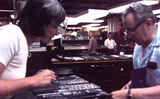
Until the 1970s, with the rise in popularity of computer typesetting, newspapers were printed the same way for nearly a century. Linotype machines would cast one line at a time from molten lead. Though an improvement from handset type, where printers would assemble lines of type one character at a time, linotype still required numerous skilled printers to assemble each and every newspaper edition.
The New York Times transitioned from that venerated production method to computer typesetting on Sunday, July 2, 1978. David Loeb Weiss, a proofreader at the Times, documented this final day in the documentary Farewell - Etaoin Shrdlu.
The title of the movie, by the way, comes from the first two lines of a printer’s keyboard, which are arranged according to a letter’s frequency of use. When a printer typed "etaoin shrdlu," it meant that the line had a mistake in it and should be discarded.
Watching the movie, you get a sense of just how much work went into each page and how printers were skilled craftsmen. (You try spotting a typo on a page of upside down and backwards type.) The film also captures the furious energy and the cacophony of clinks and clanks of the composing room. You can see just how much physical work was involved. After all, each page was printed off of a 40-pound plate made of lead.
The tone of the movie is understandably melancholy. The workers are bidding farewell to a job that had existed for decades. "All the knowledge I’ve acquired over my 26 years is all locked up in a little box now called a computer," notes one printer. "And I think most jobs are going to end up the same way." Someone else wrote the following on the composing room’s chalkboard. "The end of an era. Good while it lasted. Crying won’t help."
You can watch the full documentary above. It will also be added to our list of 200 Free Documentaries, a subset of our meta collection, 700 Free Movies Online: Great Classics, Indies, Noir, Westerns, etc..
H/T @KirstinButler
Related Content:
Friedrich Nietzsche’s Curious Typewriter, the "Malling-Hansen Writing Ball"
53 New York Times Videos Teach Essential Cooking Techniques: From Poaching Eggs to Shucking Oysters
The Art of Collotype: See a Near Extinct Printing Technique, as Lovingly Practiced by a Japanese Master Craftsman
Mark Twain Wrote the First Book Ever Written With a Typewriter
Jonathan Crow is a Los Angeles-based writer and filmmaker whose work has appeared in Yahoo!, The Hollywood Reporter, and other publications. You can follow him at @jonccrow. And check out his blog Veeptopus, featuring lots of pictures of vice presidents with octopuses on their heads. The Veeptopus store is here.
http://www.openculture.com/2015/08/the-end-of-an-era-a-short-film-about-the-last-day-of-hot-metal-typesetting-at-the-new-york-times-1978.html is a post from: Open Culture. Follow us on Facebook, Twitter, and Google Plus, or get our Daily Email. And don't miss our big collections of Free Online Courses, Free Online Movies, Free eBooks, Free Audio Books, Free Foreign Language Lessons, and MOOCs.
%%POST_LINK%% is a post from: Open Culture. Follow us on Facebook, Twitter, and Google Plus, or get our Daily Email. And don't miss our big collections of Free Online Courses, Free Online Movies, Free eBooks, Free Audio Books, Free Foreign Language Lessons, and MOOCs.
Open Culture
.
Blog
.
<span class='date ' tip=''><i class='icon-time'></i> Aug 26, 2015 01:14pm</span>
|
|
It does seem possible, I think, to overvalue the significance of a writer’s library to his or her own literary productions. We all hold on to books that have long since ceased to have any pull on us, and lose track of books that have greatly influenced us. What we keep or don’t keep can be as much a matter of happenstance or sentiment as deliberate personal archiving. But while we may not always be conscious curators of our lives’ effects, those effects still speak for us when we are gone in ways we may never have intended. In the case of famous—and famously controversial—thinkers like Hannah Arendt, what is left behind will always constitute a body of evidence. And in some cases—such as that of Arendt’s teacher and onetime lover Martin Heidegger’s glaringly anti-Semitic Black Notebooks—the evidence can be irrevocably damning.
In Arendt’s case, we have no such smoking gun to substantiate arguments that, despite her own background, Arendt was anti-Jewish and blamed the victims of the Holocaust. During the so-called "Eichmann wars" in the mid-twentieth century, a torrent of criticism bombarded Arendt’s Eichmann in Jerusalem, the compilation of dispatches she penned as an observer of the Nazi arch-bureaucrat’s trial. These days, writes Corey Robin in The Nation, "while the controversy over Eichmann remains, the controversialists have moved on." The debate now seems more centered on Arendt’s book itself than on her motivations. What do Arendt’s observations reveal to us today about the logic of totalitarianism and genocidal state actions? One way to approach the questions of meaning in Eichmann, and in her monumental The Origins of Totalitarianism, is to examine the sources of her thought—and her use of those sources.
Arendt’s library—much of it on view online thanks to Bard college—offers us a unique opportunity to do just that, not only by giving us access to the specific editions and translations that she herself read and saved (for whatever reason), but also by offering insight into what Arendt considered important enough in those texts to underline and annotate. In Bard’s digital collection of "Arendt Marginalia"—selections of her annotated books in downloadable PDFs—we see a political philosophy informed by Aristotle (see a page from her copy of Nicomachean Ethics above), Plato, and Kant, but also by conservative German political theorist Carl Schmitt, a member and active supporter of Nazism, and of course, by Heidegger, whose work occupies a central place in her library: in German and English (like his Early Greek Thinking above, inscribed by the translator), and in primary and secondary sources.
While it may go too far to claim, as prominent scholar Bernard Wasserstein did in 2009, that an examination of Arendt’s sources shows her internalizing the values of Nazis and anti-Semites, the preponderance of conservative German thinkers in her personal library does give us a sense of her intellectual leanings. But we cannot draw broad conclusions from a cursory survey of a lifetime of reading and re-reading, though we do see a particularly Aristotelian strain in her thinking: that the individual is only as healthy as his or her political culture. What scholars of Arendt will find in Bard’s digital collection are ample clues to the development and evolution of her philosophy over time. What lay readers will find is the outline of a course on the sources of Arendt-ian thought, including not only Greeks and Germans, but the American poet Robert Lowell, who wrote a glowing profile of Arendt and contributed at least four signed books of his to her library.
I say "at least" because the Bard digital collection is yet incomplete, representing only a portion of the physical media in the college’s physical archive of "approximately 4,000 volumes, ephemera and pamphlets that made up the library in Hannah Arendt’s last apartment in New York City." What we don’t have online are books inscribed to her by Jewish scholar and mystic Gershom Scholem, by W.H. Auden and Randall Jarrell, and many others. Nonetheless the "Arendt Marginalia" gives us an opportunity to peer into a writer and scholar’s process, and see her wrestle with the thought of her predecessors and contemporaries. The full Arendt collection gives us even more to sift through, including private correspondence and recordings of public speeches. The digitization of these sources offers many opportunities for those who cannot travel to New York and access the physical archives to delve into Arendt’s intellectual world in ways previously only available to professional academics.
Related Contents:
Enter the Hannah Arendt Archives & Discover Rare Audio Lectures, Manuscripts, Marginalia, Letters, Postcards & More
Hannah Arendt Discusses Philosophy, Politics & Eichmann in Rare 1964 TV Interview
Hannah Arendt’s Original Articles on "the Banality of Evil" in the New Yorker Archive
Josh Jones is a writer and musician based in Durham, NC. Follow him at @jdmagness
http://www.openculture.com/2015/08/a-look-inside-hannah-arendts-personal-library-download-marginalia-from-90-books-heidegger-kant-marx-more.html is a post from: Open Culture. Follow us on Facebook, Twitter, and Google Plus, or get our Daily Email. And don't miss our big collections of Free Online Courses, Free Online Movies, Free eBooks, Free Audio Books, Free Foreign Language Lessons, and MOOCs.
%%POST_LINK%% is a post from: Open Culture. Follow us on Facebook, Twitter, and Google Plus, or get our Daily Email. And don't miss our big collections of Free Online Courses, Free Online Movies, Free eBooks, Free Audio Books, Free Foreign Language Lessons, and MOOCs.
Open Culture
.
Blog
.
<span class='date ' tip=''><i class='icon-time'></i> Aug 26, 2015 01:13pm</span>
|
|
Now free for the world to see on the Cambridge University Digital Library are some treasures from the library’s Chinese collections. Fire up that time machine called the Internet, and you can start perusing:
The oracle bones (pieces of ox shoulder blades and turtle shells used for divination in ancient China) which importantly bear the earliest surviving examples of Chinese writing. They’re over three thousand years old.
A digitization of one of the world’s earliest printed books (Mahapraj馻-paramita-sutra or Perfection of Wisdom), a Buddhist text dating between 1127 and 1175.
A 14th-century banknote. According to Cambridge, "Paper currency first appeared in China during the 7th century, and was in wide circulation by the 11th century, 500 years before its first use in Europe."
But what’s been burning up the Internet during the past few days (largely thanks to Hyperallergic) is the digitization of the Manual of Calligraphy and Painting.
Made in 1633 in Nanjing, the Manual of Calligraphy and Painting is noteworthy partly because "It is the earliest and finest example of multi-colour printing anywhere in the world, comprising 138 paintings and sketches with associated texts by fifty different artists and calligraphers." And partly because "The binding is so fragile, and the manual so delicate, that until it was digitized, we have never been able to let anyone look through it or study it - despite its undoubted importance to scholars," says Charles Aylmer, Head of the Chinese Department at Cambridge University Library.
Begin your digital tour of the 388-page Manual here (or see a few samples above) and be among the first to lay eyes on it.
via Hyperallergic/Book Patrol/Cambridge University Library
Dan Colman is the founder/editor of Open Culture. Follow us on Facebook, Twitter, Google Plus and LinkedIn and share intelligent media with your friends. Or better yet, sign up for our daily email and get a daily dose of Open Culture in your inbox.
http://www.openculture.com/2015/08/one-of-worlds-oldest-books-printed-in-multi-color-now-opened-digitized-for-the-first-time.html is a post from: Open Culture. Follow us on Facebook, Twitter, and Google Plus, or get our Daily Email. And don't miss our big collections of Free Online Courses, Free Online Movies, Free eBooks, Free Audio Books, Free Foreign Language Lessons, and MOOCs.
%%POST_LINK%% is a post from: Open Culture. Follow us on Facebook, Twitter, and Google Plus, or get our Daily Email. And don't miss our big collections of Free Online Courses, Free Online Movies, Free eBooks, Free Audio Books, Free Foreign Language Lessons, and MOOCs.
Open Culture
.
Blog
.
<span class='date ' tip=''><i class='icon-time'></i> Aug 26, 2015 01:13pm</span>
|
|
Millions watched as astronaut Neil Armstrong put boots to the moon in 1969.
It was, as he famously remarked, one "giant leap for mankind," but from a scientific standpoint the territory was far from virgin.
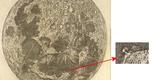
Nearly 300 years earlier, engineer Giovanni Domenico Cassini, astronomer to Sun King Louis XIV, made lunar history in 1679, when he published the first scientific map of the moon, above.
Needless to say, the event was not televised and Cassini never had the opportunity to walk on the surface he studied. Instead he observed it through the eyepiece of a telescope, a relatively new invention.
His predecessors, including Galileo, used the then-revolutionary tool to delve deeper into their own lunar obsessions, making sketches and performing experiments designed to replicate the craters they noticed in the moon’s crust.
Cassini, then eight years into his forty year career as Director of the Paris Observatory, produced a map so exhaustive, it provided his peers with far more details of the moon’s surface than they had with regard to their own planet.
He also used his powers of observation to expand human understanding of Mars, Saturn, and France itself (which turned out to be much smaller than previously believed).
A man of science, he may not have been entirely immune to the sort of moon-based whimsy that has long infected poets, songwriters, and 19th-century romantic heroines. Hiding in the lower right quadrant, near Cape Heraclides on the Sinus Iridum (aka Bay of Rainbows), is a tiny, bare-shouldered moon maid. See right above.
Or perhaps this appealingly playful vision can be attributed to Cassini’s engraver Claude Mellan.
Either way, she seems exactly the sort of female life form a 17th-century human male might hope to encounter on a trip to the moon.
via Pickover Reality Carnival
Related Content:
Free Online Astronomy Courses
Galileo’s Moon Drawings, the First Realistic Depictions of the Moon in History (1609-1610)
The Birth of the Moon: How Did It Get There in the First Place?
Michio Kaku Schools Takes on Moon Landing-Conspiracy Believer on His Science Fantastic Podcast
Ayun Halliday is an author, illustrator, and Chief Primatologist of the East Village Inky zine. Follow her @AyunHalliday
http://www.openculture.com/2015/08/the-first-scientific-map-of-the-moon-1679-can-you-spot-the-secret-moon-maiden.html is a post from: Open Culture. Follow us on Facebook, Twitter, and Google Plus, or get our Daily Email. And don't miss our big collections of Free Online Courses, Free Online Movies, Free eBooks, Free Audio Books, Free Foreign Language Lessons, and MOOCs.
%%POST_LINK%% is a post from: Open Culture. Follow us on Facebook, Twitter, and Google Plus, or get our Daily Email. And don't miss our big collections of Free Online Courses, Free Online Movies, Free eBooks, Free Audio Books, Free Foreign Language Lessons, and MOOCs.
Open Culture
.
Blog
.
<span class='date ' tip=''><i class='icon-time'></i> Aug 26, 2015 01:12pm</span>
|
|
If you haven’t yet seen Andrei Tarkovsky’s Solaris but do plan on watching it (find it online here), rest assured that there’s no wrong way to go about it. You can plunge, without preparation, right into its vivid, tormented Soviet sci-fi world of failing high technology, sublime natural forces, and haunting memory. You can do no end of preliminary research on the film, its maker, and its maker’s struggle to adapt the original Stanislaw Lem novel to his own distinctive sensibility. Or you could just precede your screening with "Auteur in Space," a brief examination of Solaris by well-known cinephile video essayist kogonada. It was made on behalf of The British Film Institute.
"The very concept of genre is as cold as the tomb," the narrator quotes Tarkovsky as writing, going on to cite his criticism of Stanley Kubrick’s 2001 "for being too enamored by the spectacle of the genre, for being too exotic, too immaculate." From then on, the video demonstrates not just what Tarkovsky does to push Solaris out of the shadow of 2oo1, but also to break it out of the standard forms of science fiction and, ultimately, to free it from the strictures of genre itself — to occupy that category we can only call Tarkovsky.
And so the Russian auteur decides to make the space station on which most of the film takes place "look like a broken-down old bus." He decides "to spend five minutes showing a man in an ordinary car traveling along the highway, and less than two minutes showing his main character traveling through space." He gives in to his "occupation with the elemental things of Earth." He comes to "question the limits of science in engaging the mysteries of existence," ultimately using Solaris to pit science against fiction, "each with their own weight and history and pursuit of truth and knowledge."
If, indeed, you haven’t yet seen Solaris and watch this video essay, you’ll surely find yourself no longer able to resist the temptation to experience the film as soon as possible. Maybe you’ll pop in the DVD or Blu-Ray, or better yet, maybe you’ll catch a theatrical screening. But if you understandably can’t wait for even a moment, you can watch it free online right now. And find other Tarkovsky films free online here.
via io9
Related Content:
Andrei Tarkovsky Calls Kubrick’s 2001: A Space Odyssey a "Phony" Film "With Only Pretensions to Truth"
Watch Solaris (1972), Andrei Tarkovsky’s Haunting Vision of the Future
Andrei Tarkovsky’s Solaris Shot by Shot: A 22-Minute Breakdown of the Director’s Filmmaking
The Masterful Polaroid Pictures Taken by Filmmaker Andrei Tarkovsky
Tarkovsky’s Advice to Young Filmmakers: Sacrifice Yourself for Cinema
A Poet in Cinema: Andrei Tarkovsky Reveals the Director’s Deep Thoughts on Filmmaking and Life
Colin Marshall writes on cities, language, Asia, and men’s style. He’s at work on a book about Los Angeles, A Los Angeles Primer, and the video series The City in Cinema. Follow him on Twitter at @colinmarshall or on Facebook.
http://www.openculture.com/2015/08/video-essay-on-how-andrei-tarkovskys-solaris-transcends-science-fiction.html is a post from: Open Culture. Follow us on Facebook, Twitter, and Google Plus, or get our Daily Email. And don't miss our big collections of Free Online Courses, Free Online Movies, Free eBooks, Free Audio Books, Free Foreign Language Lessons, and MOOCs.
%%POST_LINK%% is a post from: Open Culture. Follow us on Facebook, Twitter, and Google Plus, or get our Daily Email. And don't miss our big collections of Free Online Courses, Free Online Movies, Free eBooks, Free Audio Books, Free Foreign Language Lessons, and MOOCs.
Open Culture
.
Blog
.
<span class='date ' tip=''><i class='icon-time'></i> Aug 26, 2015 01:12pm</span>
|