Blogs
|
During the past year, sitting has become the new smoking. "Past studies have found," declares a 2014 article in The New York Times, "the more hours that people spend sitting, the more likely they are to develop diabetes, heart disease and other conditions, and potentially to die prematurely — even if they exercise regularly." What’s the science behind this alarming claim? The animated TED-ED video (above) begins to paint the picture. But it doesn’t get into the latest and perhaps most important research. According to science writer Gretchen Reynolds, a recent Swedish study published in the British Journal of Sports Medicine suggests that when you sit all day, your telomeres (the tiny caps on the ends of DNA strands) get shorter. Which is not a good thing. As telomeres get shorter, the rate at which the body ages and decays speeds up. Conversely, the study found "that the telomeres in [those] who were sitting the least had lengthened. Their cells seemed to be growing physiologically younger."
Several months ago, KQED radio in San Francisco aired a program dedicated to this question, featuring medical and ergonomics experts. To delve deeper into it, listen above. Or click here.
Meanwhile, if you have advice on how to incorporate movement into your day, please share it with your fellow readers in the comments section below.
And if your mind immediately drifts to buying a standing desk, then check out our related post: Who Wrote at Standing Desks? Kierkegaard, Dickens and Ernest Hemingway Too
Follow us on Facebook, Twitter, Google Plus and LinkedIn and share intelligent media with your friends. And if you want to make sure that our posts definitely appear in your Facebook newsfeed, just follow these simple steps.
http://www.openculture.com/2015/08/why-sitting-is-the-new-smoking-an-animated-explanation.html is a post from: Open Culture. Follow us on Facebook, Twitter, and Google Plus, or get our Daily Email. And don't miss our big collections of Free Online Courses, Free Online Movies, Free eBooks, Free Audio Books, Free Foreign Language Lessons, and MOOCs.
%%POST_LINK%% is a post from: Open Culture. Follow us on Facebook, Twitter, and Google Plus, or get our Daily Email. And don't miss our big collections of Free Online Courses, Free Online Movies, Free eBooks, Free Audio Books, Free Foreign Language Lessons, and MOOCs.
Open Culture
.
Blog
.
<span class='date ' tip=''><i class='icon-time'></i> Aug 26, 2015 01:34pm</span>
|
|
My introduction to the work of James Newell Osterberg, Jr, better known as Iggy Pop, came in the form of "Risky," a song from Ryuichi Sakamoto’s Neo Geo album that featured not just singing but spoken word from the Stooges’ lead vocalist and punk icon. On that track, Pop speaks grimly and evocatively in the persona of a protagonist "born in a corporate dungeon where people are cheated of life," repeatedly invoking the human compulsion to "climb to this point, move on, climb to this point, move on." Ultimately, he poses the question: "Career, career, acquire, acquire — but what is life without a heart?"
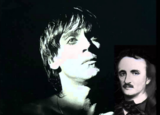
Today, we give you Iggy Pop the storyteller asking what life is with a heart — or rather, one heart too many, unceasingly reminding you of your guilt. He tells the story, of course, of "The Tell-Tale Heart," originally written by the American master of psychological horror Edgar Allan Poe in 1843. This telling appears on the album Closed on Account of Rabies, which features Poe’s stories as interpreted by the likes of Pop, Christopher Walken, Debbie Harry, Marianne Faithfull and Jeff Buckley. We featured it here on Open Culture a few years back, and more recently included it in our retrospective of album covers by Ralph Steadman.
Here, Pop takes on the role of another narrator consigned to a grim fate, though this one of his own making. As almost all of us know, if only through cultural osmosis, the titular "Tell-Tale Heart," its beat seemingly emanating from under the floorboards, unceasingly reminds this anxious character of the fact that he has murdered an old man — not out of hatred, not out of greed, but out of simple need stoked, he insists, by the defenseless senior’s "vulture-eye." For over 150 years, readers have judged the sanity of the narrator of "The Tell-Tale Heart" in any number of ways, but don’t render your own verdict until you’ve heard Iggy Pop deliver the testimony; nobody walks the line between sanity and insanity quite like he does.
Related Content:
Lou Reed Rewrites Edgar Allan Poe’s "The Raven." See Readings by Reed and Willem Dafoe
Edgar Allan Poe’s "The Raven," Read by Christopher Walken, Vincent Price, and Christopher Lee
Watch the 1953 Animation of Edgar Allan Poe’s "The Tell-Tale Heart," Narrated by James Mason
Hear a Great Radio Documentary on William S. Burroughs Narrated by Iggy Pop
Edgar Allan Poe Animated: Watch Four Animations of Classic Poe Stories
Download The Complete Works of Edgar Allan Poe on His Birthday
630 Free Audio Books: Download Great Books for Free
Colin Marshall writes on cities, language, Asia, and men’s style. He’s at work on a book about Los Angeles, A Los Angeles Primer, and the video series The City in Cinema. Follow him on Twitter at @colinmarshall or on Facebook.
http://www.openculture.com/2015/08/iggy-pop-reads-edgar-allan-poes-classic-horror-story-the-tell-tale-heart.html is a post from: Open Culture. Follow us on Facebook, Twitter, and Google Plus, or get our Daily Email. And don't miss our big collections of Free Online Courses, Free Online Movies, Free eBooks, Free Audio Books, Free Foreign Language Lessons, and MOOCs.
%%POST_LINK%% is a post from: Open Culture. Follow us on Facebook, Twitter, and Google Plus, or get our Daily Email. And don't miss our big collections of Free Online Courses, Free Online Movies, Free eBooks, Free Audio Books, Free Foreign Language Lessons, and MOOCs.
Open Culture
.
Blog
.
<span class='date ' tip=''><i class='icon-time'></i> Aug 26, 2015 01:34pm</span>
|
|
The story of the avant-garde is never just one story. But it tends to get told that way, and we tend to think we know how modernist and post-modern literature and music have taken shape: through a series of great men who thwarted convention and remade language and sound in ways their predecessors never dreamed. Arthur Rimbaud, Claude Debussy, Ezra Pound, T.S. Eliot, Arnold Schoenberg, John Cage… We could make many such lists, and we do, all the time, occasionally including the names of a few women—Yoko Ono, for example, Gertrude Stein, Virginia Woolf….
But we might write it differently, indeed, for the simple reason that women have shaped the avant-garde just as much as men have, as prominent poets and composers, not simply spouses of famous men or guest stars in a mostly male revue. You can hear one version of such a story here, thanks to Ubuweb, "the learned and varietous online repository" of "all things avant-garde." Their podcast Avant-Garde All the Time offers us two episodes called "The Women of the Avant-Garde," hosted by poet Kenneth Goldsmith, who admits the survey is a corrective for the podcast’s own blind spots. Through a small but select number of poets and musicians, Goldsmith aims "to show that there are dozens and dozens of great women artists on Ubuweb"—and everywhere else art lives.
Instead of a history, Goldsmith gives us something of a constellation of artists, many of them clustered tightly together in time and space. New York poets, writers, and musicians who came of age in the 70s and 80s—Kathy Acker, Lydia Lunch, Laurie Anderson, Patti Smith, Eileen Myles—all feature in Goldsmith’s account. Theirs was a time and place the poet Myles has described as "a moment" that was "very uncensored and really excited and it just made you feel like there was room for more."
It’s a moment that saw a revival in the 90s, when riot grrrl arose to challenge the patriarchal establishment. Around this time, artists working in a more academic context directly and indirectly engaged with literary history ancient and modern. Scholar and poet Anne Carson has twisted and translated the texts of Ovid, Aeschylus, Sophocles, and the writers (and translators) of the King James Bible. And German-Norwegian-French experimental poet Caroline Bergvall, whom Goldsmith discusses in episode one above, rewrote Chaucer and rearranged Dante.
In episode two, Goldsmith reaches somewhat further back—to Yoko Ono and Denise Levertov—and farther away from New York, with work from Iranian poet and filmmaker Forugh Farrokhzad. Prominently featured in this second part of the series, and for good reason, is fierce patroness of early twentieth century avant-garde art and writing, Gertrude Stein. Stein’s own poetry radically disrupted the accepted, and acceptable, codes of speech and writing—setting a precedent for several decades of feminist writers and artists whose appearance in archives like Ubuweb, Goldsmith notes, increasingly come to match or outweigh those of their male counterparts. Hear Stein read from her own work at another such archive, PennSound, and visit the Poetry Foundation to stream and download more episodes of Ubuweb’s Avant-Garde all the Time, including an episode devoted to Stein called "Almost Completely Understanding."
Related Content:
74 Essential Books for Your Personal Library: A List Curated by Female Creatives
Watch Patti Smith Read from Virginia Woolf, and Hear the Only Surviving Recording of Woolf’s Voice
Yoko Ono Lets Audience Cut Up Her Clothes in Conceptual Art Performance (Carnegie Hall, 1965)
Josh Jones is a writer and musician based in Durham, NC. Follow him at @jdmagness
http://www.openculture.com/2015/08/the-women-of-the-avant-garde.html is a post from: Open Culture. Follow us on Facebook, Twitter, and Google Plus, or get our Daily Email. And don't miss our big collections of Free Online Courses, Free Online Movies, Free eBooks, Free Audio Books, Free Foreign Language Lessons, and MOOCs.
%%POST_LINK%% is a post from: Open Culture. Follow us on Facebook, Twitter, and Google Plus, or get our Daily Email. And don't miss our big collections of Free Online Courses, Free Online Movies, Free eBooks, Free Audio Books, Free Foreign Language Lessons, and MOOCs.
Open Culture
.
Blog
.
<span class='date ' tip=''><i class='icon-time'></i> Aug 26, 2015 01:33pm</span>
|
|
In January, in the dead of winter, we got you thinking about warmer times by highlighting the Noam Chomsky Garden Gnome, a real product described as follows:
Standing at just under 17 inches, Gnome Chomsky the Garden Noam clutches his classic books, ‘The Manufacture of Compost’ and ‘Hedgerows not Hegemony’ - with his open right hand ready to hold the political slogan of your choosing. His clothes represent a relaxed but classy version of regular gnome attire, including: a nice suit jacket-tunic, jeans, boots, traditional gnome cap, and glasses. Additionally, Noam Gnome stands on a base complete with a carved title - for anyone who may not immediately realize the identity of this handsome and scholarly gnome.
Now that it’s summer, imagine Gnome Chomsky hanging in your garden with Howard the Zinn Monk. Zinn Monk, get it?
First published in 1980, Zinn’s famous book A People’s History of the United States tells "America’s story from the point of view of—and in the words of—America’s women, factory workers, African-Americans, Native Americans, the working poor, and immigrant laborers." It has sold more than two million copies over the past 35 years. And, as I write this post, it’s the #1 bestselling book in US history on Amazon.
Howard the Zinn Monk isn’t quite selling at the same brisk clip. But the web site justsaygnome.net might make you a Zinn gnome if you ask nicely.
In the meantime, you can watch and enjoy this illustrated video: Howard Zinn’s "What the Classroom Didn’t Teach Me About the American Empire."
Follow us on Facebook, Twitter, Google Plus and LinkedIn and share intelligent media with your friends. And if you want to make sure that our posts definitely appear in your Facebook newsfeed, just follow these simple steps.
http://www.openculture.com/2015/08/adorn-your-garden-with-howard-the-zinn-monk.html is a post from: Open Culture. Follow us on Facebook, Twitter, and Google Plus, or get our Daily Email. And don't miss our big collections of Free Online Courses, Free Online Movies, Free eBooks, Free Audio Books, Free Foreign Language Lessons, and MOOCs.
%%POST_LINK%% is a post from: Open Culture. Follow us on Facebook, Twitter, and Google Plus, or get our Daily Email. And don't miss our big collections of Free Online Courses, Free Online Movies, Free eBooks, Free Audio Books, Free Foreign Language Lessons, and MOOCs.
Open Culture
.
Blog
.
<span class='date ' tip=''><i class='icon-time'></i> Aug 26, 2015 01:32pm</span>
|
|
What makes Pablo Picasso such a representative 20th-century artist? Most of it has to do with his particular achievements, such as the visual ground he broke with his Cubist painting, sure, but some of it also has to do with the fact that his interests extended so far beyond painting. We think of creators who could create across various domains as "Renaissance men," but conditions a few centuries on from the Renaissance enabled such artists to exert their will across an even wider range of forms. Picasso, for instance, worked in not just painting but sculpture, printmaking, ceramics, and letters.
That last even includes poetry, to which Picasso announced his commitment in 1935, at the age of 53. At that point, writes Dangerous Minds‘ Paul Gallagher, "he began writing poems almost every day until the summer of 1959," beginning "by daubing colors for words in a notebook before moving on to using words to sketch images," ultimately producing hundreds of poems composed primarily of "stream of consciousness, unpunctuated word association with startling juxtaposition of images and at times an obsession with sex, death and excrement."
If this sounds like your cup of tea, you can find plenty of Picasso poetry over at Ubuweb, which offers A Picasso Sampler: Excerpts from the Burial of the Count of Orgaz & Other Poems free for the viewing. "Picasso, like any poet of consequence, is a man fully into his time and into the terrors that his time presents," writes the collection’s editor Jerome Rothenberg. His words reflect "the state of things between the two world wars — the first one still fresh in mind and the rumblings of the second starting up," a time and place "where poetry becomes — for him as for us — the only language that makes sense."
Before diving into that collection, you can also get a sense of Picasso’s poetry by having a look at some of his shorter poems collected at the site of artist Jef Borgeau, such as "the artist & his model":
turn your back
but stay in view at the same time
(now look away,
anything else confuses)
stand still without saying a word
you can’t see but this is how
i separate day from night
and the starless sky
from the empty heart
"dogs":
dogs eat at the night
buried in the yard
they chase the moon in a pack
the white of their teeth
compared to stars
the windows close against them
iron bars in transparency
life closes against them
the morning will crush them to dust
with only the wind left
to stir them up
And "the morning of the world":
i have a face cut from ice
a heart pierced in a thousand places
so to remember
always the same voice
the same gestures
and my laughter
heavy
as a wall
between you and me
the ones who are most alive
seem the most still
behind the milky way
a shadow dances
our gaze climbs toward the stars
Related Content:
Picasso Painting on Glass
Pablo Picasso’s Two Favorite Recipes: Eel Stew & Omelette Tortilla Niçoise
The Postcards That Picasso Illustrated and Sent to Jean Cocteau, Apollinaire & Gertrude Stein
Colin Marshall writes on cities, language, Asia, and men’s style. He’s at work on a book about Los Angeles, A Los Angeles Primer, and the video series The City in Cinema. Follow him on Twitter at @colinmarshall or on Facebook.
http://www.openculture.com/2015/08/read-pablo-picassos-poetry.html is a post from: Open Culture. Follow us on Facebook, Twitter, and Google Plus, or get our Daily Email. And don't miss our big collections of Free Online Courses, Free Online Movies, Free eBooks, Free Audio Books, Free Foreign Language Lessons, and MOOCs.
%%POST_LINK%% is a post from: Open Culture. Follow us on Facebook, Twitter, and Google Plus, or get our Daily Email. And don't miss our big collections of Free Online Courses, Free Online Movies, Free eBooks, Free Audio Books, Free Foreign Language Lessons, and MOOCs.
Open Culture
.
Blog
.
<span class='date ' tip=''><i class='icon-time'></i> Aug 26, 2015 01:30pm</span>
|
|
Last year Jonathan Nolan-screenwriter of Memento and Interstellar and not coincidentally director Christopher Nolan’s brother-announced that he would be developing Isaac Asimov’s legendary Foundation trilogy for HBO as a series. And we assume he’s still doing that, because there’s been nary a peep from the channel since. So far the Internet consensus has been a collective "well, that could be good!" instead of groans, which is a heartening thing these days.
For those who haven’t read the classic books, but would like to get the jump on ol’ Nolan, we submit this BBC Radio production from 1973, which is now available on Spotify. (Download Spotify software here.) The recording also lives on Archive.org as well.
Right from the beginning we know we are in good hands, with the analog drones of the BBC Radiophonic Workshop ushering us into a stereo landscape filled with plummy British accents and atmospheric sound effects. It’s like the best ever episode of Doctor Who without a Tardis, corridors, or the enfeebled cries of a lost companion.
The Foundation Trilogy is heavily indebted to Edward Gibbon’s The History of the Decline and Fall of the Roman Empire, as well as a belief in the circular nature of history.
Asimov’s hero in the first book, Hari Seldon, using a science called psychohistory, can see the inevitable collapse of the Galactic Empire in which he lives and sets about trying to change it by setting up an opposition called the Foundation. The novels then jump decades ahead, checking in with this essential conflict, much like Gibbon’s work goes from emperor to emperor, marking the decline of empire and its inevitability. Free of aliens and shoot-em-ups, Foundation is very human despite its galactic scope.
Adapted by Patrick Tull and Mike Stott, the eight part radio series does a good job of presenting the novels as a character-driven drama, and while it is talky (it’s radio after all), it was Orson Scott Card who said of Foundation, it is "all talk, no action — but Asimov’s talk is action."
It also influenced many future sci-fi writers. No doubt somewhere along the way Douglas Adams was listening to the radio play’s talking encyclopedia and thinking, hmm, what if this had jokes?
And once you get through the trilogy-maybe after an eight-hour flight?-there’s more Asimov radio plays for your listening pleasure on Spotify: Hostess, Pebble in the Sky, and Nightfall.
Related Content:
Isaac Asimov’s Favorite Story "The Last Question" Read by Isaac Asimov— and by Leonard Nimoy
Listen to 188 Dramatized Science Fiction Stories by Ursula K. Le Guin, Isaac Asimov, Philip K. Dick, J.G. Ballard & More
Two Documentaries Introduce Delia Derbyshire, the Pioneer in Electronic Music
630 Free Audio Books: Download Great Books for Free
Ted Mills is a freelance writer on the arts who currently hosts the FunkZone Podcast. You can also follow him on Twitter at @tedmills, read his other arts writing at tedmills.com and/or watch his films here.
http://www.openculture.com/2015/08/isaac-asimovs-foundation-trilogy-hear-the-1973-radio-dramatization.html is a post from: Open Culture. Follow us on Facebook, Twitter, and Google Plus, or get our Daily Email. And don't miss our big collections of Free Online Courses, Free Online Movies, Free eBooks, Free Audio Books, Free Foreign Language Lessons, and MOOCs.
%%POST_LINK%% is a post from: Open Culture. Follow us on Facebook, Twitter, and Google Plus, or get our Daily Email. And don't miss our big collections of Free Online Courses, Free Online Movies, Free eBooks, Free Audio Books, Free Foreign Language Lessons, and MOOCs.
Open Culture
.
Blog
.
<span class='date ' tip=''><i class='icon-time'></i> Aug 26, 2015 01:29pm</span>
|
|
It is surprising to me, but a few people I’ve come across don’t know the name of cartoonist Robert Crumb, cult hero of underground comics and obscure Americana record collecting. On second thought, maybe this shouldn’t come as such a surprise. These are some pretty small worlds, after all, populated by obsessive fans and archivists and not always particularly welcoming to outsiders. But Crumb is different. For all his social awkwardness and hyper-obsessiveness, he seems strangely accessible to me. The easiest reference for those who’ve never heard of him is Steve Buscemi’s Seymour in Terry Zwigoff’s Ghost World. There’s an obvious tribute to Crumb in the character (Zwigoff previously made an R. Crumb documentary), though it’s certainly not a one-to-one relation (the film adapts Daniel Clowe’s comic of the same name.)
Whether or not Ghost World (or Zwigoff’s Crumb) rings a bell, there’s still the matter of how to communicate the lovable lewdness and aggressive anachronism that is Crumb’s art. For that one may only need to mention Big Brother & the Holding Company’s 1968 classic Cheap Thrills (top), the first album cover Crumb designed—and which Janis Joplin insisted upon over the record company’s objections. With its focus on musicians, and its appropriation of hippie weirdness, racist American imagery, and an obsession with female posteriors that rivals Sir-Mix-a-Lot’s, the cover pretty much spans the spectrum of perennial Crumb styles and themes. Above, see another of Crumb’s covers, for a compilation called The Music Never Stopped: Roots of the Grateful Dead, which collects such roots and old-school rock and roll artists as Merle Haggard, Chuck Berry, Bob Dylan, Reverend Gary Davis, Howlin’ Wolf, and more.
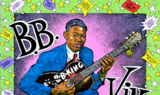
Though he objected to the 1995 assignment—saying to Shanachie Records, "You want all these people on a CD cover? What are they, like, five inches across?"—Crumb must have relished the subject. (And he was paid, as per usual, in vintage 78s.) Next to those posteriors, Crumb’s true love has always been American roots music—ragtime, swing, old country and bluegrass, Delta country blues—and he has spent a good part of his career illustrating artists he loves, and those he doesn’t. From famous names like Joplin, Dylan, and B.B. King (above, whose music Crumb said he "didn’t care for, but I don’t find it that objectionable either"), to much more obscure artists, like Bo Carter, known for his "Please Warm My Wiener," on the 1974 compilation album below.
Crumb’s use of racially questionable and sexist imagery—however satirical—has perhaps rendered him untouchable in some circles, and it’s hard to imagine many of his album covers passing corporate muster these days. His recent work has moved toward more straightforward, respectful portraiture, like that of King and of Skip James on the best-of below, from a series called "Heroes of the Blues." (Crumb also illustrated "Heroes of Jazz" and "Heroes of Country," as we featured in this post.) See Crumb’s inimitable, looser portrait style again further down in 2002 album art for a group called Hawks and Eagles.
Crumb may have shed some of his more unpalatable tendencies, but he hasn’t lost his lascivious edge. However, his work has matured over the years, taking on serious subjects like the book of Genesis and the Charlie Hebdo massacre. For an artist with such peculiar personal focus, Crumb is surprisingly versatile, but it’s his album covers that combine his two greatest loves. "What makes Crumb’s art so appropriate for the album sleeve," writes The Guardian‘s Laura Barton, "is its vividness, and its certain oomph; it’s in the mingling of sex and joy and compulsion, and the vibrancy and movement of his illustrations."
Crumb hasn’t only combined his art with music fandom, but also with his own musicianship, illustrating covers for several of his own albums by his ragtime band Cheap Suit Serenaders. And he even provided the illustration for the soundtrack to his own documentary, as you can see above—an extreme example of the many self-abasing portraits Crumb has drawn of himself over the years. Crumb’s album cover art has been collected in a book, and you can see many more of his covers at Rolling Stone and on this list here.
Related Content:
R. Crumb’s Heroes of Blues, Jazz & Country Features 114 Illustrations of the Artist’s Favorite Musicians
A Short History of America, According to the Irreverent Comic Satirist Robert Crumb
Cartoonist R. Crumb Assesses 21 Cultural Figures, from Dylan & Hitchcock, to Kafka & The Beatles
Ralph Steadman’s Evolving Album Cover Designs: From Miles Davis & The Who, to Frank Zappa & Slash (1956-2010)
Josh Jones is a writer and musician based in Durham, NC. Follow him at @jdmagness
http://www.openculture.com/2015/08/r-crumbs-vibrant-over-the-top-album-covers-1968-2004.html is a post from: Open Culture. Follow us on Facebook, Twitter, and Google Plus, or get our Daily Email. And don't miss our big collections of Free Online Courses, Free Online Movies, Free eBooks, Free Audio Books, Free Foreign Language Lessons, and MOOCs.
%%POST_LINK%% is a post from: Open Culture. Follow us on Facebook, Twitter, and Google Plus, or get our Daily Email. And don't miss our big collections of Free Online Courses, Free Online Movies, Free eBooks, Free Audio Books, Free Foreign Language Lessons, and MOOCs.
Open Culture
.
Blog
.
<span class='date ' tip=''><i class='icon-time'></i> Aug 26, 2015 01:28pm</span>
|
|
In the afterglow of the Grateful Dead’s Fare Thee Well concerts, we highlighted The Annotated Grateful Dead Lyrics, an online project launched in 1995, which provided editorial footnotes explaining the references of every original Grateful Dead song.
For many of these songs we have Robert Hunter to thank. The majority of the Dead’s songs were Robert Hunter/Jerry Garcia collaborations. Garcia composed the music, and Hunter, the lyrics. Hunter didn’t perform with the group (Garcia called him "the band member who doesn’t come out on stage with us"), but he was an integral part of the group all the same. When the Dead entered the Rock n Roll Hall of Fame in 1994, Robert Hunter was one of the inductees.
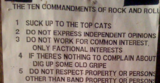
Being part of the Grateful Dead family, Hunter sometimes joined the band on tours, which weren’t always fun and games. As Dennis McNally, the Dead’s official historian, wrote in A Long Strange Trip: The Inside History of the Grateful Dead, the band, especially as it gained popularity and toured on a bigger scale, pulled some rough and tumble people into its orbit. The business managers made life difficult for the musical purists. And there was dissension at times. At one point, writes McNally, Robert Hunter wrote an open letter to the band members, structured as a sarcastic list, which "identifies the least-charitable aspects of life in the Grateful Dead hierarchy." It reads as follows:
The Ten Commandments of Rock & Roll
1. Suck up to the top cats
2. Do not express independent opinions.
3. Do not work for common interests, only factional interests.
4. If there’s nothing to complain about, dig up some old gripe.
5. Do not respect property or persons other than band property and personnel.
6. Make devastating judgments about persons and situations without adequate information.
7. Discourage and confound personal, technical, and/or creative projects.
8. Single out absent persons for intense criticism.
9. Remember that anything you don’t understand is trying to fuck with you.
10 Destroy yourself physically and morally and insist that all true brothers do likewise as an expression of unity.
Related Content:
Every Grateful Dead Song Annotated in Hypertext: Web Project Reveals the Deep Literary Foundations of the Dead’s Lyrics
The Grateful Dead’s "Ripple" Played by Musicians Around the World
10,173 Free Grateful Dead Concert Recordings in the Internet Archive
The Grateful Dead’s "Ultimate Bootleg" Now Online & Added to the Library of Congress’ National Recording Registry
http://www.openculture.com/2015/08/the-10-commandments-of-rock-n-roll-according-to-robert-hunter.html is a post from: Open Culture. Follow us on Facebook, Twitter, and Google Plus, or get our Daily Email. And don't miss our big collections of Free Online Courses, Free Online Movies, Free eBooks, Free Audio Books, Free Foreign Language Lessons, and MOOCs.
%%POST_LINK%% is a post from: Open Culture. Follow us on Facebook, Twitter, and Google Plus, or get our Daily Email. And don't miss our big collections of Free Online Courses, Free Online Movies, Free eBooks, Free Audio Books, Free Foreign Language Lessons, and MOOCs.
Open Culture
.
Blog
.
<span class='date ' tip=''><i class='icon-time'></i> Aug 26, 2015 01:28pm</span>
|
|
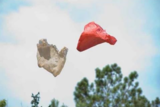
It just goes to show that, put in the right hands, you can root, or shed a tear, for any protagonist — even if it’s a plastic bag. Shot in 2009 by Ramin Bahrani (who Roger Ebert called the "new great American director") this 18-minute film "traces the epic, existential journey of a plastic bag searching for its lost maker, the woman who took it home from the store and eventually discarded it." Adding a special touch, Werner Herzog narrates the inner thoughts of the bag as it "encounters strange creatures, experiences love in the sky, grieves the loss of its beloved maker, and tries to grasp its purpose in the world."
Plastic Bag was one of 11 films released in the Internet Television Service’s "Futurestates" film series exploring "what life might look like in an America of the future." Upon its release, Herzog told The Guardian, ‘I’m so glad this is not an agenda movie or I would run like mad and get away from here. I mean, we can talk about sustainability issues, about plastic, about the Earth, but the movie’s about something else, something more … it’s about a journey." An emotional, existential one, indeed.
You can find Plastic Bag in our collection, 700 Free Movies Online: Great Classics, Indies, Noir, Westerns, etc..
Related Content:
Werner Herzog Offers 24 Pieces of Filmmaking & Life Advice
Werner Herzog Picks His 5 Top Films
Werner Herzog and Cormac McCarthy Talk Science and Culture
http://www.openculture.com/2015/08/werner-herzog-narrates-the-existential-emotional-journey-of-a-plastic-bag.html is a post from: Open Culture. Follow us on Facebook, Twitter, and Google Plus, or get our Daily Email. And don't miss our big collections of Free Online Courses, Free Online Movies, Free eBooks, Free Audio Books, Free Foreign Language Lessons, and MOOCs.
%%POST_LINK%% is a post from: Open Culture. Follow us on Facebook, Twitter, and Google Plus, or get our Daily Email. And don't miss our big collections of Free Online Courses, Free Online Movies, Free eBooks, Free Audio Books, Free Foreign Language Lessons, and MOOCs.
Open Culture
.
Blog
.
<span class='date ' tip=''><i class='icon-time'></i> Aug 26, 2015 01:27pm</span>
|
|
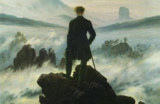
Of all the philosophical concepts Immanuel Kant is known for, the one I’ve had to struggle the least to grasp is his description of the sublime, a state in which we are overawed by the scale of some great work of man or nature. It’s an experience, in typical Kantian fashion, that he explains as being not about the thing itself, but rather the idea of the thing. Yet the concept of the sublime isn’t his. Philosophers from the Greek teacher Longinus in the 1st century to Edmund Burke and other English Enlightenment thinkers in Kant’s own 18th century have had their take on it. For the classical writers, the sublime was rhetorical, for the Brits, it was empirical. But above all, the sublime is peak aesthetics—a supra-rational experience of art or nature one cannot get one’s head around. To be so fully absorbed, so stricken with awe, wonder, and, yes, even fear—all of these philosophers believed in some fashion—is to have an experience critical to transcending our limitations.
We may not, in either common speech or academic philosophy, talk much about the sublime these days, but whatever we call the feeling of being absorbed in art, music, or nature, it turns out to have physical benefits as well as mental and emotional. "There seems to be something about awe," says professor of psychology Dacher Keltner. "It seems to have pronounced impact on markers related to inflammation." In other words, immersing yourself in art or nature is good for the joints, and it could possibly preempt various diseases triggered by inflammation. Keltner and his fellow researchers at UC Berkeley conducted a study which found that "awe, wonder and beauty promote [lower and overall] healthier levels of cytokines"—proteins that "signal the immune system to work harder." He goes on to say that "the things we do to experience these emotions—a walk in nature, losing oneself in music, beholding art—has [sic] a direct influence upon health and life expectancy."
Never mind that Kant and Burke thought of the sublime and the beautiful as two very different things. Whether we become totally overwhelmed by, or just find deep appreciation in an aesthetic experience, the emotions produced "might be just as salubrious as hitting the gym," writes Hyperallergic. That may seem a crude way of thinking about the spiritual and emotional grandeur of the sublime, but it brings our physical being into the discussion in ways many philosophers have neglected. Granted, the researchers themselves admit the causal link is uncertain: it might be better health that leads to more experiences of awe, and not the other way around. But certainly no harm—and a great deal of good—can come from conducting the experiment on yourself. Read an abstract (or purchase a copy) of the Berkeley team’s article here, and learn more about their work with the University’s Greater Good Science Center, which aims to "sponsor groundbreaking scientific research into social and emotional well-being."
via Hyperallergic
Related Content:
This Is Your Brain on Jane Austen: The Neuroscience of Reading Great Literature
How Walking Fosters Creativity: Stanford Researchers Confirm What Philosophers and Writers Have Always Known
Free Guided Meditations From UCLA: Boost Your Awareness & Ease Your Stress
Josh Jones is a writer and musician based in Durham, NC. Follow him at @jdmagness
http://www.openculture.com/2015/08/new-study-immersing-yourself-in-art-music-nature-might-reduce-inflammation-increase-life-expectancy.html is a post from: Open Culture. Follow us on Facebook, Twitter, and Google Plus, or get our Daily Email. And don't miss our big collections of Free Online Courses, Free Online Movies, Free eBooks, Free Audio Books, Free Foreign Language Lessons, and MOOCs.
%%POST_LINK%% is a post from: Open Culture. Follow us on Facebook, Twitter, and Google Plus, or get our Daily Email. And don't miss our big collections of Free Online Courses, Free Online Movies, Free eBooks, Free Audio Books, Free Foreign Language Lessons, and MOOCs.
Open Culture
.
Blog
.
<span class='date ' tip=''><i class='icon-time'></i> Aug 26, 2015 01:27pm</span>
|