Blogs
|
We live in an age of mash ups. A few years ago some malcontent came up with Pride and Prejudice and Zombies. Our cities are teeming with food trucks hawking Korean tacos and ramen burgers. And chess boxing is apparently a thing. So perhaps it isn’t surprising that some evil genius would merge the most quotable movie of the past 20 years, The Big Lebowski, with William Shakespeare.
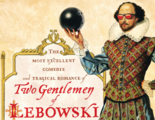
The resulting book, written by Adam Bertocci, is called Two Gentlemen of Lebowski, and it does a surprisingly good job of capturing the language of the Bard while staying true to the original movie. The author reportedly wrote the first draft of the book in a single sleepless weekend. An impressive feat that the author dismisses in an interview with CNN that you can see above.
"Anybody could, given the lack of a social life," deadpans Bertocci, "take a weekend with a movie they admired and an author that they knew well and make a similarly lengthy mash up of it."
In Bertocci’s fevered reworking (read the first 3 scenes for free here), the Dude is recast as The Knave. His belligerent best friend is Sir Walter of Poland. The hapless Donnie is Sir Donald of Greece. Knox Harrington, Mauve’s gratingly giggly conceptual artist friend, is in this version a tapestry artist. And of course, Da Fino, the PI, who shadows the Dude in the movie, is listed simply as Brother Seamus.
But where Bertocci really shines is in his clever appropriation of Shakespearean language. The film’s copious profanity has been replaced with more Bard-worthy epithets like "rash egg" or "varlet." The word "verily" peppers the Knave’s dialogue as the word "like" peppers the Dude’s. And when Walter waxes poetic about the rules of bowling, he does so in iambic pentameter.
To get a sense of the differences, compare the clip above from the movie with the Bard-ofied text of the same scene below.
THE KNAVE’s house. Enter THE KNAVE, carrying parcels, and BLANCHE and WOO. They fight.
BLANCHE
Whither the money, Lebowski? Faith, we are as servants to Bonnie;
promised by the lady good that thou in turn were good for’t.
WOO
Bound in honour, we must have our bond; cursed be our tribe
if we forgive thee.
BLANCHE
Let us soak him in the chamber-pot, so as to turn his head.
WOO
Aye, and see what vapourises; then he will see what is foul.
They insert his head into the chamber-pot.
BLANCHE
What dreadful noise of waters in thine ears! Thou hast cool’d
thy head; think now upon drier matters.
WOO
Speak now on ducats else again we’ll thee duckest; whither the
money, Lebowski?
THE KNAVE
Faith, it awaits down there someplace; prithee let me glimpse
again.
WOO
What, thou rash egg! Thus will we drown thine exclamations.
They again insert his head into the chamber-pot.
BLANCHE
Trifle not with the fury of two desperate men. Long has thy
wife sealed a bond with Jaques Treehorn; as blood is to blood,
surely thou owest to Jaques Treehorn in recompense.
WOO
Rise, and speak wisely, man—but hark;
I see thy rug, as woven i’the Orient,
A treasure from abroad. I like it not.
I’ll stain it thus; to deadbeats ever thus.
He stains the rug.
THE KNAVE
Sir, prithee nay!
BLANCHE
Now thou seest what happens, Lebowski, when the agreements
of honourable business stand compromised. If thou wouldst
treat money as water, flowing as the gentle rain from heaven,
why, then thou knowest water begets water; it will be a watery
grave your rug, drown’d in the weeping brook. Pray remember,
Lebowski.
THE KNAVE
Thou err’st; no man calls me Lebowski. Hear rightly, man!—for
thou hast got the wrong man. I am the Knave, man; Knave in
nature as in name.
BLANCHE
Thy name is Lebowski. Thy wife is Bonnie.
THE KNAVE
Zounds, man. Look at these unworthiest hands; no gaudy gold
profanes my little hand. I have no honour to contain the ring. I
am a bachelor in a wilderness. Behold this place; are these the
towers where one may glimpse Geoffrey, the married man? Is
this a court where mistresses of common sense are hid? Not for
me to hang my bugle in an invisible baldric, sir; I am loath to
take a wife, or she to take me until men be made of some other
mettle than earth. Hark, the lid of my chamber-pot be lifted!
Personally, I’m hoping that the Globe Theatre stages a version of this.
While you are waiting for that to happen, you can see another scene from Two Gentlemen from Lebowski above where The Knave and Sir Walter commiserate about a rug, which was besmirched by a "most miserable tide."
Related Content:
The Big Lebowski Reimagined as a Classic 8-Bit Video Game
Watch the Coen Brothers’ TV Commercials: Swiss Cigarettes, Gap Jeans, Taxes & Clean Coal
Jonathan Crow is a Los Angeles-based writer and filmmaker whose work has appeared in Yahoo!, The Hollywood Reporter, and other publications. You can follow him at @jonccrow. And check out his blog Veeptopus, featuring lots of pictures of vice presidents with octopuses on their heads. The Veeptopus store is here.
http://www.openculture.com/2015/07/the-two-gentlemen-of-lebowski-what-if-the-bard-wrote-the-big-lebowski.html is a post from: Open Culture. Follow us on Facebook, Twitter, and Google Plus, or get our Daily Email. And don't miss our big collections of Free Online Courses, Free Online Movies, Free eBooks, Free Audio Books, Free Foreign Language Lessons, and MOOCs.
%%POST_LINK%% is a post from: Open Culture. Follow us on Facebook, Twitter, and Google Plus, or get our Daily Email. And don't miss our big collections of Free Online Courses, Free Online Movies, Free eBooks, Free Audio Books, Free Foreign Language Lessons, and MOOCs.
Open Culture
.
Blog
.
<span class='date ' tip=''><i class='icon-time'></i> Aug 26, 2015 01:48pm</span>
|
|
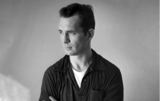
A high school friend who paid me a visit last weekend said she still doesn’t know whether reading Jack Kerouac saved or ruined her life. I, for one, could think of no higher praise for a writer. I believe she entered that dissolute Beat’s literary whirlwind through the portal of a second-hand copy of his America-crisscrossing novel On the Road, as many young people do, but since then the internet has made it much easier to get into Kerouac through a variety of other media as well.
Long-playing records, for instance: if you happen to use Spotify (and if you don’t yet, you can download the free software to get onboard here), you already have access to a good deal of material delivered in Kerouac’s own voice, sometimes against music. On 1959’s Poetry for the Beat Generation (above), an album he put together with Steve Allen (on whose talk show he famously appeared), he reads his work while Allen accompanies him on the piano. That same year saw the release of Blues and Haikus, featuring that same Kerouac voice and sensibility, but backed this time by jazz saxophonists Al Cohn and Zoot Sims.
On 1960’s Readings by Jack Kerouac on the Beat Generation (bottom), his final spoken-word album, Kerouac goes without jazzmen entirely. But then, some of his die-hard fans might argue that he doesn’t need them, that his use of the English language constitutes more than enough wild, improvisational, but somehow still disciplined music by itself. That may sound like a bit much, but Kerouac actually had a lot in common with his fellow American icons in the realm of jazz, not least a lifestyle that led him into an early grave and a legacy as a figure both tragic and inspiring in equal measure. Maybe you hear it in his prose; maybe you’ll hear it in his voice.
As a final bonus, you can stream a fourth album, On the Beat Generation.
Related Content:
Download 55 Free Online Literature Courses: From Dante and Milton to Kerouac and Tolkien
An 18-Hour Playlist of Readings by the Beats: Kerouac, Ginsberg & Even Bukowski Too
Jack Kerouac Reads from On the Road (1959)
Jack Kerouac’s Hand-Drawn Map of the Hitchhiking Trip Narrated in On the Road
Colin Marshall writes on cities, language, Asia, and men’s style. He’s at work on a book about Los Angeles, A Los Angeles Primer, and the video series The City in Cinema. Follow him on Twitter at @colinmarshall or on Facebook.
http://www.openculture.com/2015/07/free-hours-of-jack-kerouac-reading-beat-poems-verse.html is a post from: Open Culture. Follow us on Facebook, Twitter, and Google Plus, or get our Daily Email. And don't miss our big collections of Free Online Courses, Free Online Movies, Free eBooks, Free Audio Books, Free Foreign Language Lessons, and MOOCs.
%%POST_LINK%% is a post from: Open Culture. Follow us on Facebook, Twitter, and Google Plus, or get our Daily Email. And don't miss our big collections of Free Online Courses, Free Online Movies, Free eBooks, Free Audio Books, Free Foreign Language Lessons, and MOOCs.
Open Culture
.
Blog
.
<span class='date ' tip=''><i class='icon-time'></i> Aug 26, 2015 01:47pm</span>
|
|
Most of us strive to achieve some kind of distinction—or competence—in one, often quite narrow, field. And for some of us, the path to success involves leaving behind many a path not taken. Childhood pursuits like ballet, for example, the high jump, the trumpet, acting, etc. become hazy memories of former selves as we grow older and busier. But if you have the formidable will and intellect of émigré Russian novelist Vladimir Nabokov, you see no need to abandon your beloved avocations simply because you are one of the 20th century’s most celebrated writers—in both Russian and English. No indeed. You also go on to become a celebrated amateur lepidopterist (see his butterfly drawings here), earning distinction as curator of lepidoptera at Harvard’s Museum of Comparative Zoology and originator of an evolutionary theory of butterfly migration. And as if that were not enough, you spend your spare time formulating complicated chess problems, earning such a reputation that you are invited in 1970 to join the American chess team to create problems for international competitions.
Nabokov was not easily impressed by other writers or scientists, but he held chess players in especially high regard. His "heroes include a chess grandmaster," writes Nabokov scholar Janet Gezari, "and a chess problem composer…; chess games occur in several of the novels; and chess and chess problem language and imagery regularly put his readers’ chess knowledge to the test." His third novel, 1930’s The Defense, centers on a chess master driven to despair by his genius, a character based on real grandmaster Curt von Bardeleben. For Nabokov, the skill and ingenuity required for composing chess problems paralleled that required for great writing: "The strain on the mind is formidable," he wrote in his memoir Speak, Memory, "the element of time drops out of one’s consciousness." Puzzling out chess problems and solutions, he wrote, "demand from the composer the same virtues that characterize all worthwhile art: originality, invention, conciseness, harmony, complexity and splendid insincerity"—all qualities, we’d have to agree, of Nabokov’s finely wrought fictions.
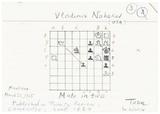
In 1970, Nabokov published Poems and Problems, a collection of thirty-nine Russian poems, with English translations, fourteen English poems, and eighteen chess problems, with solutions. He had pursued this passion since his teens, and published nearly three dozen chess problems in his lifetime. At the top of the post, see one of them, "Mate in 2," sketched out in Nabokov’s hand (try to solve it yourself here). Below it, see another of the author’s chess problem sketches, and in the photo above, see Nabokov absorbed in a chess game with his wife.
Though it may seem that Nabokov had limitless energy and time to devote to his extra-literary pursuits, he also wrote with regret about the price he paid for his obsession: "the possessive haunting of my mind," as he called it, "with carved pieces or their intellectual counterparts swallowed up so much time during my most productive and fruitful years, time which I could have better spent on linguistic adventures." Like the lepidopterists still marveling over Nabokov’s contributions to that field, the chess lovers who encounter his problems, and his ingenious use of the game in fiction, would hardly agree that his pursuit of chess was fruitless or unproductive.
Related Content:
Marcel Duchamp, Chess Enthusiast, Created an Art Deco Chess Set That’s Now Available via 3D Printer
Vladimir Nabokov’s Delightful Butterfly Drawings
Vladimir Nabokov Creates a Hand-Drawn Map of James Joyce’s Ulysses
Vladimir Nabokov Names the Greatest (and Most Overrated) Novels of the 20th Century
Josh Jones is a writer and musician based in Durham, NC. Follow him at @jdmagness
http://www.openculture.com/2015/07/vladimir-nabokovs-hand-drawn-sketches-of-mind-bending-chess-problems.html is a post from: Open Culture. Follow us on Facebook, Twitter, and Google Plus, or get our Daily Email. And don't miss our big collections of Free Online Courses, Free Online Movies, Free eBooks, Free Audio Books, Free Foreign Language Lessons, and MOOCs.
%%POST_LINK%% is a post from: Open Culture. Follow us on Facebook, Twitter, and Google Plus, or get our Daily Email. And don't miss our big collections of Free Online Courses, Free Online Movies, Free eBooks, Free Audio Books, Free Foreign Language Lessons, and MOOCs.
Open Culture
.
Blog
.
<span class='date ' tip=''><i class='icon-time'></i> Aug 26, 2015 01:47pm</span>
|
|
If you took a poll to determine in whose voice most readers would like to hear their audio books, I imagine Orson Welles would land pretty high on the list. And if you took a poll to determine which book most readers would rather approach in audio form than paper form, I imagine Herman Melville’s weighty but undeniably important (and still literarily fascinating) Moby-Dick would land pretty high on the list. Unfortunately for us, Welles never sat down to get the entirety of Moby-Dick on tape, but he did give the book a few readings on film, rounded up today for your enjoyment.
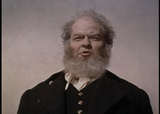
Most famously, Welles appeared in John Huston’s 1956 adaptation of the novel as Father Mapple, deliverer of the sermon on Jonah heard by the narrator Ishmael and his bunkmate Queequeg early on in the story, just before they sign on to the Pequod. Possessed of an interest of his own in Melville’s masterwork, Welles used his paycheck from the cameo to bring Moby-Dick to the stage. But he also wanted to do something cinematic with the material, as evidenced by the other two videos here: readings he shot in 1971, during production of The Other Side of the Wind. In them, he speaks the novel’s immortal opening line, "Call me Ishmael."
Though he may sound even more compelling in Ishmael’s role than in Father Mapple’s, these clips do make you wonder what, or which character, stoked Welles’ fascination with Moby-Dick in the first place. Certainly we can draw obvious parallels between him and the Pequod‘s Captain Ahab in terms of their tendency toward grand, all-consuming, impossible-seeming projects. Then again, Ahab labors under the idea that man can, with sufficient will, directly perceive all truths, while Welles made F for Fake, so perhaps he was a questioning, skeptical Ishmael after all. Whomever he identified with, this pillar of American cinema must have had big plans for this pillar of American literature — which, alas, we can now only struggle to perceive, just as Ahab and Ishmael struggle to perceive the form of the whale deep in the water.
Related Content:
How Ray Bradbury Wrote the Script for John Huston’s Moby Dick (1956)
The Moby Dick Big Read: Celebrities and Everyday Folk Read a Chapter a Day from the Great American Novel
A View From the Room Where Melville Wrote Moby Dick (Plus a Free Celebrity Reading of the Novel)
An Illustration of Every Page of Herman Melville’s Moby Dick
Orson Welles Reads Coleridge’s "The Rime of the Ancient Mariner" in a 1977 Experimental Film
Colin Marshall writes on cities, language, Asia, and men’s style. He’s at work on a book about Los Angeles, A Los Angeles Primer, and the video series The City in Cinema. Follow him on Twitter at @colinmarshall or on Facebook.
http://www.openculture.com/2015/07/orson-welles-reads-moby-dick-the-great-american-director-takes-on-the-great-american-novel.html is a post from: Open Culture. Follow us on Facebook, Twitter, and Google Plus, or get our Daily Email. And don't miss our big collections of Free Online Courses, Free Online Movies, Free eBooks, Free Audio Books, Free Foreign Language Lessons, and MOOCs.
%%POST_LINK%% is a post from: Open Culture. Follow us on Facebook, Twitter, and Google Plus, or get our Daily Email. And don't miss our big collections of Free Online Courses, Free Online Movies, Free eBooks, Free Audio Books, Free Foreign Language Lessons, and MOOCs.
Open Culture
.
Blog
.
<span class='date ' tip=''><i class='icon-time'></i> Aug 26, 2015 01:46pm</span>
|
|
Fantasy fiction invariably includes a map for readers to understand the hero’s journey, literally. We know that Hobbits had to walk a long way into Mordor, but seeing it cartographically really hits home. But what of the great road trip novels, where the country is America, the journey is long and often circular, and self-actualization awaits the hero, and not an army of orcs?
Atlas Obscura, Joshua Foer and Dylan Thuras’ blog of discovery and adventure in the modern world, have come to the rescue with an interactive map that plots out the travels of road trip-filled books, some non-fiction, others fictionalized reality. Where a location is mentioned in a text, it has been pinned to the map, and by clicking on the pin, the relevant text is revealed. Clever stuff.
For example, the map for Jack Kerouac’s On the Road (see snapshot above) plots out the five trips contained in the novel, and one can see the main hubs of the story: NYC and San Francisco, of course, but also Denver and the crazed detour town to Mexico City, where Sal, Dean, and Stan Shephard party hard in a bordello and Sal winds up with dysentery for his troubles.
For something more straightforward, check out the Northwest travels at the heart of Robert M. Pirsig’s Zen and the Art of Motorcycle Maintenance. Written in the first person, the novel’s narrator travels by motorcycle with his son from Minnesota to Northern California, ending up in San Francisco, taking 17 days. The philosophical journey, however, covers wider terrain.
Another Bay Area tale, Tom Wolfe’s account of Ken Kesey and the Merry Pranksters in The Electric Kool-Aid Acid Test starts in La Honda, California, a mountain getaway to the west of San Jose, and, as one can see, completes a circle of the States, including trips to both Calgary, Canada and Manzanillo, Mexico, where everybody is "uptight," man, heading northeast to both Guanajuato and Aguascalientes, where Acid Tests are administered.
There’s more at the link, including maps for Wild, A Walk Across America, and Travels with Charley. It might inspire a repeat reading of a favorite book. Or it might inspire you to just light out for the territories.
Related Content:
The Acid Test Reels: Ken Kesey & The Grateful Dead’s Soundtrack for the 1960s Famous LSD Parties
Jack Kerouac Reads from On the Road (1959)
The Books You Think Every Intelligent Person Should Read: Crime and Punishment, Moby-Dick & Beyond (Many Free Online)
Ted Mills is a freelance writer on the arts who currently hosts the FunkZone Podcast. You can also follow him on Twitter at @tedmills, read his other arts writing at tedmills.com and/or watch his films here.
http://www.openculture.com/2015/07/12-classic-literary-road-trips-in-one-handy-interactive-map.html is a post from: Open Culture. Follow us on Facebook, Twitter, and Google Plus, or get our Daily Email. And don't miss our big collections of Free Online Courses, Free Online Movies, Free eBooks, Free Audio Books, Free Foreign Language Lessons, and MOOCs.
%%POST_LINK%% is a post from: Open Culture. Follow us on Facebook, Twitter, and Google Plus, or get our Daily Email. And don't miss our big collections of Free Online Courses, Free Online Movies, Free eBooks, Free Audio Books, Free Foreign Language Lessons, and MOOCs.
Open Culture
.
Blog
.
<span class='date ' tip=''><i class='icon-time'></i> Aug 26, 2015 01:46pm</span>
|
|
The Emily Dickinson Museum will tell you that "The kitchen appears to be one of the rooms where [Emily] Dickinson felt most comfortable, perhaps most at home." But the "many drafts of poems written on kitchen papers tell us also that this was a space of creative ferment for her, and that the writing of poetry mixed in her life with the making of delicate treats."
We still have access to Dickinson’s gingerbread and doughnut recipes. But if you want to see an example of how baking nourished her creative process, then look no further than Emily’s recipe for Coconut Cake. The image above shows the ingredients scratched out in her handwriting:
1 cup coconut
2 cups flour
1 cup sugar
1/2 cup butter
1/2 cup milk
2 eggs
1/2 teaspoon soda
1 teaspoon cream of tartar
On the flip side of the recipe, Dickinson then wrote the beginning of a poem, "The Things that never can come back, are several" (read the transcript here). Presumably the recipe inspired the poem, but perhaps it was the other way around?
If you’re looking for your own source of creative inspiration, you can try out Dickinson’s recipes for Black Cake and also Rye and Indian Bread here. (According to The Public Domain Review, "her loaf of Indian and Rye won second prize in the Amherst Cattle Show of 1856.") And you can even head up to the Emily Dickinson Museum in Amherst, MA and take part in their annual baking contest.
Over at NPR, Dickinson scholar Nelly Lambert has more on the poet’s relationship to baking and food.
Related Content:
The Online Emily Dickinson Archive Makes Thousands of the Poet’s Manuscripts Freely Available
The Second Known Photo of Emily Dickinson Emerges
Watch an Animated Film of Emily Dickinson’s Poem ‘I Started Early-Took My Dog’
http://www.openculture.com/2015/07/emily-dickinsons-handwritten-coconut-cake-recipe-hints-at-how-baking-figured-into-her-creative-process.html is a post from: Open Culture. Follow us on Facebook, Twitter, and Google Plus, or get our Daily Email. And don't miss our big collections of Free Online Courses, Free Online Movies, Free eBooks, Free Audio Books, Free Foreign Language Lessons, and MOOCs.
%%POST_LINK%% is a post from: Open Culture. Follow us on Facebook, Twitter, and Google Plus, or get our Daily Email. And don't miss our big collections of Free Online Courses, Free Online Movies, Free eBooks, Free Audio Books, Free Foreign Language Lessons, and MOOCs.
Open Culture
.
Blog
.
<span class='date ' tip=''><i class='icon-time'></i> Aug 26, 2015 01:45pm</span>
|
|
Despite breaking his leg during a gig earlier this summer, Dave Grohl and the Foo Fighters have blitzed their way through Europe and America, playing sometimes 5-6 shows per week, in cities often large, but sometimes small.
On September 16th, the band will make a pitstop in my hometown, Mountain View, CA (population 75,000). So it doesn’t seem implausible for the residents of Cesena, Italy (population 100,000) to ask the Foo Fighters to play a show in their small city, which sits right near the Adriatic Sea.
And boy did they make the request in style. I get chills when I watch this, every time.
Update: Days later, Dave Grohl responds … in Italian:
Follow us on Facebook, Twitter, Google Plus and LinkedIn and share intelligent media with your friends. And if you want to make sure that our posts definitely appear in your Facebook newsfeed, just follow these simple steps.
http://www.openculture.com/2015/07/1000-musicians-perform-the-foo-fighters-learn-to-fly-in-italy.html is a post from: Open Culture. Follow us on Facebook, Twitter, and Google Plus, or get our Daily Email. And don't miss our big collections of Free Online Courses, Free Online Movies, Free eBooks, Free Audio Books, Free Foreign Language Lessons, and MOOCs.
%%POST_LINK%% is a post from: Open Culture. Follow us on Facebook, Twitter, and Google Plus, or get our Daily Email. And don't miss our big collections of Free Online Courses, Free Online Movies, Free eBooks, Free Audio Books, Free Foreign Language Lessons, and MOOCs.
Open Culture
.
Blog
.
<span class='date ' tip=''><i class='icon-time'></i> Aug 26, 2015 01:44pm</span>
|
|
The picture of punk as the domain of boorish nihilists who can’t play their instruments has been as much a creation of marketing (via Malcolm McLaren) as it has been a virtue-of-necessity minimalist pose and a form of avant garde DIY experimentalism. But there have always been, since the coining of the term "punk" as a musical genre, stellar musicians and thoughtful, poetic lyricists shaping the scene. Of the former, we must mention Television, with their magnificent guitar interplay between leader Tom Verlaine and Richard Lloyd. And, of the latter, we need look no further than the godmother of punk herself, Patti Smith, who has always commanded stage and studio with her smart, arresting lyricism and powerful set of pipes.
Years before the Sex Pistols invaded the States, these two bands played regularly at CBGBs (Television was, in fact, the very first band to play there) with a loose collection of misfits who re-invented rock and roll. In December, 1975, Smith released her first album, Horses, a hybrid of punk and spoken word produced by the Velvet Underground’s John Cale. But before that record made her famous—in April of that year—the Patti Smith Group took the stage with Television, and two teenage fans were there to record both sets from both bands. First appearing as a bootleg CD generically titled "Early Gig ’75," the disc has since been reissued as We Can’t Do Anymore… Cause I’m Just Too Tired!, with another set of Smith covers tacked on from a ’78 concert in Santa Monica.
We get classic tracks from both bands, such as Television’s "Marquee Moon" and "Little Johnny Jewell" and Smith’s cover of "Hey Joe" and Van Morrison’s "Gloria" as well as her own "Horses" and "Piss Factory." At the top of the post, you can hear her do six songs from that night in 1975, the last three with Television joining her onstage: "We’re Going to Have a Real Good Time Together" (Velvet Underground cover), "Redondo Beach," "Birdland," "Space Monkey," "Distant Fingers," and "Gloria." You’ll also hear the two young tapers chatting it up in the first few minutes of the tape.
Smith’s band, writes bootleg blog Doom & Gloom From the Tomb, "was transitioning from a cabaret-leaning trio to a fully-fledged rock band sound," and the ramshackle performances show us a talented bunch of musicians still finding their footing as a group. The following year, Smith and band would appear in Stockholm after the release of Horses. As you can see and hear above (after a brief interview) they’d become a tighter, and somewhat more conventional, rock and roll machine, but the early performances at the top—for all the lo-fi murkiness and intrusive crowd noise—have a raw appeal only heightened by the fact that they are now important documents of a now-legendary musical era. See this review of the bootleg CD reissue for a blow-by-blow description of this historic ’75 concert from two seminal, and phenomenally talented, punk bands.
Related Content:
The Talking Heads Play CBGB, the New York Club that Shaped Their Sound (1975)
The Ramones, a New Punk Band, Play One of Their Very First Shows at CBGB (1974)
Blondie Plays CBGB in the Mid-70s in Two Vintage Clips
Josh Jones is a writer and musician based in Durham, NC. Follow him at @jdmagness
http://www.openculture.com/2015/07/patti-smith-plays-at-cbgb-in-one-of-her-first-recorded-concerts.html is a post from: Open Culture. Follow us on Facebook, Twitter, and Google Plus, or get our Daily Email. And don't miss our big collections of Free Online Courses, Free Online Movies, Free eBooks, Free Audio Books, Free Foreign Language Lessons, and MOOCs.
%%POST_LINK%% is a post from: Open Culture. Follow us on Facebook, Twitter, and Google Plus, or get our Daily Email. And don't miss our big collections of Free Online Courses, Free Online Movies, Free eBooks, Free Audio Books, Free Foreign Language Lessons, and MOOCs.
Open Culture
.
Blog
.
<span class='date ' tip=''><i class='icon-time'></i> Aug 26, 2015 01:44pm</span>
|
|
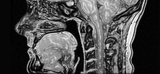
Beatboxing, the practice of producing drum machine-like beats (especially TR-808-like beats) with one’s voice, has long since made the transition from parlor trick to acknowledged musical art form. But we still have much to understand about it, as the recently-emerged first generation of beatboxing scholars knows full well. "A team of linguistics and engineering students at USC wanted to learn more about the mechanics behind the rhythms," writes Los Angeles Times music critic Randall Roberts. "By using MRI technology, they recorded an unnamed local beatboxer working his magic, broke down the most commonly employed sounds by examining the movements of his mouth and then analyzed the data."
This resulted in a paper called "Paralinguistic Mechanisms of Production in Human ‘Beatboxing’: A Real-Time Magnetic Resonance Imaging Study." Roberts describes it as "predictably heavy with linguistic jargon, but even to a civilian, the results are illuminating," especially the video the research team recorded, "which reveals how the human mouth can so convincingly create the pop of a snare drum." At the top of the post, you can see this sort of thing for yourself: in this video "The Diva and the Emcee," featured at the International Society for Magnetic Resonance in Medicine (ISMRM) Scientific Sessions in Seattle, we see how a beatboxer’s technique compares to that of an opera singer.
You can find out more at the site of the Speech Production and Articulation Knowledge group (SPAN), the USC team that performed this pioneering research into an important component of one of the pillars of hip hop. Keep their findings in mind next time you watch a beatboxing clip that goes viral (such as the Goldberg Variations one we featured back in 2012) for a richer listening experience. After all, it does no harm to the romance of the beatbox, to paraphrase Carl Sagan, to know a little bit about it.
Related Content:
Beatboxing Bach’s Goldberg Variations
All Hail the Beat: How the 1980 Roland TR-808 Drum Machine Changed Pop Music
Langston Hughes Reveals the Rhythms in Art & Life in a Wonderful Illustrated Book for Kids (1954)
Do Rappers Have a Bigger Vocabulary Than Shakespeare?: A Data Scientist Maps Out the Answer
Colin Marshall writes on cities, language, Asia, and men’s style. He’s at work on a book about Los Angeles, A Los Angeles Primer, and the video series The City in Cinema. Follow him on Twitter at @colinmarshall or on Facebook.
http://www.openculture.com/2015/07/what-beatboxing-and-opera-singing-look-like-inside-an-mri-machine.html is a post from: Open Culture. Follow us on Facebook, Twitter, and Google Plus, or get our Daily Email. And don't miss our big collections of Free Online Courses, Free Online Movies, Free eBooks, Free Audio Books, Free Foreign Language Lessons, and MOOCs.
%%POST_LINK%% is a post from: Open Culture. Follow us on Facebook, Twitter, and Google Plus, or get our Daily Email. And don't miss our big collections of Free Online Courses, Free Online Movies, Free eBooks, Free Audio Books, Free Foreign Language Lessons, and MOOCs.
Open Culture
.
Blog
.
<span class='date ' tip=''><i class='icon-time'></i> Aug 26, 2015 01:43pm</span>
|
|
The Timmy Brothers, based in Brooklyn, create handcrafted water. It’s not just any water. It’s water that lets you travel to different cultural times and places. Want to drink water that evokes memories of Mark Twain’s Mississippi River? Or the great jazz that came out of New Orleans? Well, the Timmy Brothers have just the product for you.
If you’re in Brooklyn, also consider making a side trip to Beacon, NY where David Rees lovingly creates artisanal handcrafted pencils. You’ll never look at pencils the same way again.
via Digg
Follow us on Facebook, Twitter, Google Plus and LinkedIn and share intelligent media with your friends. And if you want to make sure that our posts definitely appear in your Facebook newsfeed, just follow these simple steps.
http://www.openculture.com/2015/07/brooklyn-based-makers-of-artisanal-water-let-you-sip-from-americas-great-cultural-waters.html is a post from: Open Culture. Follow us on Facebook, Twitter, and Google Plus, or get our Daily Email. And don't miss our big collections of Free Online Courses, Free Online Movies, Free eBooks, Free Audio Books, Free Foreign Language Lessons, and MOOCs.
%%POST_LINK%% is a post from: Open Culture. Follow us on Facebook, Twitter, and Google Plus, or get our Daily Email. And don't miss our big collections of Free Online Courses, Free Online Movies, Free eBooks, Free Audio Books, Free Foreign Language Lessons, and MOOCs.
Open Culture
.
Blog
.
<span class='date ' tip=''><i class='icon-time'></i> Aug 26, 2015 01:42pm</span>
|