Blogs
|
A couple of years ago we published a post on "what Shakespeare sounded like to Shakespeare" which highlighted some prominent linguists’ attempts to recreate the Elizabethan speech patterns and accents of the playwright’s day. There may be some small debate about whether or not they succeeded, but we’ll never know for certain since his day is long behind us. In some ways, the nature of Shakespeare’s language may have been more French, or more Latinate, or more Saxon, than the English we speak today—depending on the proportion of regionalisms commingling in any given play, like characters in a national bazaar. Our current version of the language may have absorbed another four hundred years of global influence, but in the process it has also become more homogenized and standardized. Shakespeare’s language was both more provincial and more riotously diverse-in spelling and pronunciation-than many kinds of English we speak today.
Perhaps this is one reason we think of Shakespeare as a universal poet—the heterodoxy of his speech, and hence a variability of characters found in few other literatures. Even his stock types seem to have individual voices. The degree of interplay between high and low speech—city and country, comic and tragic, lyric and prosaic—may be why nearly every world language has found a way to adapt his work, accenting some qualities and muting others. You don’t have to take my word for it. You can see for yourself at the MIT Global Shakespeare’s Video & Performance Archive, which hosts dozens of Shakespeare stagings in dozens of languages, like the mesmerizing Japanese Lear above, or the heartracingly intense one-woman clip from the Argentine Hamlet la metamorphosis at the top, a melodramatic production that would thrill David Lynch. Additionally, the database aggregates "essays and metadata provided by scholars and educators in the field" of international Shakespeare studies.
Even among the thousands of English-language adaptations of Shakespeare’s work we find an international diversity of speech. The Spotify playlist above, brought to us by Ulysses Classical (makers of the Stanley Kubrick Playlist), presents a huge collection of recorded Shakespeare plays and poems, as well as the scores and incidental music for English-language productions. The actors represented-Sirs Gielgud, Olivier, and McKellen, Derek Jacobi, Edith Evans-are mostly English stage royalty, but we also have Welsh poet Dylan Thomas and actor Richard Burton, and Americans Paul Robeson, Rosalind Russell, and Orson Welles. The value of such a collection is inestimable-68 hours of Shakespeare read and performed by some of the world’s finest actors. But it is indeed a specific slice of the world. Even in English it feels (forgive the puns) that all the world could be represented here, doing Shakespeare in every kind of English around the globe. Perhaps such a global approach to teaching Shakespeare in English would add nuance to debates about whether his work is still relevant in American high school and college classrooms. In any case, there seem to be few barriers to actors and directors for approaching Shakespeare with new translations and with fresh eyes, ears, and costumes, again and again.
You can access the Spotify playlist on the web here. If you need to download Spotify, find it here.
Related Content:
What Shakespeare Sounded Like to Shakespeare: Reconstructing the Bard’s Original Pronunciation
Read All of Shakespeare’s Plays Free Online, Courtesy of the Folger Shakespeare Library
Free Online Shakespeare Courses: Primers on the Bard from Oxford, Harvard, Berkeley & More
Orson Welles’ Radio Performances of 10 Shakespeare Plays
630 Free Audio Books: Download Great Books for Free
Josh Jones is a writer and musician based in Durham, NC. Follow him at @jdmagness.
A 68 Hour Playlist of Shakespeare’s Plays Being Performed by Great Actors: Gielgud, McKellen & More is a post from: Open Culture. Follow us on Facebook, Twitter, and Google Plus, or get our Daily Email. And don't miss our big collections of Free Online Courses, Free Online Movies, Free eBooks, Free Audio Books, Free Foreign Language Lessons, and MOOCs.
http://www.openculture.com/2015/07/a-68-hour-playlist-of-shakespeares-plays-being-performed-by-great-actors.html is a post from: Open Culture. Follow us on Facebook, Twitter, and Google Plus, or get our Daily Email. And don't miss our big collections of Free Online Courses, Free Online Movies, Free eBooks, Free Audio Books, Free Foreign Language Lessons, and MOOCs.
The post A 68 Hour Playlist of Shakespeare’s Plays Being Performed by Great Actors: Gielgud, McKellen & More appeared first on Open Culture.
Open Culture
.
Blog
.
<span class='date ' tip=''><i class='icon-time'></i> Aug 26, 2015 02:08pm</span>
|
|
Here at Open Culture, the 150th anniversary celebration of Lewis Carroll’s Alice’s Adventures in Wonderland keeps going and going, because, well, who knows what form the internet will have taken by the time of the 200th? It might well bear more of a resemblance to the logical-yet-illogical reality in which the story’s title character finds herself than any of the things we’ve yet used, or imagined. You may laugh, but Lewis Carroll’s ideas have long drawn the fascination of programmers, computer scientists, and the other architects of the infoscape through which we navigate today.
They’ve also, of course, attracted the fascination of other artists, from Brave New World author Aldous Huxley, who wrote an early script for Disney’s film, to Fear and Loathing in Las Vegas illustrator Ralph Steadman, who did his own illustrated edition of the book. Today, we give you Alice’s Adventures in Wonderland in the medium of sand animation, as practiced by sand animator Magdalena Bak. At just under eight minutes and thirty seconds, it will only take you a fraction as long to watch as most of Alice‘s other cinematic adaptations (though not the very first, made in 1903, which clocks in at twenty seconds shorter).
It may also introduce you to an animation medium you’ve never seen before. If you’d like to watch more of what an animator can do with sand, have a look at the wide variety of sand animations we’ve previously featured: Vivaldi’s Four Seasons animated in sand, Kafka’s Metamorphosis animated in sand, Goethe’s "Der Erlkönig" animated in sand, modern desert warfare animated in sand, and even a Spanish-language music video animated in sand. Sand may strike you as an unusual storytelling medium, but surely Alice’s Adventures in Wonderland, even 150 years after its first publication, remains an unusual story.
Related Content:
See Ralph Steadman’s Twisted Illustrations of Alice’s Adventures in Wonderland on the Story’s 150th Anniversary
See the Original Alice In Wonderland Manuscript, Handwritten & Illustrated By Lewis Carroll (1864)
Lewis Carroll’s Photographs of Alice Liddell, the Inspiration for Alice in Wonderland
When Aldous Huxley Wrote a Script for Disney’s Alice in Wonderland
Vivaldi’s Four Seasons Brought to Life in Sand Animations by the Hungarian Artist Ferenc Cakó
The Metamorphosis of Mr. Samsa: A Wonderful Sand Animation of the Classic Kafka Story (1977)
Watch Goethe’s Haunting Poem, "Der Erlkönig," Presented in an Artful Sand Animation
Colin Marshall writes on cities, language, Asia, and men’s style. He’s at work on a book about Los Angeles, A Los Angeles Primer, and the video series The City in Cinema. Follow him on Twitter at @colinmarshall or on Facebook.
Lewis Carroll’s Classic Story, Alice’s Adventures in Wonderland, Told in Sand Animation is a post from: Open Culture. Follow us on Facebook, Twitter, and Google Plus, or get our Daily Email. And don't miss our big collections of Free Online Courses, Free Online Movies, Free eBooks, Free Audio Books, Free Foreign Language Lessons, and MOOCs.
http://www.openculture.com/2015/07/alices-adventures-in-wonderland-told-in-sand-animation.html is a post from: Open Culture. Follow us on Facebook, Twitter, and Google Plus, or get our Daily Email. And don't miss our big collections of Free Online Courses, Free Online Movies, Free eBooks, Free Audio Books, Free Foreign Language Lessons, and MOOCs.
The post Lewis Carroll’s Classic Story, Alice’s Adventures in Wonderland, Told in Sand Animation appeared first on Open Culture.
Open Culture
.
Blog
.
<span class='date ' tip=''><i class='icon-time'></i> Aug 26, 2015 02:08pm</span>
|
|
If you google my name, spelled in the unconventional way that I spell it, the first search results won’t having anything to do with me. They’ll reference another Dan Colman who, in the past year, has made a good chunk of change playing poker — including winning $15.3 million in one tournament alone. He apparently did it all without availing himself of MIT’s course — Poker Theory and Analytics — taught by Kevin Desmond, a graduate student in MIT’s Sloan School of Management. Desmond has competed at the top levels of the poker world and worked as a Morgan Stanley analyst, and he contends that being successful in both realms requires "balancing expected returns against associated risks and," … and "the key to success is self-discipline."
According to MIT News, Poker Theory and Analytics introduced students to poker strategy, psychology, and decision-making in eleven lectures." Along with giving students the chance to play endless rounds of poker, the class featured guest speakers — "Bill Chen, a professional player best known for his appearances on the Game Show Network’s High Stakes Poker television show, Matt Hawrilenko, a Princeton graduate who won more than $1 million at the World Series of Poker in 2009, and Aaron Brown, chief risk manager at AQR Capital Management." And it culminated with a live tournament.
You can access all of the lectures for the Poker Theory and Analytics course on YouTube, iTunes or Archive.org. (You can watch the complete playlist of lectures above.) And if you click here, you can get the syllabus, lectures notes, assignments, poker software, and more.
Poker Theory and Analytics will be added to our ever-growing collection, 1150 Free Online Courses from Top Universities, in both the Business and Economics sections.
Related Content:
Peter Thiel’s Stanford Course on Startups: Read the Lecture Notes Free Online
150 Free Online Business Courses
MIT Teaches You How to Speak Italian & Cook Italian Food All at Once (Free Online Course)
MIT’s Introduction to Poker Theory: A Free Online Course is a post from: Open Culture. Follow us on Facebook, Twitter, and Google Plus, or get our Daily Email. And don't miss our big collections of Free Online Courses, Free Online Movies, Free eBooks, Free Audio Books, Free Foreign Language Lessons, and MOOCs.
http://www.openculture.com/2015/07/mits-introduction-to-poker-theory.html is a post from: Open Culture. Follow us on Facebook, Twitter, and Google Plus, or get our Daily Email. And don't miss our big collections of Free Online Courses, Free Online Movies, Free eBooks, Free Audio Books, Free Foreign Language Lessons, and MOOCs.
The post MIT’s Introduction to Poker Theory: A Free Online Course appeared first on Open Culture.
Open Culture
.
Blog
.
<span class='date ' tip=''><i class='icon-time'></i> Aug 26, 2015 02:07pm</span>
|
|
The Late Show with Stephen Colbert won’t hit the airwaves until September 8th, but Colbert is already getting his Late Show Youtube channel up and running. That’s where you will find this video breaking down NASA’s amazing flyby of Pluto last week, a journey that involved the New Horizons spacecraft traveling a staggering 3 billion miles. (See photos here.) Joining Colbert is Neil deGrasse Tyson, who needs no introduction around here. Enjoy the banter, and don’t forget that you can download Tyson’s short course, The Inexplicable Universe. It’s free from The Great Courses for a limited time.
If the concept of Colbert interviewing Tyson intrigues you, don’t miss this lengthy interview originally posted on OC in 2011.
Follow us on Facebook, Twitter, Google Plus and LinkedIn and share intelligent media with your friends. And if you want to make sure that our posts definitely appear in your Facebook newsfeed, just follow these simple steps.
Related Content:
Stephen Colbert Reads Ray Bradbury Classic Sci-Fi Story "The Veldt"
Neil deGrasse Tyson Lists 8 (Free) Books Every Intelligent Person Should Read
Neil deGrasse Tyson Delivers the Greatest Science Sermon Ever
Free Online Astronomy Courses
Stephen Colbert & Neil deGrasse Break Down Our Awesome 3 Billion-Mile Journey to Pluto is a post from: Open Culture. Follow us on Facebook, Twitter, and Google Plus, or get our Daily Email. And don't miss our big collections of Free Online Courses, Free Online Movies, Free eBooks, Free Audio Books, Free Foreign Language Lessons, and MOOCs.
http://www.openculture.com/2015/07/stephen-colbert-neil-degrasse-break-down-our-awesome-3-billion-mile-journey-to-pluto.html is a post from: Open Culture. Follow us on Facebook, Twitter, and Google Plus, or get our Daily Email. And don't miss our big collections of Free Online Courses, Free Online Movies, Free eBooks, Free Audio Books, Free Foreign Language Lessons, and MOOCs.
The post Stephen Colbert & Neil deGrasse Break Down Our Awesome 3 Billion-Mile Journey to Pluto appeared first on Open Culture.
Open Culture
.
Blog
.
<span class='date ' tip=''><i class='icon-time'></i> Aug 26, 2015 02:07pm</span>
|
|
Movie audiences love dinosaurs. Ask the makers of Jurassic World, a reboot of Steven Spielberg’s venerable franchise that raked in over $1.5 billion this year. There is something about seeing humanity’s ambitions crumble in the face of a massive, toothy lizard (or are they supposed to be a giant featherless bird now?) that just captures the imagination of the inner 5 year-old in all of us.
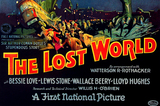
So if you enjoyed Jurassic World, you will dig The Lost World (1925), the granddaddy of giant monster movies. Adapted from Arthur Conan Doyle’s 1912 novel, the story of The Lost World should be familiar to anyone who has watched King Kong or The Lost World: Jurassic Park. The film is about an eccentric scientist, Professor Challenger (played by Wallace Beery in a Karl Marx beard), who ventures to a South American plateau deep in the heart of the Amazonian jungle where dinosaurs still exist. When he captures a Brontosaurus and lugs it back to London, the beast escapes and runs wild in the streets, smashing buildings, stomping on people and trashing cherished national landmarks. Exotic locations filled with equally exotic creatures? Check. Implicit critique of man’s hubristic ambition? Check. Way cool special effects? Check. Lost World has all the hallmarks of the genre even though it came out 90 years ago.
Audiences at the time were blown away by footage of triceratops, allosauruses and stegosauruses. Though they might seem about as terrifying to today’s jaded audiences as a Gumby cartoon, they were nothing short of a revelation in the 1920s. In 1922, Conan Doyle showed clips of the movie without revealing its origins to The Society of American Magicians, an audience that included none other than Harry Houdini. The next day, The New York Times breathlessly wrote that Conan Doyle’s "monsters of the ancient world, or of the new world which he has discovered in the ether, were extraordinarily lifelike. If fakes, they were masterpieces." In fact, the dinosaurs were the handy work of Willis O’Brien who would take his experience on this film and make the 1933 masterpiece King Kong.
You can watch the full movie above. And it will be added to our collection, 700 Free Movies Online: Great Classics, Indies, Noir, Westerns, etc..
Related Content:
Kim Jong-il’s Godzilla Movie & His Free Writings on Film Theory
101 Free Silent Films: The Great Classics
Jonathan Crow is a Los Angeles-based writer and filmmaker whose work has appeared in Yahoo!, The Hollywood Reporter, and other publications. You can follow him at @jonccrow. And check out his blog Veeptopus, featuring lots of pictures of vice presidents with octopuses on their heads. The Veeptopus store is here.
Watch Lost World (1925), the Granddaddy of Giant Monster Movies Like The Lost World: Jurassic Park is a post from: Open Culture. Follow us on Facebook, Twitter, and Google Plus, or get our Daily Email. And don't miss our big collections of Free Online Courses, Free Online Movies, Free eBooks, Free Audio Books, Free Foreign Language Lessons, and MOOCs.
http://www.openculture.com/2015/07/watch-lost-world-1925-the-granddaddy-of-giant-monster-movies-like-the-lost-world-jurassic-park.html is a post from: Open Culture. Follow us on Facebook, Twitter, and Google Plus, or get our Daily Email. And don't miss our big collections of Free Online Courses, Free Online Movies, Free eBooks, Free Audio Books, Free Foreign Language Lessons, and MOOCs.
The post Watch Lost World (1925), the Granddaddy of Giant Monster Movies Like The Lost World: Jurassic Park appeared first on Open Culture.
Open Culture
.
Blog
.
<span class='date ' tip=''><i class='icon-time'></i> Aug 26, 2015 02:06pm</span>
|
|
So many hugely successful and talented musicians have died at age 27 that it almost seems reasonable to believe the number represents some mystical coefficient of talent and tragedy. But several decades before Jimi Hendrix, Janis Joplin, Jim Morrison, Kurt Cobain, or Amy Winehouse left us too soon, Robert Johnson—the man who pioneered selling one’s soul for rock and roll—died in 1938, at age 27, under mysterious and likely violent circumstances. He was already a legend, and his story of meeting Satan at the crossroads to make an exchange for his extraordinary talent had already permeated the popular culture of his day and became even more ingrained after his death—making him, well, maybe the very first rock star.
Johnson’s few recordings—29 songs in total—went on to influence Eric Clapton, Keith Richards, 27 club member Brian Jones and so many others. And that’s not to mention the hundreds of Delta and Chicago blues guitarists who picked Johnson’s brain, or stopped short of selling their souls trying to outplay him. But Johnson, begins the animated short above (which tells the tale of the bluesman’s infernal deal) "wasn’t always such an amazing guitarist." Legend has it he "coveted the talents of Son House" and dreamed of stardom. He acquired his talent overnight, it seemed to those around him, who surmised he must have set out to the crossroads, met the devil, and "made a deal."
The rest of the story—of Robert Johnson’s fatal encounter with the jealous husband of an admirer—is a more plausible development, though it too may be apocryphal. "Not all of this may be true," says the short film’s title cards, "but one thing is for certain: No Robert Johnson, No Rock and Roll." This too is another legend. Other early bluesmen like Blind Willie Johnson and Robert’s hero Son House exerted similar influence on 60s blues revivalists, as of course did later electric players like Muddy Waters, Howlin’ Wolf, and B.B. King. Johnson was a phenomenal innovator, and a singular voice, but his repertoire—like those of most blues players at the time—consisted of variations on older songs, or responses to other, very talented musicians.
Most of the songs he recorded were in this vein—with at least two very notable exceptions: "Cross Road Blues" (or just "Crossroads") and "Me and the Devil Blues," both of which have contributed to the myth of Johnson’s pact with Lucifer, including the part about the dark angel coming to collect his debt. In the latter song, animated in a video above, Satan comes knocking on the singer’s door early in the morning. "Hello Satan," says Johnson, "I believe it’s time to go." Much of what we think about Johnson’s life comes from these songs, and from much rumor and innuendo. He may have been murdered, or—like so many later stars who died too young—he may have simply burned out. One blues singer who claims she met him as a child remembers him near the end of his life as "ill" and "sickly," reports the Austin Chronicle, "in a state of physical disrepair as though he’d been roughed up."
Johnson scholar Elijah Wald describes his history like that of many founders of religious sects: "So much research has been done [on Johnson] that I have to assume the overall picture is fairly accurate. Still, this picture has been pieced together from so many tattered and flimsy scraps that almost any one of them must to some extent be taken on faith." Johnson’s "spiritual descendants," as Rolling Stone’s David Fricke calls his rock and roll progeny, have no trouble doing just that. Nor do fans of rock and blues and other artists who find the Robert Johnson legend tantalizing.
In the film above, "Hot Tamales," animator Riccardo Maneglia adapts the myth, and quotes from "Crossroad Blues," to tell the story of Bob, who journeys to the crossroads to meet sinister voodoo deity Papa Leg, replaying Johnson’s supposed rendezvous in a different religious context. In "Crossroad"‘s lyrics, Johnson is actually "pleading with God for mercy," writes Frank DiGiacomo in Vanity Fair, "not bargaining with the devil." Nonetheless—legendary or not—his evocation of devilish deals in "Me and the Devil Blues" and gritty, emotional account of self-destruction in "Crossroads" may on their own add sufficient weight to that far-reaching idea: "No Robert Johnson, No Rock and Roll."
Related Content:
B.B. King Explains in an Animated Video Whether You Need to Endure Hardship to Play the Blues
Keith Richards Waxes Philosophical, Plays Live with His Idol, the Great Muddy Waters
Legendary Folklorist Alan Lomax: ‘The Land Where the Blues Began’
Josh Jones is a writer and musician based in Durham, NC. Follow him at @jdmagness.
The Story of Bluesman Robert Johnson’s Famous Deal With the Devil Retold in Three Animations is a post from: Open Culture. Follow us on Facebook, Twitter, and Google Plus, or get our Daily Email. And don't miss our big collections of Free Online Courses, Free Online Movies, Free eBooks, Free Audio Books, Free Foreign Language Lessons, and MOOCs.
http://www.openculture.com/2015/07/the-story-of-bluesman-robert-johnsons-famous-deal-with-the-devil-retold-in-three-animations.html is a post from: Open Culture. Follow us on Facebook, Twitter, and Google Plus, or get our Daily Email. And don't miss our big collections of Free Online Courses, Free Online Movies, Free eBooks, Free Audio Books, Free Foreign Language Lessons, and MOOCs.
The post The Story of Bluesman Robert Johnson’s Famous Deal With the Devil Retold in Three Animations appeared first on Open Culture.
Open Culture
.
Blog
.
<span class='date ' tip=''><i class='icon-time'></i> Aug 26, 2015 02:06pm</span>
|
|
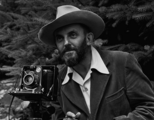
How to take photographs like Ansel Adams did? The question dogs many who’ve recently picked up the camera, especially those directly inspired to do so by he whose black-and-white landscapes practically defined the American West for the 20th century. Conveniently, though, Adams left behind much to study, and not just his considerable body of work; he also spoke without hesitation about the techniques he developed and employed, and even further explained them in books like Making a Photograph; Camera and Lens: The Creative Approach; and Examples: The Making of 40 Photographs, the closest thing we have to a master class with the man.
Adams got particular results out of a procedure he called "visualization," in which the photographer "sees" the final image as fully as possible in their imagination before attempting to capture that image on film in the real world. In the two clips featured here, you can hear Adams himself discuss visualization. "When you visualize a photograph, it is not only a matter of seeing it in the mind’s eye," he says in the video from the Getty Museum, "but it’s also, and primarily, a matter of feeling it." In the interview just above, he adds that "the picture has to be there clearly and decisively, and if you have enough craft in your own work and in your practice, you can then make the photograph you desire."
Here, Adams outlines "the steps in making a photograph" in a bit more detail as follows:
Need, or desire, to photograph. This attitude is obviously essential. Sometimes just going out with a camera can excite perceptive interest and the desire to work. An assignment—a purpose—can be the greatest stimulus for functional or creative work.
Discovery of the subject, or recognition of its essential aspects, will evoke the concept of the image. This leads to the exploration of the subject and the optimum point of view.
Visualization of the final picture is essential in whatever medium is used. The term "seeing" can be used for visualization, but the latter term is more precise in that it relates to the final picture—its scale, composition, tonal and textural values, etc. Just as a musician "hears" notes and chords in his mind’s eye, so can the trained photographer "see" certain values, textures, and arrangements in his mind’s eye.
For more information still on Adams’ artistic process, see also Ansel Adams, Photographer, the 1958 documentary we featured here in 2013. None of this material, of course, guarantees you the ability to take photographs exactly like Ansel Adams, but you wouldn’t necessarily want to: we do our best work, after all, not when we do exactly what our greatest predecessors did, but when we think how our greatest predecessors thought. Hence the importance of visualization, which you can do right now without buying the exact model of Zeiss Milliflex Adams used or going to the exact spots in Yosemite from which he shot — you only need to think.
Related Content:
Ansel Adams Reveals His Creative Process in 1958 Documentary
Discover Ansel Adams’ 226 Photos of U.S. National Parks (and Another Side of the Legendary Photographer)
Alfred Stieglitz: The Eloquent Eye, a Revealing Look at "The Father of Modern Photography"
1972 Diane Arbus Documentary Interviews Those Who Knew the American Photographer Best
Henri Cartier-Bresson and the Decisive Moment
Colin Marshall writes on cities, language, Asia, and men’s style. He’s at work on a book about Los Angeles, A Los Angeles Primer, and the video series The City in Cinema. Follow him on Twitter at @colinmarshall or on Facebook.
How to Take Photographs Like Ansel Adams: The Master Explains The Art of "Visualization" is a post from: Open Culture. Follow us on Facebook, Twitter, and Google Plus, or get our Daily Email. And don't miss our big collections of Free Online Courses, Free Online Movies, Free eBooks, Free Audio Books, Free Foreign Language Lessons, and MOOCs.
http://www.openculture.com/2015/07/how-to-take-photographs-like-ansel-adams.html is a post from: Open Culture. Follow us on Facebook, Twitter, and Google Plus, or get our Daily Email. And don't miss our big collections of Free Online Courses, Free Online Movies, Free eBooks, Free Audio Books, Free Foreign Language Lessons, and MOOCs.
The post How to Take Photographs Like Ansel Adams: The Master Explains The Art of "Visualization" appeared first on Open Culture.
Open Culture
.
Blog
.
<span class='date ' tip=''><i class='icon-time'></i> Aug 26, 2015 02:04pm</span>
|
|
At Creative Commons, a lot of the work we do to support the commons is in the background. We write and steward copyright licenses that help fuel the open web. We help push through open policies at the government, university, and foundation level to increase access to academic, scientific, cultural and other types of content. We fight for sensible copyright reform. All of this work is important, and we’re going to continue to do it.
But we also want to try our hand at something more visible. Our plan is to spend the next year collaboratively researching and writing a book about business models that involve Creative Commons licensing. Even our funding strategy for this project is public-facing and collaborative. Last week we launched our first-ever Kickstarter to raise money for the project, and we hope you’ll become a part of it all by making a pledge at any amount.
Crowdfunding this project is a way to kick off the project in an open and visible way, and to gather support and excitement for our work. But it is also a way to get first-hand experience with a business model that involves Creative Commons. As we raise funds to support the development of a book we will ultimately give away for free under a CC license, we are a case study for our own book. We’re off to a strong start and we’re learning as we go.
And we’re going to do it entirely in the open. We’ve started a Medium publication called "Made with Creative Commons" to use as our digital whiteboard. Throughout the year, we’ll be writing there about the things we learn, the questions we have, the problems we face. We’re hoping to make the research and writing process as collaborative as possible. Kickstarter backers can also become co-creators of the book to receive early drafts of our writing as we go and provide input to help shape the book.
We’re really excited about this ambitious project. Creating and sharing is what CC is all about, and as we do it, we’re hoping to reveal strategies that other creators and businesses can use for their own work. We hope you’ll join us!
-Sarah Hinchliff Pearson is Senior Counsel at Creative Commons.
Open Culture
.
Blog
.
<span class='date ' tip=''><i class='icon-time'></i> Aug 26, 2015 02:04pm</span>
|
|
At Biloxi Junior High School, the teachers are spending their summer pretty productively. They’re taking an entire hallway lined with dull green (currently unused) lockers and they’re repainting each and everyone of them — 189 in total. By the time students return in the fall, each locker will look like the spine of a famous book, and the hallway will be known as the "Avenue of Literature." One teacher told WLOX, "We want students to come back to school in August and … be absolutely amazed with what we’ve done and be curious. We want that to be the spark for reading in our classrooms… We’re hoping the students come and they become completely immersed in a collection" that contains everything from Watership Down and Johnny Tremain to books in the Twilight series, reports Electric Lit.
Follow us on Facebook, Twitter, Google Plus and LinkedIn and share intelligent media with your friends. And if you want to make sure that our posts definitely appear in your Facebook newsfeed, just follow these simple steps.
School Teachers Turn Old Lockers Into Literary Works of Art is a post from: Open Culture. Follow us on Facebook, Twitter, and Google Plus, or get our Daily Email. And don't miss our big collections of Free Online Courses, Free Online Movies, Free eBooks, Free Audio Books, Free Foreign Language Lessons, and MOOCs.
http://www.openculture.com/2015/07/school-teachers-turn-old-lockers-into-literary-works-of-art.html is a post from: Open Culture. Follow us on Facebook, Twitter, and Google Plus, or get our Daily Email. And don't miss our big collections of Free Online Courses, Free Online Movies, Free eBooks, Free Audio Books, Free Foreign Language Lessons, and MOOCs.
The post School Teachers Turn Old Lockers Into Literary Works of Art appeared first on Open Culture.
Open Culture
.
Blog
.
<span class='date ' tip=''><i class='icon-time'></i> Aug 26, 2015 02:03pm</span>
|
|
We here at Open Culture believe that, as far as science-fiction delivery systems go, you can’t do much better than radio drama. We’ve previously featured quite a range of it, from the classic 1950s series Dimension X and its successor X Minus One to adaptations of such classic works as Isaac Asimov’s Foundation trilogy, Aldous Huxley’s Brave New World, and, most recently, Ursula K. LeGuin’s The Left Hand of Darkness. Now we’ve opened up another treasure trove of sci-fi radio in the form of the archives of Mind Webs, originally broadcast on Madison, Wisconsin’s WHA-AM, starting in the 1970s.
One old-time radio site describes Mind Webs as "not really audio drama in the strict sense of the definition," but "readings of science fiction stories by some of the genre’s best writers [ … ] enhanced by music, periodic sound cues, and the occasional character voice." As the collector who made his recordings of the series available to the Internet Archive puts it, Mind Webs "stands as a testament to not only some of our greatest speculative fiction authors, but just how well simple dialog and music minus major sound effects can convey stories so well."
Which authors counted as great enough for inclusion into the Mind Webs canon? Some of the names, like Ursula K. LeGuin, Isaac Asimov, Arthur C. Clarke, and Ray Bradbury, you’d expect to find in this archive, but others go farther afield: the series also features stories by the likes of Philip K. Dick, J.G. Ballard, H.P. Lovecraft — writers who, each in their own way, bent the boundaries of all known fiction, science- or otherwise — and even such supposedly traditional storytellers as John Cheever and Roald Dahl who, in these selections, put their own spin on reality.
Listen to enough episodes of Mind Webs, and you may get hooked on the voice and reading style of its host Michael Hanson, a fixture on Wisconsin public radio for something like forty years. Back in 2001, just after wrapping up his career in that sector, Hanson wrote in to the New York Times lamenting the state of public radio, especially its program directors turned into "sycophantic bean counters" and a "pronounced dumbing down of program content." Mind Webs, which kept on going from the 70s through the 90s, came from a time before all that, and now its smart storytelling has come available for all of us to enjoy.
The playlist above will let you stream all of the stories — roughly 88 hours worth — from start to finish. Or you can access the audio at Archive.org here.
Related Content:
Hear Inventive Stories from Ursula Le Guin & J.G. Ballard Turned Into CBC Radio Dramas
Hear Aldous Huxley’s Brave New World and 84 Classic Radio Dramas from CBS Radio Workshop (1956-57)
Hear Ursula K. Le Guin’s Pioneering Sci-Fi Novel, The Left Hand of Darkness, as a BBC Radio Play
Free: Isaac Asimov’s Epic Foundation Trilogy Dramatized in Classic Audio
Dimension X: The 1950s SciFi Radio Show That Dramatized Stories by Asimov, Bradbury, Vonnegut & More
X Minus One: More Classic 1950s Sci-Fi Radio from Asimov, Heinlein, Bradbury & Dick
Colin Marshall writes on cities, language, Asia, and men’s style. He’s at work on a book about Los Angeles, A Los Angeles Primer, and the video series The City in Cinema. Follow him on Twitter at @colinmarshall or on Facebook.
Listen to 188 Dramatized Science Fiction Stories by Ursula K. Le Guin, Isaac Asimov, Philip K. Dick, J.G. Ballard & More is a post from: Open Culture. Follow us on Facebook, Twitter, and Google Plus, or get our Daily Email. And don't miss our big collections of Free Online Courses, Free Online Movies, Free eBooks, Free Audio Books, Free Foreign Language Lessons, and MOOCs.
http://www.openculture.com/2015/07/188-dramatized-science-fiction-stories.html is a post from: Open Culture. Follow us on Facebook, Twitter, and Google Plus, or get our Daily Email. And don't miss our big collections of Free Online Courses, Free Online Movies, Free eBooks, Free Audio Books, Free Foreign Language Lessons, and MOOCs.
The post Listen to 188 Dramatized Science Fiction Stories by Ursula K. Le Guin, Isaac Asimov, Philip K. Dick, J.G. Ballard & More appeared first on Open Culture.
Open Culture
.
Blog
.
<span class='date ' tip=''><i class='icon-time'></i> Aug 26, 2015 02:03pm</span>
|