Blogs
|
Our focus at Steve Spangler Science is teaching hands-on science - don’t read just about it in a text book, touch it, see it and live it. That’s where discoveries are made and real learning begins.
Some are challenging that focus on teaching science and pushing for more of a foundation in content before going into the lab. Daniel Willingham (Why Don’t Students Like School?) believes elementary students in particular are novices and are therefore unable to think like a scientist. The only people able to think like scientists are the expert scientists themselves, believes Willingham.
Willingham argues that the only way to become an expert is to have a strong foundation in the field coupled with years of practice and experience. He believes students should write poetry and perform science experiments, but they will not have meaningful and memorable lab experiences until they become a real scientist.
Katherine Beals (Raising a Left-Brain Child in a Right-Brain World) explains that labs are essential for the advancement of science, but questions if they are needed to learn what has already been discovered. In other words, is it better for students to study, hypothesize and question about a specific lab topic and then instead of performing it themselves, read about the experts’ findings? She questions if there is a purpose in re-enacting experiments that have been done over and over. The results have already been discovered, so why have students go through the same motions?
We now teach in a world with science videos, science apps and a plethora of scientific knowledge at our fingertips. There are even programs that will step students through complete labs without the students ever having to touch a pea seed, smell formaldahyde or measure a chemical. Virtual labs calculate the results based on past experiments and give students the data they need while saving money on materials and time spent in the lab.
There are the students out there that will jump up and down about this type of learning. They will step through the exciting parts of the lab without actually having to do it. But what about those who love putting on the lab glasses and gloves and diving into smelly, messy science to watch their results come alive in front of them? Even if a result has been proven again and again, isn’t there something in letting novice students make their own discoveries?
A picture of Elephant’s Toothpaste is cool, but observing it shoot into the air and then smelling the reaction is something you can’t get out of a book.
Science is explosive, olfactory and incredibly visual. It’s also tedious, boring at times, full of research and writing and results don’t always come out as expected. Shouldn’t students of all ages get the opportunity to experience a slice of what the expert scientists live everyday? Just like reading the real Declaration of Independence with the actual signatures of our founding fathers while standing in the National Archives makes a deeper impression than looking at a copy in a book.
What are your thoughts about hands-on vs. building a deeper foundation before reaching for that lab coat? What creates memorable experiences for students?
The post Is the Hands-on Approach Really the Best Way to Learn Science? appeared first on Steve Spangler.
Steve Spangler
.
Blog
.
<span class='date ' tip=''><i class='icon-time'></i> Aug 26, 2015 12:47pm</span>
|
|
Steve Spangler visited the set of The Doctors Science Lab this week to share lessons on the science behind some health discomforts…
With Steve as their lab instructor, The Doctors donned their lab coats and went to work. They used Red Cabbage Indicator, Milk of Magnesia, giant flasks and a few ‘glubs’ of vinegar to demonstrate how antacids work and the classic Elephant’s Toothpaste demonstration to show what happens with food poisoning in the stomach.
The Science of How Antacids Work
Antacids have to be one of the most popular over-the-counter medications that help control indigestion and heartburn. The active ingredient in most antacids is magnesium-hydroxide. It works to buffer and turn the liquids in the stomach from an acid to a neutral. When an acidic food that can cause heartburn is eaten, the antacid goes to work to neutralize it.
For the occasional episode, it’s okay to use antacids to calm heartburn and indigestion. It is not a good idea to take them every day or after every meal like it was once thought. Our stomachs are designed to be acidic to digest food and function properly.
The Science of Food Poisoning
You’ve eaten something that wasn’t quite right - it sat out too long or was contaminated in some way. Your stomach feels like it is going to explode in all directions and you begin praying to the porcelain gods.
To demonstrate what is happening inside the digestive tract, Steve used graduated cylinders to act as the stomach. When the "bad food" was introduced to the stomach, it reacted naturally, by quickly expelling the bad stuff fast. Vomiting and diarrhea are the two ways in which your body gets rid of the bacteria or virus.
As cool (and smelly and hot) as this experiment is, it is best to leave it to the professionals like chemistry teachers. For more information about the Monster Foam Elephant’s Toothpaste demonstration and a kid-friendly Elephant’s Toothpaste that everyone can do at home, click the experiment links.
The post The Science Behind on The Doctors Science Lab appeared first on Steve Spangler.
Steve Spangler
.
Blog
.
<span class='date ' tip=''><i class='icon-time'></i> Aug 26, 2015 12:46pm</span>
|
|
In his 15th appearance on The Ellen DeGeneres Show today, Steve Spangler brought a few of his science tricks to the talk show.
Steve made yet another colossal mess on Ellen’s set as he rigged 60 leaf blowers with 60 toilet paper rolls to launch at the same time. When Ellen pushed the button, the studio was instantly swallowed up by flying toilet paper as a demonstration of Bernoulli’s Principle.
Ellen also demonstrated centripetal force by swinging a tub of water over her head.
To watch The Ellen Show in its entirety, check your local listings.
The post Steve Spangler Toilet Papers The Ellen DeGeneres’ Studio appeared first on Steve Spangler.
Steve Spangler
.
Blog
.
<span class='date ' tip=''><i class='icon-time'></i> Aug 26, 2015 12:46pm</span>
|
|
Bullying makes the news almost every week. It exists in schools, sports fields, playground and online. We’ve also recently learned bullying is also present in professional organizations like the NFL. Children who are bullied tend to withdraw and suffer emotional scars. In extreme cases, some become so desperate, they take their own lives.
Steve sat down with professional speaker and certified professional coach Laurie Flasko to talk about bullying and what we can do as parents and teachers to put a stop to it.
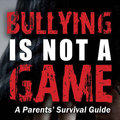
In her book, Bullying Is Not a Game, A Parents’ Survival Guide, Flasko shares advice and tips for parents on how to help their child get through bullying and survive.
If you aren’t sure if your child is being bullied, watch for some telltale signs like a change in their personality. Are they suddenly secretive and withdrawn? Do they hide their email and online activity? Have their friends stopped coming over?
Children who are being bullied may be afraid and don’t want to talk to their teachers or parents. You may need to reach out to your child and help them feel secure in talking to you. But don’t drill them. Then talk to the teacher and school about next steps.
For teachers, Flasko says their relationship is very important. Know your students and watch them for sudden personality changes or behavior. A good student who stops turning in homework or falls behind quickly may be a sign. When you see something or after a student comes to you about a bullying event, address it quickly and keep the informer anonymous.
Do not bring the two kids together unless the bully wants to apologize and the bullied child is okay with sitting down.
For more tips, support and help, sign up for Flasko’s Bully Tip of the Week.
Here are some additional resources for bullying help -
National Suicide Prevention Lifeline 1-800-273-TALK (8255)
National Suicide Prevention Lifeline Bullying Website
StopBullying.gov
StompOutBullying.com
BullyHelp.org
The post Bullying Is Not a Game appeared first on Steve Spangler.
Steve Spangler
.
Blog
.
<span class='date ' tip=''><i class='icon-time'></i> Aug 26, 2015 12:46pm</span>
|
|
NPR ran a feature today on the future of books. Here's the part that most perked my interest (beings that many of us have been talking about this for some time now)...Long the building blocks of academia, textbooks are seen more as albatross and less as asset these days. They are expensive — some costing more than $300. They are quickly outdated. They can be so heavy that students and teachers are forced to tote them around in wheeled luggage carts.Students, professors and universities are rebelling against the weighty — and wasteful — tomes. Stanford University's brand new physics and engineering library is advertised as "bookless"; relying almost solely on digital material. Free and downloadable textbooks are at the heart of the growing "open educational resources" movement that seeks to make education more available and more affordable. Groups such as Connexions at Rice University and the Community College Consortium for Open Educational Resources in Silicon Valley are supporting free online textbook initiatives.
Shelly Blake-Plock
.
Blog
.
<span class='date ' tip=''><i class='icon-time'></i> Aug 26, 2015 12:46pm</span>
|
|
Decided to take a break from blogging with the plan to get started again the day after Labor Day.Looks like that day has come.And so, I offer this humble post -- which is really just a reflection on something that's been running mantra-like through my mind recently. Namely: this paperless thing is easy.Really.You don't need a guru to lead you through this mess. It's not even a mess.I remember when I quit smoking. I'd started back in high school and got up to two packs a day by the time I was 23 years old. Then a serious case of bronchitis hit and I was put on my back for a few days with nary a smoke. Coming out of that, I decided to see how long I could go without a cigarette. And I wound up quitting.I think about this now, because as I've said before, the number one reaction I had to quitting smoking was that I became furious at the cigarette companies. And I grew furious at myself. I was so angry because I felt like I'd completely been put on and because I'd wasted so much time and money on smokes.And that's the same way I felt years ago when I went paperless.I felt like for so long I'd been at the mercy of paper companies and printers and publishers. And I realize how that can sound silly; but as any teacher sitting under five sections of research papers knows, it's anything but silly.These days, instead of waiting for all of my students to meet a deadline, I just have them share a Google Doc with me and I follow along -- popping in now and then to give advice and see what they are doing as they are doing it.And that's a paperless move that changes the feel of teaching. It's an empowering thing. It's a formative thing. It's a thing that suggests what the future might be like rather than a thing that insists on dragging the past along out of some sense of perceived comfort.And it's easy to do.Easy.And that's why in this -- what I guess you'd call the third season of TeachPaperless -- I am questioning whether or not I need to write this blog. Because so long as you can get computers and access, you can do this stuff. You don't need to pay me to come teach you. You don't need me to write a book to sell you. This stuff is easy; all you have to do is experiment a bit and find what works for you.As for those of you -- many of you, in fact -- who don't have computers and access: make this your year. Make this your year to organize parents, students, and teachers together to figure out how to get real tech in your building. Make this your year to petition your admins, their supers, and all the rest to get what you want going on in your school.Because it's 2010.And if you don't do it now, when are you going to do it? And if you don't do it, who will?So bring your A-game. Do some research and argue for the reallocation of funds from textbooks and printers to internet devices and wi-fi. Find grants. Find alternate funding. Get your parents on board. Get your tech thing worked out.And then you'll have the chance to try out this paperless thing with your students. You'll have the chance to learn and to teach and to blog and to share. And you'll have the chance to realize that this stuff is easy.And then, come one summertime soon, you'll have the chance to sit back and reflect on what you've done. And you'll think to yourself: this paperless thing is easy.Easy.
Shelly Blake-Plock
.
Blog
.
<span class='date ' tip=''><i class='icon-time'></i> Aug 26, 2015 12:45pm</span>
|
|
Things go wrong. So it's always best to be prepared when they do.One of the things I've found, especially with teachers new to working in a live social tech environment, is the fear of the tech breaking down and said teacher being stuck twiddling the proverbial thumbs.So here's a shortlist of things you can do (or should think about) when broken tech brings the pain.1. Prepare tabs of all sites you plan to lead students through in advance; this way, should your network go down, you can still manage through the majority of your web content. Students should also save offline syncs of info-style pages regularly accessed -- like e-books, encyclopedia entries, etc. In fact, tab-prep can suffice as a pre-classtime requirement for students.2. If you have both wired and wi-fi networks available, consider setting up a small local hub in your room to connect computers should the latter go down. Or if you have your own portable 3G hotspot, share it.3. Should the network fail while using Google Docs or while writing blog posts, have students dump their work into a word program and work there until the connection is re-established (this is what Gears should have been able to do). Anyway, make sure that your students know to do this from day one, it will save a lot of headaches.4. I realize this could be considered a controversial one, so I won't tell you what to do, but I'll make a suggestion that you think about making "educational fair use" temp downloads of those YouTube videos you want to show. While I don't publicly condone hacking, there are plenty of easy-to-use and easily-Google-able resources that will help you do what you need to in a pinch.5. Find alts. If you need a backchannel and Twitter gets scrambled, try TodaysMeet. There are plenty of Web 2.0 sites made specifically for education, as well; search through Richard Byrne's site for ideas.6. Design assessments based on students both collaborating and playing to their individual strengths. If your network is shaky, you might be able to have a few kids online while others are working offline. Rotate it up, let kids share tech, for the sake of argument consider the parameters of a shaky network an opportunity to experiment with group dynamics and new forms of collaboration.7. Let kids access the Net via their phones and personal Internet devices.8. Have students create any and all new accounts -- i.e. Twitter, Google, YouTube, Jing -- from home or from the library. All new account registrations basically work the same these days, so just give the students the info they need and have them set up their resources as homework. This gets rid of the problem you often encounter in a classroom when trying to make multiple accounts simultaneously under the same IP address. There's nothing more frustrating than having an entire classroom of kids fail at trying to set up online accounts just because of security and redirect issues. It's a waste of time; so save time and have them do it on their own time.9. Be prepared to improvise. And I'm not talking about flying by the seat of your pants. I'm talking jazz. You've got to practice the skill and hone the craft of improvisation everyday in every class so that when things do go haywire you're not completely screwed. If it were up to me, I'd make "Authentic Improvisation" -- as opposed to "B.S. Improvisation" -- a required class in ed school.10. Know your students. I'm convinced that at least part of the fear of tech going down in flames in one's classroom is really a manifestation of a deeper issue: teachers not really getting to know their students and therefore not having the trust, conversational faculties, and mutual understanding of learning goals to get past a rough spot. If you and your students trust one another, you should be able to teach each other using nothing more than voices and gestures. And that's not some newfangled idea: that's what teachers have/had done for thousands of years.11. Take a nature walk. Every classroom community benefits from mutual engaged experience. So you lose the wireless and your lesson is shot? Use it as an opportunity to go out and experience something with your students. Take 'em out for fresh air and conversation. Take 'em to the cafe for a snack and a chit-chat. See if the gym is open and shoot a few baskets with 'em. Don't dwell on what didn't work; rather, use the opportunity presented by a snafu to look at the world in a different way.Now, if that wi-fi keeps going out or those computer batteries keep drying up after a half-hour of use, you're obviously going to have to deal with that problem. No one can integrate tech and education in those conditions. But with a good network in place, on those relatively rare occasions when things do fall apart, you should be able to manage without losing your hair. Consider the tips I've offered (all of which I've used at one time or another) and please leave some of your own ideas in the comments. Good luck!
Shelly Blake-Plock
.
Blog
.
<span class='date ' tip=''><i class='icon-time'></i> Aug 26, 2015 12:45pm</span>
|
|
Generic Names for Soft Drinks by Countyhttp://popvssoda.com:2998/countystats/total-county.htmlA note here to folks getting this via a reader, you definitely want to check this out on the site: www.teachpaperless.com so that you are sure to get all of the pictures; this just won't make sense without the pics. The map here is pretty amazing. Color-coded, it shows the national distribution of terminology used to describe soft drinks. You'll notice some telling facts. For example, the thin swath of yellow running down an otherwise red Florida's coast. That's East Coast migrants (aka retirees) bringing their slang to Florida. And notice which state seems most pluralistic? Yup, that's all those military folks from across the country huddled together in New Mexico.Maps tell a story. And that's what my Human Geography students and I talked about today. We talked about how you could lay a map of something as seemingly innocuous as how people describe soft drinks over the context of patterns of human habitation and find a telling correlation.They were pretty blown away.Until somebody said, "But how do we know that's accurate?"So we decided to do a little informal test. The 9th graders and I tweeted out the following:Question from Freshman class: Hey world, what is the generic name you use for a softdrink? Please give name & yr location. THX! #JCHUMANGEOAnd then we started chatting about the accents and dialects of different folks in different parts of the country. Had a nice discussion. And then I remembered to check to see what had come in via Twitter.And I saw this:Tweets 9/9/10How's that for a little confirmation?In real-time, sitting in a classroom in semi-rural Maryland, my 9th grade Human Geography students reached out to the world, asked it a question, and got a response.We looked through the responses -- many of which included little stories of people's own lives and migrations -- and compared them to the map. The map proved most accurate.Now that's what I call 21st century education: analyse information, check it against the real world in real time, and evaluate what it all means.
Shelly Blake-Plock
.
Blog
.
<span class='date ' tip=''><i class='icon-time'></i> Aug 26, 2015 12:44pm</span>
|
|
Thanks to Scott McLeod for spotting me a guest post on his blog today; go check it out, it's titled 'A Simple Request'.
Shelly Blake-Plock
.
Blog
.
<span class='date ' tip=''><i class='icon-time'></i> Aug 26, 2015 12:44pm</span>
|
|
Just giving you a peek into the kinds of stuff we're doing this year in Human Geography class. Right now we're working on a unit about language and migration. Here are the last two posts from my class blog -- I think you can get an idea about some of the stuff we're talking about as well as see some of the resources we're using. Recap of Indo-European Language DiscussionTUESDAY, SEPTEMBER 14, 2010What we did in Section 2: 1. Listened to the Urdu story here: http://www.theworld.org/2010/08/20/a-persian-insult-an-inuit-dialect-and-urdu-directions/ 2. Played a game where we had to give directions in Urdu to a blindfolded friend. 3. Looked at the history of Indo-European language; (Here's a link to the Indo-European language map.) 4. Used Google Maps Streetview to explore places where Indo-European languages are spoken. 5. Discussed how English and Urdu are related. Tonight, please finish up the Language Region Google maps. We'll use those next class. And remember to check our Twitter feed for announcements/updates. Thanks. Language and Humans MONDAY, SEPTEMBER 13, 2010What we did today: 1) Review of how a human geographer can use the "Soda Pop" map to analyse migration patterns. Here's a link to the map: http://3.bp.blogspot.com/_NLOcDtt0kJA/TIkbvmqtWaI/AAAAAAAABTI/GR6lF6RQWU4/s1600/Pop_vs_Soda.gif 2) Listened to a podcast about Dual-Language Schools: http://www.theworld.org/2010/09/08/learning-in-two-languages/ 3) Debated whether immigrants to the USA should have to learn English. 4) Used Google Translate to read news in German and Korean. Here's the podcast to listen to and summarize for homework: http://www.theworld.org/2010/08/20/a-persian-insult-an-inuit-dialect-and-urdu-directions/ (20 minute program -- spend about ten minutes writing brief three or four sentence summaries of each part of the program).
Shelly Blake-Plock
.
Blog
.
<span class='date ' tip=''><i class='icon-time'></i> Aug 26, 2015 12:44pm</span>
|