Blogs
|
I have a confession to make. This may anger some people, but I have to get it off my chest. I actually like the Harrison Ford voiceover in the 1983 theatrical release of Blade Runner, though I do revile the hokey, happy ending. I guess I’m in pretty good company. Even the movie’s screenwriter, Hampton Fancher, went on record to say "the old voiceover in the first version I sort of like better than all the rest of them." In this regard, Fancher and I exist in what Colin Marshall called "a curious minority" in a recent post on yet another recut of Blade Runner, a definitive reference for almost every android/robot/AI movie made since.
It’s okay to like the theatrical cut, or the 1992 director’s cut, or the 2007 "final cut"—let a thousand Blade Runner fans bloom, I say, as long as the film remains a critical reference for sci-fi cinema for many years to come. But part of the reason for all these later versions, besides that tacked-on ending, is the voiceover, which director Ridley Scott hated, and Harrison Ford hated, and even the studio executives, who forced him to record it, hated. The studio hated almost everything about the movie, and the critics were mostly unimpressed. Siskel called it "a waste of time"; Ebert gave it an unenthusiastic thumbs up. (Philip K. Dick, on the other hand, made some prophetic predictions based on the little he saw of the film.)
Audiences didn’t cozy up to Blade Runner either. They went to see E.T. instead. Blade Runner opened at the box office with a disappointing $6 million weekend. Sensing all this trouble even before the film’s release, executives commissioned M.K. Productions to shoot the promotional film above, a behind-the-scenes short documentary that circulated at horror and sci-fi conventions in 1982. Introduced by a bored-looking Ridley Scott (and some cheesy seventies funk), the 16mm short gave potential fans a glimpse of Blade Runner’s heavily Tokyo-accented future Los Angeles, its classic noir plot elements, and its visual effects by masterminds Syd Mead and Douglas Trumbull, both of whom appear here.
Those of us fans now living in the future may find the footage of the movie’s production and the detailed explanations of its set design fascinating. It’s hard to know what the original viewers of this extended trailer/promotional vehicle might have thought, though it clearly didn’t move enough of them to fill the theater seats. I can imagine, though, that many a science fiction lover and Blade Runner fan who missed the movie’s first run might regret it now. Voiceover, sappy ending and all, it would have been a treat to be one of the first to see this now ubiquitous—and deservedly so—sci-fi detective story.
Related Content:
Blade Runner: The Pillar of Sci-Fi Cinema that Siskel, Ebert, and Studio Execs Originally Hated
Blade Runner’s Miniature Props Revealed in 142 Behind-the-Scenes Photos
Philip K. Dick Previews Blade Runner: "The Impact of the Film is Going to be Overwhelming" (1981)
Josh Jones is a writer and musician based in Durham, NC. Follow him at @jdmagness
http://www.openculture.com/2015/08/the-behind-the-scenes-blade-runner-promo-film.html is a post from: Open Culture. Follow us on Facebook, Twitter, and Google Plus, or get our Daily Email. And don't miss our big collections of Free Online Courses, Free Online Movies, Free eBooks, Free Audio Books, Free Foreign Language Lessons, and MOOCs.
%%POST_LINK%% is a post from: Open Culture. Follow us on Facebook, Twitter, and Google Plus, or get our Daily Email. And don't miss our big collections of Free Online Courses, Free Online Movies, Free eBooks, Free Audio Books, Free Foreign Language Lessons, and MOOCs.
Open Culture
.
Blog
.
<span class='date ' tip=''><i class='icon-time'></i> Aug 26, 2015 12:52pm</span>
|
|
By the end of 1960, Marilyn Monroe was coming apart.
She spent much of that year shooting what would be her final completed movie - The Misfits (see a still from the trailer above). Arthur Miller penned the film, which is about a beautiful, fragile woman who falls in love with a much older man. The script was pretty clearly based on his own troubled marriage with Monroe. The production was by all accounts spectacularly punishing. Shot in the deserts of Nevada, the temperature on set would regularly climb north of 100 degrees. Director John Huston spent much of the shoot ragingly drunk. Star Clark Gable dropped dead from a heart attack less than a week after production wrapped. And Monroe watched as her husband, who was on set, fell in love with photographer Inge Morath. Never one blessed with confidence or a thick skin, Monroe retreated into a daze of prescription drugs. Monroe and Miller announced their divorce on November 11, 1960.
A few months later, the emotionally exhausted movie star was committed by her psychoanalyst Dr. Marianne Kris to the Payne Whitney Psychiatric Clinic in New York. Monroe thought she was going in for a rest cure. Instead, she was escorted to a padded cell. The four days she spent in the psych ward proved to be among the most distressing of her life.
In a riveting 6-page letter to her other shrink, Dr. Ralph Greenson, written soon after her release, she detailed her terrifying experience.
There was no empathy at Payne-Whitney — it had a very bad effect — they asked me after putting me in a "cell" (I mean cement blocks and all) for very disturbed depressed patients (except I felt I was in some kind of prison for a crime I hadn’t committed. The inhumanity there I found archaic. They asked me why I wasn’t happy there (everything was under lock and key; things like electric lights, dresser drawers, bathrooms, closets, bars concealed on the windows — the doors have windows so patients can be visible all the time, also, the violence and markings still remain on the walls from former patients). I answered: "Well, I’d have to be nuts if I like it here."
Monroe quickly became desperate.
I sat on the bed trying to figure if I was given this situation in an acting improvisation what would I do. So I figured, it’s a squeaky wheel that gets the grease. I admit it was a loud squeak but I got the idea from a movie I made once called "Don’t Bother to Knock". I picked up a light-weight chair and slammed it, and it was hard to do because I had never broken anything in my life — against the glass intentionally. It took a lot of banging to get even a small piece of glass - so I went over with the glass concealed in my hand and sat quietly on the bed waiting for them to come in. They did, and I said to them "If you are going to treat me like a nut I’ll act like a nut". I admit the next thing is corny but I really did it in the movie except it was with a razor blade. I indicated if they didn’t let me out I would harm myself — the furthest thing from my mind at that moment since you know Dr. Greenson I’m an actress and would never intentionally mark or mar myself. I’m just that vain.
During her four days there, she was subjected to forced baths and a complete loss of privacy and personal freedom. The more she sobbed and resisted, the more the doctors there thought she might actually be psychotic. Monroe’s second husband, Joe DiMaggio, rescued her by getting her released early, over the objections of the staff.
You can read the full letter (where she also talks about reading the letters of Sigmund Freud) over at Letters of Note. And while there, make sure you pick up a copy of the very elegant Letters of Note book.
Related Content:
The 430 Books in Marilyn Monroe’s Library: How Many Have You Read?
Marilyn Monroe Reads Joyce’s Ulysses at the Playground (1955)
Marilyn Monroe Reads Walt Whitman’s Leaves of Grass (1952)
Marilyn Monroe Explains Relativity to Albert Einstein (in a Nicolas Roeg Movie)
Jonathan Crow is a Los Angeles-based writer and filmmaker whose work has appeared in Yahoo!, The Hollywood Reporter, and other publications. You can follow him at @jonccrow. And check out his blog Veeptopus, featuring lots of pictures of vice presidents with octopuses on their heads. The Veeptopus store is here.
http://www.openculture.com/2015/08/marilyn-monroe-recounts-her-harrowing-experience-in-a-psychiatric-ward-in-a-1961-letter.html is a post from: Open Culture. Follow us on Facebook, Twitter, and Google Plus, or get our Daily Email. And don't miss our big collections of Free Online Courses, Free Online Movies, Free eBooks, Free Audio Books, Free Foreign Language Lessons, and MOOCs.
%%POST_LINK%% is a post from: Open Culture. Follow us on Facebook, Twitter, and Google Plus, or get our Daily Email. And don't miss our big collections of Free Online Courses, Free Online Movies, Free eBooks, Free Audio Books, Free Foreign Language Lessons, and MOOCs.
Open Culture
.
Blog
.
<span class='date ' tip=''><i class='icon-time'></i> Aug 26, 2015 12:50pm</span>
|
|
Many of us grade the books we read, but Kurt Vonnegut graded the books he wrote. Letters of Note once tweeted out a list of the thirteen grades he applied to thirteen of his novels, prefaced with his disclaimer that "the grades I hand out to myself do not place me in literary history. I am comparing myself with myself." With that out of the way, he gives 1969’s Slaughterhouse-Five, his sixth novel and best-known work, an A-plus, and puts his fourth novel, Cat’s Cradle from 1963, in the very same league.
But you don’t have to take Vonnegut’s word for it. You can, of course, read these books yourself — or you can hear them read aloud, at least in abridged versions, for free on Spotify. What’s more, you can hear Vonnegut, clearly not a man to distance himself from his finished work, read them aloud in his own voice. The recordings come from the label Caedmon, pioneers of the vinyl-album proto-audiobook beginning in the 1950s with a record of Dylan Thomas reading his poetry. Their Vonnegut-reading-Vonnegut releases came out through the 1970s.
You might as well begin by listening to the readings of Cat’s Cradle and Slaughterhouse-Five, Vonnegut’s "A-plus" books. They also put out audio versions of Welcome to the Monkey House, which the author graded a bit more harshly with a B-minus, and Breakfast of Champions, which, with a C, he ranked down among what he considered his lesser works. But that disdain doesn’t affect his characteristic richly weary delivery of the text, and besides, some of his fans love Breakfast of Champions best of all. Bonus: Stories from Welcome to the Monkey House is also an option.
If you don’t yet have the free software needed to play these or other recordings on Spotify, download it here, start listening to these classically satirical, inventive, and cynical midcentury American novels, and prepare to hand out some grades of your own.
Related Content:
Kurt Vonnegut Maps Out the Universal Shapes of Our Favorite Stories
Kurt Vonnegut’s 8 Tips on How to Write a Good Short Story
Kurt Vonnegut Explains "How to Write With Style"
Kurt Vonnegut Urges Young People to Make Art and "Make Your Soul Grow"
Hear Hemingway Read Hemingway, and Faulkner Read Faulkner (90 Minutes of Classic Audio)
Listen to 60+ Free, High-Quality AudioBooks of Classic Literature on Spotify: Austen, Dickens, Tolstoy & More
Colin Marshall writes on cities, language, Asia, and men’s style. He’s at work on a book about Los Angeles, A Los Angeles Primer, and the video series The City in Cinema. Follow him on Twitter at @colinmarshall or on Facebook.
http://www.openculture.com/2015/08/hear-kurt-vonnegut-read-slaughterhouse-five-cats-cradle-other-novels.html is a post from: Open Culture. Follow us on Facebook, Twitter, and Google Plus, or get our Daily Email. And don't miss our big collections of Free Online Courses, Free Online Movies, Free eBooks, Free Audio Books, Free Foreign Language Lessons, and MOOCs.
%%POST_LINK%% is a post from: Open Culture. Follow us on Facebook, Twitter, and Google Plus, or get our Daily Email. And don't miss our big collections of Free Online Courses, Free Online Movies, Free eBooks, Free Audio Books, Free Foreign Language Lessons, and MOOCs.
Open Culture
.
Blog
.
<span class='date ' tip=''><i class='icon-time'></i> Aug 26, 2015 12:49pm</span>
|
|
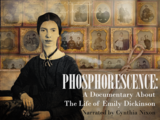
Later this year, Hurricane Films will release A Quiet Passion, a film about Emily Dickinson, which will be directed by Terence Davies and star Cynthia Nixon as the great American poet.
But that’s not where their ambitions end. If they can get your support on Kickstarter, Hurricane Films also hopes to make a documentary (narrated by Nixon) that will take everyone deeper into Dickinson’s life & times. You can learn more about the promising film-tentatively to be called Phosphorescence: A Film about the Life of Emily Dickinson-in the video above, or the text down below. Please note: If you’re inclined to support this kind of enriching project, please do so now. There are only a few short days left in the Kickstarter campaign:
The documentary will be an essential companion piece to the narrative. Narrated by Cynthia Nixon (who plays Emily in the feature film) PHOSPHORESCENCE will take us on a journey through the seasons of Emily’s life in mid 1800’s New England as we engage with her passionate relationships via her letters and poems. Emily’s deep love of horticulture and music as well as her closeness to her family and friends will form a rich tapestry - combining elements of a natural history film and a Koyaanisqatsi-esque travelogue. Together with an ensemble cast of highly recognized actors lending their voices to her many correspondences not dissimilar in tone and feel to Ken Burns’ American Civil War. And with the differing views and interpretations of her poetry by contemporary experts we aim to weave a story that will both surprise, delight and throw light on some controversial opinion from unexpected quarters.
The documentary will endeavor to reflect qualities inspired by its subject, Emily Dickinson - deft words, passionate beliefs, searing individuality and a great story well told. The film has the support of the Emily Dickinson Museum and will be completed in mid 2016.
Get more information and make a contribution over on Kickstarter.
Dan Colman is the founder/editor of Open Culture. Follow us on Facebook, Twitter, Google Plus and LinkedIn and share intelligent media with your friends. Or better yet, sign up for our daily email and get a daily dose of Open Culture in your inbox.
Related Content:
The Online Emily Dickinson Archive Makes Thousands of the Poet’s Manuscripts Freely Available
Emily Dickinson’s Handwritten Coconut Cake Recipe Hints at How Baking Figured Into Her Creative Process
The Second Known Photo of Emily Dickinson Emerges
Watch an Animated Film of Emily Dickinson’s Poem ‘I Started Early-Took My Dog’
Free Online Literature Courses
http://www.openculture.com/2015/08/kickstart-a-documentary-on-emily-dickinson-narrated-by-cynthia-nixon.html is a post from: Open Culture. Follow us on Facebook, Twitter, and Google Plus, or get our Daily Email. And don't miss our big collections of Free Online Courses, Free Online Movies, Free eBooks, Free Audio Books, Free Foreign Language Lessons, and MOOCs.
%%POST_LINK%% is a post from: Open Culture. Follow us on Facebook, Twitter, and Google Plus, or get our Daily Email. And don't miss our big collections of Free Online Courses, Free Online Movies, Free eBooks, Free Audio Books, Free Foreign Language Lessons, and MOOCs.
Open Culture
.
Blog
.
<span class='date ' tip=''><i class='icon-time'></i> Aug 26, 2015 12:49pm</span>
|
|
As many of you know, the final version of the Next Generation Science Standards were just released in early April. Over the past few weeks, our team has been working feverishly to align Steve Spangler’s hands-on science curriculum from Science in the Rockies with these newly released standards. In addition to the science standards, we know that many of you are looking for creative strategies for connecting more hands-on science with the Common Core reading, writing and math objectives. That’s why we are very excited to share these integration strategies and creative methods for making science even more fun and meaningful for your students in the coming years.
Next Generation Science Standards are a voluntary set of rigorous and internationally benchmarked standards for K-12 science education. Twenty-six states and their teams joined 41 writers and partners to compile science and engineering content that all students should learn to prepare for college and the real world.
"The Next Generation of Science Standards promise to help students understand why is it that we have to know science and help them use scientific learning to develop critical thinking skills-which may be applied throughout their lives, no matter the topic. Today, students see science as simply a list of facts and ideas that they are expected to memorize. In contrast to that approach education researchers have learned, particularly in the last 15 to 20 years, that if we cover fewer ideas, but go into more depth, students come away with a much richer understanding," said Joseph S. Krajcik, Professor of Science Education in the College of Education at Michigan State University and a member of the writing team.
Common Core State Standards are standards set across states to create a clear understanding of what students are expected to learn, and to put both parents and teachers on the same education team. These standards provide skills and knowledge students need to prepare for college and beyond.
Please join us in Denver July 9th through 11th for Steve Spangler’s Science in the Rockies.
Not familiar with Science in the Rockies? Every July, 150 teachers from around the world come together for three days with a team of instructors who are over-the-top excited about teaching science.
The workshop focuses on ways to bring wonder, discovery, and exploration back into your classroom through Halloween activities, electricity, things that glow, or even launching a potato out of PVC pipes. This is not a "sit-and-watch" teacher training… this is a "get-up-and-do" learning experience featuring over 75 engaging activities that you can take home and immediately share with your students.
You’ll leave the workshop with all the tools you need to become the best science teacher possible, including over $300 of gizmos, gadgets, hands-on learning materials for your students, hard-to-find supplies, and cool resources that accompany the Science in the Rockies curriculum. You’ll also receive a 250-page training manual that details every aspect of your learning experience, from the detailed instructions and recipes to the in-depth explanations and real-world applications.
The enthusiasm for making science fun spreads like a virus! Steve Spangler and his staff will change the way you teach science… forever.
The post Science in the Rockies Teacher Training Now Aligned to Next Gen and Common Core appeared first on Steve Spangler.
Steve Spangler
.
Blog
.
<span class='date ' tip=''><i class='icon-time'></i> Aug 26, 2015 12:48pm</span>
|
|
Steve Spangler Science has an incredible following on our three YouTube channels - The Spangler Effect, Sick Science! Experiments and Spangler Science TV. Our video team is dedicated to bring the best experiments and science programming to our viewers. They work hard every week setting off Mentos Soda Geysers in the parking lot, popsicle sticks in the studio and researching all of the science behind everything we do.
The Spangler Effect is our weekly online science show that goes in-depth on some of the most popular and new experiments from Steve Spangler.
Sick Science! features easy to do experiments and activities you can do at home or in the classroom.
Spangler Science TV offers videos and experiments from all of Steve Spangler’s television appearances.
We also enjoy watching and following all of the amazing work that is shared on YouTube education channels everyday. So much so that we thought we’d share some of our favorites for kids, parents and teachers. All offer something different and educational. This is what we watch at the Steve Spangler Labs -
Science Giants
NASA Television - NASA videos, tv and reports about space.
World Science Festival - science news, interviews and information
Scientific American - science news and lessons from Scientific American.
Nature Videos - Meet the scientists behind the research.
NOVA - science news and information.
Nat Geo Wild - National Geographic’s channel on animals and ecosystems.
Wired - Technology and gadgets from Wired.com
Smithsonian - The museums videos on everything and anything.
Science Channel - science news, information and stories from around the world.
Independent Science
Minute Physics - Science questions answered and broken down quickly and thoroughly with drawings to illustrate.
ASAP Science - Similar to Minute Physics - mini science lessons illustrated through wipe board drawings.
The Slow Mo Guys - 2 guys run video experiments and slow them down to investigate what really happens.
Smarter Every Day - science videos exploring the world and answering the question of why.
Vsauce - answers to ordinary and astounding science questions, and mind-blowing facts.
Sci Show - discussions and questions on science news today.
Education and Lifelong Learning
Soulpancake - a huge variety of videos and programming to make you open your heart and your mind, including the very popular Kid President.
Crash Course - Six courses to learn from - US History, Chemistry, World History, Biology, Literature, and Ecology.
Google in Education - News, tips, stories and more
PBS - Programming, children’s videos and more
Edutopia - for tech-savvy teachers, promoting online learning.
TED Talks - lectures, demonstrations and lessons in 18 minutes from icons and geniuses. incredible lectures, demonstrations and performances spanning every discipline imaginable.
Learning Channel - Lessons for grades 7 through 12.
Amy Poehler’s Smart Girls - Exploring cultures and the world along with advice from Amy Poehler
Teachers
Karen Mensing - 2nd grade teacher, YouTube Teacher Star, Arizona’s Gifted Teacher of the Year 2011, Teacher of the Year 2012.
WowMath - Mr. Robb’s math lectures on Algebra and Calculus.
Kid-Hosted
Doctor Mad Science - simple science experiments, hosted by 11-year-old Jordan.
Whiz Kid Science Experiments - easy experiments for kids done by a kid.
Parents
Teach Mama - Tips and advice for parents to help navigate learning everyday with your child.
Inspiration Labs - Encouraging learning through creativity and play. Activities and science experiments.
Emma Vanstone - Fun loving mum of three.
Play Learn Grow - "A Place for Moms of all ages, nations, Teachers and Children to Play, Learn and Grow together."
Want even more YouTube education channels? Check out 100 Incredibly Useful YouTube Channels for Teachers and Edudemic’s Best Video Sites for Teachers.
What have we missed? What are your favorite YouTube Channels? Leave us a comment below with a link and we will consider adding it to our list.
The post Best Science and Educational YouTube Channels appeared first on Steve Spangler.
Steve Spangler
.
Blog
.
<span class='date ' tip=''><i class='icon-time'></i> Aug 26, 2015 12:48pm</span>
|
|
More and more parents, students and lifelong learners are turning to YouTube - not for funny kitty videos or talking dogs - but for education. Teachers are sharing their lessons beyond the classroom.
Visit NBCNews.com for breaking news, world news, and news about the economy
YouTube EDU is becoming increasingly popular for online learning. Lessons from foreign languages to chemistry to algebra are available from top teachers across the world. Earlier this week, we shared our favorite education YouTube channels from the science greats to independent teachers AND students.
On their July 1, 2013 broadcast, NBC Nightly News featured some of the most popular teacher channels on YouTube. Steve Spangler’s The Spangler Effect, was one of the top learning channels featured. In The Spangler Effect former teacher Steve Spangler transforms simple do-it-at-home experiments into unforgettable experiences. It’s an in-depth look at the science behind some of today’s most popular science principles.
Here are the other teachers featured in the Nightly News story -
Rob Tarrou
What started off as a way to help students at St. Pete High School has now gone worldwide. Rob Tarrou began filming his energetic math lessons from his house with his wife behind the camera. Those videos have now been seen hundreds of thousands of times, from New York, to Hungary, to Israel.
Alex Dainis
Alex Dainis is "a biology nerd, music lover, film geek." She gets the ideas for her YouTube videos from conversations she has with her friends, such as: "Why do we get brain freezes when we eat ice cream too fast?" or "Why do we sneeze?"
Paul Anderson
Paul Anderson started creating videos for the students in his class several years ago. A friend encouraged him to start uploading them to YouTube, and he says this has brought a whole new virtual classroom of students into his life.
Keith Hughes
Public school teacher Keith Hughes, who began using video in his social studies classroom in 2002, now has more than 100 videos on YouTube covering topics in U.S. history and government, political science and world history.
Kristen Williams
Kristen Williams realized that there was an entire YouTube education community when she came across the Vlogbrothers, and got hooked.
Loretta Scott
Loretta Scott teaches Japanese from Brooklyn, N.Y.
Brothers John and Hank Green
John Green, YouTube sensation and New York Times bestselling author, has a quirky, fast-paced teaching style as he leads a Crash Course on The Fall of Rome, The Dark Ages and The Mongol Empire. His brother Hank Green explains topics in chemistry, biology, and ecology to name a few.
Rachel Smith
New Yorker Rachel Smith is a classically trained opera singer and linguist who now teaches ESL on YouTube as a career. Rachel is focused specifically on pronunciation. She has adoring students across the globe.
The post The Spangler Effect Spotlighted on NBC Nightly News as Top YouTube Education Channel appeared first on Steve Spangler.
Steve Spangler
.
Blog
.
<span class='date ' tip=''><i class='icon-time'></i> Aug 26, 2015 12:48pm</span>
|
|
Common Core - the next big thing in education reform - is getting a lot of positive and negative attention these days. Many of it isn’t accurate, like the requiring Grapes of Wrath for second graders. But what is it and what does it mean for the future of education? Here are a few misconceptions and the truth behind Common Core Standards.
(We asked our Facebook Fans what they thought about Common Core. We are sharing some of their responses throughout this post.)
Misconception
Common Core was set by the federal government and is mandated for all schools.
Truth
Common Core is a state-led effort by state leaders, state commissioners of education, state governors, the National Governors Association Center for Best Practices (NGA Center) and the Council of Chief State School Officers (CCSSO). Forty-five states have adopted the standards. Nebraska, Alaska, Texas, Minnesota and Virginia have yet to adopt them. They are being led by the states and are not mandatory.
Misconception
Common Core is mainly focused on high-stakes test scores.
Truth
Common Core Standards were designed to give every parent, teacher and student a clear idea of what are the standards of success to prepare children for college and the workforce. It is a common understanding of what students are expected to learn in every grade level. That said, Common Core-aligned tests are being developed and planned for the 2014/2015 school year, although some are already taking tests. The high-stakes tests that tie teacher salaries to test scores are the subject of a growing grassroots revolt where teachers are refusing to give them, students refusing to take them and parents keeping their children home on test days. The majority of teachers support Common Core Standards, but take issue with the testing and teaching to the test. This is the most controversial part of Common Core Standards.
Misconception
Politicians are determining what our students are learning.
Truth
Gates-funded consultants that included teachers, content and assessment experts, researchers, and standard experts wrote the standards. The drafted standards then received feedback from teachers, postsecondary educators, civil rights groups, English language learners and students with disabilities. They were also opened for public comment and received over 10,000 responses from teachers, parents, school administrators and citizens.
Misconception
English teachers will have to teach science and social studies in reading material.
Truth
English teachers will still teach both fiction and non-fiction literature. College and real world careers also demand a command of complex texts outside of literature. The Common Core Standards also include reading, research and writing in history and science. The idea is to integrate the subjects, because in the real world, science involves reading, writing, researching and more. Teachers in other subjects like science and social studies are also encouraged to build these important skills.
Misconception
All subjects are under strict guidelines from Common Core to tell teachers exactly what to teach in their classrooms.
Truth
Common Core only covers Math and English Language Arts and is not a curriculum. Many states and districts are interpreting the standards and molding them to their specific needs. Teachers will still be able to tailor their lesson plans to the needs of the students in their classrooms. The standards provide samples to help guide teachers on appropriate grade-level lessons, but teachers have the flexibility to make their own decisions on what texts or resources they use in the classroom. They do not tell teachers how to teach, they only tell them what students need to learn.
Misconception
Common Core Standards bring down all standards to the lowest common denominator. States with high standards will take a step back and we will fall even further behind international students.
Truth
There is an explicit agreement among the states that no state will lower its standards. Common Core builds upon the most advanced standards to help students achieve success in college and beyond. International benchmarking was important in setting the standards. It is supposed to raise expectations for all students vs. lowering them.
Common Core has its critics…some say we need less standardization instead of more and some do not like the way they are being implemented and adopted. It is by no way a perfect system or the end-all to education reform.
A bigger and very important debate is also being raised - the variation in funding state to state does not level the playing field. For example, Wyoming spends the most per student at $18,068 per year, while Utah spends the least at only $7,217 per student. This creates huge discrepancies in the resources available to teachers state to state. Districts also spend more or less on education based on socio-economic backgrounds and taxes. Some fear as the standards are raised, the funding will not follow, especially for lower-income schools and their students. But that’s an entirely different debate and post for another time.
Where do you fall in the Common Core debate?
Teachers - what are your experiences with Common Core so far?
Do you agree with it or disagree?
Are they easy to understand and implement?
What do you think of the standards themselves?
Sources and resources for this post -
Myths fuel attacks on ‘Common Core’ standards: Our view (USAToday.com)
Common Core foes spreading misinformation, Duncan says (Washington Post)
Don’t fear Common Core, Nielsen tells local Republicans
Report: Most IT Pros Say Common Core Will Be Good for Their District
Don’t Fear Common Core - One teacher’s opinion (LA Times)
In Push For ‘Common’ Standards, Many Parents Left Uneducated (NPR)
CoreStandards.org
The post Breaking Down Common Core, the Myths, the Truths, the Debates appeared first on Steve Spangler.
Steve Spangler
.
Blog
.
<span class='date ' tip=''><i class='icon-time'></i> Aug 26, 2015 12:47pm</span>
|
|
Love it or hate it, if you live in the 45 states that have adopted it, Common Core is coming to a classroom near you by 2014. Common Core State Standards are a state-led effort by state governors and leaders. They were written by educators and standards experts. They give teachers, parents and students a clear understanding of what they need to know at each grade level. It isn’t a curriculum but a guideline for educators. While teachers must incorporate the lessons and standards into their lesson plans, they have the flexibility to decide how they will use them.
The Difference Between Good Teachers and Great Teachers
Good teachers hold a teaching degree and want to play a part in the education of children. They love their students and look forward to coming to work. They’ve laminated their lesson plans and reuse them every year with some fun activities. Good teachers show up right before the bell and leave right after and usually don’t attend conferences. They teach their students how to solve problems and memorize facts for the test.
Great teachers engage their students and encourage them to discover the answers on their own instead of force feeding the facts. They also have activities, but they tie them to real world connections and demonstrate the passion behind the why. They are always looking for the new ways to present ideas and excite their students. Great teachers know how to turn the lessons into unforgettable learning experiences that get home to the dinner table.
They instill a lifetime of memories in their students that always start with "I’ll never forget the day that…"
Common Core Subjects
Common Core does not address science and only contains standards for Reading, Writing and Math. Next Generation Science Standards are coming down the pike, but with such an emphasis on high-stakes testing on reading and math, even the great teachers run out of time to teach science.
At Steve Spangler Science, our busy season is usually April and May when testing is over and teachers are ready to teach science. Science is not an extra curricular activity. Science is found everywhere - in sports, in cooking, in the products we use, in technology and advancements and so much more. If we are not spending the time to educate our future scientists, our future is dim.
Today’s teachers must squeeze a lot from tiny budgets, to birthday cupcakes to science social studies and music. Funding shouldn’t go to a program, it should be put into our students. How do you fit it all into a six-hour day and still produce well-rounded, fully educated children ready to enter college and eventually the job market? Squeeze it.
The secret to teaching is integration.
Pack a lot of information into a tiny space, a tiny budget and a tiny timeframe. Stop thinking of the school subjects as separate pieces…everything touches. Nothing is separate.
Sports coaches use math and analyzing skills, financial planners must read, and software developers must write. Scientists read, write and calculate in their labs. Just because you feel weak in a subject, doesn’t mean you can avoid it throughout your life and career.
Squeeze Science into the classroom.
Lisa is a 2nd grade teacher in Denver, Colorado who knows how to integrate. She shared her five top tricks to squeeze science into her classroom using Steve Spangler Science materials.
1. Lisa did away with sharing treats on birthdays. Instead, her students get to be the lab assistant for the day and help her perform and science demonstration. The kids don’t miss the sugar and get really excited to be a mad scientist for a day.
2. Lisa also integrates a lot of science into story time. She reads The Rainbow Fish by Marcus Pfister. After the class works on retelling the story while also determining the moral in the book. The class then uses UV Beads in place of the colorful Rainbow Fish scales to make their own bracelets. The beads can also be used for counting and sorting activities.
3. Axle Annie by Robin Pulver is another read aloud book she uses to teach vocabulary and plays-on-words. The students also compare and contrast how the two main characters respond to the main events in the story and determine the lesson. Then Lisa makes it snow indoors with Insta-Snow. The kids love it when she makes snow in their hands, a memorable experience.
4. About five days before Halloween, Lisa takes out her Mad Scientist Growing Body Parts Jar and fills it with water. The students take turns measuring the brain, ear, hand and nose to compare how much they’ve grown each day. She also fills a jar with salty water and asks the kids to make predictions about what will happen.
5. Lisa gives each student a Baby Soda Bottle Test Tube. They must conduct an inquiry-based activity to explore and hypothesize about the true use of the test tube. After they learn the real use, she then asks them to find a new and innovative use that solves a real world problem. She extends the activity by having the students create an advertisement or persuasive writing piece to sell the product.
Don’t forget that integration is key. Everything is connected. Include a quick science activity with your read aloud. Or make math connections within science experiments. Inspire your students and create unforgettable learning experiences in your classroom.
What are your tips for integrating more science, music, art, social studies or any of the forgotten subjects into your lesson plans?
The post How to Tackle Common Core and Squeeze Science into the Classroom appeared first on Steve Spangler.
Steve Spangler
.
Blog
.
<span class='date ' tip=''><i class='icon-time'></i> Aug 26, 2015 12:47pm</span>
|
|
By Blog Editor Susan Wells
As the back to school season starts, what types of feelings are stirred up? For me, it was always a mixture of excitement and joy over new clothes and school supplies and a knot in my stomach knowing I was headed into a new class with a new teacher. There were so many unknowns and stresses placed in that first day of school.
While some kids are ready and eager to return to school, many face a plethora of fears and aren’t ready to say goodbye to the freedom of summer.
Our Steve Spangler Science First Days of School Kit not only contains activities to turn students into friends, but also engages the kids and gets them excited about learning.
If you are a teacher, you know how difficult it is to enthrall a new classroom of students who have spent long lazy days dulling their minds in the sunshine. How do you grab their minds, shake some oohs, ahhs and laughter out of them, and become the coolest teacher in the school?
The First Days of School kit is packed with several Steve Spangler experiments and science toys.
If it makes it to the dinner table, you win!
Windbag Wonders Team Building Activity
Give each student a Windbag and ask them to blow it up as fast as they can. How many breaths will it take to inflate the 8-foot-long bag? The kids will blow and blow and blow and swear that it’s impossible. It may seem that way, until you share a little secret called Bernoulli’s Principle. Inflate the bag in front of them with one breath. Now divide the students into groups of three to five and have them inflate the Windbags. Ask the students to create a free standing structure. The highest structure wins the challenge. As a chorus of laughter and chatter erupts, the students will be so engaged, they will forget all about missing mom or dad. They may even meet a new friend or two.
Do You Trust Me?
Before the students arrive in the classroom, set up by adding 1/2 a teaspoon of Water Gel in a styrofoam cup. Fill a pitcher of water and set it aside. When the students come into the classroom, choose a volunteer. Have the volunteer hold the cup above eye level while you fill it. Don’t let them see inside. The Water Gel is a special powder that is similar to the polymer found in baby diapers. When you pour the water in the cup, the powder will absorb it.
Talk about the idea of trust and say "If you give me your trust this year, I promise to teach you things that will change your life forever!"
Now hold the cup over the student’s head and poke pencils through the cup. Have the student promise not to runaway, and warn, "you may get wet, but I really need my pencils back."
Pull the pencils out of the cup. The water will appear to have vanished and the room will fill with shouts of "how did you DO that??"
Before you give yourself away, have the students make guesses as to what happened to the water. Get them asking questions and making predictions. Now that’s the science of leadership!
Rainbow Friendship Bead Bracelets
Give each student five or so Color Changing UV Beads and a pipe cleaner. Ask them to string the white beads and make a bracelet with the pipe cleaner around their wrist. The beads will remain white until exposed to ultra-violet light, like sunlight. The secret is a pigment in the beads that responds to UV light waves. Remove them from sunlight, and they return to their white color. You may want to "forget" to tell them that the beads have this special power and instead send them home or out to recess with the bracelets to discover on their own. Fuel their curiosity by asking the students how and why they change color.
Then use the beads for one or more of these great metaphors and life lessons -
B.E.A.D.S = Becoming Enthusiastic and Dedicated Students
The beads are a celebration of diversity - diversity is often hidden in the brightest source of light.
The beads are a metaphor for a person’s true colors. True colors are a person’s inner strengths, willingness to help out, a giving heart, compassion for others or being truthful. A person’s true colors may not be visible at first, but character traits may come out in life situations.
The First Days of School Kit comes complete with an Activity Guide packed with science experiments, connections to life lessons and scientific principles. The kit is aimed at making those first days of school energetic and unforgettable by using teamwork, sharing, goal setting, reasoning and creative thinking.
30 Windbags
Approximately 250 Energy Beads (Assorted Colors)
100g jar of Water Gel™
50g jar of Jelly Marbles
3 styrofoam cups
30 pipe cleaners
First Days of School Activity Guide
The post Easing the Fears and Anxieties Through Team Building During the First Days of School appeared first on Steve Spangler.
Steve Spangler
.
Blog
.
<span class='date ' tip=''><i class='icon-time'></i> Aug 26, 2015 12:47pm</span>
|