Blogs
|
T-Shirts For Progressive Teachers: Wear Your Pedagogy
by TeachThought Staff
Being the critics of the unchecked Capitalism, greed, consumerism, and bad work that can ruin lives and manufacture grotesque social inequity that we are, the idea of selling any kind of widget at all seemed at best, clumsy, and at worst, wrong-headed.
But we launched our first campaign a few months ago and it went relatively wel; But more critically, we heard personally from several teachers how proud they were to wear the shirts-one explained that they were able to "wear their pedagogy," and their beliefs about teaching and learning. And that was cool.
Further, we realize that we live in a world where anyone can create anything. This is how people make a living, and how businesses survive. One projects funds another. A successful t-shirt campaign today can become a curriculum project tomorrow.
So we’re going to push past our initial ‘alpha’ design into more of a ‘beta’ of what TeachThought Apparel might begin to look like. We’re essentially trying out approaches to see what you want to wear. Our guiding questions?
How can a t-shirt promote progressive pedagogy?’
How can we use t-shirts to help teachers express their beliefs about education?
How can apparel make pedagogy cool?
The above is our ‘beta’ version of this idea. As we collect more data (i.e., see what you buy and what you don’t), we’ll try some other ideas we have as well. Have an idea? Let us know. If we use the idea, we’ll send you the shirt for free.
You can find the shirts over at teespring. We’ll be introducing each one individually here as well. If they do well, we’ll do something a bit more ambitious. If you hate them, we’ll keep moving.
T-Shirts For Progressive Teachers: Wear Your Pedagogy
The post T-Shirts For Progressive Teachers: Wear Your Pedagogy appeared first on TeachThought.
TeachThought Blog
.
Blog
.
<span class='date ' tip=''><i class='icon-time'></i> Dec 04, 2015 04:26am</span>
|
|
10 Lessons For The Digital Teacher
by TeachThought Staff
If you’re a teacher, and you’re in any way digital (and you presumably are if you’re reading this), there are some strategies you might consider to lubricate the interaction between the two.
And that’s where Lessons Learned from Lecturing from Laura Pasquini, Ph.D., comes in. In this fairly short presentation, Dr. Pasquini (whose blog you can find here) offers 10 lessons for the digital teacher. The strength in these tips is in the practical and flexible value each idea represents.
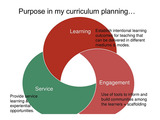
Time management, metrics for success, find purpose (indicated in the graphic above), growing a PLN (here are 20 ways to help grow your professional learning network), reflection, and mentoring are valuable for any educator in any space at any grade level, or content area. They also apply equally to new and experienced teachers, K-12 or higher ed, and so on.
Give them a look below, and give Dr. Pasquini a follow on twitter.
10 Lessons For The Digital Teacher
Manage your time
Be organized in your teaching
Measure success
Be purposeful
Find a mentor
Always be learning
Reflect on your teaching
Grow a personal learning network
Create teaching files
Be open
Lessons Learned from Lecturing from Laura Pasquini, Ph.D.
The post 10 Lessons For The Digital Teacher appeared first on TeachThought.
TeachThought Blog
.
Blog
.
<span class='date ' tip=''><i class='icon-time'></i> Dec 04, 2015 04:25am</span>
|
|
TeachThought Apparel: Teacher Life
by TeachThought Staff
Started from the bottom. Now? Paperwork. Standards. The cloud. Flipped classrooms. Mobile learning. Data. But you represent. You stay about it. It’s the TEACHER LIFE. Pedagogical agents unite. The struggle is real; Keep it hood.
You can find the back story here.
You can find the TEACHER LIFE t-shirt here.
The post TeachThought Apparel: ‘TEACHER LIFE’ appeared first on TeachThought.
TeachThought Blog
.
Blog
.
<span class='date ' tip=''><i class='icon-time'></i> Dec 04, 2015 04:25am</span>
|
|
A Brilliant Resource For Students Who Think They Hate Writing
By Ken Haynes, BoomWriter Co-founder and Chief Operating Officer
Ed note: The title is ours, not Ken’s. We used BoomWriter with students here at TeachThought and loved it, and reached out to Ken Hayes to write a guest post explaining how it works. For hesitant writers, or budding Wendell Berrys, it’s a great resource.
As teachers and parents bemoan - and studies affirm - more technology has not necessarily translated into improved writing skills for most students.
In fact, the negative effects of excess screen time and shorter attention spans due to social media are corroborated by recent studies that show only a quarter of American high school students are proficient in writing assessments, and one out of five have "below basic" writing skills.
But teachers must stick to the curriculum, and with all that they have on their plates to address the ever-evolving standards of learning, there is very little extra time in the school day to devote to improving students’ writing. As a former teacher, assistant principal and writing program director, I know firsthand that helping students improve their writing skills requires a solution that’s engaging, easy to use and academically effective.
That’s why I left the classroom to help develop a solution: BoomWriter, a free, interactive, web-based platform for group writing that engages students in writing projects for all subject areas to help them improve their vocabulary and develop their nonfiction writing and storytelling skills.
Teachers are realizing the benefits of BoomWriter in more than 25,000 classrooms in 60 countries, along with the poetic justice of using technology to undo some of the negative effects of technology on their students.
What Is BoomWriter? Improving Students’ Writing With Interactive Technology
Developed by teachers for teachers, BoomWriter is easy to use for students and teachers alike. Teachers appreciate BoomWriter’s flexibility, as it easily integrates into their existing curriculum. In a survey of Chicago and Boston-area teachers using BoomWriter, 95 percent agreed that BoomWriter was "very easy" to set-up and use with success.
BoomWriter is ideal for students in grades 2-12, is Common Core aligned, and works seamlessly for a variety of subject areas, including History, Social Studies, Science, English Language Arts, and more. A closed digital environment, BoomWriter’s tools are kidSAFE-certified, and entirely web-based. They are easily accessible on any computer, tablet, or mobile device, providing a curriculum solution for schools’ varying access to technology.
After a teacher signs up for free, here’s how BoomWriter works.
Teachers provide a prompt, story start, problem to solve, or single directive for all their students to read and respond to.
Each student writes and submits his/her entry for review and feedback from the teacher.
Once all entries are approved, all students then assess up to four of their classmates’ entries at a time, and anonymously cast their vote for the best version.
This process of reading, writing and voting continues until the project or story is complete!
This approach to "collaborative creativity" effectively engages every student in the writing process. All students also have their own personal Boomer Avatar that they can customize with Boomer Bucks earned from participation. This bit of gamification is another key to its success. In fact, teachers have discovered that the process of completing writing projects collaboratively challenges strong students to produce their best work, and reluctant writers to exceed their normal output levels as they become more invested and strive to present their best work to their peers.
Writing Tools to Fit Your Classroom’s Needs
BoomWriter offers three group-writing tools, all of which use the same collaborative writing and voting process. Teachers simply select the tool that best suits their classroom and curriculum needs.
WordWriter - Provides teachers with an interactive, yet simple, application for assessing and enhancing students’ understanding of key terms, figures, phrases, and dates. WordWriter also features Trending Words, which allows teachers to select from top trending vocabulary used by other BoomWriter teachers with their students and displays the most popular words being taught for that month, in real-time, on a grade-by-grade basis.
StoryWriter - Conducts writing activities as a class that result in a published book! Students develop their understanding of key literary elements and storytelling devices, and when finished, the class’s story becomes a real, published book with every student’s name listed as an author. This tool is ideal for ELA, creative writing and literature studies.
ProjectWriter - Fosters students’ understanding of key concepts and terms within a subject by dissecting whole units of study into smaller sections. ProjectWriter enables all types of nonfiction writing-expository, argument/opinion, scientific-and is ideal for use in History/Social Studies, Science or ELA classrooms.
In addition to these tools, BoomWriter is a Google for Education Partner, specializing in Chrome products. Through its Chrome Web Store App, BoomWriter can be added to any Chromebook, providing students with fast and easy single sign-on to their BoomWriter account.
To learn more about BoomWriter, please visit www.boomwriter.com, and follow BoomWriter on Facebook at https://www.facebook.com/BoomWriter.
A Brilliant Resource For Students Who Think They Hate Writing
The post A Brilliant Resource For Students Who Think They Hate Writing appeared first on TeachThought.
TeachThought Blog
.
Blog
.
<span class='date ' tip=''><i class='icon-time'></i> Dec 04, 2015 04:25am</span>
|
|
"A brain may seek to produce an output, but a mind wants to play."
by Terry Heick
I. Education is both industrial and fundamental; it is the mutual product of both engineering and affection.
II. This makes it a human process, full of incredible complexity that mirrors that complexity inside each of us. This, in turn, requires a response that is equally complex and decidedly clever.
III. In our first century of an increasingly global movement to provide public education, we have turned to our own rationality, and established systems.
IV. These systems parallel similar transitions from small farms to commercial agriculture, small shops into mega-stores, and inter-personal storytelling to seeking our "stories" from Hollywood and social media, all increasingly drive by technology.
V. Evaluated with a rational mind, this is neither good nor bad but only change-or even "progress."
Education’s progression has led us to our current system. This system is designed to publish common goals that drive our common actions and performance.
Within this system there are (at least) 4 subsystems:
Standards (for performance)
Policies (to govern professional behavior)
Content (to clarify what’s to be studied)
Infrastructure (to physically realize these abstractions)
Energizing the above subsystems are four catalysts:
Strategies (to design and plan for learning experiences)
Assessment (to measure the effectiveness of those experiences, and thus the planning and design)
Data (to quantify progress and deficiency to inform necessary revisions)
Collaboration (to both share and homogenize the entire effort)
These four subsystems and catalysts provides us with an outcomes-based, data-driven, top-down system of education that depends on the observation, measurement, and refinement of the human mind.
In the case of most schools, this translates to hundreds and even thousands of minds, each with their own stories, interests, insecurities, and needs. Thousands of spectacular complexities.
The word "mind" suggests something different than the current subsystems and catalysts provide. A brain may seek an input to produce an output, but a mind is curious and wants to play.
Performance on an assessment can be measured, but understanding cannot, and both fail to see the bigger picture: How can we help students see for themselves what’s worth understanding? Our curious solution so far has been to simply hand it to them endlessly until they leave for "jobs."
An outcomes-based system of education seeks only to produce outcomes. Its self-correcting systems, which glean their corrections from those strategies, data, and collaboration above, test and probe—with perfect rationality—what works and what doesn’t so that we can do less of the latter and more of the former until the latter is all gone.
It is plain to see, however, that this is not what happens. The outcomes we seek to cause are first industrial—acquisition of catalogued knowledge parsed into content areas.
Presumably, the hope is that once students have mastered this content, this kind of proficiency will lead to citizenship, affection, good work, happiness, and after a lifetime of humanizing it all, wisdom.
These ideas—citizenship, affection, good work, happiness, and wisdom-are purely irrational—abstractions that counter-balance systems-thinking and scientific approaches.
This means that we have designed a system of education that both marginalizes and patronizes the abstractions it hopes to produce. And its inherent rational subsystems—especially assessment and data—are impotent to respond to that which is irrational.
This is neither clever, nor our best thinking.
This cleaving of the rational and the irrational—of art and science—disrupts our collective complexity as human beings. It produces teachers that feel like pieces and students that feel like products. Curriculum is treated like machinery, and local communities like storefronts to peddle the end result to businesses.
The result is a system of education that seems to chase itself endless in circles. This suggests one of two responses:
The identification of a different set of outcomes (i.e., goals of education), with subsystems (e.g., standards and curriculum) and catalysts (e.g., gamification, as it is) that can communicate with and respond to one another seamlessly.
A humbler scale of teaching and learning that places people-and their human needs and affections-at the center.
We’ll know we’ve succeeded when learning spaces are filled with curious minds poking at concepts and possibilities. These minds will want to, above all else, play. A mind and soul at ease will sing.
"A brain may seek an input to produce an output, but a mind is curious and wants to play."; image attribution flickr user mattcantonese
The post "A brain may seek to produce an output, but a mind wants to play." appeared first on TeachThought.
TeachThought Blog
.
Blog
.
<span class='date ' tip=''><i class='icon-time'></i> Dec 04, 2015 04:24am</span>
|
|
10 Principles Of Proficiency-Based Learning
by Chris Sturgis
10 Principles Of Proficiency-Based Learning" by Chris Sturgis was originally published on CompetencyWorks.
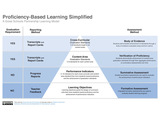
Great Schools Partnership continues to produce great resources to support states and districts converting to competency education. They have drawn from what districts are doing in New England and have created Proficiency-based Learning Simplified resources. They are a good resource for states, districts and schools to start the conversation about the new policies and practices that need to be put in place.
We know that we are on a journey, and its a creative one, so don’t be surprised if you find that you want to take these ideas further or that you come up with other ways to address the policy and practice elements. No matter what, these resources will save you time in getting started and structuring the conversations needed to build clarity and consensus.
Here are GSP’s 10 principles of proficiency-based learning.
In practice, proficiency-based learning can take a wide variety of forms from state to state or school to school—there is no universal approach. To help schools establish a philosophical and pedagogical foundation for their work, the Great Schools Partnership created the following "Ten Principles of Proficiency-Based Learning," which describe the common features found in the most effective proficiency-based systems.
10 Principles Of Proficiency-Based Learning
All learning expectations are clearly and consistently communicated to students and families, including long-term expectations (such as graduation requirements and graduation standards), short-term expectations (such as the learning objectives for a specific lesson), and general expectations (such as the performance levels used in the school’s grading and reporting system).
Student achievement is evaluated against common learning standards and performance expectations that are consistently applied to all students, regardless of whether they are enrolled in traditional courses, pursuing alternative learning pathways or receiving academic support.
All forms of assessment are standards-based and criterion-referenced, and success is defined by the achievement of expected standards, not relative measures of performance or student-to-student comparisons.
Formative assessments evaluate learning progress during the instructional process and are not graded; formative-assessment information is used to inform instructional adjustments, practices, and support.
Summative assessments evaluate learning achievement and are graded; summative-assessment scores record a student’s level of proficiency at a specific point in time.
Grades are used to communicate learning progress and achievement to students and families; grades are not used as forms of punishment or control.
Academic progress and achievement is monitored and reported separately from work habits, character traits, and behaviors such as attendance and class participation.
Students are given multiple opportunities to retake assessments or improve their work when they fail to meet expected standards.
Students can demonstrate learning progress and achievement in multiple ways through differentiated assessments, personalized-learning options, or alternative learning pathways.
Students are given opportunities to make important decisions about their learning, which includes contributing to the design of learning experiences and personalized learning pathways.
10 Principles of Proficiency-Based Learning
The post 10 Principles Of Proficiency-Based Learning appeared first on TeachThought.
TeachThought Blog
.
Blog
.
<span class='date ' tip=''><i class='icon-time'></i> Dec 04, 2015 04:24am</span>
|
|
Letting Curiosity Take Center Stage: #ReflectiveTeacher October 2015
by Beth Leidolf
"The important thing is not to stop questioning. Curiosity has its own reason for existing."
― Albert Einstein
We all have a curious side, each of us with an inner voice that calls us to investigate, probe, poke around, and examine things from all angles in order to make sense of it. Discovery, inquiry, wonder and play were all central to our lives as children.
Why then as teachers does curiosity and play fall away from our instruction and the learning taking place in the lessons and activities? Your students are curious as well, and love to discover and investigate the world around themselves through play/interaction with materials and manipulatives. Play in the classroom gives students opportunities to deepen and expand their thinking skills, improve their social/emotional skills as well as collaborative and problem solving abilities.
This month #reflectiveteacher blogs about the following prompt:
Play and student self-direction place students in the center of their own learning. How do you create and foster an environment in your classroom or school
where curiosity and inquiry take center stage?
How To Participate In #ReflectiveTeacher
Write at least one (or a series of) post(s) on the given monthly prompt
Share it on twitter with the hashtag #ReflectiveTeacher, and tag @teachthought in the tweet as well
Interact with other posts you see with the #ReflectiveTeacher hashtag-RT, fav, ask questions, and otherwise support and interact with other reflective teachers!
Letting Curiosity Take Center Stage: #ReflectiveTeacher October 2015
The post Letting Curiosity Take Center Stage: #ReflectiveTeacher October 2015 appeared first on TeachThought.
TeachThought Blog
.
Blog
.
<span class='date ' tip=''><i class='icon-time'></i> Dec 04, 2015 04:23am</span>
|
|
How To Use Infographics As Multimodal Learning Tools
by Sara McGuire, venngage.com
People don’t all learn the same way. Teachers know this, and that’s why multimodal learning methods are an essential part of any teacher’s toolkit.
Responding to the changing linguistic landscape caused by digital media and communication, many teachers are leveraging the multimodal learning opportunities offered by mixed media in the classroom.
Infographics combine both text and image, making them tools able to engage both verbal and visual learning styles. The combination of verbal and visual learning styles has been shown to ultimately increase students’ retention of basic skills by 21% and higher order skills by 20%. Having students research, conceptualize and create infographics in groups also addresses verbal and participatory approaches.
With that in mind, here are seven ways to use infographics as multimodal learning tools in the classroom
7 Ways To Use Infographics As Multimodal Learning Tools
Have students conduct multimodal research
Have students research a topic. Encourage them to draw from a variety of multimedia sources including videos, articles, and statistical reports, as well as compiling their own data. What conclusions can they draw from their data?
Have students evaluate ideal layouts
Provide students with some examples of different infographic templates and ask them which would work best for their research. To present data, what would work best—a statistical layout a comparison layout, a survey layout? How about information on a historical event—a timeline layout or an informational layout?
Have students make a rough draft
Get them thinking about the functionality of their design—what path do they want the reader’s eyes to follow? How will they relate images and text together? Have them exchange their designs with a classmate for critique—is their layout easy to understand? Is it visually interesting?
Get students thinking about design
Introduce them to themes and color schemes. How will the form of their infographic reflect the content? Have them choose a colour scheme that reflects the tone of the information they are presenting. What kinds of graphs and charts work best? How can they make their infographic fun and interesting?
Encourage students to use interactive elements
Show students how they can integrate and embed polls, videos, links, and hover charts into their infographics. This will show them how to make their presentation fun and interesting, and will point to further research questions.
Have students analyze their process
What were challenges they encountered while creating their infographics? What hidden information was revealed through the process? How did they decide what information to include and what to leave out?
Have students critically analyze their infographics
What information is the infographic showing them? What makes their infographic interesting? What works on their infographic? What ideas could they use from other students? How would those changes impact the success of their own design? It’s important to promote multimodal thinking, rather than judging the infographic as a whole.
Colors, shapes, text, font, white space, depth, layers, images, diagramming, and more all comprise the "modes" of an infographic. Model that kind of analysis for students, and you can help them begin to think analytically about how they express their ideas.
How To Use Infographics As Multimodal Learning Tools
The post How To Use Infographics As Multimodal Learning Tools appeared first on TeachThought.
TeachThought Blog
.
Blog
.
<span class='date ' tip=''><i class='icon-time'></i> Dec 04, 2015 04:23am</span>
|
|
A New Definition For Equity In Education
by Terry Heick
In a profession increasingly full of angst and positioning and corrective policy, there are few ideas as easy to get behind as equity.
Equal. Equality. Equity. Equilibrium. Equate. These are all fine ideas—each tidy and whole, implying their own kind of justice while connotating the precision of mathematics. Level. Same. Twin. Each word has its own nuance, but one characteristic they share in common is access—a level, shared area with open pathways that are equidistant to mutually agreed-upon currencies.
When discussing equity, there are so many convenient handles-race, gender, language, poverty, access to technology, but there may be a larger view that we’re missing when we do so.
The Scale of Equity
There isn’t a more global issue—equity being perhaps the global issue of our time. United Nation statistics published last year in The The Economist put it plainly. While progress is being made in sub-Saharan Africa in primary education, gender inequality is in fact widening among older children. The ratio of girls enrolled in primary school rose from 85 to 93 per 100 boys between 1999 and 2010, whereas it fell from 83 to 82 and from 67 to 63 at the secondary and tertiary levels. And elsewhere, in Chad and the Central African Republic, there is a flat-rate of less than 70 girls for every 100 boys."
This is a starkly different conversation about equity than the one we might have in the United States, the UK, Canada, or Australia. We have the luxury of becoming choosier, and harsher on ourselves, as progress is made, i.e., let’s first make sure there are free, quality schools everywhere, and that children can all read and write, and then at some point down the line we can concern ourselves with iPads vs Androids, or the broadband access in our poorest communities.
It’s easy to miss the scale of this as an "issue" because unlike assessment, curriculum, teacher pay, class sizes, educational technology, or any other persistently evergreen edu-choke point, equity never stops affecting. It’s both the center and periphery of everything because we’re always who we are, where we are.
The Cultural Effect
As a species, we express ourselves through difference. What makes "culture" interesting is how it both recognizes the individual while simultaneously allowing them to disappear into the whole again. In culture there is both identity and anonymity. There is a constant self->group transaction that is based on both affection (inward expression) and image (outward expression). This transaction is then repeated across cultures, with completely different functions. Differences within and across cultures are differences nonetheless, but the individual can think while groups simply gather.
So this is a brutally narrow take on how people gather and cohort and manifest their vision of what it means to be human, but the point remains: As educators, we suffer that same reductionism when we see the masses the same way Nielsen does television ratings. Students aren’t demographics, and it’s murky at best to see how treating them that way has improved their lot, or our shared progress.
While squinting and trying to narrow gaps, it’s too easy to lose the scale and product of our work. The segmenting of Mackenzie and Andrew into a group, and that group into a subgroup, and their understanding into data, and the knowledge we hope they come away with into standards we can teach with—this all becomes a tone—a posture dictates the terms of teaching and learning. Equity in the classroom is different than in the job market.
A subcorollary is that we all share equity and inequity, both in possession and effect. In "The Hidden Wound," Wendell Berry writes, "It may be the most significant irony in our history that racism, by dividing the two races, has made them not separate but in a fundamental way inseparable, not independent but dependent on each other, incomplete without each other, each needing desperately to understand and make use of the experience of the other…. we are one body, and the division between us is the disease of one body, not of two." This is both abstract and practical. We share both living space and social membership.
Somehow, though, public education, more so than any other industry or profession, is expected to aggregate these inherent disparities while transcending them. Our task?
Create a curriculum that provides a common language for knowledge without homogenizing the nuance of that knowledge
Design learning models that are inherently inclusive regardless of access to technology
Establish authentic functions for family members and communities who may speak a completely different language
As individuals, we work to separate ourselves—as children, often based on image, and as adults, often based on income, where we choose to live, what we drive, the smartphone we carry, and what we choose to do "for a living." But each of these expressions of who we are-gender, native language, race, sexuality, socioeconomic level, and so many others-are also opportunities for disparity all work to undermine the function of education.
It’s easy to see equity in education as a matter of fairness, access, and inclusion, but that’s only the case if what’s being fairly accessed is a system of teaching and learning that is able to meet the needs of an increasingly global population—that means fluid, responsive, dynamic, neutral, and alive. For an industry that struggles to get every student reading on grade level, this may be a bit much. My gut reaction, then, is that this can only occur through the affectionate expression of the local—this student in this home in this community, with the school functioning as an extraordinary support system.
The equity is at the student level rather than the demographic level because demographics only exist in paperwork. For every student, there is commonness and there is difference; there is what’s shared (i.e., student needing knowledge), and there is distinction (e.g., poor, rural, white, black, male, female). This never stops. We can revise our schools, curriculum, pedagogy, and technology until it is inclusive, fair, and accessible to every student, but that’s been an ongoing effort that may represent a kind of basement for our goals.
But why not consider something more ambitious? New thinking about the terms and definitions of gender emphasize both the characteristics and the fluidity of any culture. If we insist on standardizing content, maybe we can avoid standardizing education. How many different answers are there to, "Why learn?" Fantastic! Let’s iterate ourselves until we can honor that.
The work before us, then, may not be to level an academic playing field for which there is no straight, but rather to create new terms for why we learn, how, and where—and then change the expectation for what we do with what we know.
Simply guaranteeing access and inclusion into a body of content-based is no longer sufficient if our goals stretch beyond academic. A modern definition for equity in education may be less about equal, fair, or even, and more about personalization-a body of knowledge, habits, and networks that help each student realize their own perfectly unique potential.
As for a definition for equity in education? How about, "eye-level access to curriculum, education models, and learning spaces that depend entirely on the native interests, knowledge demands, and human affections of learners individually."
Or more briefly, "a fully-realized system of learning that starts and ends with the humanity of each student."
A New Definition For Equity In Education; adapted image attribution flickr user helpingting and skotit;
The post A New Definition For Equity In Education appeared first on TeachThought.
TeachThought Blog
.
Blog
.
<span class='date ' tip=''><i class='icon-time'></i> Dec 04, 2015 04:22am</span>
|
|
The Bare Minimum Of Learning Technology
by TeachThought Staff
What is the bare minimum of learning technology integration in a classroom?
Does it depend on nation, grade level, or content area? Socioeconomic status? Culture? Prevailing local technology use?
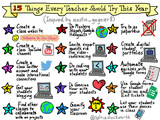
Though many teachers remain against reckless #edtech integration, the conversation is clearly shifting from should technology play a central role in the learning process to how should technology be used to promote learning? Inspired by a list she saw from @austin_gagnier8, @sylviaduckworth set out to itemize 15 things every teacher should try this year. Working her graphics magic, the above image is the result.
But while the original title of the image (and the collection of ideas it illustrate) works well, looking at it more closely, it was dominated by technology use-less about planning and learning models and teaching strategies and grouping activities or unit planning templates, and more about technology.
In that light, we felt like it represented another kind of idea-a bare minimum of technology integration in an average classroom. What might be considered a kind of basic standard for education technology in 2016? In theory, it’s not necessary to have any degree of education technology at all, though even that depends on your content area’s academic standards. (Here is exactly what the Common Core standards say about technology, for example.) And though numbers 5, 9, and 10 don’t absolutely require learning technology, they’d be all the better with its (strategic) integration.
But in 2016, it’s becoming more and more difficult to (rationally) avoid its application.
15 Examples Of What Could Be Considered The Bare Minimum Of Learning Technology
Create a class website
Create a class YouTube Channel
Create a class twitter account and make international accounts
Get your students blogging
Find other classes to collaborate with on projects
Do mystery Skypes/Google Hangouts
Invite expert guests via live video conferencing
Code with your students
Do Genius Hour with your students
Gamify your classroom
Strive for a paperless classroom (here are 26 iPad apps for a paperless classroom)
Create digital portfolios
Automate quizzes with Google Forms
Use Google Forms for student check-in and exit slips
Let students use their device in class
15 Examples Of What Could Be Considered The Bare Minimum Of Learning Technology; 15 Things Every Teacher Should Try This Year; image attribution flickr user sylviaduckworth
The post The Bare Minimum Of Technology Integration appeared first on TeachThought.
TeachThought Blog
.
Blog
.
<span class='date ' tip=''><i class='icon-time'></i> Dec 04, 2015 04:22am</span>
|