Blogs
|
Be A Creator, Not An Inheritor
by Dale Schlundt, M.A.
"There is no research stating it is harmful, but I wouldn’t."
These are the words of my wife’s OBGYN when I asked him about spraying insect poison and its potential effects on my unborn son at the time. A very scholarly way of saying, "I don’t know".
And you know what, there is nothing wrong with that reply. It reaffirmed two points for me. The first being I’ll throw out the poison and well, bugs, "Welcome". The second is it reaffirms a simple truth that we all need to be reminded of at times, there is a purpose for everyone in this society. There is an opportunity to differentiate ourselves in our profession by fulfilling a gap. A need to find the missing piece, if you will.
Everyone at some point in their lives feels that their work is insignificant. The feeling that what I am doing is not unique, there will be no lasting effect. I have received that response from editors on articles I have written. I recall one that sent me a few responses from the editorial team, "great points, but nothing new here". It still hurts. Of course, there have been those more impressed then not. Nevertheless, what I strive for is to create something needed, both in my writings and my profession. Perhaps not even something new, only a new way of viewing the old.
I pose the question to you, what is the difference between the individuals discussing immigration reform seeking their party’s presidential nomination? They are all arguing for the same relative concept with small variations. Legalized immigration as opposed to a lack of control over the flow of those crossing the border. However, what does every political candidate tell you they can do? "I can do it better." You know, perhaps so. Why not? Why else are we listening if they are all the same?
That being said, why would we believe an individual we’ve never met and discount our own abilities to create something the world needs? This is due to the fact that we have been taught to be inheritors. To inherit information, rules, culture, and so on, without adding to them. If you think about any time while you were in school, regardless of what level, how many times did your educators ask for your opinion as opposed to giving their own? When you left your institution of education, did your employer focus on making an asset of what makes you unique or did they promote conformity in all regards? We are not taught how and when to be pragmatic. When to challenge the status quo.
The Jamestown Rediscovery Project is the perfect example of the opportunities for which I am suggesting we should all strive to find. 2012 was another intriguing year, the project found the remains of a young girl who had been cannibalized. Not a common practice in our first successful English colony, this incident is something we already knew of through primary sources.
Though let’s keep in mind, anyone can write anything, just take a look at Twitter. Yet, now we have corroborated that evidence so what we considered as semi-truth or potential fact, has now a much higher probability of being so. Our understanding of 400 year old history changing because there are those who do not simply accept the status quo, but felt they can both learn from as well as add to the knowledge of our world.
Every profession needs these minds. No doubt there will be a M.D. that one days tells a patient, "There is now evidence suggesting certain bug poisons are harmful to fetuses, so do not spray." The patient thinks, "I am so glad I asked and thankful there are pioneers who push prenatal health forward."
Do not only inherit your world, create it.
Dale Schlundt holds a Master’s Degree in Adult Education with a concentration in American History from the University of Texas at San Antonio. He is currently an Adjunct Professor for Palo Alto College and Northwest Vista College. Dale has two new books available, Tracking Life’s Lessons: Through Experiences, History, and a Little Interpretation and Education Decoded (A Collection of My Writings) now available on Amazon.
Be A Creator, Not An Inheritor; adapted image attribution flickr user sparkfunelectronics
The post Be A Creator, Not An Inheritor appeared first on TeachThought.
TeachThought Blog
.
Blog
.
<span class='date ' tip=''><i class='icon-time'></i> Dec 04, 2015 04:31am</span>
|
|
Dear David: Here Are 70 Practical Things Every Teacher Should Know
by Terry Heick
Recently I found out that my best friend is in school to become a teacher.
David (I call him Gravy. Or Big Bear. Long story.) kept this one quiet-had no idea until he was already in school and taking classes. To be fair, we’re not 17 anymore. I’ve known him for 30 years, and it’s easier to hang out at 15 than 40. Life slides right on by.
This is a second (or third) career for him having spent most of his life doing craftsmanship of various kinds. He told me some of the things they’re studying in his teacher prep program, and he asked me if I thought it was valuable. Certainly having a solid base in theory makes sense, but the interviews he was doing with educators-"Why did you become a teacher?"-seemed only vaguely useful to respond to the demands of his newly-chosen craft.
In response, I created a list of random things teachers have to know in order to survive. I’ve written lists like this before, as well as lessons on teacher survival. I’ve written about How To Burn Yourself Out As A Teacher. Some of these ideas overlap, but the big idea of this list is to show the wide range of things teachers have to know that are actually practical. Useful. A daily matter of survival. The hammers and nails and screwdrivers and saws and ladders of teaching.
So, to the list. I didn’t get too Terry Heick with it. Kept the talk about wisdom and students-as-human-beings, and thought, and learning models, and compelling technology use, and play, and self-direction, and inquiry to a minimum. The rule here is day to day practicality.
There are 70. Why 70? I don’t know. I had 40 and they kept coming. I stopped at 68, but then had two more. So it’s 70. That may be too many. That in and of itself may reduce the practicality of this list. Maybe numbering things instead of waxing on poetic will help there. I may add more. Add yours to the comments below.
Hope this helps, Gravy.
70 Practical Things Every Teacher Should Know
How to manage their time with military-like precision
The difference between complex, rigorous, and just plain hard
How to deliver instruction to students from a wide range of religious, socioeconomic, and ethnic backgrounds
How to authenticate and contextualize academic content for students
How to use class walls effectively
How to deliver lessons and activities from units that are based on a scope and sequence or pacing guide
The purpose of assessment
How to fake it or pretend (that you gave the probe, watched the video, read the email, etc.)
How to promote ideal behaviors in students
How to get out of the students’ way
That students come to school for different reasons
How to collect money (and how to respond when a student doesn’t have any)
How to self-direct their own professional development
How to best spend the 1-2 planning periods a week they’ll actually get
Where your mailbox is, and when to send attendance and to whom
How to differentiate otherwise standardized content based on readiness or interest
How to work with/on multiple committees, teams, and related groups
How to bypass district internet filters, if only so you know how the students will do it
That they’ll likely have to sponsor and support one or more extra-curricular activities
How to master and maintain software for class rosters, grading, parent communication, etc.
Where teaching has been, where it is, and where it’s going
How to wash their hands
When they’re working too hard
That every student has something really, really special in them
The difference between teaching, covering, and learning
When to push, and when to pull back
That your time with a child is just a blink of an eye in the span of their life
What it means to understand something
How to see students, not a class
That students love the water fountain so very much
When during the day to make copies, or how to go paperless
How to fix a broken copier
Which meetings you can skip, and which you can’t
How to use technology better than the students
When to say no
What to do when you suspect a child is being abused at home, or bullied in school or online
Who to go to for what
How not to get caught sitting at your desk by the administrators
How to organize and optimize digital and physical learning spaces
How to organize physical and digital documents
That you can’t save them all, but that can’t stop you from trying
How to build a compelling classroom library (and this goes for any content area or grade level)
How to balance content knowledge with knowledge of learning models, instructional strategies, and student needs and backgrounds
How to really, truly evaluate assessment data
How to capture a child’s imagination
When a student is about to puke
How to help parents and families understand and support
How to motivate students like it’s your job, because it kind of is
How important it is to not to get on the librarian’s bad side
How to have a short memory for student mistakes
How to give literacy probes and other "non-content"-based assessment
How to work with resource teachers to meet IEP and 504 needs
How to hide in their room so they can actually get something done
What they can say, in person and online, that will get them fired
How to meet IEP and 504 needs without a resource teacher
How to use the best parts of their personality to craft a teacher voice and personality that works
How to demonstrate leadership within team and department activities and initiatives
How to keep students safe while making sure each student is heard and related to
To be aware of and respond to all student medical conditions
How to do the dog-and-pony show (in case they want to)
Dozens of team-building exercises
How to entertain students
The best ways to get a busy, loud, disruptive, or otherwise inattentive classroom’s attention
How to begin, end, and dismiss class
How to eat fast
How to coordinate and execute a field trip
How to get the class to school activities (gym, assemblies, library, cafeteria, etc.) efficiently
How to teach every second of every day with the awareness that a single word, gesture, or missed connection can stay with a student forever
How to be accountable to students, colleagues, administrators, media, communities and other sources of what is at best, well-intentioned support and, and is in worst cases, pressure
How to reflect on and refine one’s view of one’s self as a growing educator
Dear David: Here Are 70 Practical Things Every Teacher Should Know
The post 70 Practical Things Every Teacher Should Know appeared first on TeachThought.
TeachThought Blog
.
Blog
.
<span class='date ' tip=''><i class='icon-time'></i> Dec 04, 2015 04:31am</span>
|
|
It’s Not About The Thinking
by Terry Heick
It’s not the thinking behind an idea that should bother us, but rather the effect of the idea.
#edtech. Content-based academic standards. PLCs. Use of data. Mandates to be research-based in our behavior. Mobile learning. Differentiation. Social media in the classroom.
None of these ideas are good or bad in and of themselves. They’re just ideas. They’re value neutral, inert in isolation. We only charge them when we internalize them-think of them using our unique schema, imagine them in circumstances familiar to us, or otherwise contextualize them comfortably to avoid cognitive dissonance.
By internalizing them, we smooth their rough edges for easier consumption. Who wants to feel like they have an incomplete understanding of something? At this point, though, the idea has lost its original shape. It’s misshapen-the same difference between a real dog and one a clown twists up in brown and white balloons.
Moving from a concept or idea, to something we understand in our own terms is no small shift. And comes with a loss. By internalizing an idea, we also attach emotions to them-hopeful optimism, head-shaking skepticism. Or indifference.
For example, I love the idea of mobile learning, so I attach positive feelings to it that can lead me to cognitive distortions downstream, where I oversimplify its function, or catastrophize our continued misunderstanding of its potential in education. I champion it, but the "it" (mobile learning, in this case) is merely an idea. The it + context is different. This is chemistry.
Think of it as pattern: Idea->Integration->Effect.
The idea alone is useful only as a matter of vision or artistry. As an academic or intellectual exercise. As a matter of playful dialogue or good old-fashioned bench racing.
The integration is a matter of design and engineering (designer and engineer being two minds of a teacher).
Ideas, integrations, and effects all matter, of course, but it’s all also recursive: One affects the other, the idea impacting the integration, the integration affecting the effect, the effect shining new light on the idea. Maybe then, instead of a linear Idea-->Integration->Effect, we might think instead of something more like a triangle:
Idea
Integration Effect
Changing Our Thinking
And instead of "Is this a good idea?", we might ask other questions:
What is "it"? What are its parts?
What’s it doing?
How is it working?
What is this costing us?
What are its effects-and not narrow effects in pursuit of a single goal, but rather macro effects on a thing in its native place?
In education, these might be redressed as:
What has standardizing content into a narrow range of content areas done to learning?
How has a gamified system of education worked for children as they seek to become whole human beings capable of good work, compassion for the people around them, and nuanced digital and physical citizenship?
How has education retreating into a tangle of policy and jargon impacted the capacity of families and communities to be served by their own learning?
How do teachers respond when called to be "research-based"? Does that encourage them to pour over peer-reviewed journals of emerging pedagogies to only bring in "proven" methodology into their classroom? Or does it send them to Google to search for "research-based instructional strategies," where they find the same 6-8 examples that are tossed limp and lifeless into their next lesson plan because that’s what they were told to?
Let’s broaden our view. Let’s pretend for a moment that we will eventually be able to design a system of teaching and learning where every single student will be able to master every single academic standard their local government has set out for them. What is the effect of this system? Of this mastery? What are we assuming about the standards and their mastery? That they’ll create a nation of critical thinkers that do amazing things?
And this system-what are we assuming about it and its effects? What does it "do" to children? When they graduate from this hypothetical machine, will they have a strong sense of self-knowledge, wisdom, place, and familial legacy? Of critical thinking, work, and love? If not, is that okay?
Is that even the intended effect we’re looking for? If not, what is? We should know, right?
Ideas As Effects
A flipped classroom is good, yes? 1:1? Maker education? The 3D printer in the library? Yes, as ideas. So what are they doing? What are their effects? The idea is always neutral.
A "good idea" is marketing based on emotion and appearance. How is it been implemented, and more critically, what are its effects? Technology. Workshop-based PD. Snark on twitter. That grouping strategy you were planning on using tomorrow.
And be careful of the metrics or evidence you’re looking for. That new questioning strategy may have 65% more engagement from student, but may have stymied the students from wrestling with the question on their own. Same with teacher self-directed PD, 3-minute hallway switches, or labeling a school as "good" or "bad." Saying something is a "good idea" can only be accepted if we move directly into a conversation about integration, and then on effect.
"What are its effects?" is a complex question that deserves our thinking and most careful genius. But one even more worthy of our collective affection might be, "What is it doing to our children as they seek to become more human-to grow intellectually, creatively, and in wisdom and love?"
We might then crane our necks further downstream than we are accustomed to, so that we might see what we-and they-are moving towards together.
It’s Not About The Thinking; adapted image attribution flickr user tulanepublicrelations
The post Change The Conversation-It’s Not About The Thinking appeared first on TeachThought.
TeachThought Blog
.
Blog
.
<span class='date ' tip=''><i class='icon-time'></i> Dec 04, 2015 04:29am</span>
|
|
The Basics Of Reflective Teaching: A Slo-Blog Approach
by Beth Leidolf
As the school year kicks off, many classes, teachers and students begin with the basics, those building blocks that provide a firm foundation upon which more valuable learning and growing will take place. With that in mind, the #reflectiveteacher community gets back to basics in this slo-blogging activity called built around the ABCs of being a #reflectiveteacher.
Previously, our #reflectiveteacher challenge was a daily prompt. (You can find one example here.) While we’re going to begin a monthly series around this topic to help support teachers in reflecting on their craft, this activity is different in that’s on-going and isn’t time-bound.
8 Questions Around The Basics Of Reflective Teaching
So we’re going to blog on the basics of being a #reflectiveteacher. Here are some questions to get you reflecting.
What is reflection?
What sorts of questions can guide my reflection?
What does reflection look like in teaching?
What does it look like when reflection is missing from my teaching?
How can I make more for time for reflection?
How can I make my reflection more seamless and authentic, as opposed to just "another thing to do"?
When have I been especially reflection in the past?
What does a #reflectiveteacher look like?
Other Notes
Suggestion: Tie each post with a letter of the alphabet. That’s 26 creative and personalized posts throughout the year, a great reflective activity! For example, I created my first blog post here. For me, A is for Adventure!
Post your blog on Twitter and other social media you may use. Tag your post with the #reflectiveteacher hashtag so join the conversation!
This will be a "Slo-Blogging Activity." No rush-blog at your own pace!
We hope that you enjoy this Slo-Blogging activity here at #reflectiveteacher. Have fun, keep developing your reflective practice, find new blogs to read and enjoy connecting with new people!
As always, thanks for sharing and for making this Slo- Blogging Challenge a success for everyone! Any questions, contact or DM Beth Leidolf at @bleidolf67 on Twitter
The Basics Of Reflective Teaching: A Slo-Blog Approach
The post The Basics Of Reflective Teaching: A Slo-Blog Approach appeared first on TeachThought.
TeachThought Blog
.
Blog
.
<span class='date ' tip=''><i class='icon-time'></i> Dec 04, 2015 04:29am</span>
|
|
Survey: Social Media Is Failing To Find Traction In The Classroom
by TeachThought Staff
From a press release
Social media is a main form of communication and connection used by today’s students.
Despite the expansion of EdTech tools as classroom resources, educators have not warmed to the idea of integrating social platforms as quickly as other types of classroom technology. A University of Phoenix® College of Education survey conducted online by Harris Poll in April among 1,002 U.S. K-12 teachers finds only 13 percent of today’s K-12 teachers have integrated social media into classroom learning, with an overwhelming majority (87 percent) reporting they have not embraced social platforms. Additionally, more teachers are citing a reluctance to incorporate social media into classroom learning than in 2013 (62 percent vs. 55 percent).
Although there is reluctance, opportunities exist for teachers to harness social media’s benefits to help students understand how to use digital platforms to promote learning. Less than half of K-12 educators seem to be aware of the opportunities, with 44 percent stating social media can enhance a student’s educational experience.
"We are living in a rapidly evolving world of digital and social media, and many students are totally immersed and well-versed in these platforms," said Kathy Cook, dean of educational technology for University of Phoenix College of Education and former K-12 educator. "For teachers to stay current, keep students engaged and promote learning, it is important for teachers to acknowledge the influence of social media and understand how to use it to the benefit of their students."
Why the digital disconnect?
A lack of tools and training top the list of educator concerns. Almost all (95 percent) of K-12 teachers say they have had some level of training related to integrating technology in the classroom; however, more than half (62 percent) have had minimal or no training in the area of interacting with students and parents through social media. Nearly half (48 percent) of K-12 teachers express the desire to learn more about integrating technology into the classroom.
K-12 teachers raise many concerns, with four-in-five (82 percent) worrying about conflicts that can occur from using social media with their students and/or parents, and more than half (59 percent) stating use of personal tech devices outside the classroom makes it more difficult for students to pay attention in a group setting in the classroom. Twenty percent have also felt intimidated by students’ knowledge/use of technology devices.
"Social media is here to stay, so it is critical to invest in our educators through expanded training," said Cook. According to Cook, training extends beyond providing educators tools to integrate social media into the classroom. In addition to being prepared to use social media as a learning tool, teachers also need to be able to teach students to be responsible with their online behavior.
"Despite challenges, tremendous opportunities exist for teachers to play a leadership role in students’ digital lives, helping them learn how to use social media and understand its impact both in and outside the classroom," added Cook. "It is essential to train teachers in digital citizenship so that they can educate students about preserving their online integrity. One misstep can have ramifications for years to come, including among future employers."
Tips for teachers in a digital world
As the 2015-16 school year starts, Cook suggests the following additional tips for K-12 teachers to help them integrate social media into their classrooms to supplement school- or district-sponsored resources.
Create student social media guidelines. If your school or district has guidelines for social media use, make sure you and your students understand them completely and are following the guidelines. If your school or district does not currently have guidelines for social media use, consider developing some.
Try "closed" social media sites. Edmodo, TodaysMeet and other sites allow safe and secure social media experiences in a smaller school environment. You can also create private blogs or use sites such as Kidblogs or Edublogs, which limit access and comment abilities.
Connect with other classrooms around the world. Projects such as Global Read Aloud andSkype in the Classroom allow you to connect students in your classroom with other students worldwide.
Connect with experts worldwide. Social media tools can help you bring a variety of experts into your classroom so students can learn directly from people in the field they are studying. You can search and connect with experts on Twitter, Skype and other social media networks. Many authors and content experts may be willing to conduct a live tweet session with your students during which they can ask questions and get immediate responses.
Involve your class in a social service project. Explore projects online that your students can get involved in to help make the world a better place. Choose2Matter is one global movement that may spark imagination about how social media can be used to help others.
Learn more about social media use in the classroom. Join Twitter or use other social media tools to connect with other teachers and learn about their creative uses of social media. You can also take a class to hone your own social media skills. University of Phoenix offers a two-credit Continuing Teacher Education course (TECH/508) titled Social Media in the Classroom.
To learn more about University of Phoenix College of Education degree programs, visit www.phoenix.edu/education. For information about University of Phoenix programs, including on-time completion rates, the median debt incurred by students who completed the program and other important information, please visit phoenix.edu/programs/gainful-employment.
Survey Methodology
This survey was conducted online within the United States by Harris Poll on behalf of University of Phoenix College of Education between April 14 and April 27, 2015, among 1,002 U.S. teachers aged 18 and older who work full time in education teaching grades K-12. In addition, oversamples of teachers from Arizona (n=101), California (n=207), Florida (n=103), and Colorado (n=100) were also included. A similar survey was conducted between October 7 and 21, 2013, among 1,005 U.S. teachers. This online survey is not based on a probability sample; therefore, no estimate of theoretical sampling error can be calculated. For complete survey methodology, including weighting variables, please contact Heather McLaughlin at heather.mclaughlin@apollo.edu.
About University of Phoenix College of Education
University of Phoenix College of Education has been educating teachers and school administrators for more than 30 years. The College of Education provides bachelor’s and master’s degree programs for individuals who want to become teachers or current educators and administrators seeking advanced degrees to strengthen their professional knowledge. With education programs available throughout most of the U.S., the College of Education has a distinct grasp of the national education picture and priorities for teacher preparation. Faculty members on average bring more than 17 years of professional experience to the classroom. For more information, visit www.phoenix.edu/education.
About University of Phoenix
University of Phoenix is constantly innovating to help working adults move efficiently from education to careers in a rapidly changing world. Flexible schedules, relevant and engaging courses, and interactive learning can help students more effectively pursue career and personal aspirations while balancing their busy lives. As a subsidiary of Apollo Education Group, Inc. (Nasdaq: APOL), University of Phoenix serves a diverse student population, offering associate, bachelor’s, master’s and doctoral degree programs from campuses and learning centers across the U.S. as well as online throughout the world. For more information, visit www.phoenix.edu.
The post Survey: Social Media Is Failing To Find Traction In The Classroom appeared first on TeachThought.
TeachThought Blog
.
Blog
.
<span class='date ' tip=''><i class='icon-time'></i> Dec 04, 2015 04:28am</span>
|
|
Twitter With Meaning? 5 Authentic Roles For Twitter In Your School
by TeachThought Staff
We’ve theorized before that learning through social networks is the future. Twitter in the classroom? This is also an idea we’ve covered in the past.
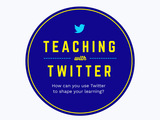
But what about a simple process for schools to use begin using twitter meaningfully? With that question in mind, and in conjunction with USC Rossier School of Education, we developed the following graphic. We kept it basic with 5 pathways: Resources, Student Learning, PLNs, Emerging Trends, And PD.
5 Authentic Roles For Twitter In Your School
Find resources
Develop Student Thinking
Help Teachers Engage With A Global Professional Learning Network (See also 20 Ways To Improve Your PLN)
Monitor Emerging Trends
Find Professional Development
Follow accounts from education’s thought leaders. The graphic has some good ideas. See also Jackie Gerstein, MindShift, Terry Heick, Audrey Watters, and more.
Use twitter’s search bar-search for your what you’re interested in learning more about. This isn’t as staright-forward as a Google search, for example, but you’ll get a better sense of the kinds of information people are sharing.
Know your hashtags. They’re a valuable tool to use to follow and participate in conversations on certain topics and themed twitter chats.
Engage with your colleagues by retweeting important or useful resources, starring interesting tweets, asking follow-up questions, and sharing resources on or from other social channels.
Made possible by TeachThought and USC Rossier’s online Master of Arts in Teaching degree; Twitter With Meaning? 5 Authentic Roles For Twitter In Your School
The post Twitter With Meaning? 5 Authentic Roles For Twitter In Your School appeared first on TeachThought.
TeachThought Blog
.
Blog
.
<span class='date ' tip=''><i class='icon-time'></i> Dec 04, 2015 04:28am</span>
|
|
The Power Of I Don’t Know
by Terry Heick
At TeachThought, nothing interests us more than students, as human beings. What they know, might know, should know, and do with what they know.
A driving strategy that serves students-whether pursuing self-knowledge or academic content-is questioning. Questioning is useful as an assessment strategy, catalyst for inquiry, or "getting unstuck" tool. It can drive entire unit of instruction as an essential question. In other words, questions transcend content, floating somewhere between the students and their context.
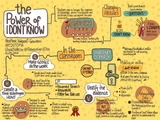
Questions are more important than the answers they seem designed to elicit. The answer is residual-requires the student to package their content to please the question-maker, which moves the center of gravity from the student’s belly to the educator’s marking pen. In that light, I was interested when I found the visual above.
It’s okay to say "I don’t know." Teach your students how to develop questions (because) it helps conquer their own confusion.
Rebeca Zuniga was inspired to create the above visual by the wonderful Heather Wolpert-Gawron (from the equally wonderful edutopia, and also her own site, tweenteacher). The whole graphic is wonderful, but it’s that I don’t know that really resonated with me. Traditionally, this phrase is seen as a hole rather than a hill. I don’t know means I’m missing information that I’m supposed to have.
The implication of a question is that the student should have (some kind of answer). See that-what’s happening there? The teacher’s whispering, "I know the answer. You should, too. Answer my question and you’ll have the answer." And? Whoopty do.
The value (of an answer) was granted by the teacher. It’s teacher-currency. There is value in answers as knowledge, but there is lasting power in inquiry because it’s a student-centered and self-sustaining process. In part, this is because returns the center of gravity back to the student, where it belongs. It short-circuits that dog-and-pony show of classroom teaching, and makes it something shaped like the student’s mind.
I don’t know, then, isn’t just a starting point for finding an answer, or a ready-made template for some academic essential question. Rather, it returns the learning to the student, and restores the scale of understanding to a universe of knowledge.
Teacher: What form of government is most likely to encourage innovation?
Student: A democracy?
Teacher: Why?
Student: Because there is a lot of innovation in the United States, and we’re a democracy?
Teacher: Is that innovation occurring because of or in lieu of that form of government?
Student: Because of.
Teacher: Why do you think that?
Student: I don’t know.
Here, there’s a shift. It’s no longer a cat-and-mouse game. Now there’s emotion involved. The gravity is with the student. The burden is in her lap, but since there is no clear path forward, the scale of things-the context-moves from beyond an interaction between a teacher and student to everything else but the interaction between the teacher and the student. The answer isn’t here. It’s out there. Out there is where I need to be.
The learning has left the classroom; now it can grow.
The Power Of I Don’t Know; image attribution flickr user Rebecca Zuniga
The post The Power Of I Don’t Know appeared first on TeachThought.
TeachThought Blog
.
Blog
.
<span class='date ' tip=''><i class='icon-time'></i> Dec 04, 2015 04:28am</span>
|
|
One Teacher In Ten: My Experience As An LGBT Educator
by Brett Bigham
When I wrote my essay for One Teacher in Ten in the New Millennium I was at a crossroads in my life and career.
I was six months into being Oregon’s Teacher of the Year and I was under order from my supervisor not to say I was gay in public. I had been informed that I was no longer allowed to write or speak unless the district had approved my words in advance. To write my essay for One Teacher in Ten in the New Millennium was insubordination. To email it in to Kevin Jennings, the editor, was a firing offense according to my district.
I submitted my essay anyway. As one of the first openly gay Teachers of the Year in the entire country, I was a voice for many gay teachers. I was an example that you can be out and still rise to the top of the profession. And as an American, I felt I had the right to speak my own words without a superintendent deciding what my words would be.
In September last year I filed a grievance with my Union. My district retaliated quickly. I was told to cancel all appearances as Teacher of the Year and that I now must submit a request to my supervisor listing who I was going to be permitted to speak to. The first three events I was told I could not attend were meeting with the local high school Gay Student Alliance (GSA), I was told I could not introduce the GSA Choir at a concert in the city square (on a Sunday) and I was told I could not meet with the Oregon Safe Schools Community Coalition, the group trying to end the bullying of LGBT youth in schools. I was told meeting with "those" groups "were of no value to the district."
This was heartbreaking to me. When I was 15 my best friend killed himself after telling me he was no longer into girls. You cannot go back in time and undo a suicide, but I knew by being openly gay and Teacher of the Year would show those gay youth, teetering on the edge of ending their lives, that they had a future ahead of them. My district said those kids had "no value."
I filed state and federal complaints against my district and was fired.
But something amazing came from that. The London Daily Mail had a full page about my situation and that article was picked up all over the world. The Nigeria Times and papers in Ghana and Singapore were running pictures of my husband and me in the Rose Festival Parade and at our wedding. When was the last time the news in Nigeria carried a story showing pictures of gay people being married or celebrated in a parade? (The Daily Mail spelled my name "Bingham" if you are trying to Google it).
And I realized that every time my district did something worse more people were hearing the story. When the district was forced to hire me back it made news again, and their announcement they were firing me again only made it grow. By the time the state investigation showed discrimination and retaliation, my story had been featured on CNN, the Washington Post, and USA Today. My Facebook was inundated with messages from all over the world, many from countries where they are frightened to be gay.
The essay I wrote for One Teacher in Ten in the New Millennium was written last May. I was Oregon Teacher of the Year. I had been married for a week. I had just met the President of the United States and then Secretary Clinton. Within months I would be threatened, bullied, harassed, fired, unfired, and publicly threatened with punishment unless I took back my complaints against the district. I refuse to be silenced. When you are a spokesperson for a group of people, silence feels like betrayal.
That is why I wrote my essay. And that is why I feel it is worth reading.
Ed note: You can check the book out on Amazon at the following link. If you buy the book from there, we’ll get an indefensibly small percentage of the sale, but what can you do? These servers don’t pay for themselves.
One Teacher In Ten: My Experience As An LGBT Educator
The post One Teacher In Ten: My Experience As An LGBT Educator appeared first on TeachThought.
TeachThought Blog
.
Blog
.
<span class='date ' tip=''><i class='icon-time'></i> Dec 04, 2015 04:27am</span>
|
|
Education App Spotlight: Contraption Maker
by TeachThought Staff
Features
Use Rube Goldberg machines to solve puzzles and create your own inventions
JavaScript mod capabilities
Teacher Dashboard to create student accounts and track progress
Curriculum available, including lessons for NGSS and Common Core standards
Other Details
Grade level range: Grade 3-10
Content areas: science & experimentation, physics, engineering, design, programming
The app is free for schools, after school programs and other educational initativies to use on institution-owned devices. (Read more.)
This game is a revival of The Incredible Machine, a popular educational game made in the 1990s. The original game designer and programmer are working on this project.
The Big Idea
Contraption Maker provides a set of puzzles that are reminiscent of Rube Goldberg cartoons. Children use hundreds of parts like hamster motors, balls, and conveyor belts to fix broken contraptions. Moving down our knowledge funnel, kids can create their own contraptions and share them with the world. It’s a digital sandbox that promotes creativity by experimenting with logical cause and effect consequences.
A key component of excelling in a STEM career is learning via experimentation, which often means testing an idea, failing, reviewing the idea, and trying a new idea. Traditional teaching methods don’t often have the latitude to encourage failure. However, experimentation and failure are key components in Contraption Maker. You learn by "failing" and testing new theories, and it is meant to be fun, not discouraging.
Related Apps
Minecraft
Casey’s Contraptions
Other building games
3 Ideas How It Might Be Used For Learning
Learn about physics in Contraption Maker, then test out your theory in the real world. Based on Next Generation Science Standards. (Read more.)
Design complex machines based on a design objective. Use your knowledge of simple machines and physics to create complex interactions. (Read more.)
Blend language arts and science by having one student build a machine, write up a description of how it works, then have a partner build a machine based on your description. Compare the two contraptions and discuss the similarities and differences. (Read more.)
System Requirements
Operating system, file size, etc.
Windows PC minimum specifications:
OS: Windows Vista
Processor: 1.7Ghz or Higher
Memory: 2 GB RAM
Graphics: 512MB VRAM, Pixel Shader 2.0 or higher
DirectX: Version 9.0c
Hard Drive: 300 MB available space
Mac minimum specifications:
OS: OS/X 10.7
Processor: 1.7Ghz or Higher
Memory: 2 GB RAM
Graphics: 512MB VRAM, Pixel Shader 2.0 or higher
Hard Drive: 300 MB available space
*The following app submission was prepared by Deborah Fike, Director of Educational Outreach for Spotkin. Spotkin is the developer behind Contraption Maker; Contraption Maker
The post Education App Spotlight: Contraption Maker appeared first on TeachThought.
TeachThought Blog
.
Blog
.
<span class='date ' tip=''><i class='icon-time'></i> Dec 04, 2015 04:27am</span>
|
|
A Project-Based Learning Spectrum: 25 Questions To Guide Your PBL Planning
by Terry Heick
I’ve been talking with a friend recently about project-based learning, which is leading to a TeachThought Project-Based Learning framework hopefully sometime next week. (Or whenever I finally get this TeachThought podcast off the ground-maybe Tuesday? Ish?)
In the meantime-and in pursuit-I’ve been thinking of the kinds of questions I consider when planning a project-or planning a unit when students plan a project on their own. There’s a lot to consider here-so much so that 12 isn’t even close to enough, but that’s because I tends to over-complicate things (my 14 year-old daughter tells me). I"ll stick to a "primary" set for the first dozen, and then add a secondary set you can take a gander at below.
I’ve more or less organized them into a kind of spectrum, from the simplest questions to consider, to the most complex. I focused more on creating compelling and student-centered projects, rather than creating a list of questions to use as a checklist for pure academic planning. For related reading, you might check out the difference between doing projects and project-based learning, as well as our project-based learning cheat sheet that provides some examples to jumpstart your thinking.
A Project-Based Learning Spectrum: 25 Questions To Guide Your PBL Planning
SIMPLE
What role is the learner assuming? Designer? Engineer? Brother? Artist? Cultural Critic? Naturalist?
What is their purpose? What are they doing, and what should the project itself "do"?
Who is their audience? Who is the audience of the project’s design, impact, or effect?
How can different learning spaces (e.g., classroom, home, digital) work together? To promote meaningful interaction? An authentic audience? Personalized "workflow" to meet each student’s needs?
What kind of support does each student need individually? Who can provide it? How much structure is enough for that student? (Scoring Guide, Teacher-Provided Tools, Rubric, etc.)
What’s the "need to know"? Is there one? Where did it come from? Is it authentic? Teacher-based, school-based, curriculum-based, or student-based? What are the consequences of each?
Which academic standards are the focus of the unit? How will data from formative assessment (that target these standards) help teachers and students respond within the project?
Who will provide learning feedback? When? How? And feedback for what-the quality of the project? Progress towards mastery of academic standards? Will it be "graded" with letters, numbers, as a matter of standards-mastery, or some other way? Which way best supports student understanding?
How should the product be paced to maintain student momentum? What "check-in with the teacher" markers make sense?
How can assessment, iteration, and metacognition improve student understanding?
How can the student bring themselves (affections, experience, voice, choice, talent, curiosity) to the project? Also, what is the teacher’s role in the process? Is it the same for every student?
What sort of quality criteria make sense? How will we know if the project "works"? Was effective? Performed? Who designs this quality criteria?
What kind of project would the student never forget?
What’s most critical to the success of the project? Creativity? Critical thinking? Organization? Grit? All may apply, but how might the project be designed to focus on the factors you or the student value most?
How can students work within their local community to solve authentic problems, or celebrate meaningful opportunities?
Is technology use distracting, useful, or critical to the success of the project?
Does it make sense for the project to also be Inquiry-focused? Problem-based?
How can students build on their unique schema and background knowledge to produce something special?
What role might iteration play in the project?
Is the project research-based? Product-based? Service-based?
Can mindfulness be embedded into the project to help students see their own thinking, identify barriers and opportunities, and respond in a self-directed way?
What filtered (e.g., a teacher-selected book, an encyclopedia) and unfiltered information sources (e.g., a Google search, a social media stream) might they use cooperatively?
What learning taxonomies or cognitive actions might guide students to think best? We covered some of these in a recent post, many of which are shown in the graphic below.
What scale makes the most sense for the student to work best?
Is the project designed to build on student strengths (rather than trying to "correct deficiencies")?
COMPLEX
A Project-Based Learning Spectrum: 25 Questions To Guide Your PBL Planning; image attribution wikimedia commons (the spectrum to the right)
The post A Project-Based Learning Spectrum: 25 Questions To Guide Your PBL Planning appeared first on TeachThought.
TeachThought Blog
.
Blog
.
<span class='date ' tip=''><i class='icon-time'></i> Dec 04, 2015 04:26am</span>
|