Blogs
|
It’s Time For Personalized Learning In Education
by Michael Horn, Executive Director of Education at Innosight Institute and co-author of Disrupting Class
In March, Tom Loveless, a fellow at the Brookings Institution, took an outdated swipe at the logic behind moving toward a student-centered learning system. He in essence suggested that because the curriculum wars have been decided more or less empirically, that people bent on disrupting the classroom and the factory-model education system were doing so under faulty assumptions about how students learn.
In his piece, he attacked the logic of teaching around multiple intelligences and pointed to some of the research that shows that tailoring learning opportunities to common assumptions around visual, auditory, and other such supposed learning styles are not good ways of teaching different students.
A problem with Loveless’s argument is that many of my fellow "disruptors" and I who think that it is important to disrupt the education system think this way not under the mindset that it will—or should—help with multiple intelligences or learning styles, but instead because of a simpler and more rigorously tested notion that is far less ideological than Loveless assumes.
Today’s factory-model education system, which was built to standardize the way we teach, falls short in educating successfully each child for the simple reason that just because two children are the same age, it does not mean they learn at the same pace or should follow the same pathway. Each child has different learning needs at different times.
Although academics, including cognitive scientists, neuroscientists, and education researchers, have waged fierce debates about what these different needs are—some talk about multiple intelligences and learning styles whereas others point to research that undermines these notions—what no one disputes is that each student learns at a different pace. Some students learn quickly. Others learn more slowly. And each student’s pace tends to vary based on the subject or even concept one is learning. The reason for these differences, in short, is twofold.
First, everyone has a different aptitude—or what cognitive scientists refer to as "working memory" capacity, meaning the ability to absorb and work actively with a given amount of information from a variety of sources, including visual and auditory. Second, everyone has different levels of background knowledge—or what cognitive scientists refer to as "long-term memory." What this means is that people bring different experiences or prior knowledge into any learning experience, which impacts how they will learn a concept. If a teacher assumes that everyone in a class is familiar with an example from history that is only ancillary to the point of a particular lesson, for example, but uses that example to illustrate a particular point, then the students who are unfamiliar with the example or who have misconceptions about that example, may just miss the point of the lesson or develop misconceptions about the point of the lesson itself. This isn’t under dispute.
There is also widespread agreement that, as a result, targeting learning just above a student’s level such that it is not too easy or hard is critical to helping students be successful (Daniel Willingham, who Loveless cites in his discussion debunking the learning-style theory, writes extensively about this in his book Why Don’t Students Like School—in the first chapter). If Loveless had kept up with our writing (not that I blame him for not) or read Disrupting Class with a bit more of a nuanced eye, he would have seen that we didn’t pin our argument on multiple intelligences or learning styles per se—we were quite up front that we are not experts in the learning sciences by any means. Instead, we asserted broadly that students had varying learning needs and used learning styles as a device to illustrate the point. Mea culpa on using that example, as I’ve written more extensively here, but at the same time, it doesn’t refute the fundamental point of our argument that customization—or personalization—is needed if we are to help every child reach his or her fullest potential.
Understanding this helps us understand the logic of personalizing learning and moving away from the current system that mandates the amount of time students spend in class, but does not expect each child to master learning. Because our education system is built to standardize, not personalize, transforming it through disruptive innovation is critical.
This seems to play into one of Loveless’s core worries though, as he seems to have a love for some of the assumptions embedded in the factory model of education. As he wrote, "Moreover, individualized instructional programs, whether delivered exclusively online or through ‘blended’ regimes, are antithetical to the goal that all students learn a common body of knowledge and skills at approximately the same time." The challenge, of course, with his argument is that today students do not in fact learn or master a common body of knowledge and skills at approximately the same time; they are merely taught them—which is far different from truly learning them.
Why is Loveless concerned about students learning the same thing at the same time? First, because learning some things in common, he says, are important. I agree. Learning some things in common—of course not all things, but a strong foundation—is important. Again, although I am no expert, the research suggests that a strong foundation of knowledge is critical for future learning and meaningful participation in and contribution to society (but it’s also not sufficient, which is why developing deeper skills and dispositions are so important—a false either-or from which we need to move away). This isn’t antithetical to blended or student-centered learning; if Loveless thinks it is, I recommend he visit one of the KIPP LA elementary schools. What he sees might surprise.
Second, Loveless assumes that because students may learn these things at different times in a blended-learning world, that it will exacerbate the achievement gap—a legitimate worry. We need more research here, but the evidence seems to suggest that the achievement gap is exacerbated in the factory-model system when a student does not master a concept, develops holes in her learning, and the teacher just moves on to the next concept the next day. Instead, what we’ve seen in Chugach, Alaska and elsewhere, is that when we move to a competency-based learning system concerned with rigor—in which students move on to new concepts only upon mastery (and there exists the notion of a minimum pace so students who are falling behind get more attention and gaps don’t grow too big)—that students who would typically be left behind and see their gaps grow bigger and bigger, instead experience a sea change when misconceptions are corrected, they master foundational knowledge and skills, and they can then accelerate much faster than anyone would have expected.
Different students also struggle at different points. Who struggles and where is often unpredictable ahead of time—in other words, "the smart kids" group and "the slow kids" group aren’t fixed. Will competency-based learning exacerbate some gaps? Certainly. The most talented students—who we under-serve and hold back today—will be able to accelerate even faster. The hope though is that these gaps will have less to do with race and wealth than they do today, but we don’t know for sure. We do know though that the status quo factory-model system—in my mind the opposite of a student-centered one—is failing along this dimension.
I’ve also heard Loveless attack personalized learning, one of the two components of what I think of as making up a student-centered education system (the other being competency-based education). Loveless looked up studies that purported to be implementing "personalized" learning and found that the approaches weren’t necessarily effective.
The challenge though is in assuming once again that everyone means the same thing by the term or did the same sorts of interventions; simply looking up personalized learning in the peer-reviewed research is too simplistic.
There are lots of notions and differing definitions of what personalized learning is, but when I, and many other disruptors use the phrase, we mean learning that is tailored to an individual student’s particular needs—in other words, it is customized or individualized to help each individual succeed. The power of personalized learning, understood in this way, is intuitive. When students receive one-on-one help from a tutor instead of mass-group instruction, the results are generally far superior. This makes sense, given that tutors can do everything from adjusting if they are going too fast or too slow to rephrasing something a different way or providing a different example or approach to make a topic come to life for a student.
But you don’t have to take our word for it. Studies show the power of this kind of personalized learning for maximizing student success. Benjamin Bloom’s classic "2 Sigma Problem" study, published in 1984, measured the effects of students learning with a tutor to deliver personal, just-in-time, customized help. The striking finding was that by the end of three weeks, the average student under tutoring was about two standard deviations above the average of the control class. That means that the average tutored student scored higher than 98 percent of the students in the control class.
Furthermore, 90 percent of the tutored students attained the level of summative achievement reached by only the highest 20 percent of the students under conventional instructional conditions. A more recent meta-analysis by Kurt VanLehn that revisits Bloom’s conclusion suggests that the effect size of human tutoring seems to be more around 0.79 standard deviations than the widely publicized 2 standard deviation figure. But even with this revision, the impact is hugely significant. The problem is that having a human tutor for each student is prohibitively expensive; so to educate large numbers of students in the early 1900s, we adopted the factory model of education we have today. The logic behind blended learning is that we can gain the benefits of mass customization—many of the effects of a personal tutor in other words—without the costs.
Now, of course, as we implement blended learning, we may learn new things about how learning works. The opportunity to collect empirical data in near real time will be far greater, so we can test out different approaches for different students and see what works, for whom, and under what circumstances. And as we do so, perhaps we’ll learn that learning styles—not the simplistic notion we have today, but, as Jose Ferreira, CEO of Knewton wrote, "that different ways of learning certain concepts are more or less productive for certain students"—do indeed exist.
But we don’t have to believe that will happen for us to believe in personalized, competency-based, blended, or student-centered learning. Of course, perhaps we do need a better vocabulary to express what we mean.
Michael Horn is Executive Director of Education at The Clayton Christensen Institute, the co-author of "Disrupting Class." He’s a graduate of Yale University and Harvard Business School. This post first appeared on Forbes.com and Wired Academic; Image attribution flickr user flickeringbrad
The post It’s Time For Personalized Learning In Education appeared first on TeachThought.
TeachThought Blog
.
Blog
.
<span class='date ' tip=''><i class='icon-time'></i> Dec 04, 2015 04:08am</span>
|
|
Video Games Engage, But Accessibility Can Be A Challenge
by Andrew Ross, Language Teacher in Japan
In part 1, we argued that video games can indeed teach your students. Below, we’ll look at specific examples of how I’ve used them, and the opportunities and challenges I’ve noticed as a result.
Games aren’t only educational, they’re entertainment.
This is why Dr. Sylvén and Dr. Sundqvist studied people who played games outside of the classroom. What we do in class is quite different from what’s done out of class. That’s not bad though. Education exists in its current form because the explicit educational process does have its benefits, especially for students who would not otherwise choose to learn on their own, or the lack the resources to do so. When you try to add games to this style (of compulsory education), the game becomes different.
Both the public and games designers have acknowledged that explicitly education based games are often, well, boring. Some people are trying to change this. The government recently funded a game called Eco that’s aimed at teaching kids environmental science by, essentially, giving them a world to doom or save based on their ability to understand their world and curb their collective greed for the betterment of everyone. The game creator actually let me review to the document that won his company their education grant. It’s based on both science research for the game’s content and education research, had lesson plans developed for explicit classroom execution, received assistance from a major university in both execution and testing, has tools to make controlling the game easy for teachers and administrators, and is designed to be low cost.
TV has Sesame Street as it’s touchstone for correctly using the medium with education, and Eco could prove to be the same with games, if it can be accepted into the classroom. And that’s the problem. The cost factor may seem high, and the lack of being explicitly educational makes them easy to write off, but above all, playing a game is generally seen only as "fun." I say this despite the fact that we all know there are teachers who will bring in a movie for kids to watch even though the content may not be completely acceptable (such as teachers who may show Pocahontas to "teach" about native Americans but forget to address the many issues of the story). There’s a right way to implement games and a wrong way.
Using Video Games in School
Simply playing games in class is not going to be the silver bullet for education-at least, not until we’ve perfected virtual reality and can mind map user experiences to specifically locate problematical neurological bridges. I’ll leave that for future generations. Right now, if a game is being used in the classroom, it should be similar to how we use literature in the class: you read some together, but for the most part, you do it yourself on your own time, and together, you use it as a point of reference for activities. This is something Eco plans to do, but you can employ it now if you know your students well.
For example, I had a very small, all girl class of Japanese middle school students who found out I like a game called Animal Crossing. This is a completely non-violent game about decorating, planting flowers, designing clothes, catching fish, digging up bones… normal, everyday stuff. Having a male teacher made them shy during our first few lessons, but knowing that I liked a game they enjoyed really motivated them to talk, in both English and Japanese. Even the kids who didn’t play the game could enjoy the conversation because the vocabulary used to talk about the game is practical (no need to introduce orcs or blacksmithing to their vocabulary!). Their primary teacher (I’m an assistant) knew nothing of the game, and while not totally opposed to game talk, she wanted me to give them a pop quiz on a chapter of their book without warning me ahead of time. Words like "run," "buy," and "festival" were easy enough, but when I combined this with the game the students were having a hard time not shouting the answers.
This sounds cute, but let me add an additional layer to this: in Japan, students almost never raise their hand to answer questions, and that’s culturally acceptable. Silence is acceptable. Teachers mostly lecture. There’s rarely any group work. If students speak, it’s because they’re reading something as a class or the teacher is calling on them to translate (but they can escape from that if they simply remain silent). When their teacher saw their response, she encouraged me to use the game or similar topics in future lessons.
Obviously using games right out of the box isn’t perfect. I used a role playing game (RPG) in two of my school’s English Clubs. English Club is, usually, just a club for studying English. There’s little to no motivation, and attendance usually isn’t as high as a sports club or team. In fact, I’ve learned that the clubs receive some funds, which do not carry over to the next year, but students make no use of. Club activities are generally created by teachers, and students basically decide if they want to do them or not, either by voicing their opinion or, more often, voting with their attention and attendance.
One of my larger English Clubs (average for other schools tends to be 2-5 students, but this school is usually over 10 strong) asked to try a game, despite the fact that it was a single player game and there were ten students. The kids enjoyed the game’s art, but didn’t have the patience to read the text, a mandatory skill needed for RPGs. Their teacher was busy and unable to translate for them. The students asked me to translate, but I only would give them a few words and try to encourage them to guess the meanings based on context. These students only wanted to battle, and the students unable to see the screen grew bored. The game was a flop.
However, at a different school, I had only one English Club member show up. She was tired of the story we’d been reading and wanted to do something different. This student wasn’t very good at speaking English, but she learned vocabulary well and wasn’t afraid to ask questions. The game’s use of casual English, like "nope," exposed her to simple conversational English she could use everyday and easily remember. When a more motivated student who simply enjoyed English conversation arrived latter, the magic of the game really started to open up.
The less skilled player started teaching her new vocabulary. "‘You are nuts! Nuts means crazy!" The students didn’t translate everything, but once in awhile, as words were often repeated (such as "shield"), they’d notice the word and try to understand it. That’s because, like in a good class, RPGs have highly structured menus and set phrases. I realized this as I had played my Japanese RPG, and saw that these students also benefited from this.
These are some of the benefits (engagement) and challenges (accessibility) of learning through video games. In part, 3, we’ll look at Games and Gender.
The post Video Games Engage, But Accessibility Can Be A Challenge appeared first on TeachThought.
TeachThought Blog
.
Blog
.
<span class='date ' tip=''><i class='icon-time'></i> Dec 04, 2015 04:08am</span>
|
|
Technology Introduces New Forms Of Experiential Learning
by Mads Bonde, CEO of Labster
What is experiential learning, what is its context, and how is it being impacted by technology?
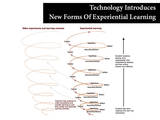
Back in the 1960s, Edgar Dale, the pioneering educator and professor of education at Ohio State University, developed the Cone of Experience, which theorized that students remember 20 percent of what they hear, 30 percent of what they see and up to 90 percent of what they do. With alternative methods of education becoming more accessible to teachers thanks to technology, educators are beginning to realize how valuable experiences can be in creating better learning outcomes for students.
Many institutions are experimenting with "flipping the classroom," by changing the way lectures and homework are used. Getting students to solve problems and complete labs in the classroom, while providing instantaneous feedback and leaving the lectures and reading for home has become more popular than ever.
Experiential Learning Helps Close The Job Skills Gap
Based on the work of David Kolb, experiential learning is, in short, learning through experience, activated in part by reflection on that experience. This idea of experience-based learning is being taken to the next level in classrooms around the country. For example, researchers at the University of Washington have created a high school science curriculum that brings real scientists into the classroom and has students complete contemporary scientific work. In New York, a collaboration between IBM and New York City public schools has resulted in P-Tech, a high school in Brooklyn that pairs students with IBM mentors.
In Seattle, Raisbeck Aviation High School collaborates with Boeing to mentor engineering students and give them a dose of what a career in the aviation industry might look like. In higher education, experiential learning creates a win-win for both students and employers, with students getting valuable hands-on education, while employers are able to teach the skills that they find many students are missing when they enter the workforce.
Kenneth Freeman, the dean of the Boston University School of Management, predicts experiential learning "will really come into its own" in the next 20 years. Freeman says that through faculty-guided projects with businesses, "More and more students will find out firsthand the range of leadership and management skills that will be required of them after graduation."
Technology Introduces New Forms of Experiential Learning
In addition to teachers and employers collaborating on ways to bring experiential learning to their students, advances in technology have enabled brand new ways for students to get real world experiences in the classroom. For example, students in Ireland can recreate the historical ruins of Clonmacnoise they visited on a field trip using open source 3D software. Within two weeks after making the 3D replica, the students were using Oculus Rift virtual reality headsets to explore their model of the ruins in 3D.
James Corbett, the managing director of Mission V, which is testing this program in eleven other Irish schools, said of the initiative, "We are in no doubt now that virtual reality will become an ever more important part of education."
The founder of Oculus, Palmer Luckey, recently spoke about the possibilities of virtual reality in the classroom in a White House meeting, "It’s going to be really important for STEM education. Because kids don’t learn best from reading a book or looking at a chalk board. We’ve decided, as a society, that there’s some benefit in field trips; actually having hands-on experiences where we send people to do things. The problem is, it takes a lot of resources to do that. Most field trips I’ve been on have been mostly travelling and corralling kids, and eating lunch, and not nearly as much actual learning. And you’re limited in what you can do. You can’t go to a new place every day because the resources aren’t there." Virtual reality may make it possible to virtually go on field trips every day.
With teachers, professors, employers, and technologists collaborating on bringing everything the world offers into the classroom, the future of experiential learning is looking bright. By giving students more real-world experiences, we can increase learning outcomes and better prepare them for the workforce. As Plutarch put it, "it was not so much by the knowledge of words that I came to the understanding of things, as by my experience of things."
Mads Bonde is the co-founder and CEO of Labster, an edtech company that develops virtual science laboratory simulations for STEM teachers and students.
Technology Introduces New Forms Of Experiential Learning; image attribution flickr user Ron Mader
The post Technology Introduces New Forms Of Experiential Learning appeared first on TeachThought.
TeachThought Blog
.
Blog
.
<span class='date ' tip=''><i class='icon-time'></i> Dec 04, 2015 04:07am</span>
|
|
The Perfect Assessment
by Terry Heick
Nothing is perfect, but we can dream. So let’s dream about assessment.
First, what is an assessment? A measurement? A snapshot? A kind of bar for students to clear? In The Most Important Question Every Question Should Answer, I theorized that "the benefit of assessments for learning isn’t merely a more clear picture of understanding; Used properly, it can also inform the rest of the learning process, from curriculum mapping (what do we learn when?) to instruction (how will it be learned?) to assessment design (how should future learning ideally be measured?)"
If the goal of our collective craft is understanding, than the tools we use should promote understanding, both directly and indirectly. Assessment is one of those tools-one widely misunderstood by teachers, and causing anxiety in the students we’re trying to serve. So then, can we do better with our assessments? I want to think of assessments in a completely different light, especially in light of modern technology. Take a clean sheet design approach to how we think of the word "test" (the patriarch of the assessment family).
So what would the perfect assessment be like? If we can design anything-not just digitize multiple choice questions, but start from scratch? What would the perfect assessment do? How would it be formed? What data would it yield? What effect would it have on the student?
How would it be used to improve learning? How could it server students-like stairs-instead of being obstacles to clear, like hurdles?
How can it promote understanding without haunting students?
There’s no single answer here because there are too many moving parts. So we can’t hope for perfection, but we can hope for perfect alignment between goals and function: What we want, and how we hope to achieve it. It’s not impossible, then, to begin to identify a set of indicators of a near perfect assessment-what it would and would not do, for starters.
Below, I guess at some of these indicators. I didn’t have a particular assessment form (MC, essay, performance task, project, etc.) or mode (norm-referenced, criterion-based, etc.) in mind. Clean sheet design and all. (You can read more about different types of assessment, or see 10 assessments you can perform in 90 seconds or less as well.)
I was more interested in the function of assessment as a tool for learning, and what we might be missing.
The Perfect Assessment…
…will be in the form and mode that will help the students reach their goals, not the institution reach its goals
…will provide data to revise planned instruction
…will show both short and long-term progress
…will adjust in real-time and scale (in complexity, knowledge demands, etc.)
…will compel students to respond with their best effort and particular genius
…will produce easy-to-extract, usable data that both teachers and students can understand and use
…will use transfer as an indicator or degree of understanding
…will be based on a specific learning taxonomy
…would allow the students to enter a state of "flow"-a complete-and perhaps playful-state of mental and emotional immersion, where they give themselves entirely to the task
…will have multiple entry or starting points
…will uncover both equally what a student does and does not understand
…would be a learning experience in and of itself
…would be fun (i.e., as a basketball game is an immersive and entertaining "test" for athletes)
…will align exactly with the stated goal-an academic standard, future aspiration, personalized learning desire, community need, etc.
…will use a scoring system that reflects degrees of understanding, progress, or mastery of individual line items/standards (rather than a gross score for a mash of "things)
…will provide a clear starting point forward for both the student and the teacher
…will allow the students to use their inherent strengths to compensate for their weaknesses (as adults do in their daily lives)
…will give students hope
…will yield compelling artifacts to bolster student portfolios and/or improve that student’s human circumstance (e.g., a product that improves their lives/community)
…won’t mistake confusing with complex
…won’t drown the teachers with follow-up work or other processes that keep them from doing anything else other than using that data to revise planned instruction for each student
…won’t be designed to yield unusable or irrelevant data
…won’t be widely misunderstood by parents, families, and communities at large
…won’t required students to sit in a desk in a room
…won’t be a matter of "pass or fail," but rather start here and move forward
…won’t be designed in a such a way that one error here can allow several errors there (e.g., a math problem where if the first problem is solved incorrectly, the rest of the problem can’t possible be right)
…won’t have built-in barriers that obscure understanding of exactly what’s being assessed (e.g., a complex text that demands strong reading skills when it’s knowledge of the water cycle that’s being assessed)
…won’t resort to distractors or tricks as a test of a student’s "grasp" of the content
…won’t have inherent cultural biases (e.g., in regards to race, gender, economic class, faith, or other "human" factor-see Diane Ravitch’s The Language Police for some background here)
…may use simulations or scenarios that invite students to use contextual cognitive processing-thinking in relation to circumstances they can play with or are naturally drawn to or are authentic-to agitate and coalesce academic knowledge
…may provide scenarios for students to think their way through, providing an authentic context, need to know, and opportunity to transfer understanding
…may not have a beginning or an end, but rather function as an ongoing, iterative effort
The post The Perfect Assessment appeared first on TeachThought.
TeachThought Blog
.
Blog
.
<span class='date ' tip=''><i class='icon-time'></i> Dec 04, 2015 04:06am</span>
|
|
Google Apps For Education Now Has More Than 50 Million Users
by Cinthya Mohr, User Experience Lead, Google for Education
In a junior high class in Queens, New York, Ross Berman is teaching fractions. He wants to know whether his students are getting the key concept, so he posts a question in Google Classroom and instantly reviews their answers. It’s his favorite way to check for understanding before anyone has the chance to fall behind.
Across the country, in Bakersfield, California, Terri Parker Rodman is waiting at the dentist’s office. She wonders how her class is doing with their sub. With a few swipes on her phone, she finds out which students have finished their in-class assignment and sends a gentle reminder to those who haven’t.
Google Classroom launched last August, and now more than 10 million educators and students across the globe actively use it to teach and learn together, save time, and stay organized. We worked with teachers and students to create Classroom because they told us they needed a mission control - a central place for creating and tracking assignments, sharing ideas and resources, turning in completed work and exchanging feedback.
Classroom is part of Google’s lineup of tools for education, which also includes the Google Apps for Education suite - now used by more than 50 million students, teachers and administrators around the world - and Chromebooks, the best-selling device in U.S. K-12 schools. Here are a few of the stories we’ve heard from teachers and students who are using Classroom.
Learning Better Together
We built Classroom to help educators spend less time on paperwork and administrative tasks. But it’s also proven to be highly effective at bringing students and teachers closer together. In London, fifth grader Kamal Nsudoh-Parish stays connected with his Spanish teacher while he does his homework. "If I don’t understand something, I can ask him and he’d be able to answer rather than having to wait until my next Spanish lesson," Kamal says.
Terri, who teaches sixth grade at Old River Elementary School, also observes that Classroom can strengthen ties and improve communication. "When a student doesn’t turn something in, I can see how close they are," she says. "In the past, I couldn’t tell why they didn’t finish their work. I was grading them on bringing back a piece of paper instead of what their ability was."
Resource room teacher Diane Basanese of Black River Middle School in Chester, New Jersey, says that Classroom lets her see her students’ minds at work. "I’m in the moment with them," she explains. "We have dialogue, like, ‘Oh, are you saying I should use a transition?’ We’re talking to each other. It’s a better way."
Removing The Mundane
By helping them cut down on busywork, Classroom empowers teachers to do even more with every school day. "I no longer waste time figuring out paper jams at the school photocopier," says Tom Mullaney, who teaches in Efland, North Carolina. "Absent students no longer email or ask, ‘What did we do yesterday?’ These time savers may not sound like much, but they free me to spend time on things that I consider transcendent in my teaching practice."
In Mexico City, teachers at Tec de Monterrey high school and university switched to Classroom from an online learning management system that often added complexity to their workflow instead of simplifying it. Professor Vicente Cubells says he’s found the new question feature in Classroom particularly useful for short quizzes, because he can quickly assess learning and have an automatic record of their responses and grades. "The Classroom mobile apps have also become essential for our faculty and students, we use them to stay connected even when we’re not in front of a laptop," Cubells said.
Giving Teachers Superpowers
Teachers are some of the most innovative thinkers in the world, so it’s no surprise that they’ve used Classroom in ways we never even imagined.
Elementary school teacher Christopher Conant of Boise, Idaho, says his students are usually eager to leave school behind during summer break. But after using Classroom last year, they wanted to keep their class open as a way to stay in touch. "Classroom is a tool that keeps kids connected and learning as a community, well beyond the school day, school year and school walls," said Christopher, who continued to post videos and questions for his students all summer long.
These endless possibilities are the reason why Diane Basanese, a 30-year teaching veteran, says that Classroom is the tool she’s been looking for throughout her career. "It has made me hungrier," she explains. "I look at how I can make every lesson a hit-it-out-of-the-ballpark lesson."
Growing Our Classroom
Ever since we began working with teachers and students, it’s been rewarding and encouraging to hear their stories, collaborate to find answers to their problems, and watch those solutions come to life at schools and universities around the world. Lucky for us, we’re just getting started.
The post Google Apps For Education Now Has More Than 50 Million Users appeared first on TeachThought.
TeachThought Blog
.
Blog
.
<span class='date ' tip=''><i class='icon-time'></i> Dec 04, 2015 04:06am</span>
|
|
7 Ways To Drop The Mic In Math Class
by couragetocore
I like to think I’m an entertaining story-teller.
Even the driest of mathematical procedures (quadratic formula derivation, anyone?) can come to life when I’m in performance mode. But over the years I’ve lectured less and less, giving students more autonomy to follow their own paths of inquiry. Students work in small groups on real world scenarios, experimenting, drawing conclusions and solving complex problems while I facilitate, motivate and occasionally lecture. Here a few tips on how to drop the mic and let students pick it up in math class.
1) Ask Curious Questions
How much taller is a human compared to a carpenter ant? How much faster can a sailboat go if you double its length? How many trees per person are there in the world? If you flip two coins, are you more likely to get two heads or one head and one tail? If you double the radius of a pizza, how much more food do you get? What function is the best model for a car accelerating from a stop light, and why? Can you figure out the percentage of green m and m’s in the world from one bag?
Every student has an innate curiosity about how the world is put together. It can seem that the abstractions of algebra are outside daily experience, and yet there are ample opportunities to draw numbers from the real-world and spark excitement. The above questions can springboard into deep conversations about exponential notation, square root functions, probability, area, quadratic functions and sampling.
2) Find A Balance Between Too Little Guidance, And Too Much
Assembling a piece of furniture from IKEA is such a choreographed experience that creativity is a dead end by design. Conversely, if I walk into Home Depot to build a house without a blueprint the project will end before it begins. It’s important to find materials which strike the right balance between providing guidance and allowing students to experiment. Courage To Core math materials are classroom tested tools for algebra and geometry, and many other teachers are creating and selling great materials on Teachers Pay Teachers, Amazon and beyond which follow a collaborative model.
3) Create A Contained But Spacious Playground
A classroom which gives students greater autonomy to collaborate needs a structure. (See my prior post on how to create expectations and effectively play the role of facilitator in classrooms centered around group work.) Building a culture of self-directed students takes patient effort at the outset, but once groups are humming along it can be an efficient and effective learning structure and a great way for a teacher to observe each student in action.
4) Be the Lifeguard They Trust
In swim class when you were a little kid, you let that one lifeguard throw you in the deep end of the pool. He’d let you struggle when you were capable, but you knew he’d fish you out if you were in real trouble. Students need to know that they can visibly struggle with mathematics and that you’ll let them go at it as long as they need to. They also need to know that you’ll throw them a lifeline if their group is lost at sea. Finesse that line carefully.
5) Promote Productive Play
Students are adept at following rules, but they are often even more adept at blurring the lines. Play at school can be an act of mild rebellion or it can be intrinsic to a learning environment that is designed to engage the voracious appetites of young minds. Once you allow students to engage more freely, the classroom can be a more productive yet more chaotic place. The usual distractions still interrupt work flow, but when group work is working, students take more responsibility for maintaining the work culture, and conversation and invention are steered toward productive ends.
6) Make Mistakes
Once we have fired a curiosity with a good question and given them the basic rules of engagement, students need to experiment, fail, and experiment some more. The path of least resistance is also the path of least persistence. Mistakes are the necessary accidents on the path to deeper understanding. Of course, this process can take time…
7) Be Patient-It Takes Time
It can be tough to fit student-directed work into the rigid schedule of the school day, and tempting to sweep kids towards wrapping up when they are still deeply working in progress. As much as possible I don’t put time limits on activities, so that students can self-pace and own their hard fought success at the end of the proverbial day. In my experience, at the beginning of the year students are less efficient as they adapt to the structure but by the end of the year move through assignments efficiently and effectively.
A student-centered, collaborative classroom environment takes a bit of effort to set up, but the rewards are great. Students learn to communicate, collaborate, persevere, bounce back from failure, think creatively and problem solve more confidently. Check out my prior posts for more hints on how to implement a collaborative model in high school math class.
If you drop the mic you may help more kids find their singing voice.
7 Ways To Drop The Mic In Math Class; image attribution flickr user olgalednichenko
The post 7 Ways To Drop The Mic In Math Class appeared first on TeachThought.
TeachThought Blog
.
Blog
.
<span class='date ' tip=''><i class='icon-time'></i> Dec 04, 2015 04:05am</span>
|
|
Fine-Tuning Education Won’t Work: How To Escape Education’s Death Valley
by TeachThought Staff
Ed reform, as it is, depends on iteration. Minor adjustments. Step-by-step. A linear process.
In general, we create initiatives that we hope will yield desired results, and measure their effectiveness with tests. This, at best, gives us program-based, test-measured improvement. But improvement of what?, we might ask. Of scores, or people?
In 2013, Ken Robinson-of Do Schools Kill Creativity? fame-followed up on some of those ideas in the video How To Escape Education’s Death Valley. In it, Robinson outlines "3 principles crucial for the human mind to flourish," and outlines "how current education culture works against them."
"There is wonderful work happening in this country. But I have to say it’s happening in spite of the dominant culture of education, not because of it. It’s like people are sailing into a headwind all the time. And the reason I think is this: that many of the current policies are based on mechanistic conceptions of education. It’s like education is an industrial process that can be improved just by having better data, and somewhere in the back of the mind of some policy makers is this idea that if we fine-tune it well enough, if we just get it right, it will all hum along perfectly into the future. It won’t, and it never did."
The idea is to, rather than offering eloquent criticism, to provide a pathway forward-all built around the idea that fine-tuning our existing thinking isn’t radical or comprehensive enough to build the possibilities in education we seem to collectively envision.
You can see the entire video below.
Fine-Tuning Education Won’t Work: How To Escape Education’s Death Valley; adapted image attribution flickr user sparkfunelectronics
The post Fine-Tuning Education Won’t Work appeared first on TeachThought.
TeachThought Blog
.
Blog
.
<span class='date ' tip=''><i class='icon-time'></i> Dec 04, 2015 04:05am</span>
|
|
The Definition Of Heutagogy & Self-Determined Learning
by Stewart Hase and Chris Kenyon
Ed note: This is part 1 in a series on self-determined learning from Stewart Hase and Chris Kenyon. Stewart’s site, Heutagogy Community of Practice, is a useful resource for reading on Self-Determined Learning.
Ed note 2: Hase and Kenyon make distinctions between self-determined and self-directed learning that may be in conflict with our use of the terms (see, for example, our self-directed learning model). In most cases, these are matters of semantics rather than function, but having a common language is critical for communication, and we’ll continue to evaluate the phrases and labels we use in the larger context of the ed community.
Summary
This content is meant to do two things. It will, for the uninitiated, summarize the origins of heutagogy and the theories from which it was derived. At the same time we will have a look at more recent work and thinking from authors around the globe and see what they have discovered through using or thinking about heutagogical principles. The main theme is that people are naturally very efficient learners and that we can more effectively make use of this fact in our current education and training systems.
Origins & Influences
The power to learn Heutagogy has come a long way since its initial inception over a bottle of wine and notes written on a napkin in a restaurant in 2000 (Hase, 2002, 2009; Hase and Kenyon, 2000, 2003, 2007, 2010; Kenyon and Hase, 2010). Don’t most good ideas happen this way?
The discussion came about as a result of a general dissatisfaction with the way in which education was being conducted in universities. We thought that, despite the role of higher education to foster our brightest minds and to expand the frontiers of knowledge, teaching was primarily a pedagogic, teacher-centric, activity. To our way of thinking, teaching in our universities needed to be more aspirational. Like other humanists such as Carl Rogers (1969) we believe that the power to learn is firmly in the hands of the learner and not the teacher. We also recognize, as have Russell Ackoff and Daniel Greenberg (2008), that humans are from early childhood really adept learners and that much of the education system confuses learning with teaching.
In fact, there is sometimes so much confusion that it can interfere with people’s natural ability to explore, ask questions, make connections and to learn. This humanistic view of how people learn has been coined as student-centred learning (Rogers, 1969) or, more recently, learner- centred learning (Armstrong, 2012; Graves, 1993; Long 1990) as opposed to teacher- centric approaches. Recently I was asked to talk to a group of trainers working for the NSW Rural Fire Service in Australia. It was their annual conference and they were interested in finding more exciting ways to train their 70,000 or so volunteers in the various competencies required to fight fires.
I showed a picture of an ancient fire engine from the end of the nineteenth century but suggested that they think of it as a new piece of fire equipment. A teacher-centric approach to learning about this new equipment would be to show some pictures to the group, go through the manual, demonstrate the required skills and then have the group practice until the required competency might be attained. A more learner-centric approach and rather more naturalistic, would be to let the group go play with the machinery and leave the manual on the seat.
The facilitator can play an important role by watching and making sure that all is safe and intervening if someone is going to initiate a catastrophic event. Everyone agreed that, indeed, the group would work it out for themselves. Unfortunately, as Ackoff and Greenberg (2008) describe so elegantly, humans are hijacked very early in life by an educational system that was designed in the industrial revolution to educate workers to make the industrial wheel go around. Thus, education has become a commodity and the curriculum, chiseled in stone, is delivered by ‘experts’ from on high.
Assessment becomes the key for opening doors and teaching is geared to providing the key. The needs and motivations of the learner and, more importantly, what is happening in their brain is of secondary importance, if it is of any importance at all. The late Fred Emery was a little more scathing in his assessment of the education system (1974, p. 1) when he said that, ‘School pokes your eyes out. University teaches you braille and postgraduate education is speed-reading in braille.’ Less controversially, a number of educationalists have questioned the assumptions that underpin common educational practice and the need for approaches that recognize the complexity of the relationship between the learner, the curriculum and learning (e.g. Davis et al., 2000; Doll, 1989; Doolittle, 2000; Sumara and Davis, 1997).
Current education practice places the process and outcomes of learning in the hands of the teacher who determines what is to be taught and how it is to be taught when, in fact, it needs to be in the hands of the learner (Coughlan, 2004). Given these beliefs about people’s ability to learn and an education and training system that disempowers rather than empowers, we decided on the term self- determined learning to describe this innate power of people to learn as an alternate view. Chris, the linguist that he is, then manipulated the Greek word for self, ηαυτος, and came up with the word heutagogy: the study of self- determined learning.
Humanism & Constructivism
Heutagogy is underpinned by the assumptions of two key philosophies: humanism and constructivism. As mentioned above, the idea of the learner being central to the educational process is a humanistic concept. Carl Rogers later adapted his client-centred approach to psychotherapy (1951) to education (1969) in what was termed student-centred learning. Similarly, constructivism places the learner at the heart of the educational experience (e.g. Bruner, 1960; Dewey, 1938; Freire, 1972, 1995; Piaget, 1973; Vygotsky, 1978).
Constructivism is based on the notion that people construct their own version of reality using past experience and knowledge, and their current experience. Thus, the learner is creative, actively involved in their learning and there is a dynamic rather than passive relationship between the teacher and the learner. Constructivism challenged educators to let go of some of the structure in what they did and allow greater dynamism into the curriculum. Constructivism led to a rise in the popularity of designing experiential learning as a means for loosening this control.
However, in our view, it did not have the impact on lessening the control of the learning experience by the teacher and hence education at all levels has remained teacher-centric. While many constructivist approaches cleverly engage the learner in experience and active learning, the teacher is still actively designing the learning task and process. In learner- centred learning tasks become less specific as control of learning is taken over by the learner (Coomey and Stephenson, 2001). Andragogy (Knowles, 1980, 1986) is also based on humanism and constructivism and was central to the original paper we wrote in 2000.
Andragogy was important because it provided an alternate to pedagogical approaches to teaching towards those more suitable for adults. Knowles was interested in the motivational aspects of adult learning and emphasized the previous experience of the learner, relevance, problems versus content and involvement of the learner in the learning process. The idea of the self-directed learner can be sheeted back to Andragogy. However, while context might be in the hands of the learner, the teacher is still largely in control of process and task.
Unfortunately, some students of heutagogy refer to it as self-directed rather than self-determined learning: the two are perhaps related but quite different. Finally, Argyris and Schon’s (1978) notion of double-loop learning influenced our thinking about heutagogy and others have since associated the two concepts (e.g. Blaschke, 2012; Canning, 2010; Canning and Callan, 2010). Double-loop learning often occurs spontaneously and involves internally challenging our deepest values, beliefs, and ways of knowing.
While it is difficult to change any of these schema that drive human behavior, it is at this level that the deepest learning occurs.
In Part 2, we’ll look at the neurology involved in this shift.
The Definition of Heutagogy; Shifting From Pedagogy To Heutagogy In Education;
The post Shifting From Pedagogy To Heutagogy In Education appeared first on TeachThought.
TeachThought Blog
.
Blog
.
<span class='date ' tip=''><i class='icon-time'></i> Dec 04, 2015 04:04am</span>
|
|
How To Create Your Own Digital Rubik’s Cube by TeachThought Staff Want to create your own Rubik’s Cube? Of course you do. And now...
The post How To Create Your Own Digital Rubik’s Cube appeared first on TeachThought.
TeachThought Blog
.
Blog
.
<span class='date ' tip=''><i class='icon-time'></i> Dec 04, 2015 04:04am</span>
|
|
Examples Of Innovation In Higher Ed-With A Caution by Terry Heick Recently, someone asked me what I thought about innovation in higher ed in...
The post Examples Of Innovation In Higher Ed-With A Caution appeared first on TeachThought.
TeachThought Blog
.
Blog
.
<span class='date ' tip=''><i class='icon-time'></i> Dec 04, 2015 04:03am</span>
|