



eBooks, Guides, Templates and White Papers
|
A solid learning management system (LMS) helps businesses streamline corporate training, thus driving business results. But choosing the right vendor may be a daunting process that takes a lot of time and effort.
The difficulty lies not only in the fact that there are tons of solutions in the market. You also have to consider a lot of aspects before you decide, including features, ease of use, costs, and your own business objectives.
In this eBook, we’ll try to ease the stress of decision-making by offering a range of practical tips on how to choose an LMS. You can also leverage the free package of templates and checklists that are downloaded together with this guide to make the process even easier. We hope all this will help you pick a solution that best suits your business needs and is aligned with your budget and priorities.
|
|
Contrary to the old adage, leaders are made - they're not just born! Leadership development is one of the most pressing issues companies are facing today. According to research by DDI, 88% of companies believe that they don't have a deep leadership bench to pull from when the occasion calls for it. This can be a culmination of many business and L&D challenges such as lack of succession planning, skill gaps, and more.
Organizations need a solid leadership development program to turn the learners of today into the leaders of tomorrow. BizLibrary lays out a Leadership Development program checklist in our handy infographic - Building Your Leadership Development Program.
|
|
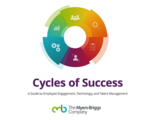
According to Gallup’s 2022 survey, 68% of full- and part-time employees working for organizations are not fully engaged in their work. What can organizations and HR professionals to do motivate, engage, and retain their employees?
One approach is to use a Talent Management Life Cycle. This model helps employees become clear about their developmental needs and growth goals, which means employers are better equipped to meet those needs and keep their people engaged. To learn more about this model and how to implement it, download Cycles of Success by Nicole Trapasso, Vice President, HR/OD for The Myers-Briggs Company.
|
|
For product pitches and sales, speed to market is everything. When organizations combine video-based practice with AI, employees get real-time feedback in addition to mentor coaching. Reducing the time needed to upskill means reaching sales goals faster.
Find out how organizations implement these winning training techniques to improve communication skills - even when their mentors are busy!
Highlights include:
Use cases for using AI-based video coaching
How learners get the most out of solo practice
How AI evaluates non-verbal communication skills
And more!
|
|
Avoid the Pitfalls of Tuition Assistance Programs with Quick & Equitable Upskilling
eBook by Degreed
Many small and medium-sized businesses encourage learning through Tuition Assistance Programs (TAPs) and other forms of education reimbursement. Yet, it’s not uncommon for funds in those programs to go unused — but why? TAPs and other reimbursement-style stipends aren’t equitable for all employees, especially for those who are financially constrained. The benefit becomes a barrier, slowing your workforce’s ability to upskill, adapt and grow. It’s time to reimagine this outdated model with prepaid learning stipends. Based on our experience, this kind of program can increase fund usage by 8 times, while still providing detailed expense monitoring for managers.
Download our eBook to learn more about the impacts prepaid learning stipends could have on your workforce.
|
|
ChatGPT is proving to be a powerful tool for professionals producing employee and marketing communications—but using it effectively takes some practice.
That’s why we created a new guide: How to Use ChatGPT to Create Great Business Video Scripts: 20 Prompts and Editing Advice for L&D, HR and Sales.
In it, you'll get:
Clarity on the pros and cons of using ChatGPT to make video scripts
20 ChatGPT prompts to help you generate a solid first draft
Tips from Vyond writers and producers on making ChatGPT’s draft more relevant to your audience
An annotated ChatGPT script makeover
And…much more!
|
|
In this case study you’ll meet Nick Goodman, the Director of Educational Programs at Snowflake, and learn how he uses AI voice in his instructional design workflows. If you create more than 10 hours of training videos, you’ll want to read this case study on AI voice.
In this case study, you’ll learn:
What is AI text-to-speech
How this increasingly lifelike speech technology is authentically impacting L&D content strategies
What synthetic voice does for instructional design leaders like Nick Goodman from Snowflake
How companies are leveraging AI tools and seeing revolutionary results
|
|
The Covid pandemic has changed our lives forever, from the way we communicate, to the way we think about mental health, and far beyond. We have reorganized our priorities, put a higher value on time with family and friends, and have a greater appreciation for some of the freedoms we used to take for granted.
This is no less true in the business world and the day-to-day of our jobs. One of the biggest workforce changes brought about by the pandemic is working remotely. And while many workers have begun to return to the office, a substantial number continue to work remotely or have a hybrid schedule. For some organizations, this new distributed workforce is here to stay. So how do you motivate them appropriately?
Download this white paper for insights.
|
|
Drive your organization forward while empowering employees.
Grow your employees’ careers inside your organization and improve long-term talent retention with the latest report from the Cornerstone People Research Lab and Lighthouse Research & Advisory. Ready, set, grow: The building blocks for high-impact talent mobility will help you better understand your employees’ expectations around internal development and what your leaders must do to succeed.
You’ll learn how to:
Improve employee visibility into new roles and opportunities
Understand the ways employee skill development goals can vary by demographic
Blend managers, culture, and technology into a cohesive talent mobility strategy
Ensure your high-performing business leaders prioritize employee growth
Reduce employee turnover and revitalize engagement with proven tactics
|
|
Skill-based training has become mission-critical to the retention of your employees and the growth of your company. Find out how making two critical adjustments to your L&D training approach can help you efficiently create content that meets the evolving needs of your workforce.
What You'll Learn:
How to efficiently create training videos at scale
How to use storytelling and interactivity to keep employees engaged
How to create a more inclusive, collaborative learning culture
Why delivering effective training helps employee retention
|



.jpg?1689800828)
.png?1687981675)


