eBooks, Guides, Templates and White Papers
|
Learning leaders are confronting a world upended by relentless disruption. It’s no wonder that the response has been what can only be called a radical transformation of the learning function — a rethinking of what is delivered, where it’s delivered and to whom, who drives the capability, and how results are reported.
To explore this new wave of learning, Executive Networks and NovoEd completed primary research with 515 learning leaders in the US, Canada, UK, Spain, and Italy in organizations with 1,000+ employees. Our inquiries revealed a variety of priorities emerging as learning leaders grapple with how to reshape learning to fit today’s new realities.
Download this ebook, co-produced by Executive Networks and NovoEd, to get insights into how learning leaders are working to ensure their transformation of the learning function aligns with the most critical business needs facing their organization.
This ebook discusses topics such as:
Why many organizations are turning to capability academies to focus on the skills needed for rapidly changing business priorities
Why L&D is becoming a top business priority for CEOs
How many leaders are extending the learning audience beyond full-time employees
How seamless systems are developing to reach hybrid and remote environments
|
|
This eBook gives you an overview of what knowledge management is, why it’s a challenge for companies - especially in today’s hybrid-remote working environment - and how to start building an effective knowledge management system.
You’ll learn about the:
Types of knowledge in an organization
Cost to companies when information isn’t accessible and easy to find, and
Benefits of using animated videos for knowledge management.
|
|
Proving the ROI of a training program can feel daunting. One of the most common ways to prove ROI is to compare the cost of training and the potential cost and consequences of not training. This is certainly an important part of measuring the return on your investment, but it doesn’t tell the complete story. It’s important to look at the impact of your training program through a variety of categories to help everyone see the value of training.
In this workbook, you’ll explore a variety of ways to measure the impact of your training program.
You’ll find:
Prompts for reflection about your training program
Steps for measuring ROI
KPIs to consider for each category
|
|
Companies with successful cultures are 5X more likely to see significant revenue increases this year.
In the age of quiet quitting and the great resignation, how is your organization meeting the needs of its employees in a genuine way to create a culture that is a catalyst for improvement and growth?
To dig deeper into the role of culture in driving success, we partnered with research firm Ascend2 to survey 300+ strategic leaders on how culture impacts performance. The research explores what exactly makes for a high-performance culture—and what’s at stake when an organization’s culture is considered negative or even "toxic."
Download a copy of the report to find out:
What organizations with best-in-class cultures are prioritizing this year
How leadership development, team performance, and diversity, equity, and inclusion initiatives impact culture
The competitive advantage that sets high-performing companies apart
|
|
What organizations and employees expect of Learning & Development (L&D) has changed dramatically over the last three years. Organizations and L&D units themselves have experienced dramatic growth or contraction; reorganization is rife; pandemic fatigue is endemic; technology such as artificial intelligence is changing the way we work and live; and fear is common. Amidst these challenges, L&D is trying to redefine itself while addressing dynamic needs at unprecedented speeds.
In this whitepaper, members of Training magazine’s Training Hall of Fame explore what these transformative changes mean to L&D as a profession and where their organizations need to go. It also discusses the challenges L&D faces, the opportunities ahead, and implications for the future.
About the Training Hall of Fame
Created in 2008, the Training Hall of Fame comprises organizations that attained a spot in the Top 10 of Training magazine’s Training APEX Awards for four consecutive years. The Training APEX Awards recognize outstanding employer-sponsored workforce training and development.
Training Hall of Fame companies are:
Birmingham Water Works Board
KLA Corporation
BNSF Railway
KPMG LLP
Booz Allen Hamilton
Leading Real Estate Companies of the World
Capital Blue Cross
McCarthy Building Companies, Inc.
Deloitte LLP
Nationwide
Dollar General Corporation
PwC
EY
Sonic Automotive
IBM
Verizon
Keller Williams Realty, Inc.
United Wholesale Mortgage
|
|
Onboarding is a vital part of the employee orientation process. New hires need the right tools and information to become a productive member on their team and at the organization. However, for many, onboarding stops after Day 1.
In this infographic, you’ll learn:
How to begin onboarding before an employee’s official start date
What should be done prior to arrival, on the first day, the first week, and the first month of employment
Why onboarding should continue for up to 6 months or more
|
|
To train the most up-to-date, efficient and skilled workforce you need to know what L&D trends to follow. This infographic highlights the key takeaways from Donald H. Taylor’s 2023 Global Sentiment Survey Results, and includes:
Hottest trends in L&D this year
Biggest challenges in the L&D space
Persistent differences across geographies, and where they come from
|
|
A good tool set enables learning designers to supercharge their learning solutions with minimal effort. This is a list of essential tools you should be familiar with.
|
|
Digital learning offers the flexibility to provide personalized paths to learners. In this guide, learn how to apply branching to create not only personalized learning paths but also adaptive content, life-like exercises and responsive interactions.
|
|
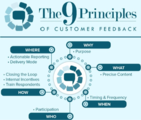
Transform "satisfied" members, customers, employees and students into LIFETIME fans. Discover deep insights by asking the right questions in the right way. Recapture lost time and money. These are the documented results of observing the 9 psychological principles that govern how people respond to requests for feedback.
The 9 Principles of Feedback is based on 96,000,000 data points gathered from 550 organizations. Simply DOWNLOAD this infographic and compare each step to your own surveys, quizzes, assessments and evaluation forms to identify the gaps. By understanding and applying each Principle, you will immediately increase participation rates, gather more accurate and meaningful results, and create an audience that WANTS to answer every question you ask.
|

.jpeg?1685998311)