All Resources
 Loading...
|
Purpose is the driving force that gives our lives meaning. Humans are wired for purpose and in fact, recent discoveries in neuroscience offer a fascinating look into what motivates us to become our best selves. The ability to align purpose is what distinguishes the most effective leaders from the rest, and purpose is at the heart of engagement, productivity, and retention. It’s no wonder that organizations that know how to harness the power of purpose thrive and excel while their peers falter or fail.
|
|
AI is changing the way we work, but for many employees, embracing it isn’t simply a matter of learning new technology. It can mean letting go of familiar routines, hard-won expertise, and a sense of certainty about the future. How can leaders help their people navigate that transition?
In this article, FranklinCovey Senior Consultant and AI Advisor Kwesi Johnson explores the often-overlooked grief behind resistance to AI—and why leaders need to meet it with both empathy and action. Discover how understanding what employees fear losing can help leaders build trust, turn resistance into forward momentum, and bring their teams along into the AI future.
|
|
As AI continues to reshape the workplace, government L&D leaders have a unique opportunity to modernize workforce training strategies while maintaining compliance, security, and mission readiness.
|
|
Every team hits a wall: a setback, constraint, or problem that leaves people feeling powerless. The result is often blame, excuses, and disengagement.
|
|
In July, four leading voices in modern Talent Development, Betty, Becky, Debbie, and Tracie, came together to discuss L&D in the Era of AI. The conversation generated so much discussion that we ran out of time. So we’re continuing it. This time, we’ll focus on the practical side: how L&D can become a stronger strategic business partner, and where AI and technology can help accelerate that shift.
|
|
Today's organizations don't have a talent problem—they have a permission problem.
Too many capable employees hesitate to speak up, wait to be chosen, avoid difficult conversations, or hold back ideas that could make a real impact. The result? Missed opportunities, stalled leadership, and untapped potential.
|
|
Transformation initiatives often begin with a lot of confidence. We know our data. Our governance is covered. We understand our skills. Our content is in good shape. The technology will integrate. Our people are ready for the change.
But how much of that confidence is based on what the organization actually knows, and how much is based on assumptions that haven't really been tested?
|
|
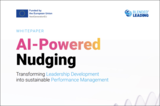
Organizations invest heavily in leadership development, yet turning learning into lasting behavioral change remains a major challenge. Training programs often deliver valuable insights, but without continuous reinforcement, those insights rarely translate into measurable business results.
What if AI could bridge the gap between knowing and doing?
This white paper explores how AI-powered nudging transforms traditional leadership development into continuous, personalized performance improvement. By delivering timely, context-aware recommendations directly within everyday workflows, AI helps leaders turn knowledge into meaningful action.
Discover how Blended Leading® enables organizations to maximize existing HR and learning investments, provide individualized leadership support through Microsoft Teams®, and reinforce positive leadership behaviors at scale.
The white paper highlights the science behind behavioral change, the benefits of AI-supported nudging, and practical steps for implementing a scalable solution that connects leadership development with measurable business outcomes.
Ready to turn leadership insights into lasting impact?
|
|
Building bench strength is taken for granted in professional sports. Owners and coaches plan for injuries that can put their ace pitcher, quarterback, guard, or goalie out of commission. I've rarely seen business leaders exercise the same degree of talent planning. As training professionals, we are in a unique position to help. We know how to define and develop competence. We can guide leaders in identifying positions, that if not filled with competent people would put the organization at risk.
|
|
AI is changing how people create, discover, and engage with learning. Instead of searching through links, navigating menus, or following rigid workflows, learners and learning teams increasingly expect to ask questions naturally, refine what they need through conversation, and receive relevant responses that understand their context and intent.
|
|
L&D leaders are increasingly expected to align learning with business priorities, make smart decisions about resources, and demonstrate the value of their work. Running learning like a business can help—but what does that actually mean in practice?
|
|
Instructor-led training is where the most important training happens, but it is also incredibly expensive. Join John Peebles, Administrate CEO and Char Noland, Cloudshare VP Solutions Consulting, to learn how training operations and environmental overhead drive these costs up and how you can get them under control.
|
|
Systems training has a bad reputation. It is usually synonymous with endless screen captures, dry "click-next" instructions, and zero engagement. But for a recent project with a leading higher education institution, we took a different approach. Instead of just teaching staff where to click, we focused on why it mattered—wrapping the entire learning experience in a compelling narrative about student success.
|
|
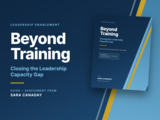
L&D leaders know that leadership development can’t end when the course does. Once leaders return to packed calendars, urgent demands, and constant pressure, even valuable learning can be hard to recall and apply.
This guide explores how organizations can close the leadership capacity gap by bringing proven leadership practices closer to the work, using AI as a support tool without handing over leaders’ judgment. It also includes a short assessment to help you see whether leaders are struggling with knowing what to do or with doing it in the middle of a busy, high-pressure workday.
|
|
You were good at selling. Maybe great. You knew the product, read the room, earned the trust, and hit the number often enough that someone handed you a team. It felt like a reward. It was really a career change.
|
|
Organizations invest heavily in learning, yet many initiatives fall short of delivering lasting behavior change and measurable business results. The difference isn't the quality of the training—it's how well learning is aligned with the organization's strategy, leadership, culture, and processes. In this webinar, you'll discover how a systems-based Organization Development (OD) approach helps transform learning into a strategic driver of organizational performance.
|
|
Flip cards, tabs, accordions, branching scenarios. These are the interactions we reach for constantly, and building them usually means opening an authoring tool, wrestling with a template, and hoping it looks the way you pictured it. Most of the time you settle for what the tool makes easy.
|
|
It is a fact, today there are less opportunities to move up in an organization. But there are more ways to grow besides up.
|
|
As technology makes information and learning available instantly, the value of great facilitation is changing. Simply delivering content is no longer enough.
Join Moe Poirier and Megan Torrance for a practical exploration of what today’s facilitators need to create learning experiences that people can’t get from content alone: connection, participation, trust, and meaningful human interaction. Moe will share ideas from his new book, The Five Personas of Facilitation: Elevate Your Training Delivery Strengths and Style.
|
|
Do you or your team adopt a one size fits all approach to influence and motivation? The most successful leaders and team contributors adapt their influence style to the target audience and situation. MHS’s Influence Style Indicator (ISI) enables participants to rise to the complex challenges of influencing others.
|
|
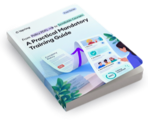
The expectations around how companies deliver mandatory training keep rising: build courses faster, update easier, and cut production costs.
This guide focuses on exactly that challenge. We’ll show how we approach this at iSpring and walk through the build step by step, using real examples and AI where it genuinely speeds up the work.
|
|
Design thinking is a powerful tool for training but but the real challenge is knowing how to actually use it to design better learning. This workshop moves beyond theory and into hands-on application, showing participants exactly how to put frameworks to work on a real training problem.
|
|
Great learning starts with understanding your audience. But knowing a learner’s job title, experience level, or location only tells part of the story. What do they need? What motivates them? What gets in their way? And what will make the learning feel useful to them?
|
|
AI can generate content, format a slide, and confidently tell you a document passes WCAG 2.2 AA… right before it gets the accessibility wrong. This session was inspired by eight hours of vibe coding a single accessible one-pager: what AI got right, where it quietly broke reading order and heading structure, and why a perfect automated accessibility score isn't the same as what works for real people.
|