



All Resources

From Ordinary to Outstanding: Build Better Presentations Faster
Most presentations fail because they are built for the presenter instead of the audience. In this fast-paced, practical webinar, learning and development professionals will learn a proven, repeatable approach to creating clear, compelling presentations in less time and with less stress.

The Perfect Mix: Recipes for High-Impact Blended Learning Campaigns
Creating an effective learning program is a lot like cooking a gourmet meal; you can have the best ingredients in the world, but if you throw them all in the pot at once, you just end up with a mess. In this webinar, we are opening our cookbook to show you how to curate the perfect mix.

Transforming What Your SMEs Know to What Your Learners Need
Your learners have needs, and your SMEs have knowledge and experience. But do those two things always line up? When creating learning content, SMEs with the best intentions can end up creating content that’s long on information, short on practical application, and wrapped up in a bullet-point PowerPoint bow.

Creating Learning Challenges to Drive New Workplace Habits
Training is an event. Learning is a process. Most L&D professionals know that, and yet we still design most learning to end when the session does. People leave motivated and full of ideas, and six weeks later, how much has changed on the job?
The problem isn’t the training. It’s what happens after it.

AI Voices vs Humans: What We’re Learning and What It Means
In 2025, over 40% of eLearning companies and more than a third of Fortune 1000 organizations have integrated AI-generated voiceovers into their training content.
Are we on the right track—or do we not yet know the impact of this transition away from humans? A growing body of research suggests that human voiceovers can still achieve up to 30% higher learner retention rates and engagement—especially in soft skills and leadership programs.

Stop Running Borinars: The Leadership Playbook for Webinars That Actually Engage
A borinar is a webinar that's boring. Your sales team has run one. Your training team has run one. Your prospects have left one. Your learners have multi-tasked through one.
The problem isn't the people running them. It's the design — and most senior leaders have inherited a format that was already broken.

Turn Learner Actions into Meaningful Experiences with Triggers
Discover how to make learning experiences more dynamic, responsive, and engaging with Triggers. As an instructional designer, you’re always looking for ways to move beyond "click Next" experiences and make learning feel more engaging and purposeful. In this webinar, discover how Triggers let you turn everyday learner actions like clicking an object, making a choice, or completing an interaction into meaningful responses.
Why Many Feedback Systems Don’t Work – and What to Do About It
Feedback is one of the most powerful tools for improving leadership, employee engagement, and organizational performance. Yet many companies invest in employee surveys and 360° feedback systems without achieving meaningful results.
Why do so many feedback initiatives fail, and how can organizations make them truly effective?
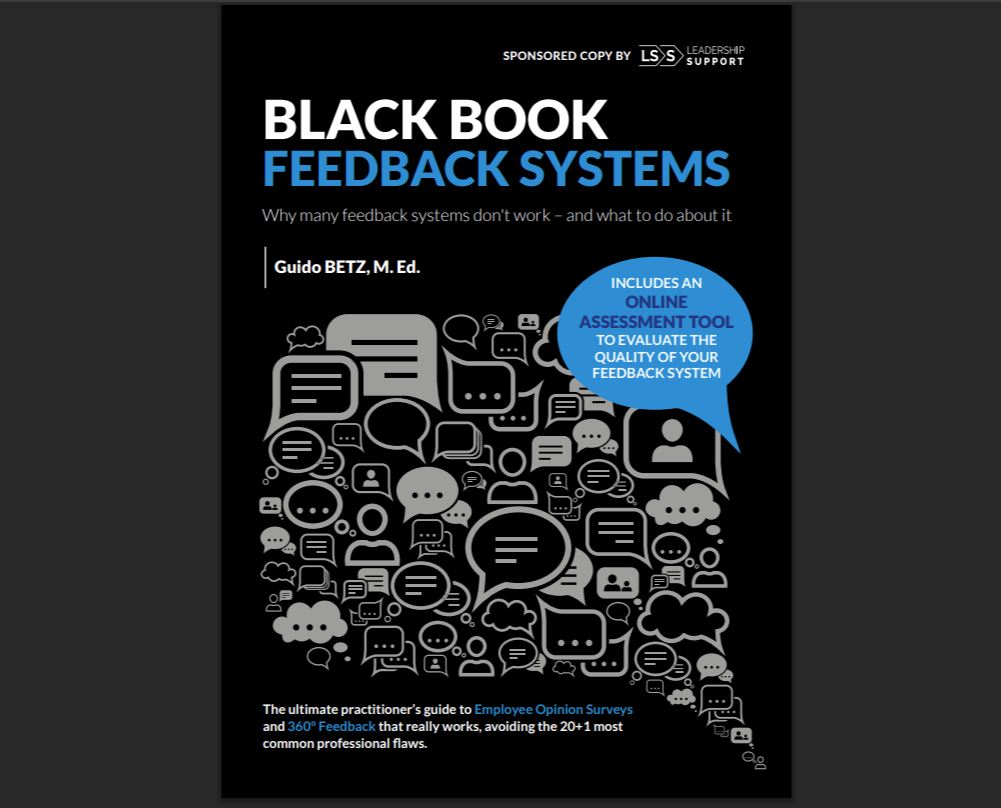
In Black Book: Feedback Systems, leadership development expert Guido Betz shares practical insights drawn from decades of international consulting experience. This engaging, hands-on guide reveals the 20+1 most common mistakes that undermine feedback systems and explains how to avoid them.
Discover how to design feedback tools that reflect your organization's unique culture, encourage honest participation, protect confidentiality, and turn valuable insights into concrete improvements.
The book explores both the technical design of feedback systems and the organizational practices that determine their success. It also includes a practical online assessment tool to help you evaluate the effectiveness of your existing feedback system and identify opportunities for improvement.
Whether you're an HR professional, business leader, or organizational development specialist, this book offers actionable recommendations for transforming feedback from a routine exercise into a driver of continuous improvement.
Ready to make feedback work for your organization?

AI Works When People Do
You’ve secured the AI licenses, delivered the training, and made the announcements. Yet, while a handful of early AI adopters are thriving, widespread adoption remains out of reach. The business case is clear on paper, but across the organization, daily work hasn’t really changed—nor have results.
Gamification 101: Boost Learner Engagement with Game Elements
In this introductory webinar, we’ll explore the fundamentals of gamification and show instructional designers how to incorporate challenges, rewards, progress, choices, and feedback into their courses. Through practical examples, you’ll discover simple ways to make learning more interactive and motivating—without having to design a full-fledged game.
Retaining and Engaging Your Employees Through Personalized Skills Development
Hiring is slow right now. Trust is scarce on both sides of the table. And the safest hire in your organization might already be on the payroll.
This ebook makes the case for looking inward before looking outward. AI has made resumes harder to believe and interviews harder to trust. The job market has frozen to the point where almost nobody is moving. And the skills your teams need are shifting faster than any job title can keep up with.
Inside, you’ll find:
Why AI has turned hiring into an exercise in mutual suspicion, and what the data actually shows
What "low-hire, low-fire" means for your hiring strategy right now, not five years from now
A practical framework for deciding when to build a skill internally versus hire for it externally
The real reasons internal mobility programs stall, even when leadership says they support them
What the highest-performing organizations do differently, backed by data from LinkedIn, Gallup, and more
A starting point for building skill-building and internal mobility into how your organization already works
If your next hire is already inside your organization, this ebook shows you how to find them.
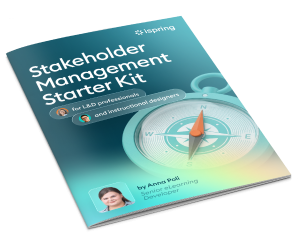
Stakeholder Management Starter Kit For L&D Professionals and Instructional Designers
In this guide, you'll find a stakeholder map template to help you see who influences what early on, as well as 10 key questions for project kickoff to clarify goals before you start building.

Map It to Mean It: Unlocking the Neuroscience in Your Training
Interleaving is one of the most evidence-backed practices in learning science — and one of the least used. Most training programs still run on traditional models that favor information delivery over learning durability, leaving one of our most powerful tools sitting on the shelf. Visual mapping changes that. When you map your learning design, you can see where topics connect, where retrieval moments belong, and where learners need space to reflect and consolidate. Mapping makes interleaving visible — and it naturally surfaces opportunities to build in retrieval practice and metacognitive checkpoints that deepen learning long after the session ends.

Snow White and the Seven Difficult Behaviors
Mirror, mirror on the wall, who's the fairest online participant of all? After Snow White was exiled into a dangerous forest by her evil stepmother, she is met by seven dwarfs with big personalities: Grumpy, Doc, Sneezy, Happy, Sleepy, Bashful, and Dopey. By understanding the personalities of the Seven Dwarfs and comparing them to common difficult behaviors seen in online training, we will learn how create a positive learning environment and foster engagement. Having all our participants singing: Heigh-ho, heigh-to, it's off to work we go!

AI-Powered Learning Innovation: A Fast-Paced Showcase
What happens when five promising learning startups take the virtual stage — each with just a few minutes to pitch their innovative approach?
A Practical Guide To Your Learning Investment
Do you know what your organization is really spending on learning? Your primary learning platform may only tell part of the story. Additional vendors, one-off purchases, reimbursements, technology, and administrative costs can quickly add up. Understanding Your Total Learning Investment helps L&D leaders uncover fragmented spend, assess return on learning investment (ROLI), and identify opportunities to consolidate, improve access, and get more value from the learning investments they already have.
Download OpenSesame’s guide to get a clearer picture of where your learning investment is going and how to make it work harder for your organization.
7 Speaking Techniques for Negotiating to Win Support, Set Terms, and Close Deals
Make your case without making it a confrontation. Whether you’re negotiating a training budget, project scope, a campaign deadline, a promotion, or closing a sale, this webinar focuses on the speaking choices you can control. David Goldberg explores how to read the room, choose purposeful wording, use your voice strategically, and align your presence with your message. Through practical examples and contrasting deliveries, you’ll explore ways to ask better questions, respond to pushback, and hold your ground without shutting down the conversation. Leave with speaking tactics that help you pursue your goals while preserving working relationships.

The Neuroscience of Purpose: Wired to Become
Purpose is the driving force that gives our lives meaning. Humans are wired for purpose and in fact, recent discoveries in neuroscience offer a fascinating look into what motivates us to become our best selves. The ability to align purpose is what distinguishes the most effective leaders from the rest, and purpose is at the heart of engagement, productivity, and retention. It’s no wonder that organizations that know how to harness the power of purpose thrive and excel while their peers falter or fail.
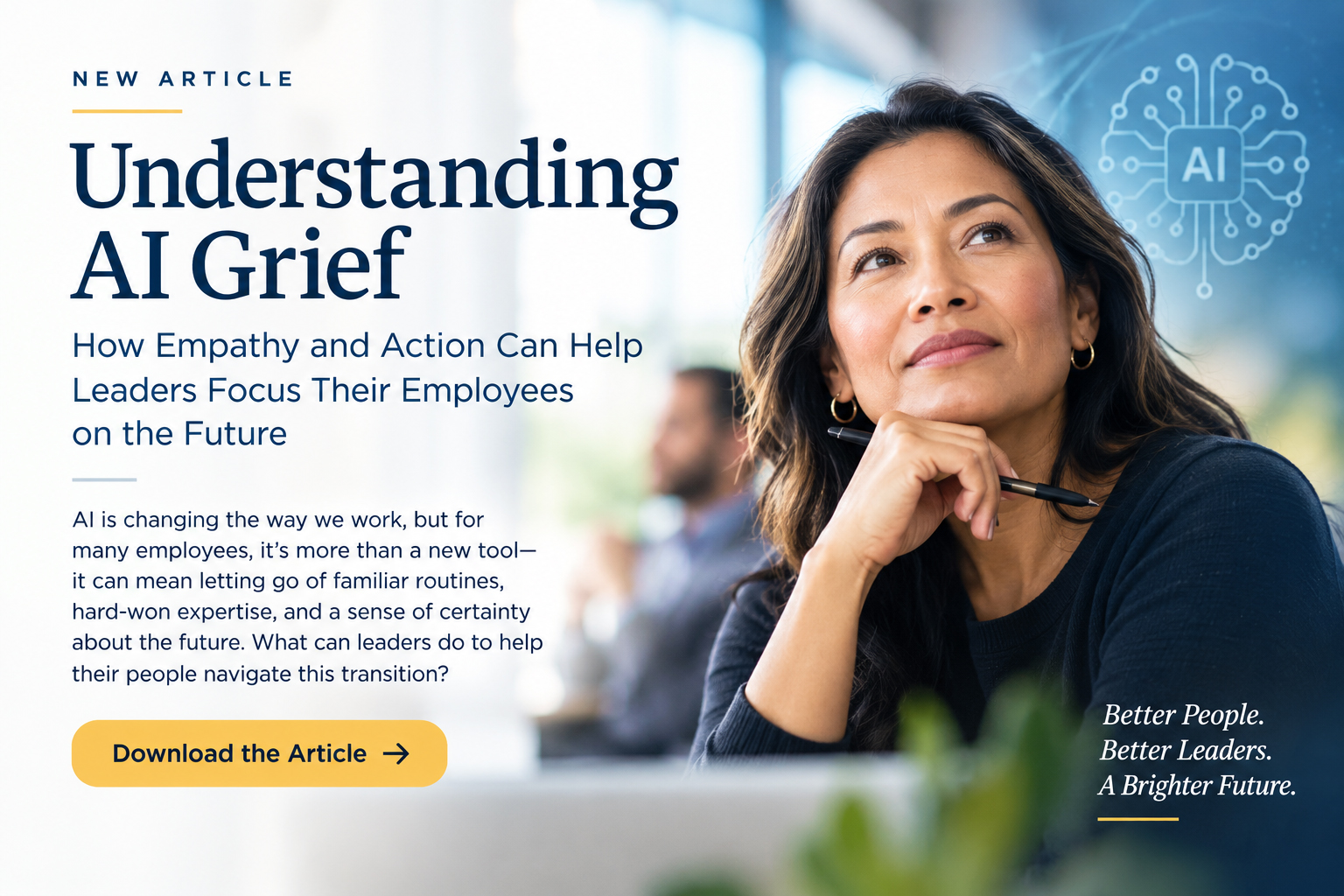
Understanding AI Grief: How Empathy and Action Can Help Leaders Focus Their Employees on the Future
AI is changing the way we work, but for many employees, embracing it isn’t simply a matter of learning new technology. It can mean letting go of familiar routines, hard-won expertise, and a sense of certainty about the future. How can leaders help their people navigate that transition?
In this article, FranklinCovey Senior Consultant and AI Advisor Kwesi Johnson explores the often-overlooked grief behind resistance to AI—and why leaders need to meet it with both empathy and action. Discover how understanding what employees fear losing can help leaders build trust, turn resistance into forward momentum, and bring their teams along into the AI future.

AI: What Government L&D Leaders Need to Know
As AI continues to reshape the workplace, government L&D leaders have a unique opportunity to modernize workforce training strategies while maintaining compliance, security, and mission readiness.

3 Ways Leaders Turn Surrender Into Accountability
Every team hits a wall: a setback, constraint, or problem that leaves people feeling powerless. The result is often blame, excuses, and disengagement.

L&D in the Era of AI: A Discussion - Round 2
In July, four leading voices in modern Talent Development, Betty, Becky, Debbie, and Tracie, came together to discuss L&D in the Era of AI. The conversation generated so much discussion that we ran out of time. So we’re continuing it. This time, we’ll focus on the practical side: how L&D can become a stronger strategic business partner, and where AI and technology can help accelerate that shift.

The Permission Mission: Creating a Culture Where People Speak Up and Step Forward
Today's organizations don't have a talent problem—they have a permission problem.
Too many capable employees hesitate to speak up, wait to be chosen, avoid difficult conversations, or hold back ideas that could make a real impact. The result? Missed opportunities, stalled leadership, and untapped potential.

Find the Readiness Gaps That Derail Learning Transformation
Transformation initiatives often begin with a lot of confidence. We know our data. Our governance is covered. We understand our skills. Our content is in good shape. The technology will integrate. Our people are ready for the change.
But how much of that confidence is based on what the organization actually knows, and how much is based on assumptions that haven't really been tested?