Blogs
|
Innovations in Reading Infographic
The National Book Foundation is a non-profit organization with a mission to promote reading and great literature. Their team has published the Innovations in Reading Infographic which lists organizations that inspire people to read and engage new audiences with literature.
The Innovations in Reading Infographic was prepared to support and promote the Innovations in Reading Prize. Every year, $10,000 is awarded to an organization or individual whose work is vital in promoting reading, through "vision, ingenuity, transformation, achievement & leadership." The $10,000 Winner of the 2015 Innovations in Reading Prize is Reach Incorporated, a Washington, D.C.-based non-profit that hires struggling teen readers as reading tutors for elementary school students.
Since 2009, The National Book Foundation’s Innovations in Reading Prize has honored 34 reading advocates who’ve made a vital difference worldwide. These honorees have a big impact! They have put over 1 million books in the hands of underserved communities, awarded over $1 million to education and literacy projects, and built over 100 new libraries in low-income neighborhoods.
In particular:
In just one year, My Own Book purchased more than 40,000 books for low-income third-graders.
Readergirlz’ Operation Teen Book Drop donated over 30,000 new YA books to low-income teens.
City National Bank’s Reading Is The Way Up® literacy Grants Program has awarded more than $800,000 to elementary, middle and high schools for creative literacy projects.
In 2014 alone, 826 Valencia awarded $120,000 in scholarships to collegebound students in the Bay area.
Honorees from all across the country
2015
Reach Incorporated (Winner),
The African Poetry Book Fund (Honorable Mention),
Call Me Ishmael (Honorable Mention),
Lambda Literary (Honorable Mention),
Motionpoems (Honorable Mention)
2014
Blue Star Families’ Books on Bases
Books for Kids
Chicago Books to Women in Prison
HOPA Mountain’s Storymakers Program
Las Comadres Para Las America
2013
City National Bank for Reading is the Way Up
Little Free Libraries
The Uni Project
Uprise Books Projects
Worldreader
2012
BookEnds
Inger Upchurch/ Real Men Read
Lilli Leight
Literacy Chicago for Reading Against the Odds
Street Books
2011
Burton Freeman/My Own Book
Electric Literature
Kore Press
YARN
2010
826Valencia
CellPoems
Free Minds Book Club & Writing Workshop
Mount Olive Baptist Church
United Through Reading
2009
Fathers Bridging the Miles
James Patterson’s ReadKiddoRead.com
Maricopa County Library District
Readergirlz
Robert Wilder
Interesting Facts
Electric Literature’s website received over 2.9 million unique visits in just six months.
James Patterson’s Read Kiddo Read website receives nearly 500K unique visits yearly and has over 150K Facebook fans.
Worldreader Mobile provides e-books written in 44 languages to over a million readers in more than 89 countries.
There are over 23,000 Little Free Libraries in more than 72 countries.
Empowering the Populations That Need It Most
Homeless
Street Books, a bicycle-powered mobile library, has served more than 1,800 people living outside, providing them with more than 2,000 books.
Lilli Leight’s "Giving Library" is located the Chapman Partnership’s Family Resource Center, which serves approximately 1,000 homeless children and their families each year.
Military
Over 1.5 million military service members and their children have participated in United Through Reading, a program which uses technology to help deployed service members read books to their kids back home.
Books on Bases has held readings and provided books to nearly 120,000 military children worldwide.
Prisoners
Teen inmates who participate in Free Minds Book Club have a recidivism rate that is one third lower than the national average.
Chicago Books to Women in Prison has donated more than 20,000 books to incarcerated women across the country.
Youth
Since 2011, The Uni Project has deployed 190 pop-up reading rooms in nearly 50 neighborhoods all across NYC.
In Memphis, where nearly 50% of children live below the poverty line, Real Men Read volunteers have read books to over 6,000 toddlers.
Via: www.nationalbook.orgThe post Innovations in Reading Infographic appeared first on e-Learning Infographics.
eLearning Infographics
.
Blog
.
<span class='date ' tip=''><i class='icon-time'></i> Jul 15, 2015 02:10pm</span>
|
|
One shout out deserves another, right? Well, I think so anyway. So, here’s the situation…
For the last few months a few of my very amazing Tech Club students—namely seventh graders Aubree and Quintin—have been submitting entries to the Flocabulary Week in Rap contest to try to win a shout out on their weekly current events video—one we share each Friday on our morning announcements program.
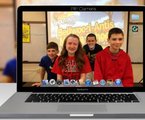
And so… I’m guessing you probably know what comes next… Yep, you’re right! Quintin’s wildly imaginative essay and drawing about an original character won this week’s challenge to earn our middle school a super cool public acknowledgement that just rocks… Seriously!
Check it out below—courtesy of a screencast created by Kermit, our go-to man of many talents.
Take a look at Quintin’s winning submission located on the Flocabulary blog. This is what the folks at Flocabulary had to say about: "We were very impressed with Quintin’s creative entry, and it stood out to us as the clear winner this week." Is that way cool or what?
Classroom Connection:
For those of you who may not be familiar with Flocabulary, let me just say that you do not want to miss this fabulously engaging edtech resource. The site contains a library of hip hop songs, videos and exercises that can be utilized to engage and inspire students to learn a variety of concepts spanning the K-12 curriculum. Academic content areas include reading, writing, literature, vocabulary, grammar, science, math and social studies. Additionally, each Friday the folks at Flocabulary produce The Week in Rap, an awesome recap of the most noteworthy national and international current events stories that occurred throughout the previous week.
But wait! There’s more! Flocabulary activities can assist teachers with mastering Common Core objectives in ELA and math. And their engaging material for social studies and science supports interdisciplinary literacy practice.
Even if you’re not a fan of rap, this is the exception! Simply put: Flocabulary is a must-have resource for every teacher’s tech-box. Be sure to dial up this site sooner than later!
Quintin and Aubree: I’m very proud of you and your accomplishments! Keep up the great work! ♥
Edutech for Teachers team
.
Blog
.
<span class='date ' tip=''><i class='icon-time'></i> Jul 15, 2015 02:10pm</span>
|
|
My post on the Five Failures of Workplace Learning Professionals has been translated into French:
FRENCH
Original in American English
Many thanks to Frédéric Domon of Entreprise Collaborative.
http://www.entreprisecollaborative.com/index.php/fr/articles/231-5-erreurs-de-la-formation-en-entreprise
Will Thalheimer
.
Blog
.
<span class='date ' tip=''><i class='icon-time'></i> Jul 15, 2015 02:09pm</span>
|
|
The Work-Learning Research website is ranked as follows:
#4 on Google
#4 on Bing
#7 on Yahoo
When searching for "learning research."
Interestingly, we hardly ever get paid to do research. Mostly we get paid to use research wisdom to make practical recommendations, for example in the following areas:
Learning Design
E-Learning
Training
Onboarding
Safety
Learning Evaluation
Organizational Change
Leadership Development
Improving the Learning Department's Results
Making Fundamental Change in Your Organization's Learning Practices
Research for me is a labor of love, and also, a way to help clients cut through opinions and get to practical truths that will actually make a difference.
But still, we are happy that the world-according-to-search-engines (WOTSE) values the research perspective we offer.
And here's a secret. We don't pay any search-optimizer companies, nor do we do anything intentional to raise our search profile (who has time or money for that?). Must be our dance moves or something...
Will Thalheimer
.
Blog
.
<span class='date ' tip=''><i class='icon-time'></i> Jul 15, 2015 02:09pm</span>
|
|
A few weeks ago I wrote a blog post about "The Monster Trash", a video my BAMS Tech Club students produced and then entered into the Intermunicipal Relations Committee’s Recycling Video Competition. Well, the results have been tabulated and the winner is… Yep, you got it! Those trashy kids of mine managed to win yet another contest—Boom!
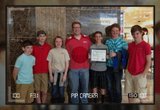
My students and I learned of this super exciting news during an Awards Ceremony at an Earth Day event held on Saturday, April 26 at the Logan Valley Mall. Not only did the students earn a very cool plaque and an ice cream party, but their winning video will be entered into the State Professional Recyclers of Pennsylvania Film Fest Contest for a chance to win a cash prize. In addition, the submission will be used in future public outreach and education programs. Is that just way cool or what?
If you missed my previous post, please take a few minutes to check out the "Monster Trash", a humorous spin on how recycling works in our school. Trust me, you’ll be glad you did! Besides being quite creative, it’s really pretty funny!
Here’s what Aubree had to say about our victory: "I am very proud that the Tech Club won the video competition because I think our video really explained the point of the recycling contest."
Kermit added, "I think that out of all of the videos we made, this one was the best one yet. We worked for many hours during and after school to make this video."
I have to agree with Kermit! This video was the bomb diggity! Not only was it an absolute blast to make, but I was very impressed with the stop animation scenes my students created. Could I be any prouder of them and their terrific efforts? Nope, because they never cease to amaze me! ♥
Edutech for Teachers team
.
Blog
.
<span class='date ' tip=''><i class='icon-time'></i> Jul 15, 2015 02:09pm</span>
|
|
After years of being embedded as a consultant in organizations who have struggled to move their stakeholders beyond a training-centric model to a performance-improvement approach, I finally realized that our painstakingly slow progress might be due to our own failures in getting our messages heard.
We in the workplace learning field are over-reliant on conveying our messages in a way that attempts to connect to our stakeholders' logical, analytical, conscious cognitive processing. The problem with this -- beside the fact that it is obviously not working -- is that most cognition occurs subsconciously. We've been trying to sing underwater.
I've always been enamored with the idea that we need to find the most important causal factors and focus on those--not on the hundreds of factors that might have minor impact. I've followed this approach in reviewing the learning research -- finding the most important learning factors, not the fad-of-the-year learning factors. But this leverage-point approach applies to our workplace-learning organizations as well. We should be looking for our most potent leverage points and focusing on those.
So, after some lengthy reflection, I have written a book chapter which describes how our leaders -- our chief learning officers, training managers, and other learning executives -- might restructure some of their organizations' standard operating procedures to send stealth messages that resonate at both a conscious and unconscious level with their stakeholders.
You can access this chapter -- which I should warn you is in rough-draft form -- by clicking here.
If link doesn't work for you, go to Work-Learning Research catalog.
Speaking on Stealth Messaging
Also, come here me talk about this at the ASTD International Conference next week (May 7-9, 2012 in Denver, Colorado, US). Here are the details:
Tuesday 10:00 to 11:15AM
Room: Mile High 1F
Research-Inspired Rubrics to Boost Training Transfer to On-the-Job Performance: The Example of the Course Review
Co-Presenter: Russ Spaulding of DIA
Wednesday 10:30 to 11:45 AM
Room: Mile High 1F
How Learning Executives Can Use Stealth Messages to Change Their Organizations. For Example: Moving from a Training-Centric Approach to a Performance-Improvement Approach
I'm speaking under the auspices of the ASTD Forum, a group of organizations who meet regularly to share best practices.
Will Thalheimer
.
Blog
.
<span class='date ' tip=''><i class='icon-time'></i> Jul 15, 2015 02:09pm</span>
|
|
School Days Around the World Infographic
The School Days Around the World Infographic looks at the differences between elementary/primary education systems across the globe. A sample of countries across Europe,Asia and Africa has been taken in order to compare aspects such as school starting times, the age children begin attending school and national curriculum subjects alongside an interesting, unique fact about regular school life in those countries.
The countries sampled in the School Days Around the World Infographic include the UK, Finland, France, Switzerland, China, South Korea, Brazil and Ghana. It has been found that the duration of an average school day also varies quite a bit depending on the country.
From looking at the School Days Around the World Infographic one can really see how despite education being a universal system, each country provides an entirely unique experience to its pupils, some being better than others, which might help us figure out what’s best for children all over the world.
Via: stuartmorris.co.ukThe post School Days Around the World Infographic appeared first on e-Learning Infographics.
eLearning Infographics
.
Blog
.
<span class='date ' tip=''><i class='icon-time'></i> Jul 15, 2015 02:09pm</span>
|
|
In this scenario, John and his best instructional-design team have to decide whether to utilize concept mapping, question answering, or multiple sessions instead of just presenting material in the normal way. Can you help them make the best decisions?
Will Thalheimer
.
Blog
.
<span class='date ' tip=''><i class='icon-time'></i> Jul 15, 2015 02:08pm</span>
|
|
"But I can’t think of anything to write." Can you even count the number of times you’ve heard that line? Probably not.
We’ve all experienced those moments when students sit and stare at blank sheets of paper or screens, almost as if they have been asked to do the impossible. Well, the next time you assign a writing activity, take the handicap away from hesitant writers by providing them with a visual prompt—a picture or image used to trigger personal experiences, thoughts, feelings or even questions that can be transferred into words to craft a piece of writing.
So, where do I find these visual cues? A great starting place would be to check out the winning entries in the Smithsonian’s 11th Annual Photo Contest in which 60 finalists were selected from over 50,000 images submitted by photographers from 132 different countries.
With categories such as the Natural World, Travel, People, Americana, Altered Images and Mobile, there surely has to be a picture or two from this collection of original photos that can ignite creative writing within your students.
Check out one of my most favorite winning photos below.
Classroom Connection:
Use photos from the Smithsonian Photo Contest (or any other resource) as a way to visually motivate students to write essays, stories, poems, etc.
Edutech for Teachers team
.
Blog
.
<span class='date ' tip=''><i class='icon-time'></i> Jul 15, 2015 02:08pm</span>
|
|
Sign up today for the eLearning Guild's Thought-Leaders series -- where they've asked me to reflect on my 15 years bridging the gap between research and practice. It's not until September, but sign up is now open.
Click here to view details and to sign up...
The description begins this way:
As workplace learning-and-performance professionals, we live in world of shiny toys, blinding clouds of floating ash, and darkness. While we have passion and good intentions, we are unable to maximize performance because we are infected with misinformation about how learning really works.
Should be fun!
Will Thalheimer
.
Blog
.
<span class='date ' tip=''><i class='icon-time'></i> Jul 15, 2015 02:08pm</span>
|