Blogs
|
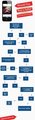
OK, so who can’t identify with the modern social media craze known as the selfie? Yep, taking self-indulgent pictures has become so popular that the term selfie was even officially added to the Oxford English Dictionary last year. These types of photos seem harmless enough, right? After all, what’s wrong with sharing a little love of one’s self?
Well, before you (or your students) jump on the latest bandwagon and potentially expose yourself to approximately 2.4 trillion Internet users, think about this: Just because you can snap a selfie, does it mean you should? Check out the infographic shown below for some advice.
Classroom Connection:
Share this flowchart with students to encourage them to think before they snap and click!
A shout-out to AlliWorthington.com for creating and sharing this very useful and relevant infographic!
Edutech for Teachers team
.
Blog
.
<span class='date ' tip=''><i class='icon-time'></i> Jul 15, 2015 02:15pm</span>
|
|
Despite decades of advocacy by our best trade associations, our wisest gurus, and our most practical researchers, most organizations today still rely on training courses that have little impact in promoting on-the-job performance.
As I mentioned in a recent article, we as learning professionals continue to fail in five major ways. You can access that article by clicking here.
I used to think that this was just a failure of knowledge, but in most of the organizations in which I've consulted, there are at least a few learning-and-performance professionals who understand that training alone is not enough. Part of the problem is the dead weight of tradition--the "old normal" continues to blind us to new possibilities. The enlightened few have a hard time pushing back against the gravitational pull of this mass hypnosis.
I recently had a new insight--a way of looking at this problem that I think might enable organizations to break out of their bad habits. The solution is that we have to gain control of the leverage points we have to push for change. We have to change the levers that warp and control our thinking. The big lever is learning measurement. I've been pushing this for years as our most important leverage point. If we measured better, we'd get better feedback, which would push us to create better learning interventions.
But learning measurement isn't our only lever and changing your learning measurement practices is not always easy politically. Beside learning measurement, I've compiled a whole list of other leverage points that really matter. In fact, it was only recently that I had this incredible insight (one I maybe should have had 10 years ago), that we ought to figure out all the levers we have at our disposal and change them to help push our organizations toward a performance orientation. I'd like to reveal one of those levers today.
One of the things we do in our organizations is review our training courses from time to time--either intentionally or by osmosis and feeling. Well, instead of using the wrong metrics, why not use methods that we know--based on our understanding of learning-and-performance--are likely to be good indicators of whether our training course will support actual on-the-job performance.
The Course Review Template is something that can be used on any training course--classroom training or e-learning.It includes a set of questions that are indicators of how performance-based your training course is. Each rubric in this tool is inspired by research or proven practices which I've learned in my 25+ years in the workplace learning field.
I should give you a warning. You're unlikely to be happy with what you find. If I bet each of you one dollar for each training course of yours that doesn't support performance, I'd be a millionaire overnight.
But to be fair, I'm going to let you try out the tool yourself. It's free. Use it. And, let me know how your training courses rate. Are they likely to improve on-the-job performance or not?
Click to Download the Course Review Template
After you review a course, post your results at the following link, and when we get enough responses, we'll let you compare your results to others.
Click to Post Your Course Review Results
Maybe I'm having a momentary bout of delusional cognition, but I'm thinking right now that this simple Course Review Template might just revolutionize our ability to simply review our courses to see how performance focused they are.
Such a grandiose statement will provoke eye rolls in some, so let me stipulate a few things. First, this is a first draft, so the Course Review Template is going to be imminently improveable. Second, the Course Review Template is NOT a precision instrument. It is not psychometrically derived, the numbers it assigns to each rubric are best guesses, and there was no super-committee here--just me. Third, the rubrics themselves are subject to interpretation. Instead of overcomplicating the form and making it unusable, I decided to keep it simple and make it less precise. Finally, course reviews are just one of the levers you'll need to completely transition from a course-focus to a performance-focus.
The bottom line is that we have to try some innovate new things to push our organizations to a performance focus. The old ways have not worked. The Course Review Template--or something like it--is worth a try. And seriously, I think it could revolutionize the way your organization views its training courses.
Will Thalheimer
.
Blog
.
<span class='date ' tip=''><i class='icon-time'></i> Jul 15, 2015 02:14pm</span>
|
|
Debunking Common Myths About Virtual Schools Infographic
While online and virtual schools are becoming more mainstream the misconceptions surrounding them are still at large. The truth is that quality virtual school programs are evolving and adapting to the needs of a digital society in a way that many traditional brick and mortar schools aren’t. The Debunking Common Myths About Virtual Schools Infographic shows that when education is no longer confined to a desk, classroom, or building the possibilities are endless.
Myth: Virtual schools are only for "troubled" students.
Truth: Online courses work well with all kinds of students. While online courses have been proven to work well with at-risk students in urban and rural areas, they work equally well for gifted students looking to get ahead, students looking to recover credits, and students who want to take an entire course load online.
Myth: Students taking classes online are completely isolated.
Truth: Students in quality virtual learning programs should never feel completely on their own. Teachers proactively communicate with students and online concept coaches are there to provide on-demand tutoring and concept demonstrations as needed.
Myth: Students in virtual schools will lack communication skills.
Truth: Online courses drive communication through a variety of mediums. Students can communicate through e-mails, group chats, forums, or discussion boards. These alternative means of communication are often ideal for introverted students who may feel hesitant to speak up in class, or "late learners" who need more time to develop their thoughts.
Myth: Online courses are all the same/not challenging/boring.
Truth: Nothing could be further from the truth. A good virtual school program is so much more than a textbook on a screen. Quality learning providers are offering courses with on-screen teachers and interactive, multimedia instruction that utilizes graphics, simulations, and props. Assessments are used to collect data on exactly where students are struggling or excelling so instruction can be differentiated accordingly. Often times, technology can help make connections between instruction and real life situations to drive deeper understanding in a way that traditional classroom settings can’t.
Via: www.wherelearningclicks.comThe post Debunking Common Myths About Virtual Schools Infographic appeared first on e-Learning Infographics.
eLearning Infographics
.
Blog
.
<span class='date ' tip=''><i class='icon-time'></i> Jul 15, 2015 02:14pm</span>
|
|
I’m typically not the self-promoting type, especially because I do not write this blog for any other reason than it has become one of my passions of life. However, when this girl gets mentioned in an article with the likes of edtech rock stars Richard Byrne (Free Technology for Teachers), Vicky Davis (Cool Cat Teacher) and Two Guys and Some iPads (Brad Waid and Drew Minock), there is cause for a high five—or two!
So, here’s the background: The other day I came across a tweet regarding 10 blogs every teacher should follow. Since I’m always looking for new and innovative ideas, I immediately clicked on the link. Little did I know that Edutech for Teachers would be on this recommended list! Yeah, really! Check out the article here.
Not only should you add the other nine authors and their blogs to your personal learning network, but I highly suggest subscribing to eSchool News, a daily tech news and innovation publication that is jam packed with the latest and greatest edtech information about how educators are using technology to advance learning.
Many thanks to Contributing Editor Sydney Mineer for the shout out! You really made my day!
Edutech for Teachers team
.
Blog
.
<span class='date ' tip=''><i class='icon-time'></i> Jul 15, 2015 02:14pm</span>
|
|
CALL FOR CONTRIBUTIONS - Do you use new technologies and social media to teach in higher education? Please consider submitting a chapter (by January 15, 2012) to the upcoming book "The Plugged-In Professor". Details, contact information and an easy-to-use template are all available at http://nova.wpunj.edu/wilderh/Plugged-in_Professor_Call.html.
Will Thalheimer
.
Blog
.
<span class='date ' tip=''><i class='icon-time'></i> Jul 15, 2015 02:13pm</span>
|
|
This is going to be a great conference, first, because I'm doing a keynote address, second, because I'm also speaking on Situation-Based Learning Design, and third, because this conference will have some very unique elements.
In addition to me, the conference highlights other experts in learning and simulation. Dr. Richard Saetti will speak on using cinema and simulations. Brandon Andrews and Dean Fouquet will talk about mobile simulations. Phil Clements will speak on the business ethics of immersive learning. Mike Graham and Ken Spero will discuss how to blend soft and hard skills in simulations. Ron Kantor will speak on social media and immersive learning. And the list goes on.
This conference provides many unique advantages compared with other conferences, which aren't as focused on the development of simulations and immersive-learning environments. First and foremost, the folks who are leading the discussions provide a blend of practical wisdom. These folks don’t just talk about immersive learning; they’ve actually built simulations that work. The conference is designed to have two tracks, one more conceptual—to ensure that we learn the right mental models about simulation design and delivery—and one more focused on the how-to’s of authoring simulations—to help us understand the nuts and bolts of how to actually build simulations that work.The conference is also going to provide a great opportunity for learning and networking, because it's going to be a small, intimate affair. If you want a chance to hob-nob with learning and simulation experts, here is your chance.
The conference is sponsored by NexLearn, creators of SimWriter (a simulation authoring tool). All conference attendees will get a copy of SimWriter Simplicity--so even folks new to simulation authoring can build their own simulations.
EARLY-BIRD SPECIAL Ends Shortly in about a week.
To check it out or to register, click here.
Will Thalheimer
.
Blog
.
<span class='date ' tip=''><i class='icon-time'></i> Jul 15, 2015 02:12pm</span>
|
|
Effective Use of Instagram in the Classroom Infographic
It has been long since social media had made its way to classroom and been successfully influenced education to a good extent. Use of Twitter, Facebook and Pinterest have already reformed education and there are plenty of educators who batted for the use of social media in education as these media have introduced new learning activities in classroom. The Effective Use of Instagram in the Classroom Infographic shows how the popular social media, Instagram can be used as a learning tool in the classroom.
One of the best ways to use Instagram in the classroom is to share various works of students, their creative artworks and let other students and their families see them. For this, you need to create a school community and make a private account for your school if you don’t want others to see your shares.
Encourage your students to share photos related to their favorite subject. Math lovers can share any photo describing mathematical concepts like angles, parallel lines, etc. Similarly, students who love literature or language can share photos from fro their favorite books or characters.
Let your students use their creativity and share with them photos that would prompt them to write essays or stories. Share a photo and ask them to compose a story as part of their weekly assignment.
Use Instagram and reward a student once a month by featuring his/her works. This is a great way to encourage your students to carry on with their good work.
Keep a track of student performance through their activities at the beginning and at the end of the year. Check out their shares and compare them to note their progress. There are sites like Prinstagr.am that offer low cost prints that you can use to see how your students have improved.
Assign your students exciting projects like recording how a chemical compound changes color in Instagram or record the changes that occur when a plant unfurls.
Create fun events! Ask your students to be a comic character for one day and share photos!
View also:
26 Effective Ways to use Twitter for Teachers and Educators Infographic
How Can Educators Use Pinterest infographic
Via: www.fedena.comThe post Effective Use of Instagram in the Classroom Infographic appeared first on e-Learning Infographics.
eLearning Infographics
.
Blog
.
<span class='date ' tip=''><i class='icon-time'></i> Jul 15, 2015 02:12pm</span>
|
|
The Neon Elephant Award 2011 went to a researcher whose work translates complicated research into instructional-design models with practical value.
Click here to see who won...
Click here to learn more about the Neon Elephant Award...
Will Thalheimer
.
Blog
.
<span class='date ' tip=''><i class='icon-time'></i> Jul 15, 2015 02:11pm</span>
|
|
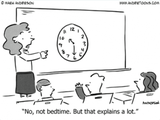
As Quincy Jones once remarked, "I’ve always thought that a big laugh is a really loud noise from the soul saying, "Ain’t that the truth." That said, Edu-fun Friday is a series devoted to adding some humor to the lives of teachers who visit this blog. After all, there’s nothing better than ending the week on a positive note! Plus, do we have the best topics to provide us with some comic relief or what?
Raise your hand if you’ve ever had these thoughts before! Both of mine are up—ha, ha!
A shout out to the Teaching Resources Facebook page for sharing this TGIF laugh! And kudos to cartoonist Mark Anderson for providing us with the laughter!
Edutech for Teachers team
.
Blog
.
<span class='date ' tip=''><i class='icon-time'></i> Jul 15, 2015 02:11pm</span>
|
|
Who is better at crafting an instructional message about science, scientists or instructional designers?
I say we instructional designers SHOULD be able to do a better job, so I'm encouraging YOU, my colleagues, to give Alan Alda's Flame Challenge a try.
Here's Alda's challenge:
"We’re asking scientists to answer the question - "What is a flame?" - in a way that an 11-year-old would find intelligible and maybe even fun."
You can read the full challenge by clicking here.
The deadline is April 2nd, so you better get moving!!
To see what you're up against, consider the content, which you can find, for example, on Wikipedia, under the entry for flame.
Some thoughts on how to be successful:
Consider pairing with an actual scientist (it's not really us against the SME's!)
Use adult learning principles, but not in the stupid, static, uncreative way most of us use them on adults, which is pretty ineffective for adults too. SMILE.
Realize that if you really want to win, you may actually have to craft your piece in a way that won't really do all the things that we'd like to do as instructional designers. For example, where we know extra spaced practice would be good, those who judge the contest may not understand all that.
Utilize multimedia and visually beautiful images.
Utilize language that, like a flame, (a) illuminates, (b) produces emotional heat, (c) and mesmerizes attention.
Good Luck Instructional-Design Team!!
Will Thalheimer
.
Blog
.
<span class='date ' tip=''><i class='icon-time'></i> Jul 15, 2015 02:10pm</span>
|