Blogs
|
Social Media is hot, but it is not clear how well we are measuring social media.
A couple of years ago I wrote an article for the eLearning Guild about measuring social media. But it's not clear that we've got this nailed yet.
With this worry in mind, I've created a research survey to begin a process to see how best social-media (of the kind we might use to bolster workplace learning-and-performance) can be measured.
Here's the survey link. Please take the survey yourself. You don't have to be an expert to take it.
Here's my thinking so far on this. Please send wisdom if I've missed something.
We can think about measuring social media the same way we measure any learning intervention.
We can also create a list of all the proposed benefits for social media, and the proposed costs, and all the proposed harms, and we can see how people are measuring these now. The survey will help us with this second approach.
Note: Survey results will be made available for free. If you take the survey, you'll get early releases of the survey results and recommendations.
Also, this is not the kind of survey that needs good representative sampling, so feel free to share this far and wide.
Here is the direct link to the survey: http://tinyurl.com/4tlslol
Here is the direct link to this blog post: http://tinyurl.com/465ekpa
Will Thalheimer
.
Blog
.
<span class='date ' tip=''><i class='icon-time'></i> Jul 15, 2015 02:17pm</span>
|
|
So in the words of my most favorite middle school Geeky Girl, Simply Aubree:
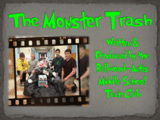
Ladies and gentlemen, please direct your attention to this screen—even though you’re probably already looking at it! The BAMS Tech Club recently entered a recycling video contest, and we wanted all of you to see the finished product. So, without further ado, please enjoy our video entitled "The Monster Trash", written and produced by Aubree, Kermit, Alex, Blake, Corey and Quintin with a little help from our friends, Ms. Forshey and Mr. Trexler.
So, is that video just awesome or what? My most favorite parts are those in which these trashy students used stop animation to create various scenes! And yes—doing so was their idea!
I love, love the skills my Geek Squad continues to learn and/or hone as they create these kinds of projects! Can you say rigor, relevant and real-world? Does it really get much better than that? I don’t think so!
Stay tuned for the results of the contest which will be revealed on April 26, Earth Day…
Edutech for Teachers team
.
Blog
.
<span class='date ' tip=''><i class='icon-time'></i> Jul 15, 2015 02:17pm</span>
|
|
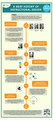
A Brief History of Instructional Design Infographic
Instructional design has come a long way. From ‘training’, which was merely considered a passive function in an organization, the emphasis has now shifted towards making learning and talent development an integral part of corporate culture. The Brief History of Instructional Design Infographic provides a brief history of how instructional design has changed over the years to take its present shape.
Origins
Instructional design first began during the World War II when a large number of psychologists and educationists were summoned to develop training materials and to apply their knowledge of evaluation.
The Programmed Instruction Movement - Mid-1950s to Mid-1960s
1954 - B.F. Skinner through his article "The Science of Learning and the Art of Teaching" pioneers the concept of programmed instructional materials.
1956 - Bloomberg Benjamin leads the development of the "Taxonomy of Educational Objectives" identifying 3 principal domains of learning.
Early 1960s - Robert F. Mager emphasizes the importance of desired behavior, learning condition and assessment in writing learning objectives.
The Criterion-Referenced Testing Movement - Early 1960s
In 1962, Robert Glaser coins the term "criterion-referenced measures" to assess students’ entry-level behavior & post-training competency.
The Conditions of Learning - 1965
In 1965, Robert Gagne identifies the 9 events of instruction highlighting some very important areas in learning hierarchies and hierarchical analysis.
A Rise of Interest in the Systems Approach - 1970s
A number of models based on information-processing- approach are developed across military, academia and organizations, many of which use media to improve the quality of instruction.
The Birth of eLearning - 1980s
Methods are evaluated as to how the PC could be used in an academic and interactive context as PLATO, the first generalized computer assisted instruction system allows computers to be integrated into instruction. Concurrently, there is also a rising interest in the principles of cognitive psychology.
A Rising Interest in Constructivism and the Importance of Performance -1990s
The constructivist theory underlines the importance of "authentic" learning tasks that replicate the actual complexity of the real world environment of traineesas opposed to the theoretical learning approach which preceded it.
The Rise of Online Learning - 2000s
Deeper internet penetration, better bandwidths and rise of the social media makes online learning a viable, economical & effective medium.
2010 and beyond
Now is the age of learning technology in all its form - social, mobile and personalized. Big data and analytics are shaping the way how learning is tailored to the needs and preferences of each learner. The principles of instruction are no doubt, rooted in years of research in ID, but learning is now designed to be more contextual, fluid and learner-friendly. Social Mobile Analytics and Cloud (SMAC) technologies are at the heart of this era of learning.
Read also: Instructional Design Models and Theories
Via: blog.originlearning.comThe post A Brief History of Instructional Design Infographic appeared first on e-Learning Infographics.
eLearning Infographics
.
Blog
.
<span class='date ' tip=''><i class='icon-time'></i> Jul 15, 2015 02:17pm</span>
|
|
I've been sharing the ideas behind the learning and forgetting curves for years.
In this new video, I go into depth about the powerful implications of these curves.
On Vimeo
On YouTube
Will Thalheimer
.
Blog
.
<span class='date ' tip=''><i class='icon-time'></i> Jul 15, 2015 02:17pm</span>
|
|
Whether you’re in need of some Easter lessons with a spiritual nature or maybe you’re an educator just looking for some seasonal fun. Regardless of your interest—puzzles, scavenger hunts, videos or poetry activities, you’re going to love bringing this holiday into your classroom with this updated collection of Easter Resources:
» Harry Kindergarten: Check out this newly released video entitled "The Bunny Goes Hop", an Easter pattern song for kids, produced by my colleague, Pete Harry. (For additional educational videos and songs, visit the Harry Kindergarten YouTube channel and/or website.)
» Easter Teaching Resources is a Pinterest board filled with arts and crafts ideas, educational activities, and printables to help you celebrate Easter in the classroom.
The abcteach Easter category page features hundreds of fun, educational activities for classroom or home use, including coloring pages, crafts, board games, readings, puzzles, interactives, and much more!
» Teaching Ideas offers an extensive range of ideas and resources to teach and learn about Easter—poems, stories, puzzles, curricular activities, images, banners, fonts, videos and Easter Egg Hunts.
» Poetry activities, interactive games, scavenger hunts, sequencing cards, puzzles, a variety templates and more await you on TES Connect—the largest teacher network in the world.
» Larry Ferlazzo’s Web Site of the Day is another site packed with online resources for teaching and learning about Easter and Passover. A few that stood out for me include a variety of Easter videos and articles from the History Channel, the Easter Bunny Rap, How Easter Works and Easter by the Numbers—a fun infographic about this holiday.
» Education World contains resources for teaching science, graphing and creative writing that fit perfectly for Easter fun and learning.
Classroom Connection:
Use these themed lesson plans, activities and materials to teach students about Easter and Passover.
Edutech for Teachers team
.
Blog
.
<span class='date ' tip=''><i class='icon-time'></i> Jul 15, 2015 02:16pm</span>
|
|
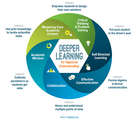
Deeper Learning for Alegbraic Understanding Infographic
The Deeper Learning for Alegbraic Understanding Infographic covers the six competencies of Deeper Learning and shares strategies for using these competencies to make learning algebra more empowering, effective, and meaningful.
Providing the right conditions for learning, every student can successfully understand algebra. What are these ideal conditions? They involve students thinking critically, working collaboratively, communicating their ideas effectively, and directing their own learning as they understand and master core academic content.
Deeper Learning for Algebraic understanding can help provide the right learning conditions. Deeper Learning isn’t simply a checklist; it is a set of interrelated competencies that students need in order to develop a true understanding of algebra content and processes that they can use to apply their knowledge to new and unfamiliar challenges in the classroom, in life, and at work.
When students are engaged in Deeper Learning, algebraic reasoning can be developed at any age. The possibilities and opportunities provided by blended learning models using appropriate digital tools and adaptive capabilities can support differentiation, acceleration, and remediation to enable student understanding. For teachers with a large number of students, adaptive learning technologies extend the capacity to individualize lessons and enhance student learning. Using the principles of Deeper Learning both in the classroom and with digital technology, educators can help elementary, middle, and high school students overcome barriers to learning algebra.
For more information download the latest white paper on Algebra Readiness through Deeper Learning in Middle School: Empowering Students and Teachers to Achieve with Confidence.
The post Deeper Learning for Alegbraic Understanding Infographic appeared first on e-Learning Infographics.
eLearning Infographics
.
Blog
.
<span class='date ' tip=''><i class='icon-time'></i> Jul 15, 2015 02:16pm</span>
|
|
My Dell Vostro laptop (after about 2 years of use) regularly runs 2 to 2.5 hours on its battery. It is a powerful laptop. I bought the Lenmar external battery to help me work on long-distance flights and to take to coffee shops, meetings, etc. (where I'm not sure I'll be able to find an electric outlet). I used the battery only once on a 5 to 5.5 hour flight from San Diego to Boston. And it worked great (so far) so I thought I'd tell you about it.
I used my regular battery till I had about 20% charge left. I plugged the Lenmar into the place where my power-cord normally goes. It quickly (within about 30 minutes) boosted my battery capacity to about 98%--all the time I was still using my computer. I didn't have to reboot like I might have had to do if I was switching laptop batteries. I unplugged the Lenmar and continued to use my laptop and had about 50% left of it's capacity when the flight attendant told us to turn off all electronics. In other words, I probably had my computer on for about 5 hours, and it's likely it might have gone on for up to 5.5 to 6 hours.I don't know whether this Lenmar external battery will always perform this well, but so far, it's perfect for what I need it for. 1. It doubled my battery life. 2. It's about one-third to one-half the price of an extra computer battery. 3. It's reasonably small, a little smaller than an Ipad. 4. It didn't get hot (a little warm maybe). 5. It's easy to use. 6. It is better than carrying a second laptop battery because you don't have to shut down your computer to install the battery--you just plug it in. It is bigger than a regular laptop battery. 7. You can also charge your cell phone (I think at the same time, though I haven't tried that yet) 8. And it looks good too.In its first use, the Lenmar external battery appears to be a real find. I had no idea external portable batteries for laptops existed--and there seem to be only a few on the market that can handle laptops.
Will Thalheimer
.
Blog
.
<span class='date ' tip=''><i class='icon-time'></i> Jul 15, 2015 02:16pm</span>
|
|
As Quincy Jones once remarked, "I’ve always thought that a big laugh is a really loud noise from the soul saying, "Ain’t that the truth." That said, Edu-fun Friday is a series devoted to adding some humor to the lives of teachers who visit this blog. After all, there’s nothing better than ending the week on a positive note! Plus, do we have the best topics to provide us with some comic relief or what?
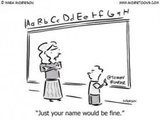
I have not yet experienced this type of student response, but I’m sure it’s only a matter of #time!
Does cartoonist Mark Anderson create the best edtech laughs or what?
Edutech for Teachers team
.
Blog
.
<span class='date ' tip=''><i class='icon-time'></i> Jul 15, 2015 02:16pm</span>
|
|
The Benefits of Out of School Math Programs Infographic
Though slowly improving over time, the most recent national assessments indicate that about six out of every ten 4th and 8th grade students are still not working at grade level in mathematics. What can we do to accelerate the impact schools have on these rates of student proficiency? The Benefits of Out of School Math Programs Infographic features four out of school math programs that can help students connect to what is going on in the classroom and help students, especially those at risk, reach proficiency.
Out of School Math Programs to Raise Achievement
Districts, schools, and teachers taxed with too little time to effectively address the individual needs of all students during the school day can find ways to support the continued growth of each student and effectively close significant gaps by thinking differently about when and where learning happens. Children spend about 20 percent of their waking time annually in formal classroom education. Making use of some of the remaining 80 percent of their time by exploring and enhancing learning in out of school time (OST) settings can make a substantial difference in learner’s present achievement and future success.
The Harvard Family Research Project’s review paper, The Federal Role in Out-of-School Learning: After-School, Summer Learning, and Family Involvement as Critical Learning Supports, notes "Educators, policymakers, and families increasingly agree: schools cannot do it alone. Children need multiple opportunities to learn and grow—at home, in school, and in the community." The same study cites reports such as Evaluation of Enhanced Academic Instruction in After-School Programs and the Study of Promising After-School Programs that show it’s possible to make significant gains in math test scores, particularly for low-income and minority students.
OST Opportunities
At Home: Ten years of research of over 100 studies shows that family involvement improves skills.
After School: After-school math activities are of particular benefit to learners who are from low-income households.
In the Summer: A 6-year study found that attendance in a summer math program resulted in a 20% improvement compared to students who did not attend.
School and Community Partnerships: A study of 39 schools found that family and community involvement supports math proficiency.
What’s essential to boosting achievement with OST programs? Connecting to what’s happening in the classroom.
Research-based Best Practices for OST Programs
Connect to grade-level benchmarks, standards, and the school-day curriculum to increase achievement.
Develop thoughtful, fun, accessible activities.
Survey and build on students’ interests.
Motivate and engage all students to participate.
Provide real-world activities that connect to the broader community.
Provide effective tutoring and differentiated instruction for all skill levels.
Integrate technology.
Provide homework help.
Provide staff training and professional development.
Schools are using OST programs in blended models across the country with great success, many of them using DreamBox Learning Math. Want to get started or expand your own programs? Download the white paper Four OST Math Programs to Raise Achievement that provides more research, best practices, case studies, and funding resources you can use to deepen student understanding, improve confidence, and raise mathematics achievement.
Via: www.dreambox.comThe post The Benefits of Out of School Math Programs Infographic appeared first on e-Learning Infographics.
eLearning Infographics
.
Blog
.
<span class='date ' tip=''><i class='icon-time'></i> Jul 15, 2015 02:15pm</span>
|
|
To view this as a PDF, click here.
-------------------------
To improve, we must know our biggest failings.
In the training and development field, our five biggest failures are as follows:
We forget to minimize forgetting and improve remembering.
We don’t provide training follow-through.
We don’t fully utilize the power of prompting mechanisms.
We don’t fully leverage on-the-job learning.
We measure so poorly that we don’t get good feedback to enable improvement.
1. Minimizing Forgetting, Improving Remembering
It is not enough to help people understand new concepts or even to motivate them to utilize those concepts. If they don’t remember concepts when they encounter situations in which those concepts would be useful, then previous understanding and motivation is for naught.
There are three powerful mechanisms that support long-term remembering, (a) aligning the learning and performance contexts, (b) providing retrieval practice, and (c) utilizing spaced repetitions. Most of our learning interventions do a poor job of providing these mechanisms—resulting in training that may create awareness but doesn’t support remembering or performance improvement.
We need to give our learners more realistic practice using scenarios and simulations. We also need to space repetitions of learning over time—much more than we do now. Instead of trying to teach everything at a basic awareness level, we need to cover less content—but not just present it—instead giving our learners opportunities for deliberate practice.
2. Training Follow-Through
Providing training but no effort to ensure that learners will apply what they’ve learned is the height of professional malpractice. If we assume that learners remember what they’ve learned (which as we just saw is not a given), learners still must (a) remain motivated to apply what they’ve learned, (b) feel that there is some benefit to applying the learning, (c) have the resources and time to put their learning into practice, (d) get feedback and guidance to improve their performance, and (e) be prepared to overcome obstacles and frustrations in applying the learning.
Note how the first two failures create an additive effect—both significantly lessen the likelihood of on-the-job application of the learning. If learners don’t remember, they’re not going to apply what they’ve learned. If learners don’t receive after-training follow-through support, they are unlikely to provide the continuous and persistent focus needed to apply the learning in a way that creates sustainable success.
To reach a credible level of training follow-through we need to (a) engage our learners managers to enlist their support, (b) provide reminders to apply the learning, (c) provide relearning opportunities for that which has been forgotten, (d) enable additional learning to improve and elaborate on the performance, (e) ensure our learners have the resources and time they need to apply the learning and integrate it into their behavioral repertoire, (f) provide coaching support to guide the learning-and-performance process, (g) ensure the learners are incentivized either tangibly with money or perks or intrinsically by aligning efforts with personal values and sense-of-identity, and (h) encourage persistence even in the face of obstacles and frustration.
3. Prompting Mechanisms
Prompting mechanisms rely on one particularly powerful foible of the human cognitive architecture—that our working memories are triggered easily by environmental stimuli. Prompting mechanisms include things like job aids, performance support tools, signage, intuitive cues in our tools and equipment, and some forms of management oversight. They work because they prompt certain strands of thinking, and thus performance. For example, a job aid that lists 5 key interview goals, 10 key interview questions and their rationales automatically triggers in the interviewer a certain way of thinking about interviewing. For example, an interview template might remind its user that interviews are more telling if interviewees are asked to perform a work task or describe how they would perform a work task. Without such a prompt, the interviewer might focus only on how well they think the person would fit into the work culture, etc.
While we are aware of these prompting mechanisms, we are not aggressive enough in their use. If we utilized prompting mechanisms more often with our training and more often as a replacement for training, we’d create better outcomes. If we went looking for grassroots prompting mechanisms already being used and helped spread their use, we’d be more effective. If we evaluated learning facilitators on their use of prompting mechanisms, we’d be more likely to encourage the use of prompting mechanisms. If we asked learners in training to practice with prompting mechanisms, we’d see more being used on the job—and our learners would remember more of what they learned.
4. On-the-Job Learning
We as learning professionals tend to focus almost exclusively on the creation and delivery of training interventions even when we know that our learners are doing a great deal of their learning on the job without any training. Employees learn through trial-and-practice, getting help from others, through social media, by reading task instructions, by using help systems, and so forth. While we have much less direct influence on on-the-job learning than on training, we do have some influence and we ought to use it if we are serious about getting results.
Often the biggest impact we can have is by accessing managers and encouraging them to actively promote learning. Managers can improve learning in their direct reports by (a) making it a point to monitor their employees’ competencies and guide them toward learning opportunities, (b) being approachable and available for questions and advice, (c) creating a culture of learning and information sharing, (d) encouraging data-driven decision-making instead of opinion-driven decision-making, (e) utilizing an experimental mindset, for example by encourage pilot-testing and rapid prototyping, and (f) giving direct reports time for learning and exploration.
We can also have an influence on on-the-job learning by creating and maintaining social-media mechanisms that can be tailored to particular needs. For example, wikis can be used by project teams to get input from various parties and blogs can be used by senior folks to lay out a compelling vision. We can encourage better on-the-job learning by improving people’s ability to coach their fellow employees. Too often people asked to coach others do a poor job because they just don’t know what good coaching looks like.
We can utilize diagnostic tools to help people in the organization see things about themselves—or about the organization—that they might not otherwise see. For example, if the organization engages in an effort to improve coaching ability, those being coached can be asked to take a short diagnostic survey on how well their coach is doing in coaching them. If an organization wants to change its culture to one that is more flexible and creative, we can utilize a diagnostic to track progress. We can also use a diagnostic to get the organization talking about specifics—so that employees know what behaviors represent the past culture and which represent the new culture.
There are, of course, other things we can do to directly influence on-the-job learning. In addition, we can change our brand by stopping our tendency to be order takers for training. By changing the way we define our role, we can encourage the business side to be fuller partners in organizational learning.
5. Measurement and Feedback to Spur Improvement
We as learning professionals suck at measurement, creating a vacuum of information that pushes us to make poor decision after poor decision in our learning designs. By only seeking learner opinions about the learning, we encourage a bias toward entertainment and engagement and away from content validity, remembering, and application. By measuring only when the learners are in the training context, we don’t learn whether the learning intervention would generate remembering in a work context that is not like the training situation. By measuring only during the learning event, we measure the learning intervention’s ability to create understanding, but we do not measure the learning intervention’s ability to support long-term remembering. We also fail to examine whether any training follow-through is utilized. By utilizing only low-level questions in our tests of learning, we fail to measure the ability of our learners to make decisions that relate to workplace performance. In short, we don’t get the feedback we need to make good learning decisions.
Maintaining ourselves in a state of permanent darkness, we continue to make terrible decisions in regard to learning design, development, and deployment. We design primarily for engagement and understanding, while ignoring remembering, motivation, and application. We hire and promote trainers and training companies who get great ratings but who don’t help learners remember or apply what they’ve learned. Because our measurement is focused only on training, we fail to engage our business partners to ensure that they are adequately supporting learning application—we also never learn what obstacles and leverage points face our learners when they go to apply the learning in their jobs. We build e-learning programs that encourage learners to focus on low-level trivia instead of focusing on the main points. By abstaining from diagnostics, we leave employees blind to conditions from which they might benefit. Poor measurement enables the first four failures.
The bottom line on measurement is that measurement should provide us with valid feedback. Unfortunately, because we haven’t taken the human learning system into account in our measurement designs—and in our measurement models—we are getting biased information and drawing inappropriate conclusions from poor data.
The Five Failures are Fixable
We as learning professionals—as a whole—though working honorably and with good intentions, are too often failing to maximize our impact. Our job is work-performance improvement. We can start by improving our own work performance.
But instead of focusing on everything—which will certainly overwhelm us—we should focus on the things that really matter. We should focus on our five failures. Instead of following willy-nilly prescriptions that pop like fads from a popcorn popper—we should focus on five things that are fundamental—and inspired by the learning research. We should focus on the five failures.
In this brief article, I have provided strong hints about how to rethink and redirect each of the five failures. While such a brief synopsis is certainly not sufficient to enable you to completely redesign your learning efforts, it should, I hope, motivate you to get started.
-------------------------
To view this as a PDF, click here.
Will Thalheimer
.
Blog
.
<span class='date ' tip=''><i class='icon-time'></i> Jul 15, 2015 02:15pm</span>
|