Blogs
|
If you are working on spelling or if you are hosting a spelling competition with your students, here is a cool website that you can work on spelling with your students: SpellingBeetheGame
The spelling game asks you to choose one of the real pictured characters and then you can play the game by writing the words that you hear on your keyboard. To hear the word, you simply to click on the hear word, you can also listen the definition of the word or you can listen the word in a sentence. With your each correct spelling, you can advance to the next round to win the game.
A cool game that you can offer your students to play at home or you can play it in the classroom in a competitive way!
Ozge Karaoglu
.
Blog
.
<span class='date ' tip=''><i class='icon-time'></i> Jul 16, 2015 07:49am</span>
|
|
Andrea Hernandez, known as edtechworkshop in the blogger- and Twittersphere has written a thought provoking blogpost about Where’s The Authentic Audience? She takes a closer look at the buzz word circulating among blogging educators and classrooms and asks tough questions. What happens when there is no audience coming to your or your students’ blogs? She elaborates her point by reflecting on the importance of quality work, connected teachers, give and take, writing with an audience in mind, digital literacy and humility.
I am honored that she has allowed me to cross post her article here on Langwitches ( I do not have many guest posts on Langwitches). I encourage you to head over to her blog EdTechWorkshop and chime into the conversation already pouring into the comment section. While you are there, subscribe to Andrea’s RSS feed.
If you have never commented on a blog post, but her words resonate with you, take that extra step to put YOUR response into words and join the conversation to answer WHERE is the authentic audience?
Have you seen the "buzzword bingo" games that go around at conferences? According to Wikipedia, a buzzword has the characteristics of:
Intentional vagueness. Their positive connotations prevents questioning of intent.
A desire to impress a judge, an examiner, an audience, or a readership, or to win an argument, through name-dropping of esoteric and poorly understood terms in an attempt to inflate trivial ideas to something of importance.
http://www.techwithintent.com/2012/06/iste-bingo-edtech-buzzwords/
One of these concepts, that is starting to feel like a buzzword to me, is "authentic audience." You’ve heard it. I’ve said it. Students used to turn in work to the teacher, the audience of one. But blogs, wikis and other tools have changed all that. Now our students can share their work with (say it with me) "an authentic global audience." Really?
There is no doubt that student’s work MUST be authentic and that writing for real communication is highly motivating. Take blogging for example. Bloggers write to communicate, share and flesh out ideas. If the communication is one-way, learning may still occur. But without feedback and conversation, blogging is only slightly different than writing in a journal. If only the teacher reads and comments, how is blogging different than the "audience of one?"
What does this mean for student bloggers? What does it take to make the process truly authentic and truly interactive? I asked on Twitter but got no response…ironic? Or case in point?
Quality Work-
There are only so many people "out there" who want to read poorly written, lacking-in-passion posts with titles like "Journal #5." This poses a problem for teachers who are trying to embrace tools, but also looking for ways to structure writing assignments. Posting to a blog does not guarantee either student motivation or high quality work.
How much choice are students given in the assignment? How much teacher guidance goes into the final product? I don’t propose a canned solution. Like most dilemmas in education, every teacher has to figure this out by asking, "What will work for each individual student in my class?"
Connected Teachers-
As teachers, we know the power of modeling. If we don’t know or understand something, how can we teach it? Those teachers who, themselves, have the strongest networks are the most successful with connecting their students in all kinds of ways.
In my role, as teacher of teachers, it is not enough for me to set up blogs and teach the students and teachers to use them. If the teachers who assign the blog posts don’t understand blogging in a deep, experiential way, the assignment is just that- a homework assignment.
Give and Take-
In a conversation we talk and listen. We ask questions and care about the answers. Talking to myself is not a conversation. In the edublogosphere are we guilty of talking too much and interacting too little? How many bloggers leave regular comments for others? How many teachers who tweet and share the work of their own students, seeking comments and feedback from others, take the time to respond when someone else asks?
Are we teaching our students to read the posts of other students? Are we taking the time to model and teach quality commenting? Are we assigning students to interact with others or just to write their own posts? Are we, as teachers, taking responsibility to mentor and interact with students other than our own?
Writing with the Audience in Mind-
One thing that I have noticed over and over again, with students of all ages is the way they end a story or video or other project with the words, "I hope you like it" or "I hope you enjoy my story." They ARE innately creating with an audience in mind. And they want the audience to connect with their work. But we know that it’s not enough to hope. We have to learn to use our words and images in ways that draw the attention we seek. We need to teach our students good writing, and good writing has a purpose and an audience in mind.
Digital Literacy-
Digital writing is different. I am still learning this myself, as I know I am too wordy. In high school and college I wasn’t wordy enough and had to force myself to say more to fill x pages or words to fulfill the assignment. The jury is still out on whether the Internet is making us shallower, but there is little doubt that our eyes are not drawn to endless lines of text on the digital page. Are we teaching students to use bullet points, subtitles and images? Are we teaching them to write succinctly and powerfully?
Humility-
One of the parents at our school brought up the issue of humility. I thought it was an astute observation- that so much of online behavior is attention-seeking. We post something on Facebook because we hope it will be liked. We are excited for the "success" of a video gone viral. Is this the right measuring stick for work of meaning and depth, work that shows quality and growth? How do we help students develop positive character values, such as patience and humility, in this instant, connected world?
These are just a few points to consider. What have I forgotten?
Silvia Rosenthal Tolisano
.
Blog
.
<span class='date ' tip=''><i class='icon-time'></i> Jul 16, 2015 07:49am</span>
|
|
Here is an amazing resource for young learners who are learning to read: It is Teach Your Monster to Read.
This is an online program where kids create their own monsters and play fun games to play with it. As a teacher, you can create accounts for your students to play games. Children can learn letters and sounds and the games help children to combine the sound into the words as the kids play the games. As the children play games, they can earn some prizes such as hats, underwear, cakes etc. Like that, the students work on fixing their monster’s spaceships to go home at the end.
This game is a great way to teach and assess basic reading skills in a fun way. The game is fun, colorful and enchanting to play!
Ozge Karaoglu
.
Blog
.
<span class='date ' tip=''><i class='icon-time'></i> Jul 16, 2015 07:49am</span>
|
|
State of our School Address (regarding Blogging)
3 years ago, we created blogs (WordPress platform) for ALL classroom teachers and resources. There was an expectation for teachers to be at least on the first step of the blogging ladder, illustrated in the image below. Their classroom blog needed to be, as a minimum, a replacement of a weekly folder filled with parent-school communication and homework assignments. Teachers were expected to learn how to update their blogs (at least on a weekly basis), insert images and videos and categorize their blog posts. (Getting to Know your Blog- A Beginner’s How To Guide)
This was a steep learning curve for some teachers. In addition, it was extra time consuming, as it was taking teachers longer time to learn and be comfortable with uploading and inserting images, creating photo galleries, creating links, posting, etc.
Then the question shifted from How to We Did it… We Built It…Will They Come? Some teachers continued to email parents weekly, pointing them to the blog to look at images and news, others resorted to "bribing" students with extra credit if their parents went on the blog, yet another class created a Blog Tutorial for Parents & Grandparents video.
In preparation for our students to become actively involved in contributing on the classroom blogs, as a school, we needed to Update & Upgrade Our School’s Media & Publishing Release in order to reflect the shift from students as consumers to students as producers.
Some teachers felt ready sooner than others, to climb the next step on the ladder. They opened their classroom blog up for comments to their students. They started to shift from merely pushing out information to parents and students to see the opportunity for a conversation. Teachers were learning to, not only post information, but posing questions for students, encouraging them to think and to participate in a virtual conversation. - Preparing Students for Commenting with Wall Blogging.
Once students were well on their way to begin. They were comfortable in logging into their accounts, reading posts and submitting a commenting, the next step was to focus on the QUALITY of their writing. What constitutes a quality comment? One class answered this question by creating a newscast- Quality Commenting Video by Third Graders
The next step on the classroom blogging ladder was for not only the teacher to produce content/posts, but for students to take ownership. For one teacher, it meant the realization that her classroom job list was in need of a 21st century update What is… What Will Be Obsolete…in Second Grade?
Some teachers:
had daily student "bloggers", who were in charge of updating the classroom blog, being the Official Scribe of the day.
had students take (handwritten notes) summarizing the daily learning during each subject area, to be then typed and uploaded on Friday to the blog (younger grades).
highlighted best work from students as it was produced.
put students in charge of photographing classroom/resource activities and learning taking place during the day, the class discussed and voted on the final images to be uploaded at the end of the day and write a short blurb to each image. - Let’s Ask the Kids: 2nd Grade Bloggers
Some classroom blogs were growing beyond homework assignment, as teachers found opportunities to amplify the use of their virtual spaces to get kids involved and engaged in conversation
Do Killer Whaler belong in Captivity? (7th Grade)
Centimeters and Meters (3rd Grade)
As commenting and posting to the classroom blog became the routine, especially in the upper elementary grades, students were eager to "earn" their own blogs. It was up to the teacher to set the criteria for students to earn them (ex.5 quality posts moderated and published on the classroom blog).
Once having earned that promotion, students became administrators of their own blogfolio , a combination of an online portfolio and a learning blog. Students were able to choose their own theme from a variety of pre-approved themes available. They chose their own title and tagline, and wrote their About Page.
It takes time for the faculty to see that the students’ blogfolios are NOT a project from/for the Language Arts class. We are not there yet.Teachers, still need to take advantage of pulling in resource teachers and student experiences. Non-Language Arts teachers still need to realize that the blog is a platform for learning for THEIR students too. All this is a process for teachers and students to work through.
We had Professional Development workshops helping teachers subscribe to RSS feeds (Subscribing via RSS & Google Reader to Classroom Blogs) in order to streamline the process of reading AND giving feedback to all their students. This is a daunting task for many teachers, as they are feeling overwhelmed. I have met too many teachers (at other schools) who, precisely for that reason, gave up blogging with their students. It was simply too much work to read and sift through all the writing and commenting (!!). We are committed to working through this at our school though. We are concentrating on finding new ways to embed the reading, the writing, the commenting, the conversation into the "way we do things", not something we do in addition.
I created the following infographic to demonstrate the flow of blogging in the classroom. The hope is to deflect from the emphasis on technology and the "translation" from analog work to digital work during the blogging process.
You can download the infographic as a pdf file.
There is so much to consider when blogging with your students. You will be able to read about some, some you will hear from teaches who are already blogging and some things you will just have to experience and go through for yourself in order to make it work for you and your students. What we do know, is that no teacher can attend a 3 hour workshop on blogging and is ready to blog with their students the following Monday. I wrote extensively about the process for Stepping it Up- Learning About Blogs FOR your Student as a guide for teachers who want to see blogging as a platform for their own professional development and as a medium for student learning.
Ann Davis, on her blog wrote a post titled "Rationale for Educational Blogging", an article (and the following comments) worth reading! David Jakes responds in the comment section speaking directly to the teachers "who have kids write for the refrigerator".
Ann Davis’ quote of "It is not just a matter of transferring classroom writing into digital spaces", resonates deeply with me. It is a challenge, that we are continuously reflecting on in school, as learning and literacy coaches, but need to do a better job in helping faculty work through this as well. Tough questions need to bubble up to the surface:
Where it the Authentic Audience? by Andrea Hernandez
What does it mean when students, teachers, parents feel "blogged out"?
How do we prevent student blogfolios from becoming an accumulation of "Homework for Thursday", "Homework for Friday" posts?
Where do we go from here?
We will continue to seek the following through our blogs:
quality writing and commenting
documentation of the learning process
hub for learning artifacts
reflections
meaningful discussion
metacognition
authentic feedback
global awareness and connectedness
We will encourage, support and participate in activities that will foster the above goals.
Examples:
quad-blogging
commenting mentor program
blogging buddies
professional blogs for our educators to build reflective teaching practices, connections to a global network of educators and building a personal brand
What are some goals for your blogging program at school? What are some of your tough issues and questions you are working through?
Silvia Rosenthal Tolisano
.
Blog
.
<span class='date ' tip=''><i class='icon-time'></i> Jul 16, 2015 07:49am</span>
|
|
If you would like to toss a coin and if you don’t have one, you may want to use these three cool tools to virtually decide who to start.
JustFlipaCoin immediately tosses a coin for you to see if it is heads or tails. Simply go to the website and click on the coin. It’s pretty simple.
Facade gives us another way to toss a coin. You can also write what to do or not to do if it is heads or tails.
The last one is Ken White’s Coin Flipping website. Here, you can toss more than 1 coins which is cool!
Enjoy!
Ozge Karaoglu
.
Blog
.
<span class='date ' tip=''><i class='icon-time'></i> Jul 16, 2015 07:49am</span>
|
|
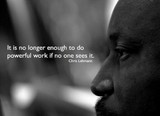
image licensed under Creative Commons by Darren Kuropatwa
What a powerful quote by Chris Lehmann! What a stunning image by Darren Kuropatwa!
It speaks directly to the urgency in education to make SHARING part of the literacy fluency (think>experience >reflect>create>share> )
The heart of the quote connects me to Dean Shareski’s K-12 Online conference keynote titled "Sharing, the Moral Imperative" [ as Educators].
When I first started teaching, I was accused of bragging to my colleagues as I shared a "Mock Application for a Foreign Exchange Year" package that I had created for my 8th grade Spanish students. I was told by a colleague, that "this is NOT done here at the school. Teachers keep their material to themselves in order not to brag". I was told to keep that in mind before I ever thought of bringing something I had created up again. If I would have followed her advice, Langwitches Blog would have never existed! So, please don’t take the following as "bragging". It is truly not meant as such, but to illustrate a point: The power of a network and the reach it can have.
In preparation to a workshop, I will be facilitating about Twitter at the integratED conference in San Francisco, I uploaded a slide deck to SlideShare. I then tweeted the link to the slides.
I watched in amazement, as the views climbed from 3000 to 6000 in the first few hours after the upload. Then 12000, 20000 and now after 48 hours over 30000 views. These numbers sound insane to me. Here I am working in my home office, taking pictures of a blue little bird in my backyard… and a few hours later thousands and thousands of people have seen them. The power of sharing and the amplified reach of sharing is real!
Let’s connect this "feeling of amplified reach" back to Chris Lehmann’s quote from above:
It is no longer enough to do powerful work if no one sees it.
What if I would have not uploaded the slides? What if I would not have tweeted it out? What if I would have "limited the slides" to the people attending my workshop in San Francisco next week?
Sharing does not seem to come natural to many. Sharing is even a "cultural thing". The existence or comfort level of sharing varies according to countries, cultures, even among generations.
How do we promote a culture of sharing in education? How do we make it the "natural thing" to do next? How do we bring the ones on board, who feel they have nothing to share? How do we approach the "relatively new" subject of amplified sharing?
So many questions…
If the power of collaboration and sharing as an educator is of interest to you, take a look at Alec Couros‘ blog post "The Story of an Idea" and several blog posts here on Langwitches linked from "What Do You Have to Lose?".
I am "sharing" the Twitter workshop slide deck below.
R U Ready 4TwitterII from Silvia Rosenthal Tolisano
Silvia Rosenthal Tolisano
.
Blog
.
<span class='date ' tip=''><i class='icon-time'></i> Jul 16, 2015 07:49am</span>
|
|
We teachers, from time to time, assign students to keep a diary specially when it is holiday time. Although my favorite is Penzu as an online diary, Diary web tool seems promising as well.
After signing up, Diary gives you an online board where you can immediately start taking notes and attaching images. To add more pages to your diary, you simply click on the + button. Your diary will be private but you can share it with others on social sharing websites.
Give it a try to explore the possibilities.
Ozge Karaoglu
.
Blog
.
<span class='date ' tip=''><i class='icon-time'></i> Jul 16, 2015 07:49am</span>
|
|
As teachers, we all know that we should create time to reflect on our professional practices… we need to experience the process of reflecting, in order to be able to guide our students…
….but what get’s cut the easiest from our schedule if there is little time available? How can we see reflection as a high priority item on our never ending list of things to do? How can we get into the habit of making reflection time?
After two intense days at a recent conference, with most participants probably on information overload, Darren Hudgins (the conference organizer and leader) wanted to make a point and encouraged the attendees, not only to experience the conference (which was very hands on), but also to take the time to reflect. As the organizer, he built time in the schedule to reflect on our experience!
Darren gave us 10 minutes of UNINTERRUPTED time to reflect, to write…He called it "Content Vomit" (yes…very graphic). He reminded us, that we could clean it up later…
It was genius of him to remind the teachers to focus on writing and NOT to check their emails, their twitter stream… He challenged everyone to concentrate to reflect during that time.
My initial goals were to take a closer look at how conference attendees learn for sustainable change. I took the given time to reflect on what I knew and wanted to learn about reflecting as an educator.
Here are some of my unedited thoughts during these 10 minutes of reflection time:
Don’t let audience leave without having made a commitment to "one thing they will implement" when they get back to their routine, to their school, to their lives.
Do people know how to reflect?…. give them samples of reflection… prompts…. practice to just let go and just write… ok to clean it up later….
Feels weird to write and not able to cross link…to not being able to open up new tab to look for other resources to bring into my writing…
I admit , that my fingers automatically wanted to switch to my Tweetdeck (just quick to check)
How can you help to make this exercise a quality reflection for attendees?
How can you help them see that sharing is a vital new part/natural sequence / part of fluency in education : experience >reflect > share
What new dimension does shared reflection bring to the table?
Can anyone reflect in writing?
Are some people better/more natural at reflecting than others? Why do people have an aversion to reflecting ?or to reflecting publicly?
Is 10 minutes of uninterrupted time to write too much? too little?
What will the feedback from other participants be? The math teachers? The ones who do not write much in their everyday lives? How sustainable is this reflection? How many will go back and integrate it in their own learning?
Do teachers need to know how to reflect and be in the habit of reflecting for themselves in order to encourage a reflective culture in their classroom?
Darren uses the above quote from Antoine de Saint-Exupery: "A goal without a plan is a wish". Making reflecting a priority is allowing ourselves the time to make a plan with the goal of being and growing as a professional educator!
We were given three choices of "roadmaps" to use for our reflection:
Choice 1: Four Dimensions of Reflective Learning by Karen Barnstable
I. Thinking Back
II. Thinking Forward
III. Thinking Inward
IV. Thinking Outward
Choice Two: What? So What?
What?
Describe the experience; outline what happened that compelled you to think about and change your behavior (i.e. learn).
So What?
Describe what difference it makes; outline what impact or meaning it has for you (or why it should matter to others).
Now What?
Describe what’s in store for the future now that you’ve learned from this experience; outline what you are going to do to continue your professional development in light of this learning.
Choice 3- Peter Pappas Taxonomy of Reflection
Bloom’s Remembering - Reflection: What did I do?
Bloom’s Understanding - Reflection: What was important about what I did? Did I meet my goals?
Bloom’s Applying - Reflection: When did I do this before? Where could I use this again?
Bloom’s Analyzing - Reflection: Do I see any patterns or relationships in what I did?
Bloom’s Evaluating - Reflection: How well did I do? What worked? What do I need to improve?
Bloom’s Creating - Reflection: What should I do next? What’s my plan / design?
OK, now I am switching gear and moving from the importance of reflection for us as professional educators and life long learners to embedding reflective practices in student learning. I am following in Peter Pappas’ footsteps, when I want to distinguish between reflections for teachers and reflections for students. How can we prepare our students to become life long reflective learners? What are the benchmarks for each grade level to grow as a reflective learner?
Chrissy Hellyer used the following prompts for her fifth grade students.
I am working with our Kindergarten teacher on creating a starting point to expose, model, coach, guide and document (type for them, record them with audio/video, etc.) their reflection. We are looking for collaboration partners in the lower elementary school to create a guide for reflective practices in connection with their blogs or portfolios. If interested please tweet @langwitches or contact me via the blog.
Further resources about reflection:
A Taxonomy of Reflection: Critical Thinking For Students, Teachers, and Principals by Peter Pappas
Reflection for Learning: Why Reflect? by Helen Barrett
Knowing ourselves enables us to teach others by Rhonda Bondie
VoiceThread as Digital Portfolio by Chrissy Hellyer
Reflection Toolkit (PDF), Northwest Service Academy, Metro Center, Portland, OR
Prezi by Peter Pappas
The Reflective School by Peter Pappas on Prezi
Silvia Rosenthal Tolisano
.
Blog
.
<span class='date ' tip=''><i class='icon-time'></i> Jul 16, 2015 07:49am</span>
|
|
If you are looking for a cool website that you would like to recommend your students to practice listening in a nice way, here is Just Books Read ALoud.
The website has many read aloud books that you can choose from. As you listen to the books, you can see the pictures of the stories and sometimes the text that goes along with it. The stories have been read by native speakers and many of them has great talent in telling the stories. You can search books by length, age, narrator, level and author.
This site can be recommended to parents who would like to help their children to practice English at home. Students can be assigned to listen to one of the books and retell it at home or can be given some questions to answer.
Loved this website and hope you enjoy this too!
Ozge Karaoglu
.
Blog
.
<span class='date ' tip=''><i class='icon-time'></i> Jul 16, 2015 07:48am</span>
|
|
In a post, titled It’s All About Sharing and Collaborating, I wrote about a Russian educator who had translated material from Langwitches into his language in order to SHARE the content with his colleagues who spoke no English. Alec Couros, told the Amazing Story of Openness and his diagram of the Networked Teacher as it has been translated into many languages now.
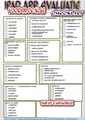
It am tremendously honored, when my work gets AMPLIFIED into other languages, reaching educators, I would not have reached otherwise. Dico Krommenhoek contacted me a few days ago via Twitter. I was thrilled to give permission, without hesitation, when he asked to translate the iPad App Evaluation checklist into Dutch. It gives me a sense of COLLABORATION across time, space and language, when I can "teach" via my work and materials without ever speaking the same language or meeting these teachers face to face.
This is a beauty of CREATIVE COMMONS and an amazing story of openness (as Alec Couros puts it).
That is why my work gives me satisfaction…
You can download the pdf file of the checklist in Dutch here.
Silvia Rosenthal Tolisano
.
Blog
.
<span class='date ' tip=''><i class='icon-time'></i> Jul 16, 2015 07:48am</span>
|