Blogs
|
Today I'm attending a webinar by Rick Altman, called "Why most Powerpoint Presentations suck.", a part of the Outstanding Presentations workshop (#opw on twitter). The workshop series is an attempt by a bunch of presentation skills experts to share their wisdom freely with us - the masses. It's very late in the night here at Bangalore and I need a really good presentation to keep me awake and taking meaningful notes, so what you see here will be really the best I can try to gather from Rick's talk. Rick is the Author of "Why Most PowerPoint Presentations Suck" and that's predictably his topic for his talk. BTW, these are liveblogged notes.Oh no! Ellen says we'll start in a few more minutes -- that's not fair! It's disrespectful to the people who do come on time to have to wait longer. One way not to make your presentation suck - respect people's time! Looks to me that Ellen dropped the ball a bit there. Anyways, we start 5 minutes later than planned - so it isn't too bad. Looks like the chat is quite limited -- not that awesome for a webinar at this time, especially when there's a twitter hashtag on their for people to air their thoughts and it's not the most convenient thing to switch between the webinar tool and twitter itself! Meh...There's a lot of drivel that people begin their presentations - e.g. a loaded agenda and all about the speaker. Why do 99% use a tool that's an object of such derision? Death by Powerpoint?Most people spend less than one hour learning Powerpoint. Some times 15 minutes! They spend the next five years using the same limited skills. Those who do it fast are thought to be experts and those who teach others are called gurus.Most people who go about creating content, go about creating it backwards e.g. the company's virtues, mission statement, etc. What does that say about the presenter's ability? It tells me the presenter's topic itself isn't the strongest thing about the talk. Similarly, bulleted slides dump down perfectly good ideas, because then speakers are speaking to slides and the slides are getting between them and their audience. That said, all Powerpoint isn't bad. "Powerpoint is a good finishing tool, but should we start with it?" I agree that starting analog on pen and paper is a good way to start preparing for presentation.DesignWhy do people cram every word onto their slides?they're lazythey don't know any betterand many other reasonsMany presenters don't believe they can design their way even out of a paper bag, so Rick wants to share some survival skills.People don't come to see your slides. They come to hear your expertise. That said, it's not about you. They need to be convinced that you have their interests in mind. You need to get away from the computer and that sometimes means fast paced doing and undoing and often paper is best way to generates ideas at speed.Design - a plan for the structure and functions of an artifact, building, or system. Nowhere does that say decoration. Design != DecorationQuestions to ask yourself:Do you know your stuff?Have you prepared diligently?Could you give the presentation without any slides at all?If you're really prepared, you can get through even bad slides. That said, if you were well prepared, you are likely to have minimalistic slides, because now your visuals are never a crutch -- they only reinforce your core message."Few slides and few presenters can function properly with excess verbiage"When you have too much text on your slides you feel compelled to read from it, and that makes you look like a complete idiot in front of your audience, because they think you're a bozo who doesn't know your topic. And 'postage stamp' like photos on your slides do your presentation no good.There are several ways to reduce text on your slides -- one way out as Rick suggests is to first reduce your bullet points to 3-4 words each or less. Not my idea of doing this properly, but OK - I'll listen on. Rick's approach seems to be very different from mine, where I'd break up his one slide into several more slides, but I guess it's not a bad approach.Other Reasons for FailurePeople cram text on their slides because:they don't know any better;OR they are addicted;OR they are trying to create leave-behind;OR they're required to.The first problem is a big problem, though easily solved through some education. The others are a bit more difficult to deal with. Clearly text is how you inform people of something, but imagery helps people feel something. So text itself, often doesn't do it.The problem of trying to create leave-behinds just leads to slideuments.Thanks for mentioning this, Rick. If your slide functions as a good document, then it's neither a good slide nor a good document. Rick suggests that we use the notes page to create our documents and the slides to be just slides -- that's good advice. I like Nancy Duarte's great video that helps how you understand why you should present your slides and distribute your documents and not vice-versa.Being required to have lots of text on slides makes us as drones of presenters and it makes our audience nothing but zombies! Rick suggests a show-and-tell technique where you say something and then display it on screen. Again, not something I agree with -- I'm less forgiving than Rick.Crafting Better MessagesHere's Rick's wisdom on making better presentations:Take the three-word challengeBigger is rarely betterWhitespace creates emphasisDoes your boss need a detox program? Audience members need more than something to think about. You want your audience to actually do something after you've presented. Unfortunately text does little to connect on emotional levels for them to feel the weight of your message.Animation without EmbarrassmentSmart sequencing is the key to increased understanding. Abuse of animation ranks highly amongst top presentation annoyances. Flying text is bad animation. OTOH the use of animation to progressively build an image or to reveal a concept sequentially is much more effective.Good animation promotes increased undestanting and appreciation of the topic. It calls attention to the topic, not to the tool.The animator's oath:I will use custom animation wiselyI vow not to offend the sensibilities of my audience.I will not use animation just because I can!Rick has a few other suggestions for animators:Thinking "sequencing" when you hear "animation".Spoon feeding chunky data is critical to better understanding.You can't go wrong with fade.I wish we said "it depends" at least once in this talk! Really, going to point of saying we should use fade is a bit too simplistic for the plethora of presentations we end up doing.I've found Rick's advice a bit prescriptive and silver-bulletish and guilty of not sharing some fundamental design wisdom that Gary Reynolds of Presentation Zen often shares. This is not to demean Rick's talk, but some of this talk isn't necessarily what I agree with a 100%, though I share Rick's goal to make better presentations. Anyways, staying up late hasn't served me awfully well tonight, but I'm happy to bite the bullet and do this again next time. If nothing, I'll reinforce what I already know.© Sumeet Moghe, 2009
Sumeet Moghe
.
Blog
.
<span class='date ' tip=''><i class='icon-time'></i> Jul 20, 2015 10:54am</span>
|
|
A couple of months back you would remember how I put together a couple of posts over here in this blog where I shared some of the highlights from the recent Social Business Forum 2011 event, which took place on June 8th in Milan, Italy. Well, a couple of weeks ago my good friends from Open Knowledge announced that the video recordings from the different keynote and breakout sessions are now available for public viewing over at the Social Business Forum Agenda Web site. So I thought I would put together this quick entry to point you all to the main site where you would be able to find them all, including the recording of the breakout session I did on Organisations or Communities.
If you have been reading this blog for a while now you would remember how, over the course of time, I have been musing all along that one of the major key drivers of social software adoption within the enterprise, and beyond, is not necessarily individuals themselves, i.e. knowledge workers, as individuals, but the informal groups they form, based around a common topic or affinity; basically, informal networks and communities of individuals gathering around about specific subject matters they are truly passionate about, wanting to share their knowledge across, their passion as well as keep learning along the way.
This major driving force of adoption of much more powerful and emergent collaboration and knowledge sharing tools results in a massive shift of how corporations operate, both internally and externally, transitioning from the old concept of project teams, imposed from high above to top down by the organisation itself, to different collaboration patterns, or personas that clearly reflect the complexity of the working environment we have been exposed to over the last few years. After all, when was the last time you were working on a single project, with a single project team, in the same building, or location, or even country? Probably a long while ago, I can imagine, specially, since it looks like nowadays most knowledge workers are working on multiple teams, with multiple projects and initiatives and perhaps now more distributed than ever all over the world.
This new dynamic of how work gets done is basically the main premise of what I tried to describe on that particular breakout session I did at the Social Business Forum event, where I basically explained how Social Computing tools are taking by storm the corporate world to define the whole concept of the Social Enterprise as more and more businesses are transitioning from Globally Integrated Enterprises into Socially Integrated Enterprises.
From there onwards I also spent a few minutes talking about some piece of research that my colleagues from the IBM Almaden Research Lab (Specially, Tara Matthews and her extended team) have been conducting over the course of the last few months on the topic of Collaboration Personas, or Types, that clearly define how the traditional concept of collaboration amongst small groups of knowledge workers is transforming itself, breaking down the silos, where it may be more appropriate and suitable, into a much more complex collaborative environment where multiple sets of contexts are helping redefine how we are collaborating amongst each other in a much more open, public, transparent and effective manner.
Thus, with all of that said, as a quick and short introduction, I would like to take this opportunity to share with you the links to the video recording as well as the presentation materials themselves, stored in Slideshare, so that you can have a look and explore further the concept of whether communities and networks are slowly, but steadily, taking over the traditional concept of organisation, or not, and how work that used to get done in the recent past in locked down, protected silos is now transitioning into a new method of engagement, where collaboration and knowledge sharing are no longer nice things to have, but overall business imperatives that every company should prioritise as critical for their own survival in today’s knowledge economy.
Here is the embedded code of the video recording:
Organizations or Communities? - Luis Suarez from SocialBizForum on Vimeo.
And here is the presentation materials themselves that I used for that presentation:
The Socially Integrated Enterprise: Organisations or Communities? The new Collaboration Ecology - Luis Suarez
View more presentations from SocialBizForum
Hope you have enjoyed watching it throughout and please do take a minute or two to share in the comments, whether you are also starting to witness such social transformation, or not, within your own organisation with those emergent networks and informal communities to help redefine the future of the workplace. Our workplace. I would love to know more …
Luis Suarez
.
Blog
.
<span class='date ' tip=''><i class='icon-time'></i> Jul 20, 2015 10:54am</span>
|
|
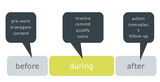
It's been a while since I've reported a webinar, so today with the new series of Learning and Skills Group sessions, I'm getting back on the live-blogging circuit. Ok, kinda. Anyways, today's topic is (as you may have guessed) "Using live online training as part of a successful learning blend.". Charles Gould of Brightwave and Matt Turner of Live Time are going to be trying to answer the question that most people seem to be asking of synchronous learning. So, as most LSG webinars, I think this promises to be an interesting event. Let's get started.Charles and Matt seem to have discovered a huge demand for synchronous learning in the course of their consulting work in the elearning space. So let's see who's attending this webinar:17% Trainers11% Learning Designers20% L&D Manager19% E-learning Professional17% OtherHmmm... that's a fair mix and people have various different motivations for attending this webinar. Looks like one of the focus areas is to highlight the differences between webinars and a live, online training course.So what is the difference between a webinar and a live online training course?There are some subtle differences and here are some of them:Online training sessions are a bit more formal and have some well defined outcomes. They tend to be more action-oriented in their approachThey have objectives and motivations which are consistent across the trainers and the students.I could argue this a bit, but oh well! So anyway, back to main question - how do you integrate online training into your learning blend? There's various stuff that needs to happen before, during and after the session itself. Here's a picture that expresses Charles and Matt's thoughts about the activities that you may want to plan for online training. Online training is starting to be a good supplement to classroom and elearning activities. The benefits are quite obvious - costs, the lower carbon footprint, the ability to actually do it without any huge constraints. We need to look beyond just those benefits though - we can have lots of people in the training, we can all talk together, we can walk out without offending people and most importantly, its an nice way to bring geographical diversity to your classroom. So it's a little more than just a virtual classroom.That said, there's no opportunity for body language, eye-contact and then again there's a myriad of distractions available to us -- for example I'm live blogging at this moment.It looks like everyone's been involved with online training in some way or the other. So let's hear some of Matt and Charles' tips for online training.TechnologyAs you may already know, there are several options for online training tools. There's DimDim, Live Meeting, Webex, GoToMeeting, Lotus Live Meetings, Cisco Webex and Adobe Connect. If you're still deciding, here are a few things to consider:Bandwidth - does your organisation have enough bandwidth on the network to run this kind of thing?Storage - where will you save most of your data, recordings, etc?Risk - how secure is the service and how open or closed is the option you're using?Integration - are you using it with your LMS or other systems?Costs - how cheap or costly is your implementation going to be? How much staff time are you going to need?PeoplePeople, as we've already discussed have a myriad of distractions in their life. People are people and if they want to multi-task, they will! When you don't get eye-contact, it's a gigantic difference. If you're multi-tasking then you're perhaps going to be a good online training that's because you already know what your audience will do. So, what you don't want is someone reading a script. What you don't want is someone reading script. What you do want is someone bringing in a bit of a personality. Voice is crucial to the success of an online training session. Using a headset helps and perhaps a directional mike maybe? Trainers need to be hugely expressive online - remember people can't see you; so make peace with that and do what you can to overcome that hurdle. As human as you can sound, the better for you!ContentSo let's see what kind of subjects work well in this medium.I've now completely lost visuals- damn! So I'll just go with what I hear.Seems like soft skills are a good area to discuss online. Bringing in experts and to keep it short and simple is a good idea as well. Learning from suggestions that others make is a great way to influence behaviour. The more you can involve people, the better - 90% of the talking should be from the participants. Teach people how to use the tool and how to use the chat box. Just as Don does for the LSG webinars, it does helps a lot to get people used to the environment. This is the equivalent of getting people used to a training environment. Also, get people's views by using polls as an activity. This is the equivalent of how we do polls (show of hands) in a classroom. Don't overdo the poll though, but beware the meaningless poll - they can break up the momentum of the session. So use polls where you expect a distinct set of answers, but if things are just obvious, don't just do it for the sake of doing it.Final TipsAsk people what they'll commit to do once they've been through the session.What's going to stop them from doing what they'd like to do.Discuss these hopes and concerns with participants.Don't be ambitious - it's not about what you want to do to look cool. It's also about managing change and getting people comfortable with the medium.Roland from Live Time has a tip - the technology is there, but don't go overboard!The voice of just one person gets boring after a while, so vary it by bringing in audio, video, etc.Don't get flustered if things go wrong - remembers Murphy's law.Be flexible - something that works in one session, will not necessarily work in the next. The dynamics of people are extremely crucial to keep in mind.Online training takes time. To make something, simple, short without the benefit of physical presence and the interactivity that people expect, is always tough. So try getting as much of this work done up front and make sure you prepare well! © Sumeet Moghe, 2009
Sumeet Moghe
.
Blog
.
<span class='date ' tip=''><i class='icon-time'></i> Jul 20, 2015 10:54am</span>
|
|
I am not sure whether you may have been watching in the last couple of days, one of those special events that I can surely guarantee you is going to help out redefine the whole concept of Management AND Leadership as we know it. As part of this year’s many worthy events around IBM’s Centennial celebrations, the last couple of days have been rather interesting following the IBM THINK Forum live event in New York City, where a whole bunch of really engaging, thought-provoking and inspirational speakers have been sharing their wisdom on what leadership is all about, but, most importantly, on what it takes to become a true leader in today’s, more complex than ever, (business and societal) world.
If case you may not have seen it just yet, there is still plenty of buzz with multiple people live tweeting the event, but also some phenomenal live blogging done by Steve Hamm for Day 1 and for Day 2, where you can get a quick glimpse of some of the main highlights as well as a good bunch of video clips, as short snippets, that can certainly give you plenty of great insights on what happened during those couple of days. And talking about those videos I would love to spend a couple of minutes sharing along what, so far, have been my two favourite clips from the overall event.
The first one coming from Mary Galeti, Vice-Chair The Tecovas Foundation, where she comes to discuss, in a little bit over a minute, how the leaders of today, and definitely, of tomorrow, are the new servants of the knowledge workforce, where they are no longer managing their employees, but leading them to excel at what they are truly passionate about. More than keep moving along with that traditional command and control attitude, she turns the whole thing around indicating how what really matters is helping out people become better at what they do and move out of their way! Whoah! Very powerful words to live by, for sure, and a clear indication of the impact of living social within the enterprise, and probably beyond, too!, seeing how embracing the Social Web philosophy may certainly help in shifting gears and help realise executives as well it’s much more beneficial, for everyone, to provoke a fundamental change in not only how we operate, collaborate and share our knowledge across out in the open and perhaps much more transparently, but also how we need to redefine our new leadership role(s) within the corporate environment, and in our own societies, to match today’s complex environment and its ever growing needs. Worth while a look for sure!
The second favourite video clip is another one that doesn’t last more than a little bit over a minute and which features a rather peculiar interview by Errol Morris with Sam Palmisano, IBM’s CEO, and where he shares what, to him, leadership is all about. No, I am not going to spoil it for you much more than this, other than stating it’s quite refreshing to see how Sam himself identifies some of the key traits that are also permeating throughout the Social Web in helping identify the new leaders of today, errr, I mean, tomorrow. And watch out!, because those same characteristics would apply to our leaders in society today! Worth while having a look, specially, given the context of where Sam is coming from, i.e. celebrating those 100 years of existence from IBM itself and laying down the ground for the upcoming challenges for the next 100 years!
Finally, there are plenty of other rather short interviews and video clips that came out of the IBM THINK Forum event and which I would strongly recommend you watch as well, specially, the ones by Joi Ito‘s, amongst several others in order to witness how world leaders of today are seeing their leadership roles shifting into preparing the way for the leaders of tomorrow … starting today!
No time to waste…
Luis Suarez
.
Blog
.
<span class='date ' tip=''><i class='icon-time'></i> Jul 20, 2015 10:54am</span>
|
|
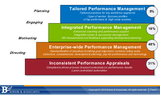
I'm a big fan of Josh Bersin and I'm thrilled to be on the second LSG webinar of the day where he's talking about development driven performance management. I've had a rough afternoon having lost visuals on the previous webinar, so I'm hoping I have better luck with live blogging an event. So, I'm not going to say much more and I'll start writing away.Josh's topic stresses on how management and performance management has a profound effect on learning. By focussing on development as part of performance management, Bersin's found how companies drive high performance. Performance Management DriversPerformance management is a set of management practices to set measurable goals and objectives for employees and to assess achievement of such objectives. This leads to improve performance through coaching, compensation, development, etc. Most importantly, performance management is management!Companies focus on this to create a high performance culture and to decide compensation. And then again there's the reason of compliance, equity (ensuring fair compensation) and improving business results. Organisations want to align individual and overall business goals to ensure employees understand the kinds of contributions supervisors expect. Of course, we want to retain good people and reduce the cost of employee turnover.When it Breaks downPerformance management is underperforming though and the focus tends to become about goals than just performance. The focus is on the individual and not on the whole. Only 27% people in Bersin's research feel that this process helps employees align goals to company objectives. Bersin's come up with a maturity model that you see above. Most companies as you can see, sit at the bottom, but only a few companies actually tailor their practices for key workforce segments. They maintain success profiles of top performers and high value workers. Very few companies integrate career and succession management, coaching and performance support with their performance management models.The model needs to move from being competitive to being coaching and development driven. The competitive evaluation focuses more on appraisal while development driven performacne mangement focuses on coaching and development. This is crucial to the lifecycle of a company from being a startup to maturity."Companies that reach maturity, need to focus more on coaching and development" - Josh BersinThe coaching and development model does well in:retaining top performershiring the best peopledeveloping employeesdeveloping leadership pipelinesand developing great leadersThe competitive assessment model however does well in:responding to current economic conditionsplanning our future talent needsensuring complianceWe however don't need to focus on all goals equally. The focus needs to be where the impact is really high. Right now, our focus seems to be compliance and equity as against also focusing on improving business performance.The gap we need to overcome is the the gap between our activities and our expectations. Coaching has a strong impact on business results almost 150x and 200x greater. In a similar manner development plans have at least a 2x impact on revenue. This is all based on Bersin's recent research. This is good enough reason for companies to invest in development driven performance management. Keys to Transitioning to Development-Driven ApproachJosh recommends the following steps to transitioning to development driven approach.Change the definition of PMIntroduce CompetenciesCreate and support high quality development plans for peopleEnable managers to coachCreate frequent occasions to reflect on peformanceFor #1, Josh introduced a case study of Kelly services who have made performance management go beyond writing performance appraisals for hours over having rich discussion. They have now made performance related conversations more frequent and focus entirely on performance improvement. Conversations do not diverge to compensation, ratings, rankings. (I think that's key). They now have made employees responsible for developing their own goals for the year.For #2 Stacia and Josh mention that there's a direct link between competencies and an outstanding performance-driven culture. They have a strong research dataset for this. This seems obvious because: Competencies are almost a 'common currency' for assessing performance and potential for promotion. It gives employees a clear set of objectives.It helps the whole organisation to select high potential leaders effectively.Companies can provide success profiles to help recruiters and hiring managers to select for a position.Competencies allow L&D to create meaningful performance improvement initiatives.Competencies create alignment and a clear understanding of corporate culture and values.This is perhaps way too formal for a company like mine, but I do see the value that a clear articulation of competencies can bring to an organisation. Now what is a competency? It's a set of performance outcomes you can determine for individuals in your companies. These could be related to your core values, job effectiveness, functional areas, career development and leadership. The key is to break competencies down and not try to do all of them together. Also, fewer competencies work better! The idea is to think "capabilities not competencies", because if you focus too much on job descriptions then you're likely to become too granular to affect performance. The example Stacia picked up for #2 was from Flextronics, who created 15 competencies known as performance behaviours and provided examples of how these look like. The organisation then communicate these to their managers mentioning that it's critical to coach their direct reports to success.For #3 Josh mentioned the importance of individual development plans or personal development plans as we know them in Thoughtworks. There are several activities that you can create through learning and development to support employees to success. The example the duo introduced was again Kelly services. Kelly has already made employees responsible for development of their business and professional goals for the year. The moment they enter these into their online system, they get to seek out recommended deveopment opportunities. This has caused a huge pull-based development culture amongst Kelly's staff. For #4 Josh mentioned that managers need to know how to coach - establish goals, help people monitor progress, find solutions to problems, appreciate strengths/ weaknesses, etc. This is something that I believe is key - a manager who can't coach is a bit of a paper pusher IMO.ADM is Stacia's example for this key. ADM is a 25000 strong company in the agriculture space. They've launched a coaching program to help managers understand how to effectively coach their employees. The program is 8 weeks long and is a thorough blended experience. It's apparently been hugely successful and ADM has saved $100,000 saving (in terms of retention/turnover/hiring) and a lot of leaders are looking to enroll in the program.Key #5 is something I really like because it's about reflection - which is a great learning tool. Feedback is a crucial tool that Josh mentions here. Stacia picked up the Travelex example here. Travelex has found that peformance management through regular 360 feedback is more frequent, authentic and useful than they were ever before. The response in that firm has been overwhelmingly positive, though the practice is relatively new.Josh lastly mentioned that we need to have integrated platorms that help automate such approaches. I would say however (with all due respect), that the focus should first be on the cultural change than the tool. There are several tools that perhaps do this - including Cornerstone, that Josh mentions.This has been a really dense presentation -- very informative and a great lot to reflect on later! Thanks Josh!© Sumeet Moghe, 2009
Sumeet Moghe
.
Blog
.
<span class='date ' tip=''><i class='icon-time'></i> Jul 20, 2015 10:54am</span>
|
|
Summer is over and that, basically, means that I have just kicked off the next round of business trips from now till year end. And, indeed, I just did that, as I came back yesterday from my first one of those, this time around to Brussels, Belgium, where I had a wonderful time participating in a customer workshop talking about The Social Enterprise and its own wider adoption of social software. Fascinating and rather enlightening discussions, on both ends, over the course of 4 hours, no doubt!, but more on that later… For now, this is going to be just that unusual blog entry where I will be talking about something else, completely different, from the regular topics I cover over here. And all of that because of something that happened yesterday, on my way back home, that I guess is going to be difficult to forget any time soon.
I have been doing business travelling over the last 15 years and, as most of you folks out there know already, some years more often than in others, but in most cases rather regular scheduled trips all along. Well, for the first time in those 15 years of being a road (Errr, I mean, air) warrior, yesterday I had the longest layover I have ever experienced at any airport. I was stuck in Madrid (In T2) for 9 hours non-stop. Yes, you are reading it correctly. 9 hours.
Now, I can imagine you may be wondering why didn’t I hit the road, grab a taxi and head downtown to enjoy what promised to be a rather gorgeous autumn day, right? Initially, I thought about doing just that, but then again, coincidences in this world teach you that some times whatever you may have planned doesn’t always work out the way it is supposed to. Like this time. Just as I was on my way to Brussels on Thursday last week I found out that one of my former team colleagues, and rather good friend, who enjoys, just as much as I do!, a lovely glass of red wine over a delightful conversation, was also arriving, around the same time as me, at the same terminal, at the same airport where I was. What are the chances of that? She was flying from Milán, and I was coming from Brussels, so we decided to get together, catch up with each other properly face to face for a good couple of hours, enjoy the one or two glasses of red wine and just let part of the afternoon go by enjoying catching up after not having seen each other for a good while.
And we just did that! We went to one of the bars at the T2 terminal, grabbed something quick to eat, and, of course, got ourselves a good supply of wine. That part of the afternoon was just absolutely brilliant! Believe me, don’t ever let people tell you that social interactions through the Web are just as effective, engaging and nurturing as those face to face, in real life. No way! There is no substitute at all for them! So whenever you have a chance to reach out and cultivate them, by all means, go ahead and do it! We had a wonderful time catching up with each other on what we have been doing the last couple of years and it was rather refreshing to see how that pure chance got us together in the first place while in Madrid’s airport. From there onwards, I shared with her a few tips on what to do in Madrid for the remaining time that she is going to be there, and we both departed to our usual schedules for the day. Hers to hit town and enjoy the lovely weekend before work kicks in next Monday. Mine, wait for a little bit longer and make my flight home after a few days away. And that’s where things went awry.
What was supposed to be just one more hour before departing, it turned around into becoming a 5 hour delay before our plane finally took off! Goodness! I guess technical faults in an airplane about to take off can cause that kind of trouble. Anyway, if you are a frequent traveller you know how things go from there. First they tell you 30 minute delay, then 60 minutes, then we move into two hours, and, finally, on the 4th hour waiting there, things are now ready to head back home! That’s the kind of suspense I am not very keen on experiencing and living through on a Saturday afternoon, don’t you think?
Anyway, a long time ago, after a continuous and rather frustrating experience, as a business traveller, of delayed flights, missing them altogether for whatever the reason or just about whatever other complication, one gets to learn that no matter how angry or upset you get about things, never mind picking up useless arguments with people, the delay is still going to be there, or if the flight is cancelled, there is nothing you can do at all either. So I tried to make the most out of my afternoon at Madrid airport and I think I reached the conclusion I need to pick up another one of my hobbies from all along that, lately, I had it almost abandoned: Read fiction. And a lot of it! Specially, when you are stuck at the airport with a bunch of hours before your next flight takes off.
I love reading. I have always enjoyed it quite a bit, even when I was a whole lot younger and perhaps my mind should have busier with something else. However, as of late, perhaps in the last few years, I have neglected reading fiction for far too long, focusing, almost exclusively, around business reading, specially, around the top of the Social Web and the Social Enterprise. My iPad Kindle is ful with books around these business topics, and while I was listening to Spotify on my iPhone (Something for which I am very very grateful, since it made for a wonderful afternoon listening to some of my favourite #elsuastunes), I realised I didn’t have enough fiction materials. And, funny enough, while I was pondering about that and sharing the odd tweet here and there (Guess that’s what happens when you get stuck and bored at the same time!), a good friend of mine, Rogelio Pérez-Bustamante, gave me a quick phone call where we talked for a little bit.
I tell you, things don’t happen just like that, without any purpose. There is always one. You just have got to go, figure out and find it! And seize the opportunity. For this time around, Rogelio actually told me that a rather good friend of his, Ernesto Uría, was just about to present live, this coming week, at 19:00pm CEDT on Tuesday, at the Ámbito Cultural of El Corte Inglés, a new book of delightful short stories under the suggestive title "Ficciones y Aflicciones" ("Fictions and Woes"). The book is in Spanish, and I have yet to find a copy of it for my iPad Kindle or buy it at the recently launched over here, in Spain, Amazon. But right there, while I was talking to him and he was sharing with me plenty of his notes about the short book, and how much he enjoyed it, I just realised I needed to read more fiction. It would have made for a fantastic and delightful afternoon, right there, if I did have a copy of Ernesto’s book and read through it. Somehow it just hit me.
You know, with all of the stuff that’s happening out there, in our now more complex than ever world, a world in where we all know, and are starting to realise, that things would never be the same anymore, it still pays off to have some brilliant fiction reading sitting right next to you, whispering in your ear, enticing you to leave everything behind, "pick up" the book, and start reading, letting your mind do the rest. Yes, indeed, I do need to read more fiction, I do need to find a way to evade myself from being stuck at the airport for so long and don’t feel much into business reading, really (Hey, it was the weekend, remember?!).
But it gets better, because while I had been pondering and musing further on about it all, and perhaps re-start that fiction reading with a splash and get a copy of Ernesto’s book, Rogelio shared with me the speech he himself is going to deliver on Tuesday’s public presentation of "Ficciones y Aflicciones" ("Fictions and Woes"). And goodness! Right there, it blew my mind away! What a surprising, refreshing and staggeringly good read! It’s just 8 pages long, but I can tell you they will certainly trigger that inner urge to want to know more. To get busy and start reading Ernesto’s book right away! Yes, I know, I know, you would probably be expecting by now to have a disclaimer or something, right? Well, here it is. Rogelio is a good friend who is now just starting to dive into this whole world of the Social Web and social networks; we have been having a bunch of conversations on why social networking is taking everything by storm, and how it is changing us all as a society altogether, and I can tell you his opinions about this financial crisis, as well as what he thinks of Europe, would probably make for one of the most fascinating reads out there on the Spanish blogosphere… Not to worry, I’m working on that! I mean, helping him out get his own blog going
The truth is that I hardly know Ernesto (Here is a short, but rather good interview with him, in Spanish, if you would want to read more about him and his work), but you know how it goes, the friends of my good friends are also my friends, so pick perhaps this unusual blog entry with a pinch of salt or two, or, better, go and get a copy of the book and then let me know whether you like it or not. From what I have been talking to Rogelio about it, he just confirmed it would be one that I would enjoy to dive, back again, into the world of reading fiction. And after reading his opening speech, I would probably have to agree with him on it… Ohhh, and he’s been rather generous to allow me to publish it over here, before the book’s public launch on Tuesday. So go and grab a copy of it, in Spanish, at this link and start reading. You will enjoy it!
See? This is probably what happens when you have far too much idle time in your hands, and brain!, on a Saturday afternoon, while being stuck at an airport for a few hours, wanting to find a way to successfully escape, for a while, from everything that’s happened around you. And somehow, yesterday’s experience has confirmed as well that perhaps every odd weekend I may post another entry on something rather unusual, not very much related to the topics I usually cover over here in my blog. They may make up for some interesting and serendipitous new findings and somehow I am starting to feel I may be enjoying it quite a bit! Hopefully, you, too, folks!
(I will let you know, by the way, what I thought about the book itself myself, once I get my hands on a hard copy, but guess what’s going to be the first thing I’m going to be suggesting Ernesto pretty soon… Indeed, where is the eBook for me iPad Kindle? )
Luis Suarez
.
Blog
.
<span class='date ' tip=''><i class='icon-time'></i> Jul 20, 2015 10:53am</span>
|
|
A few weeks back, I spoke on the topic of "Making Feedback Work in your Teams", at the Agile 2010 conference. I felt like a really popular speaker looking at the full house I attracted to the talk and in hindsight I can imagine why people felt interested in the topic. Feedback is crucial to the learning process and supports the iterative nature in which people pick up their skills. You learn a bit, do a bit, get some feedback, learn a little more, do a little more and so on. Anyway, I don't need to harp on the value of feedback -- I'm pretty sure you agree.Something else has got me thinking by the way. When I was at Hampi this weekend, our guide Basava was really nice to let me ride his motorbike across the city. While I am a motorcyclist in Bangalore city, I'm not the most skilled rider you'll ever meet. So I had to go back into my bag of experiences to tell myself how I should ride the bike. Here's what I did:I told myself that Basava's bike was generally quite similar to my bike - the same manufacturer, same engine capacity and the same number of gears. Good start -- I was making a bit of a generalisation.I then looked at the gear-shifts and they were a bit different. After a bit of a struggle, I tried to convince my brain that this new bike, with a significantly more powerful engine was really just my bike with a slightly different gear shift. That wasn't true, but it was a way to represent information in my world. I was making a distortion of reality.Finally, I started to ride the bike in top gear. That said, this wasn't going to be my bike forever, so I didn't need to know everything about it. I just ignored everything that was new on the bike - the LED dashboard, the new controls, the decals, etc. I couldn't let myself be bothered by details that made no sense to me. I was deleting information.So, why am I telling you this story? It's because this is the way we generally build our perceptions. We view the world from a filter of past experiences and then create a new interpretation based on our generalisations, distortions and deletions. This is where feedback can be both valuable and meaningless. Feedback is valuable because it gives us valuable insight into the perceptions that our behaviour can often drive. On the other hand, when we don't see the correlation between reality and the resulting perception, feedback starts to lose its value. With that rather long introduction, I want to introduce a few anti-patterns which we should avoid when we're trying to share feedback.Perception minus RealityMost often, it's our perception that drives our feedback. For example we find some people really helpful, others to be really brilliant co-workers and others to be absolutely irritating. So, it isn't surprising that sometimes we jump straight to the perception instead of stating the reality that drove the perception. For example you may say, "Sumeet, you're a very committed co-worker." While it feels very nice to hear something like that, it gives me very little value, because I don't know about what behaviours I should repeat and why you really feel this way. OTOH, if you were to tell me what made you feel this way, it gives me some behaviour I can try and repeat. For example you could say, "Even when you weren't at Bangalore, I could see that you were in touch with us on the discussion forum, IM and video-conference. You took up a lot of tasks for the team during that time and it makes me feel that you're really committed to your work." You'll notice that the new version of the same feedback has two parts to it -- the observation and then the perception. This gives the recipient a direct correlation between behaviour and the resulting perception. Also, the observation is reality which is undeniable. It quantifies your perception, which by virtue of being personal is completely undeniable as well!Adjective OverloadAdjective overload sounds like this, "Weiwei is awesome to work with. He is very a understanding and effective partner. He is also very dedicated." Carrying on from the previous anti-pattern, adjective overload does precious little to strengthen any one's confidence or to improve their effectiveness. What makes Weiwei awesome? Why do you feel he's understanding and effective? What makes you believe that he is dedicated? Adjective loaded feedback leaves a lot of unanswered questions. OTOH, if the giver was to quantify this perception, it's likely to help the recipient understand the feedback much better. The observation+impact model works perfectly here. For example, "Weiwei always hears out my ideas when we're pairing. We draw out pictures on a whiteboard to reach common ground. This makes him an effective partner for me."Unspecified ConclusionsOn a certain team, I read the following notes "You work with everyone with no personal agenda." and "I think you should be a project manager soon." Going on from the last two anti-patterns, even this style of feedback gives the receiver nothing to work with. What does it take to be a project manager? What qualities does the individual already display? What knowledge, skills and aptitude does the individual need to pick up for the role? The unspecified conclusion gives none of this information. It takes the abstracted perception and doesn't justify it in anyway for the recipient -- as a consequence, it's nothing but a short lived ego-booster.Improve Effectiveness? No Chance!A lot of written feedback I've seen reads like this, "I'm sorry, I can't think of anything you can improve on." People need to be damn perfect for us to not find any ideas to help them grow. My ex-colleague, and Gordon Pask award winner Liz Keogh suggests that if someone was really good at their current job/ role, then we should investigate the next challenge they're moving onto or are longing for. That information can help us make suggestions that'll help them bridge the gap between what they're doing today and what they need to do tomorrow. So even if you're giving feedback to the ultimate perfectionist, consider what will help them grow into the next assignment they're moving onto.In my DefenseLast but not the least, I want to make a case for not being defensive when receiving feedback. If you've known me for a while, you know that I'm a big fan of Dr. Randy Pausch's last lecture. My favourite story is the one Dr Pausch told about his football coach, Jim Graham:"And the other Jim Graham story I have is there was one practice where he just rode me all practice. You’re doing this wrong, you’re doing this wrong, go back and do it again, you owe me, you’re doing push-ups after practice. And when it was all over, one of the other assistant coaches came over and said, yeah, Coach Graham rode you pretty hard, didn’t he? I said, yeah. He said, that’s a good thing. He said, when you’re screwing up and nobody’s saying anything to you anymore, that means they gave up. And that’s a lesson that stuck with me my whole life. Is that when you see yourself doing something badly and nobody’s bothering to tell you anymore, that’s a very bad place to be. Your critics are your ones telling you they still love you and care. "That story has stuck with me for the last three years or so. Feedback is a gift - people offer it to you with the best intentions. To argue against it or to offer justifications is equivalent to rejecting a gift. Granted all gifts don't come in the best wrappers and granted that all gifts aren't useful. The best you can do when you're receiving a gift though is to say "Thank You!". Just as we'll often go back home and then think of the best way to use the gift, it's a good idea to reflect on the feedback we get. Often we'll realise how we can grow from the feedback and equally often we'll realise that we can't do much with the feedback. Both possibilities are fine -- we just need to establish our openness to the gifts people offer us. To be frank, there are several other anti-patterns I could discuss here and we could keep going on until the cows come home. The fact is that I've got to close this post now and you must be tired of reading this weekly rant. If you like posts of this nature, I'll try touch upon other aspects of feedback in future posts. In the mean time please do let me know how you liked this article. Your comments help me tailor this blog to the way you'd like it to be.© Sumeet Moghe, 2009
Sumeet Moghe
.
Blog
.
<span class='date ' tip=''><i class='icon-time'></i> Jul 20, 2015 10:53am</span>
|
|
I have been training for ages now. Some of the things I do have almost become part of muscle memory for me. I've always thought I do this well, but I hadn't quite nailed down what I really do when starting training programs. Well begun is half done, and I believe starting training is more than just calling out where the restroom is. It's about setting the tone for the days to come and to be able to introduce a safe environment for training. In today's blogpost I want to share some tips that you may want to consider when starting a training program of your own. Throw in some ColourPeople like colour, and people like pretty pictures. On day one I don't want my colleagues to walk into a black and white, drab looking, dimly lit room. So I obsess over the colourful pictures on the flipcharts that I put in the room, I take extra care to ensure that there's bright lighting and I like to have a lot of colourful stickies for students to use in the classroom. Sketch pens and crayons on the table depict an environment of fun and play, so I often throw them in for equal measure. Some of the photos you'll see here are indicative of the things you'll see us do at ThoughtWorks University.Get People to Know each otherThe one thing you don't want is for your group of learners to be strangers to each other. People tend to work well with those they know so I do what I can to have people get to know something special about each other. One of the activities I use for this is a game called "Find Someone Who...". I'm sure you can guess what it is - it's a game where I snoop around on Google, Twitter, the blogosphere and Facebook to find interesting facts about each of my students. I then randomly put them onto a sheets which I give to the attendees. Now they need to talk to each other and find a unique name to put against each interesting fact. This becomes a nice opportunity for all of them to know each other a little better and to showcase their personalities a bit too. I've seen that this works well as a start for a training program even when people know each other. There's always a lot of things colleagues don't know about each other, so a little mingle at the start can never hurt.Set the rules of engagementEvery workplace has it's ground rules. Training in it's own way is a workplace too and needs it's own ground rules. I like to agree these rules with the group when we start off, so that we can work together with a few clear assumptions in mind. What I do like to do however, is not make these sound like dictatorial statements. If you look at this picture, you'll see that I like to word these in a fun manner and I throw in a lot of colour so the ground rules don't seem like I took them out of a bland corporate handbook.Level the Playing FieldI usually don't like to make too much of a difference between instructors and students in a course. The more students start to see instructors as just experienced peers, the more they're likely to participate openly in training. At ThoughtWorks, we like students to challenge the instructors and that's why we position ourselves more as facilitators than just subject matter experts. To achieve this, we do a few things:Give the students an opportunity to become teachers through Open Spaces. This also an opportunity for them to define their own curriculum.I have trainers participate in initial activities with the students to set them up as equally fallible individuals in the experience.The rules of engagement applies as much to trainers as to the students. This helps everyone realise that we're in the experience as equals.Make things big and visibleLast but not the least, it's important that your audience is aware of what the schedule for each day is. It helps them prepare their minds for what's coming up and gives them clear expectations. Even when collecting individual hopes and concerns I like to make them big and visible so people can feed off each other's thoughts. We also keep a visible parking lot for off-topic conversations and if that starts to fill up in a huge way then that's a clear indication that the group needs to have these conversations soon. All our planning for Pecha Kucha nights and Open Space sessions happen in a big, visible fashion. This democratises the learning environment and helps the students be as involved as the trainers, in making the program successful.I'm pretty sure I'm missing some very obvious details that go into giving your training program a successful start. So if you've got something you'd like to add to this list, please be my guest and drop your notes in the comments section. BTW, I'm sorry about the recent irregularity with my blogposts. I promise to get back to a more predictable schedule from next week. In the mean time, I'm extremely glad to announce that I'm speaking at DevLearn 2010 at San Francisco. I'm both excited and nervous about the opportunity since this is my first time speaking at an eLearning Guild conference. I promise to try and put up a good show there though, so if you're at the conference do drop in to my session and give me some confidence!© Sumeet Moghe, 2009
Sumeet Moghe
.
Blog
.
<span class='date ' tip=''><i class='icon-time'></i> Jul 20, 2015 10:52am</span>
|
|
In the last few years there have been a good number of people, out there on the Social Web, who have come and gone and who have remained quite an inspiration for yours truly in helping shape up plenty of the ideas and thoughts I have been sharing over here, in this blog, over the course of time, around the topics of Social Computing and the Social Enterprise. One of those special thought leaders in the 2.0 social space(s) is Kathy Sierra; someone I do wish would come back to the Internet Blogosphere to continue to inspire all of us with some of her amazingly insightful and rather enlightening articles on her blog, amongst several other places. She surely is thoroughly missed by plenty of us.
Now, for those folks out there who may not have heard about Kathy just recently, or, at all, I can certainly go ahead and recommend you have a read of these two gems that she put together over at gapingvoid (Hugh MacLeod‘s blog) and which would make for some excellent food for thought around the topics of gamification and customer loyalty, respectively. Brilliant reads with lots of great insights to digest, chew on and learn plenty more about two of the most hyped conversations going on at the moment in the social media space. Must-read materials they would surely manage to change your own perception about both subjects. No doubt!
But today’s blog post though doesn’t have anything to do with either of those articles. Perhaps, at a later time, I will talk some more about them. However, for now, I do want to talk about a particular YouTube video that has been making the rounds lately, and which features Kathy herself talking about a rather poignant, controversial, but equally important topic: Stop online harassment.
While plenty of people have been talking about the controversy around the Google Plus policy about using our real identities, instead of fakes or pseudonyms, Kathy just focuses, in a bit over 5 minutes, on what I think is probably the main issue at hand at the moment within the Social Web: the potential risks and harm done by not putting a hard stop to online harassment. It’s a very touchy, thorny issue; one that perhaps does deserve a whole lot more attention by everyone than just this blog post by yours truly, more than anything else, because I suspect that all of us who have been online for a while, at some point in our lives, we have experienced some kind of harassment while making use of the Social Web and various (social networking) sites.
So I thought for today’s blog entry I would go ahead and share the video clip over here, as a way to help bring forward some more awareness of the potential issues at hand, and, most importantly, some good guidance on what each and everyone of us can do to help out. It’s the least we could all do, more than anything else to perhaps show how for those folks involved in such harmful activities that there are better ways of participating from the Social Web, including protecting your own identify and virtual presence with a good purpose. This hasn’t got anything to do with patronising or trying to diminish people’s experiences on the Web, whatever they may well be. This is a whole lot more about educating people on what we could do to finally take a stand about such activities and help prevent them in the near future. All of us. Together.
My good friend, the always sharp and insightful Euan Semple reflected on Kathy’s short video clip as well with a wonderfully inspiring short article under "Be the change" that makes that very same point across of educating and facilitating a better, and smarter, use of the social tools at our hand with this priceless quote:
"Yes act in ways that cultivate positive behaviours and yes, be prepared to stand up and say when someone is "behaving badly", but stop short of telling other people what they should or shouldn’t be doing - it just tends to wind them up!"
Exactly! I guess that’s the piece of homework that both Kathy and Euan have laid out nicely for all of us: look after each other against that "bad behaviour" and instead inspire, as Kathy would probably state as well, the creation of passionate users, because, at the end of the day that’s what it’s all about, as this priceless quote from "19 Revealing CEO Leadership Quotes" puts it brilliantly:
"It’s so important to be happy in your role and to have passion for the role. I have made a conscious choice to focus on how I love the people and the products, and to be happy each day"
After all, it’s our (virtual) home, isn’t it? I mean, the Social Web. My home. Your home. Our home. So we may as well treat it accordingly, don’t you think?, and start looking after each other in much more meaningful ways. For our own, and everyone else’s, good. It still is the least we could all do.
Luis Suarez
.
Blog
.
<span class='date ' tip=''><i class='icon-time'></i> Jul 20, 2015 10:51am</span>
|
|
This isn't the kind of stuff I usually blog about, but it's high time I used whatever little reach I have from my blog to voice some collective concerns about our rising carbon footprint. Months back, I started following an organisation called 350.org. The premise is quite simple - our carbon footprint is increasing steadily at a rate of 2 particles per million (ppm) each year. We're already way above the healthy limit of carbon in the atmosphere - 350 ppm. Given our current reading of 392 ppm, in two decades we're going to see some pretty drastic consequences if we don't act fast. What could some of those consequences be? Let's take a look:
Rising sea levels are likely to wipe out little countries and islands like Maldives. That means several people displaced from their homes, several people dying.The earth is going to be a far hotter and inhospitable place for life - the greenhouse effect
Melting glaciers and ice-caps are going to create several domino effects on our climate and bio-diversity.The extreme heat is likely to cause an overheating of the earth's crust, leading to earthquakes, tsunamis, volcano eruptions and what not.The extreme heat is likely to lead to the worst droughts imaginable. In 2008, Australia has already suffered one it's worst droughts in a 1000 years!Forest fires are going to become more and more common, leading to a huge loss of flora and fauna.We could keep going, but I guess it's safe to say that the potential effects are quite scary. Now we can argue that all of this is conjecture and I'll stand on your side if you say that - no problem. The question I still want to ask is -- will you risk even a small chance that your next generation will not be able to see and enjoy this world as you do today? Just as my grandparents did for my parents and my parents did for me, I want to give my children (not here yet) an opportunity for a better life than I lead. I for one, am not going to leave that to chance. So I'm putting my stake in the ground and taking a stance. And frankly, so should everyone else because at the very minimum it takes nothing more than making a little noise.
We can all do our little bits
In 2006, Al Gore talked about averting a climate crisis and urged individuals to do the little things that could make a difference. The fact is that the developed world needs to take a lead in this as the developing world tries to catch up. Even by looking at the good old 80/20 rule, we can tell that we need to put our effort where the highest impact is. An example here is that each US citizen puts out 20 tons of carbon into the atmosphere every year! That's a whopping amount considering that people in India and Africa don't even put out a ton each year. The global average is five tons per person!
But the point isn't about who's responsible. The point is more that we all should do our bit, simply because we can. Take a shower instead of a bath, ride a two wheeler instead of driving a four-wheeler, join a carpool, go solar where you can, buy fuel efficient lighting, buy carbon offsets when you travel, raise awareness through social media, create political pressure. Every little effort makes a difference.
We can Innovate to Zero Emissions!
Frankly, the technology is out there. Bill Gates pointed this out in his TED talk about innovating to zero carbon emissions by exploiting carbon free energy sources. This is a crucial bit of investment that developed countries need to make, so they can bring down their emissions and then set the tone for technology adoption in developing countries. That said, the governments will have no incentive to do this if we don't make enough of a noise about it. It's a fairly simple equation - the carbon footprint will keep increasing as more people have access to services. The widespread availability of technology is a good thing and we can ensure that our growth remains sustainable as long as we can fund the research that'll bring down carbon emissions substantially in the next three or four decades. Your voice counts in making this research funding meaningful for governments to invest in. The reason I'm blogging about this today is because today's the Global Work Party. Starting now, people at 7347 events in 188 countries are getting to work on the climate crisis. You can join one of these events as well. It's never too late! Make people hear your voice, raise awareness -- here's your way to change the world in a small way!© Sumeet Moghe, 2009
Sumeet Moghe
.
Blog
.
<span class='date ' tip=''><i class='icon-time'></i> Jul 20, 2015 10:51am</span>
|