Blogs
|
After having put together last couple of blog posts about some of my reflections from the year we are about to end around The Social Web and Technology in general, I guess it’s now a good time to share with the world the third one from the series. The one I have been telling people about over the course of the last couple of months as the one that is going to mark a before and an after with regards to my own involvement with The Social Web. You could probably think of it as a redefining moment of my own Social strategy, pretty much like I did in February 2008, when I redefined my own use of email by living "A World Without Email" ever since. I do realise that some folks may not like it, and some other people may relate to it quite a bit. But, in principle, I am going to keep that spirit of living life in a perpetual beta, going through, yet again, another experiment and see how it would move along, except that, this time around, it’s my own virtual life. Welcome to the new elsua!
How can I summarise this new strategy towards social networking in a short sentence, so that you would be able to have a glimpse of what I am about to get started with? Hummm, that’s quite a nice challenge, indeed, but if you have read the last couple blog entries you may have sensed already what it would be like. In case you haven’t though, here is a single one liner describing what I am about to get started with in 2012: Finally, after 10 years in the making, I’ll be freeing up myself from the yokes of both technology and the Social Web in order to get around, connect with my various social network(s), share my knowledge across and collaborate further along on my terms and not longer theirs.
I am not sure what you folks would think, but I’m ready, at long last, to free up myself from the yoke that both Technology and the Social Web have over-imposed on all of us and to no remedy. Or, better said, I am ready to free up myself from those people who control both of those environments to get the most out of us, but at our very own costs; in most cases, our very own energy, efforts, and truly hard work, while they just sit there and wait for it to happen, because they know it will happen eventually. Most of us, knowledge workers, have always had that very strong urge to connect with others, to share our affinities and true passions, to care for what one embarks on, and to help out where we possibly can. And plenty of times we keep going through the extra mile to try to achieve it. And most of the times, we don’t. Rather technology fails, or The Social Web user experience fails. Or both! And what do we do? We keep trying over and over again till we eventually make it through and make it happen. I am tired of having to put up with it all, of having to spend a humongous amount of time trying to customise my virtual social life to meet someone else’s needs (Those of both technology and the Social Web, as good examples to start with), while ignoring and neglecting my own.
Well, not anymore from yours truly. It’s, finally, a good time for me to depart from that incredibly frustrating experience of having to adjust, time and time again, both my working and life styles to the constant failures from both technology and the Social Web. It’s time for me to let real life kick-in, once again, and bring back that very important component all of us, human beings, seemed to have been neglecting for a long while: our very own personal, real life, (business) relationships. Yes, the physical social networking no-one seems to have realised we have been having out there for thousands, if not millions!, of years! I am no longer going to wait for either technology, or social networking tools, to fix their silliness and have me try multiple times to reproduce an experience that I feel should be rather straightforward: sharing!
I am no longer willing to go and pay through my nose for a service, i.e. the Internet, that telcos have ingrained in all of us as an essential must-have. Well, not really. They never had the control and they are not going to start now. At least, not with me. if the connection is there, if technology enables it painlessly, if the Social Web works the way it is supposed to, I’ll be fine. I will be there! Just like in the last 10 years and counting… However, if either of those three factors fail to deliver, I hereby declare I no longer care. Like a very good offline friend of mine would say: "Life is just way too short to have to worry about certain things taking place. You better make them happen yourself and move on, instead!"
And that’s why, from here onwards, I am no longer going to worry about technology itself (Whether it’s connectivity, tools, or social software), nor going to rely on it much to get stuff done. If it works, it works, if it doesn’t, I won’t be bothering. I will be moving on to the next thing, because, you know, there will always be a next thing. Even after the Social Web. And that, basically, means I am no longer going to be around, waiting for things to happen and ask me, again, to spend my energy, effort and whatever other trouble, including my own time, to see if things would work out once again. Like I said, life is just too short for me to worry about those silly things. We should move on to better things, I am afraid.
WOW!! Really? Are you saying what I think you are saying with those few paragraphs mentioned above, you may be wondering, right? I mean, how will I get my stuff done, both internally and externally, both at work, and outside work, if I am no longer going to rely, as religiously as I used to, in both technology and social networking tools. Well, that’s a pretty good question, indeed, for which, at this point in time, I don’t have an answer for. However, I can tell you something else. I’m an optimist, an outrageous, a heretic, a free radical, in short, a rebel at work by heart who knows that if we don’t push the limits on helping redefine and reshape our very own social technology experiences no-one else is going to do it for us. So I’m having enough with it all. I am having enough with having to put up with plenty of frustration, of additional stress I know I could do without, rather low energy levels that keep draining both my motivation and energy to want to do great things, and a huge amount of unnecessary and unneeded tension that I know I just don’t need any longer anymore! And probably you, too!
Indeed, I am not sure how this is going to end up eventually, and whether I will be making it at all, or suffer along the way quite a bit. However, I am very willing to give it a try and see how it goes. That’s what life is all about, I guess, right? Trying new things to see whether they would work out for you or not, learn a lot about them along the way, and try not to make the same mistakes again. In short, keep applying some of that critical thinking in everything we do, because, like I said above already, if we don’t do it for ourselves, no-one else would. And perhaps rightly so. It’s got to get started within ourselves, because, whether we like or not, we are the ones who know best where the issues lay and what we can do about them. And act upon them! Long gone is the time where we remain passive about most of the stuff we used to do. Long gone is the time where we just waited for things to happen. It’s time to move on to better things and keep excelling at what we are already doing.
I am sure at this point in time you may be wondering what it would look like, right? I mean, how will it work for yours truly in today’s technology driven world by no longer being dependent on it, by freeing yourself from its everlasting yoke? Well, like I said, I will be reshaping it over the course of time, but here are some initial thoughts of how I’m planning to tackle both Technology and the Social Web in 2012 and beyond:
Connectivity: Starting with a biggie, why not, right? Yes, from now onwards, I will no longer care whether I’m finally connected to the Web or not. If within the first 15 minutes I can’t manage to stay connected on a rather decent Internet connection, I will give up on it and move on with the offline world. Perhaps a whole lot more productive than trying to figure out, or troubleshoot, why I can’t get connected in the first place. This would apply mostly to my business travelling, whether to customer events, workshops, meetings, or conferences, seminars, summits, hotel rooms, etc. etc. I’ll be more than happy to live blog / tweet / plus on things around me while I am travelling and certainly share as much as I possibly can, but if connectivity fails to deliver, you won’t see me much, perhaps the odd message to alert folks I’m giving up for the day and move on into real life, where I am sure conversations would be just as good and fruitful, but without the excruciating experience of, time and time again, having to struggle with technology. Not to worry, my dear telcos and various different Internet providers, the b*tching will be rather limited, since I know you can’t care less about trying to improve our user experiences. Your wallet will notice it though. From day one… At least, from me.
The Social Web - Blogging: One of my favourite social software activities from over the last 9 years (It’s hard to believe that I got started with my first internal blog way back on December 2003!!) will always be blogging. Like I said, if there is anything the last three months have shown me with these rather extensive breaks is that I need to keep writing. It’s healthy for the mind, it’s healthy for the soul. I realise now, as I am putting this round of blog entries that I cannot longer live without it. So what am I am changing in this area?
Well, as a starting point, I am going to diversify my own blogging style. It’s no longer going to be those rather lengthy, hopefully, helpful, blog posts that I keep sharing over here. I do know and realise that plenty of them are far too complex to digest on a single read. Yes, they are, just as much as they are for me to put them together, since I truly love the research that goes along with it. The amount of extra linking I put together into it, the recommendations I share across on people to follow, including their writings and everything else and so forth. It’s quite a lot of time consuming, but totally worth it. Once you have got the right connectivity though, but since I know next year will be another year where I won’t have it, I better diversify on it. So, as a starting point, my blogging will continue to have lengthy blog posts where appropriate, but when I can’t put them together I will be going for shorter entries, sharper, sharing an initial idea I want to jot down somewhere and rather raw with hardly any additional links or hyperlinks to people’s work. That will need to come along at a later time.
The idea would be to keep feeding the blog with, hopefully, interesting content we can all learn from, which is also one of the reasons why I’m planning to make much heavier use of my Google Plus profile to draft some of those ideas, get some conversations going and then perhaps move that dialogue into a blog post for everyone else to see and participate in. And whenever it happens that I’m offline I will move that writing exercise offline as well, which is where I am hoping to rely, quite a bit more, on Evernote on my iPad than what I have in the recent past. Somehow I would want my iPad to become my new moleskine that I can take with me and sync everywhere, whenever I regain back connectivity.
The Social Web - Twitter and Google Plus: My use of both Twitter and Google Plus will continue to be pretty much the same from what I recently blogged about over at "Google Plus and Twitter - How They Work for Me Hand in Hand". I will continue to work with both of them as part of "The Big Three", but with the slight difference that, if good, decent connectivity is not there within the first 15 minutes of trying it out, I’m dropping both of them for what’s left of the day, till I regain that connection again. Like I said, if it works, it works, if it doesn’t, I am no longer going to wait. Instead, will focus on other offline activities, including real life conversations, specially, when I am on the road.
Mind you though perhaps on that same context of being a road warrior I will probably be focusing more on tweeting, than plussing, at least, till the overall user experience for Plus Mobile improves quite drastically, including the additional of a native iPad App. So if you don’t see me for a couple of days on Plus, it’s probably, because I am travelling and taking a short break; it doesn’t mean I have abandoned it. Not a chance. Remember, it’s still part of my "Big Three", along with IBM Connections and Twitter.
The Social Web - The Rest: The rest of the various other social networking sites will probably remain the same for yours truly. I will continue to have a light presence in there, although I’m not going to invest much on it, at least, till they all dramatically improve the overall experiences, so that they don’t become more of a drain, like most of them are now at the moment, whether due to privacy issues, terms of service, awkward user interfaces, etc. etc. You name it. So if you would want to reach out to me, the best methods would still be through this blog, a Twitter mention to @elsua or My Google Plus Profile. If it doesn’t get eaten by the system you should be able to receive a response from me within a reasonable amount of time depending on the urgency of the request / query / matter. I will still be there, not to worry, it is just that my response would now probably take a bit longer … But it will get there eventually.
The Social Web - Content Curation: And, finally, perhaps the biggest new move I will be making in 2012 and beyond. As good as knowledge sharing, collaborating with others, and generally connecting with other people are as activities on the Social Web, I’m going to start focusing plenty more on content curation. It’s the new black, it looks like, and I am hoping to bring it back into my social streams starting very very soon. Time and time again I keep getting healthily bombarded with terrific content I would want to share across, but usually I keep failing to share it along, because I just can’t keep up with it all while trying to add my ¢2, with the issues mentioned above already. So, instead of increasing my levels of frustration and irritation from not sharing those great links out there, I’m taking a different approach this time around and will start exploring the potential from one social software tool I have been following for a little while and enjoying from other folks: Scoop.it.
My profile in there is rather empty at the moment, but as we move along into the new year I surely plan to create a good number of different categories and start populating them a good bunch of interesting and relevant readings I have bumped into over the course of the last few months, and which, at some point or another, I would want to refer to once again on the odd blog posts, Plus conversations or tweets.
I may be looking as well for an external social bookmarking service, to keep that curation going, but I am not too sure at this point in time just yet on what I will be doing. Still thinking about it, so if you folks out there have got any recommendations outside Delicious or Diigo, which have never convinced me much, I am afraid, I would love to learn about how you are managing your own social bookmarks. I have heard lots of great things about Pinboard, but not sure whether it would be worth the investment or not… What do you think? Is it worth while going for it? Would love to read your thoughts on it, if you are using it actively.
And that’s it! Another rather lengthy blog post about to hit the Social Web out there. Another blog entry, that, like I said, will help shape up, once more, my overall Social Web Presence. Still in the making though and with plenty of room for improvements, I am sure, but I just love engaging on this kind of experiments to keep refining them over the course of time, just like I have been doing for almost 4 years now with living "A World Without Email", more than anything else because of the unexpected situations and key learnings that will occur and that I am sure will be helping me put a stop with that excruciating and rather painful experience of having to adjust my social presence around certain social networking sites, when I feel it should be otherwise.
Did I complete lose it? Am I way off again? Did I jump the shark far too soon? I seriously don’t know. I guess time will tell, and this blog, too! Because I surely plan to share how the experience will be developing over the course of the next few months. Got any suggestions on what you feel could work, or not? Share them along, too, please! I would love to know whether I have gone completely crazy with all of this Social stuff or whether we are just witnessing the beginning of something bigger, much bigger: Redefining Our Own Social Web Presence with a Focus and a Purpose.
(Ohh, by the way, I haven’t revealed a couple of surprises here and there that will surely continue to shape up and change a few things on how I view self-publishing of new content and not necessarily on the blog alone; I will be sharing more details on each of them shortly as well, as I get ready to prepare last few things, before they go live … Stay tuned for more! It’s bound to provide lots of good fun, too!)
Luis Suarez
.
Blog
.
<span class='date ' tip=''><i class='icon-time'></i> Jul 20, 2015 10:47am</span>
|
|
I am participating in David Mallon's session at DevLearn where he's talking about the importance of learning culture in building a high impact business strategy. Now I must tell you that I'm a big fan of David and his talk last year gave me a lot of inspiration in creating ThoughtWorks' learning strategy. He is one of the best analysts you'll meet in the L&D space. Bersin is a great research organisation that you need to definitely know about and perhaps even be a member for and they are Josh Bersin's company -- he's an absolute god in this industry.The research from David talks about data from 425 organisations worldwide. This is a very important topic for us. There's a force for transformative change in the learning function and the business at large today. The Business climate is changing because of growth, the economy, globalisation, etc. The workforce is changing with it's mix. The technology is changing at an astronomical pace and the organisational dynamics are affecting HR and L&D decisions in a huge way. We have a very different workplace and workforce today. One of Bersin's pieces of research is called Talent Watch - this is about Leadership in HR and Learning. The top challenges for 2010 have been around pressure to cut costs, the need to accelerate innovation, growth and global expansion. This has implications for us as learning professionals. Do we have the skills to thrive, now that we're coming out of a downturn. Do we have the next generation of leaders in place? Are we prepared for scaling and growth. 44% organisation are focussed on new products and services. 52% are seeing accelerating growth in the current environment. Why are some organisations better than others?Today's topic however is about learning culture. What is it that enables certain learning organisations to do significantly better than others? The short answer is:alignment with businessdoing effective thingsdoing things efficientlyWe contribute in three ways:Skills and Competency DevelopmentTalent and Capability DevelopmentLearning Culture DevelopmentIncreasingly talent needs drive learning organisations. High performing organisations are 3 times more likely to have a strong learning culture, reveals David Mallon. Remember that this is part of research from over 425 organisations! But what in the world does a learning culture mean?Learning culture is driven by business outcomes. Bersin has studied ten performance measures for this:ProductivityInnovationLearning AgilityWorkforce ExpertiseTime to MarketMarket ShareCustomer ResponsivenessCustomer SatisfactionCustomer InputCost StructureWhat drives the learning culture?But even all of what I've written doesn't answer what would drive a strong culture of learning? Bersin has come up with a High Impact Learning culture model and includes a few values:Building Trust - jow do we rely on people to learn from each other?Encouraging Reflection - do we value reflection and learning from our mistakes?Demonstrating Learning Value - how does the organisation demonstrate that learning is an important thing?Enabling Knowledge SharingEmpowering Employees - learning happens when we take risks and step out of the box? Is making mistakes and failing fast a good thing? How ok is the organisation with failure - because this leads to bigger successes down the road.Formalising Learning as a Process : Learning is not an event, it's a process. How does the organisation support continuous learning?We need leadership and management to drive the ability to learn, the motivation to learn and the acquisition and application of knowledge and skills. Here are the top 10 practices (of the 40) we need to focus on:Leaders are open to bad news.Asking questions is encouraged.Decision making processes are clearly defined throughout the company.Employees frequently get tasks or projects beyond their current knowledge or skills level in order to stretch them departmentally.Employees in the organisation have influence over which job tasks are assigned to them.The organisation values and rewards employees who learn new knowledge and skills.The organisation values mistakes and failures as learning opportunities, and provides structured opportunities for reflection.The organisation believes that learning new knowledge and skills is a valuable use of time.Employees generally believe the learning and/or developmental opportunities offered by the organisation to be of high value.Employees in the organisation take active part in their own personal development.Most of this doesn't count as stuff that we control as L&D and this goes with my argument of ensuring that L&D partners with leadership, management and HR to ensure that we have a strong learning culture. Doing these things has strong value, because strong cultures = high performers. David is showing us some crazy ass graphs that prove this with empirical evidence. This isn't just about learning - this is good, sound business strategy.Most of the surveyed innovative organisations do most of the things that you see in the top 10 list above. Do you want your organisation to be innovative?Examples from the Real WorldCisco has a leadership development program. Cisco has a strong action learning approach to Leadership Development. This means that we learn the best to have a real world problem to solve. Cisco runs their program for 15 weeks and is a mix of formal and informal learning. The first 2-3 weeks is about self-directed learning. The second phase which is about 9 weeks where they actually work in a group to solve existing business problems. Phase 3 is all about feedback and development planning. It's a highly prestigious, and everyone wants to be part of it. Everyone's talking about it and the model is getting transferred to other programs as well.ING Direct is an 'unbank' that wants to be low-cost and high touch. The CEO is always talking about learning and the fact that the people who are learning are the absolute rockstars. This is an example of leaders promoting learning and demonstrating learning value. The Orange Code of ING is all about learning as a culture.Kelly services, one of the world's best recruiting firms invested in a good onboarding program and reduced turnover in a huge way. Strategic onboarding not just aids learning but creates a sense of connection to the company. Federal Reserve Bank of Cleveland integrates knowledge sharing program and processes with their organisation's objectives. They've got some of the most innovative social learning programs that you can think of. They've integrated knowledge sharing with performance management and they've made it a core competence for many in the company. They've constantly rewarded people for participation. They have collaboration days to actually help people to have extra time just to collaborate and learn from each other. The encourage employees to see knowledge sharing as a leadership development opportunity. This is an example of how the organisation believes that learning new knowledge and skills is a valuable use of time. Learning is part of the DNA of the company. We need to be looking at learning culture as the foundation for our learning strategy. Bersin has a great piece of advisory research for this.Getting startedDavid has some excellent suggestions for us to get started with developing learning cultures. This is golddust, read carefully:Make learning strategic - integrate it in support of capability developmentMake a belief in learning part of the organisation's culture of leadership. Make a great first impression for learning. Use onboarding programs to encourage employees to take personal responsibility for learning.Make full use of captive audiences. Use required training activities to prove the value of the organisation's learning offering and strengthen the L&D brand. This is a good lesson for stuff like compliance training.Make work educational. Use embedded learning like feedback, customer feedback, stretch goals, job rotation and retrospectives.Make knowledge sharing an organisational habitMake performance management a driver of development. Think coaching and development. Yet again, an awesome session by David, I like his sessions a lot and I thought it was a pity that some people left early.© Sumeet Moghe, 2009
Sumeet Moghe
.
Blog
.
<span class='date ' tip=''><i class='icon-time'></i> Jul 20, 2015 10:47am</span>
|
|
Around this time of the year, last year, I put together a blog entry over here under the suggestive heading of "Three Wishes", where I tried to reflect, once again, and like I have been doing for the last few years, on what I would want to accomplish in the New Year. Not necessarily a new set of resolutions per se, year in year out, but thinking more along the lines of being pragmatic and focus instead on those little things that one could embrace and adopt rather easily and yet have a greater impact altogether. Now, how far off was I eventually? Let’s see … Here’s today’s "Reflections from 2011″ blog post.
In that article I mentioned above I wrote about those three wishes being as follows: Stay Healthy, Sustainable Prosperity and Be More Human. Those were not such a bad idea, don’t you think? Perhaps a bit utopian at large, but even then today, nearly a year later, they are still as relevant as they were when I first jotted them down together in that blog post. I’m not so sure whether we have embarked on sustainable prosperity in the last few months, judging by the current state of affairs with our global financial crisis, specially, when you read articles like this one that postulate the crisis won’t finish till around 2031 (Quite an interesting reading, by the way, that clearly confirms how we, human beings, seem to be really good at repeating the very same mistakes throughout our history time and time again! -In Spanish-) or whether we have become more human.
I will leave that last one up to you folks to decide based on the good amount of happenings and events taking place around us over the last 12 months. I would tend to think we are, slowly, but steadily, judging on a good number of rather interesting articles I have bumped into over the course of the last few weeks / months that seem to shift gears and focus more on that aspect of celebrating and fully embracing our humanity. And I am sure you may have bumped yourself into a whole bunch of other interesting and relevant reads along those lines, too.
Interestingly enough, with regards to "Stay Healthy" I wrote back at the beginning of January the following paragraph:
"[...] So my first wish for everyone out there is to stay healthy no matter what.
To me, that means staying away from the computer for longer periods of time (I know that’s going to be a challenge on its own already!), do plenty more exercise, eat even healthier, get plenty more sleep (I know some of you will be having a giggle or two while you are reading that one!) and, eventually, continue to take much better care of myself, since I know no-one else is going to do it. Not even work! hehe"
Little did I know, as I was putting together those few words that it would all turn out to be quite an amazing and inspiring revolution altogether to push me forward several months later on to what I am today: probably the healthiest in the last 16 to 17 years of my lifetime that I can remember! So much so that over the course of the last few months one comes to realise that what really matters in our today’s-more-hectic-and-busier-than-ever-lives is just something so relatively simple as staying or becoming healthy. The rest, as they usually say, will come along. Hard to believe, but yet, so accurate, it’s scary!
Stay healthy is also going to remain my main wish for everyone out there as we approach the beginning of a New Year: 2012 (Even if it is the last one). Stay healthy has also taken a new meaning for yours truly after quite an amazing 6 months where I have gone through something that I’m still trying to find proper words to describe it, yet, it’s had some of the highest impacts on not only what I do, but also who I am. Short version of the story? Well, in a bit over 6 months I have now lost 18 kg (Almost 40 lbs) and have gone back to the weight I used to have 16 to 17 years ago: 83 kg / 183 lbs / 13 stones.
Here is the long story though of how I made it happen and how it continues to work for myself as I have now stabilised on that specific weight range. It all started back in July when after all of the business travelling with all of the evening meals out, drinks, very little sleep, the accumulated stress and a whole bunch of other things put me on the high end of 101.5 kg / 224 lbs and I thought enough was enough. I had to stop it. It was getting far too much and I needed to find a way out without being it too costly. You know how it goes, once you reach a certain age (Mine will be coming along next year!), where you combine the big 4 with the big 0, you come to acknowledge you need to do something about it before it is too late or else. And since I didn’t like much the else bit, I decided to do something about it right away this year.
Now, before I go any further into sharing further insights based on my own first hand experiences of how it’s worked out for me becoming a lot healthier losing that amount of weight I mentioned above over the course of the last few months, I would want to stress out that this has worked with me really well, but there is no guarantee, nor will I offer one, that it would work out for other folks out there. There are plenty of health specialists and nutritionists out there who you folks should go to, if you would want to start up something similar, specially, at this time of the year when we all have got that lovely resolution of wanting to lose some weight
Ok, with all of that said, here are the three things that I have done this year to help me Stay Healthy and regain back plenty of my own life along with it:
Regular Exercise: Right off, back in July, when I decided to start losing some weight I knew that, for me, there wouldn’t be any magic diet out there that I would need to follow in order to lose all of that weight. It had to come off from somewhere else and since I used to play basketball in my younger years for a long while I knew that the best thing that would work out for me would be to engage on regular exercise. And that’s what I did. So almost every day (I usually take a break in the middle of the week) I go half and half running and fast walking for about 7 to 8 km non stop (Ohhh, Boira has been a great help in this area, too! Specially, in the last month or so); then during the course of the day I also do about 10 minutes of rowing; some yoga exercises and, finally, some abs, too (Working my way to 100 a day at the moment…).
I must confess at the very beginning I thought it was going to be rather difficult to build the habit and all, but the reality is that it hasn’t. It’s been a blast all along. The key trick that worked out for me very nicely was to consistently continue doing the exercise till I would build a habit, then the rest would be much easier. And it surely has! 6 months down the line I still go out running / fast walking for one hour to make up for those 7 to 8 km and I still enjoy it just as much as I did at the beginning.
However, the beginning was not that easy. Through a good number of experiments, trying to fine out the length of and what time of the day for the exercise that would be the most suitable for me, I figured out that I eventually enjoy doing the daily workout first thing in the morning (Right after I wake up, drink a couple of glasses of water and off to hit the road, or, better, the countryside) and that’s basically what I do still today. In case you may not have seen it, here is a superb .PDF article that explains the "Best Times to Train" with lots of pros and cons for whatever the time so you can find the right one that just works for you. Like I said, I know that for most folks would vary, but, for me, it looks like early morning exercise does the trick. It keeps me going for the rest of the day, too!, and big time!
Watching what I eat: I bet that this is the one item you would all be thinking about "Ohhh, so you eventually are dieting and everything, right?". Well, not really. I am not following any kind of specific diet and surely don’t plan to start one now. I eat everything (Meats, fish, fruits, vegetables, sweets, legumes, dairy products, etc. etc.). I haven’t cut down on anything rather drastically, even carbs; what I have done though is I have started watching the amounts of food I eat on a daily basis. I watch out for the portions. Long gone are those meals where the food was overflowing the plates. Now, I just have enough food intakes that allow me to feel full, but not overblown (out of proportion, like I used to do!). I have a light breakfast, a somewhat heavy lunch meal and a coffee / tea break in the afternoon and a very light dinner by the end of the day. Yes, indeed, I don’t starve, nor do I plan on doing it any time soon. Not worth the pain, nor the effort. Rather prefer to concentrate on watching out for large portions and focus instead on medium / smaller ones.
One other thing that I have done rather consistently is to drink a lot of liquid as well during the course of the day. Specially, water. I usually drink between 2 to 2.5 liters of water, plus the odd juice, coffee / tea, etc. Earlier on with this initiative I realised that another thing I knew was going to help me in the drinking department was going to reduce my intake of alcohol to a certain degree. So I’m not alcohol-free at the moment, but I don’t drink as much beer, long drinks or wine as I used to do and my body seems to be rather grateful about that, to the point where I am no longer missing it. I have switched from long drinks to scotch on the rocks and every time I get one I surely make sure I enjoy it to the max. It doesn’t happen too often, so better do it, right? The same for a glass of wine or a good quality beer! But that would be it. The next day up early again and off to burn it all.
Sleep: I know that this may sound rather ironic and perhaps a bit too funny, but the third thing that has helped me tremendously in building up the habit of losing weight when I’m not exercising, or watching over what I eat, has been something so relatively simple as having enough hours of sleep. Plenty of people out there would probably be saying how sleep is for the weak and everything, but, seriously, I no longer care much about such statements, specially, knowing the many key benefits I have been getting back from making a habit of good long nights of sleep. Sleep is probably more important than food, and I can certainly confirm it’s helping me burn fat at a faster pace than whatever I could ever anticipate (Did you know that your body, as an average, could probably lose about 1 kg per good night sleep? Mine does … hehe), so I am planning on continuing to get my beauty sleep for as long as I possibly can, although I have lately settled down between 7 to 7.5 hours per day.
Have you ever heard about sleepyti.me? Not sure whether you may have seen it or not, but, lately, in the last couple of months, I have found it very interesting to help me establish the best wake up times based on the good number of hours I intend to sleep, which sleepyti.me has settled down for me on 7.5 hours per day. So I do try to follow it up as religiously as I can and so far it’s working really well. I no longer even question whether I can stay a little bit longer up or not. I reach a certain time of the evening and straight to bed! Building up another habit I have learned to enjoy quite a bit, too! That’s the beauty of it, that I no longer feel bad about sleeping more hours than what I used to in the recent past.
And that’s it! With those three simple things, although I am sure I could add plenty more details about each of them, which I may be able to do during the course of the next few months to share across with folks progress on how things have been moving along further, I came to the conclusion that health as far too important to neglect it, specially, when you can see, live and experience fully some of those amazing results at the end of the tunnel. There used to be a time, and plenty of folks who know me can confirm that, where I continuously neglected both my body and overall healthy just to remain connected online a little bit longer. I have been accused (in a healthy way, I suppose…) about being part of the club of social networkers who never sleep and rightly so, if I judge my online virtual behaviour over the course of time. However, over the last 6 months that’s no longer the case and I can surely guarantee you all that the same would be happening in 2012. There was a time for me to put a stop to how much my online life was trumping my physical health and while I was still on time, I realised that I was rather lucky to change the tide of things right when I could. There is no way back for me any longer.
So if you don’t see me online much over the course of the day, there may be multiple reasons for it… I may not be connected due to technical problems, or lack of network coverage, or the social tools not playing nice, or whatever else. Or, just plainly, and from this blog post onwards, because I may be just simply out and about embarking on my daily workout. Hopefully, you will be, too! Remember, no matter how cool the Social Web is for all of us on how it keeps feeding our brains to unparalleled levels of greatness, enlightenment and learning, we still need to attend to our physical bodies and ensure we are all in good shape with our health to enjoy both the mind and the body, because if we don’t do it, no-one else will!
Have a wonderfully Happy, Prosperous and rather Healthy New Year 2012 everyone!!
Luis Suarez
.
Blog
.
<span class='date ' tip=''><i class='icon-time'></i> Jul 20, 2015 10:47am</span>
|
|
I am an absolute fan of Tom Kuhlmann and I can't resist the opportunity to participate in his session about Virtual Villages: Cultivating a Shared Practice Community. Tom really knows about this stuff, given the immense success of the Articulate Community. If there's one person you can learn about this from, it's Tom and of course his team. The Articulate community is a pretty cool place -- it doesn't have the snarkiness. You go for help and you get help immediately. There's heaps of content out there and it's one of the most useful places to learn. The cool thing is that people aren't rude to you and there aren't draconian rules.What's a communityCommunity is the place where people share what they know and learn from each other. There are perhaps 150000 registered users on the group. If you take the spammers out of the community and the lurkers and you have 80,000-100,000 active users. You have lots of active users, but Tom's point is that numbers doing make a community, because 80,000 people doesn't mean that 80,000 people are sharing, sometimes it's only a small percentage. How does a community work?The community is a place where people want to learn and they want to get to an expert who can help them learn. Tom started to engage with the Articulate community for his research project and started to contribute on it with no strings attached. He gave himself of being the expert who wants to find people who want to learn. Tom learnt a lot about the mechanism of the community process from this experience and from his research. When Tom joined Articulate, he was looking for people who are really passionate about helping people - David Anderson and Jeanette Brooks are folks who really dedicate their work lives in helping people. They are really special people. So a community is a place where:a) someone wants to learn something;b) someone is willing to helpThe important thing here is that you don't make draconian rules, and you do the best you can to give away your work. Proprietary stuff makes it difficult for people to share. So while the community is all about building expertise, the new learners feel attracted to the community by their expertise. The Articulate community has a reputation model where they have MVPs -- honouring people's contribution to the community. This recognition often makes great contributors to become obligated to contribute and drives greater contributions from them.The key to a community however is that you want to ensure that while you promote the experts, you also make it easy for the new guys and avoid an elitist mentality. Tom gets a lot of traffic because the Articulate community makes communication and sharing easy using the technology they have available. Technology is an enabler, but remember communities are all about people. Communities aren't all the same. A Volkswagen community is going to be different from a church community which is different from a software development community. The difference means that we need to structure every community differently. The truth about communities and this is a rough estimate:95% just want quick tips and tricks5% are conversing and activeIf the 5% don't exist, the 95% don't appear to get the help. OTOH if the 95% aren't around, then the 5% who want to belong don't have a reason to be there.Making your Community WorkTom is now telling us about a few tradeoffs you may need to make when structuring your community:High Fidelity/ High Convenience: Sometimes you may not have the coolest community but you give people a huge amount of convenience in finding stuff. OTOH, you may actually go for a high-fidelity and quality of communication to go for a little less convenience. Remember this is a balance not always just a choice.Social connection/ Pragmatic Connection: How are people engaging? Are they engaging for the fact that they want social connections? Or are the out there because they want to be able to get most use out of the communityCommunity Experience/ Practical Help: People become part of communities often to belong and feel part of a sense of worth. On the other hand people other people are looking for a quick set of tipsRemember the cheap disposable phone does similar things to a status symbol phone. The audiences they meet are different though. My mother wouldn't care about an iPhone, but I care about it heaps. Remember that a community is an organic process. Think of your community as a tree -- your experts are the root and the others are the fruit. You want the fruit, but you won't have it if you don't tend to the roots. So whatever you can do to make your experts get more and more involved, will help you build a better, stronger community. Your experts will build the engine that brings other people in.Remember that there's an overwhelming amount of information out there. You need community management and that has two clear roles:For people who need quick, practical help, you need someone who is curating interesting information and brings interesting information to the surface.For people who wish to belong, you need someone who is a connector and keeping the experts interested."You can't make people love you. You can only love them yourself!" - Tom KuhlmannPeople don't care about Articulate. All they care about is getting their jobs done. The community is not about Articulate -- so the team doesn't sell the tool on the forums. It just helps them get stuff done. On your companies community of practice, you can do this same thing by finding out what they care about and focus on that rather than focus on what you want to do. Don't focus your community of practice on the cool aid - focus on real work that people care about. See how you can help someone's team be more than the team that they have available to them. The community needs to make people successful.To measure your community's success, think of what your fruit is:is it the number of people?is it the number of experts on it?is it the amount of content you have?is it the number of conversations you have?Do be mindful that you avoid cliques, negative commentary, erratic norms and forcible community building. Think of how you'll grow as your community gets bigger. Create a way for people to get what they need. How can you share your expertise. BTW, Tom mentions WebJunction as an example of thriving community that you can also learn from.© Sumeet Moghe, 2009
Sumeet Moghe
.
Blog
.
<span class='date ' tip=''><i class='icon-time'></i> Jul 20, 2015 10:46am</span>
|
|
Ok, here we go, folks! Here comes 2012 and it looks like it’s going to be busier and more hectic than ever! Are you ready for it? We better be, because there is no way back! We are already fully immersed in it and it surely looks like it’s going to be another exciting, enlightening and rather interesting new year with lots of very inspiring and encouraging things worth while experiencing to the fullest! And today is no different! While I am still enjoying a few more days on holidays, before getting things rolling with another year at work, I thought I would drop by over here and kick-off the series of blog posts for 2012 with what promises to be *the* most Inspiring Video of the Year (Yes, I know! Already!!). One of those videos you must stop everything you are doing right now and watch it through! Specially, with lots of people around. Specially, with your kids or grand-kids. It’ll change completely the way you view things, and the way they, too, see them themselves. It’s the re-birth of the Circular Economy, as we know it. And about time, too!
I cannot believe that the video clip was put together, and shared across, in YouTube on November last year and that we all totally missed it, since it hardly has got more than 180 views so far. But, believe me, it will be worth while the 18 minutes of your life that it lasts. Every single second of it! It will change your life for good and plenty of your beliefs on what rules the world today and what should be eventually. Yes, indeed, it’s that good! It’s a rather short video interview that the one and only, Loren Feldman, put together for 1938 Creative in association with Important Media, to interview Ken Anderson, long-time naturalist, who word after word cannot but keep inspiring us all to help us understand how we need to redefine the way we live and the way we treasure, or not, certain things in today’s world.
Over at Ken Anderson: Perspectives From A Long-Time Naturalist Loren himself describes briefly in a short blog post what the interview will be all about, and in order not to spoil it, I will just briefly mentioned how, while going through the clip on its entirety I just couldn’t help thinking about two different blog entries that I put together last year and which would make up for some interesting reading along the lines of what Ken has got to tell us all on where we are heading. Remember "The Social Enterprise and The Circular Economy"? Or "Welcome to the Social Enterprise Awakening!"? In case you may not have, you would see how Ken demonstrates, time and time again, how it is possible to live, and embrace fully, a healthy, prosperous AND sustainable Circular Economy, as long as we shift focus from what drives our global economy nowadays (Not to worry, I’m not going to spoil it for you what Ken thinks are the main culprits of where we are today… Couldn’t have put it myself in better words either though!) and we start reverting things in the opposite direction of where we are heading.
Eventually, provoking what Ken calls out for as "The Awakening", which, and I surely agree with him 100%, is very much needed at the moment. Now, I could go ahead and describe that awakening referencing back again that blog post whose link I shared above already, but, no, I am not going to do that. I’m actually going to point you instead to a superb piece of art that my very dear good friend Susan Scrupski put together a couple of days back and which describes, quite nicely and with quite powerful words, what our focus and purpose for 2012 (And beyond!) is going to be. At least, that one from yours truly. Have a look and check out "#OccupyEnterprise and Start your own Revolution" and be inspired by amazingly powerful statements as this one:
"The Council members are fighting for a new way of working where freedom of ideas will produce increased employee motivation and loyalty which in turn will spur innovation and problem-solving. Yes, business objectives are driving this change, but the natural by-product is the humanization of the workforce. Transparency will go a long way to revealing the unsavory underbelly of the corporate beast" [Emphasis mine]
And now, right after you have read Susan’s article, come back, hit the Play button of this embedded YouTube interview and be WOWed by Ken’s words of wisdom, knowledge, lifetime experiences, hope, optimism, outrageousness, deep caring, sharing, mother nature and our role in it, and, in short, ourselves, and our future in this world. Specially, for those who are coming after us and for whom we have got a lot to account for. Still.
Not sure what you would think, but after watching that video clip, there are two other things I’m going to be doing in 2012 plenty more: Wear Sunscreen and listen, and learn plenty more!, from our elders. They have always known, and experienced fully, a whole lot more than we do…
Luis Suarez
.
Blog
.
<span class='date ' tip=''><i class='icon-time'></i> Jul 20, 2015 10:46am</span>
|
|
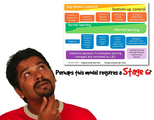
I was at DevLearn 2010 last week - I had a great time presenting and I learned from some true masters. Conferences like this are a great experience in terms of actually meeting people in your personal learning network and getting to know them first hand. While talking to a lot of industry colleagues out there, asking them questions and answering some of their questions I wondered why I was doing this. Why was anyone doing this? Don't all our companies have their own walled gardens of knowledge? Aren't they walled for a reason? Was I doing the right thing by sharing information? Was everyone else doing the right thing? These questions led me to think that there's perhaps a few fundamental realities that we're missing with the whole enterprise social learning practice. I briefly spoke about this to Charles Jennings after Jane Hart's wonderful session outlining the state of learning in the workplace today, and here's what I had to suggest to him.People are Already Sharing Out ThereWe're born with the fundamental desire to share and learn from peers. We're also a lazy race of animals. We like to get the best possible results from the smallest effort we can invest. So when we need results developers ask questions on stackoverflow, learning professionals go to lrnchat and everyone of us goes to Google. When possible, we share ideas at conferences than in team meetings. In fact, I know quite a few people who wait months to come to a conference so they can find solutions to their problems. The truth is that if a problem has more eyeballs looking, then it has a greater chance of finding a solution. That's a mathematical fact, not just because of the sheer numbers, but also because of the huge power of diversity. The empirical evidence is stacked in favour of sharing more openly, yet organisations choose to hide information behind a firewall. The few times that people look inside their organisation for learning, is when the knowledge is specific and proprietary to the firm. Given that most firms are not the only ones that operate in their space, these instances are far and few in between. This explains the low uptake of enterprise intranets.Parallel Social Universes need Common Sense Aggregation"People's time is a zero sum game." - Mark Oelhert, Defense Acquisition UniversityThe drive to mimic social software in the enterprise is a well intentioned one. Having said this, I believe it's a mistake to create parallel social universes in the enterprise. For example, a lot of enterprise 2.0 implementations see a blogging, social networking and microblogging system behind the firewall. Now there's nothing wrong in setting up this infrastructure as long as it leverages existing contributions on the public internet. What happens instead, is that organisations put up this social infrastructure and then expect employees to start blogging, 'tweeting' and networking within the firewall. Again, if someone's already doing this on the big broad internet, there's no incentive for them to contribute on the puny intranet. Think about it -- why would a blogger with an established following of 3000 readers, put in a new effort to blog internally where at the most a 100 people are likely to read her blog? And why would she risk putting her ideas on a platform where her identity is likely to die the day she leaves? Now you can coerce your employees into contributing to your enterprise social infrastructure, but that takes autonomy out of the motivation game. On the other hand, if we could harness the contributions people already make to the web - their blogs, their twitter feed, their delicious bookmarks; we not only leverage the collective intelligence of our workforce, we provide people with recognition for their individuality.Porous Walls are the Way for the FutureThe open source economy makes for an interesting way to tame complexity. When an organisation open source's software, there's not just an interesting business reason behind it, but also a few interesting technical reasons. Think about free development capacity for your software. How about a few new features added for no extra cost? Well yeah, you'll discard 90 contributions to get the 10 quality commits, but free work is free work! How about having people find and fix your bugs for free? This is an extended team, at little or no cost. Now of course, most organisations choose to keep some software proprietary to maintain a strategic advantage, and that's the reason that organisations are likely to keep some knowledge proprietary as well. This said, the vast majority of discussions on company forums are hardly about proprietary knowledge.Just as we would open source software, isn't there a case for us to open up discussions and knowledge sharing beyond our firewall, limiting only confidential discussions to be within the company? Like open source, this has it's practical benefits and then, early movers have a strong branding advantage just like early movers in the open source space. As walls of the enterprise social network start to become porous this is likely to drive two way knowledge traffic for our organisations. Some of this traffic is likely to come from people we don't even employ! We need to think about the potential of such an approach and before we start to obsess over risk, we need to understand that this is an existing phenomenon. Whether we choose to facilitate it or not, this is already happening. I don't disagree that this requires a fair degree of social media education for our people, but I believe this is an effort well worth our time. My conversation with Charles Jennings ended on the note that I see a Stage 6 on the Internet Time Alliance's workplace learning diagram. It's a step beyond working collaboratively and co-creating in a workscape. It's about transcending organisational boundaries and embracing a state of porous walls. In my view it is a state of the world that's more in tune with reality. People are already sharing their expertise in the wide open. We can choose to be blind to that and fight the web in a battle we can't win. Or we can be pragmatic and exploit this intellect.What do you think? Am I going bonkers? I'd love to hear what you think of my hopes for the future of workplace learning. Don't be bashful and leave your comments here -- it's been a while since I heard from you.© Sumeet Moghe, 2009
Sumeet Moghe
.
Blog
.
<span class='date ' tip=''><i class='icon-time'></i> Jul 20, 2015 10:46am</span>
|
|
Continuing further along with another blog post from the series of articles on "Reflections from 2011", I thought I would go ahead and spend a few minutes today musing about what I still think was one of the main key terms, within the Social Enterprise space, that most of us got exposed to, and talked extensively through a good number of rather interesting and enlightening articles and publications throughout last year and that I feel would continue to come along rather strongly during the course of 2012 as well. Probably, because we are not done with it yet, but, most possibly, because we need to shift gears with it. Why? Well, so far, we haven’t done good enough with it, despite the various claims we may have been exposed to over the course of time, and we are running out of time and pretty quick! Of course, I’m talking about Employee Engagement or, in other words, how do you keep your employees motivated to excel at what they already do, driven by their distinctive passions, purpose and meaning?
You may be wondering why I mentioned above that we are running out of time on this critical concept of Employee Engagement, right? Well, let’s see it with a couple of good examples. How about this recent, rather worrying, study on how "A Third Of Employees Are Ready To Quit" or how a good percentage of today’s workforce continues to feel more disengaged with what they do than ever before, as they no longer feel the passion for their work nor their job(s)? Or how another study finds out how "One Third of Employers Have Disciplined Employees Using Social Media"? Or take this other, even more interesting and intriguing, study, where it’s demonstrated how more and more employers are no longer trusting their employees to do their work. Or, another one where work inequalities are reaching alarming levels close to disengage them for good and with no point of return. Yes, the examples keep piling on and on and on and I am sure you folks have got your favourites out there as well.
The reality is that Employee Engagement still remains a critical success factor for most employers and large corporations, and small businesses, too!, and we are running out of time because we are not doing a very good job at it at all. Quite the opposite. Yes, I know, we have seen, or been exposed, to a good number of really good articles that talk extensively about how to keep your employees, i.e. your knowledge workers, motivated to do their best and keep growing further in their career aspirations, contributions, purpose, meaning, etc. etc. without losing track of the business revenues, which is what most corporations care about nowadays anyway (Always have, I am afraid!). Yet, we keep failing drastically, and rather miserably, in achieving that long term goal of keeping employees motivated and all of that due to a very simple reason that most organisations seem to keep ignoring or neglecting big time: we consistently don’t ask them what they really want!
Indeed, that simple! Employee Engagement has always been a concept driven top down by corporations and their executives, who keep wondering how do they keep their employees motivated to go the extra mile without asking for much in return. What can they do to entice their knowledge workers to keep thriving and shining at what they already do well, which eventually is going to provide more business revenue, better customer satisfaction by delighting their clients and, hopefully, happier employees, without having to spend perhaps too much cash on rewards, incentives or whatever else so that it doesn’t go out of proportion. See? That’s exactly the problem! That kind of mentality where we are inspiring our knowledge workforce to compete against each other for those rewards, for those incentives, as individuals, as treasure hunters, where you try to do your outmost just to stay on top, annihilating everyone else around you. It’s part of that legacy corporate culture we have inherited from the 20th century and which we don’t seem to be too keen on getting rid of it, probably because it perhaps keeps nurturing the main corporate system that feeds it rather nicely backwards as well: money, greed and power.
I mean, can you imagine an entire workforce earning just as much as the CEO and his / her corporate executives? Or having that same amount of power at the same time as a group, network, community, where traditional management is no longer the one ruling but instead a new kind of leadership would be required? Obviously, not! Which corporation could sustain that? The reality though is that mentality is what’s keeping us away from "Designing a beautiful business", as my good friend, Esko Kilpi, put together on a superb blog post just recently that I strongly encourage you all to go ahead and read further on what it would entail to reach that mantra of a beautiful business that he envisions amazingly accurate, and very nicely done!, and not too far away from today’s corporate environment. At least, for some businesses out there.
Another interesting read to provoke that shift away from that industrial model of recognising your employees with that individual competitive environment of cash, and whatever other tangible incentives, and move into a much more accurate, relevant, pertinent, purposeful and perhaps very much needed networked, interconnected and community-driven approach would be the excellent article "The Philosophy of Motivation" put together by Greg Satell where you will be able to find precious little golden nuggets like this one very relevant to the whole conversation of how to approach it when wanting to keep your knowledge workers motivated:
"[...] treating people with dignity means treating them as ends in themselves, rather than as simply means. [...] motivation is much more about intrinsic rewards than extrinsic rewards. Motivated people join an organization in good faith and expect to find meaning in their work, instead they get an incentive program. No wonder they get discouraged"
Greg’s description of the shift from the industrial age to the passion economy is just brilliant, too!, with magical quotes like this one: "In the industrial age, value was created by harnessing energy. In the passion economy, value is created through superior design". Like I said, a highly recommended read to help differentiate what’s at stake over here.
The challenge is out there for everyone though. As we move into another exciting and rather thrilling new year, it would be the perfect time to shift gears and start thinking about "Employee Engagement" not just from the top down in any and every organisation, but also from the bottom up! The good thing is that we are not alone! We don’t have to reinvent the wheel and wonder how we are going to get things started and make that shift happen. We are not starting from scratch and it would be silly to fool ourselves, if we believe it’s a whole lot harder than what it actually is. As a good starting point, we need to lower down the center of gravity and the decision power, starting by trusting more our very own employees, so that we get to find out what they really think; continuing further by discovering together different ways to keep rockstar employees happy, because whether we like it or not, they are the major driving force that gets everyone else excited wanting to jump into the bandwagon by following their true passion, which is the work they are already doing and excelling at!
I strongly believe that, at the end of the day, we would ALL be rather amazed and very pleasantly surprised to find out from those employees that, for them, it’s not all about the money, or the salary raises or whatever other cash, hard incentives. It’s a whole lot more than just that! We are talking about people in here, and as people do business with other people, there is a great chance that it will all be about fostering the right working environment where people are, AND feel, treated like people. Just what they are. An end in themselves, as Greg put it beautifully in an earlier article I mentioned above.
It’s all about finding ways to motivate your knowledge workforce to finally help you understand fully that this is all way beyond just thinking that money will do. Don’t take me wrong, money is good! It pays your bills and gives you an opportunity to enjoy a fulfilling life, but there is more to it. In fact, a whole lot more to it. And, like I said, we won’t need to start from scratch. In fact, there has been plenty of rather fascinating and thought-provoking research in this area, like Jack Wiley, executive director of the Kenexa High Performance Institute, recently wrote over at "Give employees what they really want" and where he talks about R.E.S.P.E.C.T., i.e. the main topics to cover, as an organisation, to keep your employees motivated and bring in Employee Engagement into the 21st century modus operandi of the new workplace, away from the industrial era:
Recognition
Exciting work
Security of employment
Pay
Education and career growth
Conditions
Truth
Please do go ahead and read further on Jack’s insights for each and everyone of those items to see what lies ahead. Certainly, a good challenge for all of us, as I have mentioned above. It’s not going to be easy either, for sure. But no-one said it would be. It’s actually what’s at stake for all of us who would want to design those beautiful businesses that Esko mentioned over in his blog post. That’s what makes it the most exciting of challenges. It’s one we can all contribute and make it happen eventually. It’s our way out to define the workplace of the future and there is probably not a better way of doing it than reverting Employee Engagement into what really matters, as Esko concludes beautifully with this gem:
"The years with the Internet have proven that we are capable of working together competitively/cooperatively, building social communities that many would some time ago have dismissed as impossible dreams. Thus we don’t yet have a good idea of what cannot be done by connected people working together in new ways. Changes in existing organizations and the evolution of new ones will have characteristics in common. Just as natural systems like the human body are not vertical hierarchies with each part superior to another in ascending linear order, organizations of the future will not be structured that way. This is not to say that all present industrial organizations are doomed but our models to describe the world around us are. We need a new vocabulary beyond the models of industrial production and separatist, mechanistic concepts of a corporation"
Yes, indeed, we probably need a new vocabulary, but I suspect that along with that new vocabulary we would also need a new way of thinking, a new way of working where employees, through their trusted networks and social communities own the corporation, just as much as the latter owns them. That’s when engagement will take a new meaning. The one we have all been waiting and anticipating for all along. For all of us, not just for the few we already know who they are…
Are you ready to own your beautiful business? If the answer is "Yes!", you better start working your magic to help make employee engagement no longer a myth, but today’s corporate reality. We very much need it. And fast!
Luis Suarez
.
Blog
.
<span class='date ' tip=''><i class='icon-time'></i> Jul 20, 2015 10:46am</span>
|
|
(WARNING: I do realise that I have already included a warning and word of caution throughout this article about the length of it, but I thought I would let folks know as well how if you would just want to check out the yearly progress report you would just need to read the first section and move on to other things. While putting this blog entry together, maybe the longest article I have ever written anywhere, I now realise that the main purpose of why I wrote in its entirety in the first place was more than anything else as an exercise for yours truly to go down the memory lane and see what happened during the course of 2011 in this area. That’s why I’m including this entry as part of the "Reflections from 2011″ series. Please do not feel obliged to read through it all, if you wouldn’t want to. Perhaps the best option would be to read each section every other day. I thought initially about splitting it up in multiple parts, but I wasn’t convinced by the end result, so eventually decided to leave it all as one piece. Hope folks enjoy it just as much as I did putting it together and bringing up some great memories from last year! Yes, after this one I’ll be taking a short break… to give you all a breather … Don’t worry hehe)
It looks like the series of blog posts on the "Reflections from 2011" meme that I have been putting together over here in the last few days keeps moving further along nicely to the next take with an article that I do realise is very much long overdue not just by weeks, but by months altogether! Goodness, if I go back to the last blog entry I published on this very same subject, it was almost a year ago: "A World Without Email - Year 3, Weeks 29 to 51 (The Email Starvation Continues…)". Yes, indeed, nearly 12 months ago was the last time that I shared over here further insights on how that initiative of mine around living "A World Without Email" was coming along and report on due progress. Yet, for one reason or another, it didn’t happen. I mean, the progress report, because the initiative itself has been working wonderfully all right all along. So I guess it’s probably a good time now to finally provide folks with an opportunity to find out what’s happened in the last year of #lawwe. Are you ready? Let’s go! Let’s do it!
Ok, before I get started with that progress report, a word of caution though, I am actually going to do something different this time around. Not only am I going to provide an account on what’s happened in the last few months of living "A World Without Email", but also I am going to be sharing a good number of insights on what’s happened around me, out there on the Social Web, and how other folks have been thinking, and taking action, too!, about living their own "worlds without email". As such, this blog post will be a rather massive one, perhaps the longest I have ever written, so I have decided as well to split it up in sections; that way it would be much easier to consume, but please do allow me to warn you ahead of time that this post will try to summarise nearly one year of what I would call now a world wide trend to continue Thinking Outside the Inbox.
A World Without Email - The Progress Report
To get us started I thought it would be a good entry point to refer folks to the last article I published on this topic over here in this blog, where I covered the latest progress report up to Year 3, Week #51. And what a better way of finishing that year end report than sharing with you all the last week, i.e. week #52, along with the overall yearly report itself. All in a single place so that you can take a look into how things developed further during the course of 2010. I know, a long time ago, but still worth while sharing across before we catch up with 2011′s, don’t you think? Here it goes:
As you would be able to see from the above screen shot, for week #52 I received 14 emails during the course of that week, to make up for a total amount of 929, coming from 1167 in 2009 and 1647 in 2008, as seen in previous reports. And that basically means that I have consistently gone down on the amount of incoming corporate emails year in year out. Starting off in 2008 with an average of 32 emails per week, to 22 emails received per week in 2009, to then, finally, 18 emails received in 2010. I am not sure what you folks would think, but that is not so bad after all considering how when I first got started with this experiment I was receiving between 30 to 40 emails per day, which sounds like a rather substantial reduction over the course of time taking place very steady and at a good pace. I am sure you may be rather intrigued by now about what happened in 2011, and till today, and whether I have been able to keep things going at such rate as well … Or not.
Before we go on to that though I thought I would also share something rather interesting that I have discovered over the course of the years and that’s how the peak days and lowest days of incoming email have been reducing its figures just as much. Going from 63 max. to 3 minimum in 2008 to 44 and 2 in 2010, respectively.
So what happened in 2011 and till last week, since the progress reports are running from February to February every year and I am still a few weeks away from that cut-over date to finish off the progress report for 2011? Not to worry I have got some pretty good news and I can share with you folks some really good statistics as to what’s happened from week #1 to week #47 of Year 4 - 2011 of living "A World Without Email". Here’s the screen shot of the report so far:
Well, there it is. I am very pleased to let you folks know that, so far, I have received 767 incoming emails for those first 47 weeks of the year. And that, basically, means that in Year 4 of reporting progress the average of corporate email I’m receiving on a weekly basis is now down to 16 emails per week. Yes, indeed, only 16 emails per week! And still going down, judging by what’s happening this week so far with another rather low number. Ohhh, and talking about low numbers, see how the highest peak of incoming email went down from 44 to 30 emails and minimum to just 1. That’s not bad either, since that eventually means I am almost there to enjoy a full week where I won’t receive a single email at my corporate email address. Wooohooo! Yes, almost there!
I am not sure what will happen with the remaining weeks till week #52, but somehow I feel that things will continue to go down consistently, to the point where I may reach well below the #15 emails per week mark that I envisioned a few months back. And that wonderful thought implies just an average of 2.1 emails per day! Double w00t!! Needless to say that I will keep folks updated on how things are moving along, hoping that this time around I am not going to take that long to give you that particular report. Fingers crossed things will go all right and will keep those numbers going down …
Improving the Overall Email User Experience
Ok, time now to move into the second of the upcoming sections I mentioned earlier on I was going to split up this blog post on, to make it somewhat easier to digest overall. I am sure that at this point in time plenty of folks out there are wondering what my thoughts are right now with regards to corporate email and to venture to state whether it’s got its days numbered, or whether we are going to have email lingering around for a long while. Well, 4 years ago if people would have asked me that very same question, I would have probably said that email would be dying a very painful and slow death over the course of time, as the Social Web and Enterprise Social Software tools continue to take by storm the corporate world as the preferred methods for knowledge sharing and collaboration.
Yet, first hand experience, and a few years later, have shown me that we may not be there just yet. Email is not dead right now, and it won’t be for a good number of years. At least, not yet. Like I have been saying in a good number of occasions, there are a couple of incredibly good use cases for corporate email to still survive nice and dandy: 1) Managing Calendaring & Scheduling events and 2) Hosting 1:1 confidential, or rather sensitive, conversations in a private manner. For the rest, there is no reason why we couldn’t have the vast majority of those email driven conversations hosted elsewhere, which is essentially what’s been happening in the last few months.
What we are seeing then is how email is morphing, and moving away, from being the King of Communication and therefore a rather powerless content repository (with a good number of issues I’m sure we are all rather familiar with - i.e. mail jail, finding missing content, losing email archives, mail quotas exceeded, attachments, Reply to All, etc. etc.) into an incredibly powerful social messaging and notification system of content that’s stored elsewhere, i.e. social networking, collaborative and knowledge sharing tools eventually.
What’s rather interesting from this transformation is how, nearly 40 years later, email is just going back to basics, and in full force! And what’s even more exciting is that it’s starting to happen at the right time, for once, because over the course of the last few months we have been exposed to a good number of different relevant reads as to why plenty of knowledge workers keep considering corporate email a time waster, a hindrance of one’s own productivity, or rather costly to the business, not to mention the potential security issues incurred or a rather growing issue of email overload altogether.
But, like I said, and perhaps worth while repeating over here as well, once again, email, per se, as a communication system is not that bad; it’s actually a rather effective tool overall. What’s been happening though all along is how we have consistently abused it ourselves, left and right!, to adjust its way of working to our very own way of working (i.e. secretive, private, opaque, political and power struggles, cover your a**e, proof of work, etc. etc.). So if there is something out there that it’s killing our very own productivity, it’s not email itself, but our abuse of it that’s killing such productivity. Why? Well, because we don’t know how to properly make use of it. Hold on, let me correct that, yes, we do know how to properly use it, it’s just that we don’t do it any longer, because we have grown rather comfortable living with the current status-quo it provides: a corporate weapon for delegating work on to someone else, just as much as that full inbox of to-dos from people’s work and no longer your own. So perhaps we do deserve that misuse of email, since we don’t seem to want to break the chain and starting using email smarter, not necessarily harder.
The good thing is though that we are making progress. We have finally understood and came to terms with the fact that we could no longer sustain that method of working in an environment where we now know there are much much better collaborative and knowledge sharing tools out there with social software. We are finally embracing that notion that we need to smarten up in our very own use of email, even if that implies playing games, and start considering how email is no longer the king and master of the corporate world, but just another useful tool for certain types of interactions where it is rather suited for the job.
That’s why over the course of the last few months we have seen a rather large, and growing number, of really interesting, relevant and worth while reading articles that can certainly help folks tame the email beast even more, so that we can fine tune not only the amount of time that we spend processing our daily work email, but also how we can find that sweet spot that email needs to land on in that complex collaborative environment with the emergence and adoption of social tools within the corporate environment. So plenty of the links I am referencing in this particular section of this article deal exclusively with various different hints & tips, productivity hacks, tools to use where appropriate, new intriguing and relevant initiatives and so forth. Yes, as you will be able to see, there is something out there for almost everyone and the least I could do is to share along those links that I know I, too, would have found rather useful if I were still relying somewhat heavily on corporate email. Hope folks enjoy them, too!
Research on Redefining Email AND Our Use
But it doesn’t end up there just sharing those good practices, productivity tips and whatever other hacks on making the most out of email. Over the course of the last few months we have witnessed how something is happening with email. After several decades of very little research on our user patterns, as well as some more research on redefining how we could best improve the overall email experience, we are starting to see various different studies, initiatives and some additional piece of research that are starting to gather around some pretty interesting data and key findings that I am sure over the course of the next few weeks, perhaps months, we are going to see how not only are they going to shape up our very own use of email, but also the various different email systems that we are currently using at the moment, and which, you would all agree with me, we could do plenty more innovation on that space alone!
I know how at this point in time you may be wondering whether I would believe, or not, if email could turn all around and become a whole lot more social. Well, I’m going to reserve the answer to that question for a little bit later on in this article, but I can certainly anticipate that Yes! we will, finally, see that full transformation from email into social email, although I can tell you, right now!, how we are no longer going to call it email, but something different… Keep reading till we reach that final conclusion on what it would be like …
The Naysayers & Denialists
Back in February 2008, and throughout the whole year, since I started this initiative on living "A World Without Email", it never ceased to amaze me how very little email was questioned about whether it was still the king of corporate communication and collaboration. Or not. It was a given. No-one even dared to bring that up as a topic, and if you would do that people would think you would be crazy! (Like I was told several times …). How could we survive within the corporate environment not using work email to stay in touch, to keep in the know, to communicate, collaborate and share our knowledge across, store our very own content, etc. etc? How could we do things without email? That must not be possible! It cannot be. There cannot be any other way out there, for sure!, I was told time and time again … And fast forward 3 years, into 2011, and the number of articles, blog posts and whatever other publications trying to defend email from not falling off its corporate pedestal has been quite an amazing experience watching it through all along!
Notice how I am putting together this section over here, on purpose, before anything that will come later on to provide that counterpoint, but I have always thought that if you feel threatened enough to write about advocating for something else that is coming your way in full force, it’s probably because there may well be a few good reasons for you to worry, or, at least, to start thinking about it. You know how it goes, right? Where there is plenty of smoke out there, there’s gotta be fire somewhere! And that’s exactly what has happened during the course of 2011 at such a rampant pace that it’s been rather difficult, and quite tough, just to keep up with those writings from various publications, blog posts, industry analysts, power users, corporate thought leaders and a rather long etc., advocating for how essential and critical email continues to be within the corporate world and how we are going to have it for plenty more decades! Regardless of the huge, and rather disruptive, impact from corporate social networking. Goodness, like I said, where there’s smoke … Otherwise why would you feel threatened for that change in the first place and feel you need to defend the indefensible? Plenty of food for thought right there, don’t you think?
To The Crazy Ones, The Misfits, The Rebels, The Trouble-Makers … The Brave Ones
Yet we all know that "Email is where knowledge goes to die". By the way, that quote I have borrowed for over the course of the last couple of years is not mine, contrary to a few people’s tweets I have bumped into over the course of time, but from Bill French himself, who coined it a whopping 13 years ago, back in 1999, and still is as relevant as ever. So during the course of 2011 we have seen how I am no longer alone on this crazy endeavour of wanting to ditch corporate email for good, at least, for the vast majority of internal, behind the firewall, interactions and instead make a progression, or a transition rather, towards embracing and making the most out of Enterprise Social Software tools. No, once again, I am not saying that we should be kissing good-bye to work email altogether, since I still see a couple of good use cases for it, but I am really glad that a good amount of folks are starting to see the light acknowledging that, certainly, there are better tools out there that help knowledge workers become more effective and efficient at what they already do with regards to being in the know, collaborating, sharing their knowledge across and helping their organisations understand new key concepts like openness, publicy or transparency, amongst several others like being more networked, interconnected, nimble, trustworthy, committed or even more motivated towards wanting to participate further out in the open in (knowledge) communities to keep up with the learning curve(s) and what’s happening around them. Regardless of whatever those may well be eventually.
So this section is dedicated to what I would call from now onwards, The Brave Ones. Those folks who, over the course of 2011, have been capable of challenging the status-quo of corporate email to the point where they have been rather successful in their efforts of starting to move away, rather progressively, from email itself and, instead, move to more powerful collaborative and knowledge sharing tools. This section is dedicated to those Brave Ones who make me feel right back at home, because I no longer feel like a weirdo within the corporate world trying to abandon what I feel is no longer a productive tool. They are the ones who keep inspiring me to push the limits on to the next level, even after 4 years of living "A World Without Email". They are the ones who are, rather strongly, showing the way of how it is possible to live a work life, after all, without email as the main ruling tool available to them.
But who are those Brave Ones, you may be wondering, right? Well, here are a few of them and some of their rather interesting, thought-provoking and inspiring writings they have put together over the course of the last few months and still going strong!
Starting with "We Quit Email"; a rather fascinating initiative launched by Kim Spinder in The Netherlands and which is getting some lovely traction with plenty of advocates who have started their journey to move away from work email and who are making some really good progress altogether. Check out their Facebook Page for more details on how they are getting along and how you, too, could join them! We have also seen how some large cloud email providers like Cisco are moving away from providing that online service any longer and I would venture to state that we all probably know why that is happening…
Then we have got my good friend Prof. Paul Jones, at UNC-Chapel Hill; one of the smartest people I know in the Academia world, and in general, for sure, and whom I continue to have the great pleasure of interacting extensively over the course of months during 2011 through various social networking sites sharing plenty of really good insights about his bold move of giving up on work email and instead making use of social tools. Now, one of the reasons why I have enjoyed the vast majority of those interactions is because Paul has taken the opportunity to blog extensively about what’s meant for him to ditch work email and, instead, rely more on social networking tools to connect, reach out and collaborate with his peers and students. And he has been getting lots of great press altogether over the course of time, too! Amazingly inspiring stories that you folks can follow up on, and I strongly suggest you do!, throughout the various links I have been putting together over here, just to give you a glimpse of how he has been doing and how he, too!, has proved, and rather extensively, how you can live "A World Without Email" even in the Academia world, perhaps one of the most traditional environments where you could say email rules just as much as in the corporate world. Time and time again he has proved that it is possible to make it happen and perhaps a good introduction to find out more about how he does it is this wonderful Prezi presentation that he put together not long ago where he talks extensively about it, and, most importantly, what it’s meant for him and for those around him. Strongly recommended read, for sure!
Of course, we have got a few more examples of those "Brave Ones"; Geoff Kim would be another one of them. Check out this blog post where he announced a while ago that he, too, would be moving off away from work email and still going strong at it, judging from his Twitter bio. MG Siegler (@parislemon) has been sharing plenty of interesting thoughts about his recent move of giving up on work email as well, and has been getting some rather interesting follow-up conversations as a result of it. We have also seen how incredibly talented and smart folks like Chris Anderson are finding it rather cumbersome and challenging to deal with email altogether, so he, too, decided to challenge its status-quo introducing the Email Charter, a rather interesting initiative, for those folks still relying quite heavily on email, as their preferred method of communication and collaboration, to save their own inboxes, and which over the course of time got a whole bunch of relevant press and follow-up and which perhaps I will discuss some more about it on a separate blog post in its due time. But surely worth while checking out, no doubt! Specially, if you are still planning to continue making use of email …
And we have got more "Brave Ones" out there, folks! You see? This is exactly what I meant when I stated above that it’s a really really nice feeling when you are no longer alone doing something and people start joining you on their efforts on an initiative that they, too, feel is worth while pursuing further along, just because they would want to improve things on how we connect, communicate and collaborate onwards. And if there is someone out there who has made quite a difference as well with regards to this whole initiative of abandoning email that would be my good friend Paul Lancaster, over in the UK, who, back then, had the absolutely brilliant and unique idea of have a "No Email Day" on a date rather difficult to forget: 11th of November 2011 (In short, 11/11/11).
The initiative was rather simple and easy to follow: not to send a single email for an entire day on 11/11/11 and see whether folks would succeed, or not, and then share further insights about it on what the experience was like. He put together a rather fascinating "No Email Day" Manifesto over at Slideshare that you folks can still go out there and read further on. It’s a highly recommended read that surely captures the spirit of this No Email Day initiative with lots of really interesting and relevant points as to why email is no longer the kind of communication and collaboration, amongst several other types of interactions. He also published a Twitter report with the outcomes of the initiative that’s worth while skimming through to find plenty of really worth while digesting reads on how other folks across the globe joined the movement and enjoyed a email-less day at work. Fascinating to say the least!
The whole idea got plenty of attention and traction on both the social networking world, as well as traditional news mainstream resources. And Paul is already buzzing around on to the next thing! As he recently announced over on Twitter:
Ok, here we go. We’re officially declaring 12/12/12 as #noemailday No.2. Just under 12 months to take (back) control of your Inbox!
— NO EMAIL DAY (@NoEmailDayHQ) December 30, 2011
Yes, indeed! Mark your calendars, folks, for December 12th 2012 (12/12/12, for short), because we will be having the second "No Email Day" in a row and that, basically, means that we have got less than 12 months to take back control of our inboxes and start thinking outside the inbox a bit more! Oh, boy, I just can’t wait for that date to come along! Ohhh, and I am sure you may be wondering what my 11/11/11 was like, right, as an experiment. Well, of course, I didn’t send a single email; in fact, I haven’t sent emails in a long while! But it looks like folks around me were not very successful about it because I got one of the highest incoming numbers of email for the entire month!! Ironic, to be honest! But plenty of work ahead still if I would want to revert that trend for 12/12/12… And I am ready for the challenge! Will you be joining us as well?!?! We surely hope so!
So far this section has been about "The Brave Ones", as people, as knowledge workers out there who have successfully challenged that status-quo that email has been providing for most of us within the corporate world for a good number of decades, but the really exciting thing from 2011 and with which I would want to close off this section is the fact that not only knowledge workers, but also different businesses and organisations are starting to consider, slowly, but rather steadily and progressively, and to a certain degree perhaps a bit too aggressive as well, transitioning away from corporate email into social networking tools, specially, for internal, behind the firewall conversations happening amongst employees.
Thus over the course of last year we have seen how companies like Intel, Deloitte, Lanvin, Klick, Notebooks & Gottabemobile, Nozbe or even Volkswagen (with a rather good press coverage as well altogether, by the way) have already started to make their move into a corporate environment where email is no longer as relevant as it used to be, or come to the point where it is no longer in use for internal interactions like for Klick, Notebooks & Gottabemobile, as well as Nozbe. Whoaaahhh! Who would have thought about that, right? They are surely leading the way, but if there is one other company out there that has been both the traditional media and social media darling with regards to their quest of ditching corporate email for its entirety over the course of three years that would be the French IT firm Atos Origin who earlier on this year made a very clear statement, a new mission, a new goal altogether: stop using email for internal interactions in three years.
At the beginning of the year, around February 2011, we saw the first announcement from Atos’ CEO Thierry Breton, explaining and sharing further details, about what their company will be doing in the next 3 years to ditch corporate email. Slowly, but steadily, move away from it, specially, for internal collaboration amongst employees and, instead, rely on both social networking and real-time collaborative tools, like blogs, wikis, microblogs, instant messaging, emeetings, etc. etc. in order to slow down, quite drastically, their reliance on email as a productivity tool to get the job done, because it was no longer happening and people were spending far too much time just processing those emails. It was no longer effective enough.
Needless to say that such a bold move provoked an unprecedented amount of very vibrant reactions of all sorts (Positive and negative), across multiple publications, newspapers, radio shows and caused quite a stir within the social networking realm, specially, since it was coming from such a large IT firm, with a top down corporate mandate inspired by Thierry himself, and which a good number of folks had plenty of concerns that it would eventually work out as announced. But they kept going and a few months later they came back for more! And if initially the whole announcement caused quite a commotion all over the place, their follow-up even more! Why? Well, because they were starting to prove they were walking the talk and got embarked on gradually moving away from corporate email and successfully continue to make use of social tools. Of course, there were a whole bunch of rather interesting follow-up conversations, blog posts, articles and whatever else with people starting to take sides. Those who feel they won’t make it, because email will always be there, and those of us who feel they would eventually be making it across because it’s all not just about abandoning email but inspiring an entirely new corporate culture where openness, trust, publicy, transparency and connectedness will rule instead.
Yes, indeed, I believe they won’t be capable of ditching corporate email on its entirety for 100% of the internal interactions, but if they succeed with going all the way up to 99%, or 95%, or even 98%, which is what I am currently living myself, it should still be considered a huge success and another leading model to follow. You may be wondering why I am changing my perception and opinion from a recent article I published on the NYTimes where I stated how even then I would still envision a couple of use cases for email, as mentioned above on this article, but then while reflecting further along on it, if we take corporate mandates as what they are, game changers, and if we give them enough time to make it happen (3 years) and help knowledge workers to adjust properly to new ways of thinking and working, there is no reason why it wouldn’t be taking place altogether! And that’s why I am very excited to keep learning more about the progress they are making, because 18 months down the line, the news we are getting as a result of that blunt move, are very very encouraging altogether. Can you imagine if they eventually manage to pull it off?!?! What will be our excuse not to follow suit? … Plenty of food for thought in that regard, I would think … Specially, as bold moves like that one help redefine the corporate world of the 21st century. Something that you would agree with me is rather needed at the moment …
Musings About (Our Use And Abuse Of) Email
We are now approaching the end of this rather long blog entry. I do appreciate the continued patience and interest in reading this far, and I thought I would start working my way to the conclusion by sharing with you folks a good bunch of rather amusing, and equally inspiring, funny at times, too!, links to blog posts, tweets, Web sites that have been musing extensively about the whole topic of email and how it’s been dominating the way we collaborate, communicate and share knowledge across the corporate world. So we have seen Dilbert at its best, or xkcd (Twice!) bringing up a touch of hilariousness to the whole mess email has provoked over the course of time. The Oatmeal has done a pretty good job at it, too!, with some funnies that I am sure we could all relate to. We have been exposed to some brilliant email closing lines, rather clever Out Of Office messages, comics, other interesting initiatives and lots and lots of witty remarks of the pros and cons of work email. And I am sure you would all have plenty more favourites out there… Care to share them along as comments to this blog entry? Would love to read them as a lovely trip down the memory lane for what we experienced during the course of 2011 and perhaps still into 2012! Don’t be shy… Share away!!
Perhaps my old time favourite musing about this whole thing about email though is the absolutely hilarious blog post that my good friend, Dan Pontefract, put together earlier on in the year under the suggestive title "Email, A Love Story". I would strongly encourage you all to go and read it if you would want to laugh really hard and fall off your chair! But please try to avoid having a drink while in front of the computer, because otherwise it will get messy and we certainly wouldn’t want that! But I can tell you, it won’t leave you indifferent! Thanks much, Dan, for the link love, too! (Pun intended!)
Towards A Social Messaging and Notification System
Almost there, folks! Almost done with perhaps the longest blog post I have ever written in my entire 9 years of blogging. Goodness! Who would have thought about that as I was getting started with the few paragraphs a while ago? Phew! Hang in there for a little longer! So, after having put together that particular yearly progress report on living "A World Without Email", you may be wondering whether do I see email myself in the next few years, right? Well, back in February 2008 I would have probably told you that email would no longer exist within the following 5 to 7 years. But then again, like I have mentioned above already, first hand experience and lots and lots of conversations with hundreds, if no thousands of people sharing and exchanging insights on this subject, have taught that perhaps we are not going to see email go away in its entirety any time soon! We are certainly going to have it, but perhaps in a different shape and form. It’s not going to be like regular post, or telegrams, or even faxes, where we hardly use them anymore. All of those "systems" failed to reinvent themselves successfully and accommodate into a new space where they would fit in with a large complex environment of communication systems. That’s probably why we hardly use them anymore. Yet, they are still very much there!
However, email is not going to suffer from that same fate. For the first time in decades, email is starting to feel threaten by that complex collaborative, knowledge sharing and social networking environment and, as such, it’s starting to help re-define itself into the next wave of email. Funny enough, Google Wave was a pretty good representation from that re-encarnation, but it’s probably too bad that it never delivered, for whatever the reason. Perhaps one day I will share my ¢2 on why I feel it failed eventually, when I thought it was the closest we have probably ever had to move away effectively from email altogether!
Anyway, what I am trying to say over here is that I feel that email will successfully reinvent itself before we ditch it completely within the corporate world. It’s morphing already. If you look into what a good number of email system vendors are doing at the moment, they are not sitting back waiting for it to die. They, too, see the need to reinvent what they have been providing for a good number of years. It’s a big, fat cash cow that no-one wants to see going away far too soon. And that’s probably why we are seeing lots of interesting articles and publications that are covering its evolution into what may become over the course of time, making that massive transition from what I call a pure content repository tool, to a social messaging and notification system of content that’s stored elsewhere, which is just too funny, and perhaps ironic, too!, because that was exactly the main purpose behind email when it was first invented over 40 years ago! What comes around, goes around, I guess …
Living A World Without Email - The Documentary
Well, I suppose we would have to wait and watch attentively to see what happens eventually and see whether email will finally reinvent itself, or not, into accommodating a new set of needs where it would need to find its sweet spot and consider itself part of a bundle, a set of options, in a new, much more complex collaborative environment, where social collaboration consoles will rule; where it’s just one more of the mix, one more of the potential solutions for very specific use cases and from there onwards we would have to watch and see how it will decide to blend in. Because whether it would like it or not, if it doesn’t, I can surely guarantee you it would have its days numbered within the next year or two! Yes, that soon! Remember, the social transformation is already happening and email has got two choices at the moment: 1) Join the party and jump into the bandwagon and continue to live on merging into the new space filling in the gaps of what social tools don’t provide just yet (Standards, universal access, as good starting points!) & 2) Move on to die a rather slow, but painful death where hardly anyone will use it any more, like we are doing with faxes, telegrams, or postal letters nowadays (How many Christmas Cards did you send again this year, by the way? To me, the star, by far, of these Festive Holidays was something I was totally not expecting at all: WhatsApp. See what I mean?).
Thus where does that leave me then? That optimist, outrageous, heretic, free radical, potential trouble-maker, a true rebel at work, basically, who back in February 2008 decided to challenge the status-quo of the corporate world and undermine it big time by Living "A World Without Email" ever since. And not looking back! What happened to me during 2011 then? How did things go eventually for yours truly as I keep reflecting on everything I have been involved, or exposed to or immersed in? There are probably lots of different things that I could say to describe it, but I guess the one that would come the closest to accurate state what it was like was probably using the analogy of riding a roller-coaster non-stop! What an exhilarating, exciting, mind-blowing, rather hectic journey altogether! Being featured on a German IT Magazine as Menschen 2.0 is not such a bad thing to finish off the year, don’t you think? Well, there is more!
A whole bunch of good and very dear friends have helped me, over the course of months, spread the message about Thinking Outside the Inbox and start working your own magic to detox yourself from your email diet once and for all. They have also been rather instrumental in helping understand the new kind of leadership that’s emerging with social networking, the Future of Collaborative Enterprise and its rather complex environment and how we all start to fit in together in such ever changing landscape of Social Business. And for all of that, and so much more!!, I will always be ever so thankful! Without their unconditional support, their insights and extended views they have always been very willing to exchange with yours truly to keep learning more about this subject and all things social in general, without their true admiration which has always been mutual, helping out and rather often going the extra mile, #lawwe would have never happened.
So to all of you, you know who you are!, who have been sticking around through thick and thin over the course of the year(s) and, specially, in helping get the word out on "A World Without Email", I would like to take this opportunity to thank you all for quite an amazing experience and a large token of gratitude for walking along with me on this rather exciting journey. It surely has been a blast and I am so looking forward to plenty more in 2012!
But before I would let you all go away and take a good rest from having read through this blog post on its entirety, which I do really appreciate, I would love to conclude this article, this yearly progress report, with what perhaps has been the most amazing experience for yours truly throughout 2011 and in this whole space of "A World Without Email". No, it wasn’t just the couple of times I have participated in podcasting episodes from The Taking Notes Podcast, or This Week in Lotus podcast or from the delightful CBC Podcasting series (Or being featured on another BBC podcast or The Sunday Times as well, thanks to Paul Lancaster). It wasn’t just being a speaker at various different conference events where I talked about this very same subject, amongst several others related to all things Social, including The Social Enterprise theme, with perhaps #JamCamp being one of the most inspiring altogether!, or being featured in a recent NYTimes article over at Room For Debate with a bunch of really smart folks, under the title "Should Workplaces Curtail E-Mail?" and which Prof. Paul Jones captured its true essence beautifully on this blog post.
No, it wasn’t all of that, which I know would be more than enough on its own! (Phew!), and something that I would always be rather grateful for to even not forget about it. It was actually having that unique and once-in-a-lifetime opportunity to shoot a short documentary that my fellow colleagues from IBM Benelux decided to offer me, along with the fine folks from Ogilvy, as part of a Social Business campaign (#outsidetheinbox) that launched towards the end of last year and which, over the course of 4 minutes, describes pretty much who I am, what I do for a living, where I live, and, most importantly, how I continue to live day in day out a true life on "A World Without Email". I am not sure whether you may have seen the video documentary already, or not, but, just in case, here is the embedded code of the clip (There are other versions of the documentary with subtitles in English, French) that has been making the rounds quite a bit over the course of the last few weeks and still going … so that you can watch it through…
Yes, that pretty much describes who I am, who @elsua is, what he does, what he believes in truly, and what he has been trying to do over the course of the last few years and which right now seeing how 2012 is presenting itself would, finally, become a global trend to follow. And, of course, I will be more than happy to keep up with these posts of progress reports, so that folks out there would be able to find out some more on how things are going. But for now, for me, that concludes this massive yearly progress report "A World Without Email". I would want to take this opportunity to thank everyone who has managed to read it through in one single go. Hope it’s proved useful to you, just as much as it has for me as a remembering exercise of what’s happened in the last twelve months in this space… Stay tuned for more! And keep living those worlds without email!!
PS. Ohhh, before I let you all go now, for real, I promise, let me finish off this rather long and extensive entry with one of the experiences I’m the most excited about for 2012 and beyond (Probably for the next 100 years!). An experience that has totally made my 10 years of working as a social computing evangelist at IBM very much worth it all along! Earlier on this week, I got a bit too emotional and a bit too over-excited, when, while I am still on holidays, one of my colleagues, and good friends at IBM, sent me a quick message through Words With Friends sharing along how our new CEO, Ginni Rometty, put together the first blog post ever (In a community space above all that everyone is welcome to join!!) from any IBM CEO in our internal IBM Connections deployment with a short 3.30 minutes long video clip, with full text transcript and English subtitles as well, to greet all IBMers in the new year in her new role. And the most amazing thing is that, as Bob McMillan reported earlier on over at Wired, she did that without broadcasting it out there sending a single email altogether! Just put it out there and wait … Within a matter of hours it went viral throughout our Social Intranet to the point where it’s now the single blog post with the highest number of page views, comments and ratings altogether! Some whopping statistics for those folks who may be interested: 127k page views, over 560 comments and 108 ratings in just 3 days and counting! Bob is also commenting how she is not out there just yet on the Social Web, and he brings up a very good point, but, to be honest, she is already microblogging internally with a superb outreach and noticing how she has also got a Twitter ID I wouldn’t be surprise she will jump outside, too, soon enough! I guess my job is now done and complete. Probably a good time to start thinking about moving on to other things … If she has managed to make the time to write that blog post, put together the video clip and share it along, as our new CEO in a rather exciting and challenging new year, what’s our excuse? Or, even better, what’s your excuse? Live Social. Do Business.
Happy Epiphany everyone!
Luis Suarez
.
Blog
.
<span class='date ' tip=''><i class='icon-time'></i> Jul 20, 2015 10:45am</span>
|
|
At DevLearn 2010, I ran a couple of Breakfast Bytes on Social Learning and Elearning. A breakfast byte is a freeform discussion on a specific topic amongst a bunch of interested people. In my view, a lot of Open Space rules apply. For example, "Law of Two Feet" - if you don't feel you're getting enough value out of a conversation, then use your two feet and move to another place. "Whoever comes are the right people" - the people that attend are the ones who genuinely care about the discussion and that's more than enough. "Whatever happens is the only thing that could have" - while breakfast bytes may have an agenda, people drive the conversation. If something happens, it's the group driving it - we take it in our stride and keep moving on. And "When it's over, it's over" - we do the topic and don't do the time. As a corollary, if it's not over, it's not over and often participants will carry on the discussion in hallways, over dinner and over drinks. Of course, sometimes breakfast bytes will start 0710 instead of 0715 and end later than planned -- "Whenever it starts is the right time." Spirit and creativity don't run on the clock!With that context, let me quickly recap some nuggets of wisdom that I really liked, coming out of each of my Breakfast Bytes.Social Learning PatternsI proposed this session with the aim of eliciting patterns and antipatterns around social media in the enterprise and to also see how people were using social media at work. Here are some little bits of the discussion that are really interesting.It's important to first articulate the problem before jumping into the tool. We're problem solving consultants, not one-trick ponies.Change is difficult and we need to provide transition paths for our colleagues. For example, do we really need to declare war on email? Change management is a crucial competence.Strategy trumps the tools - we need to resist jumping on the bandwagon just because it seems cool. Key thoughts are - how do we help people work smarter? How do we create a workscape? Instructional Design still remains a crucial skill - how do we as IDs help structuring the experience for our colleagues? How can we create a context for collaboration and learning? Problem analysis skills and performance consulting are the need of the day.What business results are you driving? Look for inspiration. For some people in the room it was about driving efficient customer support."Build it and they'll come." is a myth. Education, curation, community management and user support go a long way.A lot of people in the conversation pointed at the Articulate community as an example of great community management. I've liveblogged Tom's recent talk on the same topic. It's key to get C-Level leaders (and opinion leaders) involved heavily in championing social media use in the company. When leaders show the way, others are likely follow.There's nothing technical about being social. There are several social learning patterns that have nothing to do with technology. The enterprise collaboration space is essential, though spaces for individual communities only lead to walled gardens. The traditional approach of defining structure before release has to disappear. Instead we need to facilitate emergent structure through rich metadata. Folksonomies are the way of the future.When selling social media we need to be mindful of two things:People's time is a zero-sum game -- social learning can't be yet another thing for people to do. It needs to make something else easier. Take some other work away.Collaboration is only a means to an end. Instead of championing the tools, we need to champion how we wish to drive business and individual performance results.Few people like to contribute on a blank slate. Amongst other things, we need to a critical mass of content and conversations before the majority of the organisation jumps onto a new platform.Last but not the least, we talked a lot about Enterprise 2.0 and it's effect on performance. At the end of the day that's what everyone cares about - so we need to speak the language of the business. Vampires, Werewolves, Holy Water and Silver Bullets - What Myth are you Busting?My second session had a crazy working title though Brent changed it to "Understanding and Dealing with Elearning Myths". My hope was to have a discussion that focussed on some myths that people either believed in or had busted or were struggling to combat. I think our discussion veered in a slightly different direction, but that was fine because I think it was excellent conversation all the same. The fact that this group had Cammy Bean, Neil Lasher and Tom Kuhlmann in the room, meant that we had enough juice for a refreshing chat.Our discussion started off with some myths that people brought out. We couldn't get to all of these:Elearning? People don't learn that way.Mobile Learning is all about the iPhonePeople come to work and not to socialise.Powerpoint Sucks.People go to work not to play games.Compliance training should be in PDFs.A few cool thoughts that came out of the discussion were:We first need to define the scope of what elearning means. Neil argued that elearning has a much larger scope from the time we defined it. Any learning enabled by technology is elearning. Everyone uses Google for example, so the assertion that people don't learn using technology is definitely a huge myth.Neil further asserted that we need to eschew the 'Next' button - frankly the tool tip says "Click Next to Continue". In that case, why don't we just call the button 'Continue'? This drove a few peals of laughter!Our discussion then moved towards the notion that "Powerpoint sucks". I have some strong views in this space. Albert gave us a great quote, "Design happens outside the tool". We talked a lot about Kevin Thorn's award winning Powerpoint based course. That's an example of great elearning using a humble tool and a great way of seeing how design has nothing to with the tool you use. If you're a rapid elearning designer, here are six tips that are likely to help you design better. Moving back to the topic of resistance we talked a bit about the ills of the course factory approach. John Seely Brown's keynote had focussed on flows of information over stocks of knowledge. The approach of creating course after course is flawed. We need to go to our audience, ask what they need and deliver that fast - that's where rapid elearning has it's value. Ask the BBC! More importantly, we need to question the value of every course we need to create. What's the shelf life? Can a conversation suffice? Can coaching on the job help? Is it really a skills and knowledge problem? I shared my experience with ThoughtWorks University. A bunch of links on an LMS don't encourage anyone. It's not just enough to create good content. People like social context around content. At ThoughtWorks University, we do our best to facilitate elearning through forum discussions, one-on-one coaching and guidance and by using that to drive better discussion face to face. It's almost like you need a vibrant community around your content.We then came to the point about compliance training. Neil mentioned that most compliance training could be a quick PDF tip sheet with a signature sheet. We don't need to create expensive elearning. We can do the simplest thing that works.We also talked about the flip-side. Compliance training in organisations is a time when you have a huge number of eyeballs looking. This is a time for L&D departments to put their best foot forward and use this as a branding moment. Can we get people excited about learning by making this mandatory training an exciting experience?The topic of games in elearning raised a few eyebrows. Almost everyone agreed with Byron Reeves' points from the keynote, though Cammy raised an interesting point. If someone's job sucks, can you really make it any better by dressing it up to be a game? Isn't that like putting lipstick on a pig? We also talked about slot games, jeopardy and tic-tac-toe in elearning. A gaming mindset definitely challenges the brain, but a whiz-bang game to just dress up a course and make it engaging isn't really a great idea as most people agreed. While Tom was kind enough to say these games may have some place in elearning, he definitely advocates designing for applying than for recall. His tip was to try and design courses that model real life actions as far as possible. At some point we also discussed that we don't need to do everything inside a flash based course. There are several other ways of creating engagement. We need to think beyond the course and think about social media, rich media on the internet, coaching, etc as opportunities to change performance.We wrapped up the discussion talking about Cathy Moore's action mapping approach as a way to create inexpensive, yet lively elearning that actually mimics real world actions. I've used action mapping as a way to drive out design outcomes for instructor led training as well, so I really like this approach. There are times when to get a stakeholder to understand the value of designing this way, you may need to reconstruct a course from scratch. You can then show both courses to your stakeholder and have them choose what's the more engaging way to learn! It'll take some of our time, but will perhaps help us be more succesful as designers. The Harvard teaching for understanding framework is also quite a nice way to think through your design approach.So that's it! This ends my reporting responsibilities from DevLearn. I apologise for slacking off with these recaps - work's been quite hectic and the fact that I'm heading off on leave in a few days just makes things even tougher. For those I met at the conference - I'm really grateful for your company. In fact, I'm humbled by the great work I saw and the passion that most of you exude. It's been a pleasure!© Sumeet Moghe, 2009
Sumeet Moghe
.
Blog
.
<span class='date ' tip=''><i class='icon-time'></i> Jul 20, 2015 10:45am</span>
|
|
A few days back Nikhil Nulkar and I were discussing the need for social media in the enterprise. After all, we still have the original killer app of the internet - email. As Andrew McAfee says, "Email is freeform, multimedia (especially with attachments), WYSIWYG, easy to learn and use, platform independent, social, and friendly to mouse clickers and keyboard shortcutters alike." McAfee is right, and let me add that email is easy - it's the one thing everyone knows about and looks at. It's personalised - everyone sets up their inbox the way they want. And most importantly it tends to be the de-facto standard for a lot of people to receive work alerts and manage their professional workflows. Mailing lists are one of the first forms of social collaboration on the web, and sophisticated groupware like Google Apps make searching easy. So why do we need social platforms in the enterprise?I know Nikhil and I try quite hard to articulate what we see as the obvious benefits of going beyond email. In today's post I want to say why email is not enough, if you're looking to build a connected, learning organisation. Collaboration happens across a spectrum"When you don't know what you don't know, you should hang out with people who may already know."I recently read John Seely Brown's book - the Power of Pull. If you've followed this blog in recent weeks, you may remember that I was privileged to meet him at DevLearn 2010, where he kicked off the conference with a keynote on a pull based knowledge economy. Brown looks at collaboration across three separate levels, which I view as part of a spectrum. When people know what they don't know, they want the opportunity to access knowledge by either searching for it or asking other people. This is where email and search can come in handy. The trouble is, that often people don't know what they don't know. This is where Brown talks about the concept of a spike - concentrations of talent around the world. He talks about how musicians gravitate to Nashville and how software engineers go to Bangalore or Silicon Valley. When you're in the area of innovation for a field of your choice, you learn accidentally. The stream of information around you creates the phenomenon of serendipity. The most important part of the collaboration spectrum however is co-creation. A groups that just generates a lot of conversaton is what I call a "hot-air community". The talk needs to culminate in some action. When people discover new ideas, concepts, tips and tricks -- all this needs to come together in some form palatable for new members of the community or even those not part of the discussion. The value of a community's knowledge economy is in the useful work that it's members put out.It's not all about the contentMailing lists generate a lot of content. Questions and answers, interesting musings, controversial views - they have it all. As someone on mailing lists for ages, I've always struggled with the lack of context though. Let me explain. An answer on a mailing forum isn't enough. I could search through an archive and find that answer, but the metadata around it is what matters. For example, how valuable was that answer? What kind of other topics does that conversation relate to? Who wrote this response - what is her role, what are her interests? Where else does she contribute? How can I get to see more of her contributions?Context gives us the answers content cannot. I've written earlier about the importance of metadata on enterprise 2.0 systems and frankly - email doesn't provide the metadata we need to provide context to our conversations. We need rich metadata and people profiles to augment our conversations.The walls are not the truthMailing lists are an example of walled gardens. Just because you have a mailing group for developers doesn't mean that only developers have the answers. Emergent practice needs divergent thinking. As Scott Page says quite eloquently, diverse groups of smart people outperform an alpha group of specialists when the problem they're solving is sufficiently complex. So, if the only representation of an analyst community is a mailing list of people, then we run the risk of assuming the mailing list as the people who have the answers. This is often not true, because answers can often come from the most unexpected sources. Conversations need to be out in the open, to give solution providers the best chance of finding the problem they can solve.Membership doesn't indicate subscriptionPersonalisation is key aspect of getting the most out of our public internet experience. Even if I subscribe to a mailing group, I may not care about everything everyone in the group says. Mailing lists lock people into a stream of communication that they may or may not like to subscribe to. I can say for myself that I usually just value a few people's voices. On the public internet I filter my input by following only the people and conversations that I'm interested in. I look through activity streams and jump into conversations through a matter of choice. I think of it as being akin to sitting by a flowing river -- I don't need to drink all the water in it. I just dip my toe when I feel like it. Email doesn't allow following people or following interesting conversation. This is where the Facebook activity stream paradigm comes in handy. I get emails, but only when I join a conversation. In fact, I can control what kind of alerts my activity streams generate for me, not the other way around. Control emerges from informed choices - rich profiles, followership, tagging, etc.Email integration is key to engagement but not the end allI believe centering your learning strategy purely around email is a mistake. Andrew McAfee clearly mentions that people's resistance to move beyond email and groupware comes from what Richard Thaler has called the endowment effect - we value what we have significantly more than newer items, especially if the new item will substitute what we already have. McAfee also mentions that email is a channel technology - designed to keep conversations private. Web 2.0 technology such as wikis, blogs, media sharing, microblogging however are platform technologies. "They accumulate content over time and make it visible and accessible to all community members." I also argue that beyond the content they provide far more context around what you see. Now this is not to say that we need to ditch email and move on - that would be a change management nightmare. The key is to leverage email in a manner that it draws users to the platform. Simple transition paths like being able to contribute via email, are crucial. That provides a simple transition path for those resisting change. While backward compatibility with email is a challenge at a lot of Enterprise 2.0 projects (from the look of it), I find it surprising how little I use email in my personal life. I mostly stay in touch with people over Facebook and Twitter. The fact is that I keep putting off all emails I need to write on a personal level. It's way too heavyweight for the way I like to communicate. In my immediate team, we exchange very few emails because we mostly stay in touch over Yammer. We end up using Yammer and use email only for channel oriented communication.Am I downplaying the benefits of email? I'll be curious if we'd have been keen on email if the de-facto standard of the world was collaboration platforms. I seriously doubt it. What do you think? How are you getting over the email problem?© Sumeet Moghe, 2009
Sumeet Moghe
.
Blog
.
<span class='date ' tip=''><i class='icon-time'></i> Jul 20, 2015 10:44am</span>
|