Blogs
|
Whoahh! Who would have thought about that, eh? Here is this English Language and English Literature BA just going through one of those milestones difficult to achieve in today’s current time and age. Who would have thought that on January 20th 1997 I would start working for IBM and that 15 years later I would still be there having a blast loving what I love doing: working smarter, not necessarily harder, with plenty of people as passionate as I am for everything related to knowledge sharing, collaboration, communities, learning and social networking, and aiming at doing, or, at least, trying my hardest, something meaningful and purposeful. Yay!! Happy IBM Anniversary to me!
If someone would have told me, back then, in January 1997, that I would be making 15 years in the IT company that hired me back then, as a contractor, to then full time regular employee in November 1999, enjoying the work I do without focusing too much on the technology piece, that I never liked anyway, I would have told them that they would be just plain crazy. If someone would have told me that after IBM making its 100th anniversary last year, and with over 50% of its population less than 5 years in the company, while I just hit 15 years, I would have told them there would be no way for me to last that long! Seriously. Can you imagine yourself in today’s world, 2012, where the average knowledge worker hangs around a job for 4 years approximately, lasting in any business for 15 years and still have a feeling that you are just getting started? Yes, I know, too difficult to imagine, but the reality is that’s the time I have been at IBM and it feels just like yesterday!
Long gone are the days when I first started working as a Customer Support Representative for the mainframe, supporting the UK, to then move to the PC environment (OS/2 and Windows 3.11!), to then end up on the Training Department from the Help Centre where I spent 4 years in total getting folks up to speed on how to make effective use of computers to get work their work done, as customer support representatives. Long gone are the years where I spent one of the most unforgettable years on a physical assignment in Dublin helping out with the migration of the Help Center from Zoetermeer, NL, to Dublin itself. Long gone, too, are the years where I was in the Global Technology Services line of business, working as a Knowledge Manager for the whole of EMEA implementing and deploying KMS and other Learning & Knowledge initiatives. Long gone, as well, are the years where I worked at the Systems and Technology Group business unit on their Technical Communities Programme or the Global Business Services Community Building programme within their Learning & Knowledge section. Yes, indeed, time flies when you are having plenty of good fun and you have that strong feeling of contributing into something bigger, much bigger, than you.
So much fun as the last 5 years that I have been part of the BlueIQ Team, as a social computing evangelist and community builder, helping accelerate the adoption rate of social software tools, both internally and externally, from fellow IBMers. So much fun as the last 11 years that I have been involved with social networking tools, having gotten started with that precious gem a bunch of us got busy with back then called Fringe and which, right from the start, initiated my journey towards living social till today. And still going strong!
Late last year, with the craze from year end activities and the bunch of business travelling I did, I missed a couple of other important milestones: the 8th anniversary of my internal blog (December 2003) and the 6th anniversary of my external blog (October 2005); as well as my 12th anniversary as a full time employee at IBM (November 1999). I couldn’t possibly miss out on another important one, this 15th consecutive year I have been working for IBM, and which I made a couple of days ago. So what did I do to celebrate it?
Well, after having completed a face to face team meeting to prepare and put together the last few details from the planning of our internal and external Adoption Programme for 2012 and beyond, and after a rather intense, exhausting, but equally rather exciting and exhilarating experience at one of the best conference events I have attended in a long while (Lotusphere and IBM Connect 2012), I decided to take the vast majority of the day off, hang out by the pool (After all, the weather in Orlando last Friday was just stunning!), relax, muse and ponder some more, about how lucky I am for working where I work, for living where I live, for doing what I love doing, and for having around me an incredible amount of really smart folks, both IBMers, and non IBMers, who, without them realising much about it, have managed to shape up, over the course of the years, yours truly, what I do, what I care for, in short, who I am today.
I think it was Gary Hamel who once said that we, human beings, are pretty much shaped up by those people who we are surrounded with, you know, the folks who we usually hang out with (Gosh, wish I would remember the exact quote! Anyone wanting to come to the rescue, please?) and that’s probably the best way for me to define how I feel about work (at IBM) and perhaps share some further insights as to why, all along, I am a people person who cares about who I work with, what we do together and what we can learn new. Long gone are the days where I would worry about making more than enough money, or about having enough (executive) decision power, or influence, to change things, or about having wide spread recognition (even if I don’t deserve it) or just simply having enough work in order to be able to keep up paying my bills. While I can imagine some of that may tick for some people out there, it is no longer the case for me. Maybe even it never was in the first place.
Yes, I guess you could call me a hippie, a Hippie 2.0, but I have always believed work should be a whole lot more than just that. Work. It should be about constantly finding new meaning, new focus, new purpose, new goals in one’s life, a strong sense of pride on what you do and who you know, who you connect with, collaborate or share your knowledge with; it should be about finding new ways to keep up with the learning curve so you can stay away from stagnation to no end; from being a passive consumer, or witness, of things (passing by); it should be about having that rather rewarding and fulfilling feeling that you are, hopefully, contributing into something bigger, much larger, something beautiful, that we could then pass on to our future generations knowing that we have done the right thing: leave them with an opportunity to remember and treasure a legacy that will make their lives, and those of their grandkids, much better altogether.
Yes, I know. I am a hippie 2.0 at heart, probably on the verge of being flagged as well as a utopian, but very proud of it eventually! Always have. And while I may continue to work on helping achieve that purpose and those goals for as long as I possibly can, there is one thing that I could share with you all out there who may be reading this blog post as I reflect further on about how those 15 years have gone by lightning fast and with me hardly noticing it: carpe diem! Seize the day!! Make the most not only out of (your) work, but also out of your own life!
If you come to think about it, we have been given one single life to try to enjoy to the fullest. To get the most out of it, while we can! Yet, we haven’t been given a single job to carry out in our lifetime, have we? But dozens, if not hundreds of them! So, why would we continue to work for something that we may not believe in, that we may not feel motivated, nor engaged enough, nor recognised for and whatever else? Just because it keeps paying the bills without involving too much thinking on the side from you? Really? I hope not. Otherwise we would be totally wasting another precious life. Our own.
Just think of it. Already one third of it is spent getting plenty of much needed sleep, specially, those who have learned how important it can well be for your own well being to sleep good enough hours (So we don’t notice it…); the second third is spent at work (where I do realise a good bunch of folks do have a tendency to work plenty more hours than that second third!!) and that just leaves us with one third of our lifetimes to enjoy and celebrate what we enjoy doing the most: our true passion(s). Whatever those may well be…
Why waste our meaningful and purposeful lives, just like that?!? Shouldn’t we all wake up, once and for all, and try to aim for better things? We know we can do it. We know we just need that gentle push to get us going. Perhaps 2012 is the year where we can break loose and start living much more fulfilling lives altogether. Otherwise, what’s the alternative? Do you like it? I surely wouldn’t. I guess at this point in time in these reflections I shouldn’t spend entire afternoons at the pool in Orlando, Florida, reflecting on these things, but as I went through my 15th year anniversary at IBM last Friday, while enjoying the sunshine, the good weather, a lovely drink and plenty of thinking along the side(s), I just couldn’t help but reminding myself of one of my favourite speeches, quite an inspiring and thought-provoking reminder for us all on what really matters, and which you can find out more about it on this YouTube video, which I will also embed over here. You know, the same thing over again, the small things: Wear Sunscreen!
I am not too sure what I would be doing in the next 15 years, whether I would still be working at IBM, or elsewhere, but one thing for certain is that I definitely plan to continue having a blast with what I do, on a daily basis, living social and all. Life is just too short not to grab it by the face and smack it left and right, if it isn’t facilitating, nor helping, to provide you with you truly deserve. So go ahead and grab it, before it vanishes and moves on, leaving you behind!
Happy IBM Anniversary, my dear hippie 2.0! Here’s to another 15 coming along …
The question should not be ‘What keeps you up at night?’, but ‘What gets you up in the morning?’ @practicallyrad at #ls12
— Stuart McIntyre (@StuartMcIntyre) January 17, 2012
Luis Suarez
.
Blog
.
<span class='date ' tip=''><i class='icon-time'></i> Jul 20, 2015 10:39am</span>
|
|
A few weeks back I was in a conversation with one of my smartest and most confident colleagues. What he told me might leave you a bit surprised. If your were to meet this gentleman in person, you'd have no idea that someone like him would ever be nervous. As it turns out, he was talking about his problem of getting nervous when he stands up and speaks in front of a large audience. Now, I must say I wasn't one bit surprised to hear what he had to say, because frankly I know very few people who aren't nervous of public speaking and presenting. In today's blogpost I want to share the advice I shared with my friend - five tips to deal with presentation fright.The Show Begins Before the PresentationIt's very tempting to spend the last few minutes before your presentation rehearsing your slides, thinking of your punchlines and deciding how you'll wow your audience. Frankly, it's a really bad idea to do so because it means you'll spend time away from the audience that's gathering at the venue. Why is it easier to speak to people you already know, than to present to an audience that you don't know at all? Familiarity brings a level of comfort and safety. Too often, the time you spend staying aloof from your audience, gold plating your presentation, is the time you can use to build familiarity and comfort. So how about the next time you present, you try to mingle with your audience, get to know a few people by name and see how you can use the friendly faces in the audience to give you confidence?Don't Blow Your own TrumpetThe other day I saw this really funny Dilbert strip and it reminded me of a session at the recent DevLearn conference. The speaker (his name isn't important) started off his session with a few minutes about who he was and pointed out that the most important thing for us to know was that he had about 30 years of experience in L&D. I found that amusing at the time, because he was speaking of social media in the workplace - a youth driven phenomenon that has come up just in the last few years. How did the 30 years of experience matter? In my mind he had set his billing quite high at that point and the only direction he could go was south. cIn fact, he didn't do his 30 years of experience any good when he said that there's there's a version of Facebook and MySpace that you can install behind your firewall. As it turned out, the talk was a huge disappointment for me personally and was the only session I didn't report. Martin Fowler once told me that if you have to tell your audience how good you are before you start your presentation, it's an indirect indication that your talk is not good enough to establish your credibility. Why would you want to brag and then set yourself up for failure? Presentation guru Olivia Mitchell shares some very practical tips on how you can establish your credibility without bragging at the start of your talk. Frankly she's got some great tips to relieve the pressure that a chest thumping self introduction can create for you.Fight the Murphy Monkey"As you get to speak, it's as if a (Murphy) monkey has suddenly jumped onto your shoulders. He claws your neck and weighs you down - making your knees feel weak and shaky." - John Townsend, The Trainer's PocketbookRegardless of how experienced a speaker is, the feeling of nerves is always there. Everyone feels a little nervous when addressing an audience, especially an unfamiliar one. Experienced speakers however, will deal with this quite well. As Townsend says, they know about the Murphy monkey. You'll notice that a lot of great speakers will start their talks with a question, or a show of hands, or a quick activity or icebreaker. They might initiate a discussion, tell a story or ask for a volunteer. This is a way to not just engage your audience from the start but also a way to share the spotlight with them somewhat. For sometime, during the tense initial minutes, you've thrown the monkey off your back and thrown it to your audience. I've found this to be a good way to take the pressure off myself and get the rest of the presentation into a relaxed, conversational mode.Practice Exclusion while you work on Inclusion"Creativity means creative choices of inclusion and exclusion." - Robert McKee As experts on the topics we speak on, it's natural to have heaps to say. Of course, everything is important and we want people to get a 'complete picture'. Unfortunately people can retain only so much at the end of a standard 60 minute talk. To top it, the more points we need to cover and the more complicated the talk, the more we need to remember. As a consequence there's more pressure on us as speakers. On the other hand, if we were to keep the main presentation simple without being simplistic, the details are likely to emerge from conversation. Conversation helps ease the pressure in presentation situations. It's important to know how your audience is likely to pull the details, and drive out depth that way instead of putting all the pressure on yourself to push out all the information. Olivia Mitchell's excellent guide helps you stop information overload in your presentations.Manage your EnvironmentLast but not the least, I want to mention a problem I face often. At ThoughtWorks University, often the hotel room gets really cold when we switch on the air conditioning. Conversely when we switch of the air conditioning, it gets warm and comfortable, but at the same time it becomes hot and sweaty if you're a really active speaker. The feeling of being hot in a large room doesn't help any presenter's mental state. To add to this, a warm, comfortable room after a heavy lunch in the afternoon is an invitation for a snoozefest, regardless of how engaging the speaker is. I've also walked into rooms with several chairs arranged neatly in rows when I've got just about 15-20 people in the room. People have a tendency to sit in a scattered fashion if the room allows them to. I like to get people into one distinct cluster, as close to myself as possible. That way, it's easier to interact with the audience and keep things conversational. If I have group exercises, they're easier to run this way as well. More importantly, the feeling of having one group close up as against several splinters all across the room feels significantly less intimidating. The less intimidated I am, the more likely I am to be myself. If you present often, I'm sure you feel nervous every now and then. How do you deal with the stage fright? I'd love to hear your tips and I'm sure others who read this article will find those useful too. Please drop your ideas in the comments section. Thanks for reading - see you here next week!© Sumeet Moghe, 2009
Sumeet Moghe
.
Blog
.
<span class='date ' tip=''><i class='icon-time'></i> Jul 20, 2015 10:39am</span>
|
|
Over the last couple of months, my wife and I have been caring for and feeding a few stray pups in our neighbourhood. For those of you for whom this is an alien concept, in India, every neighbourhood has packs of strays. Often they're made out to be a menace, and they can be with their pack behaviour, especially when protecting their territories and often when they're rabid or just plain hungry. Most times though, they're just good dogs, and just like other dogs, they are lovable, friendly and loyal.Coming back to the original topic, my wife and I had been caring for this new litter and every now and then we thought of putting the pups in a shelter so they could have a good life and maybe find a permanent family. And then every weekend, something would come up and we'd think that we were doing our bit by feeding the pups, so we kept putting off the idea.When I came back from my latest vacation, I noticed that some of the pups were missing, particularly a male pup I called Tawny. Tawny was always weak and lower in the pack order - so he always got scraps for his meal. Perhaps he died of starvation. Wimpy and Brownie, two of my other favourites had grown. I had another thought about taking them to the shelter, but I then thought that they seemed to be doing well, so I put the idea off again.A few nights back an intruding pack of dogs attacked Brownie and Wimpy. Brownie was walking around with a twisted neck two nights back and I had to rush her to the veterinary hospital and shelter. Wimpy on the other hand, breathed her last this morning. I could have stopped this from happening.I think there's a moral in this for me and for others. If you have a thought about doing good for someone - just do it. Don't postpone it for another day - sometimes life has a way of making you regret it.© Sumeet Moghe, 2009
Sumeet Moghe
.
Blog
.
<span class='date ' tip=''><i class='icon-time'></i> Jul 20, 2015 10:39am</span>
|
|
About two years ago, I wrote a short blog post on the topic "On Humanising Titans", where I tried to put in perspective what it was like being humane by showing and demonstrating a new kind of leadership, that one of leaders as servants, as I was trying to capture what must have been, till then, one of those sport battles of epic proportions difficult to forget. Even today. Well, three years later, almost at that very same time, and at the very same venue (The Australian Open) I guess we have just witnessed another example where we can surely take the word epic into a new level! But even more so I think we have just witnessed, in its purest form, two very distinctive traits from that new kind of leadership that a bunch of us have been advocating all along over the course of the last couple of years: Perseverance and Resilience.
No doubt, last Sunday’s Australian Open’s tennis final between Novak Djokovic and Rafael Nadal was one that’s going to be rather tough to forget, and perhaps we shouldn’t. In fact, I hope we don’t. If anything, I think, and I am hoping you would all agree with me, that it was magical to witness, over the course of 6 wonderfully long hours!, how just a single tennis game can transcend the court, and send a clear message, across the globe, when these two titans get together, to help us understand what we all are made of. Perseverance and Resilience at their best.
Now, at this point in time, most folks out there who know me know that I’m a true nadalist at heart, but at the same time I do recognise and acknowledge when someone is playing some absolutely stunning tennis, just like Roger Federer has done for years already!, and in this case the tide is shifting towards Nole. So big congrats to him and his team for making quite an entrance into 2012! Just fantastic!
However, I would want to share a couple of thoughts with regards to Nadal himself, since I cannot imagine what he must have felt like after losing such a tremendously powerful game down to a couple of details that I am sure we can all think about. And remember. Still. Here is this Spaniard, who has already lost a good bunch of finals with Nole during 2011 wanting to come back for more. Never giving up. Nor wanting to do so any time soon. Not only does he want to improve his game, knowing 2011 wasn’t enough to beat him, but also trying to search from within himself for new ways of re-finding excellence. He knows he just needs to keep coming back for more. He knows that the next time he will be one step closer. Perhaps that one that time around. He may be going down again though, as it has happened last Sunday, but there he is, standing up again, thinking about the next time. Because there will always be a next time. Whenever, wherever. Talking about being stubbornly perseverant and resilient, right?
Take a look at this absolutely beautiful piece put together by Brian Philips under the title "Nadal vs. Djokovic: Here We Are Again, My Friend" (The epic warfare of tennis’ big three)", where not only does he get to define, and pretty accurately, what epic means nowadays, like I said, taking a new meaning altogether in today’s sports’ world, but where he also gets to talk about how tennis matches like that one, where titans clash together like those two, brings up a whole new beauty of lessons learned about life in general not just for tennis lovers, but for all of us in general:
"Nadal, though? He plays like he’s fighting giants. It’s not just the sneer, or the muscles, or the hair, or that forehand — you know, the one where he swoops the racket all the way around his head like he’s whipping the team pulling his chariot. It’s also that frantic tenacity that used to drive me so nuts. Federer seems devastated when he loses but he also seems to sense losses coming and accept them before they arrive. When Nadal falls behind, he turns the match into life and death. He gets mad. He hesitates less. He hits the ball harder. He doesn’t look sad or scared. He looks defiant, and he plays like he’s possessed"
Imperial, indeed! Not sure what you folks would think about that quote, but, to me, it clearly defines a very simple concept that’s slowly, but steadily, re-entering the corporate world at long last: passion. Yes, indeed, it’s all about how passionate you are with your mission, whatever it may well be; how willing you are to go the extra mile to accomplish that sense of achievement for having done something you feel really passionate about; to demonstrate that no matter what the conditions you may be working under, you can still have plenty of good fun. You can still enjoy the game. Whatever the game. It’s basically about showing how that leaders as servants mantra takes a new meaning when you bump into a fearless leader like Nadal wanting to serve not just himself, nor the game, but everyone else along with it! That’s what passion does to you, for you. That’s why every time he hits the court I’m right there, watching him stand, waiting to be wowed and inspired alike, once again, and be ready for another unbelievable tennis match.
Because, just like he, Nadal himself, stated after the match, after that 6 hour long final with some incredible tennis on both sides of the court, he’ll "keep fighting". Well, if he will keep on fighting, so will we, don’t you think? It’s the least we could do for him and for us. It’s the least we could do for our leaders of tomorrow. Today. Once again, that’s what passion, and true, unconditional inspiration to want to excel even more at what you already do can do for you. Now, imagine that happening in the corporate world, with our own business leaders? Can you imagine where they would be capable of taking us all? No exceptions?
Serving to lead will take us there. No doubt. I can hardly wait for it! And you?
Luis Suarez
.
Blog
.
<span class='date ' tip=''><i class='icon-time'></i> Jul 20, 2015 10:39am</span>
|
|
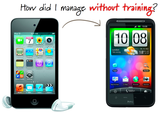
For the last few months I've been a self confessed fan and avid user of iPhone OS. Yesterday, as an impulse buy, I picked up a Droid. Months of conditioning to Apple's interface left me confused when I first saw the HTC Sense skinned Android interface. That was at noon yesterday. A little over a day and I'm happily doing all of my mobile computing tasks using my Android. It doesn't surprise you that I didn't need any training, does it? But here are some questions for you.Did the inventor of the wheel have training? Did Alexander Selkirk who was castaway on an island and survived for four years before rescue have any training? If you embark on a project out of your comfort zone, will you really need up-front training on the domain? The answer to all of these questions is perhaps a "No". For the last few years, I've been thinking that not just the elearning that we create, but also the way we choose to educate in classrooms and corporate boardrooms is ineffective and outdated, given the information explosion we have today. What's the purpose of any education? To prepare us for real life, don't you think? If that's something we agree with, then education should no longer be about disseminating information. Education should be about simulating real life challenges - the information should be incidental to solving the problem. Work, on the other hand needs to build in the safety for failure. In today's blogpost, I want to share a few thoughts about the place for challenges in today's education and work environments.Information is already out thereAs I struggled with my new phone, I decided some information could be handy. Not surprisingly, all the information I needed was available when I needed it. A quick tour of the HTC Sense interface came with the setup application on the phone. Information about really useful Android apps came to me through a Google search. Even when I was planning to buy the phone, I got all the information I needed by searching through reviews on the internet. Now this may all seem simple because I'm just talking of a phone switch. I do think however, that you'll agree with me when I say that information of most kinds is already available to us - regardless of the subject. We no longer face an information famine - it's all there at the click of a mouse. Why then, do our models of education and training retain the legacy of the 80's when information was scarce and available with only a few experts? Now that most of the information is already out there, I believe we need our experts and 'trainers' to be more than just information bearers. Failure is a great teacher "The main point is that, if we continue to look at education as if it's about coming to school to get the information and not about experiential learning, empowering student voice and embracing failure, we're missing the mark... Because learning has to include an amount of failure, because failure is instructional in the process." - Diana LaufenbergYou should definitely watch this talk by Diana Laufenberg where she talks about her experience of teaching children in different schools and how she has found mistakes to be an integral part of learning. At ThoughtWorks we believe in a culture of 'failing fast and learning from our mistakes'. That's because learning is an iterative process and not an dimension free event. I remember that I've learned most of the skills I practice today through years of applying them and having failed several times. Failure has taught me the ways that don't work and as a consequence I've learned the ways that work for me. Learning is effective when it's painful, but most learning experiences tend to try and lay a red carpet for the learner. We do our best to tell them 'the right way to do things' and coach them through the 'one right answer'. What happened to good, old fashioned exploration? Now I know that an 'instructionally sound' approach of leading the learner down 'the right path' seems very elegant, but this is what I call 'false elegance'. It seems like very intelligent design in comparision to the trial and error approach of learning, but we all know at the bottom of our hearts that the messy, failure ridden road is the one that builds true skill. Why then, do educational programs not encourage failure? Why don't companies build in the safety to fail, so people can keep learning from their mistakes? After all if people keep learning, the organisation tends to keep growing.Information creates Knowledge, but Challenges create experienceThe downside to pushing your content to the learners is that it assumes that all of the information is equally relevant to the learners and meets their learning needs. - Tom KuhlmannI'm a big believer in the power of pull to create learning. As human beings, we're an extremely adaptive race. Given a challenge, we'll usually gather the know-how to solve the problem. Challenges need to be at the center of modern learning experiences. Be it training, or elearning, when there are challenges that are as close to the real world as possible, we help learners build the confidence and experience to respond to similar challenges at the workplace. For example at ThoughtWorks University, graduates have the challenge of building a real world application for a real world client. The challenge has everything you'll see in real life, delivery pressures, technical complexity, teamwork, consulting, etc. By the end of the experience, we're not just helping the grads to learn the skills they'll need at their job - we're helping them to learn how to learn.Setting challenges is just a better use of people as well. We don't need to hire expert trainers in hordes if only we can build in safety to fail at the workplace. Intelligent workscape design can help in a big way. In instructional situations, designers can work with SMEs to create authentic challenges. SMEs on the other hand can serve as coaches (or virtual coaches) to guide people through the struggle. In face to face situations, this is a way to foster leadership - after all a lot of leadership skills are the same as the ones we need to become good coaches.As we head into the next generation of learning technology, I wonder if our focus needs to be around designing experiences over designing information dumps. I'm a big believer in the fact that learning is a process, and not an event - how can we put our learners on a diet of information and let real world challenges determine if they even need all that information in the first place? What do you think? Is pull overrated, or can we do significantly better as instructional designers? I welcome your comments!© Sumeet Moghe, 2009
Sumeet Moghe
.
Blog
.
<span class='date ' tip=''><i class='icon-time'></i> Jul 20, 2015 10:39am</span>
|
|
Once again, I am on the road on to my next business trip, this time around with two distinctive parts; one of them to Helsinki, Finland, where I will be participating in a number of IBM sponsored events around the Social Enterprise, a really cool, inspiring and rather innovative initiative on "Redefining Work 925" and, believe it or not, Living "A World Without Email" (One of my favourite topics du jour, as you can imagine …) and the other one to Paris, France, where I will be participating, and moderating a couple of panels, at the always engaging, entertaining and rather thought-provoking Enterprise 2.0 Summit, which starts next week on February 7th, and that this year promises to be quite an amazing event! But more on that one later on …
Yet, once again, since connectivity while on the road has got a lot to be desired for, I have picked up the good habit of pruning my RSS feeds (Remember RSS?), spice them up a bit and enjoy offline reading while I’m disconnected. And while I am doing that up in the air, I bumped into this brilliantly provocative blog entry by Tim Elmore on "Confessions of a Ghost Writer … for Students". Goodness! How low can we, human beings, get? Or, even worse, how can we still allow that to happen?
Indeed, in a rather sharp article Tim comes to question not just the ability of ghost writing for students per se, but the ethics, or, better said, the lack of ethics and morale, in doing so when students are employing those ghost writers to pass on their exams on subjects that may be of interest to them, or not. Showing, at best, how laziness, and perhaps that lack of morale or motivation combined altogether, can certainly damage the true spirit of hard labour (Even on the literal sense of the word!) in delivering something for which one would feel very proud of. At least.
The story of the ghost writer that Tim exemplifies in that article will surely give you chills going through your spine big time, as it highlights all of those traits that a bunch of us have been wanting to wipe out from the corporate world as well for a while now: hypocrisy, lack of ethics and morale, unwillingness to do meaningful work (that’s truly yours, not someone else’s), lack of responsibility and co-ownership, laziness, instant gratification for the sake of it, not the value you may be providing, etc. etc. You know the gist…
What’s really troubling though from the article itself is not what Tim portraits quite clearly of what’s happening out there right at this very minute with students and the work they produce (Or don’t produce, better said), but a rather poignant question that I thought I would include as well over here to see the whole context of where we may be heading:
"What will our world look like if these students become our leaders?"
Whoahh! Sorry, but before we try to venture an answer for that rather provocative question allow me to comment on it for a minute: No, we do NOT want to have those leaders governing in our world. Sorry, that may have worked in the recent past, but as we moved into a (business) world that’s more interconnected, networked, engaged, transparent, public, nimble, collaborative, trustworthy, engaged, committed, authentic, and whatever else you can think of, along those lines, that is, the last thing we need is to have a range of generations who become our leaders by doing something that doesn’t match, really, any of those traits: cheating (due to lack of ethics and morale).
Tim’s article clearly reminds me of a recent internal conversation I had with a bunch of fellow IBMers where we were discussing the concept of ghost writing on blog posts and social networking sites, specially, with senior leaders in mind, as a way to allow them to enter the world of Social slowly, but steadily, helping them adjust to new ways of interacting with the help of others, who may be a bit more versed. Well, now more than ever, and after reading Tim’s piece, I’m not convinced at all that ghost writing, even for executives!, is a good thing!
The Social Enterprise has always demanded authenticity, co-ownership, responsibility, trust, transparency, commitment, engagement, motivation, being the real you, your self, the don’t pretend to be who you are not, etc. etc. Around the world of blogging, I have always found it very difficult to try to justify ghost writing when authenticity and trust kick in, even for senior leaders and that article surely confirms that belief. If you can’t be you, please don’t get someone to be you. No matter how important you are, how busy you may well be, how much of a thought leader you are (and perceived by others), engaging in social networks requires your personal you to do it. Sorry, no ghost writing.
Yes, I can imagine such activity may have worked in the traditional world of communications and marketing, and, to a certain degree, I can agree with doing such activity when you need to deliver a certain corporate message, whatever that may well be, but when it’s just you (your thoughts, your beliefs, your ideas, etc.) what you are delivering we want to hear, read, learn from you, AND interact and engage with you!, no intermediaries, please. We had enough of those in the recent decades and I am starting to think we need to move on from that discourse. To the point where I am more and more convinced by the day that if you can’t engage with your real self in social networking sites, your blog and whatever other means of living social, I think it would be much preferred that you don’t engage at all. We want the authentic you, the trustworthy you; we want to have the certainty that we are talking with the real thing: your own person.
I guess you folks may be thinking that I am a purist and all, and perhaps I am (Don’t think I will have any issues with that notion in this context, to be honest), but read Tim’s article once again, move that context into the corporate world, and try to answer that question again: "What will our world look like if these students become our leaders?" … with that mentality, but, even worse, with that notion of ethics and morale about meaningful work, inspired by their so-called role models that have already starting shaping up that wrong set of core values. Not sure what you would think, but I feel we need to stop it. And very soon, before it is just too late!
How can we possibly justify ghost writing / engaging in social networks today when that lack of authenticity, trust, openness and transparency, amongst others, will clearly not just damage your reputation as a business (Remember businesses are made of people!), but also your engagement with your peers, subordinates, thought leaders, customers and business partners alike?
Is this the new workplace of the future, we have been envisioning over the course of the last few years, that we would want to inspire within our younger generations, as well as our more senior knowledge workers? I surely hope not! There is something very wrong about this out there, in my opinion, and the sooner we all put a stop to it, the better. So next time that you may be thinking about doing ghost writing, or ghost blogging, please do think about it, think of the repercussions, of the implications, of the consequences, of the potential damage you will be creating. And, above all, be transparent and open enough about it and let us know you will be still carrying on with it… so that we can move on in search for those other leaders who want to be their selves inspiring lots of trust, authenticity, transparency, openness, engagement and whatever else, because, somehow, I feel we would ALL be much, much, better off altogether!
Business. Made Social. Earn it!
Luis Suarez
.
Blog
.
<span class='date ' tip=''><i class='icon-time'></i> Jul 20, 2015 10:39am</span>
|
|
One of the most popular posts on this blog is about my ideas of what constitutes a social learning culture. In that article, I wrote about the need to bring together the most passionate people you can find for your business. If that is true, then intelligent hiring has to be at the center of an organisation's social learning strategy. While technology is crucial to the success of a social learning initiative, at the center of it all are people. In today's blogpost I want to articulate my points about why hiring is crucial to success of a social business and ask if L&D has a place in developing a hiring approach for the organisation.The 90-9-1 RuleWikipedia's most active 1,000 people — 0.003% of its users — contribute about two-thirds of the site's edits. - Nielsen, 2006 I've linked to this resource several times and to me it represents the constraint for most communities. Researcher Jacob Nielsen in his 2006 alertbox said that in most online communities, 90% of users are lurkers who never contribute, 9% of users contribute a little, and 1% of users account for almost all the action. This is what we often term as the Participation Inequality principle of online communities. Now if we were to extend this principle to a mid-sized company of let's say 2000 users, that gives you about 20 people contributing to all the action on your social platform. Traditional hiring eventually norms to an equilibrium similar to that of the outside world. 1% on the big, broad internet still amounts to thousands of users. 1% participaton the intranet, is something that an organisation serious about social learning can ill afford to live with.I Think of Workplace Learners on a SpectrumWhen interviewing people, I like to investigate their inclination and approach to learning. Now what I use, has no scientific basis though I want to introduce it to you all the same. I tend to think of people on a spectrum as you'll see above. On the left hand are the people who I call the laggards (for want of a better term). These are the people who cannot articulate their approach to learning clearly and don't present evidence of being self driven in how they learn, share and connect. The dormants on the other hand show evidence that they can learn when presented with a challenge, but don't quite demonstrate that they can drive their own learning. They do show promise and are perhaps only awaiting inspiration. The learners are the third kind of people on my spectrum. These individuals can show evidence of having proactively picked up several new skills over the past few years. They however aren't in a position to influence change in their peers, because of their current lack of sharing and connection. The resistors are a special kind of people on the spectrum and I'm not even sure if they're a different breed. These are learners who already share and connect in their own way. Despite their obvious ability to be social learners, they're resistant of newer approaches to learning and can often be wary of new tools, platforms and strategies. The really special people are the sharers, who can not just drive their own learning, but have no trouble adjusting to any kind of collaborative environment. The tools are only a means to an end -- they focus on making the most of the environment they get.Now I'm not trying to pitch my approach to you - it obviously is very 'me'. What I'm trying to say here is that learning is also a skill and different people show different levels of proficiency with this skill. To build a true learning organisation, you need to avoid hiring the laggards and dormants until they demonstrate evidence of at least being able to drive their own learning proactively. While job interviews focus a lot on core competence, I wonder if it's crucial that we try to gauge learning ability when you're hiring?Emergent and Novel Practice need SharingA lot of knowledge management thinking draws from Dave Snowden's work on the Cynefin model. Snowden describes situations, models and systems by way of four main domains - Simple, Complicated, Complex and Chaotic. For simple problems, the cause and effect relationship is absolutely clear. You could write a five step process to solve the problem and you'll get the same results each time. It is akin to turning the handle on a sausage machine - you know exactly what to expect. For problems in the complicated domain, there's again a clear cause and effect relationship, but you need to analyse the situation to establish this. Once you've understand cause and effect, you can easily apply an established practice.It's here that things become interesting. When problems head into the complex domain, cause and effect are so mixed up that you can determine the relationship only in hindsight. Depending on how a few parameters change, things can look quite different. This is where story telling and experience sharing is crucial. Knowledge sharing helps establish patterns that can help identify cause and effect relationships. This leads to solutions in this space (emergent practice). What's even more interesting is the chaotic domain, where there's no visible relationship between the cause and effect. This is where problem solving becomes iterative and we do what seems like a good choice. Depending on the result, we retrospect and take the next step. In the chaotic domain, collaboration helps drive the right decisions eventually leading to a novel solution for a novel problem.Most organisations are looking to outsource problems in the simple domain. Organisations are likely to retain the problems in the complicated domain, but the problems that we have little idea about are in the complex and chaotic domains. We need sharers to solve these problems. Hiring helps us seed our organisations with smart people that are willing to share, collaborate and connect to solve tomorrow's problems.After that rather long setup, the question I want to ask is if L&D needs to play a larger role in the way organisations hire. If we really care as much about collaboration and knowledge sharing in the enterprise, then is there a case for us to invest ourselves strongly in our employers' people strategy? How can we help HR identify the meta-cognitive candidates that can be the sharers our businesses need? If we say we don't need to bother with this , then are we saying we can afford participation inequality? What do you think? © Sumeet Moghe, 2009
Sumeet Moghe
.
Blog
.
<span class='date ' tip=''><i class='icon-time'></i> Jul 20, 2015 10:38am</span>
|
|
As I have just mentioned in my last blog entry, the last few days I have been embarked on my latest business trip, coinciding with a wonderful visit all around to Helsinki, Finland, where my good friends from IBM Finland invited me over to participate on the IBM CIO Forum event, with the rather innovative initiative of "Redefining Work 925", and a couple of other events, and where, after being there for about three days, I think I may have just experienced the future… The future of a fully networked and interconnected world… Our world. And what it would look like altogether. And, yes, it’s much more exciting and brighter than whatever I could have ever imagined!
As a road / air warrior, I get to travel a fair bit and visit not just mainland Spain, but a bunch of other countries in Europe, and North America. I have yet to visit South America, continental Africa and Asia, although I know it will all come together eventually at some point, but if there is anything that Helsinki, Finland, has shown me in the last couple of days is that you can have more than a decent Internet connection, and for free!!, while you are carrying on with your work and personal life helping it become ever so much more engaged, participative and interconnected with the Social Web available out there!
In another blog post I will detail some of the highlights from my visit to Helsinki, what I learned and what plenty of other folks are doing out there in the area of Social Computing, but for now I just couldn’t help thinking about putting together this short blog entry to explain why my expectations on connecting to the Internet, for work, or personal stuff, will never be the same again after this business trip. And here is why…
That’s a snapshot of the free wi-fi connection at the hotel where I stayed those days in Helsinki. And this is the one from the free wi-fi connection at the Helsinki airport, which is even much more remarkable:
For a good number of years I have always been complaining (Yes, I guess it’s complaining, because that’s probably what I have been doing all along…) about how poor the quality of wi-fi and Ethernet connections are in a good number of countries I have visited (US, Canada, Spain, France, UK, Germany, Ireland, Belgium, Portugal, Mexico, Netherlands, Hungary, Switzerland, etc. etc.) and on top of that how expensive it is for the quality of service that we get, even worse here in Spain, where the prices for ADSL, for instance, are some of the most expensive in Europe with the lowest bandwidth! And not just at hotels, conference venues, Internet kiosks, regular 3G connectivity, etc. etc., but also at our own homes! I was reaching the point of believing that we would have to get used to living through such poor quality standards of service with no remedy, waiting for our ISP providers to keep making big bucks while never delivering, and eventually give up on it all.
Here is another example. This week I am in Paris, to attend and moderate a couple of panels at the always enlightening and rather exciting Enterprise 2.0 Summit event and here is the current free wi-fi connection at the hotel I’m staying at, so that you folks can have a look into what it is like coming back to the harsh reality I have been exposed in the last few years:
Ouch!! Well, see the difference? Maybe not! Maybe we should not get used to such poor quality standards on providing wi-fi connectivity, regardless of the venue. While In Helsinki, I certainly experienced the future. And it is just gorgeous and bright! It’s something that I never expected it would be quite shocking as it was, yet so rewarding and fulfilling. Have you ever heard about being empowered, as a human being, thanks to technology and the Internet, regardless of whatever you may be doing? Well, I experienced that! And so much more!
I met a bunch of wonderful friends over there, some of whom I have been wanting to meet up in real life for the last few years, like Esko Kilpi or Riitta Raesma; met other new friends like Saku Tuominen, Petra Sievenin, Harri Ohra-Aho, Marko Laukkanen or my fellow IBM colleague Ville Peltola, amongst several others (Too many to mention!!), who are working on some pretty amazing stuff related to the Social Enterprise field, yet for them that amazing pervasiveness of a fast and speedy Internet connection is a given. Well, perhaps it should be for us, too!
It was quite a liberating experience, to be honest, to be socialising in the true sense of the word, i.e. going to bars, restaurants, and whatever other hang-out places and find out that each and everyone of them had really good, decent, and FREE, Internet connections for their customers to enjoy while having conversations with your friends. Social, for me, while on the road, has taken a new meaning. One that I’m finding it hard to come to terms with it, because, usually, when I am travelling abroad, as soon as I leave Spain, I am in the dark, don’t have data, nor do I incur in the hugely expensive and abusive roaming charges that the European Union keeps doing nothing about to our mobile providers over the course of the years and it’s starting to become a rather frustrating experience.
Even more, when I suspect that Finland is not the only case where that pervasive Wi-Fi access and service have been phenomenal all along. Denmark would probably be also one of those exceptions at the same level as Finland in helping us all understand that things can be much different, once and for all! Like I experienced myself as well last Wednesday, while I was at the airport waiting for my connection to Helsinki and the free wi-fi was just as good!
Yes, I guess that expectations have risen to a new level for yours truly, with regards to what a Decent Internet Access would be like, specially, while on the road, since, after having experienced a new wonderful world of fast, quality connectivity, things will never be the same. In fact, I keep questioning myself with such an amazing connected experience with the Web how come there are so few Tech related conferences taking place in the Nordics? I don’t think it’s about the weather, although last week surely was quite another experience!, but I know, for sure!, that is definitely nothing to do with the availability and accessibility of Internet connection, because over there, it just rocks! And I just can’t wait to come back to experience the future once again, … And perhaps with a bit of nicer weather I may have moved over there altogether!
For now though, here’s an interesting question I would want to put together out there for someone, whoever that may well be, to provide an answer to it, to close this blog post: What do we, human beings, need to do to get some Decent Internet Access over here in Western Europe? Where did we go wrong? Anyone care to venture an answer for that one? Clearly we do have leading examples like Finland or Denmark, so what’s stopping us from truly empowering us to fully live the Social Web the way it was meant to be all along for all of us: universal, pervasive, free access to information, knowledge, AND connections, i.e. the people? Is that just too scary? Anyone?
Luis Suarez
.
Blog
.
<span class='date ' tip=''><i class='icon-time'></i> Jul 20, 2015 10:38am</span>
|
|
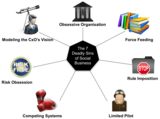
Dinesh Tantri, Nikhil Nulkar and I are on a project together at ThoughtWorks and we share some incredible moments together talking through our social business approach at ThoughtWorks. The project is part of the reason I've been a little late to write my weekly post. I'm also fortunate to work alongside Sahana Chattopadhyay who's such an astute thinker in the field of workplace learning and collaboration. I learn heaps just being around them. Every now and then I run into situations where I see how social software can make work life so simple. That said, doing the simple things aren't often the easiest. The transition from the non-social way of working and learning isn't the easiest for organisations to deal with. Like every other system, organisations are a system with a state of equilibrium. This equilibrium brings in a state of inertia - an inertia of working a certain way. It takes a lot of effort to establish a new state of equilibrium and the discipline to do the right things. This includes avoiding the temptation to commit what I consider sins of social business. So, in today's blogpost I want to introduce to you what I call the seven deadly sins of social business - things you want to watch out for, if you really care for a social enterprise.1. An Obsession with organisation "Organizations lull themselves into a false sense of safety with their hierarchies rather than recognize the danger of discouraging information flow, keeping data out of the minds of people who need it." - The New Social Learning (Marcia Conner, Tony Bingham)A few days back I read a fun article by Gia Lyons of Jive Software. Gia had a guest blog post from a social business advocate who expressed her frustration with "highly structured document management processes" and heirarchical organisation. In my opinion upfront information architecture for social business platforms is a very bad idea. Let me explain. People often represent stuff heirarchically through bullet points, folder structures and what have you, but they end up finding things organically. If you're on a Mac, you're possibly organising your data in a really structured folder system, but perhaps end up finding your stuff using Spotlight or Quicksilver. On the web too, we try to find information through the shortest route possible - tags, bookmarks, search, mentions on Twitter. Heirarchies are not a representation of everyone's truth either. For example a piece of content that sits in Products->Consulting, could also sit in Products->Consulting.A great risk of heirarchies and prescriptive information architecture is that in our attempt to imagine the path people will take to contribute to the platform, we create empty containers that never have any content in them. It's quite easy to accomodate legacy behaviour and give into stakeholders that want a folder like structure to your social platform. I do think however, that what customers want is often not what they really need. So, let's remember that information is multi-dimensional. People represent information differently and metadata helps create a crowdsourced representation of your organisation's knowledge. Instead of creating walled gardens for content, let's think of ways that we can actually create information flows - perhaps to the extent that we make our organisational walls porous and harness stuff from the public internet.2. Throw the Kitchen Sink at ThemLet's face it, you can't force people to see every piece of information that you put on your intranet. People consume information by virtue of their interest and the people they trust. There can be a tendency to architect a system that sends everyone an email for every activity on the platform. That is a possibility as much as the reality where people have thousands of unread emails in their inbox. You could also clutter the landing page of your intranet to force people to see everything they 'should' see. There are several sites with that level of clutter that no one ever goes to. As in the Twitter world, people follow the people they trust and care about. They follow the hashtags that indicate a topic of interest. It's crucial that we allow people to manage their information stream. Personalisation is a key to making any social business initiative succeed - that's at the heart of PKM too. The huge complaint about information overload is really about filter failure, but you don't want to create a situation in your organisation where you don't give individuals the opportunity to place their own filters. 3. Impose Yourself Through SoftwareI've been speaking to my colleagues about the Articulate Community. It's a community of 57000+ practitioners, with three passionate community managers. Tom, Dave and Jeanette work untiringly to stitch together a community that is free of imposed structure, rules, and regulations. The Articulate Community is not snarky, doesn't have draconian rules, and allows people to contribute the way they feel appropriate. The community managers do what it takes to aggregate contributions from the big broad internet as well as through the community. As curators and connectors, they make sure that they balance informality and the lack of rules with constant communication. You should read about this community. There's a strong tendency to impose every 'business rule' through software. The frank truth is that this is not transactional business software. People will make contributions the way they please, and the key is to keep the platform frictionless, freeform and emergent.4. A Limited pilotHave you ever heard the suggestion of piloting your social business solution with one team, to see how it goes? Social business is all about serendipity and breaking down the walls. By opting for a limited pilot, there's no question of breaking down the wall, because innovation is within a closed group. There's also limited chance of serendipity because the chance of accidental discovery from our strong ties is less likely."Serendipity is possible when we’re collaborating with our close colleagues on a well-defined project, but that’s probably when it occurs least often. It’s much more likely during wide forays and broad searches, the kind that are so easy to do with current technologies." - Andrew McAfee.As McAfee quite clearly articulates, there's great value in going "as broad as possible right away". Even if all parts of the business aren't social from day one, it's important to have something up there that touches everyone's lives. To try and put this simply, my view of a pilot is one where we try address breadth first instead of addressing only depth for a particular function. Breadth promotes everyone's access to the platform and allows users to start exploiting the emergent nature of social software to decide how they'll use it.5. Nurturing Competing SystemsIn his excellent article, "Why Good Companies do Bad Things", Michael Idinopulos talks about innovation marginalisation. Firstly statements like "This is a cool, crazy experiment. We're just going to put it out there and see what happens. In a few months we'll decide what to do with it." This, as Michael says appeals to early adopters but scares everyone else away. The other big mistake is to nurture competing systems, especially the systems we transition from. Andrew McAfee talks about the 9x endowment effect, where "We value items in our possession more than prospective items that could be in our possession, especially if the prospective item is a proposed substitute." People are unlikely to shift from the inertia of their existing way of working to a new way of working, especially if it pulls them out of comfort zones. More importantly, why would you want to have multiple systems serve the same purpose?A flipside to competition is an unnecessary competition with email. Let's understand that email is the most ubiquitous tools in the workplace. Just like we haven't been able to weed out the telephone yet, we will continue to need to email to run business. So instead of competing with email, we'd rather use it as a way to engage late bloomers on the platform. Competing with a system that you can't kill is just a bad idea.6. An Obsession with RisksA lot of project management has to do with risk management. While this is a great project management competence, it can be a huge bane in the social business world. A huge part of social business is about understanding the risks, putting in place good community management and letting go. What can happen instead, is that project managers obsess about risks and block out features in the fear that users will misuse the system. Frankly, social media puts things out in the open - there are more eyeballs looking. The crowd can actually help surface abuse. In addition, I must say it's foolish to try and manage all risks through software restrictions. Community management plays a big part in not just educating users, but also in connecting people on the platform, and creating a meaningful structure. Andrew McAfee's article about Enterprise 2.0 insecurities is a great post about this very topic.7. Modelling the CxO's viewLast, but not the least social business is not about constructing a heirarchical intranet that models your CxO's view of the world. Leadership does often drive the business with a certain strategy in mind. While all of this is nice and dandy, a lot of CxO level representations don't necessary model a regular knowledge worker's view of the enterprise. The way you design your social intranet provides an entry point to a myriad of learning and collaboration possibilities for your colleagues. Just the same way as we design applications with users at the center, it's crucial that we design social platforms with the average employee, not the CxO. Do they view the enterprise as a collection of communities? Then model it that way and not as a collection of practices as your CxO wants it to be. Do people want project collaboration to be democratic? Then model it that way, not through a top down view of how a CxO believes a project should collaborate. Remember, social business is a great leveler and it's for the people, by the people, of the people.I tend to be a bit of a headstrong social media dude, and I guess my views can be too strong - though I try my best to balance them out the best I can. Having said that, I do have good reasons to stand by my views, so I'm looking at you to tell me what you think of what I've posted today. What do you think? Am I talking through my hat here? Or are you nodding your head in agreement? What do you want to add to this list? I'd love to hear your thoughts. Thanks for reading.© Sumeet Moghe, 2009
Sumeet Moghe
.
Blog
.
<span class='date ' tip=''><i class='icon-time'></i> Jul 20, 2015 10:38am</span>
|
|
As you may have noticed already, the last post that I put together over here in this blog was a bit over three weeks ago, so, once again, it looks like that quiet period is now over and it’s a good time again to resume my regular blogging activities. I know that plenty of folks out there may have thought that I have given up on blogging altogether, again!, after such a long time not writing much in it, but far from the truth! Coming back in full force and perhaps with a new direction for the blog as well, which I will explain in an upcoming new entry. However, I am sure you are all wondering what have I been up to then in the last few weeks, right?, and what prohibited me from coming back to the blog and keep up with the regular schedule. Well, how can I put it? Hummm, how about when a combination of business travelling, planned obsolescense, lack of consideration towards others’ own health, and @elsua v4.0 decided to kill my own productivity?
Indeed, in such pretty demanding times, where more and more is expected from us, knowledge workers, where we are continuously asked to produce more with less, where remaining effective, if not even more productive, has taken a new meaning for all of us, it seems like we are doing a pretty bad job at getting rid of productivity killers and help us get better at what we are already doing. And I am not just referring to the things we can do ourselves to avoid those productivity killers, since I am sure we all know how we could get rid of each and everyone of those!, but talking about those that have been inflicted upon us and for which we do have very little to do to overcome it; but perhaps now it’s a good time to get rid of the silliness of it all.
Cutting through the chase though, the main reasons why I haven’t been capable of resuming my regular blogging activities, as well as pretty much all of my external social networking interactions out there on the Social Web, and perhaps internally as well, has been due to 4 different productivity killers that apparently all decided to kick in at the same time, i.e. that period of three weeks!, and for which one has got very little to do about it all. Although, again, perhaps we need to start doing something about it. And here is why. Here are those productivity killers that I wish we would all know how to address them and get rid of them:
Business Travelling
After having seen, and experienced!, the future, as a result of a short visit to Helsinki, Finland, I am no longer too sure that I would be capable of putting up with being stuck at an airport, or in a hotel room, or at a conference venue, where the Internet connection is just not up to the standards of what one would expect to keep being productive. For example, on my way back home from Paris, after a wonderful Enterprise 2.0 Summit event, I was stuck for almost 5 hours in Barcelona airport, plus another 3 hours from Barcelona to Gran Canaria. And throughout all of that time I couldn’t manage to get a decent connection in order to do my job. That, right there, is already 8 hours of lost productivity! Yes, 8 hours that no-one is paying for!
Now, as most folks out there may have seen it for a long while, in a good number of European countries things are starting to become a bit dire, with regards to the financial crisis, high unemployment rates, lack of decent jobs, etc. etc. Our governments keep telling us that we need to go through these little sacrifices in order to make it. They keep telling us that we need to work more hours, increase our productivity and perhaps become more conscious of the time we spend at work. In short, they keep telling us we need to be more productive. Yet, time and time again, they keep neglecting and ignoring the fact that traditional work is no longer the vast majority of the knowledge work happening out there. It’s no longer a physical location, or a place, or having a set of tools. It’s actually a state of mind. Work happens around you, wherever you may well be, and with whatever the tools you may have at your disposal, whether it’s your laptop computer, your smartphone or your tablet.
Governments keep failing at understanding and embracing this new dynamic where for most of the road / air warriors out there work happens while we are on the move! On the train, on the plane, at a hotel room, at a conference venue, meeting up with customers, etc. etc. And when a whole bunch of us have made the transition into an always-on work environment relying on the cloud to deliver what we need, we just can’t afford failing at not having a decent connectivity. We just can’t be effective and productive enough if the external world doesn’t catch up with us! If governments would finally truly understand that. If they’d want us to be rather productive they need to help us stay connected, regardless of wherever we may well be! Now, you may be saying that I am a dreamer, asking and longing for such state of things for always-on work, the reality though is that I am not. Finland, and I would venture to state that for all of the Nordic countries, for that matter, keeps showing us, and leading!!, the way. And, let’s face it, it’s working! Look at they financial crisis in all of those nordic countries. See? Nothing. They just keep working! They may have other problems and other issues, but lack of productivity is no longer one of them. And I bet that pervasiveness of a strong broadband penetration has got a whole lot to do with it. So if they have managed to make it, why can’t we, the rest of Europe, follow suit? Couldn’t we learn something from them? Aren’t we all part of the EU after all? Shouldn’t we help each other raise our common stakes as productive European citizens? Something tells me we got a lot more to win than to lose, don’t you think?
Planned Obsolescence
But just as I was on my way home, when I arrived and turned my MacBook Air on, the unexpected, as usual, was about to happen. And again far too soon! Indeed, on the top left of my MBAir a funny rattling noise started to become more and more worrying and after some initial diagnostics I eventually found out the MBAir fan finally ceased to stop working. Oh, yes, MBAir machines *do* have fans as well. Oh, yes, MacBook Air machines are also very much trapped in this 20th century non-sense that we all know as Planned Obsolescence. I have been having this machine for a bit over a year now, exactly one month after the guarantee expired!, and bang! The fan is now history. After calling Apple Care, as well as the Apple Store where I bought it, it looked like it was going to take me quite some time to have it fixed and eventually returned back to me, and quite pricey, too! So, falling, once more, for that silliness of planned obsolescence, I decided to give myself a treat (Seeing a very special date coming up for yours truly, which I will mention shortly…) and purchase a new MacBook Air 13", which is the machine I have been using in the last couple of days.
But it wasn’t the machine I originally got when I bought it. Somehow, at the shop where I bought it they mistakingly gave me the 128GB hard disk model, vs. the 256GB one, which is the one I wanted. And that basically meant that I had to go through 2 different installations over the course of one week in order to be up and running once again. And I did. I tell you, there is something out there on getting new shiny objects, but, more importantly, something that I have noticed myself over the course of the last few years as you get a new machine time and time again. Going minimalist. That’s right. Every new machine that I have been getting in the last few years I have gone one level deeper with regards to the amount of Applications, Software, Documents, Pictures, Files and what not I may have got on my machine to the point where minimalism has taken a new meaning for me. Yet, it was two different clean installs that I had to do over the course of a single week and that added, quite a lot, to the productivity drains I have been suffering from in the last few days, and those of you who may have done such recent move would probably confirm this as well.
The key question though that I keep coming up with is when is the world finally going to come to terms with waking up and making a successful transition into becoming a full, sustainable, circular economy and leave behind those economy models that not only keep getting us in trouble, as we have seen, witnessed and lived over the last 4 years, and still going strong!, but at the same time, they keep destroying the most precious gift given to us, human beings, next to our life: our planet. When are we going to get rid of that pernicious obsession with wanting to own stuff. What’s wrong with borrowing, lending, making good use of stuff you need and then letting it go, with learning to live just with what you need, not what people keep implanting in your brain that you need? When are we going to fully understand that the resources we have got around us are finite. And we, too, are finite. That one day, if we don’t change our mentality, and start living more meaningful, respectful, purposeful and sustainable lives, we would be the ones that need replacing, that our long awaited planned obsolescence is very much overdue and that Earth will dispose of us, just as much as we are doing of her at the moment. Yes, please, let’s stop, and get rid of!, the non-sense of planned obsolescence and help us keep productive with what we have for longer periods of time. Planet Earth would be a much better place to live in, for sure!
Lack of Consideration of Others’ Health
Ok, moving into the third productivity killer for yours truly in the last couple of weeks. This one, in particular, is the one where I am planning to become a lot more aggressive to try to address it on my own terms, since I think it can be done easily. If you have been following my internal and external social interactions, to the point where I may have shared across some of them, you may have noticed how last week, the entire week!, I have been recovering from a rather nasty flu that I got from a good friend of mine, who, apparently, was just recovering from a severe bronchitis himself and he thought things were back to normal. Well, they weren’t! Because that flu knocked me down the entire week like you wouldn’t believe it.
This winter season I have been having one cold and this one flu. So I guess it’s not too bad. The problem though is that, for me, this was the first time in my life that I had a flu, that I remember, that involved fever, muscle aches, apathy, strong headaches, and what not. And, as such, it required a whole lot more taking care of it and curing it than anything else than I can remember. And I am finding it a bit too ironic that I was in Helsinki with a whole lot harsher temperatures and extreme winter, followed by Paris cold weather as well, and eventually 3 weeks later, the lovely sunshine got me and knocked me down for the entire week!
But why am I using the heading over here as lack of consideration of others’ health? Well, mainly because if that friend of mine had decided to stay home for a few more days a bunch of his friends, me included, would have been spared from a rather miserable week. One were my own productivity suffered quite a bit, just as much as that one from other folks, too!, because of him not being considerate enough that while he may have been feeling better, he obviously was not well enough just yet, because some of us got the flu virus after being in close range with him, while celebrating a special event I will talk about shortly.
And this is what I meant that some times, specially, when you are not feeling well, but you feel you need to carry on with the world around you, it’s probably better for you to stay inside and spare that rest of the world some better times. I stayed home the entire whole week last week and will probably do so for most of this one as well. Sometimes it’s better to recover in isolation, getting well taken care of, than just being out there, trying to pretend like nothing is happening and bang! get everyone around you infected with the odd seasonal cold / flu. Believe me, the fact that we may not see you for a few days does not mean that we have forgotten you at all. Quite the opposite. The fact that you have helped us remember one of those unforgettable weeks of you dragging along all the way, surely is going to leave a mark, because I have come to the conclusion that if you can’t spare from your cold / flu, we may as well do it ourselves. So next time we meet up F2F and you tell me you are recovering from a cold, flu, or whatever else, don’t be surprised if I rather walk away from you, or ask you to stay away till you get better. No, I’m not being anti-social. I am just asking you to be aware that just because you are sick it doesn’t necessarily mean that everyone should be sick along with you. And since you don’t seem to be conscious / aware of it, we may as well do that for you. Not to worry, when you feel better, we will be paying for the drinks to celebrate your comeback!
Oh, and if you have got to go to the traditional office to do some work, you may want to think about it twice, as well. Last thing you would want to do is to knock down your entire business for a few days, dragging along, just because you decided not to stay home for that little longer. Some times, it’s worth it staying home. Remember, whether you are there or not, the business will continue. If you get everyone sick, that may be another matter. Spare them. Spare us, please.
@elsua v4.0
And, finally, the last of those productivity killers that has prohibited me from being much more active in the Social Streams out there in the last couple of weeks. But, not to worry, this is a fun one! One that although it takes a long while for me to admit, it’d only seem to be happening every 40 years! And the reason why it was a productivity drain was more than anything else because celebrating it meant being outdoors, more than indoors working along.
Yes, that’s right, as some of you have noticed in several other places, a bit over a week ago, I reached that lifetime milestone of 40 years of age. Or, as I decided to call it, I just became @elsua v4.0. As you can imagine there were lots of celebrations on the side for such achievement and, while I have got a blog post coming up on the topic, where I will reflect on a few things I have learned over the course of those 4 decades, I decided that since it’s just such a special lifetime achievement, and given the recent issues with that nasty flu, I’ll be celebrating it throughout the whole year! Here and there, and right in between! Why not, right? What are the chances of being 40 again, don’t you think?
Oh, yes, that, too! I can now then vehemently state how those younger generations making extensive use of social networking tools for both personal use as well as for business use, are actually not that young anymore. And how we may be much better off switching the discourse from that generational divide into embracing different working styles within the workplace. That’s what it is all about!
And, to conclude this rather long and extensive blog entry that will serve as me getting back to my regular blogging activities, I guess I’d summarise the main key learning from @elsua v4.0 throughout the last 40 years picking up on a superb mantra headline that my good friend Harold Jarche has been using for a long while and, which, to me, has taken a new meaning altogether just recently: Life in Perpetual Beta:
Be a Natural Enterprise (Slideshare link)
"Find the sweet spot: identify your gift, passion & purpose
Find the right partners
Research unmet needs
Imagine and innovate solutions
Continuously improvise
Act responsibly on principle"
Yes, indeed, it’s good to be back, sustainably productive and Hippie 2.0 once again!
Luis Suarez
.
Blog
.
<span class='date ' tip=''><i class='icon-time'></i> Jul 20, 2015 10:38am</span>
|