Blogs
|
I'm very excited to be at Michael Wesch's keynote at Learning Solutions 2011. Michael's from the department of anthropology at Kansas state university and is a well known figure exploring the effects of new media on society and culture. This is a topic that I'm particularly interested in and it really gets me warmed up to see someone from academia come up with a talk like this. I'm expecting a lot of real stories and empirical evidence. You should definitely look up Michael's YouTube channel - great videos and great stuff to learn. He's also a twitter god - 10,000+ followers?The place that Michael turns to for answers is his students. He has 200-400 students each year and he studies them like an anthropologist. Classrooms are the quintessential areas of learning in society and there's something really wrong with them. You get disappointing results such as questions like, "How many points is this worth?". The video above is an illustration of stuff that's so wrong with education today. Facebook through class all day - there's literally something in the air. The knowledge is all around people and a lot of advanced technology is so ubiquitous that it makes connection, organising, sharing and learning easier than ever before. In Michael's world people need to be knowledge-able, be able to find, share, learn, organise. We're in the middle of profound cultural change and only the knowledge-able can cope with that change effectively. Our Culture is ChangingMichael has spent a lot of time in New Guinea and it's a fairly tough place to live in given the things that people have to eat and how they survive in the tropical weather in rainforest. When he was there it felt to Michael as if he had a total loss of self. He says your self is reflected back to you by your context and he had to recreate himself in this new culture and environment. There was no media there to guide him. He realised just how important media was to him. The next 8 years that he was there, media helped the people there in a big way. For example population census - it should be really easy to write down the names and list the people in a village right? Except the people in village don't really have regular names. Their names are like 'brother', 'sister', etc. The other examples was disputes. People would get together in a village get together and fix the relationship in a group. When you bring in the written law, this obviously changes things dramatically. Media is therefore not just tools and communication - they mediate relationships. Media changes, relationships change and the culture changes.Think about how we watch TV. We watch TV for the content, but the content drives relationships. We watch TV while at dinner, we congregate in groups to watch sport. These are the conversations that create our culture. Now this kind of stuff should be showing it's effect on education, but it doesnt - 43% of students are bored, up from 20% in the 80s. How do people get engaged in American Idol and not as much in class?"What we are encountering is a panicky, an almost hysterical, attempt to escape from the deadly anonymity of modern life… and the prime cause is not vanity… but the craving of people who feel their personality sinking lower and lower into the whirl of indistinguishable atoms to be lost in a mass civilization." - Henry Seidel Canby, 1926Let's understand this phenomenon. We use the word "Whatever". So what's a brief history of the phrase "Whatever"? Let's analyse it over time. In the pre-60s "Whatever" meant "That's what I meant". After the 60s it became synonymous with "I don't care" or a "Meh...". This reflects itself in the Nirvana lyrics of the "Smells like Teens" song. So why is American Idol popular, it's a way for people to raise their personality and not be indistinguishable. More people want to be important today - more people want to be the new American Idol. From the late 90s to now, people have adopted the "I'll do what I want" meaning for "Whatever". It's an empowered generation and free culture. This is embodied in the book, Generation Me. It's a very broad cultural phenomenon which is driving a search for identity and recognition. Our choices are so incredibly broad, you're not born knowing who you are and want to be. We all need identity and recognition and the media keeps bombarding us with messages of the kind of people we should become. The search for the authentic self leads us towards self-centered modes of self-fulfillment and disagreement on several things - values, views, approaches. We're more disengaged and more fragmented. The new media revolution is creating the cultural background for this kind of a change. A User Generated Knowledge EconomyWeb 2.0 is changing the way we connect to onother. We need to rethink ourselves as the video above will show you. Michael created this at home and it has had 11,319,629 over the last four years. This is when Michael shared it with four friends just to get feedback. Can you imagine that? Things got viral and he was soon topping Digg. This was a way for user generated filtering. Think about it - Michael created this video. That was user generated content and digg helped users to filter this out. People can go ahead and organise it themselves using delicious - this is a user generated organisation. Things like RSS feeds help people get stuff on their own systems and this becomes user generated distribution. This is a new knowledge economy that's shaping itself through the input of the users than a top down authority.Companies like Dorritos are letting users create videos for them to do their advertising. They ran a contest and selected the top 5 in their contest and one of the winning videos took just $12.79 to create. This is a sign that we need to rethink the way we do things. Ebay is changing the way we commerce. People are renting out rooms and cars and people are banking without without banks - 10% loans this year will be peer to peer and negotiated through the social web. We're doing politics differently - Obama's campaign was an example. But think of how we would do governance differently if we built society ground up on what technology have. We can design democracy fromnthe ground up. Ubiqutous, context aware, social, semantic social networks are changing our world.Why does this matter?This deeply matters. We know ourselves through our relations with others. New media is changing how we perceive ourselves and how we relate to each other. We have a cultural inversion today. There's a tension. We're expressing individualism like never before but we value community. We talk independence but we value relationships. The free hugs campaign was pre-social media but when it goes on YouTube it gets 67,900,361hits and becomes a global phenomenon. Think of how this kind of thing becomes revolutionary. This is how people are talking back to brands. The above YouTube video caused a big brand to bring users to the table and force themselves towards change. There's new possibilities all around us. There are great tensions and those tensions allow for creativity in learning.The first video on this blogpost was something 200 students collaboratively scripted and filmed using new media tools. What's important to note is that knowledge is all around us. The classroom is not the place where we should be going for knowledge. As architects of culture, we need to understand this phenomenon and our environment. The walls of the classroom are not the truth. Information is not just a part of these walls. Authority isn't single source. The uncultured project is an example of someone walking out of class to change the world - Shawn Anand's story is truly inspirational. Our understanding of this phenomenon is important. We have to create learning environments that help people be knowledge-able and live in this new environment. We need three things:Real world problems;People working together;Leveraging technology effectivelyMichael's students create free documentaries that get viewed the world over. This is an example of how they've leveraged collaborative technology to change the way people learn and be knowledge-able. Inspiring. Michael's rattling away examples before I can absorb them all. This is just so inspirational, world changing. Projects like ushahidi are changing the way we help people. This is a new knowledge economy - it's time to be knowledge-able.© Sumeet Moghe
Sumeet Moghe
.
Blog
.
<span class='date ' tip=''><i class='icon-time'></i> Jul 20, 2015 10:31am</span>
|
|
One of my other passions, that, coincidentally, don’t get to talk much about on this blog, but perhaps I should, is that fascinating topic of Learning. And not just learning within the Enterprise, a la learning in context, learning while at work, or embedded learning, in short, where a bunch of really smart, evocative and rather insightful folks have been sharing graciously, over the course of the years, their experiences, know-how, knowledge and expertise, like good friends such as Jay Cross, Jane Hart, Harold Jarche, Charles Jennings, Clark Quinn or other incredibly inspiring folks such as Dan Pontefract, Stephen Downes, George Siemens, Donald Taylor, Dave Cormier, amongst several others. I am actually talking about Learning in the wider, more general context of education, and where a good number of really inspiring stories continue to emerge to highlight how we may be on the tipping point of re-thinking learning itself and its purpose(s), as we have known it for decades, and, most importantly, how we have been dealing with it at schools, colleges and universities. It’s probably a good time now to, at long last, rethink the Essence of Connected Learning.
While I was in London last week at the Melcrum Digital Summit, to present on IBM’s journey towards becoming a successful social business in the context of talking about BlueIQ and our internal adoption experiences (Check this Slideshare link for the presentation materials that I used), I had the opportunity to engage on a superb range of offline, face to face, conversations on various different topics and one of my favourites was that one with Barnaby Logan where we talked extensively about learning and how it seems to have shifted gears, finally, into becoming much more relevant, networked, interconnected, social, technology enabled and, above all, with a clear purpose: re-engaging both students and teachers alike as part of the same immersive and adaptive learning experience. Very inspiring altogether!
Then as I come back home, after having finished up my last business trip, I get the opportunity to experience serendipity doing its magic, once again, and allowing me to bump into another short video clip, that lasts for a bit over six minutes, which points back to a rather inspirational Web resource: Connected Learning, under the suggestive title "The Essence of Connected Learning":
The Essence of Connected Learning from DML Research Hub on Vimeo.
In that video we get to see how a few folks get to describe Connected Learning itself as a "model of learning that holds out the possibility of reimagining the experience of education in the information age. It draws on the power of today’s technology to fuse young people’s interests, friendships, and academic achievement through experiences laced with hands-on production, shared purpose, and open networks", which I am not sure what you would think, but it certainly seems to be the right step in the right direction towards meaningful and purposeful learning activities over the course of time and taking into account the digital world we live in nowadays.
And while drafting together this blog entry and reference both the video clip as well as remembering the great conversations with Barnaby (Thanks much for those, by the way, Barnaby!), I just came to the realisation that from here onwards I am going to make an effort and blog on a more regular basis about this topic of social, adaptive, emergent, interconnected, technology driven learning and the kind of impact that is currently having not only within our societies as a whole, but within the business world, in particular.
When "work is learning and learning is the work", as my good friend, Harold Jarche, recently blogged in a beautiful article on "When learning is the work …", I guess we would need to figure out how we are going to continue to learn, unlearn and relearn, even from an early stage, if we would stay relevant in the 21st century, as my fellow colleague and good friend, Anna Dreyzin, recently talked in a short article she put together quoting Alvin Toffler: "The illiterate of the 21st century will not be those who cannot read and write, but those who cannot learn, unlearn, and relearn".
And it is now thanks to making all of those connections to these interesting resources, conversations and whatever else that I have, finally, made the connection into "Net Smart", my good friend, Howard Rheingold‘s, latest masterpiece that I got on my way back on my Kindle App and that I have started reading recently, and where Howard gets to "provide evidence, advice and suggested practices for mastering today’s digital literacies of attention, participation, collaboration, crap-detection and network know-how".
Ha! Talking about Connected Learning. I guess you will be seeing, from here onwards, plenty more articles on this topic over here in this blog. The spark just got ignited. Let’s see where it would take us. Care to join me / us?
It would be worth it.
Looking forward to learning plenty more on the subject along the way, too. No doubt!
Luis Suarez
.
Blog
.
<span class='date ' tip=''><i class='icon-time'></i> Jul 20, 2015 10:30am</span>
|
|
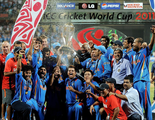
Before I begin today's blogpost, I have to mention the biggest event in Indian cricketing history over the last three decades or so. India won the 2011 Cricket World Cup on Saturday and what a win it was! The eleven played like true champions against a tough opposition and at the end of it came out on top. For my non-Indian readers here's a moment for you to accidentally discover how big a deal this is in India. People actually took to the streets in celebration. If you bump into me over the next few days, you're likely to hear me talk about this win so bear with me please.Speaking of accidental discovery brings me to what I want to write about today. We're uncomfortable with accidents and uncertainty. That being said, a lot of social media based learning solutions rely on serendipity and chance discovery. Serendipity is quite a counterintuitive phenomenon. How do you know that you'll know the important stuff? Most of us from the '70s and the '80s have grown up on a diet of structured media, whether through the web or through books, magazines and education. New media on the other hand accelerates content creation in such a big way that traditional structure is destined to fall behind. A week or so back I wrote an article about the shape of knowledge management in the age of social media. Today I want to talk about the personal mindset that each knowledge worker needs to really exploit this rich, diverse, yet often confusing information explosion.We ask for structure, but do we really need it?It's amazing that when on company intranets, people expect structure whereas when on the internet, people don't even imagine browsing. It's no surprise that several people actually use Google as their homepage or as a means to start navigating the web. Why then, is search a counter-intuitive beginning to people's intranet experience. Granted that most intranet searches are just bad, but let's assume you could be confident that the information you're looking for exists, and there's a good search that can find stuff. People still find it tough to start with search. I believe there's a reason for this. Traditionally, company intranets had finite amounts of information. It's easy to build a taxonomy around this finite information and organise it in a browseable sitemap. With modern social intranets content creation explodes in such a big way that it's a bit foolish to even attempt structures. The only structures that survive are the ones that emerge ground up through metadata. Social media does it's bit to help search on the internet as well. Whether we like it or not we constantly keep accidentally discovering stuff on the internet, through various social networks. The constant discoveries help us know in our subconscious mind that we can actually find something if we tried.Don't drink from a firehose, just sit by a stream"Its a river of information, dip your foot in whenever its convenient." - Leo LaporteThe fact is that with modern social networks, serendipity is a knowledge guarantee but it needs mental preparation. It may seem that if someone provides you packaged, neatly organised content then you'll be happy, but the reality is quite the contrary. Let's forget about social media for a while. Regardless of how avid a news reader you are, it's perhaps tough for you to keep up with all the news in the world. Depending on the kind of news you're interested in, you perhaps customise your news intake. Not many people read the entire newspaper. Think of a time when you missed an important piece of news. Not many people really sweat over this, because if the news is really important, someone will tell you about it. Social media is quite like news. As Laporte says, it's a river of information. When you sit by a river, you don't try to drink all the water that's flowing by. You dip in your toe when it makes sense for you. But then what if you miss something? This is where you handle your learning just the way you handle news. If it's important, your connections will tell you. This is where having personal learning network (PLN) that you can trust, makes sense.It's not information overload, its filter failureClay Shirky said a few years back, "It's no information overload, it's filter failure." If the current information explosion was really a bad thing then the converse, an absolute lack of information, would make us happy, wouldn't it? Now that seems odd - I guess no one would be happy with that. Shirky's right then - the filters are crucial. As I explained in my last article, we're so individualistic these days that another person's organisation of content hardly ever makes sense to us. On the other hand if we have right filters, we can create a structure that makes sense to us and is tailored to our needs. And by the way, sometimes the best filter is another person on your PLN who you can trust. Just as we trust our friends to remind us of important news we've missed, we leverage our PLN to find the the learning that's important.If you still need structure, the tools are out thereOnce you know what filters make sense for you, there are several tools and services that can create meaningful structure around that filter. My latest favourite is Flipboard on the iPad (see screenshot above) though apps like Zite are worthy competitors. The truth is that you don't need a fancy iPad to provide you the right kind of organisation. Web services like paper.li can help you create really nice, structure around important information. Google Reader can give you some really interesting visualisation around your RSS feeds. Heck, there are thousands of applications and services just around Twitter. The key is to pick the services you care for, decide on the filters that make sense to you and follow the people that really matter. From that point you just need to trust that the important information will come to you. Just believe!Ever since Jay Cross wrote his book on Informal Learning, several people have spoken about the need to 'formalise informal learning'. I think that's just absolute rubbish. Informal learning benefits from the natural connections amongst people and the serendipity it fosters. "Formal informal learning" is the biggest oxymoron on the planet, I'm sorry! In my view the fact is that if you can't prepare for serendipity, you're not ready for the 21st century workplace. Structure makes sense when you're dealing with a finite amount of information. The only way through constantly growing information sources, is to be able to develop the skills of personal knowledge management and sense making. If I was hiring someone today, this would be a primary skill I'd look for.(Technorati claim: FRCHU6AEKYFN)© Sumeet Moghe
Sumeet Moghe
.
Blog
.
<span class='date ' tip=''><i class='icon-time'></i> Jul 20, 2015 10:29am</span>
|
|
Over the course of time you come to realise how there are a number of different articles published out there that you know are going to have a higher impact than others on how you perceive various different things, whether personal or work related. But what happens when you stumble on perhaps the most essential and critical article you have come across in a long while that manages to question a good number of the things we have been taking for granted at work for years? An article that dares to question how the business world has been functioning and operating over the course of decades by claiming, loud and clear, how companies keep ignoring 150 years of invaluable and precious research on how we become most effective and productive while at work. Are you prepared to be challenged, too, about your core work beliefs? Really? Are you sure? I mean, are you really sure? I can tell you it’s going to hurt, but maybe we need it that way, as one of those massive, unprecedented wake-up calls that may mark the beginning of something new and rather powerful: a smarter knowledge workforce.
A few days back I bumped into this very intriguing and rather helpful article put together by Jessica Stillman under the rather provocative title of "Why Working More Than 40 Hours a Week is Useless" where she points us out to a superb piece of writing done by Sara Robinson at Salon under the suggestive heading of "Bring back the 40-hour work week" where she questions something that I am sure most of us knew, deep inside, from all along, but that very few have dared to even bring up as a topic of conversation. Specially, at work. Basically, when was the last time you worked 40 hours a week? Or, more importantly, does working more than 40 hours per week make you more effective and productive at what you do? Well, Sara claims on that article that, contrary to what we may all believe in, it doesn’t. In fact, working over 40 hours per week is the most unproductive thing you can do to damage not only your work or your colleagues’ work, but also yourself, as a knowledge worker AND as a human being. And she has got 150 years of powerful research to back up that argument!
Whoahh! What do you say to that? I mean, really, what can you say to that? Right there, after having gone through that absolutely stunning piece (Long entry, for sure, but well worth reading every single word of it!), I came to the conclusion that in the 15 plus years I have been working in the corporate world I have never managed to make only 40 hours a week. And, notice how I am using the word manage, because I feel it fits in quite nicely in the whole context of how we have been taught over the course of decades that if you are only working those 40 hours a week you are just basically being underutilised and pretty much lazing around (Perhaps, nowadays even by checking out all of those social networking sites!). Well, it’s actually quite the opposite! You have just been abused left and right by the system into making you believe that working overtime is not only an expected behavior, but a desired one! By our employers, of course! But here’s the twist, by ourselves, knowledge workers, equally so, too! And that’s where things have gone horribly wrong. Apparently.
I can strongly recommend you make the time today to read through Sara’s dissertation, as I am sure you will then be thanking her for sharing it across in the first place and for being capable of opening your eyes, and brain!, to the unthinkable, specially, in today’s current financial turmoil: you don’t need, you shouldn’t have!, to work more than 40 hours a week to be effective and productive. So stop doing that today! Stop working those unpaid hours that research has proved don’t contribute much to your overall performance, or to the overall business outcomes!, and for a good number of reasons. Stop working longer hours than you should and you will even feel much better as a result of it eventually. Although it looks like things were not like that a while back.
Sara mentions how this work behaviour, and expectation!, probably, comes from something that’s been implanted in our work brain from all along. To quote:
[…] But you push on anyway, because everybody knows that working crazy hours is what it takes to prove that you’re "passionate" and "productive" and "a team player" — the kind of person who might just have a chance to survive the next round of layoffs.
But you eventually find out, through the hard way, you don’t survive it. And then what? That’s exactly what Sara covers successfully in her write-up. Like I have mentioned above, it’s a rather long column that she has put together, but in it she covers, in-depth, where the traditional 40 hour per week work schedule comes from (From the most of the unexpected places, I can tell you!), how and why it was established on that timeframe and how the whole concept of working overtime and staying productive is a myth. A myth we have been told to believe in all along, but that it doesn’t have any scientific validation it actually works. It doesn’t. At all. It makes us all sloppier at what we do. It drains our physical body, our brain, our capacity to collaborate, share our knowledge, innovative and think clearly; it damages not only our very own health, but also our very own healthy, and much needed!, relationships with the outside-out-of-work world: family, friends and relatives, etc. etc.
In her commentary, Sara gets to build up the case how the 40 hour a week work schedule got started with the labour based workforce, and how when we made the transition into the knowledge based work we pretty much ignored that good practice thinking we could demand more of our knowledge workers, because, you know, after all, they are no longer working hard with their hands, but with their brains, so there is this assumption you can get more out of that than whatever you have thought about it. In reality, it’s worse! Apparently, knowledge workers can only produce good quality work in a range of 6 to 7 hours per day. No more. Yes, I know! Really!!
I didn’t know that myself either! Fascinating! But it gets even better, because she then gets to build the case of when, how and why did we destroy the healthy and rather productive 40-hour week. Now, this particular section from her piece I find it really disturbing and rather uncomforting, because, in a way, she comes to claim how we, ourselves, knowledge workers, were the ones who demolished such well established industry standard of only working a certain amount of hours, before our work and output both start deteriorating. Very sobering piece for everyone out there to read through, ponder, reflect, and evaluate whether you yourself feel that you have contributed to it. I know for myself I surely have and having read the whole thing I’m glad I have now got an opportunity to do something about it.
That’s just what she gets to cover next with some very powerful and inspiring counterarguments. "Can we bring it back?" Should we bring it back? That we is not only knowledge workers themselves, but employers alike. According to her, for employees:
"[…] The fundamental realization is that an employer who asks for more than eight hours a day or 40 hours a week is stealing something vital and precious from you. Every extra hour at work is going to cost you, big time, in some other critical area of your life. How will you make up the lost time? Will you ditch dinner and grab some fast food? Skip the workout? Miss the kids’ game this week? Sleep less? (Sex? What’s that?) And how many consecutive days can you keep making that trade-off before you are weakened in some permanent and substantial way? (Probably not as many as you think.) Changing this situation starts with the knowledge that an hour of overtime is a very real, material taking from our long-term well-being — and salaried workers aren’t even compensated for it"
For employers, she adds:
"[…] the shift will be much harder, because it will require a wholesale change in some of the most basic assumptions of our business culture. Two generations of managers have now come of age believing that a "good manager" is one who can keep those butts in those chairs for as many hours as possible. This assumption is implicit in how important words like "productivity" and "motivation" are defined in today’s workplaces. A manager who can get the same amount of work out of people in fewer hours isn’t rewarded for her manifest skill at bringing out the best in people. Rather, she’s assumed to be underworking her team, who could clearly do even more if she’d simply demand more hours from them. If the crew is working 40 hours a week, she’ll be told to up it to 50. If they’re already at 50, management will want to get them in on nights and weekends, and turn it into 60. And if she balks — knowing that actual productivity will suffer if she complies — she won’t get promoted"
Goodness! I am not sure what you folks would think about those two quotes, but I fear that she has described, tremendously well, and rather accurately, how the business world operates today, in 2012!!, and even more so when you start considering the current financial crisis and how precarious working conditions have become in most countries. So how can we rebel against that? How can we change the tide and revert back to what research over the course of 150 years has proved that it works just all right? I bet most of you out there would feel it’s not an easy task. Sara would agree with you on this regard, I would think. In fact, she offers a good number of options, and potential solutions, that would be worth while considering and pondering further. Go and read those, while over here I am going to take the liberty of adding a couple of suggestions myself on how we, both employers and knowledge workers, can get things back on track and into the right direction if we would want to survive further in this 21st century Knowledge Economy.
For employers:
Stop measuring the performance of your employee knowledge workforce by the amount of hours they put together on completing tasks or by their sheer physical presence at the office. Instead, measure the deliverables, the outcomes, the outputs, what they eventually provide as value-add to the company, i.e. to your customers, and if they can do that in, say, 4 hours, don’t add on them new tasks or additional work to do. Remember, there used to be a time when knowledge workers worked in a single project, with a single team, with a single mission and a specific set of goals. Bring that back, since you can only stretch productivity up to so much, before it takes a big hit on your overall business, which I am sure is the last thing you would want to do.
Also, it would help if businesses would, finally, understand that their knowledge workforce are, actually, people, knowledge workers, and not just some resources or assets that they can shuffle around freely at their will. Those knowledge workers have got many more better things to do than being treated like those resources you can place here or there at your own leisure, just because you feel you are entitled to. Well, may be not. There is a formula out there that’s been around since the 19th century (in Britain) that pretty much describes it rather nicely: "eight [hours] for work, eight for sleep and eight for what we will." It’s still a formula that works. It’s a formula that needs to come back, because, as Sara mentions: "[…] the bottom line is that people who have enough time to eat, sleep, play a little, exercise and maintain their relationships don’t have much need of their help" (Their as in industries and branches of medicine devoted to handling workplace stress).
For employees:
It’s going to be even harder and tougher altogether. I am sure you folks would have a good number of suggestions of what we, both employers and employees, could do about this important topic (And I would love to learn more about them in the comments!), but I sense that one of the key, important things that we could do, as knowledge workers ourselves, in order to make this happen, is to, finally, put a stop to that silly attitude of competing against each other to see and prove who is better in order to claim that well deserved promotion. When we all know, in most cases, no matter how hard you work, how competitive you have become with your colleagues, by protecting and hoarding your knowledge, assets, skills and expertise, or by how much you have managed to put down your peers so that you can stand out that, there is a great chance that you won’t get promoted. And then? Where does that leave you? … Exactly!
Yes, you may get promoted, but you may not. The thing is that while I’m writing these words there is a single key concept out there (And it is not slacking off work, nor stop working altogether, just in case you were thinking about that! heh) that we need to have plenty more of in our corporate world to help us understand how we are much much better off helping each other than fighting each other. Everyone out there would probably want to become an executive or a senior technical leader at some point in time, but, time and time again, in the age of the Sharing Economy, in the age of interconnectedness, of earning their trust by merit (More than anything else you may have done in the past!), of transparency, of engagement, of passion, of intrapreneurship, even, etc. etc. I can imagine how fighting others is not going to be very helpful, never has, eventually!, nor will it help you advance that much faster. And, definitely, stopping others from excelling at what they do, so you can come on top, will take a whole lot more than 40 hours a week. Indeed, in order for us to revert back into that 40 hour a week work mentality where we continuously aim at helping each other becoming better at what we already do, we need plenty more of Servant Leadership. At all levels, but starting with you, not everyone else, but you.
So, eventually, I couldn’t have agreed more with Sara’s conclusion on what’s at stake over here, in today’s business world, if we don’t take any action about it and just move on with what we think is the workplace of the future. I sense it’s got to be better than this, much better than this, because what’s at stake right now, and in the next few years, is our mere survival as knowledge workers, as human beings:
"For the good of our bodies, our families, our communities, the profitability of American companies [Or any company], and the future of the country [any country], this insanity has to stop. Working long days and weeks has been incontrovertibly proven to be the stupidest, most expensive way there is to get work done. Our bosses are depleting resources from of the human capital pool without replenishing them. They are taking time, energy and resources that rightfully belong to us, and are part of our national common wealth"
A few times in the past I have been talking over here in this blog about striking for smart work and sustainable growth in our knowledge based societies and after reading Sara’s last few words from her conclusion I can only say it’s now our job, our duty, perhaps, to make it happen, and the sooner, the better; we probably cannot even wait much longer, specially (to quote her:) … "If we’re going to talk about creating a more sustainable world, let’s start by talking about how to live low-stress, balanced work lives that leave us refreshed, strong and able to carry on as economic contributors for a full four or five decades, instead of burned out and broken by a too-early middle age. A full, productive 40-year career starts with full, productive 40-hour weeks. And nobody should be able to take that away from us, not even for the sake of a paycheck" [Emphasis mine to which I would add as well that it's probably not even worth it any longer. It never was in the first place]
So, have a good guess into what I’m going to start doing from next week onwards …
How about you?
Luis Suarez
.
Blog
.
<span class='date ' tip=''><i class='icon-time'></i> Jul 20, 2015 10:29am</span>
|
|
Cammy Bean is hilarious - and she's also just spot on. Some months back she wrote about her newly discovered syndrome - SoMeFat. My friend Neil Lasher talked about that on his blogpost to kick off the year. It feels like a bit of an epidemic to me, I tell you because I think the SoMeFat bug has reached me. Don't worry, I'm advised that it's a minor disorder and that I should be back to my vocal nature on all social media channels. I'm also told that my upcoming three week vacation starting 21st April, will bring me back recharged. In the mean time, I'm going to take the doctor's advice and not blog about social media or social business today. Instead, in today's blogpost I'll share with you three tips that can really help bring your presentations alive. Of course, there's several other things you can try - all I want to do is share some interesting techniques to bring the zing back to your slides.Use Contrast to your AdvantageContrast is a great way to lead your audience's attention to items that deserve their attention. There are several ways of creating contrast. You could choose a variation of size, colour or shape to draw people's attention. You'll see several presentation gurus use this trick all the time and it comes in handy when there are more than one element on the screen and you need to focus only on one of them. Take a look at some of the examples I've put up for you above.Build a Consistent ThemeI recently attended Tom Kuhlmann's talk at Learning Solutions 2011. Tom's obviously a great practitioner of slide-based presentations and his talk last month was no exception. What I was quite interested by however, was the consistent moon theme that he adopted for his talk. You should see the slides here. The slide design actually added an element of fun and consistency to his visuals and kept me engaged. Tom's made a habit of using a consistent visual theme, and you'll see that even on the presentation he did at DevLearn 2010. Actually if you look hard, you'll see that several illustrious presenters use this approach as well. Take a look at this presentation by Garr Reynolds and also this one. And while you're at it, don't miss Guy Kawasaki's enchantment, though I know one of the viewers found it disappointingly predictable!Use Hand Drawn, Organic GraphicsOne of the trends I've seen in recent years, is that of hand-drawn graphics. While Garr Reynolds did a bit of it in this presentation, I see it being more prevalent these days with a lot of us wanting to stamp our personalities with custom graphics. And what can be more custom than a hand-drawn picture? Take a look at Richard Lee's entertaining Pecha Kucha talk to get an idea of how you can use this style effectively. I've also added one of my presentations to this post (nothing really confidential), so you can see how some of this applies for real, business presentations. And by the way, if you were scared of sketching stuff out by yourself, there's help. The Articulate community has some really cool hand-drawn assets for download. If you do feel like sketching things up, it's quite easy - buy yourself a pen tablet and then just use Powerpoint as Dan Roam recommends. And if you have something like an iPad, then there are free tools like Adobe Ideas that are so simple that even I can draw!So, I hope that you like this little break from social media and that these tips help you improve your presentations in some small way. By the way, I am going on holiday from 21 April as I already mentioned. I am taking a three week break from blogging during that time unless there's some way I can find an internet connection and the motivation to write during that time. I do promise to come back and spew my thoughts on this blog as usual when I'm back, so hang in here if you do like the blog. Until next week - tada!© Sumeet Moghe
Sumeet Moghe
.
Blog
.
<span class='date ' tip=''><i class='icon-time'></i> Jul 20, 2015 10:29am</span>
|
|
I am sure that if I would go and ask you folks about naming over here some of your pet peeves from traditional collaborative and knowledge sharing tools, you would probably be getting on a roll for a good while and share all of those gripes you have been exposed to and that you wish something could be done about them. I am sure that if I would go ahead and ask you the very same question for social networking tools, they may not well be the same pet peeves, but I am certain you could name quite a few of them as well. No doubt! Well, that’s exactly what the folks from Dice News did just recently, while at SXSW, by interviewing a whole bunch of people about that topic. Calling it rather revealing, thought-provoking, mind-bloggling and sobering would probably fall short altogether. Just think of it, what’s your social media pet peeve? Ready?
Hang on for a minute though. Let’s go first and have a look into what some of the folks who were interviewed briefly by Dice News said about what were their main gripes with regards to social networking tools and the Social Web in general. Here’s the embedded video clip that lasts for a little bit under two minutes and which can surely make up as well for some really good fun to kick-off another week at work! Get your bingo cards out as well to see how many of those pet peeves you get to experience during the course of the day and check them all off! Oh, and don’t cheat!! This one is going to hurt a bit! Here it comes:
Frightening, don’t you think? I am not sure what you folks would think about this one, but when I watched it for the first time I just couldn’t help identifying a good number of the same reasons why I stopped using corporate email at work living "A World Without Email" over four years ago, without opening up another can of worms along on my pet peeves on corporate email itself, thinking we could do better, much better, with social technologies, to help make us much more effective and productive at what we do at work, and yet we are finding out, probably through the hard way, that’s everything, but helping us out!
I am sure that at this point in time you may be wondering what would be my main gripes, right? Well, at the moment, and judging by my own user experience over the course of the years I guess I could just nail it down, for me, to three different items:
Social technologies themselves: I mean, when was the last time you were 100% happy and content with the potential and your overall end-user experience from any of the external social networking tools out there, as well as your favourite Enterprise Social Software platform? If you have been reading this blog for a little while now, you can see how I still think we are at the infancy of defining truly inspiring, engaging, rewarding social technologies experiences and, when we do we seem to nail it, we mess up with other things like privacy, security, copyright infringements, and whatever else. And we are back to square one.
Think of social networking as just another marketing channel: This just would apply not only to Marketing and Communications, for which it’s a given, as I am sure you would agree with it if you have been exposed to either of those groups in social channels, as they themselves call them. Well, no, this is out for everyone who thinks that social tools are just another means of blasting out messages, their messages, broadcasting them along with very little interaction along the way. If anything, social networking is all about building strong personal business relationships, networks of people with a common interest, a common passion, wanting to do things better at their jobs, while still having fun, and still learning along the way. Remember "Life in perpetual beta?" Well, 10 years later, it’s still about conversations!
Distraction: This is probably the one that most of us would feel identified with big time and probably right so, because the amount of noise one gets exposed to over the course of the day on the Social Web is starting to become mind-boggling, if not too worrying! Never mind my cry-out from a few weeks back about embracing a much more focused and purposeful social networking experience. We still aren’t there yet! Therefore, we need to work harder, smarter, on it.
And we probably won’t be able to address it and fix it properly during the course of 2012 either, as my good friend, Bill Johnston, annotated a couple of days back on a brilliant tweet he shared over at his stream:
IMHO, we will look back at 2010-2012 as period of mass distraction on the social web, vs. 2013 relationship building & focus on shared value
— Bill Johnston (@billjohnston) April 2, 2012
Spot on! That’s what I will certainly be looking into over the course of the next few months, so that when 2013 kicks in, I’ll be ready, if you can ever say that for the Social Web, because you are never ready. It’s a constant learning experience where every day there are dozens of new precious gems you get exposed to that you didn’t know were going to help or benefit you, and, yet, there they are for you to embrace them and make you better at what you do, if you can find them amongst that noise, that is.
So, a little bit of homework for us social networkers out there, I would think, if we would want to turn the tide around of bumping into more and more pet peeves around social technologies, and our consistent and growing abuse of them! We may as well start doing something about it, before it’s too late and break them like we have done with *cough* email *cough* over the course of the years. Now, I am not going to propose what folks can do, or should do, about it, since I have always felt it’s a very personal opinion, and experience, engaging with social networking tools, which is also the main reason why I have never believed in best practices for social networking in the first place, nor for knowledge work, for that matter! There aren’t any! What works for some people may not work for others, so where is the "best" in that? (More on this topic on an upcoming blog post, not to worry… hehe).
What I’m planning on doing myself though is continue to focus and redefine the purpose of my social presence, both internal and external, with simple activities like doing a bit of virtual hygiene of the social tools I rely the most on, like Twitter and Google Plus, for instance, so that over time I can continue to fine tune the overall experience, reduce the noise to a certain degree, and bring back that building of personal business relationships that Bill mentioned on that tweet, but, specially, focus, even more, on that shared value, because, at the end of the day social networking for business is all about: the value add (that shared value) you can provide to those who care about you and your business. And that all starts by asking yourself how can I help you today to become better at what you do?
Let’s bring back the focus on the WE, and move on from the ME. We will all be much better off. I can guarantee you all that!
Luis Suarez
.
Blog
.
<span class='date ' tip=''><i class='icon-time'></i> Jul 20, 2015 10:29am</span>
|
|
The tiger is not the only important animal in the forest. Spotted deer, sambhar, bears, jackals, and several other animals dot the jungle landscape. Add to that the avifauna of Kanha National Park, and the tiger's perhaps a minority amongst the wild attractions of this reserve. All this said, there's something that sets your blood racing when you come face to face with this large, magnificent, enigmatic predator. The fact that it is so elusive makes the whole act of tracking no less than a Sherlock Holmes whodunit mystery, and the act of finding one something to write home about.The first leg of my vacation was with a few friends I was meeting for the first time. Sahana and I has been to Kanha earlier and were familiar with what to expect. Sowmya, Pratima, Santosh and Pramod joined us as first time visitors to this amazing forest. I was particularly excited about this visit given my success spotting animals in the thick November forest last year. Javed, our trusty driver from last time was in tow - as always with a keen eye for any signs that the dusty forest roads or the dry tree branches offered.If you've been on an African safari, you'll perhaps find the notion of having to find animals quite weird. As it turns out, animals in the subcontinent are quite different from animals in Africa. Lions and cheetahs display sociable traits and are more accommodating of human presence than tigers who are reclusive and avoid human beings like the plague. I believe they're also developing an evolutionary response to poaching by staying away from humans as far as possible. Also, the dense Sal forests of Kanha and their expansive, tall grasslands provide a challenge for animal viewing at just about any time of the year.There's something magical about spotting animals in the wild despite these challenges though; I can say that in particular about our first tiger sighting of this trip. It was in the early hours of morning, 7:45 AM to be precise. We were scouring the forest for signs of predators. We'd run into a bunch of handsome barasinghas (swamp deer) and captured some great snaps. Our disappointment from the last day of not seeing tigers on the previous day was palpable. Three people in the group were still awaiting their first ever tiger sighting and there was a strange tension in the air. "I'm feeling lucky today.", I told Sowmya. She hadn't taken me seriously until we ran into another safari vehicle that told us they'd crossed paths with a tigress. "She crossed over to the right", said the other driver. Javed is a keen naturalist himself and his instincts told him that this was a mother on the move to rendezvous with her children. "I think she'll cross over to that road", he said.We wasted no time taking a turn and then we all held our breath and waited. "Tiger... look there, she's moving", said Javed. I must tell you, I saw nothing. I marvel at the eyesight of these local people - they see things that us city dwellers can never notice. "Don't worry, she's coming this way, right behind our vehicle." said Javed. I kept my camera trained at the fire line where we were expecting her to emerge. And emerge she did, resplendent in the red morning sun - the play of light enhancing her beauty. This was 'Collar-wali', Kanha's only collared tigress at the moment and a bold, breeding female. She seemed unperturbed at the sight of the safari vehicles around her, a quick disdainful look at all of us and off she was; disappearing into the bushes on our side. A few moments earlier, we were shivering in the early morning wind. Now, some of us were breaking a sweat!That encounter turned a corner for us, though the sightings that followed didn't necessarily measure up to her elegance. We saw her adolescent cub and another bold tigress in the Mukki zone in the following drives. Our trip was generally a pretty good one, though weather chose to play spoilsport for most of the afternoon drives. We saw most of the animals of any repute except sloth bears, leopards and wild dogs. Amongst birds, we saw and photographed several species as well. You'll have to take a look at my photographs for a more visual storyline.I'm now on the train to Junagadh to reach our next destination, Gir Forest National Park - the last home of the great Asiatic Lions. I can tell you I'd be jumping up and down in excitement if this cooped up railway compartment allowed me. The excitement of seeing these amazing beasts in the wild is giving me goose bumps already. More on that in a few days when I leave that destination.If you want to visit Kanha, talk to Gaurav Athelye of Jungle Lore to arrange Javed or his brother Shakir's services. He can arrange transfers for you and also help you select accommodation of your choice. For what it's worth, we stayed stour usual haunt, the Madhya Pradesh Tourism Hostel inside the forest, right beside the Kisli gate. I strongly recommend staying either there or at the Baghira Log Huts, a far more comfortable resort of the state tourism corporation. Both these places are in the middle of the forest and you'll often be lucky to see jackals, Indian bison, sambhar deer, chital and several birds in the vicinity. When night falls, the entire area goes pitch dark - leaving just you and the starlit sky for company!© Sumeet Moghe
Sumeet Moghe
.
Blog
.
<span class='date ' tip=''><i class='icon-time'></i> Jul 20, 2015 10:29am</span>
|
|
I am sure that this may have just happened to everyone out there and on a rather regular basis, too! Specially, if you are a blogger! Just as I was putting together a blog post on the topic of the 40-Hour Work Week (- "The Magic of Sustainable Growth"), which I published a couple of days ago I happened to bump into another really interesting and worth while watching video clip that touched quite a bit on the very same topic that I covered on that article: work life balance, although, like I said in the past, I have grown to be more fond of the concept of Work Life Integration, instead. The video itself comes from the Ignite series (Ignite Philly, this time around) and it’s a rather thought-provoking 5 minute-long inspiring speech by Pam Selle that tries to share with each and everyone of us how whenever we reach the tipping point of stating "Get a life!" we may as well need to do so! As we may be missing far too much of what really matters… because of work.
Like I said above, the video is a short, crisp and rather powerful awakening call for all of those knowledge workers out there who may feel that their job is eating up not only all of their work time, but also most of their personal time, along the way, too! Now, I understand the video has got some strong language, but I think Pam gets the point across very nicely and in a tone that while I understand may not be getting through for some folks, I think it’s all just too down to earth, and rather realistic on helping everyone understand where we are and how we may need to keep on challenging a good number of the presumptions that we have always been taking for granted in a business environment when talking about work time AND personal time.
"Go the F*ck Home: Engineering Work/Life Balance" is a rather provocative watch, for sure, but well worth the time to discover the real consequences of working overtime, of giving up your time, just like that!, for free, of constantly being used (and treated!) as an asset, of showing how there are better, smarter ways of getting the job done, of re-focusing on what you would need to do and do it!, in the time that you have been allotted, so that you, too, could get a life. I loved her comment about naming more than two things that we all get to do outside of work and if you can’t name more than two, you have got a problem. Indeed! Too much work time, too little play, personal time! Priceless!
You see? It looks like the best option for all of us is to have an escape plan, something else to do, other than work, to occupy our time during the course of the day, when we are no longer working, and still have the feeling we are achieving something meaningful. And all of this going all the way to the top, including management!, who should be acting as leading examples, in the first place, helping their employees understand that they, too, have got a life and therefore should leave work, and do something else, before they would come to realise that their knowledge workers may be rather unhappy with their overall jobs, just as much as they themselves. When we all know that happy employees are the ones who produce the better outcomes: happy customers. After all, if Facebook’s COO Sheryl Sandberg can do it, why can’t everyone else, right? What’s our excuse?
And if you need an escape plan, how about having a vacation? That would probably help out everyone out there start up with making that separation between work and personal life, right? And stick around with it altogether as well, upon your return. After all, we all know how beneficial, relaxing, chilling, unwinding and healthy it is to take a good long vacation, of, at least, two weeks disconnecting from everything for optimal results (Yes, even my own boss is confirming that!). Even better, we all know and embrace the many other good benefits from having unlimited vacation days, as I have also blogged about in the recent past sharing the experience of the delightful Maggie Fox from Social Media Group So why not do it? No, don’t worry, contrary to what most people would think, knowledge workers, in general, would not slack off. Why? Because they are hard working professionals, remember?, the ones you hired in the first place, the ones who you have trusted all along to do the right thing, i.e. getting their work done. So they are not going to abuse it. All the other way around! They are going to become even more productive and effective at what they do and work harder, because they are the first interested parties in keeping things that way!
Ohhh, that you cannot take vacation, because you can’t afford it? Even your work project won’t allow it? Well, let’s take it into the next level… How about *not* having any vacation, nor off sick time altogether? Let’s go to the other extreme. Let’s wipe out the entire concept of taking a vacation from the workplace and instead, like my good friend Kevin Jones blogged about just recently, let’s introduce this rather fascinating and refreshing new policy: "Need it, Take it", which goes pretty much as follows:
"If you need time off, take it. If you are sick, stay home. Just continue to do amazing work"
Yes, I know, if you have been reading this far you are probably thinking I am just crazy. But why not? Why couldn’t we just live without vacation days and, instead, shift gears ourselves and change mindsets thinking that you may not need to have a fixed vacation period eventually, but, maybe what you need is just taking the time off, when you need it, for the time you consider responsibly enough to take off and just go ahead and do it! Knowing that it will happen when you know it will have the least impact on the business. Your business.
Smart companies like Evernote are already doing it and proving that it can be done and I guess at this point in time you may be wondering what you would need to do in order to make it happen for yourself, right? Well, something relatively simple: just ask! You know, like I have always been telling people, if you don’t ask, you already got the "No!" for an answer; if you do ask and get a "No!" for an answer, that’s just totally fine, remember you already had it. But if you get a "Yes!" for an answer you may find yourself you are right on track and you got it! A win-win situation for everyone, because when you get that "Yes!" you would probably be *the* most interested party in keeping things going that way. And I can’t blame you. I would do the very exact same as you would be doing. In fact, I have already been doing it myself for the last 8 years working AND living in Gran Canaria. Remember, for many years I didn’t ask, so I had a "No!" already. But then, one day, I eventually asked, took the risk, a good chance that things could work out, and, I got it! I got the "Yes!" and two weeks later I moved permanently to Gran Canaria where I have been living and working ever since. And still having a blast!
But if you don’t ask, if you don’t provoke that conversation to take place, it will never happen. So you are back to square one. And I am not sure what you would think, but I do believe it’s worth while taking the risk of asking away (your immediate management or whoever else), because in a way you are also helping your management line to understand how they need to shift gears themselves and instead of measuring your performance by the amount of hours and days that you work, they would probably be much better off measuring your overall outcomes, your deliverables, your output, and understand fully how, in a good number of times, you would be providing that extra level of top quality value by taking time off to focus on what you need to focus on: yourself. Re-energise, charge your batteries and come back for more!
After all, it’s a beautiful, wonderful world out there and every extra hour that we spend doing overtime or not having that time off for ourselves to do other things as part of that personal work life integration strategy you should all start working your way through on it, you are losing out. And you are losing big. As big and mind-blowing as this:
Don’t you think it’s worth while asking after all? Don’t you think it’s a good time now to take your life back and instead of talking about work life integration you start living more that life work integration for yourself and for what really matters?
You bet!
Luis Suarez
.
Blog
.
<span class='date ' tip=''><i class='icon-time'></i> Jul 20, 2015 10:29am</span>
|
|
If you've never seen lions in the wild, it's quite something to be less than six feet away from one. If you have seen lions in the wild, then to see them crouch, stalk and get into the hunt is like watching poetry in motion. The big cat trail made it's second stop at Gir. Sowmya, Pratima, Pradeep and Santosh had headed back to Bangalore. That left Sahana and me to make the long journey to Junagadh, so we could connect to the last home of the Asiatic Lions (Panthera Leo Persica). Our journey took longer than expected and the comfortable, air-conditioned drive from Junagadh to the Club Mahindra resort was just the thing that we needed to soothe our muscles.The next morning we were on safari. Gir has a clearly demarcated tourism zone that has 8 separate routes. This is a small section of the 1412 sq km forest, and that affords the animals a really large inviolate area. Unabashedly so, we had our eyes set on lion sightings. I asked our guide Bali about lion sightings and he said, "I'll show you so many lions that by the end of your nine drives, you'll be tired of them!" I can't say I'm tired of lions, but having seen 28 of them, I can safely say my eyes have had their fill for this time.There are a few things you should know about Gir. First, lion spottings are aplenty on route 6 and route 2. This is because these are tracker assisted routes. From what I hear, Sandeep Kumar - the deputy conservator of forests at Gir is a pro-tourism administrator. Not only has he been instrumental in doubling the daily permit quotas to enter the forest, he's also made a significant change to assure visitors of lion sightings.Lions are social animals. Having brushed shoulders with the local Maldhari and Negro tribesmen, they've also become used to human presence. The local people are heavily involved in the conservation of this magnificent animal, which explains the evident disappearance of poaching and the continually rising population of big cats (411 in the last census). This being said, it's never easy to spot them, because lions like most cats, can relax in the shade for unto 16 hours a day. They go on the hunt or to patrol their territories mostly in the darkness of night. This means that your chances of spotting a lion by following pug marks or by driving down a route are quite slim. This is where the trackers come into play.Gir's trackers are men from the local tribes who've grown up in the forest. They don't just know the forest like the back of their hands, they know the habits and haunts of the lions. With Gir being the last home for Asiatic lions, conservation efforts need to be more than just the usual stuff. The trackers do a 14 hour job in the forest, traveling on foot, motorbikes or bicycles to personally monitor the health of various lions in the forest. If a lion looks ill or needs medical attention, they'll inform a crew so they can get to the spot and help the beast. It's no wonder that Gir's male lions enjoy a long life despite their violent lives.Coming back to route 6 and route 2, Sandeep Kumar has instructed the trackers to assist safari jeeps with sightings whenever possible, especially if the sighting doesn't interfere with the natural behaviour of the animal. Let me put this into some perspectives. We did four of our safaris on non tracker assisted routes and we ended up seeing two lions. On the remaining five safaris we saw 26 lions. I personally think this is a wonderful move from the forest department as long as visitors don't make a circus out of it.The lions apart, Gir is home to over 300 leopards and the numerous warning calls we heard for this elusive beast is testimony to their invisible presence. We could only spot one though - perhaps that's a reason for us to return. Combine that with the several species of birds and the great sightings of Asian paradise flycatchers and several birds of prey, and Gir becomes truly a wildlifer's heaven.If you want to visit Gir, consider staying at the Club Mahindra Safari Resort. It's not exactly close to the forest, but I must say their service has bowled me over. If you prefer staying closer to the forest, consider the Gir Birding Lodge or the government's Sinh Sadan guest house. The latter is quite difficult to get bookings for. You need to get through several phone calls to secure your spot. Safari bookings are usually through your hotel and it's useful to have hotel staff that understand your interests. Make sure you are vocal about what you want to see, so they can get you on the right routes. And by the way, don't be shy to walk around the buffer zone of the forest. You might just be surprised with some of the birds, animals and people you bump into!© Sumeet Moghe
Sumeet Moghe
.
Blog
.
<span class='date ' tip=''><i class='icon-time'></i> Jul 20, 2015 10:29am</span>
|
|
Over the last few days I have been relatively quiet on this blog, more than anything else because I have been doing plenty of thinking, along with drafting a bunch of blog entries, on venturing to re-design and redefine the corporate workplace as we know it seeing the huge impact social computing is causing on how we get work done. I already ventured to share some of those insights on previous blog posts, as you may have already noticed, but I’m now ready to share plenty more. So it’s time to pick up my regular blogging schedule and get down to business. How about if we take a look at the state of one of the most powerful use cases and success stories behind social networking and social media out there, Customer Service, and see whether we have got another winner or not… Hummm … not really. Colour me an skeptic then: "I cannot go to the Opera, because I have forsworn all expense which does not end in pleasing me" [by Charles Townshend]
For a good number of years, actually, for as long as I remember, my all time favourite default Web browser has been Opera. I know that may sound as pure heresy by those who live on Internet Explorer, FireFox or Chrome, for that matter, but, it’s true. I have always been in love with that browser from the very first moment that I used it on Windows and now on Mac. Something that I cannot say for any of the others, as they have taught me, over the course of the years, to not trust them much for doing an effective job or for making my Web work any easier. Opera did though.
For those folks who may not be familiar with Opera it’s that massive swiss knife-like Web browser that allows you to do a bunch of various different tasks and activities without leaving the application itself: email (Ha! Before you run into the wrong conclusions, like when I mentioned this over on Twitter, I still use *personal* email for private exchanges, specially, with those folks who loathe social networking tools or for those other who haven’t bought into it just yet, but it’s still my personal email, not work related); newsgroups and forums; Internet Relay Chat (a.k.a. I.R.C.); RSS / Atom newsfeeds; torrents, etc. etc. It’s all you need in a browser to help you become a powerful knowledge Web worker. And it works. It *does* certainly work. Till you lose 7 years of history.
That’s right! Last week, I got a prompt to upgrade Opera v 11.62 to v 11.63 on the Mac through the Mac App Store. Free upgrade, as usual, rightly embedded into the App Store experience for the first time *ever* and ready to take the plunge. And there I went, and there I lost 7 years of both personal and some work related stuff. Ouch!!! The upgrade went all right, or so I thought. No glitches noticed and in a matter of minutes I was upgraded. The problem though became apparent when, after starting the browser, I could have access to everything (Bookmarks, links, speed-dial options, etc. etc.), except the Mail folder. The folder that contained all of those personal private email messages, several hundreds, if not thousands, of RSS feed items, newsgroups, forum posts, and so forth. All of that completely wiped out. Gone! 1.76GB of data smashed as if they never happened.
Initially, I thought that the folder may have just been misplaced, or it may have been located elsewhere, but when trying to use Grand Perspective and WhatSize I just couldn’t locate that 1.76GB of disk space anywhere. Just anywhere. I looked and looked for a couple of days and nothing to be found. All deleted. Wiped out. Completely. No more available and slowly entering into panic mode at that time! One of the reasons why I have delayed blogging about it because you know how it goes as one of the golden rules for blogging: never blog when you are upset or angry. But I was. I *certainly* was. Right there, last week, I was prompted to upgrade to a new version of my all time favourite browser and right there it managed to destroy that trustworthy relationship of the last 7 years. Panic mode growing stronger by the minute. So I turned to Opera’s customer service hoping they might be able to help out. But, no, they couldn’t. In fact, they didn’t. Or worse, they never ever even responded! Talking about the power of Social Media in providing good customer support / service… Not!
I opened a Forum post at the Opera Forums for Mac users. 4 days later I’m waiting for the first response / reply from any of the support folks from Opera itself. Nothing has happened so far. So in an effort to get back to normal, I decided to reach out to them on Twitter and experience their customer support through social media channels. Just as inexistent, and still waiting for a response through a Mention, Forum Reply or whatever else. Yet, nothing:
.@opera I could do with some further help on this thread > is.gd/A8JTde please? So far not much support offered Thanks!
— Luis Suarez (@elsua) April 19, 2012
I know at this point in time most of you folks may have been thinking that I’m making too much of a fuss with all of this, since I could just fire up my most recent copy of my data stored in my Time Machine, copy it across and move along. I did do that already and I managed to recover almost entirely from it, having lost only two weeks of data, but I still think it’s beyond the point. If I am a customer, and end-user of your product, and I have run into trouble because of an upgrade you are advising me to take upon, the least I’m going to expect is for you to be there when I need you. When I need your help to get me back in business, because something may well go wrong, like it did. What I was not expecting at all was not perhaps a feedback comment that I had too much of bad luck, but the fact that there hasn’t been a single reaction, *at all*. Again, talking about customer service in the era of Social Media engaging through social channels. Colour me skeptic once again, because it’s just not happening!
And Opera is not just the only recent occurrence of this lack of customer service through social channels. In the past, and just through my own personal experiences, although my good friend Euan Semple has also got a recent, rather interesting, upsetting story on poor quality customer service from an ISP provider: Orange, other businesses like Delta Airlines, Movistar, Swisscom & NH Hotels have been running into the same issues of poor customer service and they have never gotten in touch. Months have gone by without anything happening and, at this point in time, I won’t expect a response either. And the same would apply for Opera. Thus just like I did with all of those businesses (No longer flying with Delta, no longer supporting Movistar, no longer staying at NH Hotels who employ Swisscom as their wi-fi providers), over the weekend I recovered fully from the huge mess the upgrade caused and I have now stopped using Opera altogether and have moved on to RSS feed readers, specific mail clients (Sparrow), and both FireFox and Chrome as my new browsers.
Now, I know I won’t be trusting them to do the right job, since they never have done it properly in the first place, the browsers, I mean, but I already know that. I’m on guard with both of them and keeping an eye on my data to ensure it’s all there in a consistent manner. However, I trusted Opera. I have trusted it for over 7 years to do the right thing and it has done so all along, but for one instance where a big mess was caused the last thing I expected was a lack of response. Not a single comment, not a single reaction. Sorry, but that hurts. Customer loyalty takes years to build effectively, just as much as trust does, but it just takes a split second to destroy and to not recover it again. So time for me to move on and don’t look back, since they have done so just the same.
I can imagine that plenty of businesses are buying into the whole mantra of using social media to be closer to their customers and help support them accordingly. The thing though is that you eventually need to do that. If you are going to be there, be there, be willing to actively listen to not only the wonderful, positive feedback that you get from your customers about your products, but also the rough commentary, the constructive feedback that people share kindly with you without expecting any kind of compensation except than you fixing your own problems with your products so that they can be happy customers again. If you are only willing to listen through social media to the kool-aid and how great your products are, you are just use social technologies as another marketing thingy, whatever name you would want to insert there, and we all know how much we, dear customers, loathe that kind of cheating behaviour. End result? What I started this blog post with:
"I cannot go to the Opera, because I have forsworn all expense which does not end in pleasing me"
Luis Suarez
.
Blog
.
<span class='date ' tip=''><i class='icon-time'></i> Jul 20, 2015 10:29am</span>
|