Blogs
|
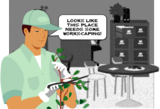
A few days back I watched a pretty awesome video by Nick Shackleton Jones about the Affective Context Model. Nick told a great story about the importance of the affective context - the emotional metadata that allows us to connect and remember various pieces of information. Nick's also written a splendid article about this very topic for those who want more detail. Nick's video was a great illustration of why push-type learning tends to be ineffective and why despite our best efforts, learning is never effective unless an individual feels a strong, apparent need for it. While a huge portion of our training budgets goes towards creating the content for learning, we seem to ignore that people learn only when they see a strong need. As I've mentioned earlier, context trumps content in the modern L&D world, and as L&D professionals we need to be able to create a work context that allows knowledge workers to learn when they experience a strong desire to do so. As instructional designers, we need to workscape our training programs so they can provide our learners the affective context around which they can pull and retain information themselves.Last month, Josh Bersin wrote a thought-provoking blog post about how, despite all the advancements in technology and the Gen X/ Y debate aside, the way people learn hasn't really changed. He made some really simple, but astute points:Mastery (not in Dreyfus terms) means being able to apply knowledge - until someone performs a task themselves, they don't really learn it.People learn by doing.The purpose of training and development is to accelerate this process - and yet we don't pay adequate attention to 'workplace learning'. We're still stuck in the classroom paradigm.Management and leadership drive learning in an organisation. L&D has little control over workplace practices; a true learning organisation learns even beyond the traditional boundaries of L&D and it's the responsibility of the management, leadership and really everyone in the organisation to drive this culture.I've found some of this thinking extremely motivating in the context of my new found fascination for workscapes. In today's article, I want to share with you my thoughts around why we need to evolve towards full-blown workscapes as against a purely course focussed approach. Hopefully some of my thoughts will resonate with your own and I'd love to hear how you feel about this topic.Recognising False EleganceI grew up in this industry doing a lot of standup training. I still do a lot of that. I've done a fair bit of elearning and I've seen and created some great courses and some awful courses. I've grown to believe that we live in an age of false elegance. Hear me out. Some of us have made it almost an art form in the way we engage and entertain people. Our training sessions just flow by and people seem so entertained, happy and involved that it's no wonder they rate our programs highly. In fact we make the experience so pleasant and memorable that they do amazingly well in the post-training assessment as well. Coverage is hardly a problem - we cover 95% of our target audience. Yet, when it comes to retention and eventual transfer of learning to the workplace, most of this amazing learning investment is lost.Take the story further and we automate our flawed training processes by creating 'engaging elearning'. People love the slot games and tic-tac-toes that we add into our elearning courses. Best things ever! We now train 100% of our people at a third of the cost and quarter the time. In fact, we throw in bonus courses and still save ourselves a lot of money. Guess what, we still can't make a difference to the bottomline. The really effective elearning is where people actually practice real-world tasks, but we have little time for that post our fascination with card games and flashy animations.This is what I call false elegance. Our solutions look really polished and slick, but under the surface they do precious little. We need better approaches and a renewed focus.We're Living in ChaosDave Snowden's landmark work on the Cynefin model will remind you of your workplace. As it turns out, traditional elearning and training focusses on the 'Simple' domain of Cynefin. There are clear cause and effect relationships and therefore it's easy to determine how you can respond to problems in this domain. Definitely easy stuff to teach. With the fast changing nature of business, only simple, repetitive processes fall under this domain. Most knowledge work falls under the Complex, Complicated and Chaotic domains, where we our answer for causality is a broad, "It depends...". If your job is to train knowledge workers, think of how many times you say those words in a classroom versus giving a clear answer and you'll realise how little of what you teach falls under the Simple domain.Our obsession with training however has meant that we try to dumb down chaotic problems by trying to break them into several best practice solutions. We then try to find an attractive package for this collection of pseudo-best-practices and push them down the throats of our unsuspecting learners through meaningless games and activities which have no relation to the real world. I'm not surprised people find it difficult to apply classroom learning to their day jobs.We need On-Demand Solutions"We have built our education systems on the model of fast food. This is something Jamie Oliver talked about the other day. You know there are two models of quality assurance in catering. One is fast food, where everything is standardised. The other are things like Zagat and Michelin restaurants, where everything is not standardized, they're customized to local circumstances. And we have sold ourselves into a fast food model of education. And it's impoverishing our spirit and our energies as much as fast food is depleting our physical bodies." - Sir Ken RobinsonHave you ever thought of why your employees access Google more than your intranet? Or why new employees seem to use your learning tools more than the grizzly old consultants? It's because on-demand is the real buzzword we should have been thinking of all the time. Information in context, trumps instruction out of context. The power of Google is in being able to provide answers to people's current problems and needs. A new hire doesn't want to look silly in her new job, so she does all she can to get up-to-speed with her new job. She's happy to go through badly crafted materials on your intranet because it answers her emotional need to feel competent. Isn't it ironic then that we focus all our efforts on creating entertaining sessions and pretty elearning when a similar effort to meet people at the point of need could potentially reap greater rewards?Training seeks to solve tomorrow's problems using yesterday's wisdom. I'm not saying yesterday's wisdom is not valuable - indeed it is. All I'm saying that our work is changing in a way that yesterday's wisdom can only guide decision making for the new problems we'll face tomorrow. Our approach has some fundamental drawbacks, which Tony Driscoll very eloquently describes as the seven scary problems of our status quo. To me, it tries to overcomplicate what could be a very simple solution e.g. connecting a newbie to an experienced coach, or finding her some advice. We need to simplify our approach and move the availability of training and education to the workplace.We need Diverse SolutionsWe're beyond the point where a single solution can solve all performance problems. People learn iteratively and over time and when we look across learning paths for a capability/role, we'll notice that different outcomes need different learning solutions. More importantly, as Sir Ken Robinson says, "It's about customizing to your circumstances, and personalizing education to the people you're actually teaching." So, the model of courses needs to almost give way to learning suites. I remember my colleague Jason Yip saying he attended "Getting to Yes" training that he really benefited from . OTOH, a little Al Gore talk on TED has spurred me to learn so much about the climate crisis eventually leading me and my wife to support movements such as 350. And while learning styles don't really exist, there are two truths about learning:people have different learning preferences and workflows (not VAK - sorry);and different topics merit different treatmentsThe key operative word is 'different' and we need to be able to craft diverse learning solutions to be able to cater to our audience and our organisational capabilities.Deep Specialisation in Business, Diverse L&D SkillsIf whatever I've said until now is true - our age of chaos, the need to bring learning to the workplace, and the need to be diverse; frankly, it's really difficult for a 'generic' L&D consultant to achieve all this, without a strong appreciation of the business. The evolution of the modern L&D professional has to be in the direction of specialising and generalising at the same time. This is a bit of an oxymoron, except that learning professionals need to specialise in their organisation's business and generalise in the L&D space. This makes it easy for us to create contextualised solutions for the business that make absolute sense, as well as pick from a plethora of tools that this age has put at our disposal. Fortunately this isn't impossible - we just need to shift from our 'trainer' mindsets. As we open our mind to the possibilities, we'll realise that:Our job as L&D professionals is to ensure a timely response people's need to learn.When we need to push learning, we need to create the affective context for learning via stories, simulations, and scenarios.Training programs with simulated pain points and resultant skill practice create lasting impact and aid retention.Our job is not just to teach content, but to also create the context for learning in the workplace. At a minimum, this means helping people 'learn to learn'.We can't possibly account for all the knowledge in the enterprise or teach our way out of trouble. By connecting people to other people we ensure that collective problems merit collective solutions.Not all new solutions are technical - our facilitation experience still counts for something.Our training departments aren't dead - they're reborn. All we need to do, is wake up to the reality of our modern world and revel in the options it has given us today. Workscaping can happen at every level - your next training program, your team, your office, and your entire organisation. The key is to think lean and find the most effective and yet the most timely ways for people to learn in the context of their everyday jobs. That's when we can evolve to being true learning organisations.What do you think? I'd love to hear your thoughts in the comments section of this post. Don't be bashful, drop in a line or two!© Sumeet Moghe, 2009
Sumeet Moghe
.
Blog
.
<span class='date ' tip=''><i class='icon-time'></i> Jul 20, 2015 10:57am</span>
|
|
One of the reasons why I really, really, like the Social Web is because, every so often, you get to bump into those little gems that most folks don’t notice, but that when going through them you pretty much feel they are so special that you just can’t help but re-sharing it again, hoping that others would bump into those precious little things and feel just as inspired are you are after watching them. Well, last week I had another one of those moments and now that I have managed to get some time to blog about it, I thought I would go ahead and point you to two minutes of pure gold: Ira Glass on Storytelling.
You gotta love creative work. It’s probably one of those human traits that we couldn’t possibly live without. It’s part of our genes, our DNA; perhaps one of the several other things that make us unique. But the truth is that, in most cases, it doesn’t just happen. It requires lot of effort, energy and hard work, and perhaps feeling totally inspired altogether as well. Well, if you are very much into creative work then, in whatever form or shape, this is probably one of those blog entries that I think you would enjoy reading further …
Last week, over in Google Plus, I shared a post to a rather short video clip titled "Ira Glass on Storytelling", where you can certainly witness some of that creativity I mentioned above already. It’s just a short video clip of a little bit under two minutes where Ira Glass himself gets to talk about the process of putting together stories, what it takes, what it involves, both from a process perspective, to how it actually works out, about doing some creative work, and how in some cases, perhaps most cases, things don’t tend to work out all right, at least, in the way we expected it to be and for a rather long period of time. The rest is just an absolutely delightful account that pretty much describes why the whole process, even while you are still learning, or why you are failing to some degree, is very much worth while. And why we just need to keep pushing further along…
Ira Glass on Storytelling from David Shiyang Liu on Vimeo.
The wonderful thing though, for me, from sharing this post amongst my Plus networks, was that one of my good friends, Rachel Happe, left a great comment where she eventually pointed out to the entire video clip, which is actually an interview with Ira himself, divided in four parts (Part I, Part II, Part III and Part IV), where he gets to talk about Storytelling, the power of the anecdote, what are those moments of reflection while telling stories, how we can go out there look for great stories, why some times we may not be as creative as we thought we were (And lots of practical tips on how to overcome those roadblocks), how we have got that special ability for good taste and for getting rid of cr*p, and how we should use it as often as we possibly could. To then finally finish it all off sharing a couple of pitfalls that people seem to make when putting together stories, using whatever media, and which he advises on avoiding time and time again… But I will let you go and find out more about those two for yourself by watching Part IV of the interview. Here is Part I to get you started:
Some pretty amazingly inspiring stuff on that short interview for sure, that, all in all, lasts for about 17 minutes. The truly fascinating stuff though was that while going through it, and thinking about the various different phases of my own creative work, I couldn’t help agreeing big time with plenty of the advice and great tips that Ira offers in order to not just find some really good stories, but putting them together nicely with that top-notch piece of creativity we all seem to have and which definitely needs further development. Even at that stage where we may not be sure anymore whether it is worth it or not, which Ira establishes at around the 2 year mark of having started it.
Too funny that, when I started with my own blogging, both internal and external, I went through that very same phase, twice!, and around the very same timeframe. Those two years he mentions! Pretty soon though, in October and December this year, it will be my 6th and 8th year anniversary of blogging and somehow I feel I may have gone pass that initial roadblock, although from time to time it keeps coming back. I guess that’s why you may have seen how some times there are some quiet periods where I don’t blog just as often.
I know as well that my blog posts feel pretty much like stories, at least, that’s what plenty of you folks keep telling me, and lengthy ones, too, for sure! (By the way, trying to work a lot on that one at the moment to tame the beast !), but somehow, somewhere in there, and every now and then, I sense that I need to go ahead and enter a moment of reflection and figure out whether that creative work needs shaping up, rework, further enhancements or just pretty much carry on with it. It is in those moments that I realise that, while watching Ira’s interview and thinking about my own blogging style, every now and then, I still enjoy, very much so!, going through this wonderful presentation on "The 25 Basic Styles of Blogging … And When To Use Each One" to try to figure out whether I may have shifted focus into something else, i.e. another blogging style, and figure out the reasons why.
It’s over 4 years old, but still as relevant today, as it was back then. That’s why I wanted to finish off this blog post on The Inspiring Video of the Week with that additional helpful tip on finding and figuring out your own blogging style and voice, because "[...] your taste is still killer!" After all, who doesn’t want their own blogging to "[...] have the special thing that we wanted it to have", right?
The 25 Basic Styles of Blogging … And When To Use Each One
View more presentations from Rohit Bhargava
(I was hoping to be able to post this blog entry yesterday evening, but, instead, I think those of us who were lucky enough to watch it, AND live it! (Even on TV), we have probably witnessed one of the most insanely electrifying Finals in tennis that you can ever imagine! Over 4 hours of intense, relentless, never-ending, brilliant, talented and highly spirited fighting, that eventually had to have a winner. Another clash of the titans, for sure! One thing confirmed though, once a nadalista, always a nadalista! Vamos Rafa!!!)
Luis Suarez
.
Blog
.
<span class='date ' tip=''><i class='icon-time'></i> Jul 20, 2015 10:57am</span>
|
|
At TWU, I have heaps of fun doing our little Pecha Kucha Nights and last week was no exception. Now I upload the slide-decks here, but I must say that's never a substitute for a live performance. Plus I've always been wary of scaring our speakers with a video camera in the room. Luckily Steven Hill decided to film himself during his Pecha Kucha talk and I had no idea his talk was going to be such a laugh riot! I'm actually going to plug Steven's talk as an example of how simple slides and a relaxed presentation style and rate of speech can have a really memorable impact. Don't miss this, it's absolutely worth the watch.© Sumeet Moghe, 2009
Sumeet Moghe
.
Blog
.
<span class='date ' tip=''><i class='icon-time'></i> Jul 20, 2015 10:56am</span>
|
|
Over at the BrainYard, my good friend, Rachel Happe, put together, just recently, a rather interesting and insightful blog post under the heading "Got Culture? Use It To Drive A Successful Social Business" where she comes to confirm what a whole bunch of us have been saying all along for a while now; that for an Enterprise to succeed in living social culture is going to play a key role at the same time that online communities will continue to be the major drivers of social software adoption, both inside and outside of the firewall. However, it won’t be easy. And it won’t take place overnight either. There will always be a good bunch of roadblocks, inhibitors and whatever other issues, like reluctance to change or fear to think and act differently, that would need to be addressed and all of those would be, pretty much, around augmenting your already existing corporate culture and values to address those concerns, as that social transformation continues to happen. The key question would be whether your business is well prepared to invest, heavily enough, in shaping up its own culture to re-adjust and become a truly Social Enterprise.
In that wonderful article Rachel offers some great help and very adequate suggestions on how to get the ball rolling. She eventually comes to talk about the stuff that most folks haven’t considered just yet in any open and transparent collaborative and knowledge sharing environment. The soft skills. Those skills that are hardly taught anymore when you are hired into a company and that, in most cases, are always treated, and considered, as a given. In short, once you joined the company collaboration is a natural task / activity and, by default, you are pretty good at it. Just like when they handed over your laptop, your mobile phone, your email address and that’s it! Off to work!
Well, it doesn’t work that way. Collaboration has always been a buzzword and a tough challenge to meet up by competing knowledge workers who have been brought up all along with mantra’s like "Knowledge is power" (So why should you share it, right? Sharing your knowledge will relinquish your power, don’t you think?). Nothing to do with social computing tools alone, really. It’s how most of us have been brought up in the corporate world for decades and why, despite all of that time, we still have to come to terms with a truly collaborative and an open knowledge sharing culture where Knowledge SHARED *is* power. That’s when things do really get interesting!
There is no doubt that effective collaboration that is happening amongst individuals, teams, networks and communities, as part of that social transformation of culture, process and people, is a key success factor to become a Social Enterprise. It’s also true that most knowledge workers out there "aren’t all naturally good at collaboration", as Dan Keldsen would say, even though you may have enough elements to facilitate and enable that collaboration; in fact, most knowledge workers have never been trained, nor educated, on becoming powerful collaborators, specially, when being confronted with a good number of different collaboration personas and contexts . They have just been told that collaboration, specially in today’s virtual, distributed corporate world, is just the norm. It’s how we work, how we get stuff done; in short, how we become smarter at what we do. But is it really?
I am not sure what you folks would think about this, but, for a good few years, I have been missing, all along, plenty of helpful and relevant education resources, driven by HR, that would help knowledge workers understand collaboration for what it is and help facilitate their on boarding of collaborative and knowledge sharing tools in order to make the most out of it. Specially, since not all of us are true, natural collaborators. And, once again, here we have got social networking tools coming to the rescue and we still haven’t got that critical component of educating your own knowledge workforce about how, when, with whom, for what purpose and why collaboration needs to happen, and what would be the options available out there.
So Rachel offers three different approaches that would probably give you a good start to begin thinking about how you can make your own corporate culture much more open, transparent, engaged and nimble to embrace collaboration and social technologies and funny enough without making use of any of that! Again, touching base on the soft skills. Here you have got them listed, so that you can get an idea:
"Use evocative images to spur a detailed discussion of cultural norms and expectations
Use specific examples of online behaviours and statements to discover what’s culturally unacceptable, uncomfortable, neutral, and positive
Express the same context in different ways, using different tones and wording to determine tone vs. content comfort"
Corporate culture has always influenced collaboration. For better or for worse. And the same would pretty much apply to social software tools as well. I am sure that, by now, you folks would know about businesses whose cultures are not very keen on collaboration and knowledge sharing, and other companies where they thrive on collaboration, even with or without making use of social computing tools. The interesting thing is that, once again, social tools will provide us with a unique opportunity to decide whether we would want to influence culture to lead in the right direction, or keep making the very same mistake over and over again. The good thing is that it’s our choice. We get to decide how influential corporate culture is going to be for every business out there that wants to become a social enterprise. We get to decide how critical and paramount collaboration and sharing amongst groups is going to be from now onwards, because originally, and that was to be expected, social networking tools do facilitate, or even make it easier, for collaboration to take place.
Take IBM (My current employer), for instance. Traditionally, collaboration is a core part of our values. It’s in our genes, our DNA. It’s an integral part of who we are. Of course, we do have silos, as well. Who hasn’t? Some of them are actually valuable altogether, although probably the vast majority shouldn’t be there in the first place. Still it’s hard to imagine an IBM that doesn’t breathe collaboration and knowledge sharing over the course of decades (You may have heard about how the IBM Forums just recently marked their 40th year anniversary in the company). Well, our social transformation over the last few years has enabled us to take collaboration into a new level, one where we are breaking down those silos, at a rampant pace, although sometimes you still have the perception it doesn’t happen fast enough, when it is!, by encouraging fellow colleagues to continue to make use of social tools, both internal and external, to foster a much more open and collaborative work environment where there are hardly any hierarchies, structures, top-down mandates, etc. etc. Just a peer to peer collaborative effort where we are all learning day in day out how to make the best out of it.
And it is with that learning experience mentality put in place that I thought I would go ahead and close off this blog post sharing a short list of the commonest traits I have been exposed to from other fellow colleagues that could surely help any corporate culture become more collaborative and therefore address the needs to augment those soft skills. Starting with yours truly, by the way!, since you are constantly exposed to them as one faces the reality that in today’s business world we can no longer do our jobs alone. We always depend on other people, on their skills, their experiences, their know-how, their willingness to help out when you need it and so forth.
Mind you, we are talking about powerful characteristics here that have kicked in a rather complex multicultural environment across the board. But I am sure those would apply as well to other companies. IBM has got a presence in over 170 countries, with 400k employees, distributed in over 2000 offices, with 50% of its population with less than 5 years at IBM, with 73% of managers with remote employees reporting to them, and with over 40% of the entire workforce working mobile. Probably as complex as you can get, don’t you think?, and perhaps the perfect ground for virtual collaboration to flourish all over the place. So what are those common traits that powerful collaborators have been permeating across throughout the organisation, when using collaborative, knowledge sharing and social networking tools? Let’s see:
Be a good listener: Indeed, most of the potential conflicts that can happen in a multicultural collaborative environment are happening because knowledge workers just simply don’t listen well enough. Sometimes it’s much better to listen, focus and pay attention to what’s been said than to utter words to just get your voice heard.
Be innovative: Always be looking on the bright side of injecting innovation into everything you do. It’s those new, unexpected ways of doing things different that are so refreshing and empowering when collaborating with fellow colleagues.
Be creative: Creative work is critical for every powerful collaborator out there. Creativity is a craft we all have, some folks develop it more than others, but it’s still an integral part of who we are, as human beings, so if we exercise our own creativity every day there is a great chance it will leave a mark over time difficult to forget. It will help spark more innovative ways for smart work to take place eventually.
Be curious: This is one of my favourite characteristics in powerful collaborators when working in a complex, multicultural environment. Being healthily curious about those around you who you are collaborating with would make you much more focused, and keen on working together effectively. It’ll also help you understand how some things do work in some cultures and why they may not work in others. By you having an understanding of how others think you would be in a better position to collaborate more effectively. And vice versa, of course.
Be confident: Absolutely! Every knowledge worker out there has been hired by their company in the first place, because they have got both the skills and experience to carry out their jobs and, secondly, because they are all hard working professionals. So, without hesitation, show that confidence. They need it, just as much as you do.
Be polite: This is perhaps one of the most underestimated, yet most powerful and empowering, characteristics that keeps getting neglected, time and time again, in a corporate environment, and perhaps elsewhere, too! There is nothing out there that beats a heartfelt Thanks! for helping out those in need, for finding the right experts, for achieving together a common goal, etc. etc. Being polite can take you very far, whether when asking for help or even when giving it out. Try it!
Be helpful: If I were to pick up what I think is the most significant and mind-blowing characteristic from the ones shared over here today for any collaborator out there, being helpful is probably as good as it gets. Always being willing to help others, even if you yourself are busy, too!, can help you build social trust amazingly fast and with very profound marks that everyone will remember when wanting to collaborate with you. You do it for them today, they do it for you tomorrow. In the open and transparent world of social networks, that’s how it works.
Be authentic: Not much to say about this one, right? Don’t you think? When collaborating with others and using social tools, why pretend to be who you are not? Why bother playing a role that you, yourself, don’t even feel comfortable with in the first place? Authenticity is a key trait from the open Social Web, pretending to be someone or something else, would only harm your online reputation over time. Just be you. It’s enough.
Be passionate: Of course, I couldn’t close this list off with another one of my favourites. If you have managed to take some time to observe and watch those powerful collaborators around you, you would see how, for most of them, passion, or being passionate about a particular topic, runs through their veins. It’s what drives them to work; it’s what gets them motivated to share their knowledge, collaborate, learn and inspire others. It’s that passion that drives them in the long run to want to build long lasting personal business relationships with those folks who they share a common affinity with. Don’t neglect your passion; don’t let it go unnoticed; don’t feel bad, or embarrassed, for showing it, even if others make fun of it. You know what? They just wish they all were as passionate for what you do as you are… Seriously. Let it shine! Let it carry you into becoming a powerful collaborator yourself.
And, finally, the last one of those traits that surely adds further up to those soft skills that help knowledge workers becoming much more efficient and effective at what they do and how they collaborate with others, and also one of my favourites: be yourself. Allow others to trust you for who you are and for what you are good at. Honesty, flexibility, understanding, openness and transparency, amongst several others, can pay big dividends over time. Being yourself, showing that hard working professional you are will only reflect back into others always wanting to work with you together. Because, after all, who doesn’t want to mix and mingle with passionate top performers, right?
Now, I am sure you may have yourself a good bunch of additional traits, characteristics, etc. etc. you may have experienced or learned about from other powerful collaborators out there, or even yourself. Care to share and add further up into the conversation with an additional comment or two and let us know what would make open collaboration stick within your organisation to become a Social Enterprise?
Luis Suarez
.
Blog
.
<span class='date ' tip=''><i class='icon-time'></i> Jul 20, 2015 10:56am</span>
|
|
DevCamp Bangalore 3 is happening at ThoughtWorks's Diamond District office at Bangalore today.Registration Like any BarCamp, registration is on the wiki and there is no registration fee.DevCamp is an un-conference by the hackers, for the hackers and of the hackers. It's a species of BarCamp where anything a lover of computers and technology would consider important or entertaining goes. The first DevCamp took place a little over two years ago, and we've always had a lot of fun being a part of this event; we're hoping to keep that trend going with DCB3.What's in store?DCB3 is going to be packed with informative presentations, Fishbowl sessions, lightning talks, and much more, so don't miss it!Interested in doing a session? Please keep in mind the fact that everyone at DevCamp is a hacker, a pro. Assume a high level of exposure and knowledge on the part of your audience, and tailor your sessions accordingly. Avoid 'Hello World' and how-to sessions which can be easily found on the net. First hand war stories, in-depth analyses of topics, and live demos are best.Add your abstract/presentation topic here. Don't forget to sign up, and do pass the message along to anyone you think would be interested. Hope to see you there!© Sumeet Moghe, 2009
Sumeet Moghe
.
Blog
.
<span class='date ' tip=''><i class='icon-time'></i> Jul 20, 2015 10:56am</span>
|
|
This is not the first, nor the second time, and I am sure there will be a third time, and many more!, at some point, that I have either heard or read about something that I would think would make pretty upset all of those folks who work on the Internet or with technology in general. Yes, I am referring to the so-called Knowledge Web Workers. Specially, those folks who have made the Social Web their new home. Indeed, in a rather thought-provoking, but very inspiring, article, Douglas Rushkoff comes to question whether we are witnessing the end of jobs as we have known them for centuries and whether we are pretty much experiencing the birth of a unknown need, till now, of a renewed model of jobs. In Are Jobs Obsolete? Douglas keeps questioning whether technology (And the (Social) Web) are part of the main problem we have been having over the last few years in the jobs market with having less and less of them. In a way, not his words, but mine, plenty of folks feel one of the culprits why the jobs market is not recovering fast enough is because of Enterprise 2.0. Or the Social Enterprise.
And in a way, they do have a good point. With the emergence of social software tools and the Social Enterprise, reducing costs, generating more sales leads, improving knowledge flows, faster problem solving, rampant innovation, retaining top talent, keeping current employee workforce happier and more engaged with much lower attrition rates, are some of the very attractive reasons for employers out there to pay attention to social and try to make the best out of it, without having to hire more human talent. Why would you want to hire more people when your current workforce has tripled their productivity, as well as their customer satisfaction, by using social software tools, don’t you think? And right there we have got the main problem. Knowledge workers are not getting hired, because social computing tools are helping solve most of the companies’ problems / issues without having to spend extra money on hiring new resources.
The reality though is quite different. And rather refreshing altogether! Perhaps what could be needed and we just didn’t know about it from before. What employers are doing, and facilitating big time altogether!, is the creation of an Army of Social Intra/Entrepreneurs, who mingle amongst each other, both inside and outside of the firewall, so the traditional concept of a company’s walls are no longer there, fully networked and wired into a complex matrix of personal (business) relationships, that are going to define work for themselves without even, if it needs to be, counting on those employers in the long run. Allow me to explain… They have got everything they need: the skills, the knowledge, the time, the energy, effort and support from others, their extensive and ever expanding networks, and something else that is starting to emerge big time and which, right now, seems unstoppable: plenty of free idle time to do what they have been passionate about all along. And that may, or may not, be related to work.
And this is exactly the point that Douglas makes beautifully in his article. The fact that our traditional concept of work, the one we have been living under over the last few decades, and, which in most cases has been dictated upon us by others without us having much of a say about it, is starting to decline and leave its way behind into a new model of work. One where the traditional corporate environment and the traditional mindless jobs are being overtaken by what a bunch of folks would now call Knowledge (Web) Work.
I remember having read in the past some piece of research (I wish I could have bookmarked it, when I was going through it!) that claimed how amazingly good we are, as human beings, when we have got plenty of idle time in our hands, instead of the traditional job / work, in order to create something new. Whatever that something would be. In fact, some employers are already facilitating some of this themselves by allowing their employees to spend some time out of their own work doing something else. Totally unrelated with their jobs, and perhaps more aligned to their personal passion(s) they would want to pursue further. And time and time again it has been proved to have worked wonders.
So if jobs are becoming obsolete, as we have known them for a long while, and it is starting to look like that!, and we keep building those armies of socially networked intra/entrepreneurs, there is something else that the Social Web, and the Social Enterprise, are helping provoke within the corporate environment: a transition away from measuring performance by your sheer presence and instead measuring that same performance based on the results you provide and deliver, resulting in the elimination of the traditional work hours.
Matthew Ingram describes it himself beautifully in a recent blog post over at GigaOm under the heading "Do we need defined hours of work any more?" and that my good friend, the always inspiring and KM blogger extraordinaire, Bill Ives, developed further under "Do We Need Defined Work Hours?" as well. Indeed, one of the most fascinating aspects of social computing within the enterprise is how it has helped knowledge workers, AND their employers, realise how it’s much more beneficial to measure business results than the hours you put at work while at the office in a place nearby your boss, so that he / she can see you are working away like crazy, when perhaps you may not well be.
I am sure there would be plenty of you folks out there confirming how even though this may well be the current trend it may not be extended enough to appear across the business world, and I would agree with you that may well be the case; maybe, because there will be companies out there that have not started their way just yet to live social, but, eventually, they will. They probably won’t have much of a choice. And the main reason being, I would probably venture to state, it’s due to that socially networked army of Intra/Entrepreneurs that keeps getting bigger and bigger by the day as they themselves keep re-defining the current workforce of the 21st century based on the networking relationships they keep building, cultivating and nurturing over the course of time.
The Trust Agents, the Wild Ducks. The ones who understand that the future of work, their work, is to probably move around the edges, or towards the edges, as my good friend, Harold Jarche put together, rather nicely, a couple of months back under "The 21st century workplace: moving to the edge" with golden gems like this one:
"The 21st century workplace, with its growing complexity due to our interconnectivity, requires that we focus on new problems and exception-handing. This increases the need for collaboration (working together on a problem) and cooperation (sharing without any specific objective).
One challenge for organizations is getting people to realize that what they know has little value. How to solve problems together is becoming the real business imperative. Sharing and using knowledge is where business value lies [...]"
And that’s why those companies that have decided to become social enterprises and empower their knowledge workers to fully live social have already gotten started the path of preparing, facilitating and embracing the knowledge workforce of the future where work will be defined, and carried out by themselves, without having a traditional job, without having defined work hours, with a relevant work life integration that really matches their needs and in an environment where facing complexity and chaos in problem solving, ideation and exception-handling (Read further Harold’s take on that to see where we are all heading…) is going to bring innovation further up into a new level: networked, interconnected, collaborative, open, transparent, knowledge sharing based, engaging and empowering on delivering excelling business results and no longer that sheer presence we have just gotten too used to over the course of decades.
The main challenge remains though for all businesses out there: what are you doing to help prepare and facilitate that army of socially networked Intra/Entrepreneurs, both internal and external? Those who know your company best, your business and your customer base inside out, those who have got all of the knowledge, experience, know-how, skills, AND networks, to help you, as a business, survive in the 21st century? Because, something tells me that if you, as a business, are not ready just yet to help facilitate that change, and be well prepared for it, they will be moving on eventually … and won’t be looking back.
After all, they already have their jobs, their work hours, their passion and motivation to do the work and their extended networks. Basically, the work they themselves have defined over the course of time. With or without you. What shall it be?
Luis Suarez
.
Blog
.
<span class='date ' tip=''><i class='icon-time'></i> Jul 20, 2015 10:55am</span>
|
|
In the past couple of years that I've had a Mac, a lot of people I've spoken to about presentation skills have remarked to me, "Oh, but you have Apple Keynote for presentations. It's so much better than Powerpoint." At the end of several of my presentations people ask me, "You didn't do that in Powerpoint, did you?". Whenever I do one of my talks on presentation skills I invariably have some people in my audience start off the discussion with a "Powerpoint sucks..." refrain. And the fact is that I've very loosely used the phrase "Death by Powerpoint..." in my conversations and talks. Today, I think it's high time that we give Powerpoint a proper defense. Let me say this -- there's nothing wrong with Powerpoint. It's probably the most versatile presentation tool on the planet and gives us a lot of power. The fact that we misuse it and give it a bad name has nothing to do with the quality of the tool itself. In fact, to rest my case I've gone ahead and created some awful slides using Apple Keynote and I assure you it took me little effort. I'm pretty sure I can do an awful Prezi and do similar stuff with Slide Rocket and Google Presentations. Convinced? I thought so!
Now to the skill of making good presentations. I think it's so simple, that anyone can do it. Nancy Duarte has made that point with an amazing presentation created solely in Powerpoint (above). In fact I'm going to use three presentations by our ThoughtWorks University students to make my point about things that you should absolutely do when you want to create effective presentations. And hopefully then, the tools will cease to matter.
Think Stories, not Facts
And I'm not talking about stories of the once-upon-a-time variety, though they may be cool too. I'm talking about why anything that you will say means anything to anyone. This is about how can you weave your message into an engaging timeline that captures attention, creates interest and evokes emotion. Last week, I shared with you SG Hill's hilarious Pecha-Kucha talk. Steve's talk had really simple tips on how to generate traffic for your blog. I could actually summarise the facts in a few lines:
Start a blog.Get an analytics service to track your readership.Try a snazzy blog title, and creative post headlines.
Have your friends comment liberally.Mention your blog to your friends.Provide an RSS feed.Publicise it on social networks.That's a really simple set of facts. In fact, they're so simple that they don't even need a presentation. I could put all of that into a single slide with bullet points or maybe even email it across. That however, isn't memorable enough and the way Steve wove these pieces of advice into a story of his own experience was funny, engaging and created a lasting impression. If I had to introduce someone to blogging, I'm now going to point them to Steve's video. The point I'm trying to make is that your presentation is more than just the facts that you want to convey. In fact I argue that presentation are more about entertainment and excitement than education. If you can as get people interested and excited about your topic; that's enough to get them to learn about the facts by themselves. In that, it's often more important as to what you don't say than what you do say in your presentation.
Ditch the Templates
Most Keynote and Powerpoint templates are really well intentioned. Both Apple and Microsoft however, are trying to satisfy the natural urge of most users and companies - the urge to bullet point. No wonder most templates tend towards a bullet-point layout for their slides. Now of course you don't want to be like the others, do you? I'm sure you want to be different. If you do, you're perhaps on the right track.
"Be interesting, or be invisible." - Andy Sernovitz
The fact is, that in most cases you don't need a template. You just need a blank slide that you overlay with full-bleed images. Last week Andrew Kiellor did a pretty amazing presentation, giving us a tour of what we should see in Australia. I've embedded the presentation for you to see (above) and you'll notice that Andrew has maintained visual harmony in the top right of his presentation by moving an arrow across Australia's map. In that, it fits with his presentation title; Australia - A Tour. By including real, dazzling images of landscapes across Australia, Andrew didn't just have people gasp in the middle of his presentation, he also negated the need for a template.
I'm not saying that you'll never need a template though. There are times when you want to create a strong, visual consistency across your presentation and a template is real handy for doing that. Garrey Reynolds' presentation on thinking like a designer is an example of one such situation. In such cases I recommend you create your own templates. And believe me, it isn't rocket science. If you can get smart at using master slides, Tom Kuhlmann can show you just how easy it is.
Meaningful Imagery Counts
A few weeks back I saw Sam Tardiff do a cool presentation with a provocative title - 17 Reasons why AFL's better than your favourite sport. Now Sam's presentation may not be the prettiest presentation on the planet, but he very effectively takes images from real life and puts them in front of the audience to let them see why AFL is a superior sport. I particularly like reason 14 - take a look! There's something about visual evidence that makes messages stick for our audience. It's important to note that where a single image was going to struggle making a point, Sam used a video. In a time when most presentation tools allow unbridled use of media, it's crucial that we exploit it. It's also crucial though, that we maintain relevance. It's easy to go overboard with irrelevant stock imagery and as Martin Fowler often says, "Stock photos are the bullet points of the 21st century." I can't help but agree when I see cheesy, overused stock imagery on slides when an earthy, real life image could have done a world of good. Garrey Reynolds of Presentation Zen fame has an excellent article on 10 ways you can use images poorly in presentations - an excellent list of mistakes to avoid. And if you needed some inspiration on how to create beautiful slides you can be proud of, do read my 7 tips to whip your slides into shape. I strongly believe that bad presentations have to do more with the presenter than the tool. That said, you need a capable tool to help translate your actions into a show. Powerpoint 2010 (Windows only), is a worthy upgrade and there are several good reasons for you to add it to your presentation arsenal. Sure, there'll be a few tools here and there that have an extra feature or the other, but I guess nothing beats Powerpoint's all round capabilities. And if you needed help on how to effectively use the tool, you always have experts to reach out to for help. So the next time you feel like blaming the tool, please don't. Go back to the drawing board and just try harder!
Update:BTW, if you wanted to take your presentation skills to the next level, here's your opportunity to learn from the best. Hear live from eight presentation experts without leaving your home - ain't that amazing?© Sumeet Moghe, 2009
Sumeet Moghe
.
Blog
.
<span class='date ' tip=''><i class='icon-time'></i> Jul 20, 2015 10:55am</span>
|
|
I am not sure whether folks may have noticed it, or not, but it surely looks like every couple of years, or so, we keep having an influx of articles, blog posts, mainstream media items, etc. etc. on how more and more businesses are continuing to block the use of social software tools inside of the firewall, just because they feel their employee workforce may be goofing around more than they should. In fact, they shouldn’t at all! So, once again, we go for the easy way out and, instead of figuring out what we could do to address and fix that concern, once and for all, we are witnessing how companies decide to go ahead with the blockage of the Social Web, just because they believe their knowledge workers are no longer as productive as what they should. It’s starting to get pretty boring, and rather disappointing, after all of these years, don’t you think?
I mean, that’s only half of the equation, isn’t it? Yes, of course, there will be a group of knowledge workers, on every company out there, who would try to find any means of not wanting to do their jobs and, instead, do something else. And not just with the Social Web. We have been experiencing this very same concern back in the day with email, Instant Messaging, the Internet, the water cooler, etc. etc.; all of them having been blamed, over the course of decades, for being responsible as well for people’s lack of productivity and for getting us all far too distracted from real work. And, lately, it looks like the next victim from that group is gaming or playing games at work. Like Angry Birds.
Now, I think you would all agree with me that group of folks who are always finding an excuse to wriggle themselves from their daily work duties are much more of a profound problem with HR itself, and, specially, with the methods they may employ to hire new employees, supposedly, as hard working professionals. Perhaps they may not. So why do we keep blaming technology, and this time around, the Social Web in particular, as the main culprit that keeps enticing knowledge workers into goofing around activities? And now, we have got a new layer … With all of the buzz going on about gamification, it looks like the latest scapegoat to help prevent employees from becoming more productive is playing games. But what happens *if* playing games actually makes you *more* productive?
That’s the rather thought-provoking idea behind one of my favourite futurists out there: Ross Dawson, who, just recently, put together this rather insightful blog entry (Under the heading "Angry Birds and productivity at work: why distractions can help") where he comes to share how "people who browsed the Web in work breaks were more productive than those who continued working or did other things on their break", quoting a recent piece of research under the suggestive title "Impact of Cyberloafing on Psychological Engagement". Just think of it, what would happen if, indeed, playing games at work would make us all more productive, as a way to provoke an interruption in what we are doing at that particular moment to help us break through on a potential issue, or problem, we may be facing and for which we don’t have a solution just yet? And then, when occupying our minds with something else that allows us to trigger our thinking braincells… bang! we find the solution to our problem?!?
Isn’t that quite something? Now, let’s face it. How many times have we been in that use case scenario ourselves, that I have just described above, specially, while on those long working days we keep adding further up time and time again and in which we would eventually need some kind of distraction to help us re-focus, address whatever the showstopper may well be and move on to the next thing… with the problem solved? I am not sure about you folks, but I have got moments like those pretty often, specially, while working on a virtual, distributed environment of multiple projects, multiple teams, multiple tasks at hand, but all of them ending up, always, with the same deadline. Sometimes it pays off to step back, relax, do something that doesn’t have anything to do with what you got stuck with in the first place, let your brain do its magic, find that solution, apply it, and move along, once again. The Social Web is brilliant at doing this. Just as well as playing games.
Believe it or not, I am not much of an Angry Birds fan; instead, I play Words with Friends. Why? Mainly, because, first, it gives me an opportunity to unwind, relax doing something else, while my brain keeps thinking of a solution to something I may have gotten stuck with, and eventually be done with the interruption having another problem fixed, but, also, secondly, because playing games at work allows me to build further on my social trust with my peers, customers, thought leaders, friends, you name it, as I have blogged about in the recent past.
Yes, indeed, the key message in here is how are we going to handle our interruptions, while at work. Having too few is perhaps not such a good thing, since we all need to come to terms with the fact that we can’t work and be consistently productive 8 hours straight. However, having too many is not such a good thing either, since it would probably become far too complex, over time, to stay focus while trying to achieve something. However, when looking into this more in detail, we may need, perhaps, some new, fresh thinking to apply and help us solve the issue with interruptions. Something that I have already talked about last week and which my good friend, Harold Jarche commented on, brilliantly!, on Ross’ blog entry: Measure your knowledge workers by the results they deliver, i.e. their overall performance, and not by their sheer presence at work, or how many hours they put together behind them day in day out.
To quote Harold, since I think he pretty much nailed it, as far as I am concerned, on what I do strongly believe needs to happen within the corporate world, and beyond, if we would all want to facilitate, embrace and live the upcoming Era of the Social Enterprise:
"What’s wrong with playing all day? We need to discard the Taylorist notions that time is money. Results are money. If I play all day and bring in more revenue than my peers who don’t play why would you want to stop me? A results oriented work environment gets rid of this notion of time for money. It doesn’t work in a creative economy" [Emphasis mine]
So, to close off this post, every time that someone comes up to me and shares that influx of news items, blog entries, or whatever else about companies banning social media tools, I just can’t help but share this blog post I put together a little while ago on "Top 10 Reasons to Ban Social Media in the Organisation! — Really?", which comes to reference this excellent resource put together by Jane Hart that confirms that instead of going the easy way out and keep blocking these social tools, we should perhaps, and finally!, do another piece of research or study on the impact of NOT having social software tools, or games, to build trust, connect, collaborate and share your knowledge with your peers, customers and business partners.
Something tells me that study would actually be rather revealing, if not too shocking altogether! And that’s probably the main reason why we haven’t done it just yet. Too scary of the real impact of not living social to help you become more productive at what you do, regardless of the interruption(s).
Luis Suarez
.
Blog
.
<span class='date ' tip=''><i class='icon-time'></i> Jul 20, 2015 10:55am</span>
|
|
Last Wednesday, Richard Lee treated us to a great Pecha Kucha performance (above). His talk - "More than Words", was not just a treat in terms presenting naked, but also used a style of presentation visuals. Richard hand drew all his visuals, creating a very organic, edgy feel for his talk. Now that's something I've been thinking about. I have a love-hate relationship with stock images. There are times I like them, but then there are other times when they're just inappropriate. In today's blogpost, I want to cover off some reasons why you may not want to use stock imagery in your presentations.AuthenticityStock images are beautiful. Actors dress up perfectly; they put up the right expression; the lighting and the backgrounds fit perfectly -- it's symphony in action! And that's where they sometimes fail. Real life isn't all that perfect. In fact real people don't even dress as perfectly as the actors on stock images. If I was doing a generic presentation at a conference the picture on the left hand side (above) could be a great one to depict a meeting or people trying to collaborate in a physical space. On the other hand, if I was to be presenting at ThoughtWorks, I'll get laughed at for using that same picture. We're a company of geeks and to start with we have a very informal dress code at the office. The photograph on the left is just not authentic. The image on the right, however, is a real ThoughtWorks image from a real meeting and provides a more authentic representation. It's fairly important to tailor visuals to an audience and while some visuals may just be more stunning, authenticity often trumps asthetics.Story TellingIn presentations, your images are not just placeholders for your speech. Often they tell a story. For example the picture above is a great example of teamwork for me, and is an opportunity for me to tell the story of how these two acrobats worked as a team to create stunning poses and an awe-inspiring performance. I could choose a stock image instead, but it takes away the opportunity for me to tell a story from my own experience. The bane of stock photography is that the visuals lack context. When you click your own images or use images that capture a moment from your own life, you can tell stories that no one else can. That's something that makes your presentation unique. Your presentation is your 'purple cow'.Recreating Real SituationsOften times, stock images are just so generic that they struggle to capture the dynamism of a real situation. In the case of Richard's presentation, he wanted to pick out situations that we'd all seen in recent days to make his point about how people might mean something completely different from what you think they're saying. While extreme Photoshopping skills might help you along, sometimes that's way too much trouble. In Richard's case, he found it easier to borrow my tablet and sketch together a bunch of images to show examples of how people in our team talk about food, hiring rickshaws and choice of apparel! Sometimes it may mean that you have to try and snag a photograph with the help of your colleagues at work and use that image for your presentation. The key here is to stay true to your story and to ensure that you're recreating it in a credible manner."Stock images are the bullet points of the 20th century" - Martin FowlerWhile I'm not as critical of stock images as Martin and I continue to use them quite a bit in my presentations and elearning, I like to be pragmatic about their use. The fun thing about presentations is that there is no silver bullet. Slides are only a medium to express your thoughts and should be secondary to your story. So while my Pecha-Kucha offering career advice to TWU grads primarily used stock images, my other Pecha-Kucha on how the magic never ends at Disneyworld Orlando, uses a lot of my own photographs. I am particular about beautiful slides, but I'd like to warn you against doing that at the cost of your story and content. After all, the presentation is not about the slides, it's about you and what you want to share!That brings me to the end of this little blogpost and I'm sorry I've run late this time; do let me know what you think by leaving a comment or two.© Sumeet Moghe, 2009
Sumeet Moghe
.
Blog
.
<span class='date ' tip=''><i class='icon-time'></i> Jul 20, 2015 10:55am</span>
|
|
There are plenty of various different reasons as to why, for the last few years, I have been really excited about the emergence of social software tools within the corporate environment and beyond, but there is one in particular that keeps getting my attention, time and time again, as it has been helping bridge a number of various different disciplines letting them feed, each and everyone of them, from the same source to perhaps become eventually one and the same. Knowledge Management, Collaboration, Social Computing, Learning and so forth are coming along nicely, at long last, looking for a common identity that would reflect a purpose within a work context and it looks like Storytelling is helping big time become the unifier business component a good bunch of us have been looking forward to from all along to boost the way we share our knowledge and collaborate also within the workplace environment: that is, through (beautiful) stories.
At this point in time I think it is undeniable the Power of Storytelling in helping knowledge workers not only transfer their knowledge effectively across with others, but also learn plenty more along the way. There have been lots of great write-ups and insightful articles along these terms on the many reasons why storytelling helps make messages stick, but the truth is that telling stories is not something new and related just to social computing. Quite the opposite: "Since the first humans gathered around a fire, we have been telling stories". In fact, "telling stories is fundamental to how we make sense of this often confusing world, how construct our identities, and how we tell each other who we are", as Sarah Jansen wrote beautifully over at the Zahmoo blog a couple of months back.
I, too, have been blogging, just recently, about storytelling and creative work, about what makes a good story and how to share it across or about the power of storytelling and narrative in helping businesses realise their true full potential of the amazing talent their knowledge workers have and how to make the best out of it by helping (re)surface conversations, stories, experiences, know-how that, for a long while, have been hidden away in people’s heads. And now, slowly, but steadily, and thanks to the wonderful work of social tools, we are witnessing how storytelling is no longer a dirty word, but pretty much a highly recommended activity to engage in, whether internally or externally.
So I thought that for today’s blog post I would ahead and highlight how powerful some stories can well be to not just share your knowledge across, as well as embrace a rather fascinating learning activity coming along nicely, but also about how they involve something that is pretty much unique to us, human beings, which is emotions. Rather touching emotions in most cases. Like this week’s Inspiring Video of the Week.
Now, I am not going to say much more about this precious little gem that lasts for a bit over 3 minutes, other than ask you to stop whatever you may be doing at this very moment, sit back, relax, and hit the Play button. And prepare yourself to be wowed and touched in plenty of special places! Perhaps places you never thought you would have them, any longer, anywhere near you. Yet, after watching it, I am sure you will get to enjoy and treasure them just as much as you used to up to not so long ago.
This is perhaps one of my all time favourite Inspiring Videos of the Week, and I am certain that, after you watch it, you will know why. Compelling, touching, mind-blowing are some of the words that surely fall short in describing how wonderfully delightful it is and what powerful messages it conveys throughout! Get ready, here it comes!:
So, what do you think? Do you still feel that storytelling, whether work related, or not, doesn’t have any business purposes within today’s corporate world? Silence of Love surely is going to help us all get rid of that assumption and start figuring out ways of how we are going to incorporate telling stories and narrative into our long term strategy of becoming a powerful Social Enterprise. Something tells me we would all be much better off…
Luis Suarez
.
Blog
.
<span class='date ' tip=''><i class='icon-time'></i> Jul 20, 2015 10:54am</span>
|