Blogs
|
A trend in outsourcing is one-on-one outsourcing of services. This is nothing new of course, since when you hire a painter to paint your house, you are already in an outsourcing relationship. New is the fact that internet technology paves the path for new kinds of outsourced services. One-on-one tutoring via the web is such an example. You can hire a tutor to explain different concepts and subject matters. Sometimes with an Indian accent according to CNet News.
One example of these tutoring services is TutorVista.com. This website offers 24-hour online tutoring services for students in all grades through high school. The programs cover a wide variety of regular school subjects and also provides standard tests. I wonder if there also are free peer-to-peer tutoring websites besides these commercial offerings. The main challenge will be the indication of the quality of the tutoring, since you don’t know what you don’t know!
Daan Assen
.
Blog
.
<span class='date ' tip=''><i class='icon-time'></i> Jul 20, 2015 11:53am</span>
|
|
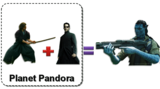
Last night we watched Avatar, and I must say I was absolutely blown away by the 3D production, the special effects and the overall, gripping storyline. If you haven't watched Avatar yet, I strongly recommend that you do so, for the absolute entertainment value that this James Cameron epic provides.While watching Avatar I suddenly had a brainwave for a blogpost. The movie had triggered a few thoughts in my head about Learning and Development. Let me share them with you.Creativity is often about 'Synthesis'With all the 'oohs' and 'aahs' about Avatar set aside, if you look hard, you'll realise that the movie is essentially very similar to two other previous Hollywood hits -- The Last Samurai and The Matrix. Essentially, if you combine the storylines of those two movies and give them a space twist, then you end up with Avatar. No, I'm not trying to say that James Cameron plagiarised those two stories (though it would be quite smart if he did), all I'm saying is that the movie indeed seems like a synthesis of those two great movie ideas.Often creativity isn't necessarily a brand new idea. It can even be a brand new idea from the combination of other great ideas.Synthesis can transform your classroomSo, taking that thought about synthesis ahead, there's a case for us to think about how synthesis can transform your classroom. At DevLearn, Erika and Julia from Google demonstrated a few simple ideas of how they are combining technology with good old classroom facilitation to make the learning experience more engaging. Here are some ideas I really liked:Are you teaching people how to write well? Ask them to write a blog post and ensure that every student posts comments about what they liked and what they didn't. As a teacher, post your comments as well.Are you teaching people how to code? Use Google Code Labs to provide them code snippets that they can collectively iterate from. Use the revision histories/ comments to provide feedback and to correct coding patterns. Are you trying to share instructional resources? Create a Google Wave and embed it into your class homepage. People can discuss the problem amongst themselves, but at the same time make a private submission to the instructor if this was an assignment, test, etc.Are you preparing for a sesion where you don't know what to expect? Use Google Moderator to crowdsource questions and discussion points for the event. That way you can ensure that you deliver only what people want to learnThere are other exciting ways to enliven your classroom. One of my favourite blogposts of 2009 was the one Tom Kulhmann wrote about how empowering your learners. Tom gave out 3 ideas to creatively use technology in your classroom, which included giving your students a social media project. Tom put together a quick demo of what such a project could look like, using Vuvox (see below)You don't need to do everything within eLearningThe concept of synthesis needs to stretch into the domain of online, and technology assisted learning as well. No, I'm not saying that this isn't a creative field -- it's perhaps one of the most creative aspects of modern L&D. That said, I still see the huge tendency with instructional designers to try and do everything from within elearning. Its important to remember that the end goal is not to create a really flashy elearning course. Its not even to try and craft an exquisite learning experience. The end goal is to enhance workplace performance. I remember reading an article by Jay Cross where he said:"As we attempt to do things in an instructionally sound manner we can get TOO focused on doing things in an instructionally sound manner…and lose sight of what the business needs. Often what the business needs is 'good enough' and 'enough so that someone can continue to do his/her job.'"Social Media and other emerging technologies allow you do what's 'good enough' and do it just-in-time. There's very rarely a need to do everything within flash-based elearning. Here are a few ideas you can use, to complement your elearning to create a rich, effective, learning experience (to eventually enhance workplace performance).Leverage your Learning Management System: If you're using an LMS, in particular Moodle then why not create bite-sized elearning modules and let your LMS provide an exploratory interface to your content? That way, you save the effort in creating complex branching across sub-modules. Also, LMS's such as Moodle provide an excellent set of social and interactive tools to make your course engaging. Patrick Malley has written an excellent article about how you can use Moodle in a game changing fashion.Combine different tools to achieve the right impact: Just because you need one interactive activity in your course, doesn't mean you need to break the bank by employing a dozen Flash programmers. Pull custom Flash based elements into your rapid-elearning course if you need to. Take a look at the demo below (Articulate skin by Kineo), where I've pulled a Flash activity inside Powerpoint. If you're suffering from a common cold, then you need a tablet not a dozen vaccinations! You can even bring the web into your course, as Tom says here and here.Can you really solve the problem with eLearning alone? Often the solution to a performance problem could be an elearning course plus some follow up coaching. Consider what it'll take to really enhance workplace performance. If necessary provide the manager with some training within industry style support so they can actively coach their people.I'm sure there are dozens of other ideas to creatively enhance your courses using the concept of synthesis. And of course, you don't want to break the bank! What ideas have you tried in order to make craft effective learning experiences? Post your ideas and suggestions in the comments section. I'd love to hear more.© Sumeet Moghe, 2009
Sumeet Moghe
.
Blog
.
<span class='date ' tip=''><i class='icon-time'></i> Jul 20, 2015 11:53am</span>
|
|
Field day in December???Now I know what your thinking, it's December and it's 20 degrees out, but I just presented at a state conference on this subject and wanted to make a blog on it while it was still fresh in my head. When physical education teachers are presented with the task of creating and overseeing a field day it can be a bit overwhelming. Than once you start thinking about how you are going to accommodate/modify activities for students, it can seem staggering. Hopefully this blog can help calm your nerves and give you some ideas on how to make your field day accessible to everyone.When you are creating a field day for students with disabilities there are a few things to take under consideration. For a successful field day you need to think about:How you are going to utilize your parasActivitiesTransitions to stations ThemesThemes: For this subject I don't have to much to say. When it comes to themes just make sure that they are broad enough that you can integrate many different types of activities into it. Make sure it isn't so narrow of a theme that you can't think of more than two activities to go with it. Here are a few ideas for themes:Car washSummer timeCars/NASCARJungleOlympicsTransitions and placements of stations:When coming up with your field day, think about the placement of your stations. This is a part of organizing a field day that is sometimes overlooked but is very important to having a successful field day. You do want three activities in a row where the students are using up all their endurance. Instead build in a few stations that are fun and the students can engage in the activity without wearing themselves down. When creating your field day layout think about creating visual supports on each station to help guide students on how to best particapte in the activity. This will be beneficial to all students, but will be extremely helpful for visual learners, like many students with Autism.Visuals and other tools can be a great asset for your para professionals. Creating map for your pars and volunteers will not only give them written directions that they can keep glancing at but will encourage them to be more involved. Let them know that you value them and have taken the time to make a map to help them with the field day.Here is a list of a few other considerations that you may need to prepare for depending on your student's needs:Make sure that all mobility issues are addressed. Make all your stations easily accessible for student whom are chair users.When sounding off on a megaphone or horn to let the students know to change stations, let a student who is sensitive to loud noises use the horn, this will help reduce anxiety.Keep a majority of your stations short and sweet. Many children (not just ones with disabilities) have short attention spans. Having short stations that are active and fun will increase the student's ability to be engaged.Activities:Adapting activities is about looking at your specific student's needs. So for this section I will list different adaptations that may be utilized for specific disabilities.Physical Impairments- Use adapted equipment( bowling ramps, lighter balls, reachers, etc.), for students with MD have frequent breaks to reduce fatigue, modify rules of games so that the game is still competive for everyone(maybe Billy only has 3 pins to knock down and John has 5)Intellectual impairment- Simple (1-3 steps) instructions, modify game so there is less external stimuli( if there was a game where students had to fill buckets with certain colors, limit the buckets), give them a peer buddy, extra visual/verbal cues, use a picture of the student on the place where you want them to beVisual impairment/Blind- Use bright visually stimulating objects, use bells, a guiding line for running activities, beep balls, a sighted guide, have someone clap at a finish line, incorporate games where everyone is blindfolded( minefield)Emotional impairment- Design games that limit competition, let students compete against their own scores rather than compete against other students, THINK ABOUT THEIR GROUPING( many children with emotional impairments will act out more often towards certain students), use more cooperative/team building games rather than competitive games like building a hoop house where students try to create a house with 3 hula hoops and the group must crawl through it without the hula hoops collapsing Severely multiple impairments- Modify the games so that students are able to use eye gaze and other forms of communication to engage in the activity, use bright visually stimulating objects, use bells, create sensory stations such as one where they put their feet in a small pool and try to feel as many marbles and other tactile objects as possibleAutism- Visual maps of the field day, prepare your students for field day with a social story, visual supports for the activity, give the student a peer buddy, incorporate activities that meet your student's unique sensory needs(such as a log roll station for children with vestibular needs)Getting others involved:Working with para professionals in the P.E. setting can be difficult at times. Many para professionals think that because they are in P.E. they do not need to particapte. This is why the P.E. teacher should be creating a strong collaborative relationship with the paras for the entire year. Ways to get your paras more involved:Try to incoporate them in lesson planningGive them lesson plans in advanceLet them have a space in your office to keep there stuff, like in the special education classroomsGive them clear expectations by having classroom expectation posters on the wallsIf you have a strong relationship with your paras throughout the year, than you should have no issues once field day comes around. But if you are experiencing any issues, try some of the suggestions I have given you from above. On field day, some paras may be in groups of children they haven't worked with before. Make sure your paras know your students needs and are give specific instructions on how to best address their needs.When the field day experience is all said and done, send out a survey monkey to all of those who helped out. Find out how they thought it went and how they think it could go better.Quote of the day:"A conference is a gathering of important people who singly can do nothing, but together can decide that nothing can be done."- Fred Allen
All Good Education is Special Education
.
Blog
.
<span class='date ' tip=''><i class='icon-time'></i> Jul 20, 2015 11:53am</span>
|
|
Behavior Management TipsAs a teacher I know that sometimes the most difficult part of teaching is keeping student's behaviors under control. So I thought I would make a blog about some strategies I have used to help curb some of these disruptions.First let me tell you a little bit about my teaching background to help you understand where I received some intense knowledge/experience in behavior management. When I was in grad school, I was on a grant program and had to work a certain amount of hours in the field each week to fulfill my grad school requirements. In this program I worked a decent part of my hours at a k thru 12 school for the emotionally impaired. It was one of the most amazing experiences of my life and this experience would impact my behavior management techniques greatly. In this program I had was fortunate enough to be able to teach adapted physical education to the students at this school. We had a large range of reasons of why the students ended up at a center based school for the emotionally impaired. Reasons ranged from being defiant, fighting all the way to sexual assault. To say the least, when I first arrived to the school I was pretty intimidated by the school, the students and their "baggage". Quickly my feeling of being intimidated led to intrigue. I saw how well the students behaved when they were given consistent rewards and consequences. I started to see the students and their "baggage" in a different light as well. I viewed the students who had experiences that I could never imagine, and who needed someone that they could rely on more than anything else in the world. Then I finally learned enough techniques I could use to help prevent behaviors, redirect behaviors and give appropriate consequences to shape behaviors.Now that I have given you some of my background story on how I have had an unique experience with behavior management, let me give you some tips and advice on how to best prevent and deal with behaviors. Something my mentors, Dr. Davis and Dr. Dillon once told me, there are 3 parts of a child when it comes to their ability to learn, there is the child's natural abilities, their environment and the learning styles. You can only adapt their environment and the way you present the information, so focus on those components to try and make a positive impact on the child. Something to consider when looking at how to adapt your environment and teaching style to help students be successful when looking at their behaviors.The first thing you need to consider before you start trying to shape a child's behaviors is who that child is. Taking the time to get to know the child, building a relationship and letting them know that you value them and their opinion can sometimes solve behavior issues. Once you have established a real relationship with a child, they will be more motivated to try and help you to solve classroom behavior problems. When getting to know your students you will find what motivates them, what sets off their behaviors and how to deescalate behaviors once they have begun. Education is the most powerful weapon which you can use to change the world.Nelson Mandela Read more at http://www.brainyquote.com/quotes/topics/topic_education.html#UzSrdqQwquEy9ZXI.99Preventive Strategies: Let's now discuss preventive strategies. In the education field, there is a big push for preventive strategies. There is very good reason to have this big push. If you set up an environment to decrease the incidents of disruptive behaviors then of course this is a huge component of behavior management. Here are a few preventive strategies that you might consider using in your classrooms/gyms:• Give a student a seat closer to the teacher• Do not confront the student openly in front of their peers• Give the student frequent hall talks to review expectations• Put up visuals of classroom expectations• Use a stop light system, where when the stop sign is up, no one is able to talk, or they get a strict consequence• Put in a reward system that can be earned for good behavior• Give student's sensory breaks• Planned ignoring•Have a chart for a student to monitor there own behaviorAnother important aspect of shaping behaviors and motivating students to be successful in your classroom/gym is to monitor their behavior closely. Using behavior chart to tally their behaviors or giving a comment about why and how their behavior occurred can give you real insight into why they might have acted out. Here is an example of a very simplistic behavior chart.Behavior Systems:Now as I said before, every student is completely different. What strategies work and don't work will depend on the student, the environment, and consistency. I can't stress enough the importance of consistency for students who exhibit extreme disruptive behaviors. Now let me describe to you the system that was used at the school for students with emotional impairments. It was extreme, but I have adapted for my classrooms for students with Autism, Intellectual Disabilities and Physical Disabilities. The system is broken down into 5 levels. Every level that a student climbs up, they receive more privileges and independence. An example of a privilege is the ability to go to the bathroom without an escort or eventually going to a general education setting for parts of the day. Students would gain points to advance levels by not receiving either a reminder, breaks or being sent down to a center (a padded room where they would be closely monitored). This program is extremely motivating for students who lack the self control to be successful in unstructured situations. Obviously, I'm not suggesting that you utilize a behavior system where you use a padded room as a consequence. But nonetheless, there are some valuable points to be made from this example.First, students being knowledgeable about their behavior expectations and consistency are key. The students in this program were all very aware of the system and knew how to follow the rules. Students will test boundaries, it is just human nature, but when they test boundaries it is important that they get the same consistent message for behaviors every time. Otherwise it can be confusing and the bad behavior is at risk to being reinforced.Second, not all behavior systems need extravagant reward systems. Simply giving students jobs like cleaning equipment, erasing the board, or passing out paper can be quite motivating. Just remember that it is key for them to know how to earn this reward and that you are proud of them when they succeed. Lastly, a 1,2,3 and your out! warning system works great for a behavior management plan. For my classroom, I have adapted a students behavior plan and have applied it to the entire classroom. There are different consequences at every stage and the last one is being sent to the office. Reward Systems:Now that I have discussed with you preventive strategies and consistent consequences, let's discuss the most important tool to use when creating your behavior management plan. A reward system! Reward systems can be created for individual students or for entire classrooms. Using intrinsic rewards is proven to provide more sustained motivation. Getting your students to feel good about what they have done and to work hard for their own reward is always the ultimate end goal. When struggling to motivate students, creating a reward chart where the student picks what they earn is a great idea. Have the student help design their own reward system, so that you know it's highly motivating. Then give out tickets that the students can earn for good behavior. I have found that using rewards on an intermittent basis is quite helpful if the behaviors are not too severe. Using rewards intermittently gives the student a message that the desired behavior is rewarded and praised from others. Although in real life, a good behavior will not always be met with a physical reward.Other interventions:There is a wide variety of different methods that one may utilize to help students be more successful in their school environments. I personally I have found that peer mediation sessions work very well with students who are having conflicts with another student. I have used peer mediations for students with mild to moderate cognitive disabilities and students who have Autism. The peer mediation interventions have been very successful. What I have done for these individual cases is I created feelings sheet with pictures that they could use to point to when they are discussing their feelings. Here is an example of a simple peer mediation sheet that the students could use to express themselves to one another: I have found that using peer mediation is usually very successful because the students are the one's trying to find solutions to their problems. They start by each student having time to tell the other person how they are feeling and why they are feeling like this. The students than have time to discuss with the other student and a peer mediator how to best solve their problems. They than make up a contract and all the parties involved are given the choice to agree to it and sign it. Because this puts all the responsibility onto the students, I have noticed that this strategy works quite well. Something else that I have left out of this blog is the importance of getting parents to agree with your behavior management techniques and be on board with your behavior plans. This may not work every time and it may take sometime for the parent's to understand and accept your techniques. Just remember that it is a huge asset to have the parents back you up at home when the students are misbehaving. Trying to build a strong and positive relationship with the parents is vital to the success of your behavior management plans. Here is a list of other interventions that may work with some of your students:Student contractsStudent planners to communicate effectively with parentsStudent to Teacher conferencesConferences with ParentsStaff meetings about individual student's behaviorsAfter thoughts/Resources:Looking back at this blog, I realize that behavior management is a huge part of teaching and cannot be summarized in just one blog. I hope some of this information is helpful for you while you are teaching in the field. Here is a list of different web sites that pertain to behavior management that may be quite useful for you:http://www.bbbautism.com/behavior_management_strategies.htm A website that is specifically created to help you with behavior management for children with Autism.http://www.do2learn.com/BehaviorManagement/BehaviorManagementStrategies/index.htm Really great website called Do 2 Learn that provides a good amount of free tools that can be used for behavior managementhttp://www.crisisprevention.com/Resources/Knowledge-Base/General/Behavior-Management-Strategies-and-Techniques A good site that sets out nice steps on how to remain calm and in control during challenging situationshttps://www.teachervision.com/classroom-discipline/resource/5806.html The Teacher Vision website has really great articles and free printables on a variety of subjects and behavior management is no exception. Quote of the day:"He that would be a leader must be a bridge."- Welsh Proverb
All Good Education is Special Education
.
Blog
.
<span class='date ' tip=''><i class='icon-time'></i> Jul 20, 2015 11:52am</span>
|
|
From time to time the field of Corporate Learning is subject to discussions on the labeling of the discipline. We have come all the way from Training and Personnel Development. Currently we are in the Human Capital Development era. Just another try to pimp the discipline? Clive Shepherd wrote an interesting comment on this development. He states: "I do know what capital is, and it isn’t people … People are not capital because they cannot be employed in place of money to purchase assets or to cover expenses … If anything, the concept of human beings as assets is even less credible than it used to be, because, with increased mobility of labour and severe skills shortages".
I think his statement is spot on and Human Capital Development is just a way of stating: "Look we are doing some strategic things here, we are adding value to the business!" This probably is an attempt to counter the criticism HR professionals constantly having to deal with. In my opinion re-labeling the discipline isn’t the answer. More fundamental changes are needed for HR(D) to become business partner:
Increase business understanding and general business acumen.
Don’t talk jargon and develop professionalize the ways of working.
Leave the administration and operations to services centers or outsource.
Get out of you ivory towers in Corporate HQ and start listening to your clients.
Forget about ROI and deliver services the business is asking for.
If the fundament is right, the labeling is just about internal marketing. And I must say Human Capital Development sure sounds trendy and appealing. I can imagine that it looks impressive in internal Powerpoint presentation for executives. So, what should we do? Should we use a label that is appealing, but not correct from a theoretical standpoint. Or, should we be true to our profession and use a label that is authentic.
Please help me out on this one and join my poll (see sidebar)! What is your preferred label for the field of corporate learning and development?
Daan Assen
.
Blog
.
<span class='date ' tip=''><i class='icon-time'></i> Jul 20, 2015 11:52am</span>
|
|
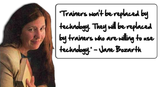
Wow, its 2010 already - a beginning of new decade! It seems like the last year and even the last decade, just went by in a breeze. There have been so many developments in the L&D space in this last decade that have really revolutionised this field. It's as if it was yesterday that Jane Bozarth very smartly predicted that "Trainers won't be replaced by technology. They will be replaced by trainers who are willing to use technology." This is more true in this decade than it ever was earlier. To greet the new year, I thought I should do a quick post outlining the changing role of the corporate trainer. Today's post follows on from two of my previous posts of a similar nature, which you apparently found interesting:From Training Specialist to Learning GeneralistInstructional Designers need more skills than just writing!The Six Hats of a TrainerYes, I've read De Bono's work and his "Six Thinking Hats" were an inspiration. In fact my six hats of a trainer are indicative of the various roles that an intelligence age trainer needs to play and as a consequence the different ways she needs to think. Now before I get out of this with egg on my face, let me clarify that I don't expect one person to be good at all of this overnight! That'll take intuitive aptitude! My friend Vijay Colaco takes strong objection to the word 'training' and believes it's akin to how we make animals do our bidding. Vijay OTOH prefers to think about corporate education (on the lines of 3 Idiots), where individuals make informed decisions about the steps they take. What I hope is that as we enter an exciting new decade, traditional trainers can look at their roles with a bigger sense of responsibility and the satisfaction of being able to contribute to their organisations in a more complete fashions. In effect, we'll craft more effective learning experiences and eliminate waste most ruthlessly.So here's what wearing each of these hats amounts to.Being a Teacher"As teachers we focus on helping people acquire general cognitive abilities, rather than on particular performances in specific situations"The role of the teacher is fairly traditional. Most corporate trainers are pretty good at this already. The key to effective teaching is the ability to help people develop new strategies for thinking and acting. That said, the focus is less on performance improvement and more on new learning. Its important to note that while a lot of modern trainers scoff at teaching and term it as passive, it has its own place especially to empower novices. While teaching is not new to existing trainers, a lot of us could use help with our presentation skills. I find Garrey Reynolds' Presentation Zen to be a great resource for teachers to learn how to effectively prepare, simplify, visualise and deliver a sesssion on any topic.Being a Facilitator"As facilitators we're helpers and we assist groups in working together in various contexts to reach the best possible conclusions or decisions."The game starts to change here a bit. While teachers aid the acquisition of new knowledge and understanding facilitators make it easier bringing out and focusing the wisdom of the group, often as the group creates something new or solves a problem. Facilitators need to have the ability to stand back and let the group perform and interfere only when they see a need to course-correct. The act of facilitation involves creating group interaction patterns that bring out the best learning. This could be limited to facilitating just business as usual meetings or even large scale conferences. In the recent past, my favourite resources for facilitation related wisdom have been ex-ThoughtWorker Jeremy Lightsmith's website on Facilitation Patterns, Steven List's Blog and his interview on Open Spaces with InfoQ and also Patrick Kua's blog.Being a Coach"As coaches we actively enable our coachees to develop specific behavioural competencies, as a consequence helping them achieve or improve their performance in certain contexts."As I've said earlier as well, coaching is a fairly underestimated way of creating learning. That said, I believe coaching to be an "on the ground" job that happens continuously. It's something that should happen on the job and all the time -- it should not be an intervention. That said, to create a crop of good coaches corporate trainers need to don the role of a 'coach coach' or 'master coach'. Through their efforts they need to make mentorship a common practice across teams and organisations. There are far reaching consequences of this investment. There's greater organisational understanding of how people learn. In time, learning becomes common practice and a continuous process rather than an event. In time, the organisation also learns that elearning or training or social media aren't silver bullets and that every extrinsic effort to creat learning falls flat without the intrinsic support of coaching and mentorship.Being a Designer"As designers we use creativity and analysis to build instructional solutions that make complicated tasks and concepts simpler."If you've followed this blog then you know that I feel Instructional Designers need more skills than just writing. Instructional design is easily one of the most skilled professions in the learning industry and when we wear this hat, we are responsible to translate learning visions into concrete resources. I deliberately call this hat that of a 'designer' only (as against instructional designer) though, because I feel that we need to look beyond instructional design alone. I feel we get way too caught up in making things instructionally sound as against picking the low hanging fruit of aggregating 'not-instructionally-sound-yet-useful' information. As a hardcore pragamatist, I often care less about instructional soundness if aggregating useful content gives me a quick win and an easier way to get to a learner. This is not to say that instructional design isn't valuable -- its just that pragmatism and a shorter time to market will give us a sharper edge this year.Being a Technologist"As technologists we stay on the cutting edge of technological innovation and harness technology to make the learning experience more effective." There's no denying that technology is occupying an increasingly large space in education of all forms and at all levels. To avoid technology will only be to live in a state of denial. I can only request my 'training' colleagues across the world to embrace this as an extension of their existing skills and know that this is a great way to utilise their experience of influencing people's learning. Informal Learning is largely accepted as a highly effective way of creating continuous learning and technology is a great way of enabling informal learning. As technologists 'trainers' need to continuously stay on top of emerging trends in the marketplace and we need to embrace the 'don't worry, be crappy' mentality. As innovators, we need to release early and release often and stick our necks out for things that we see potential in. So are virtual worlds the coolest new trend in learning technology? Or is it alternate reality? Or then is it social media? Let's raise our awareness of these trends and at least get our hands dirty to start with. And let's not stop at that alone -- if we see value, let's be prepared to take this to the next level by increasing our engagement with our IT departments to articulate the benefits, risks and issues using shared vocabulary.Being a Consultant"As consultants we ruthlessly eliminate waste and evaluate at our learning offerings from the perspective of the business, ensuring that we continuously deliver the most efficient solution (instructional or not) to achieve the performance expectations."In a previous post, I've pointed to quite a few resources that can help us build our consulting skills. While I talk about Consulting last, its definitely the meta-hat for all the above hats. As service providers to our organisations and clients, we're all consultants. Not only do we need the ability to engage our stakeholders, but we also need to articulate the value of our approaches and determine the right solution to performance problems in the business. Its not enough anymore to be a glorified order-taker for the business -- we need to go several steps forward to look at the entire value stream we're addressing and how our interventions will affect its performance. So, in my opinion, if there's one hat we'll always wear in this decade, it'll first be the consulting hat - to problem solve first and then wear the right hat to implement the solution!My blogpost is limited to my own experiences with L&D over the last few years, so I have to turn to you for inspiration. What roles do you think trainers will have to play in years to come? What roles are you having to play? Please post your thoughts in the comments section and let me know what you think!© Sumeet Moghe, 2009
Sumeet Moghe
.
Blog
.
<span class='date ' tip=''><i class='icon-time'></i> Jul 20, 2015 11:51am</span>
|
|
Fundraiser Ideas on a Snowy DayCurrently I am snowed in at a relative's house so I thought that I would spend some time trying to push my fundraiser and list out some keys to having a successful fundraiser! If you are around January 25th, you should come to Woodland Lanes in Livonia for some fun and exciting bowling! We are going to have a 50/50 raffle and a "silent auction" where you can buy tickets and use them to try and win the gifts you want the most. 5 Key Ideas For Your FundraiserWhen trying to put together a fund raiser here are a 5 tips to keep in mind: Advertise it anyway you can (Facebook, flyers, blogging;), and remember to tell everyone). As one blogger put it, "Be shameless when it comes to putting yourself out there."Setting a date can sometimes be the hardest part of organizing a fundraiser, make a secure date as quickly as possible and than everything else will fall in placeSet a goal for your fundraiser. Is the fundraiser's main mission to get publicity, make money, reach out to other organizations, or a combination of different goalsSet a clear purpose for your fundraiser, let people know exactly why they need to be charitableTake a list of donors names and addresses at the fundraiser and send them Thank You letters to let them know they will were noticed and that you appreciate them Quote of the day:"Education is the most powerful weapon which you can use to change the world." -Nelson Mandela Education is the most powerful weapon which you can use to change the world.Nelson Mandela Read more at http://www.brainyquote.com/quotes/topics/topic_education.html#UzSrdqQwquEy9ZXI.99Education is the most powerful weapon which you can use to change the world.Nelson Mandela Read more at http://www.brainyquote.com/quotes/topics/topic_education.html#UzSrdqQwquEy9ZXI.99Education is the most powerful weapon which you can use to change the world.Nelson Mandela Read more at http://www.brainyquote.com/quotes/topics/topic_education.html#UzSrdqQwquEy9ZXI.99Education is the most powerful weapon which you can use to change the world.Nelson Mandela Read more at http://www.brainyquote.com/quotes/topics/topic_education.html#UzSrdqQwquEy9ZXI.99
All Good Education is Special Education
.
Blog
.
<span class='date ' tip=''><i class='icon-time'></i> Jul 20, 2015 11:51am</span>
|
|
A few months back Patrick Kua wrote a blog conjecturing if the lack of retrospectives is really a smell. Pat mentioned how he was very lucky that the team had some really strong people who got things done and kept the project 'continuously improving'.To quote Patrick,"It’s amazing what a bunch of energised, passionate and people with the "solve the right problem once" attitude can achieve."Reminiscing this post from Pat, I had a few thoughts:Given we agree that:retrospectives are a 'best practice';and that they are a tool for improvement;is it fair for us to say (at least theoretically) that we can take this 'best practice' to an extreme level just as rationale behind extreme programming may suggest?Second, Agile methods (at least theoretically) assume a team composed of the 'best people' who are 'generalising specialists' or 'versatilists'. The key to having a really strong team could then be mechanisms that not only encourage strong communication, but also those that allow teams to recognise problems, find solutions. That then will fuel continuous improvement, perhaps making retrospectives purely an optional ritual.What could these mechanisms be?My passion for retrospectives set aside, I realise that the practice is definitely more than a decade old in the mainstream. Things have changed significantly since then.More teams understand the value of solving problems 'just in time';Command and control leadership may have not disappeared from the horizon, but leaders are slowly discovering their roles in empowering their teams to take more control of situations and problems.Technology is changing fast and our ability to use tools to make problems visible solve them is fast increasing. Here are a few ideas I had to increase communication and to recognise and solve problems on a team. These ideas don't necessarily negate the requirement of a retrospective, but they can perhaps take us one step further to being high performing teams.A low tech method - daily 'hot topics'A few months back, we were a team of 7 people with Ritin Tandon at the helm as the team lead. Ritin devised a method for us to recognise issues and solve them on an ongoing basis. In the team area, Ritin put up a flip chart called "Hot Topics". Everytime anyone in the team had something to discuss or a non-urgent problem to solve, they'd put up a sticky on the flipchart. At the end of the day, one of us (often Ritin) would facilitate a quick discussion around our hot topics and we'd volunteer to solve the problems then and there. If we expected that a problem would take time to solve, then one or more of us would sign up to work on it and we kept reporting back progress to the team. Its been a fantastic practice and for the investment of a few minutes each day, we got a huge sense of fulfilment by taking blockers out of our way. What we were doing was a bit of a mini-retrospective each day and that helped us be a continuosly improving team.A hi-tech method - use Web 2.0 tools to surface and resolve problems.There are quite a few tools these days that can help create high quality communication in teams. Two tools that I think can be really useful to surface and resolve problems in a team are Google Wave and Google Moderator.Google WaveGoogle Wave follows the paradigm of blips. It could be quite easy to create a retrospective playground on Google Wave where you create brainstorming blips (Keep Doing, Stop Doing, etc) on the wave and people can add their thoughts and following discussion under those blips. In fact I think this could be even better than a ritual retrospective where we often don't discuss issues because of a lack of time. Using this method, people can actually choose to comment on every issue they feel passionately about instead of restraining themselves only because others don't see the value in their thoughts yet!Google ModeratorGoogle Moderator is a great social application to crowdsource ideas. You could potentially ask your team an open ended question about ideas for improving the project. As the team posts it ideas, members can vote up the ideas they like the most and provide commentary on its implementation. Over time, you have a nice prioritised list of improvement activities for your project. As you implement these ideas, the burning need for a retrospective may disappear. Obviously, I'm not speaking from too much experiential wisdom (the lack of proper screenshots is a tell-a-tale sign) and I acknowledge that these ideas may not eliminate the need for retrospectives completely. In fact the goal isn't to eliminate retrospectives (they're obviously a very useful exercise) -- the goal is to continously improve so that the retrospective isn't the only place to achieve this. What do you think? Please let me know by posting your comments on this blog. I'd love to learn from your experience.© Sumeet Moghe, 2009
Sumeet Moghe
.
Blog
.
<span class='date ' tip=''><i class='icon-time'></i> Jul 20, 2015 11:50am</span>
|
|
A few weeks ago my local newspaper published a piece on Lifelong Learning that expressed concerns about the lack of support the Dutch Government is giving to it. The argument is that there are good intentions, but action is missing. "No one is against Lifelong Learning, but we need more people promoting it actively", according to Theo Bovens of the Dutch Open University. His institute is facing a decrease in new students year after year. You can argue if this is an indication of a lack of interest in lifelong learning or it is pointing at a different problem.
But anyway, more concerns are raised. The article points at the fact that it is not possible in the Netherlands to get a Government sponsored scholarship for picking up a study beyond your thirties. Also the cancellation of attractive tax deductions and the limiting of subsidies is doing Lifelong Learning no good according to the journalist. The government should take its responsibility in financing Lifelong Learning instead of leaving it to organizations and individual employees. In my opinion the government is already betting on a new horse called Innovation. The article continues with the scary perspective that this behavior will lead us to disaster. The Netherlands will not reach their goal of having 20% of the workforce following a part-time course or studying besides work . Is this alarming? Well, when you look at the fact that the Netherlands are at 16.6% and above average in the EU, there is nothing to worry about. But when you consider the Netherlands having knowledge economy and innovation high on its priority list, it might be alarming that Slovenia has passed us and also Sweden and Finland score significantly higher.
But there is hope. Research into Lifelong Learning is in general only focused on formal education (Education Permanente). It is about quantity in money spend on and students that go through education and training programs. Although it provides some information on the bias for learning in a country, there is much more than just the formal side of learning. Lifelong learning is as human as eating and sleeping. It is a natural thing, that occurs regardless of classrooms and instructors (in some cases even more effective in the absence of these). Especially in times of rapid change in knowledge, technology and methodologies formal approaches are too slow anyway. So, let us be the best in informal learning. It won’t help us make us reach our Lisbon goals, but it will help us forward.
Daan Assen
.
Blog
.
<span class='date ' tip=''><i class='icon-time'></i> Jul 20, 2015 11:50am</span>
|
|
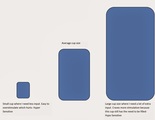
The Essential Sensory Integration GuideFor today's blog I was going to focus on children with sensory needs and how we can try to best meet their needs. I believe that sensory issues are becoming more and more prevalent(maybe just better recognized) in the teaching world and it is important to address these issues so that the student is better able to learn and develop. I will take you through each of the 6 sensory systems and activities that can be utilized to meet these needs.What is a sensory need?Sensory needs were best explained to me by Temple Grandin, a leader in the Autism field, at a conference I attended about two years ago. She said something along the lines of "Sensory needs are like having a cup(this symbolizes our sensory need) that needs to be filled with water(this symbolizes the sensory stimulation). We all have a cup, but some of us have different sized cups. If you have a large cup(hypo sensitive) than you need a great deal more water than most people to fulfill your needs. If you have a small cup than you only need a little bit to fulfill your need and it is easy to overfill this cup and make you feel overwhelmed. There are different sized cups for each one of our sensory systems and not all of them are the same size either. So where as my cup for taking in auditory input may be very large and I need a lot of water to fill it, my tactile(sense of touch) cup may be very small and I don't need much water at all to fill it." I believe that this paraphrase helps one understand sensory processing disorder(SPD) a little better.Here is a picture that I hope represents the idea as well:The Different Types of Sensory NeedsSensory issues can manifest themselves in a variety of ways. They can appear to be behavioral, panic attacks, attention deficits, or they can cause a student to struggle to interact with others. But I have witnessed on many different occasions how these concerns can be greatly reduced through sensory integration activities.For example, when I was finishing up my student teaching I was placed in an elementary ASD program. I had a student who was extremely bright and was doing academic work that was years above his grade level. But at the same time this student would avoid any peer interactions and would rather focus his attention on playing an Ipad(visual stimulation) or bouncing on a hippy hop ball(vestibular). For an end of the year field trip we went to a local swimming pool. Once this student was in the pool he was a totally different child. He was intiating play with his peers and playing appropriately. Because of the tremendous amount of sensory input that swimming gives to our system he was able to not feel overwhelmed and able to interact with his peers in a meaningful way.With sensory processing disorder there is a large variety of different needs. Some children are hypo-sensitive and crave extra stimulation. Others are hyper-sensitive and just a little of a certain stimulation can be quite overwhelming. Here is a list of the different unique sensory needs that a child may crave or be quickly overstimulated by:Auditory Visual Gustation(Taste)Olfactory(Smell)Vestibular(Balance)Tactile(Touch)Proprioception/Kinesthetic(Body Awareness)**The Proprioception and Kinesthetic sensory systems are not the same but are frequently lumped together. Visit this site to read about the differences. Proprioception WikiHow to Address Sensory NeedsHere is a Maslow's Hierarchy of Needs picture for students that I created:I really wanted to focus on the physiological needs of the students for this blog. It is a well accepted fact that if a student is not fed, is homeless, sick, or lacking sleep they will not be able to function very well in school and it is vital that those needs are addressed so that the student is able to learn and grow to their best potential. The same goes with addressing sensory needs. A student with SPD has a biological need and we as educators have to try to address them.When thinking about activities that help integrate sensory input to include in your day remember that many of these different categories cross over. Such as dancing activities can help a child's auditory, visual, tactile, vestibular, and propriceptive systems.Depending on if the student is hypo or hyper sensitive is how the activity is done. Changing the force or speed of an activity may be appropriate to address whether they have hyper or hypo sensitive sensory input system. For example, a student whom has a vestibular hypo sensitivity may need to be slowly rolled on a large hoppity ball, where as a child whom has a vestibular hyper sensitivity may need to do the same activity at a faster rate.Sensory Integration ActivitiesHere are is a list of the sensory need and different activities that can be utilized to best meet the child's unique needs:Tactile: Any water activities, arts and crafts activities with tactile objects like putty and finger paint, massage, bare foot activities, dance, and crawling through tunnels. This is the child that will benefit from creating things with their hands and using manipulatives for math. It may be helpful for this child to differentiate between objects through using their sense of touch. This child may be more successful in class if they are able to use a fidget toy during class.Visual: object manipulation activities like baseball or tennis where the game or objects can be modified, this may be done through changing objects colors or size, and/or it can be done through modifying the games speed or distances. Other activities that would promote visual sensory integration include tracking, sorting objects, and scavenger hunts where a student has to find different objects. Make sure that with these students, whatever you are trying to draw their attention towards is bright, colorful and visually stimulating. Auditory: Activities like goal ball that strongly use auditory recognition, localization and discrimination, activities that depend on student's auditory memory, activities where students create their own sound effects(for example creating a radio show). Other ideas that may help auditory sensory integration are music therapy headphones during class work, headphones or ear plugs to reduce noise, and the removal of or placement of cork boards on the walls that will enhance echoes.Vestibular: Any activity that includes spinning, log rolls, balancing, jumping on trampolines, scooters, tumbling or swinging. A great way to promote vestibular integration is through using hippy hop balls as seats. Proprioceptive: Activities that involve naming body parts, movement activities done in front of a mirror, juggling, yoga stances and imitation of movements. These students will excel in work where they are constantly moving. Using theaters and charades in the classroom/gym are great ways to help these students be successful. A student who would benefit from propriceptive sensory integration may also benefit from frequent breaks.*For this blog I am not going to cover activities for sensory integration for taste and smell.For more information on how SPD can affect how a person with SPD communicates with the outside world here is this very moving and inspirational youtube video titled "In My Language"Quote of the day:One looks back with appreciation to the brilliant teachers, but with gratitude to those who touched our human feelings. The curriculum is so much necessary raw material, but warmth is the vital element for the growing plant and for the soul of the child.-Carl Jung
All Good Education is Special Education
.
Blog
.
<span class='date ' tip=''><i class='icon-time'></i> Jul 20, 2015 11:49am</span>
|