



Blogs
|
Last week I read an interesting article by Mirjam van Praag about training as development aid for entrepreneurs in Developing Countries. She describes an approach that combines microfinance for these entrepreneurs with training in business administration. This is not only lifting the success rate of the entrepreneurs, but it also reduces the risks for financials of offering microfinance to these entrepreneurs. And since microfinance have proven to be a succesfull means to fight poverty, adding training to the formula will make the success even bigger and more sustainable. Research by Karlan and Valdivia of Yale University has proven that the entrepreneurs that received training perform better. Striking is the fact that the entrepreneurs that were most sceptic about the training, had most benefit from it. The entrepreneurs received the training in 30-60 minute weekly sessions at their local Bank. They have discussions in entrepreneur communities and receive some homework. "With microfinance the coaching and guidance of entrepreneurs is just as important as the finance itself", is a well-known phrase that proves to be right. This sounds like a good opportunity for e-learning as well!
Daan Assen
.
Blog
.
<span class='date ' tip=''><i class='icon-time'></i> Jul 20, 2015 11:45am</span>
|
|
Last week I had the great privilege to be able to attend an assessment conference at Michigan State University. Keynote speaker Dr. Stiggins introduced the conference, "Re-envisioning Assessment, Accountability and Data Use to Support Schools". The conference had a unique format of having four different expert panelists present information to the audience about information and current trends in assessment.Having had the privilege of being able to go to multiple conferences across the nation in my short career, I must say that every aspect of this conference was spectacular. The panelists gave useful and cutting edge information, the format kept the conference fresh and invigorating, and the keynote speaker was beyond inspirational and truly struck a nerve in everyone who attended the conference.For this blog, I would like to summarize some of the information that was presented. To help organize the events, I will break them up into the keynote speaker and the four panels of experts; formative assessment*, teacher evaluation, parent and public use of data, and data assessment and Teacher Education.*I put the formative assessment session and the data assessment session together because they covered similar information. Keynote SpeakerAs a keynote speaker, Rick Stiggins, a man who has dedicated his life to creating quality assessments, was a phenomenal and inspirational speaker. Rick descended upon the education community by referring to it as an institution that is wrongly believed to have quality assessments. He respectfully challenged the audience to rethink the way we design assessments and wanted us to truly reflect on the purpose of assessments. Dr. Stiggins said it best: "decisions will be made based on these crucial assessments." Another major point that Dr. Stiggins made was that to be able to create a strong assessment, we need to set a clear purpose and target and create an assessment around it.With Dr. Stiggins' strong words, he advocated us to take a more conscientious roll in designing and administering assessments. He questioned the way we have been assessing students and asked us to ponder how we can improve upon these old ways. He asked us to grow as individuals, grow as a profession and grow as a community. Session 1: FAMEThis first panel was headed by principals and consultants who have implemented FAME (Formative Assessment for Michigan Educators) into their districts. They spoke on the value of having groups of educators come together and discuss formative assessments, how to implement them effectively, and how to use the data to strengthen instruction. This panel gave us insight on how the FAME groups are working together and able to use their information productively to drive instruction. Formative assessments (unlike summative assessments) are an ongoing process that consists of teachers and students interacting with one another throughout a unit of instruction. It is a process used during instruction that provides feedback to adjust teaching and learning to improve each student's achievement. Educators in classrooms are constantly using formative assessment, but the FAME groups help monitor the Formative assessments and look at how we can use the data in an effective way.Here is a list of some of the different aspects of FAME groups and what they should be focusing on during their meetings:FAME groups should be between 6-8 members. They should be lead be a facilitator and meet multiple times throughout the year. FAME groups discussions are to be lead by and decided upon by the group rather than an administrator.The learning group should focus on matters such as strong learning directions so students understand what is being asked of them and that students know what the criteria is for success. They should target key standards and identify them on assessments as well as projects.Session 2: Teacher EvaluationThis panel was made up of principals and superintendents from around the state. The major focus of this group was that teacher evaluations, although they hold a great deal of power, do not always translate to how effective a teacher truly is and how they can improve upon their craft. The discussions were on how we can better implement teaching evaluations to improve teaching. Here are a few ideas and questions that arose from this debate:Have 4-6, 15 minute teacher evaluations throughout the year rather than two 60 minute evaluations.Teacher evaluations need to provide relevant feedback that is relevant to the instructor.Paras/students/parents should be filling out evaluation forms as well, as they are interacting with the teachers on a more consistent basis than the administrator. How do we adapt state/district level testing to make it a more realistic assessment in the classroom?Session 3: Parent and public use of dataThe panel for the parent and public use of data panel was very unique and because, of that fact, very informative. The panel consisted of 3 members. One was reporter Dustin Dwyer from NPR, who wrote a piece on a low performing school Grand Rapids, Mi. The second panelist was Dan Varner, a member of the Michigan board of education and on board as an assessment tool for some schools in Detroit, MI. The last panel member was a parent advocate from Kentucky. I'm only going to focus on panelists Dave and Dustin for the blog. The reporter from NPR discussed his intense look into a third grade classroom at Congress Elementary in Grand Rapids, Michigan. He summarized his 50 minute piece by discussing that we put too much faith in how well a 8 year old child does on a single test. He went on to talk about his experience of sitting in a classroom for 6 weeks. Test results did not even scratch the surface on what was going on in the school. There is a great summarizing quote from Mrs. Howard (the third grade teacher he observed) about how to really find out how good a school is. "I tell them first of all, come visit us. See what we do every day, moderately talk to us about the curriculum. Talk to us about the Common Core state standards that we’re implementing. And just have them talk to other parents who have had their children here for a period of time, who can tell them what we do and the proficiency levels of those kids."Panelist Dave Varner from the Michigan board of education focused on the system that they have implemented to rate schools in Detroit. Detroit is a rarity because all the schools (charter or not) are school of choice as long as you live within the city. To get an accurate reading of each school's performance, they created a scorecard. The scorecards are easily accessible and readable by the public. They earn a letter grade on academic performance, academic progress and school climate. These grades are based on a number of different details and walk throughs made by community members.Here is video by Dan Varner that better explains the score card and the benefits of using one. ConclusionAs I stated in the introduction, this was truly an inspiring conference that I was luckily able to attend. The conference not only give great information on how we can improve our assessments on different levels, but it left an imprint on myself on how we can do better assessments so that we can benefit our instruction. I have come away feeling more alert and aware on what should drive the assessments I use and create. I am motivated to try and find what my assessments are asking and are truly assessing what I am teaching in my classes. It is so easy to blindly give out these tests to students and then give them a grade. As educators, we should not be using assessments/grades in this way. Using assessments in this way makes the grades we give and the data we use to make "crucial decisions" useless.Assessments should be used to show journeys of knowledge, not just accountability. As a special education teacher, I believe our field is more accustomed to showing growth and progress rather than just a standard grade. But I do not think our system is foolproof in any stretch of the imagination. We as educators need to come together, in small and large scales, to really take a deeper look at our assessments and how we can best use them to drive/improve our instruction.Website of the Day:Here is a website for teaching materials that I use on a weekly basis. They have a bundle of free worksheets, games, rewards and other tools that you can download once you register for free on the site.Quote of the Day:"If you don’t know where you are headed, you’ll probably end up someplace else." -Douglas J. Eder, Ph.D
All Good Education is Special Education
.
Blog
.
<span class='date ' tip=''><i class='icon-time'></i> Jul 20, 2015 11:45am</span>
|
|
So last week I tweeted an example of immersive learning scenario built entirely in Powerpoint and published using Articulate Presenter. Given that I saw the tweet travel a fair bit, I thought it might be a good idea to share some of the related ideas on this blog.Does Rapid eLearning mean Crapid eLearning?No, it doesn't have to. Really, the quality of your elearning depends on your creativity and the amount of thought you put into its design. In a recent conference, Cammy Bean and Stephen Walsh put together a great talk on 10 ways you can yawn proof your elearning. If you look at any of the ideas they put into their guide, you'll notice, none of them says, "Employ an expensive flash programmer." or "Get a budget of $100k." Recent advancements in rapid elearning development have put a lot of power into the hands of the average SME who has a passion for learning.The key to creating interactive elearning then isn't about rollovers and animations. In fact most people are really past the ooh's and aah's you might expect to get as a result of those fancy effects. So the way I define interactivity in elearning is:"It's not about how someone interacts with the interface, but how the interface interacts with the person's mind."Immersive scenarios are an inexpensive way to create meaningful interactivityA few months back, my favorite blogger Cathy Moore put up a very interesting article about why you want to include scenarios in your elearning. Coupled with Cathy's excellent presentation on the topic (see below), it was great advocacy for the use of immersive scenarios in your elearning. The key as Cathy says, is to 'solve real problems in the real world.' so we need to think of ourselves as 'experience designers' and not 'information developers'.How to save the world with elearning scenariosView more presentations from Cathy Moore.How I built my scenarioSo, first things first - the credits. None of the content of this example was mine. This was a scenario Katherine and William Horton presented at a conference 3-4 years back. All I did was pretty it up a bit and place it in Articulate Presenter. My aim was to illustrate how easy it is to create something fairly engaging with just a few minutes of work in Powerpoint, provided you have your design well thought through.My approach towards scenariosWhen designing any kind of elearning, I like to use Cathy Moore's action mapping approach to first define the scenario-based activities. I then use Ruth Clark's framework to flesh out the details of the scenario. Ruth recommends that as designers we think through the following aspects of the situation on screen.Task Deliverable: What will the learner do to demonstrate competence?In our case we wanted the manager to make the right decision about somebody's sabbatical leave request.Trigger Event: How the task or problem normally initiates in the job setting.In our case, the scenario gets triggered when you recieve the approved request from the applicant's supervisor.Case Data: What background information is needed to solve the case?The employee's file and leave request form the case data for this scenario.Guidance: How will learners get assistance when solving the case?You can get guidance by talking to the employee's supervisor, an HR person or a legal eagle.Feedback: How will the learners receive intrinsic feedback as the scenario plays out? How will they receive traditional, instructional feedback a.k.a Teaching Moments?The scenario has some very traditional feedback for the choices they make, but some intrinsic feedback could be useful. Our scenario misses this at the moment, but one way to build this in would be to illustrate the consequence of their choices.Reflection: What opportunities will the learner have to review their actions/ decisions and consider alternatives?We're missing this part in the demo, but its really important to give the manager and opportunity to review their actions and reflect on how they actually went about the decision.Visually representing the scenarioI built out all of the elements in my scenario entirely in Powerpoint -- at no point did I go into any external program. A few things that might help you achieve the same effect:Tom's tutorial on how to build out a scenario visually.Tom's folder template from which you can individually extract the stack of paper, the folder, the paper clip, etc. You can very easily create these assets yourself if you like. Just take a look at this tutorial.As far as the remaining graphics are concerned, yes they may look custom, but they're not. They're just standard clipart from Microsoft Office. All you need to do is search by the styles I've mentioned below.The rest is plain and simple hyperlinking. The current version of this demo has a few minor bugs, but I'll let you have the source files so you can dissect this and have a bit of a play around.All you need is a bit of inspirationFor many years of my life I kept waking up saying, "I'm not a creative person." I know now that nothing can be far from the truth for both you and me. Sometimes all you need is a bit of inspiration. There are several examples of creativity that you can learn from. In fact, I'm starting to catalogue all such examples at this link. A few examples that I really liked in recent days were:A demonstration of how you can recreate an expensive Flash course in Powerpoint (@tomkuhlmann)E-mersion's course for the Red CrossTelstra's 3Rs of Social Media EngagementExperian's online orientation programmeYou can find many more such examples on the web and in particular on the Articulate Community. Its defnitely worth being a part of this community even if you're silent lurker. All of the wonderful discussions that take place are well worth listening into, every once in a while. Remember, the tools don't matter -- exploit your creativity. Also, if you find something really creative that you care to let me know of, just drop me an email. And as always, please post your thoughts in the comments section. I'm really keen to hear from you.© Sumeet Moghe, 2009
Sumeet Moghe
.
Blog
.
<span class='date ' tip=''><i class='icon-time'></i> Jul 20, 2015 11:45am</span>
|
|
All Good Education is Special Education
.
Blog
.
<span class='date ' tip=''><i class='icon-time'></i> Jul 20, 2015 11:44am</span>
|
|
Applications of emerging technologies for learning are evolving very rapidly at the moment. Reseach reports and cases on technology-enhanced learning are popping up everywhere in the web. The British BECTA organisation published an interesting report on the "Emerging Technologies for Learning". In the report six experts describe different emerging technologies and their impact on learning. The trends covered are:
The netgeneration: a new generation of learners with the computer as the nucleus of their workspace. They go online when they need information, are multitasking and primarily use Instant Messaging, e-mail and cell phones for communication. Conclusion: our assumptions about students and what is best for their education may not be matched by today’s reality.
Mobile, wireless & connected learning: mobile devices and wireless networks are changing the way we live, work and learn. We are connected to people and information real-time, anywhere and anytime. For learning the concept of the Personal Learning Environment (PLE) applies to this trend. It enables close integration of learning into the day-to-day practice of our private and work lives.
Location-based, context-aware learning: ‘ubiquitous computing’ principles are about the integration of computing power (microprocessors) in our environment. The computer itself dissapears, but they have their tentacles in the environment to sense. manage, interpret and act on information around us. This already becomes clear in wireless networking, GPS and mobile devices. However applications are few the potential of this technology for the learning environment is great.
Serious games and virtual worlds: serious games and virtual worlds are about using gaming and virtual reality techniques to explore non-leisure concepts. They enable us to provide support for learning communities, broadening networks of learners and providing creative, self-directed learning and experience design. This matches the shifting need from knowledge transfer to experience and activity design in education.
Search technologies: new Internet search technologies emerge with conceptual, contextual and semantic search. This enables us to find the information we are looking for more easily when we turn to the web. Tag clouds and social tagging are examples of new ways of tagging available information to improve searching processes. It supports learning, but is not a substitute for Education 1.0 that for this author hasn’t lost its relevancy.
Interactive displays: new ways of displaying computer screens open up new ways of using computers in the classroom and beyond. With touch-screen mobile devices and electronic whiteboards new opportunities for learning emerge. Computers and content become more human centered and enable collaboration. This supports new ways of activity-based and workplace learning with computers.
This BECTA report is an interesting read that is rooted in the field of education, but also has relevancy for corporate learning. New models of learning are within reach for learners and learning professionals based on the empowering force of new technology. Let’s reap the benefits!
Daan Assen
.
Blog
.
<span class='date ' tip=''><i class='icon-time'></i> Jul 20, 2015 11:44am</span>
|
|
As Instructional Designers, its always a challenge to balance meaningful instruction with information. Cathy Moore's action mapping framework is a great way to create lively elearning that allows you to include just the right amount of information in your elearning course. That said, our SMEs and clients will often say to us things like, "But we need to include _______ in the course as well." or "All that's fine, but they need to KNOW ______ as well." Its a consulting challenge to make the trade-off between meaningful instruction and information overload in such cases. That being said, there are a few simple strategies that you can use to ensure that your course has the right impact and you can include your client's request for additional information too! Here they are.Provide information through scenariosAs you may have noticed in my last post, I have a strong preference towards scenario based elearning. Scenarios allow us as designers to present our audience with a real life challenge. Of course, real life challenges are tough to solve without background knowledge and sound instructional thinking can allow us to weave in this important information, without being too top heavy about it. When your audience accesses knowledge from a state of pain, they're more likely to appreciate its value and remember it at their day job. What this makes us do, is think hard about the information that is really of consequence for the performances we target.Try organising optional information in tabsRegardless of how hard we try however, there's some information that just is so sacrosanct that it HAS TO BE part of the course. But then, what if this 'valuable' information just doesn't add value to the performance we seek and expect our audience to demonstrate during the course? I've found a middle path, especially when using Articulate Studio '09. You see, Articulate Studio allows you to customise your player to include some of this information in tabs. When we tuck away some of this really 'nice to have' yet apparently 'important' information in tabs, we have one more way to satisfy our clients and at the same time ensure that the course stays lively, engaging and useful. Take a look at this really elementary demo that I put together for this very technique.Provide your audience with Job AidsI've always believed that people learn over time and that learning is a process not an event. So its impractical to include roll all of the support an individual needs, into a single course. In recent months I've been surprised to see so many wonderful courses that don't link to any follow up information such as a job aid or performance support. And to think that after all that effort in putting together a great course, it should be really easy for you to put together a one-page summary of how people can perform specific tasks! So my suggestion is to include a few things for people to use as a follow up for your course:a definite action that you'd like them to perform once they're done with the program;a set of people that can help them answer questions if they're stuck;a set of resources and job aids that can help your audience long after they've forgotten your hard-work on the courseEnable supervisors with Job InstructionOne of our problems as elearning instructional designers is that we often forget about other, lightweight methods of creating learning. I believe that people learn a lot from mentoring and apprenticeship. And who better to provide this support than the supervisors themselves? Fortunately we don't have to go down the heavyweight colocated training approach to achieve maximum benefits. In recent days I've become a big fan of the training within industry (TWI) approach of the Lean world. While the TWI set of practices dates back to second world war, the approaches make more sense today than ever. One of the practices from TWI is job instruction. The idea was to help supervisors get inexperienced workers 'up to speed' faster. So they taught supervisors to break down jobs into closely defined steps, show the procedures while explaining the key points and the reasons for the key points, then watch the student attempt under close coaching, and finally to gradually wean the student from the coaching. The course emphasized the credo, "If the student hasn't learned, the teacher hasn't taught". Job Instruction sheets considerably simplify this activity for the supervisor and its great investment to provide them with such material to support their teams. You'll find some excellent examples of job instruction sheets at this location. Take a look, download the ones you like and start putting together these single sheet plans for supervisors to support your course. I believe the impact could be tremendous. One of the things that I'm always curious about is how we can do more with less. What simple, yet high impact methods are you discovering to support learning for your clients or company? Yes, my intention is to steal your ideas and use them at work, but more importantly I'm keen to learn about what's happening across the world in terms of inexpensive innovation in the field of learning. So as always, place your thoughts in the comments section of this blogpost and also let me know what you thought of this article. I'm always keen to hear your thoughts.© Sumeet Moghe, 2009
Sumeet Moghe
.
Blog
.
<span class='date ' tip=''><i class='icon-time'></i> Jul 20, 2015 11:44am</span>
|
|
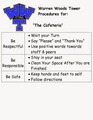
This last school year, a few co-workers and I decided to create a PBIS program for our students. It was pretty successful overall and I wanted to go through some of the different steps on how we developed it. Our program is far from perfect and I will be making updates to this blog as we continue to develop our PBIS program. SurveyThe first thing we did was we created a survey for our students to take. The questions that were included in the survey were if they saw problematic behaviors in class, if they were distracting, how we may be able to fix it and what types of rewards they would like as an incentive for positive behavior. From our results we saw that many students thought that a reward system would be beneficial to our program and they gave us many great ideas for rewards. From the results from our surveys, we were than able to give something concrete to our administrators so they could see that this was a problem in our program and that we needed to address it. We asked for a budget and our administrator asked us to contact our parent's club. We wrote a nice letter to them and than we had our budget. Posters/ExpectationsAfter we had the okay to proceed from our administrator and a budget, we than created posters that defined our expectations in different settings. We decided to create a 3 bees poster, where it defined our expectations in a simple 3 step expectations poster. The 3 expectations he students were expected to follow were to be respectful, be safe and to be responsible. We than defined what that meant in the hallways, in the classroom and in the lunch room. We also created our very own titan tickets that were to be given out to the students for good behavior and they could redeem for rewards.After our posters and tickets were created we had a large congregation to explain the brand new program to our students. We told them about our new expectations and how they could earn rewards. We also gave out raffle prizes during our meeting to get the kids excited, which they were. Here are two examples of the posters we would use to show that we have specific expectations in different settings: RewardsOverall a lot of the reward we used were food. We would go around on Fridays and the students would be called out to buy different items from the cart. We had small candy, larger candy, and little dollar store trinkets. Than every other week we would have a big prize. These prizes would be something like going outside for an hour, playing board games, going to the gym or watching a movie. These rewards would be expensive for the students but quite cost efficient for us. In the future we are planning on adding more "games" to our PBIS program. We have thought of games like the "Price Is Right" or "Family Feud" where students would need a certain amount of tickets to play in the game where they could possibly earn more rewards.As a last reward, we wanted it to be extremely rewarding, so I being the dedicated teacher I am I let the students shave my head. The students loved it and it was a group experience at the end of the year. Using the cart/rolesAnother aspect of using a PBIS cart is that you can make it academic and a job readiness skill. Our students were given specific jobs each week that they were supposed to do to maintain the cart. The jobs included: Make the signs for our cart Stocking the cart Greeters at the door to tell the teacher the cart was thereA ticket counterA cashier who gave out the rewardsThe PBIS program also engaged our students in the curriculum by having them keep as a checking book of their tickets. They would count them every week and write down the amount and the difference from the week before. Quote of the week: I like nonsense, it wakes up the brain cells. Fantasy is a necessary ingredient in living, it's a way of looking at life through the wrong end of a telescope. Which is what I do, and that enables you to laugh at life's realities. -Dr. Seuss Website of the month:If you are like thousands of other teachers out there you may feel that your students are constantly coming to you with a never ending supply of personal issues. Some more serious than others. First take a breath and realize that you are only one person and won't be able to solve every problem that your students have. We do what we can for our students and we try to intervene when we can help but there is always more work to be done. This is why I wanted to share this really helpful site with all of you. It is called 7 cups of tea and it has trained listeners to listen to peoples problems. It will set you up on a message link to talk to someone who is trained to listen to peoples problems and give them advice. If a student needs a little extra guidance and is not in an emergency type of situation than this would be a perfect resource for them to use. Also as a side note, they also are trained to listen to people talk about work stress;)
All Good Education is Special Education
.
Blog
.
<span class='date ' tip=''><i class='icon-time'></i> Jul 20, 2015 11:44am</span>
|
|
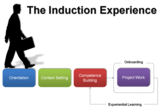
A few months ago, I wrote an article about empowering learners in your induction program. The thoughts I shared at the time were around the various components of an induction program. My points in that post were also around the value of considering a pull based approach for upskilling your new hires. A few days back Michelle Dineen asked a question on the Learning and Skills Group about accelerating learning for new employees and making their transition into their new roles, smoother. So, while I did reply to that post using my own experiences, in today's post I want to share some ideas consolidating some of the interesting work people around the globe are doing to make life easier and more effective for new hires.The way I look at the process of InductionIf you look at the picture above, you'll see that I consider Induction to be a multistep process:Orientation - which covers the standard stuff for people to understand the ecosystem of the company; people, policies, benefits, systems, etc.Context Setting - which helps people understand the culture and identity of the company; history, values, USP, brand image, business model, etc.Competence Building - which helps people pick up the technical skills they need for their jobs.Project Onboarding - which helps people ease into their specific team, department, section or project.As you'll notice, I've experienced learning to be a continuous process, so I believe that people will need an opportunity to keep building their competence as a result of ongoing challenges that they face on their projects. So here's a secret about me -- I don't believe in elearning, social media and the like because they're cool or because I think they can be cheap or maybe reduce the cost of training. All those are fair benefits, but I believe in these modes of learning because they provide continuing opportunities for people to support their own learning. The ideas I showcase today, are therefore a way for you to empower your learners in their performance situations.Idea #1 - Try an Induction PortalIn July last year I was on a webinar by Lars Hyland of Brightwave showcasing the induction portal (or rather the pre-induction portal) for Sky - a major home entertainment provider in the UK. The portal allowed new hires in various roles to start their induction even before joining Sky and they could go through self-paced elearning courses on company values, organisational structure, core product knowledge, health and safety in an environment that was engaging and representative of Sky's brand. There are some obvious advantages of the approach:Your new hires have an opportunity to interact with your brand much earlier than the date of joining. With an intelligent application of design thinking, you could have inductees salivate at the prospect of their first day at work!You can ensure that new hires complete certain elements of training even before they join the company. As a consequence, you can reserve the time you earlier spent in induction, for more valuable activities which perhaps can happen only in a face to face environment.And most importantly, you reduce time to competence in many areas -- people can get up to speed with the requirements of their job much faster than in the case of classroom only education, given the unbridled access to these tools.For the full article, click here. For an example of such a portal take a look at Vestas World.Idea #2 - Provide your New Hires with continuously Reference-able MaterialAt DevLearn 2009, I met Bill Corwin. Let me first tell you that Bill is who you'd call an absolute demo-god! At the Demofest in the conference, Bill was showcasing his work on the company's Employee orientation programme. Armed with tools as humble as a simple video camera, Powerpoint and a bunch of advertisements and videos from marketing, Bill set out to create what seemed like a really interesting way of orienting employees to your organisation. Bill was in a situation where he found new starters drinking from a fire-hose in what used to be a 4-5 hour orientation programme. There was just too much to take in during that short time. So Bill decided to reuse the classroom training assets to create an online orientation programme that employees could take at their own pace, when they need it."And it’s easy for them to revisit things if they want. By design, the training doubles as a reference tool for all 4,500 of our North American employees. In fact, 61% of our trainees use the course after their initial training, to look up information as needed."Bill's work is an example of simplicity in action. You'll notice that none of the materials would have taken too much programming skill to create. On the other hand the skill required was that of resourcefulness and content aggregation. If you take a look at the video above, you'll see that the program is designed with a very personable feel to it. People have videos of real people introducing the topic, the content is simply presented and it's no surprise that the number of learners who are confident they can find the HR info they need has jumped from 59% to 90%. I look at it as an excellent way of making your new hire orientation extremely effective.Read the case study here.Idea #3 - Give them Learning Paths to chart their own Learning JourneyWhile it's legitimate to ask people to learn on their own, it's tough for new hires who don't know what they don't know, to seek how to know what they don't know! Confused? Let me try again. It's fair to ask people to take charge of their own learning. That said, new hires are really keen to do well in their new job and get through their probation with a sense of success. Without a sense of what people expect from them in their jobs and what skills they'll need to meet those expectations, self-learning can become similar to a wild-goose chase. To tackle this, we're using an approach driven by Learning Paths. Very simply, a learning path is nothing but a chronological representation of an individual's learning journey from Novice to Expert in a specific job role. The idea is that you can hand a new hire their learning path at the start of their job in the company. From that point on, the electronic version of the path can be their entry point to seek out learning resources on the LMS, the organisational wiki or social learning platform. So yes, learning remains self-driven but has some tangible outcomes that the new hire can work towards. In coming weeks, I may just publish a case study that will illustrate real life examples of Learning Paths in action.Idea #4 - Provide them a Career CoachWhen you're new to a company and you need guidance on what your career should look like, it's never enough to look at a microsite or a set of documents or even the very engaging elearning module. You need someone to talk to; someone who can guide you through your career moves in the company. In your initial days at the company, this could be the person that makes you feel comfortable in the organisation. As you go on, this person connects you to others in the company, guides you through your learning journey and help you deal with the feedback you're recieving. As time progresses, this person can be your guide and advocate for career movements in the company and can again guide you to find the right people and resources to help your learning in your new role. In general, we call this role the career coach or the personal development coach at ThoughtWorks. We've had this support for quite some time now at the company and most people tend to swear by the support they get from their coaches.Idea #5 - Strengthen your Project Onboarding ProcessesLastly, I come to the oft-neglected aspect of Project Onboarding. We need to remember that people can't know everything before they come onto a team or a project or even a department. There are many things that we learn only when we see them in a performance context. This is where project onboarding is crucial. According to my colleague Pat Kua, "The main goal of a new person is to learn about the larger context. They seek out things they should know about, start to understand the domain specific vocabulary, and begin to work with the team and the work culture. The more complex the project is, and the larger the number of people who join, the longer this phase can last."Pat is someone I consider to be an expert on the topic of onboarding people. As with many other things, his skills are experiential and he knows about this having practiced it on many different teams. Take some time to look through the various onboarding strategies on his blog and his related article on InfoQ. I find all of them to be extremely lightweight, yet practical methods of getting a new person to be comfortable with the context, practices and the working of a project. Yet again, the ideas on my post are limited by my own experiential wisdom (or the lack of it). What ideas are working for you in your own induction context? I'll be hugely obliged if you shared them with me on the comments section of this blogpost. At ThoughtWorks, we're currently working on a new and improved model for induction and your experiences will help us greatly in our own approach. When we do get done, I'll do my best to get a case study out as long as I can get legal approval.(A quick clarification -- the career coach role in ThoughtWorks has till date been known as the sponsor. We're in the process of changing the nomenclature, so that it reflects the true purpose of the role.)© Sumeet Moghe, 2009
Sumeet Moghe
.
Blog
.
<span class='date ' tip=''><i class='icon-time'></i> Jul 20, 2015 11:43am</span>
|
|
Ever since the work of Peter Senge (1990) the concept of the Learning Organization remains the Holy Grail of management in contemporary business. This is merely due to the ever increasing pressure to keep reinventing products & services, business models and operational processes. Critique of Senge’s work was that it was too abstract to implement in organizations with rather vague dimensions as: systems thinking, personal mastery, mental models, shared vision and team learning. Recent research into characteristics of learning organizations made the concept a bit more transparant for management. After "Is Yours a Learning Organization?" by Garvin, Edmondson & Gino now Erwin Danneels published an interesting research paper on (sort of) this subject. In his "Organizational Antecedents of Second-Order Competences" Danneels looks at competences that enable organizations to develop new competences, something that can be viewed as the source for innovation. In fact two types of learning can be distinguished in this respect: 1) learning that is aimed at improving existing product, services and processes, 2) learning that is aimed at producing new knowledge resulting in new product, services and processes. As the driving force for this learning Danneels points to five factors:
Organizational Slack: the room an organization offers its employees for reflection and renewal. Not all worktime employees spend should be absorbed by the day-to-day job. Or as John Cleese put it: "If your want people to be creative, give them time to play!". Companies as Google and 3M are good examples of embedding this in management practice.
Constructive Conflict: openness in the organization to challenge the existing ideas, beliefs and assumptions. Internal discussion (with mutual respect) is stimulated to foster innovation. This is of key importance for the double loop learning Argyris & Schön published about in 1978.
Willingness to Cannibalize: active support for innovation projects that potentially take away sales from existing products or services. Don’t neglect technological innovations because they can cannibalize your existing business, but embrace them and embed them into the organizations competences.
Environmental Scanning: stimulation of active environmental scanning by employees is crucial. Make them establish networks beyond the borders of the organization via professional associations, networks, conferences, trade shows and researchers. This is crucial for picking up new knowledge and competence in the ’outside’ world.
Tolerance for failure: failure should be seen as a potential source of future success. Mistakes should be seen as opportunities to learn. With this mindset employees sense the room for entrepreneurship that will enable the development of new competences.
An interesting article that is enhancing the growing body of research into learning organizations from the perspective of strategic innovation and the so-called second-order competences.
Daan Assen
.
Blog
.
<span class='date ' tip=''><i class='icon-time'></i> Jul 20, 2015 11:43am</span>
|
|
Survey MonkeyWhile I'm enjoying my very humid summer break I'm also reflecting on this great year of teaching for myself. One great tool that I used throughout the year was survey monkey! I found a variety of different uses for it.Survey monkey let's you give anonymous surveys to others and than gather their feedback in a nice organized fashion. So if you are a data tracking nerd like myself, look no further!I used it on a regular basis as an exit slip for different lessons. Although you do not get to see who is struggling with what it still is a nice indicator of how your class is doing overall. The reason I chose this tool over other formative assessment tools such as exittix or Socratic is because it was easier to build and easier for the students to access the site as well.Disability Support GroupsAnother valuable way to use the survey monkey website is to show data to your colleagues and administrators. At my school this year we found that many of our students felt bad or mistreated because they had a disability. Now this is in a high school setting where many students, whether or not if they have a disability, have self-esteem issues. My social worker and speech therapist and I thought that we should look into creating a support group for the students. This would be a safe environment where the students can discuss how they feel and specifically about how they deal with living with a disability. To be able to get the time and budget to create a support group, we first needed to show data the supported our claim. I than had all of the students in the center-based program that I work in take a survey about how they feel about having a disability and if they would find a support group helpful, in an anonymous setting. After they took the surveys, my PLC group and I reviewed the data and did see that there was a need that was not being addressed. I than took it to my administrator and he approved of us creating a support group for the students. If I did not use something like survey monkey to support my claim, it could have been much harder for me to get the ball rolling on such a project.Our plans after this are to have the students help facilitate the support group and guide the conversations. Myself or the social worker will attend each meeting and like other support groups they will be a safe place where people are asked not to share others personal stories. We are hoping to get guest speakers to come and speak to our students as well.The support group will be starting up this fall hopefully, so I will definitely have another blog about it once it is up ad running!Quote of the day: Good teaching is one-fourth preparation and three-fourths theatre.-Gail Goodwin
All Good Education is Special Education
.
Blog
.
<span class='date ' tip=''><i class='icon-time'></i> Jul 20, 2015 11:42am</span>
|






.jpg?1506532497)

