Blogs
|
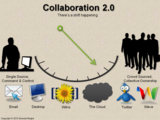
There's a shift happening and its all around us. We may not be a part of that shift yet, but I'm sure each one of us will soon be. We might want to think that technology is changing the way we collaborate and yes that's true! But there's a lot changing in the way we think as well. Managers are starting to think differently, staff definitely has a mind of their own and are more empowered each day and the focus on collaboration is much more than we saw even 3-4 years back. Over the last week, I've been thinking about the nature of this shift and I've tried to distill down this change into four main areas. Let's see how we're changing!
From Single Source to Crowd SourcedThere was a time when we believed in single sources of good information. Popular authors, popular textbooks, popular magazines, popular news channels, popular radio stations, all led to the birth of Mass media. People believed these authentic sources of information because the people that created information were hugely qualified and apparently quite talented in their field. There was no arguing with that, was there? Organisations were quick to follow this route and then came the age of file repositories and Quality Management System (QMSs). In fact the best people in your organisation would sit all day and do nothing but document 'best practices'. Depending on the policy of your firm, either your manager would have access to this information or you'd have restricted access to only the QMS of your department. And I remember from my experience in my first few jobs, that I wasn't even allowed to share a useful document with a colleague in another department. Apparently that was for 'information security'! Even when it came to project documents, it was either the tech-lead, business analyst or the project manager who created these and the rest of us just looked at them in amazement and were passive users of these documents. This was truly the age of Nupedia style documentation, characterised by control, bureaucracy and long drawn approval processes.
Things have changed significantly today. Most firms worth their name have some sort of collaborative document management system in place. The death of Nupedia and the subsequent success of Wikipedia has led to the large-scale adoption of wikis in the corporate world. Most importantly, organisations have realised that many heads are better than one. Crowdsourcing is turning out to be new corporate buzzword, and as Andrew McAfee might say, mobs have started to rule! The clamour for social and informal learning is getting louder each day if you believe the Internet Time Group. What you'll notice though is that in teams, its not just senior people that are creating valuable information -- everyone is. Teams are quick to adopt tools like Media Wiki or Google Sites to create collaborative workspaces. The responsibility to create knowledge doesn't just rest with managers now -- everyone's responsible. Which brings me to my next point.
From Command & Control to Collective OwnershipManagers are still the bosses and there's no denying that. But with the advent of collaborative, team-based approaches like extreme programming and agile, the definition of leadership is fast changing. Command and control still exists in the workplace but we're doing more to encourage collective ownership. Take the classic case of Microsoft Project and Microsoft Excel based project plans. The only person who at any given point has any idea about where a project is the guy looking at the project plan. Let's flip this over now and bring it over to the collaborative project environment. In this place the team has a card wall instead of a project plan on the manager's desktop. The tasks are represented on swimlanes with each swimlane representing the status of the tasks in it (eg: New, In Analysis, Ready for Development, etc). Team members can pick up cards from the wall an move them to completion across its swimlanes. If there's a bottleneck, the team see's it and rectifies it. Everyone takes responsibility for doing the best they can and the project manager doesn't have to be a supervisor assigning work. At any point, everyone in the team knows what's going on with the project. Its collective ownership in practice.
Modern project management tools are starting to embody these very characteristics. I work for ThoughtWorks and there's no secret that I'm a big Mingle evangelist. But trust me, Mingle is definitely one of the best project management tools that you can lay your hands on. It uses the card wall metaphor for the team to have visibility into whats going on. Its web-based, so all you need is a browser. It has various reporting and visualisation modes for your project data and packs in its own wiki for your team to collaboratively create documentation. I strongly recommend that you download it and take it for a spin. Mingle's free for a year for a team of upto five users, so its really great to try out if you have a small team.
From Inward Looking to Outward LookingIn my first job, I was not allowed to share documents from my department with people in another department. To do so would be an information security violation and consequently a firing offence. For any problem I faced, I could only look at my team because others had absolutely no idea of what kind of work I was doing. In a similar way, people in other teams had no way of using my help, because just like I had no idea of what they were doing, they didn't know what I was good at.
Things have definitely changed. We're more keen on breaking down silos and departmental boundaries are become more and more porous each day. We don't have to be only inward facing to find our solutions -- we can ask our friends in other departments, we can find people with similar interests who aren't in our companies, we can look outwards to our Linkedin contents and the blogosphere to find solutions. The possibilities are limitless. As we break down walled gardens in the enterprise, knowledge sharing improves, the cream rises to the top and everyone can benefit from everyone's thinking. Wikis and cloud computing using platforms like Google Apps are making this almost an out of box exercise.
From Structured to FreeformEmail Is Dead... Long Live Email!View more presentations from Wrike com.One of the enabling forces behind all of this perceptional and behavioural change is obviously technology and I can't help but remark how the preference for platforms is changing. We loved email and we still do, but there's a huge shift towards more free form and frictionless tools. So while email was the cool thing a few decades back, we've moved to wikis and blogs, then the cloud and now Twitter and Google Wave. To supplement good old email, Twitter and other microblogging platforms support status updates while Wave supports in team collaboration, planning and discussion. The phenomenon of emergence allows us to still have structure only we don't need to develop hierarchies and complex taxonomies -- the structure appears over time, based on the patterns of usage. The larger the group, the quicker this pattern emerges; the smaller the group, the more people need to have a reason to participate. Technology is not just cooler, its more representative of the way we think and participate.As you can see, the shift is real -- its happening all around us. All we need to do is give in to this change and evolve. Its an exciting time already and the future promises more - dont you think? Let me know by adding your thoughts in the comments section.
If you liked this post, you may like my other posts on the topic of Enterprise 2.0.
Also next week, I'm speaking at the Agile Bengaluru 2010 conference on the topic of "Facilitating Dialogue in situations of Conflict". It promises to be a great event, so please come over and interact with all of Bangalore's Agilist crowd. And don't forget to swing by and say hi to me and other ThoughtWorkers. I'd love to see you at my workshop as well.© Sumeet Moghe, 2009
Sumeet Moghe
.
Blog
.
<span class='date ' tip=''><i class='icon-time'></i> Jul 20, 2015 11:49am</span>
|
|
This week I formally kicked off for my ultimate corporate learning experience: the start of my own company. This milestone is set with the registration at the Chamber of Commerce today. In September 2007 we (me and two partners) will be in business with Atrivision. We will focus on the link between organisation, learning and technology delivering practical solutions for organisation. I will update you on the exact details of this new venture when we are in business in september. For this post I want to focus on the learning aspect of this excercise.
What struck me is the learning experience you go through setting up a company. And what surprised me (or maybe not) is how little of this is covered in formal education. I finalised my MBA just a year ago, but I must say you face a lot of new challenges they don’t cover in a business administration study. And, you learn to cope with them very rapidly in action. I ‘developed’ my own blended learning program on the fly with some formal workshops at the Chamber of Commerce. These covered issues like ‘How to set-up your financial administration’ and ‘Formulating general terms & conditions’. I added a lot of semi-formal learning reading books for specific knowledge and entrepreneurial inspiration. These ranged from a review of the Entrepreneurship module from my MBA (I faced a transfer issue regarding this knowledge following the course in 2006) via Million Dollar Consultancy to Purple Cow and ZAG. The Dutch book "En nu laat ik mijn baard staan" ("And now I am going to grow a beard") also served as a source of inspiration. Besides this semi-formal part I found the informal part very helpful, consisting of several meetings with experts in accounting, tax, contracts and (venture) capital. Last but not least we are part of the TOP(Temporary Entrepreneurial Positions) programme of the University of Twente. This enables us to be part of a network of Knowledge Intensive Entrepreneurs. And, this also gives us the opportunity to work with a scientific and business mentor. For the scientific part Prof.dr. Joseph Kessels will be our mentor and we already had an inspiring meeting with him. His book on HRD in the Knowledge Economy will serve as a guide for defining the value proposition of Atrivision. In addition to all this we also will have our offices at the Knowledge Park just opposite to the Campus. I am therefore thrilled by the idea that the learning will continue at full throttle in the upcoming months. We have established a learning ecology or social network that will be a sound basis for informal learning.
I am confident that we are going to be successful with our new company. But if not, then at least we had a wonderful learning experience that will stay with us for life. For everyone looking for a course or study to follow, I can recommend setting up your own company. Or you can join Atrivision, since we will be an entrepreneurial network organisation willing to share learning with you!
Daan Assen
.
Blog
.
<span class='date ' tip=''><i class='icon-time'></i> Jul 20, 2015 11:49am</span>
|
|
Hi all! Obviously as a teacher I have nothing better to do than make a blog about education on a Friday night.When we are working in a day and age of technology and in the information era, we need to constantly keep ourselves updated on new and innovative technology uses. This is not only to keep our student's attention and give them a fun medium to access the curriculum. We also want our students to learn how to use different tools online and how to find valuable resources using the internet. Here are 6 different websites that may keep your students on the edge of their seats as well as help teach them the skills and strategies they will need to lead a productive life!1. Our first site that teachers should be using is Kids Blog. This is a great site to use for your kids to communicate with one another and/or different classes through blogging. You have complete control over the blog and it is totally private. For our students who are living in a more and more technological world, this is a great tool for them to learn how to communicate with one another using the web. Sadly, many people with disabilities have very limited social lives once they have graduated school. I believe that it is very important for these students to know how to communicate via the web. Just like myself, a student could create a blog on whatever interests them and find people with similar interest through blogging or other social medias. The way I have used this in my classes is at first I lead the student's blogging with articles I have found. Next they are to comment on one another's blogs. Then as the students become more and more familiar with the site, I have them start blogging and commenting about their goals, what they have learned in our class, how they will apply learning about using a blog, and discussing the day's objectives. Planning:2. If your like me and you are a complete scatter brain at times, Planboard can do you wonders with your organization of your class schedule and lessons. Planboard is an easy to use website that not only gives you a great formula to create your lessons but gives you a great scheduler as well. This website has helped me to create a more structured environment in my class by helping me structure my lesson planning. Formative Assessment:3. I have two excellent websites for formative assessment. The first is the one that I use of a near to daily basis. This website is called Exitticket. With this site you can create short or long quizzes that the students can take on their phones or on a computer very quickly. Once they take the quiz they will instantly go to your computer and you can see the results of your class as well as the result for an individual student. This is does a great job telling you if you need to reteach a lesson and it can provide very valuable data that is stored on the site. This site gives you a calender to plan out what mini quizzes you will give ahead of time. Exitticket is a great way to start and/or end the class period. 4. The next website I'm going to share with you is called Socrative. Although I am not as familiar with this formative assessment website, I have heard numerous wonderful things about it. This site can also be accessed by students using their phones and or a regular computer and it runs quite similarly to Exitticket. So which ever format suits you best you should use right away! Curriculum: 5. Now I will get to the websites that can really help you with your curriculum and instruction! I know being in a self-contained special education classroom, there are many different levels that the students are at depending on the subject. It can be extremely hard to teach to all of these levels at once. The website Khans Academy is a brilliant tool I use in my math class on an almost daily basis (although it covers Language Arts, History, Science and Art as well). This is a completely free website that helps students find their level of need and it guides them through videos that were created by a former Harvard graduate. Some of these videos also feature celebrities like Lebron James to help peak the student's interest. The website helps student find goals that are suitable for them and it allows the student to earn awards once they have met their goals. The website gives the student a chance to practice their skills and receive help through hints and videos.I have used this site as a station for my students during centers and as an extension for my kids who need to be extra challenging material. This site not only helps me differentiate for my class but it also takes great data on a vast amount of subjects and well defined objectives.6. The final site that can be very useful for your classroom is Terraclues.com. This site may not look like much once you visit the site but it is a great tool to use for creating scavenger hunts and for allowing your students to create their very own scavenger hunts and play each others. You can create your own scavenger hunts by simply giving clues to the students about a location and than putting a marker on a Google map. The students complete the scavenger hunt by using Google Map and the clues you gave them to find the locations. Once they find a location you can write a quick blurb about the location and give a website that has more information on the location. Quote of the Day:"The mediocre teacher tells. The good teacher explains. The superior teacher demonstrates. The great teacher inspires." -William Ward
All Good Education is Special Education
.
Blog
.
<span class='date ' tip=''><i class='icon-time'></i> Jul 20, 2015 11:49am</span>
|
|
At ThoughtWorks we're looking for versatile learning professionals in India with a keen interest and experience in social media. This role will be based out of either Bangalore or Pune. This depends on the current location of the applicant and in case of really exceptional candidates we can consider a telecommuting option. While we're still trying to define the boundaries of this role, here are some of the key expectations and skills required:Key ResponsibilitiesWork closely with Instructional Designers and facilitators and find creative uses of social media to enhance our existing learning programs.Design new programs with social media as the primary mode of deliveryEvangelise the use of social media as a mode of learning in the organisationResearch latest patterns in social learning and keep ThoughtWorks on the cutting edge of learning technology adoptionWork with existing community leads to ensure that these groups support continuous learningWork with Marketing and KM to leverage existing resources for learningWork with lead Instructional Designer to develop the most effective learning strategy for a performance problemKey personality attributesA strong background in eLearning/Instructional Designer/Facilitation/CoachingPassionate about technologyExceptional communication Skills (Oral, Written & Presentation)Good understanding of emerging knowledge management principles and paradigmsGood understanding of the implications of Web 2.0 & Enterprise 2.0Excellent networking and relationship-building skillsGood research skillsAbility to collect and assimilate ideas and content from multiple sources internal and externalDeeply self motivated and independentComfortable managing multiple high-priority knowledge requests simultaneouslyExcellent organizational skills and attention to detailsExperience ProfileOverall experience of atleast 4-5 years2+ years of experience in Social Learning/Collaboration/Web 2.0/Enterprise 2.0 or allied areasEmail me if you are interested : smoghe at thoughtworks.com© Sumeet Moghe, 2009
Sumeet Moghe
.
Blog
.
<span class='date ' tip=''><i class='icon-time'></i> Jul 20, 2015 11:49am</span>
|
|
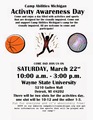
If your not doing anything on Saturday, March 22nd you should come down to Wayne State University for a fun day that is full of activities that are specially designed for the people with Visual Impairments. The Non-Profit I'm with, Camp Abilities Michigan, is putting it on for a disability awareness day! Anyone can come and participate, volunteer or observe. All you need to do is register online at Activity Day Sign Up. From our Activity Day, we hope that you walk away with an experience that will change your perspective on people with disabilities forever. Through these activities you will start to understand the impressive amount of concentration and hard work it takes to engage in these sports. Hopefully this will be an insightful day for everyone and you will gain a new sense of respect for people with disabilities.We will start by explaining all the rules and passing out eye shade masks to the participants. We will be playing 2 games designed for the visually impaired and we will also have a few extra fun activities. Here is a description of the two sports we will be playing.Goal Ball: Goal Ball is a game currently being played at the Paraylmpics. Every player in these games wears a eye shade mask, to prevent any advantages. The objective of the game is to roll a ball, which contains bells in it, past the opponents goal line. To stop the ball the defense must try to stop the ball using their entire bodies. For this game the player needs to utilize their sense of hearing to block the ball as well as communicate with their team. A lot of strategy can develop if you are communicating well with your team. This is personally my favorite of any Paraylmpic sport I've played before. Beep Baseball/Kickball:Beep Baseball and Beep Kickball are played very similarly. Like Goal Ball, all the players must wear a eye shade mask. The game requires a beeping ball, two beeping bases, and outfield place mats. When the batter hits the beeping ball, he runs to the base that makes a loud buzzing noise. While this is going on, a sighted person calls out different numbers for the outfield to go and try to find the ball, only one person is called from the outfield at a time for safety reasons. If the outfielder finds the ball before the batter touches the base, than the batter is out! This is another game that focuses on one's sense of listening, but with this game there are other events taking place and the players must be able to differentiate between sounds and run towards them. Our main objective for our Association is to promote physical activity and social interactions for people with Visual Impairments. Please come out and if you have any questions just contact me at: scmcnamara23@campabilitiesmichigan.org.Quote of the Day:"If I regarded my life from the point of view of the pessimist, I should be undone. I should seek in vain for the light that does not visit my eyes and the music that does not ring in my ears. I should beg night and day and never be satisfied. I should sit apart in awful solitude, a prey to fear and despair. But since I consider it a duty to myself and to others to be happy, I escape a misery worse than any physical deprivation." - Helen Keller
All Good Education is Special Education
.
Blog
.
<span class='date ' tip=''><i class='icon-time'></i> Jul 20, 2015 11:49am</span>
|
|
It has been quiet on my weblog for quite some time due to illness. Lying in bed gives you some time for reflection, but I’d rather be up on my feet. Especially during the start-up of a new business. At atrivision my partners have not been sitting still. We were present at the Performa 2007 with a booth and two seminars. Also we have been able to launch our weblog (Dutch) at www.atrivision.com/weblog. Now I am back in the saddle I hope to be able to contribute to both this and the atrivision blog and be able to do some work in the meantime.
Daan Assen
.
Blog
.
<span class='date ' tip=''><i class='icon-time'></i> Jul 20, 2015 11:48am</span>
|
|
When: Wed, Jan 20, 11:00 am GMT/ 4:30 pm ISTHere's an invitation for an interactive webinar on "Succeeding with Globally Distributed Agile" with Sameer Deans, Delivery Manager, ThoughtWorks. This talk will shed light on choosing Agile practices for your software development project and on what happens when the offshore value proposition comes along with the fact that the delivery team is spread over several locations. What you will learnImportance of basic Agile methodsHow to structure a team in a distributed Agiile environmentPractices to overcome challenges in communication and visibilitySpeaker ProfileSameer Deans is a Business Analyst, Project and Delivery Manager at ThoughtWorks with ten years’ industry experience. He is experienced in Business Process Design and has domain knowledge in Banking and Financial Services, Requirements Analysis and Agile Development Methodologies to client engagements. He is responsible for the initiation and growth of several communication channels for distributed development.Click here to register.© Sumeet Moghe, 2009
Sumeet Moghe
.
Blog
.
<span class='date ' tip=''><i class='icon-time'></i> Jul 20, 2015 11:48am</span>
|
|
This post will be done a little differently than some of the others blogs I have posted. This blog is my personal opinion about why Adapted Physical Education is a mostly unknown field within education. As a philosophy of mine, I like to brainstorm solutions to problems rather than just point out problems themselves. So with this blog, I implore you to leave some comments on how we can try to fix these problems and make adapted physical education a more well known field.Here are a few reasons that I believe Adapted Physical Education is not a common discussed field in education.The Benefits Are Not Well Known To Public:One of the major factors with Adapted Physical Education's obscurity is that the benefits of APE are not well known to the public. Physical Education teaches to three learning domains: cognitive, affective and pychomotor. It is well documented that from APE, students with disabilities can gain greatly in motor movement, cognitive prowess and social skills. Children with special needs can gain major self-esteem/self-image benefits from participating successfully in group activities and feeling that they are contributing to a team. APE can provide a hands-on approach that can lead to cognitive improvements which teach to a different learning style than a traditional classroom setting. The most obvious of the benefits from APE are the physical benefits. Students with disabilities need to learn fundamental motor skills and physical fitness to help them lead healthier life styles as well as have more opportunities to engage in recreational activities. If these benefits were more effectively publicized, I believe that would be a tremendous opportunity for the APE field. General Physical Education Is Being Cut: Picture is from sparkpe.orgThe picture above shows the cuts that have been made to public schools over the last few years and how this has affected P.E. directly. As you can see, these are pretty substantial and it may prompt some to start thinking why APE is necessary if we do not even have general physical education. Although I strongly advocate that you write your local representatives to try and deter these cuts, one must keep in mind that Adapted Physical Education is a right that many students under IDEA are entitled too (this is explained more in depth in a past blog). With these cuts in physical education, it seems that the government is putting health and fitness to the wayside, although we have an obesity epidemic in America. With these cuts, the government is sending a message that PE is not as important as other academics. I believe our youth need PE now more than ever, and our children with disabilities need PE coupled with direct and individualized instruction to improve their quality of life. Lack of communication within the digital age:I have surfed the internet for hours trying to find different Adapted Physical Education blogs and resources. The truth is, it is a small field and the resources I have found are limited. I believe that as a field, we need to use digital media (such as Twitter, Facebook, and blogs) more effectively to try and convey our message about the importance of APE. Although I have been to many terrific conferences and have met a multitude of passionate APE teachers and gained a lot of ideas from them, we need more resources that are available for our practitioners. We are currently living in the Information Age, where the internet can connect us with one another in mere milliseconds. As a field, I believe we need to be using this technology more effectively to communicate with one another and with the public. Using blogs/social media to connect to others could greatly enhance instruction and awareness in the APE field.With that being said, here is a list of great resources that can be found on the internet that pertain to APE:This is a resource to use to find out what APE is and how to become APE certified.The Sport and Development website has a nice section on adapted sports and it describes the benefits of sports and physical activity for people with disabilities. PE Central is a well-known website that has activities and lessons for PE teachers. The site also includes a section on APE that includes a decent amount of resources. A blog from the Friendship Circle that discusses how to best include students with disabilities in the gym setting. There are also a few good examples of what a Adapted Physical Education setting should look like. Here is group of APE teachers who make videos on how to modify cues and equipment from California. Laws and regulations not being properly enforced:In my opinion, the greatest reason why Adapted Physical Education continues to be an after thought in many districts is because states and local districts are not properly enforcing schools to comply with laws and regulations. Whilestates and districts are neglecting APE, it is our students that are suffering. Trying to bring awareness of the importance of APE to our local and state representatives is a major and necessary priority. Now the question is what is the best way to go about this?After Thoughts:As an educator, I want my field to expand and benefit more children. I believe we can accomplish this through having an open dialogue about how to best solve this crisis of obscurity. I would love to get some feedback on this blog and start an online dialog about how to find solutions to this ongoing problem.Quote of the day:Ability is what you're capable of doing. Motivation determines what you do. Attitude determines how well you do it. -Lou Holtz
All Good Education is Special Education
.
Blog
.
<span class='date ' tip=''><i class='icon-time'></i> Jul 20, 2015 11:48am</span>
|
|
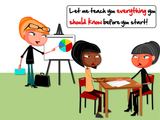
Last month when I was in Sri Lanka, I tried a local dish called Kottu. Kottu's a simple, yet complex street side dish and it contains roti bread, carrots, beans, onions, other vegetables, eggs, meats, coconut oil; well almost everything you can imagine, thrown onto a pan and tossed together. Hold on - did I just say 'everything'? That's a bit of a magic word for anyone in the learning world. "Teach them everything that they need to know." OR"Let's ensure we cover everything!" OR"In this course we'll teach you everything you need to get started." I'm sure most of us have heard each of those statements and more and perhaps said some of those things ourselves in our career. The funny thing is, that at the back of our minds, all of us realise there's no way we can teach people 'everything' they need to know. That said, with stakeholders breathing down our necks and the demands of each role at the back of our minds, it's tough to figure how we can let people get off training without teaching them 'everything' they should know. In recent days, I've been using Learning Paths to determine the right learning strategy to develop capabilities for specific job roles. In fact we've tried this approach with some success in some of our strategic consulting initiatives as well and I'd like to share this really simple technique with you. Read on to learn more...Introducing Learning PathsA learning path is nothing but a chronological representation of an individual's learning journey from Novice to Expert in a specific job role. It can look as complex as a multipage document, but for me it looks like a variant of the picture above. There are a few key elements to a Learning Path:Job Expectations & Recommended ReadingEvery job has some expectations against it. As a L&D professional, not only do I like to know the expectations for the role I'm supporting, but I also think that the learner deserves to know without ambiguity what the role expects of her. That way there's a tangible set of goals to work against. A lot of roles have recommended texts to support people at all levels. Making a list of the most important books and resources for the job is always useful not just for new starters, but also for us as learning professionals to design the right learning experience. Foundation Skills Foundation skills are the absolute bare minimum skills to start a job. As simple as that. An amateur journalist will not start editing articles on her first day. A novice salesman isn't going to generate regional sales reports. The key to determining foundation skills is to ask yourself (or the SME), "What are the things the novice performer will absolutely not do in their first month on the job?"Intermediate SkillsIntermediate skills are usually tricky to figure out. The best I can define them is by saying that these are skills people need after having spent some time on the job and after having gained sufficient mastery with their foundation skills. For example, I can ask a novice analyst to elicit and articulate customer requirements as a foundation skill, but it make take the novice some time before she can lead sessions with the team to estimate these requirements or to lead showcases with the customer or to run planning meetings. These will be intermediate skills for the individual. Advanced SkillsTo pick up advanced skills the learner needs to work with other experienced people. No amount of teaching can give people confidence with advanced skills. It takes time, support and on-the-job support. Coming back to the example of the journalist, if she is expected to take over a complete beat with no experience of doing so in the past, she'll most probably need some apprenticeship before she is ready to go on her own.Acquired SkillsLastly, there are acquired skills. These skills come with experience alone. Only when people try, fail, try again and get their hands dirty with a number of things and start building appreciation for a their surrounding ecosystem do they pick up these skills. As an example, a business analyst will gain the skill of facilitating workshops and managing requirements pipelines only over a period of time and with experience.Adopt the right Learning StrategyThis bit of simple, upfront analysis helps us in a few ways:Individuals know where they stand in their learning journey at the company. Instructional Designers know what the pre-requisites and assumptions for designing learning for any stage are. This way we can avoid throwing the kitchen sink at any module we create (elearning or not).Stakeholders know exactly what kind of support to invest in, to help people grow in expertiseOnce we've drawn up a Learning Path, devising our Learning Strategy becomes all that much simpler:We know which skills we can influence with teaching and traditional elearning -- foundation skills and an initiation to intermediate skills lend themselves quite well to these modes.We know that practicing intermediate skills and learning advanced skills needs mentorship and coaching.We know that it takes not just on the job support, but perhaps also interaction with other practitioners and a robust knowledge sharing strategy in the organisation to develop acquired skills. Most importantly this takes patience, because people need experience to develop these skills. Informal Learning, can perhaps shorten the time to mastery, though!I'm still trying to develop my thinking around Learning Paths and your feedback will help me in finding the most effective way to apply this technique. Please share your thoughts by commenting liberally in the comments section.If you liked this article, you're likely to enjoy my other posts on similar topics:The Agile Elearning Design Manual - Think Small (Iterations, Action Maps, Storyboards, and Mini-Modules)Using the Dreyfus Model to engage people in your Online Learning programPut your learners on a diet - consider a pull based approachEmpowering learners in an Induction Program© Sumeet Moghe, 2009
Sumeet Moghe
.
Blog
.
<span class='date ' tip=''><i class='icon-time'></i> Jul 20, 2015 11:48am</span>
|
|
If your a parent of a child with Autism than you probably have looked far and wide for programs that were designed around your child's special needs. Well look no further than Athletes with Autism(AWA)! This is a fantastic program that has been servicing children with Autism in the Detroit area for over seven years. Oh and did I mention that it is absolutely free!?!I have been associated with AWA for over two years now. With these experiences, let me explain to you how this program is completely unique and how your child could benefit from joining the program.What is Athletes with Autism?Athletes with Autism is a Detroit-based sports program that is trying to promote fitness, motor skills, socialization and independence in children with Autism. Athletes with Autism provides 3 different recreational sessions per year. Two sports/skill related sessions in the Fall and Winter and a swimming session in the Spring. All of these sessions take place at Wayne State University. Meet the VolunteersThe athletes are put into small groups of 3-5 with a 1:1 ratio of volunteers to athletes. Athletes are able to work in a one-to-one environment with a volunteer and build a strong bond with that person. A majority of the volunteers at Athletes with Autism are Physical Education college students or Speech Pathologist graduate students. This makes for a great learning environment for the athlete. Not only is the athlete receiving invaluable motor skills training, but they are working in a one-on-one setting with future professionals who are building upon the athlete's speech abilities. The volunteers for this program make for an unique group of future educators that can deliver a wide variety of important skills that a child with Autism would benefit from for a lifetime.Incorporation of TechnologyOne of the most amazing aspects of the program is the AWA app that they use with the children. The AWA app contains social stories, visual schedule, a timer, visual/video representations of motor skills, and a reward system. The social stories/visual schedules are used throughout the sessions and are specially created to help relieve anxiety and tell the student what is going to happen next.The timer is used for students that may need a visual to help reduce anxiety. It can be used before a transition or to track how long a student can have a break/reward.The visual/video representations of motor skills are used to show a visually stimulating video on how to correctly carry out a motor skill.The reward system will shows the students a visual representation of how many tasks they must perform before they receive a reward.Structure of the SessionsEvery session starts as a large group coming together and reading a welcome/warm-up activity social story on a projector, then the group engages in a warm-up activity. The groups then go into their separate smaller groups. The speech pathologist in each group conducts a skills practice social story on the iPad. The children engage in the skills practice which can range from practicing one's basketball dribbling to learning the backstroke. After the timer goes off, athletes come back together in their small groups and read a game social story on the iPad. The athletes will then play in a game that was specially designed for their unique needs. After they have finished the game, they will go back into the large group setting and read a good bye social story as a group. Personal Experience:From my own experiences at AWA, I found that it was a phenomenal experience. I gained a better insight for whom I was as an educator and as a person. It was one of my first experiences of working with children with disabilities in a physical education setting. I quickly found out that physical education for children with disabilities can be extremely beneficial for the child. Throughout each 8 week session (Spring is 6 weeks) I saw the children grow leaps and bounds from where they were when I first started working with them. They would interact more with their environments and with their peers. The children would also gain valuable motor/sports skills that they could use outside of the program to interact appropriately with their peers.In graduate school, I conducted a study that looked for a link between the AWA program and social growth. We found that from the start to the end of a single session, athletes were tripling the amount of times they were initiating and reciprocating peer/coach interactions. I would recommend this program to any parent who has a child with Autism and wants to see them develop more age-appropriate social/motor skills. With these skills that this program helps to ingrain, the child will become more independent and live a more fulfilling life. Quote of the Day:"If I could snap my fingers and be non-autistic, I would not. Autism is part of what I am." ― Temple Grandin
All Good Education is Special Education
.
Blog
.
<span class='date ' tip=''><i class='icon-time'></i> Jul 20, 2015 11:48am</span>
|