Blogs
|
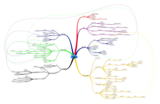
I can't attempt to summarise Eric's keynote, also because I feel woefully inadequate to be able to tie together the thousand pieces of wisdom and interconnections that he through out in the speech. My slow brain's going to take some time to process this information. But anyways, I did a mindmap while Eric was presenting, and I'd like to share it with you. Here you go! Click on the mindmap for a full-size version, because I imagine it'll be impossible to read at this size. Again, its a very personal note-taking approach, so I don't imagine it'll be most intuitive.© Sumeet Moghe, 2009
Sumeet Moghe
.
Blog
.
<span class='date ' tip=''><i class='icon-time'></i> Jul 20, 2015 12:03pm</span>
|
|
New study provides insights into how parents pass anxiety and depression onto their children.
» Continue reading: How Children Inherit Anxiety And Depression From Their Parents
» Read HealthiestBlog.com, the new site from PsyBlog's author
Related articles:
How Parents Turn Their Children Into Narcissists
Academic Achievement: You Inherit More Than Just Intelligence From Your Parents
The Number of Children That Makes Parents Happiest
How To Help Children Control Their Emotions, Reduce Anxiety and Boost Attention
A Blood Test for Depression
Dr. Jeremy Dean
.
Blog
.
<span class='date ' tip=''><i class='icon-time'></i> Jul 20, 2015 12:03pm</span>
|
|
This afternoon I sat through Adam Mash's (? I think that's his name) session on Google Wave. Being a Google Wave tester, nothing that he said was new for me except he highlighted a few things worth reiterating.So what should you know about Google WaveThere are some really interesting uses for Google Wave:Collaborative creation of documents, reports, observations, requestsGroup/ Afilliation rosters; Agenda, meeting minutes, to-do list combos; Collaborative proposal Writing and approval; Collective visioning and brainstorming; Getting to know you style stuff Fun, special interest conversationsA few things that people may not know about WaveThe complete wave guide -- all there is to know about Wave You can create and access public waves. You can explictly choose to follow public waves. Wave is an open protocol, so it is possible to create custom clients to interact with Wave. Just like every other Google Application, Wave is extensible and there are already quite a few extensions in play for Google Wave, that will make it a fully featured collaboration platform whenever it is out. It is not possible to remove people from a wave, yet. Support for mailing lists and groups isn't great yet. Actually its almost non-existent. There's a twitter feed for google wave at #googlewave© Sumeet Moghe, 2009
Sumeet Moghe
.
Blog
.
<span class='date ' tip=''><i class='icon-time'></i> Jul 20, 2015 12:01pm</span>
|
|
How to make exercise a habit that's hard to break.
» Continue reading: The Psychological Secret to Great Exercise Habits
» Read HealthiestBlog.com, the new site from PsyBlog's author
Related articles:
Really Easy New Method For Changing Habits
5 Habits Proven to Reduce Risk of Alzheimer’s and Dementia
Habits and The Unexpected Benefits of Weak Self-Control
10 Simple Habits Proven to Make You Happier
Exercise Can Improve Long-Term Memory
Dr. Jeremy Dean
.
Blog
.
<span class='date ' tip=''><i class='icon-time'></i> Jul 20, 2015 12:01pm</span>
|
|
The last session I attended today was by Julia Bulkowski and Erika Grouell from Google about how they're leveraging Web 2.0 technologies to help drive performance in their company. Again, nothing new given that Google's products are all free for public use. This said, it was a great reinforcement of how much you can do with just one integrated (single sign-on suite).Key TakeawaysCulture is key to adoption of Web 2.0 technologies.Google and ThoughtWorks have very unique cultures that are geared towards rapid technology adoption, minimal access barriers and hierarchy and a lot of companies still need to figure out the best structure to make Enterprise 2.0 adoption succeed. A clever use of blogs and discussion forums: Practicing and reviewing transactional skills like writing and email communication. A clever use of Google Code Labs: Leverage fellow software developers to learn a programming language. Use Google Code labs to provide code snippets to learn practical styles and patterns of programming. Very wiki like, especially with revision history and crowdsourced descriptions. This makes experts visible and lets new developers ramp-up quicker. A clever way of sharing instructional resources: Create a Google Wave and embed it into your class homepage. People can discuss the problem amongst themselves, but at the same time make a private submission to the instructor if this was an assignment, test, etc. A clever use of online photo and video sharing: Sharing howto's, tips, screencasts, tutorials. Take a look at YouTube's Google Apps Channel. As a social tool as well, users can create their own tutorials, etc and they could do videos of themselves doing presentations and get feedback from each other. Clever way of preparing for a session, panel discussion, conference talk: Use Google Moderator so participants can brainstorm questions for the session. Helps you prepare as a speaker as well. Providing Web 2.0 services in the enterprise is a way of reducing your risk. If you don't, people will in any case use these tools outside and then you don't have any control and have in a way increased your own risk!© Sumeet Moghe, 2009
Sumeet Moghe
.
Blog
.
<span class='date ' tip=''><i class='icon-time'></i> Jul 20, 2015 12:00pm</span>
|
|
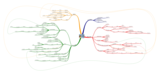
Again a great storytelling keynote by Leo Laporte, arguably the czar of New Media. Leo touched upon the stories of his life and the shift from advertising driven mass media to content driven new media where he's trying to be the "CNN for Geeks". Great wisdom and since some people liked my mindmap from yesterday, here's another one. Please click on the image for a larger size. As Leo said, "Its a river of information, dip your foot in whenever its convenient."© Sumeet Moghe, 2009
Sumeet Moghe
.
Blog
.
<span class='date ' tip=''><i class='icon-time'></i> Jul 20, 2015 11:59am</span>
|
|
Smartphone data can be incredibly accurate in predicting depression, study finds.
» Continue reading: 3 Ways a Smartphone Can Detect If You’re Depressed
» Read HealthiestBlog.com, the new site from PsyBlog's author
Related articles:
Using a Smartphone For One Day Has Transformative Impact On The Brain, Study Finds
Smartphone Addiction: How It May Affect Your Thinking Skills
4 Surprising Advantages of Being Depressed
A Fast-Acting Treatment Which Helps Severely Depressed Experience Pleasure Again
Depressed People Take Social Rejection Harder, Here’s Why
Dr. Jeremy Dean
.
Blog
.
<span class='date ' tip=''><i class='icon-time'></i> Jul 20, 2015 11:59am</span>
|
|
Stephen Walsh and Cammy Bean from Kineo put together an interesting session on how you can create engaging elearning without really burning a hole in your pocket. Cammy and Stephen are friends and I really enjoyed their session. They put together some great examples of elearning that were, let's just say quite stunning! There were some great takeaways for attendees and I've summarised that in this blog.Key Takeaways Things that bore people: Navigation; Text Heavy; Endless videos; Talking heads Cookie cutter approach to design; Locked navigation; violating basic rights of freedom; Systems simulation; Patronising or elementary content; Monotony and Redundancy; How to design rapidly: Show, don't tell: Get a prototype out as soon as possible; "Get it wrong first time, and iterate from there." Get in front of users as soon as you can; Keep a playlist of ten tracks of design.Stephen introduced to the audience his Ten tracks of design: Hit me with your best shot: Use stories that show what can go wrong. Find the killer fact, stat or quote. Learn from your marketing team. Give me a Reason: Object to learning objectives. Instead of a dozen boring learning objectives, try a lead-in video and show what normally happens and then point out how this will solve a problem that your learners will face. Getting the best stories: Get war stories from your best people and get true stories from your newer people. Don't just go to your senior people -- ask people in the trenches, so that way people who go into this training will actually relate to the real situations. Audio interviews over Skype were a great idea Stephen put forward. Tear down the wallpaper: Use purposeful graphics. Make them earn their place. "Decoration isn't design." This is assessment in the real world: Make it tough as hell. Make it open any time. Do it, prove it, move on. Make more mistakes: Find the mistakes that hurt the most. Simulate them in elearning. Keep them real, play them out. When you're providing feedback provide more than just incorrect/ correct observations, add context about why a choice is appropriate or not. A little less conversation, a little more action: Simplicity is tough, cut your training to the bone. Watch out for dialogue amongst characters. Keep text to a minimum and tone it down to the absolute key message! What more can I do?: Think outside the course -- create a learning campaign. Reach out with online support - don't do everything through elearning! Don't get caught up in the technology, think about the problem and the solution. What's are the different ways to spread the word, the simplest way to get learning out, and the most effective way to get them engaged. Keeping it real: Make the most of media and use audio and video where it counts! Use real people and film them (think of doing it secretly, so people aren't conscious!). When people's identities are at risk use a witness protection style by blurring people's faces out. Video is proven to be the most effective medium for behavioural skills. Now what?: The end is the beginning. Call to action and then don't let go! Build in ways to sustain performance and link into your LMS and Knowledge Management System to access follow up activities and resources. Leverage communities of interest and people's desire to be altruistic.© Sumeet Moghe, 2009
Sumeet Moghe
.
Blog
.
<span class='date ' tip=''><i class='icon-time'></i> Jul 20, 2015 11:58am</span>
|
|
Michael J Fox, who suffers from Parkinson's, is an advocate for research into the disease.
» Continue reading: Potential New Treatment For Parkinson’s Found — And It’s An Existing Drug
» Read HealthiestBlog.com, the new site from PsyBlog's author
Related articles:
Alzheimer’s Treatment Using Ultrasound Completely Restores Memory
New Depression Treatment So Obvious You Won’t Believe It’s NEVER Been Tried Before
A Fast-Acting Treatment Which Helps Severely Depressed Experience Pleasure Again
Drug Reverses Schizophrenia in Mice by Curbing Synaptic Pruning
New Dementia Treatment Triggers Brain Cell Growth
Dr. Jeremy Dean
.
Blog
.
<span class='date ' tip=''><i class='icon-time'></i> Jul 20, 2015 11:58am</span>
|
|
The last session from DevLearn 2009 that I sat through was the one by David Mallon from Bersin & Associates, called "The Changing Learning Function: Rethinking how your organization works". David was presenting empirical evidence from 798 Organisations and 40,000 training and HR business leaders and using Bersin's analysis about what the new face of the learning organisation should be like.What I learnt Why are we talking about all of these new technologies? Its because business is changing and that's forcing businesses to rethink what we do in each of our departments and that includes learning and development, knowledge management, and the like. Are all the thinks we knew about our job really as good and are we using ourselves in the best way for our organisation? The problem is context, not content. Its everyone's responsibility to deal with information and act on it. Everyone is a knowledge worker and the overwhelming amount of information floating around. Its tough to find the most useful information. We need to reuse and have some set of standards to be successful. Frequent change of information makes it difficult to find the most current information. Inconsistency of information formats or sources makes it difficult to use and comprehend new info. Learning professionals have the ability to create the context and the standards that organisations really need. The ongoing role of a modern enterprise L&D function is two fold: Deep Specialisation:Focus on your company's niche. What's your competitive advantage? Learning Agility: At an organisational level, how quickly can you add new skillsets, learn from your mistakes and create new capabilities. A change is needed: Large and midsized organisations are still spending most of their learning time in their classrooms. Technology enabled learning is gaining strength each year, but very slowly. Having said this, most leaders believe that on the job experience, mentoring, projects, job rotation, and coaching are the most valuable learning approaches. 72% companies believe that the most valuable learning approaches are informal, yet only 30% of resources are focussed in that area! So, we need to optimise the informal learning in organisation and not just the classroom. The modern learning organisation should be structured in the following framwework: Your Learning Programs addressing your Audiences and Problems Your Approaches and Architecture: Formal Learning: 20% Informal Learning: 80%. This includes On-demand Learning: Elearning, help, search, books, etc Social Learning: Blogs, wikis, forums, communities, social networks, etc. Embedded Learning: All the ways that we learn inside work. eg: Performance Support, Feedback, Rotational Assignments, Course Corrections, Retrospectives, etc. The Disciplines that people need to master to adopt these approaches The tools and technology that support these disciplines But most importantly, beyond all of this, under the hood -- there's the culture of the organisation. The Modern Enterprise Learning Index (MELI) is a set of 10 indicators to determine readiness/ capacity to support learning agility and thrive in the face of informative change. (Internal Indicators: Capacity Building, Business Analysis, Content Efficiency, Adaptation, Versatile) (External Indicators: Business Driven, Talent Linked, Timely, Targetted, Proximal) Retention after training events is high, but it drops over time and so does expertise. Learning is a process and not an event, so informal learning create a series of events that helps people learn over time. How about blending informality into formal learning by leveraging online communities, and by using tools such as Job Aids (Standard Work), Forums, EPSS, etc. David showed a case study from Nationwide insurance in how they blended informal learning around a large formal program to help a major capabilities shift for the company. IBM Blue Pages was another example that David showed as an enterprise wide collaboration system. Coaching is a highly underestimated way of creating learning over time. I loved the case study of BT that he showed where they were looking at Formal Learning supported by Social Learning, developed by anyone, using segments lasting minutes, delivered by anyone, given just in time, pulled and in real time and was dynamic and adhoc (long sentence, I know!) This apparently built reputation and people wanted to contribute to be known as "the guy". The community flags inappropriate content and there's hardly ever been anything that they had to pull out. David lastly looked at the Disciplines we need to engage in as Learning professionals to make our organisations successful. He had culled this using data from the 10% of the most successful companies he had surveyed Knowledge Management: Develop overall strategies for capturing and harnessing the collective knowledge of an organisation. Business Intelligence/ Analytics Information Architecture: Structuring information to make it easy to find. Stop paying attention to a single course, but pay more attention to the learning experience. This involves thinking spatially across contexts. Performance Consulting Development of Rich Media (information, visualisation, etc) The role of a Training team: "Center of Excellence for Learning in the organisation". Focus on capabilities (preparing for tomorrow) as against skills (preparing for today).New Roles in the learning organisation: Performance Consultants Instructional Designers Work out in the biz, teaching others to structure knowledge; Supervise SMEs. Add additional disciplines to create environments Be masters of the business Measure approaches in business terms View fast/ efficient business performance/ improvement as ultimate expression of their ablities. Content Developers Multimedia Specialists Information Architects Editors/ Production Support Community Management Content Stewards Moderators Program Managers SME's © Sumeet Moghe, 2009
Sumeet Moghe
.
Blog
.
<span class='date ' tip=''><i class='icon-time'></i> Jul 20, 2015 11:58am</span>
|