Blogs
|
This afternoon I am doing an online talk to Ibiza. I am going to attempt to do it in Spanish. Here is the transcript and a link to the slides. Let’s hope my Spanish isn’t too bad and that the audience understand me! I must be mad!
Gracias por la invitación . Voy a tratar de dar esta charla en español, pero algunos pueden estar en Inglés . Soy irlandés , pero vivo en Inglaterra. Tengo un doctorado en Química y comencé a trabajar en e-learning hace más de twent años . Tengo dos hijas , tienen quince y diecinueve años. Soy un catedratica de aprender la innovación en la universidad de Leicester . Tres cosas sobre mí que no están en la internet . Odio las alturas , me encanta la pais Irán y no me gusta viajar.
Los temas de mi charla son:
· La creciente importancia de las tecnologías
· Una línea de tiempo e-learning
· Tecnologías Emergentes
· Diseño de Aprendizaje
· Recursos Educativos Abiertos
· Cursos Enlinea Masivos Abiertos
Así es que las tecnologías disruptivas o pedagogías ? Creo que es los dos . John Naughton en su libro enumera nueve características de Internet . Una es que disruptiva es una característica no una falla. Me gusta esta cita de Einstein . Tenemos que ir más allá de recordar el conocimiento , para permitir a los estudiantes a ser creativos , capaces de resolver problemas . Enlace de lista es un gran video corto por Ken Robinson , argumenta sistema educativo actual no está actualizado y tiene que ser cambiado radicalmente .
Este corto video es un ejemplo de tecnología disruptiva . Superficies sin costura y trabajar a través de dispositivos . Es evidente que esto tiene un enorme potencial para el aprendizaje. ¿Entonces por qué está aprendiendo e- importante? Creo que hay dos razones . En primer lugar para el aprendizaje.
· Apoyar la interacción , la comunicación y la colaboración
· El desarrollo de habilidades de alfabetización digital
· La promoción de diferentes enfoques pedagógicos
· Fomentar la creatividad y la innovación
· Para conectar a los estudiantes más allá de la clase formal
Y más en general para equipar a los estudiantes para la vida y el trabajo en un contexto cambiante dinámica.
· Para Preparar a los estudiantes para un futuro incierto
· Para mejorar las oportunidades de empleabilidad
· Debido a la importante función de la tecnología en la sociedad
Esta figura muestra una línea de tiempo de las intervenciones tecnológicas importantes de los últimos treinta años. Se inicia en los años ochenta con la aparición de herramientas para crear ricas , multimedia interactiva . La web surgió en el 93 , increíble pensar que es sólo 21 años de edad! No podríamos haber imaginado el impacto increíble la web tendría en nuestras vidas y nuestros hijos no pueden imaginar un mundo sin ella . Entonces el concepto de objetos de aprendizaje surgió la idea de crear un recurso y el intercambio y la reutilización . Sistemas de Gestión de Aprendizaje fueron importantes por dos razones . Las primeras instituciones tecnologías realizadas ya no eran innovaciones periféricas sino una parte fundamental del servicio que se ofrece a los estudiantes. En segundo lugar nos dieron un lugar seguro para los profesores para crear recursos y apoyar el aprendizaje en línea . La primera generación de dispositivos móviles era muy diferente de la pequeña y teléfonos inteligentes y las tablas de hoy . La investigación sobre Learning Design surgió a finales de los años noventa , la exploración de nuevos enfoques para apoyar a los maestros en su práctica de diseño . Tecnologías de juego llegaron después. Seguido por el concepto de los recursos educativos abiertos , promovido por organizaciones como la Fundación Hewlett y la UNESCO . Los medios sociales fue el siguiente, en la actualidad hay una variedad de maneras en las que los alumnos pueden comunicarse y colaborar con los demás. Los mundos virtuales eran populares a mediados de los años noventa , pero no son muy evidentes ahora . La segunda generación de dispositivos móviles eran más compacto y más elegante , e incluyó los libros electrónicos . Cursos en Línea Abiertas masivas son ahora una importante tecnología disruptiva , desafiando a los modelos de negocio educativos existentes . Por último , el más reciente tema de interés es ‘ Analytics ‘ de aprendizaje , la capacidad de utilizar los datos de los Sistemas de Gestión de Aprendizaje para entender mejor el aprendizaje del estudiante .
En cuanto a las tecnologías emergentes , los informes anuales Horizon el New Media Consortium son útiles en términos de lo que indica las tecnologías que pueden ser importantes para uno, tres y cinco años. En el plazo de un año enmarcar las listas de informe actual . • En línea , híbrido y el aprendizaje colaborativo • El uso de los medios sociales en el aprendizaje En tres años • La sociedad creadora , por ejemplo 3D -printing • Los datos que apoyan el aprendizaje y es decir la evaluación analítica de aprendizaje En cinco años • Enfoques más ágiles para cambiar • Maneras de ayudar a hacer el aprendizaje en línea más natural y sin fisuras
La Universidad Abierta del Reino Unido tiene un informe anual denominado innovando pedagogía. En él se enumeran los diez cosas siguientes como importante
· MOOCs
· Placas para el aprendizaje de acreditación
· Analítica de Aprendizaje
· El aprendizaje Seamless
· Aprender con los demás
· Repensar la publicación científica
· Aprendizaje Geo
· Juegos para el aprendizaje
· Cultura Hacedor
· Consulta Ciudadanía
A pesar del enorme potencial de las tecnologías para el aprendizaje , hay una serie de barreras . Por ejemplo :
· Los maestros no tienen las alfabetizaciones digitales necesarias
· No hay recompensas para la enseñanza
· No es competencia de otros proveedores
· La dificultad de la innovación de escala
· ¿Cómo asegurar la inclusión social
Esta figura ilustra el cambio de la Web 1.0 a la Web 2.0 , desde una web staic pasivo a uno que es más interactiva y participativa . Las características incluyen:
· La capacidad de tener critiquing pares
· El contenido generado por los usuarios
· Prácticas Abiertas
· Distribuido a través de herramientas y contextos
· agregación colectiva
· La capacidad de mezclar las herramientas y crear un entorno de aprendizaje personal
Este es un buen video que muestra las implicaciones de las redes sociales en nuestras vidas .
Esta diapositiva muestra cuatro enfoques pedagógicos .
· pedagogías asociativas dónde atención se centra en el individuo a través de la asociación y el refuerzo , los ejemplos incluyen e- formación y ejercicios y prácticas .
· pedagogías constructivistas , donde la atención se centra en la construcción de los conocimientos previos , los ejemplos incluyen el aprendizaje basado en la indagación
· pedagogías situacional donde la atención se centra en el aprendizaje en un contexto ya través del diálogo , los ejemplos incluyen juegos de rol y el aprendizaje a través de juegos
· pedagogías conectivistas , donde la atención se centra en el aprendizaje en un contexto distribuido con otros , los ejemplos incluyen el aprendizaje reflexivo y dialógica .
Ahora quiero mirar a los cuatro tipos de pedagogías :
· Ejercicios y Prácticas
· El aprendizaje basado en la indagación
· Situado aprendizaje
· El aprendizaje inmersivo
Esta diapositiva muestra cuatro Esta es una captura de pantalla de la herramienta de e - evaluación de la Open University , OpenMark . Es una herramienta muy sofisticada , los alumnos pueden conectarse con otros instrumentos , en este ejemplo una herramienta de dibujo química y obtener retroalimentación detallada. También hay muchas aplicaciones muy buenas para el aprendizaje . Por ejemplo , aquí hay un ejemplo para el aprendizaje de idiomas . Aquí se hace clic en la imagen de una manzana y la rana come. El segundo ejemplo es el de mejorar las habilidades de escucha . El tercero es un completo diccionario Inglés - Español . Dos ejemplos para el aprendizaje basado en la indagación . Mike Sharples y Eileen Scanlon tenían un proyecto llamado mensaje personal , que utiliza las tecnologías para el aprendizaje basado en la investigación para la Ciencia . Doug Clow desarrolló una herramienta, llamada iSpot , para aumentar la comprensión pública de la ciencia . El proyecto de investigación Personal desarrolló una herramienta llamada nQuire , lo hicieron una revisión de la literatura sobre el aprendizaje basado en la investigación y desarrolló este marco para las etapas de la investigación. Esto se ha incrustado en una herramienta en un dispositivo inteligente. Aquí están las fotos de los estudiantes que usan el dispositivo para llevar a cabo una investigación. iSpot es un sitio para subir el avistamiento de flora y fauna . Ayuda a aumentar la comprensión de la gente de la Ciencia , pero los datos es utilizada por los científicos reales a una mejor comprensión de la ecología cambiante del Reino Unido .
Hay muchos ejemplos del uso de los mundos virtuales para apoyar el aprendizaje situado. Por ejemplo un juego de roles en la medicina , exposiciones de arte virtuales y apoyar el aprendizaje de idiomas . Esta aplicación proporciona traducción instantánea , texto y auditiva , entre dos lenguas . Por último , en términos de aprendizaje de inmersión , google tiene una herramienta llamada Google inmersión. Traduce parte del texto de una página en un idioma diferente. Si pasa el ratón sobre el texto cambiará entre las dos lenguas . Así que aquí estoy leyendo sobre MOOCs , pero mejorando indirectamente mi vocabulario español . Es evidente que existe un enorme potencial para las tecnologías de apoyo al aprendizaje . Las redes sociales ofrecen una variedad de formas en las que los alumnos pueden comunicarse y colaborar . Hay muchos recursos gratuitos y cursos . Sin embargo las tecnologías no están siendo plenamente explotados y hay un montón de ejemplos de mala pedagogía. Los maestros dicen que no tienen tiempo y no tienen las habilidades de alfabetización digital necesarias . Un grupo de nosotros hemos estado trabajando en una nueva área de investigación , diseño de aprendizaje , que tiene como objetivo hacer frente a esto y ayudar a los maestros a tomar decisiones de diseño más informadas basadas pedagógicamente y hacer un uso adecuado de las tecnologías . Recientemente hemos publicado el documento " La ‘ Declaración de Larnaca en Learning Design ", que describe nuestro enfoque . He desarrollado los 7Cs de marco Learning Design , que tiene una serie de recursos y actividades para apoyar el diseño . Se inicia con la Conceptualizar C , se trata de crear una visión para el curso . El siguiente es el C C Crear que se trata de articular lo que se crearán recursos (como texto , audio y vídeo) y los recursos libres se utilizará . Los dos siguientes son Cs sobre el fomento de la comunicación y la colaboración . El Considere C se trata de promover la reflexión y ayudar a los alumnos demuestran cómo se han alcanzado los resultados de aprendizaje , es decir, es el elemento de evaluación. El Combine C mira todo el diseño desde diferentes perspectivas , por ejemplo, mirando cómo los estudiantes de tiempo mucho más están gastando en diferentes tipos de actividades . Por último , la Consolidar C se trata de poner el diseño en un contexto de aprendizaje de la vida real y evaluar su eficacia .
Un ejemplo de un recurso asociado con la Conceptualizar C es la actividad Características del curso . Este consiste en un paquete de cartas , que describen los siguientes aspectos del curso : Los tipos de enfoques pedagógicos Los principios de alto nivel Las formas de orientación y apoyo La naturaleza de los contenidos y actividades que los alumnos harán Los tipos de reflexión y demostración ¿Y cómo se facilita la comunicación y la colaboración. Esto muestra el perfil acitivty que es un reource bajo el Combine C. Los tipos de actividades que el estudiante lo hacen son : De asimilación : leer, escuchar o ver El manejo de la información, tales como la manipulación de datos en una hoja de cálculo La comunicación , por ejemplo en un foro Producción , por ejemplo la creación de un compuesto químico o un modelo arquitectónico Experiencial de aprendizaje , por ejemplo, ejercicios y prácticas o trabajos basados ??en Adaptación , por ejemplo, el modelado o simulación Evaluación La herramienta puede ser utilizada para indicar la cantidad de tiempo que los estudiantes pasan en cada uno de estos. También puede ser utilizado por los alumnos . Aprendí español hace unos cinco años en línea , los cursos fueron excelentes , buenos recursos - libros y DVDs , pero no había suficiente en la práctica de hablar, y hablar es mi habilidad más débil . Así que hay una relación directa entre las actividades que hacen los estudiantes y su aprendizaje . La etapa final es el guión gráfico . Esto muestra las listas de las semanas y los temas a continuación, la parte superior . A la izquierda se muestran los resultados del aprendizaje. En el medio están las actividades de los estudiantes lo hacen. Por encima de estos son los recursos que se dedican a . Por ejemplo, en la semana uno que ven un video y leer un documento. A continuación se enumeran las cosas que crean. Así que en la semana uno , escriben un ensayo. En la segunda semana , escriben un blog , en las últimas semanas que hacen una presentación en grupo y escribir un diario de reflexión sobre su aprendizaje . Bajo esta es la evaluación . En la semana uno del profesor proporciona retroalimentación formativa en el ensayo. En la semana dos, compañeros proporcionan comentarios sobre la entrada en el blog . Por último, el profesor proporciona retroalimentación sumativa en la presentación del grupo y el diario reflexivo . La parte final es asegurarse de que se cumplen todos los resultados de aprendizaje . Esta es una foto de un guión gráfico producido durante un taller .
En el METIS proyecto financiado por la UE , hemos creado una herramienta de diseño de aprendizaje en línea llamado ILDE ( Learning Design Marco Integrado ) , que se puede utilizar para crear un diseño e implementarlo en un Sistema de Gestión del Aprendizaje . Este es un breve vídeo sobre ILDE en español . Ahora quiero mirar a los REA y MOOCs . Ahora es más de diez años desde que surgió el concepto de REA . Promovido por organizaciones como la Fundación Hewlett y la UNESCO , con la visión de que la educación es un derecho humano fundamental y debe ser libre. En la actualidad hay cientos de depósitos de REA y un montón de instituciones tienen presencia en iTunesU . El New York Times afirmó que el 2012 fue el año de la MOOC . A pesar del potencial , los REA no se ha utilizado ampliamente . En El proyecto OPAL miramos más de sesenta iniciativas OER y derivamos un conjunto de prácticas en torno a la creación y el uso de los REA . Hemos producido el MetroMap OPAL , que ayuda a las partes interesadas ( responsables políticos , líderes institucionales , docentes y alumnos ) para crear una visión para su uso de REA y un plan de implementación . En un proyecto relacionado , POERUP , hemos documentado más de 300 iniciativas de REA y hicimos una serie de informes detallados por países y tres informes de política . MOOCs surgieron en 2008 , con la Connectivst Conocimiento MOOC por Siemens y otros. Hay una bonita evaluación de este por Fini . En la actualidad hay muchos consorcios MOOC , incluyendo edx , Udacity y más recientemente FutureLearn y Open2Study . Hay un bonito video en MOOCs por Dave Cormiers . Una serie de enlaces útiles sobre MOOCs incluye : una lista de MOOCs , la serie de blogs EFQUEL en MOOCs y calidad y, finalmente, la lista de los artículos ICDE MOOC . Sin embargo , el valor de MOOCs se impugna En el lado positivo , que son gratuitas , y tienen el potencial para apoyar la inclusión social. Permiten a los participantes a ser parte de una comunidad global distribuida . En el lado negativo , hay muy altas tasas de abandono y muchos argumentan que se trata de aprender los ingresos no los resultados del aprendizaje y que MOOCs son sólo un ejercicio de marketing . Hay un bonito video de un debate sobre los pros y los contras de MOOCs , desde la conferencia ASCILITE .
Creo que el concepto de xMOOCs (basados ??en el aprendizaje Didáctico indivual) y cMOOCs (basados ??en conectivista aprender con otros) es demasiado simple. He desarrollado una taxonomía para describir MOOCs. Se compone de doce dimensiones. Los tres primeros tienen que ver con el contexto, el grado de apertura del MOOC es, cuán grande y cuán diversos son los alumnos. Los otros nueve dimensiones tienen que ver con el aprendizaje. ¿Qué es multimedia incluyen, cómo se anima a la comunicación, la colaboración y la reflexión. ¿Qué tipo de itinerario de aprendizaje se proporciona? ¿Qué formas de control de calidad están allí. Si hay alguna certificación o enlace en la educación formal. Y, finalmente, la cantidad de la autonomía del alumno. Esto también se puede utilizar para diseñar y evaluar MOOCs.
Entonces, ¿cuál es el futuro de la educación? MOOCs son sin duda un ejemplo de una tecnología de punta, que está desafiando a las instituciones educativas tradicionales y sus modelos de negocio. Necesitamos nuevos enfoques pedagógicos a utilizar realmente los beneficios de las tecnologías. Finalmente creo que estamos viendo una desagregación de la educación. En el aprendiz futuro no pueden hacerlo grados completos, pero puede pagar por:
• Los recursos de alta calidad
• itinerarios de aprendizaje guiadas
• Alguna forma de apoyo
• Acreditación
Gracias por su atención, espero que haya encontrado esto útil. Si usted está interesado en esto y quiere saber más Tengo un libro sobre diseño del aprendizaje y actualmente estoy escribiendo un segundo, lo que tendrá un montón de ejemplos prácticos de diseños para apoyar diferentes enfoques pedagógicos. Más información también está disponible en SlideShare, y mi blog.
e4Innovation
.
Blog
.
<span class='date ' tip=''><i class='icon-time'></i> Jul 23, 2015 11:26am</span>
|
|
The Greatness of #CatBread
After our TCEA presentation in Austin, back in February, we received a few requests for tutorials one how to make Aurasma perform certain actions. One of the more popular ones was making a "Sphere" pop out into an aura.
Follow the "Thrasymachus" channel on Aurasma and view the following aura. :)
To see how I did this, watch the following video.
Filed under: In The Classroom, Technology Tagged: app smash, app smashing, ar, augmented reality, augmented reality app, aurasma, classroom tech, classroom technology, ed tech, edtech, education technology, iPad, iPhone, panoramic, sphere, sphere app, teacher technology
Thrasymakos
.
Blog
.
<span class='date ' tip=''><i class='icon-time'></i> Jul 23, 2015 11:26am</span>
|
|
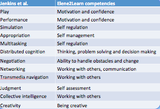
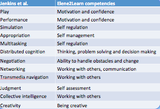
I am doing a keynote this afternoon at the elene2learn conference in Barcelona. The programme can be found here. I will focus on the notion of disruptive education and will argue that teachers and learners need new digital literacies to harness the potential of technologies. I have mapped the nine elene2learn competencies to the digital literacies described by Jenkins et al. The elene2learn ‘How to guide’ outlines the nine competencies and includes over 40 case studies of the use of technology for learning, in each case providing a map of which competencies are developed and which technologies are used. Well worth a read.
e4Innovation
.
Blog
.
<span class='date ' tip=''><i class='icon-time'></i> Jul 23, 2015 11:25am</span>
|
|
I received this email a while back. It was a powerful statement and has inspired me to care even more for my students than I did before I read it. I’ve held on to it privately, but thought it might also inspire others in the field.
This is also why I advocate students to take "tough" classes in HS as opposed to waiting for college to challenge themselves.
So I don’t get in the way of this message, I’ll simply say I was blown away by this email from a mom who both loves her son and "gets it". I think we witnessed each others struggle in the exchange that came afterwords.
Mr. Cooper,
As a parent of a former (and current) student, I wanted to express my appreciation of the responsibility and consequences you are teaching your students. My son, xxxxxxx, had you for government last fall (as a senior taking a dual credit college course) and had a less than desirable outcome. By him making a "D", he was unable to transfer the credit and disqualified him from taking an additional 6 hours in the Spring. Knowing his receiving 12 hours prior to high school graduation was now non-existent was hard for us and him to swallow.
Although I was disappointed at the situation (loss of $$ and time), I believe it was the best "shot in the arm" you could have given him. Should he had taken advantage of his resources (such as coming to you or asking someone to look at his paper), the outcome may have been different. As a parent, you can only talk about how to study, when to study, what happens if you don’t; but we are dealing with kids who think they have all the answers and "everything is fine" mentality. It is when they live through the experience and walked in "the shoes" that they realize mom and pop have been there and they know what they are talking about!
Today, Xxxxxx is a freshman at Xxxxxx in Xxxxx, getting his basics before he heads off to Xxxxxxx. Based on his experience in your class, I truly believe he is doing better than if you had "given" him the "C". The experience in your class made him realize that nothing is handed and everything is earned. He is going to tutorials, having his papers looked at by his aunt (who is editor of a small town newspaper!), and has even been on the helping side of a classmate who was having difficulty in math. He is still learning the process but he is headed in right direction and I have you to thank.
In addition, I believe his experience has trickled down to Xxxxx who witnessed the outcomes of Xxxxxx’s shortcomings and think she is a better student because of it. I am encouraged she will finish more positively in your class!
Thanks,
Xxxxxx
Filed under: In The Classroom
Thrasymakos
.
Blog
.
<span class='date ' tip=''><i class='icon-time'></i> Jul 23, 2015 11:25am</span>
|
|
What’s the buzz, tell me what’s a-happening? Do you care to know? Well, it’s from Flash to the future with HTML5!!
What is HTML5?
HTML5 is the fifth major revision of the Hypertext Markup Language (HTML), the core language of the Web. It is a non-proprietary and open source, free for all to use. Though the language is primarily created for web pages, it is increasingly relevant to eLearning courses, as most often they operate through web browsers, providing a rich user experience.
The advance in technology from Flash to HTML5 paved the way for Content Modernization - transforming old content to new delivery formats to create a more dynamic learning experience for today’s workforce.
3 Key reasons to move your eLearning content to HTML5
1. BYOD (Bring Your Own Device) a rising trend
It is normal for a person to switch between 2-4 devices throughout the day, and Gartner predicts that by 2017, fifty percent of employers will require employees to supply their own device for work purposes. With this BYOD environment growing, it opens up an enourmous delivery medium challenge for L&D professionals because they must develop solutions which can work on virtually any device. By developing courses in HTML5, this gives learners the option to view the courses across any device, unlike native application development, which only works on a single operating system. Not only does this make course management simple, it is also much more economical.
2. Unlock Investment in Legacy Courses
Legacy learning courses that were built using technologies other than HTML5 seem to be a deadlock investment today, because they do not provide the desired output on mobile devices. There is a growing demand by employees for learning solutions to work on their favorite mobile devices. This demand has given a boost to Content Modernization; specifically converting Flash content to HTML5, where companies can save thousands of dollars by merely updating the technology layer in their courses, instead of creating brand new courses from scratch.
3. New Investment in Courses
HTML5 is the technology to invest in for newer courses because it is mobile friendly and lets you accomplish things that were previously impossible. All the latest browsers have incorporated this technology because much more is now achievable in a browser through HTML5 versus HTML4, Flash, and other antiquated technology. This technology enables learning courses to be peppered with informal/ social learning elements that are far more desirable amongst the workforce of today. Also, the current trend with the use of HTML5, is the delivery of manageable bites of content for various mobile devices in mLearning, which divides what would be an hour of dedicated WBT, into 4-5 learning sessions which can be taken throughout the day.
As the years go by, the line between business and personal is blurring. The use of mobile devices is increasing and becoming more mainstream. Users are expecting to get information anywhere, anytime, and expect it to be fast. In this environment where users reach for their mobile devices before laptops, you should be driving your team to be thinking "HTML5 first", while slowly phasing out your older technology.
About the author: Brenda Fernandes is a content quality analyst with InfoPro Learning, Inc. With over 15 years of experience, Brenda is an avid learning strategist with content development, instructional design and business analysis as her core areas of expertise. Brenda is a keen practitioner of harnessing the power of learning content to impact employee performance.
Follow me on Twitter @BrendaMEF
The post HTML5: What’s the buzz? appeared first on .
InfoPro Learning
.
Blog
.
<span class='date ' tip=''><i class='icon-time'></i> Jul 23, 2015 11:25am</span>
|
|
Source: ukedchat.com
Agreed! Never thought I would use twitter, but as an educator and participating in twitter chats I have learned a lot!!
See on Scoop.it - InformationCommunication (ICT)
Mr Kirsch's ICT Class Blog
.
Blog
.
<span class='date ' tip=''><i class='icon-time'></i> Jul 23, 2015 11:25am</span>
|
|
Monday 20th October sees the launch of the EMM MOOC platform (see http://project.europeanmoocs.eu/first-european-multilingual-moocs-go-live-sign-up-now/).
The EU-funded EMMA project aims to:
showcase excellence in innovative teaching methodologies and learning approaches through the large-scale piloting of MOOCs on different subjects. EMMA will provide a system for the delivery of free, open, online courses in multiple languages from different European universities to help preserve Europe’s rich cultural, educational and linguistic heritage and to promote real cross-cultural and multi-lingual learning.
EMMA will operate in two main modes; as an aggregator and hosting system of courses produced by European universities; and as a system that enables learners to construct their own courses using units from MOOCs as building blocks. The EMMA team are taking a deliberate multi-lingual, multi-cultural approach to learning by offering inbuilt translation and transcription services for courses hosted on the platform.
Ten difference MOOCs are being launched (see http://platform.europeanmoocs.eu/courses.php), with topics as diverse as Climate change and pedagogies. The MOOCs are typically between six and eight weeks long, with about 3 -4 hours of learning required each week. The MOOCs contain content and videos, as well as guided activities and the opportunity to communicate with other MOOC participants via forums and blogs. The MOOCs consist of core and extension materials and a clear indication of the amount of time needed to complete each section is given.
The University of Leicester is launching two eight-week MOOCs on Monday 20th October: Technology-Enhanced Learning and Learning Design. I am very excited to be part of this project and I am looking forward to participating in the two MOOCs we are offering. So if you haven’t already signed up, do it now!
e4Innovation
.
Blog
.
<span class='date ' tip=''><i class='icon-time'></i> Jul 23, 2015 11:25am</span>
|
|
When I first came to the United States from Costa Rica in 1980 I was intimidated by everything I saw. Especially here in Texas, everything seemed bigger and better than what I had experienced in San Jose. It was, to put it simply, "Big Time". I was excited to be a part of it and eventually grew into my responsibilities and assumed my duties as an American and a Texan. Every few years, my family and I would go back to Costa Rica…back home.
Costa Rica will always be a part of who I am and I wouldn’t have it any other way, but the promise and permeation of freedom found here in the U.S. allowed me to become who I was meant to be. I was blessed with the responsibility of coloring and texturing the cloth that would become my small piece of our grand American tapestry.
Fast forward 30 some odd years…
What So Proudly We Hail flew me and several other instructors from across the country to Washington D.C. the summer of 2013. We were brought together as a temporary think tank to game plan how best to attract, develop and maintain good American Citizens.
The three day event was singular for me. Heading the group were Amy and Leon Kass. Amy Kass was a product of the University of Chicago, a storied institution in the world of humanities, and a fellow seeker of wisdom and virtue. Talking to her over the three days was like conversing with an affable and witty library. She was mesmerizing in everything she recounted. Leon Kass wrote a book that absolutely inspired my intellectual life: The Beginning of Wisdom. In it the Old Testament is put under a philosophical lens in search of examples of virtue and wisdom (as an aside, I don’t think it is unrelated that Plato once wrote "Wisdom begins in wonder" and The Bible states "Fear of the Lord is the beginning of wisdom"…after all, wonder and fear are similar reflections of the experience of "awe"). I was completely in awe of this couple and their immense depth as individuals and as a couple.
Cheryl Miller, a fellow University of Dallas graduate, was our guide and pulled the event together. She was the contact person for everything related to the What So Proudly We Hail (@WSPWH) event to the dozens of annoying D.C. touristy questions from yours truly.
Over a very formal dinner that I think exposed my pedestrian DNA, I was blessed to have met instructors from Colorado, Illinois, California, and Texas that harbored the same concerns I had for the future of this country. As public school push digital citizenship and global world views, these same schools often take for granted or are ignorant of the requirements needed to solidify what it means to be an American. Even if the question of what an American might be is open for discussion, one must be able to discuss it intelligently and with some roots in the various answers offered by our past and present opinion leaders. The answer may be a patchwork answer, but the patterns and hems should be recognized for their contributions.
It’s a bit ironic (or maybe "patchwork" proper) that an outsider like me was in charge of teaching natural born citizens the greatness of their own country. That greatness can be found in this nation’s successful and incomplete responses to those eternal problems that hound every civilization: the search for Justice, Goodness, Truth, and allocation of power among many others.
For whatever reason, What So Proudly We Hail asked me to put together a lesson on one of several topics. The Declaration of Independence and Federalist X immediately came to mind. One addresses the source and form of our basic human rights and (esoterically) why denying human rights is such a travesty and the other addresses the best way to begin to secure those rights in a nation of free men pulled simultaneously in the directions of reason and passion.
Federalist X tugged at me a little more in this situation. It’s a beautiful essay charged with hints of passion and a great dose of logic. The essay exposes the enemies of any free people and features Publius’ famous, not solution, but redoubt or fortification against those enemies.
No scientist, statesman or philosopher has found a way to address the permanent problems of man mainly because man is that half beast, half god that is a puzzle to himself. Grouping men together into nations only diffuses the boundaries of these permanent problems to the point where those who don’t pay attention begin to think that solutions have been found. Revisiting the original struggles of those on the front lines is helpful.
Here is the lesson on the WSPWH site.
The lesson claims that it is "by" me. It was a wonderful collaboration with Cheryl Miller at @WSPWH, the Kasses, and myself.Filed under: Government/Civics, In The Classroom, Political Philosophy Tagged: American Founders, amy kass, Charles Cooper, cheryl miller, civics, costa rica, federalis x, federalist 10, federalist papers, Founders, government, immigrant, leon kass, lesson plan, social studies, thrasymachus, what so proudly we hail, wspwh
Thrasymakos
.
Blog
.
<span class='date ' tip=''><i class='icon-time'></i> Jul 23, 2015 11:24am</span>
|
|
Technology has revolutionized education, but asking how it can improve learning may be the wrong question.
Source: www.forbes.com
See on Scoop.it - InformationCommunication (ICT)
Mr Kirsch's ICT Class Blog
.
Blog
.
<span class='date ' tip=''><i class='icon-time'></i> Jul 23, 2015 11:24am</span>
|
|
This is a special guest post by associate professor Carl Reidsema from the University of Queensland. Nice work Carl!
The Day the US President Dropped in on the World’s Largest Flipped Classroom at the University of Queensland for the G20
There’s certainly a lot of hype and interest in what the world’s most powerful man, Barack Obama, gets up to. Whether you love him or not, what he has to say and where he goes are all keenly followed. So imagine my surprise when I find out that he’s going to be paying a visit to my classroom at The University of Queensland while he’s here for the G20 in Brisbane, Australia!
So what, you say? Presidents drop into classrooms all the time because education is as vital as health, defence, business and the rest of his many portfolios.
Well, in this case the classroom that the President of the United States of America is visiting happens to be a space big enough to hold 2000 people bleacher-style but for 20 weeks of the year, I and my co-teaching academic colleague along with 3 of our most talented teaching assistants use it as an active teaching space for 1200 first year student engineers at 600 students an hour in what is arguably the "World’s Largest Flipped Classroom".
There have been decades of unmet global demand to produce graduate engineers who can work well and communicate in teams with internationally diverse peers and respond creatively yet rationally to complex socio-technical problems. We create these graduates by providing our students with opportunities to engage in hands-on authentic design problems requiring fundamental knowledge and skills in both engineering and high tech simulation software tools. Beginning in 2010 with a year in planning and supported by industry partners ABB and Boeing Australia as well as the government Office of Learning and Teaching (OLT) and Royal Australian Navy (RAN), UQ Engineering runs an intensely challenging course with absolutely no lectures as a Flipped Classroom. Here students do their lectures online before coming to campus to collaboratively do their ‘homework’ in full hands-on mode facilitated by experts in professional practice.
e4Innovation
.
Blog
.
<span class='date ' tip=''><i class='icon-time'></i> Jul 23, 2015 11:24am</span>
|