Blogs
|
Snapchat says its servers were not breached, but a third-party app may have been compromised, exposing users’ photos
Source: www.cbsnews.com
See on Scoop.it - FootprintDigital
Mr Kirsch's ICT Class Blog
.
Blog
.
<span class='date ' tip=''><i class='icon-time'></i> Jul 23, 2015 11:31am</span>
|
|
I am currently writing a book on Learning Design, which is intended to provide a practical hands on guide to designs, built around the 7Cs of Learning Design framework. This post is a draft of what I have written so far on Chapter Three - The Create C (formally the Capture C). The current version of the chapter is available from Slideshare. Comments welcome!
e4Innovation
.
Blog
.
<span class='date ' tip=''><i class='icon-time'></i> Jul 23, 2015 11:31am</span>
|
|
Thrasymachus:Great read. Meaningful feedback help calibrate teacher expectations & student intentions so that deep learning can happen.
Originally posted on online learning insights:
Giving Feedback to Students that Stands Out
In last week’s post Tools-of-the-Trade to Make your Online Teaching Even Better I reviewed various tools that help online educators make a connection with students by using media other than text to deliver guidance and instructions to students in online classes. In this post I focus on how educators teaching online [and face-to-face] can use ed-tech tools effectively to provide formative and summative feedbackto their students. I’ve included several resources and examples of ed-tech tools in this post in a case study format featuring both online and face-to-face educators describing their methods.
The Case for Formative Feedback Formative feedback in some cases is more valuable to student learning than the final assessment. For instance, when a final grade comes later in the course session the student is not as receptive to feedback, and often focuses on the grade not the feedback. Formative…
View original 805 more wordsFiled under: In The Classroom
Thrasymakos
.
Blog
.
<span class='date ' tip=''><i class='icon-time'></i> Jul 23, 2015 11:30am</span>
|
|
With the rapid proliferation of mobile devices entering the workplace, many more organizations are permitting employees to bring personally owned mobile devices (such as laptops, tablets, and smart phones) to their workplace, and to use those devices to access privileged company information and applications. Beyond the corporate world, does the BYOD practice apply to educational settings?
Key Points
The habits of learning consumers have changed. A growing trend with learning consumers is the demand for the ability to utilize their own devices during training.
Today’s learners demand and expect that solutions be tailored to their unique needs.
A company portrays the image of a flexible and attractive employer, and BYOD can be a means to attract new hires.
Learning consumers are inclined to trade their desktops for a device to engage in remote learning.
BYOD can enhance effective and efficient learning.
Takeaways
BYOD is making significant inroads in the business world, and most businesses simply cannot block this trend.
BYOD has been characterized as a feature of the "consumer enterprise" in which enterprises blend with consumers.
BYOD offers a few "hashtag-trending" opportunities; iOS-agnostic apps can empower every participant with an active voice.
Effective knowledge-based content can be delivered to learning consumers including millennials to baby boomers, at any location and to suit varying learning styles.
Innovations in mobile device technologies have made it affordable for virtually all consumers to have an electronic device, whether it is a mobile phone, tablet or laptop.
Instructional designers are focused on developing content that can be configured to any device the learner chooses to use.
Companies partner with MOOC providers (eg, Coursera, edX, Udacity, Udemy, NovoEd, iversity, and others) who now have corporate development teams that will help to select and license access to university-level online programs.
There is a growing trend for partnerships with community colleges, manufacturers to develop curricula, and to select and recruit candidates.
To quote Mike Elgan, "BYOD devices aren’t categorizable as tools, but instead are part of the employee. … It can’t be ignored or wished away."
There’s no use debating, BYOD is here to stay!
About the author: Brenda Fernandes is a content quality analyst with InfoPro Learning, Inc. With over 15 years of experience, Brenda is an avid learning strategist with content development, instructional design and business analysis as her core areas of expertise. Brenda is a keen practitioner of harnessing the power of learning content to impact employee performance.
The post Bring Your Own Device (BYOD): To Stay or To Go? appeared first on .
InfoPro Learning
.
Blog
.
<span class='date ' tip=''><i class='icon-time'></i> Jul 23, 2015 11:30am</span>
|
|
Thrasymachus:Nice post!
Originally posted on THE WRIGHT STUFF:
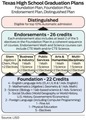
When House Bill 5 was being debated in the Texas Legislature, at first the main focus was the reduction of required number of STAAR End-of-Course exams from 15 to 5. Students are now required to take EOCs in US History, Biology, Algebra 1, English 1, and English 2.
Now the main focus is on the new graduation requirements, which will affect all current 8th graders as the begin high school next year.
What we have now is called The Foundation Plan. In addition, each student will have the option of graduating with an endorsement (possibly more than one). The five endorsement areas are …
STEM
Arts and Humanities
Business and Industry
Public Service
Multidisciplinary
We have had numerous meetings with administrators in our school district as well as with administrators for other school districts. HB5 is very detailed and somewhat confusing because of all the options it allows. However, I…
View original 116 more wordsFiled under: In The Classroom
Thrasymakos
.
Blog
.
<span class='date ' tip=''><i class='icon-time'></i> Jul 23, 2015 11:29am</span>
|
|
Advances in technology are on the rise and companies are looking for better ways of training their sales force. Such a scenario compels companies to get a better Return on Investment (ROI) from training and to fuel future growth in sales productivity.
Operations within your company may be rapidly expanding into global markets. As a result of the expansion, your sales force needs to interact anytime and anywhere using multiple technologies. To keep abreast of the changing technologies in the highly competitive global market, sales training programs may be delivered in a disjointed manner or provide an incomplete response to the complexities of modern selling.
To overcome this challenging situation, companies need to establish new methods of training and learning, which focus on crisp content, better interactivity, engagement, and are high on knowledge transfer. There is a huge need for training that will facilitate the sales force to apply learning in their day-to-day tasks. The solution lies in online training. Enhancing Learning and Development (L&D) through online training not only helps the sales force access trainings and gain required skills at their own pace and convenience, but also empowers them to enhance their skills that contribute to the goals of the company as well as promote career progress. L&D through online training helps to improve your sales training methods in a very effective way.
But, this brings on another big challenge—development of effective training. Developing the right kind of training, mapping to customer needs is essential but is not easy. InfoPro has an in-depth understanding of this challenge. Our entire scope of sales trainings with innovative instructional strategies and engaging media are geared toward meeting our customers’ strategic business needs as well as learners’ knowledge needs.
To speed widespread adoption of improved sales methods and processes, while linking your efforts to company goals, watch this space to read about "Developing Effective Strategies for Sales Training".
About the author: Brenda Fernandes is a content quality analyst with InfoPro Learning, Inc. With over 15 years of experience, Brenda is an avid learning strategist with content development, instructional design and business analysis as her core areas of expertise. Brenda is a keen practitioner of harnessing the power of learning content to impact employee performance.
The post Developing Effective Sales Training appeared first on .
InfoPro Learning
.
Blog
.
<span class='date ' tip=''><i class='icon-time'></i> Jul 23, 2015 11:29am</span>
|
|
We are currently evaluating the two MOOCs were are delivering on the FutureLearn platform. In addition, we are currently finalising material for a Technology-Enhanced Learning MOOC as part of the EMMA project. From the findings we have been able to derive the following good practice guides for the design and delivery of MOOCs.
Keep the MOOC relatively short; evaluation suggests that longer MOOCs result in high dropout rates and low learner satisfaction. Four to eight weeks is the recommended length of a MOOC.
Clearly articulate the number of anticipated learning hours per week; again keep these to a minimum; around 3 - 4 hours is recommended.
Have a clear and logical learning pathway.
Consider having core and extension activities.
Indicate the amount of learning time associated with each learning activity,
Make clear why participants are expected to use digital technologies (such as forums, wikis, blogs, etc.) and in particular clarify what are the perceived benefits. For example, wikis as a good means of collaborative working, blogs for reflection, or e-portfolios as a means of participants evidencing and collating how they have achieved the intended learning outcomes.
Keep video under 10 minutes, audio can be longer
Ensure that learning outcomes are indicated at the beginning of each week, use active verbs that are measurable.
Ensure content is coherent and logically structured, with a clear beginning, middle and end.
Indicate what, if any, tutor support is provided.
Articulate the pedagogical approach used, for example is reflective learning encouraged, or dialogic learning.
During design try and focus on activities rather than content.
Consider carefully what collaborative elements are included and how these are organised.
Try and ensure that each week is organized in the same way so that it is easy for the participants to orientate themselves.
Keep participants motivated and on track by providing a weekly email update, summarizing the key points covered and signposting to the following week’s activities.
Include mini quizzes at the end of each week, to enable participants to assess their learning.
Provide extension activities, which are both remedial and advanced in nature, to cater for a diversity of participants.
Consider having a short (5 minutes) video introducing the week’s content and activities, this provides a more personal touch.
Have a number of synchronous hour-long sessions, perhaps one at the beginning of the MOOC to provide an overview and enable participants to outline what they hope to get out of the MOOC, one in the middle providing a space for Q&A and any points for clarification, and one at the end to provide a space to reflect on their experience.
Try and ensure that all the resources are open and CC licenced.
Provide a discussion thread on the forum to enable participants to introduce themselves, their experience of the subject to date and what they hope to get out of the participation in the MOOC.
Consider having a particular structure, for example:
Connect, Activate/Demonstrate, Consolidate
Connect - an introductory section to orient the participant to the week’s content and activities.
Activate/Demonstrate - the main focus of content and activities for the week.
Consolidate - the reflective element of the week, where participants reflect on what they have learnt and consider the relevance to their own practice.
Present, Apply, Review
Present: Methods to present new material to students, or to encourage them to think it out for themselves. This might involve facts, theories, concepts, stories or any other content.
Apply: Methods requiring students to apply the new material just presented to them. This is the only way to ensure that students conceptualise the new material so that they can understand it, recall it, and use it appropriately in the future.
Review: Methods to encourage students to recall former learning so as to clarify and focus on key points, ensure understanding, and to practice and check recall.
Use an appropriate mix of multimedia, ensure that images add something to the text, and consider the benefits of audio versus video. Audio is good as participants can listen to whilst doing other things, video is good if it shows or demonstrates something.
Try and ensure active participation as much as possible, for example: get participants to find and collate relevant resources, comment on the resource that others have uploaded, get them to write reflective blog posts and to comment on the blog posts written by peers, get them to participate in a discussion forum on a particular topic, or get them to work collaboratively in a group.
Enable participants to monitor their learning progress, by providing them with the ability to tick once activities are completed.
Consider personalising the learning experience, by providing audio feedback.
Ensure that there are clear signposts for navigation and labelling (i.e. have clear headings, make it easy for the participants to navigate around, etc. ).
Ensure that all the materials are accessible (variable fonts, suitable colours).
Ensure that all links work.
Ensure that all the activities are consistent with the platform’s functionality (i.e., discussion forum, feedback mechanisms).
Keep text simple and to a minimum.
e4Innovation
.
Blog
.
<span class='date ' tip=''><i class='icon-time'></i> Jul 23, 2015 11:29am</span>
|
|
Posting things on social network can differ your future based on what you post. If you have pictures or comments that you have made that are not appropriate then you could not get accepted for some colleges. You can prevent this by thinking before you post something. "How could this affect my future positively or negatively?" Then hopefully you can make the right choice.
Mr Kirsch's ICT Class Blog
.
Blog
.
<span class='date ' tip=''><i class='icon-time'></i> Jul 23, 2015 11:29am</span>
|
|
Originally posted on WordPress.com News:
Another
SXSW
is upon us, which means a whole bunch of WordPress team members will be heading to Austin later this week. Since the official schedule is packed full of events, we want to make sure that you have the inside scoop on what we’ll be up to and where you can find us. If you’re in town, we hope you’ll stop by and say hello!
Speaking of WordPress…
Keep your schedules open for a couple of exciting panels taking place over the SXSW Interactive weekend.
Starting things off on Saturday, March 8, our founder, Matt Mullenweg, will be looking at The Open Source Revolution: From Blogs to Homes. The panelists will discuss how open source is affecting the tech industry and what the future of technology looks like for those shaping the open source revolution (Saturday, March 8, 3:30pm at the Radisson).
Then, on Sunday, March 9, Automattic…
View original 445 more wordsFiled under: In The Classroom
Thrasymakos
.
Blog
.
<span class='date ' tip=''><i class='icon-time'></i> Jul 23, 2015 11:29am</span>
|
|
Learning and Development strategies will help you leverage sales promotional approaches across your organization in sales enablement and sales training practices and processes to:
Put sales training systems in place to promote sales success and gain traction through enterprise buy-in
Improve selling acumen by defining and executing on best practices and competency models
Establish credibility as a trusted partner who supports business goals
Engage frontline sales management in cultivating long-term, sustainable results
In developing sales trainings for promoting learning in areas such as sales, retention, and customer service, one or more of the following effective strategies may be used:
Strategy I: Anchor/coach-based
Strategy II: Scenario-based
Strategy III: Game-based
Strategy IV: Blended learning
Strategy I - Anchor/Coach-based
The purpose of anchor-based learning is to help the learner explore and discuss realistic problems in a professional scenario. The idea of an anchor stems from the fact that social learning or learning among peers is more effective compared to formal training. Anchored trainings usually contain a character based on the generic learner profile that the learners can easily identify with, thereby creating a social environment wherein the learner can expect to be exposed to an informal and relaxed kind of learning. This strategy will help the learners develop the desired skills faster as they will be able to easily identify themselves with the anchor.
Strategy II - Scenario-based
The scenario-based strategy’s main purpose is to mold the thinking of the learners using real life situations in their day-to-day environment and imparting knowledge of the expected patterns of behavior. This strategy firmly establishes learners in their work environment and provides a resolution to real life problems and dilemmas wherein the learner has to engage in task discretion and decision-making skills. The scenario-based strategy is useful in developing future scenarios as well as relevant tactical options to manage future developments. Besides, the use of scenarios is helpful in providing realistic strategic recommendations.
Scenarios may be used through one of the following approaches:
Approach I - Case Study-based
Approach II - Video-based
Approach III - Simulation-based
Approach I - Case Study-based
A case study approach helps to teach the learners how to apply the concepts in relation to their daily situations. The case study is generally followed by a number of formative questions for the learner so that the learner can build on his knowledge. This strategy is useful where the content presents specific examples of industry scenarios, in this case sales scenarios pertaining to up-selling, cross-selling, new customer acquisition, customer retention, etc.
Approach II - Video-based
Videos provide experiential and practical learning and helps the learners identify with situations and easily understand the concepts being taught. Since the videos present realistic scenarios, the learner can easily understand the application of concepts and thereby gain practical knowledge.
Approach III - Simulation-based
The use of simulations prepares the learners for various sales situations by involving the learners in role-play scenarios that are based on real experiences and actual events. Sales simulations offer sales people an opportunity to test themselves and reveal vulnerabilities in a safe environment. Simulated scenarios give them time to practice in advance and overcome the possible shortcomings. In other words, simulations provide experiential learning. Learners will be able to identify with the situation and become actively involved to generate a solution.
Strategy III - Game-based
The game-based strategy involves active participation and interaction of the learners wherein they are educated on new and complex concepts through fun games, which may be otherwise difficult to teach or boring to learn. The learners find it easy to face real-world challenges in game-based environments as they can choose actions, experience consequences, and work toward their learning goals. They can make mistakes through experimentation in a risk-free environment thus getting opportunities for exploration. Games work as excellent motivational tools and help students grasp and remember facts better. Game-based learning enables learners to perform tasks and experience situations, which would otherwise not be possible or undesirable due to cost, time, or for reasons of safety.
Strategy IV - Blended Learning
This strategy can be successfully used to deliver large scale sales trainings. This strategy combines the traditional face-to-face classroom methods with more modern computer-mediated training such as web-based training. This dual approach helps to leverage the best aspects of both types of training. A blended instructional approach can result in better learning outcomes, improved retention, and increased learner enrollment.
Improved ways of training your sales force to fuel future growth in sales productivity through effective learning and development strategies will help your company promote sales success and step ahead with firm sales footprints.
About the author: Brenda Fernandes is a content quality analyst with InfoPro Learning, Inc. With over 15 years of experience, Brenda is an avid learning strategist with content development, instructional design and business analysis as her core areas of expertise. Brenda is a keen practitioner of harnessing the power of learning content to impact employee performance.
The post Developing Effective Strategies for Sales Training appeared first on .
InfoPro Learning
.
Blog
.
<span class='date ' tip=''><i class='icon-time'></i> Jul 23, 2015 11:29am</span>
|