Blogs
|
Source: www.gizmodo.fr
See on Scoop.it - FootprintDigital
Mr Kirsch's ICT Class Blog
.
Blog
.
<span class='date ' tip=''><i class='icon-time'></i> Jul 23, 2015 11:29am</span>
|
|
One of the most important design decisions you need to make is considering the nature of the learners who will take your course or module. Students on a first-year undergraduate Mathematics course will be very different from post-graduates undertaking a Continuous Professional Development course or those taking an evening class in Spanish. The Persona cards are a useful way of articulating the nature of typical learners on your module or course.
The persona view enables teachers to create personas for the types of learners that are going to complete the design activity; a class of first year 18-year old Maths undergraduates, will have very difficult needs to an online language course for adults. Hence articulating the persona for the learners will help guide what kind of teaching intervention is appropriate for those learners. Factors to take into account include: age, sex, cultural background, discipline, level of technological competence and motivations for doing the learning.
Personas are a tool for sharing our understanding of the expected nature and types of learners.[1] Nielsen (Nielsen 2013) states that:
The persona method has developed from being a method for IT system development to being used in many other contexts, including development of products, marketing, planning of communication, and service design. [..] Common understanding is that the persona is a description of a fictitious person, but whether this description is based on assumptions or data is not clear, and opinions also different on what the persona description should cover.
It is important to try and be as detailed as possible when describing a persona. An understanding of the characteristics of potential learners will help inform and shape the design process, to ensure that it is targeted at the right level in terms of learners’ competencies and motivations. Cooper (1999) argues that:
Personas are the single most powerful design tool that we use. They are the foundation for all subsequent Goal-Directed design. Personas allow us to see the scope and nature of the design problem. They make it clear exactly what the user’s goals are, so that we can what the product must do - and can get away with not doing.
Tables 1 and 2 show two personas, for Joe and Marie. The personas illustrate the very different characteristics of the learners, in terms of their background and motivations and goals.
Name: Joe
Gender: Male
Age: 19
Lives in: Gloucester, UK with his parents
Likes football and music
Education and experience
Joe has had a conventional education completing 9 GSCEs and 3 A levels (in Chemistry, Physics and Maths). He works in a local restaurant as a waiter at the weekend. He has not travelled much outside of the UK. His hobbies include watching football and playing in a local band
Roles and responsibilities
He has worked as a waiter for two years and now supervises new employees. He runs a computer programming club, which has 15 members. They meet every Sunday more for two hours. He publishes a monthly newsletter on their activities.
Technical skills
He is a proficient internet user and has good programming skills, which he has learnt in his spare time. He has a laptop and an iPad. He uses the latter primarily for surfing the Internet and keeping in touch with friends.
Subject domain skills and knowledge
He has good science skills and a reasonable level of general knowledge, although he does not keep up much with current affairs.
Motivation and desires
He wants to get a job in the IT industry as a computer programmer, he is passionate about programming and is very gifted at it.
Goals and expectations
His goal is to complete a computer science course and then get a job in the IT industry.
Obstacles to their success
His one weakness is a lack of concentration. He does not have very good study skills and tends not to put too much effort into his learning.
Unique assets
He is a gifted computer programmer and is very sociable and confident with lots of friends.
Table 1: Joe’s Persona
Name: Maria
Gender: Female
Age: 45
Lives in: London, UK with her husband and two children
Likes classical music, theatre and reading
Education and experience
Marie left school having completed 5 O’ Levels. She later returned to college to complete a HND in cooking. She has run her own Italian restaurant for 15 years. Her parents were Italian and moved to the UK when Maria was ten years old.
Roles and responsibilities
Her restaurant business is very successful. She employs five people, including a full-time chief. She has overall responsibility for the business, including the finances and deciding on the menus, in conjunction with the chief.
Technical skills
She does not use the Internet very much and has relatively low levels of IT proficiency. She does own a desktop computer but using it mainly for sending and receiving emails.
Subject domain skills and knowledge
She is more practically orientated than academic. Her Italian is rusty, she hasn’t practiced it much since moving to the UK when she was 10.
Motivation and desires
Her husband and her would like to move back to Italy when their children (19 and 19) have left home. They would like to set up a restaurant business there. As a result she wants to improve her Italian skills. She is not interested in getting a qualification per se, she just wants to be proficient in Italian.
Goals and expectations
Her goal is to complete an online intermediate Italian course with the Open University, UK and then to move to Italy and set up a new restaurant business.
Obstacles to their success
The main problem she has is a lack of time, she is kept busy with the restaurant (working very long hours) and her family. The OU course requires 7 hours a week as a minimum, she will need to be very focused and motivated to ensure she meets this commitment. In addition, she will need support to begin with to develop her Internet skills, given that the course is wholly delivered online.
Unique assets
She is very practical and has a good business sense. Once she commits to something she is very driven. She has good general language skills and that fact that she lived in Italy for ten years should give her a good head start.
Table 2: Maria’s Persona
[1] The following is taken from http://www.ld-grid.org/resources/representations-and-languages/personas
[2] https://openclipart.org/people/jonata/jonata_Boy_with_headphone.svg
[3] https://openclipart.org/detail/173498/retro-woman-2-by-tikigiki-173498
e4Innovation
.
Blog
.
<span class='date ' tip=''><i class='icon-time'></i> Jul 23, 2015 11:29am</span>
|
|
I was reading this article about Jellyfish born in space. Apparently, being born in a gravitation free environment messes with calcium crystals that evolved in jellyfish (most animals, really) to help them orient themselves & navigate the seas.
As squishy & fragile as these creatures seem, they need the constant tug of gravity to fulfill their "jellyfish-ness".
What a great argument for classroom/campus/district standards (academic & discipline-wise). Humanity was born out of pressure to survive and rise above the rest of creation.
The soft bigotry of low expectations hurts everyone one of our "jellyfish" students from the youngest to the oldest. Our students need pressure so they will be properly oriented for the world they will co-create and eventually inherit.
There is soft bigotry in looking the other way when students cheat (in the variety of ways that they pull this off), preparing low level lessons, and assuming students can’t achieve more than you expect by taking choice and freedom of action away from them.
Human beings need pressure, direction, & those tugs/nudges that help us navigate life. Guidance, successes & failures are all needed to produce the next generation of leaders.
Jellyfish need resistance to their efforts to become what they are and so do our students.Filed under: In The Classroom
Thrasymakos
.
Blog
.
<span class='date ' tip=''><i class='icon-time'></i> Jul 23, 2015 11:29am</span>
|
|
A wonderful chat I’ve recently come across is the No Box Thinking chat (#NBTchat - Sundays 7pm central). The central theme suggests that "thinking outside the box" isn’t enough to ensure the vitality of education.
During any meeting, education or otherwise, tossing out the phrase "think outside the box" to brain storm for a solution to a problem may sound innovative. You’re leaving a safe place, right? Jumping outside the box will lead you to a wonderful new pasture where the grass is greener.
The box, though, is still there. Thinking outside the box means you’ve taken a step in the right direction…but only a step. The gravity of the box still acts as an anchor to weigh down any thoughts that might take flight. Even outside the box, a large enough box still blocks your view of some things.
The Box: depth where there is none
Let’s take a quick, but related, philosophical side trip. Jean-Jaques Rousseau (18th century "French" philosopher) touched on the idea of our "box" when he said that people in Western society (any democratic or timocratic society for that matter) tend to be empty mirrors that reflect off each other.
What he meant was that people who don’t have ideas of their own look to reflect, intentionally or not, the ideas of others. They are mirrors that simply regurgitate "the other" (much like standardized testing is a regurgitation of the learning students receive in class). If you reflect or chase after other’s approval or praise (the box) you can never escape its influence. It still frames your thoughts even as you claim to be "outside" it.
If you have an entire society of mirrors reflecting off each other there is an illusion of depth, where there is none.
Think of your typical standardized test driven classroom where the teacher ONLY teaches to the test. The most successful students in that class tend to be the ones who can replicate what they teacher said. Information thrown out the day or the week before is either jotted down in notes or memorized by the students and thrown back at the teacher in a slightly different form. The teacher validates the student simply for projecting a reflection of the teacher back at them. Meanwhile, the rest of the class writes down the correct answer and is swayed into thinking an intellectual depth was demonstrated when, in fact, there was none.
An example, look at the image below. A girl positions herself between several mirrors. The light bouncing the same image from different angles to and fro. A simpleton might assume that the room is bigger than it really is or that there are more people in attendance than there really are. Depth is perceived, where there is none.
That depth seems to exist because the other students aren’t replicating the teacher’s thoughts the "right" way. A few "get it" and many don’t quite understand. The many have failed at some task so a perceived need for work is noted. The class moves in the direction of this pointless goal. Bam! Educational depth has been produced out of a very flat classroom.
The Box Cycle
There is a tendency for calls of "outside the box" thinking to happen in aging social/political groups.
Why?
A force or event draws people of a like mind together. Before the box forms, there’s a flurry of ideas, plans, hopes and so on that energize the new group/movement. Through trial & error the ideas best adapted for the conditions that created the group are accepted, normalized, and become the foundation of the "box". Over time, extensions and adaptations of the original "box rules" stack one on top of another. As long as there isn’t too much tumult in the system, the box works so effectively that it seems invisible.
The problem becomes evident when something disrupts the status-quo. A disruption forces participants to initially use old ideas and resources to patch the new problem. When this fails, they begin looking for ideas "outside the box". Outside of the box, though, is often a reflection or regurgitation of what was in the box (I’m thinking of one standardized test replacing another one). One must put "the box" in the rear view mirror and watch it disappear to get good enough vantage point to start all over.
"No box thinking" or, as Nietzsche put it, "no horizon" thinking requires a leaving behind of old ways to start all over. This is difficult but necessary, especially as it relates to today’s approach to education.
If you’ve read my previous post on how every student is now a port city, you’ll know that handheld devices and 24-7 access to any information any where had DESTROYED any illusion that the teacher should be the absolute expert in the classroom. Students can now see inside boxes that we didn’t even know existed. They have access to the best and worst humanity can offer. Handing out packets of papers to get them ready for a really tough series of multiple choice tests does nothing to prepare them for a future where the iPhone5 will be a relic and a joke.
How do we attain goals without relying on old systems?
The focus should be on student choice activities as they are fleshed out by the skills developed in and out of the classroom. This is not to say that students should never memorize facts. We all operate on memorized facts (from driving our cars, to following certain people on Twitter, to using facts as common ground for new relationships). Facts, though, should not be emphasized over general concepts and skills. This emphasis betrays the weaknesses of the old way.
To avoid our "new thinking" from eventually becoming the "new box" it is helpful to place the goal beyond reach. We can find this act with the Declaration of Independence’s "Life, Liberty, and the Pursuit of Happiness" and Plato’s many writings that the Truth exists but is beyond immediate perception.
No Box Thinking requires a commitment to accept the truth from any direction. NBT requires the participant to see nearly any resource as useful in the classroom to meet the need of the goal. Above all else, NBT, for it to be faithful to the great potential it offers, requires participants to let students project "who they are meant to be" as opposed to reflect what the teacher thinks they are.Filed under: In The Classroom Tagged: box, chat, education, education philosophy, inside the box, instructor, iPad, iPhone, Nietzsche, no box thinking, outside the box, plato, rousseau, students, teacher, technology, Twitter
Thrasymakos
.
Blog
.
<span class='date ' tip=''><i class='icon-time'></i> Jul 23, 2015 11:29am</span>
|
|
I’ve just got back from Ireland, where I had my first taste of being an adjunct professor with Dublin City University (DCU). I am working with Mark Brown who is heading up the new National Institute for Digital Learning (NIDL). On Monday Mark and I talked at a National Forum seminar in Athlone. The theme was the flipped classroom. I focused on the concept of disruptive education and looked at disruption from four perspectives: the flipped classroom, opening up education, e-pedagogies, and Learning Design. The focus of Mark’s talk was on quality, built around a metaphor of ice cream. Our talks were followed by a talk from Brian McCabe from the NUI Galway, where he provided a practical description of his implementation of the flipped classroom. On Tuesday I spent the morning with the NIDL team talking through the 7Cs of Learning Design and discussing how it could be applied at DCU. I’m really looking forward to working with Mark and the team to take NIDL forward, I think it is a really exciting initiative. Watch this space as they say!
e4Innovation
.
Blog
.
<span class='date ' tip=''><i class='icon-time'></i> Jul 23, 2015 11:28am</span>
|
|
Today, the focus on training is strategically aligned with the business. As a step in the direction of meeting the organization’s principal goal—success, development of training material encompasses a blended approach. The blending of content provides a mix of eLearning nuggets, reinforced coaching strategies, robust new performance support systems, and learners’ collaboration and curation of learning content.
It’s estimated that more than 90 percent of learning is obtained through informal means, and only 10 percent comes from traditional structured training. There is also a general consensus around blended learning designs leaning toward a 70:20:10 framework (70% experiential learning, 20% social learning, 10% formal learning) as the preferred strategy to improve workplace performance and with a greater focus on supporting informal learning.
Blended Learning Increases Learner Engagement
As eLearning is on the rise, more and more companies move classroom content online, but don’t do away with it altogether.
The benefits of a classroom environment are highlighted in a recent article on How Blended Learning and Gamification Increase Student Engagement. The article states that, the classroom environment — especially if it’s a really collaborative, innovative, problem-solving focused environment — is so important. And it’s not impossible, but it’s much harder to create that culture online.
Rob Schwartz, an online teacher, believes that online teachers can also enhance a learner’s engagement. To quote Rob, "Nobody wants to engage with content; people want to engage with other people about content. When we learn, it’s a human experience. If we try to remove the humanity too much from it and turn it into just technology, we’re missing out on a really critical part of that experience of learning."
Leveraging an LMS for Blended Learning
Leveraging an LMS may prove to be an excellent option for your organization. When used for blended learning, an LMS offers several advantages for both employee and management.
Management
Employees
An LMS allows Management to offer training programs that provide various approaches, including mobile learning, online learning, and face-to-face learning. A mix of these approaches lend toward keeping the learner motivated and engaged. Blended learning programs that are carried out with an LMS allow you to blend online learning and classroom sessions for a more effective approach.
With the use of an LMS for a blended learning approach, keeps the training process streamlined. Planning and monitoring training activities with the help of an LMS makes it really easy.
An LMS provides for a robust server and a secure system, which makes it easy to store and access learning data.
The ability to reach out to more learners spread throughout the world. Virtual learning sessions and eLearning courses can be easily delivered without compromising on the quality and consistency of training.
Multiple learning formats (including podcasts, text files, videos, mobisodes and more) and media channels—offline and online). The use of an LMS makes it easier for training programs to cater to different demands and needs.
An LMS provides greater training flexibility and encourages a continuous learning process without geographical boundaries or time restrictions. A blended approach offers training resources that may be reached via chat rooms, wikis, blogs, forums and other online options.
Using online training channels often improves interaction with instructors or trainers because it increases their approachability. Social learning and collaborative tools, along with online help, helps to facilitate greater levels of interaction between trainers and employees.
Increased approachability and interaction with trainers/instructors through the use of online training channels—social learning, collaborative tools, and online help.
Encourages employees to learn at their own pace and stimulates greater knowledge retention. Dependency is reduced on single sources of information is reduced as employees also have access to important learning resources online.
Benefits of Blended Learning
Companies reap the benefits of eLearning as it is a convenient mode of training a larger audience. When training is well delivered, both staff and the company at large, leverage from increased performance levels and reduced training costs. The blended learning benefits for corporate training may be briefly described as follows:
Improved ROI - Companies are able to save through decreased travel and reduced material, leading to improved and more efficient staff performance. This lends toward improving consistency and scalability with eLearning—longer hours of classroom training are condensed into fewer hours of web-based learning.
Consistency in delivery - ELearning promotes a standardized process and consistency in the delivery of content.
Real-time access of content - The eLearning course can be accessed anytime, anywhere and through the device of the learner’s choice.
Greater retention - The eLearning approach includes a combination of multimedia and instructional designs to deliver a rich learning experience. Through this learning environment, learners are more likely to retain learning content and repeat the course to enhance learning and subsequently performance results.
More control to learners - Learners can go at their own pace, not at the pace of the slowest or fastest member of the learning group within the class environment.
Almost every person surveyed this year said that blended learning approaches work best. To reiterate those opinions, I quote an L&D director who summed up Blended Learning as follows:
"The single modality learning approach is definitely going by the wayside. It just reflects changes in society and technology in general."
About the author: Brenda Fernandes is a content quality analyst with InfoPro Learning, Inc. With over 15 years of experience, Brenda is an avid learning strategist with content development, instructional design and business analysis as her core areas of expertise. Brenda is a keen practitioner of harnessing the power of learning content to impact employee performance.
The post Blended Learning Grows Up appeared first on .
InfoPro Learning
.
Blog
.
<span class='date ' tip=''><i class='icon-time'></i> Jul 23, 2015 11:28am</span>
|
|
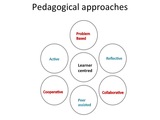
On Monday I did a talk at a National Forum seminar at Athlone Institute of Technology. The theme was the flipped classroom. I focused on the concept of disruptive education and looked at this from four perspectives: the flipped classroom, opening up education, e-pedagogies, and Learning Design. In terms of the flipped classroom I argued that the concept was about ‘flipping’ from a traditional lecture-centric approach to one that was learner-centric and activity-centric. The idea is that learners watch videos in advance covering the key concepts, this frees the face-to-face classroom up for discussion and activities. I argued that the benefits were that this enabled the learning intervention to be more collaborative and problem-based. The diagram below illustrates the components that are associated with the flipped classroom, most importantly it is learner centric.
Opening up education has gained increasing interest in recent years, partly through the emergence of Open Educational Resources, but also more recently through Massive Open Online Courses (MOOCs). These are disruptive in that they are challenging existing business models for traditional educational institutions. In a world where resources and indeed courses are increasingly free, what is the role of a traditional institution, what are the benefits of learners paying for courses? I described the MOOC classification schema and argued that this could be used to describe, design and evaluate MOOCs. For e-pedagogies I described four examples of how technologies could be used to promote different pedagogical approaches. Finally, I argued that design is the key challenge facing education today, teachers need support to make informed design decisions that are pedagogically effective and make appropriate use of digital technologies. I introduced the 7Cs of Learning Design framework as one means of achieving this.
e4Innovation
.
Blog
.
<span class='date ' tip=''><i class='icon-time'></i> Jul 23, 2015 11:28am</span>
|
|
For students to embrace the skills needed in a changing technology landscape, teachers must coordinate knowledge, instructional practices, and technologies to positively influence academic achievement.
Source: www.edutopia.org
See on Scoop.it - Educational News and Web Tools
Mr Kirsch's ICT Class Blog
.
Blog
.
<span class='date ' tip=''><i class='icon-time'></i> Jul 23, 2015 11:28am</span>
|
|
Today’s consumers are digitally connected, socially networked and prefer to have gathered all the required information on the product that is to be purchased, before they even speak with your sales team. However, an intelligent consumer may approach your salesperson with a difficult question—one without an answer on your website, white paper, social media posts and so on. Is your staff adequately equipped to make that personal connection, provide a trustworthy experience for your prospective customer and tip the scale toward a win situation for your organization?
Importance of Product Knowledge
Product knowledge is the most important tool for closing sales. It instills faith, trust, and respect in the customer, which creates a positive customer experience. The importance of product knowledge represents itself the most in these situations:
Answering Difficult Questions: Many customers will have answered just about every question on your product or service before they even call you. But, there are usually a couple questions which don’t have answers online, and normally they are difficult questions like: "I have read some mixed reviews on your customer service. Can you tell me what I can expect if I have problems down the road?" This is where product knowledge training is crucial. If your team is educated on these negative perceptions ahead of time and have prepared responses for them, the answer the customer receives will be very powerful and concise. If they are caught off guard, they might become defensive, stumble over their response, or completely ignore the question, which will result in all faith being lost with the customer because the one question they couldn’t find an answer for ahead of time, was answered insufficiently.
Building Trust: Customers have to trust the product, company, and person they interact with before they make a purchase, and by now, you probably know that the person they interact with is weighed much more heavily than the other two sources. This makes it vital for your sales team to be seen as trustworthy sources of information. As mentioned earlier, customers enter conversations armed with information about your product. Imagine what it says to your customer if what they hear from the salesperson is not the same as what they have taken from your website or marketing releases. It eliminates all trust in not only the company, but also in the salesperson, because they don’t know who to believe. This makes it crucial that not only your sales team has enough product knowledge, but that they also have the most current product knowledge.
Making Lasting Impressions: One of the reasons that customers are doing so much research on your products and services is that tremendous competition has driven consumers to believe that all products are similar. With such a small margin of difference in the product itself, companies are realizing that they can make up for the difference in other areas. One easy area that you can make a difference is in the buying experience, but it requires an in-depth knowledge of your product to do so. For example, a customer starts the conversation by asking about one product, but your salesperson recognizes that this customer is actually a better fit for a different product (or even an add-on product.) Your salesperson then proceeds to explain the reasons why, and in doing so, has now taught the customer something and shown that the salesperson has the customer’s best interest in mind. With so many "order takers" in the sales industry right now, this is sure to create a lasting impression.
Benefits of Product Knowledge
Knowledge is power and for your sales force, product knowledge can be the vehicle to increased sales. We have already discussed the reasons why product knowledge is important to your business, but the list below highlights the benefits of product knowledge—as they directly relate to your sale team.
Strengthen Communication Skills - A thorough and wider understanding of a product enables a salesperson to use different techniques and methods of presenting a product to various types of customers. Stronger communication skills empower a salesperson to suitably adapt a sales presentation for greater impact.
Boosts Enthusiasm - Armed with deep product knowledge, a display of enthusiasm and belief in the product may generate excitement among your customers and alleviate uncertainty about the solution that the product provides for the customer.
Grows Confidence - If a customer isn’t fully committed to completing a sale, the difference may simply be the presence (or lack) of credibility or confidence a salesperson has towards the product. Becoming educated in the product and its uses will help cement that confidence.
Assists in Overcoming Objections - Factual information gained from product knowledge, may be used to strike down objections voiced by customers. Solid knowledge about your product coupled with parallel information about similar products sold by your competitors—gives you that added advantage to easily counter objections.
Product training with emphasis toward product knowledge will be more effective in helping you deliver customer experiences that "Wow" before your competitors do. In closing and to reiterate the importance of product knowledge, here’s a quote:
An investment in knowledge pays the best interest. -Benjamin Franklin
About the author: Brenda Fernandes is a content quality analyst with InfoPro Learning, Inc. With over 15 years of experience, Brenda is an avid learning strategist with content development, instructional design and business analysis as her core areas of expertise. Brenda is a keen practitioner of harnessing the power of learning content to impact employee performance.
The post Product Knowledge Training appeared first on .
InfoPro Learning
.
Blog
.
<span class='date ' tip=''><i class='icon-time'></i> Jul 23, 2015 11:28am</span>
|
|
I am currently working on a chapter on the 7Cs of Learning Design, for a book that James Dalziel is editing. Today I have been working on the Consolidate C and in particular I have been writing about rubrics and checklists to evaluate the effectiveness of a design. Below is one example, comments welcome
Are learning outcomes indicated?
Do the learning outcomes use active verbs?
Are there clear signposts for navigation and labelling (i.e. are there clear headings and is it easy for the participants to navigate around?
Is the learning time associated with resources and activities indicated?
Is the material logically structured and coherent (are terms explained, do sections follow each other??
Is there an appropriate mix of multimedia?
Are videos kept to below 10 minutes?
Is there a clear and logical learning pathway
Is the way in which technologies are to be used made clear to the learners?
Is the content coherent and logically structured?
Are the pedagogical approaches explicit
In what ways are communication and collaboration encouraged?
Are all the materials accessible (variable fonts, suitable colours)?
Do all the links work
Are the activities consistent with the platform’s functionality (i.e. discussion forum, feedback mechanism)?
Are the materials open (are there any technological access issues)?
What pedagogical approaches are used?
Are sections given clear timeframes
How are activities monitored?
Is there is clear minimum to complete and is there a clear learning timescale?
What assessment elements are there?
e4Innovation
.
Blog
.
<span class='date ' tip=''><i class='icon-time'></i> Jul 23, 2015 11:28am</span>
|