Blogs
|
One of the most challenging thing organizations face today is to manage the amount of data produced on a daily basis. IDC forecasts a 44% increase in data volumes between 2009 and 2020 which means content management will become tougher going forward.
Learn how to maximize OneDrive with Office 365 and have virtually ubiquitous access to open, edit and share data from anywhere. Also, Office 365 users can now stop discriminating about which files or data deserve to occupy the cloud and which should remain local.
Microsoft’s research indicates that three out of four users have less than 15 GB of local files on their PC/Laptop, so it believes that the new 15 GB limit in OneDrive will accommodate the needs of the vast majority of users.
Key Takeaways:
Why use OneDrive with Office 365
Comparison between OneDrive and other cloud storage products
OneDrive Migration
Integration with Office 365
If you register by Jul 25th, 2014 you will be entered to win an all new iHealth Wireless Activity & Sleep Tracker of retail value $79 and we are also raffling for a Water Resistant Wireless Bluetooth Speaker of retail value $139 for those who stay on for the full webinar.
Netwoven
.
Blog
.
<span class='date ' tip=''><i class='icon-time'></i> Jul 27, 2015 12:19pm</span>
|
|
We are Debra Smith and Galen Ellis, two evaluators who discovered through AEA that we share a common method of using logic models to facilitate systems thinking with our clients. Many people think logic models are a complicated exercise with little value. Some are downright cynical, saying they tend to represent "a tenuous chain of unproven assumptions used to justify the pre-determined program model" (Public Health Director).
We both use a two-phase logic model development process: first, we help our clients develop a balcony view "theory of change" by identifying the global goal or vision and mapping key resources, strategies and outcomes. Clarity in Phase I, makes going to Phase II—identifying outputs and short, mid and long-term outcomes and measures—more manageable and meaningful.
Debra: I first used this approach while working with a museum education department to develop an evaluation system for their programs. We mapped the overall theory of the department, tracking resources and activities leading to their long-term vision, which they described as "the community loving the museum." Staff were then able to develop logic models for their individual programs, and then a system that streamlined the data they collected within and across programs.
Galen: I have facilitated logic model processes for the development of agency-wide evaluation systems with several organizations in this two-step process. The theory of change process helps the client articulate how their activities and the outcomes they expect fit with their agency’s values and mission. Then I work with each individual program/project within the organization to develop its own logic models that link to the agency’s broader theory of change. This shifts the culture of the organization towards being outcomes-based, and helps connect the distinct programs via common outcomes that reflect the agency’s values and mission.
Lessons Learned:
Logic models can help prevent mission drift. The agency-level logic model will capture outcomes that are aligned with the mission. Programs within the organization can then align with those outcomes and share evaluation measures, leveraging the broader organizational goals to guide their own success.
Using the logic model process to develop an agency-wide evaluation system elevates the value of evaluation within the organization.
Rad Resources:
WK Kellogg Foundation Logic Model Development Guide
Tearless Logic Model
Hot Tips:
Showing how a logic model tells a story can help clients understand the role and value of a logic model. Galen uses the metaphor of crossing a river. Video Clip
Even in developmental projects, it can be helpful to map the theory of change, then refine it based on what is learned.
The American Evaluation Association is celebrating Logic Model Week. The contributions all this week to aea365 come from evaluators who have used logic models in their practice. Do you have questions, concerns, kudos, or content to extend this aea365 contribution? Please add them in the comments section for this post on the aea365 webpage so that we may enrich our community of practice. Would you like to submit an aea365 Tip? Please send a note of interest to aea365@eval.org. aea365 is sponsored by the American Evaluation Association and provides a Tip-a-Day by and for evaluators.
Related posts:
SIOP Week: Dale S. Rose on Organization Development: A Program Worth Evaluating (Logically)
Logic Models Week: Tom Chapel on How Logic Models Can Be a Strategic Planning Tool
Logic Models Week: Ian David Moss on Why Logic Models Don’t Have to Suck
AEA365
.
Blog
.
<span class='date ' tip=''><i class='icon-time'></i> Jul 27, 2015 12:18pm</span>
|
|
Introduction
SharePoint 2013 Search enables users to modify the managed properties of crawled items before they are indexed by calling out to an external content enrichment web service. The ability to modify managed properties for items during content processing is helpful when performing tasks such as data cleansing, entity extraction, classification and tagging.
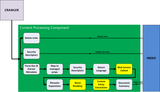
The content processing component is designed over a fixed pipeline, which in turn is made of several processing stages arranged in sequence to perform distinct activities while processing a document for indexing.
While the content processing component provides several improvements over SharePoint 2010 enterprise search (not FAST Search for SharePoint 2010), it has introduced a bottleneck where custom processing is needed in the pipeline. For custom processing SharePoint 2013 has provided mechanism "Content Enrichment Web Service (CEWS) (shown as Web Service Callout in above diagram)." This is in principle a hook in the pipeline for an external WCF service.
The major two drawbacks of this process are:
Whatever custom processing we need, must be performed within this single WCF service call. There is only one registration of a CEWS allowed per pipeline (and there is only one pipeline allowed per Search Service Application). This introduced a bottleneck where we have requirements for multiple external processing of documents passing through the pipeline.
After we register the CEWS it will be applicable for all "Content Sources" in a specific Search Service Application. In practical scenario if we might have multiple Search Content Sources for a Search Service Application and have different requirements for each of the Content Sources there is no way to achieve this. This is explained below.
Content Source 1 ->required to process Managed Property values from Repository 1
Content Source 2 -> do not need to process any values from external repository
Content Source 3 -> required to process Managed Property values from Repository 2
There is no need for a Content Enrichment Web Service call for Content Source 2 and Content Source 1 and Content Source 2 needs to call two completely different repository to get the managed property values. Using a single Web Service call for both of them will not resolve the problem here. Registering a WCF Routing Service as CEWS can resolve this problem which we’ll discuss in below section.
Solution Overview
In our demo solution. There are 2 different Content Sources specific to a Search Service Application. The requirement is
We need to generate the document preview using the Longitude Preview Service from BA-Insight and at the same time we’ll populate some managed property values coming from a SQL server database for one of the Content Sources. Let’s name it "Content Source CEWS Multiple". The BA-Insight uses their own Content Enrichment Web Service to generate document preview.
For another Content Source we need to generate the document preview only. Let’s name it "Content Source CEWS Single". This only needs to call the BA-Insight preview generator Content Enrichment Service only.
Introducing WCF Workflow Service
The WCF Workflow service has the ability to call more than one WCF services. Instead of registering a simple WCF service as an endpoint for a Content Enrichment web service we can register a WCF workflow service as the endpoint and then call our custom WCF services from the Workflow Service. The WCF Workflow Service can call the BA-Insight preview generator service first to generate the preview. Then it’ll call our Custom WCF service which gets the values of the Managed Properties from SQL Server database. After getting the values, the Workflow Service will create the Output Properties and send it back to SharePoint Pipeline where SharePoint will populate the Managed Property values. But this will be applicable for both of the Content Sources which is not desired as mentioned earlier. The second Content Source "Content Source CEWS Single" needs to call the BA-Insight preview service only to generate the document previews. To resolve this we need the help of WCF Routing service which is described below.
WCF Routing Service
WCF 4.0 introduces a new service called the Routing Service. The purpose of routing service is to pick up the request from client and based on the routing logic direct the request to proper endpoints or downstream services. These Downstream services may be hosted on the same machine or distributed across several machines in a server farm. So instead of registering the WCF Workflow Service as the endpoint in our CEWS we need to register the WCF Routing Service as the endpoint for our CEWS. The SharePoint pipeline will call the WCF Routing Service during crawl with some Input and Output properties. Based on the Input property parameter the routing service will then redirect the request to either the WCF Workflow Service or the BA-Insight Preview Service. To understand in details we need to discuss some of the details on SharePoint Content Enrichment Service.
SharePoint Content Enrichment Web Service Components
Following are some key components of the Content Enrichment Web Service Parameters which can be defined during the registration of the Service.
1. InputProperties: The InputProperties parameter specifies the managed properties sent to the service.
2. OutputProperties: The OutputProperties specifies the managed properties returned by the service
Note, that both are case sensitive. All managed properties referenced need to be created in advance.
3. Trigger: A trigger condition that represents a predicate to execute for every item being processed. If a trigger condition is used, the external web service is called only when the trigger evaluates to true. If no trigger condition is used, all items are sent to the external web service.
4. SendRawData: A SendRawData switch that sends the raw data of an item in binary form. This is useful when more metadata is required than what can be retrieved from the parsed version of the item. In our case we need to set it to true since the BA
5. TimeOut: The amount of time until the web service times out in milliseconds. Valid range 100 - 30000. In our case we’ll set it to a higher value since we are using multiple services at at some point it’ll be heavily loaded.
The detailed of configuration options and Content Enrichment Web Service can be found from MSDN. Following is a sample of PowerShell script to deploy the CEWS.
$ssa = Get-SPEnterpriseSearchServiceApplication
$config = New-SPEnterpriseSearchContentEnrichmentConfiguration
$config.Endpoint = http://Site_URL/<service name>.svc
$config.InputProperties = "OriginalPath,Body"
$config.OutputProperties = "OpProp1,OpProp2,OpProp3,OpProp4″
$config.SendRawData = $True
$config.MaxRawDataSize = 8192
$config.TimeOut = 10000
Set-SPEnterpriseSearchContentEnrichmentConfiguration -SearchApplication
$ssa -ContentEnrichmentConfiguration $config
Putting It All Together
Schematic flow diagram for Overall Search Enrichment Process
Above we explained the entire logic of the Search Enrichment process through a schematic diagram.
The WCF routing service is configured as the endpoint of the Content Enrichment configuration. Only the contents in the "Content Source CEWS Multiple" Content Source needs to be updated with the managed property values from the SQL Server database, and therefore it behooves us to only forward our content processing request to the WCF Workflow Service when the document being crawled exists in the aforementioned Content Source. For documents in the other content sources, we only need to generate the document preview from BA-Insight. Therefore, instead of routing the request to the WCF Workflow Service, we are simply sending the request to the BA- Insight Longitude Preview Generation Service.
The routing service routes the request based on the routing filter. In this case the filter is configured on basis of the managed property named "ContentSource" and the value of the ContentSource. This concept can be implemented if there are more Content Sources and needs different repositories to populate the managed property values. The only thing needs to remember that the code needs to be very efficient as there are some very heavy processing involved during the processing of the documents and the SharePoint Search (noderunner.exe) Service itself is very memory hungry.
Netwoven
.
Blog
.
<span class='date ' tip=''><i class='icon-time'></i> Jul 27, 2015 12:18pm</span>
|
|
The importance of traditions in employee engagement It doesn’t take a rocket scientist to figure out that when employees feel like they are part of something they contribute more than just positive energy. Their energy ripples throughout the entire framework of an organization and ultimately contributes to bottom line profitability, even though their exact effect is mostly immeasurable. This is what’s known as employee engagement, and it’s the new watchword for Human Resources professionals that are doing more than just doing their job. Going the extra mile, however, is easier said than done. The Gallup organization’s...
SHRM
.
Blog
.
<span class='date ' tip=''><i class='icon-time'></i> Jul 27, 2015 12:18pm</span>
|
|
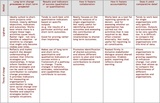
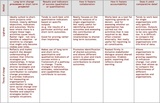
My name is Michele Tarsilla (@MiEval_TuEval) and I am a transformative evaluator with a focus on capacity development in international and cross-cultural settings. Having worked in 30 countries, I have become aware of the detached -and somewhat cynical- attitude that grantees organizations have towards their funder’s requirement for developing and using logic models (see the table below). As a result, the development of logic models has often been integrated acritically into organizational practices, merely as a simple "password for funding".
Source: www.keystoneaccountability.org
In response to such mechanistic use of logic models among many organizations working in international development, my effort has been to strike a balance between:
the need for accountability to my main client (e.g., the international organization asking me to work with local grantees and staff to develop a logframe and a theory of change); and
the ethical/professional (rather than contractual) obligation to be accountable to those very same local grantees and staff whose planning, monitoring and evaluation capacity development I am expected to contribute to.
Lessons Learned:
In an effort to promote a genuine understanding of how a logic model could become indeed an organizational asset (and by so doing, to enhance the ownership of both the final product and the process leading to its development), I have often asked my clients two things. First, to challenge some of those long-term goals recommended the funders and often inserted by default in the Logic Model template distributed to them). I particularly encourage them to translate those often ambiguous goals into lower-level objectives aligned with their specific vision. A small organization in Kinshasa that supported the professional development of young artists, for instance, did not see the relevance of including the Millennium Development Goal on poverty reduction -which the funder has assigned to them- as the ultimate rationale for their program in their logical framework. As a result, they replaced the goal within a different one (Increased support by the National Ministry of Culture for youth Culture and Development creations in the Kinshasa province").
Second, I invite local organizations and staff to combine the monitoring of activities and processes that funders are particularly interested in (e.g., for accountability and comparability purposes across project sites) with that of one or two additional programmatic aspects even if ignored by the funders’ guidelines. Furthermore, I push them for an ever more creative visualization of their respective programs inputs and results ("framers" will favor linear representations of program processes whereas "circlers" will be more keen at embracing a systemic and adaptive perspective of their program dynamics).
Rad Resource: For an interesting review of different logic models development processes, see Reina Neufeldt’s 2011 Handbook on "Frameworkers" and "Circlers"
The American Evaluation Association is celebrating Logic Model Week. The contributions all this week to aea365 come from evaluators who have used logic models in their practice. Do you have questions, concerns, kudos, or content to extend this aea365 contribution? Please add them in the comments section for this post on the aea365 webpage so that we may enrich our community of practice. Would you like to submit an aea365 Tip? Please send a note of interest to aea365@eval.org. aea365 is sponsored by the American Evaluation Association and provides a Tip-a-Day by and for evaluators.
Related posts:
Logic Models Week: Debra Smith and Galen Ellis on How Logic Models Can Be Used to Develop Evaluation Systems
Charles Gasper on Logic Models
Michael Duttweiler on Talking Your Way Into a Logic Model
AEA365
.
Blog
.
<span class='date ' tip=''><i class='icon-time'></i> Jul 27, 2015 12:18pm</span>
|
|
Overview
When I am exploring the breadth of SharePoint 2013 PowerShell and would like to dig a little deeper to understand what each of the commands are doing and what set of command are available for given operation or area of SharePoint functionality, or would like to debug some of the run time issues you may incur, I like to explore with the .Net Reflector.
Here I wanted to provide you with some guidance on your way around exploring the SharePoint 2013 PowerShell.
Setup
First of all, of course you will need to have your SharePoint 2013 On Prem installed and an existence of live farm .
You could use any commercial available Obfuscator tool. I use Red gate .NET Reflector.
Exploring
Run the .Net Reflector.
Locate the Powershell assembly as below. With .Net 4, the assembly location is now located under C:\Windows\Microsoft.NET\assembly
For powershell assembly locate the following folder
C:\Windows\Microsoft.NET\assembly\GAC_MSIL\Microsoft.SharePoint.PowerShell\v4.0_15.0.0.0__71e9bce111e9429c\Microsoft.SharePoint.Powershell.dll
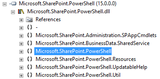
Once you have loaded the PowerShell assembly, you will see following name spaces
In order to look up the usual SharePoint Command Lets such as Get/Set/New/Delete/Remove commands look below under the SPCmdlet groups to locate your desired command
Lets explore one of the commandlet we all use Add-SPSolution.
So locate the SPCmdLetAddSolution as below:
On the Details pane you should see the method partial details as below
Now click on Expand Methods to further expand the details of each method. Partial view below:
Here under the SPSolution method you will see that there is call for _LocatFarm object which is based on the SharePoint Object Model.
So let’s click on the add method, and you will see that the call is pointing to the object model, and there you further explore the real call details.
Conclusion
Likewise, being able to explore the specific calls by knowing your API calls, you can further diagnose your Farm Issues, Configuration Issues and Development issues.
Netwoven
.
Blog
.
<span class='date ' tip=''><i class='icon-time'></i> Jul 27, 2015 12:18pm</span>
|
|
Note: This week I am at the Annual National SHRM Convention in Las Vegas, NV. And in case you’re wondering if it it’s hot in Las Vegas in July, the answer is HELL YES. The heat…my god, man, THE HEAT. Not everyone likes to go to conferences. There are a lot of people. Vendors look desperate. There are too many sessions that seem to look the same, and if you have to get on one more shuttle bus, you may burst into tears. Now multiply that by about 15,000. Because that’s how many HR professionals have descended upon Las Vegas...
SHRM
.
Blog
.
<span class='date ' tip=''><i class='icon-time'></i> Jul 27, 2015 12:18pm</span>
|
|
I’m Kylie Hutchinson, independent evaluation consultant and trainer with Community Solutions Planning & Evaluation. I also tweet regularly at @EvaluationMaven.
Systems thinking and evaluation is a hot topic these days, and as someone who spends a fair bit of time in evaluation capacity building, it has me thinking a lot about logic models. Some of you might recall a post I did for AEA365 back in 2014 on "Are Logic Models Passé?’, where I mused about the utility of static logic models in highly dynamic and complex programs.
Since then I’ve been on the hunt for examples of more "fuzzy" logic models but have only been able to find one example. Which leads me to wonder if what programs really need is not something "fuzzy", but rather something that is both structured and flexible at the same time. Sort of like Lego™.
Imagine that a program is a bridge, designed to get people from one side of a canyon to another. The program logic model is the bridge’s design, and the better the design, the greater the chances of receiving funding to build it. The bridge construction initially occurs according to plan, however, as time goes on things come up and the bridge contractor wants to make some changes. What do you do? Stick with the original design but risk not reaching the other side? If your bridge is made of steel or concrete, you’re stuck moving forward. But if you build it with Lego™, it’s easier to swap pieces in and out, without having to demolish the whole bridge. Eventually you’ll get to the other side, but maybe the bridge looks a bit different than you originally intended.
I know that some funders and government departments aren’t comfortable with the idea of "fuzzy" and I can appreciate that. Perhaps a Lego™ bridge is something more in line with their needs.
Rad Resource: Here are two Pinterest pages with resources on both logic models and systems evaluation.
Rad Resource: For a quick overview of systems thinking and evaluation, check out this five minute video.
The American Evaluation Association is celebrating Logic Model Week. The contributions all this week to aea365 come from evaluators who have used logic models in their practice. Do you have questions, concerns, kudos, or content to extend this aea365 contribution? Please add them in the comments section for this post on the aea365 webpage so that we may enrich our community of practice. Would you like to submit an aea365 Tip? Please send a note of interest to aea365@eval.org. aea365 is sponsored by the American Evaluation Association and provides a Tip-a-Day by and for evaluators.
Related posts:
SIOP Week: Dale S. Rose on Organization Development: A Program Worth Evaluating (Logically)
ECLIPS and Systems TIG Week: Tarek Azzam and Matt Keene Recap Systems-Oriented Evaluation
Logic Models Week: Debra Smith and Galen Ellis on How Logic Models Can Be Used to Develop Evaluation Systems
AEA365
.
Blog
.
<span class='date ' tip=''><i class='icon-time'></i> Jul 27, 2015 12:18pm</span>
|
|
Overview
Yammer is a private social networking tool that is best used to collaborate and share within the organization. It provides a single platform connecting people, conversations and data from different business application weaving into a single corporate social experience. Yammer is therefore available for all corporates as free Yammer Basic and for all Office 365 E3 & E4 customer it comes free as Yammer Enterprise.
So what you Get in Yammer Enterprise that Yammer Basic does not Give?
Yammer Basic Network:
It is FREE
Enterprise social networking
Basic Social Networking Features >Bring the power of social networking to your company with conversations, user profiles, Inbox, feeds, and more.
Collaboration Features >Collaborate with anyone in your company by working in groups, sharing files, co-editing content and more.
Yammer Mobile >On-the-go access to Yammer with mobile applications for iOS, Android and Windows Phone.
Apps >Integrate business apps like Klout, Github and Zendesk with Yammer to boost engagement and productivity.
Yammer Enterprise Network: (In addition to the above features, following are unique to Enterprise)
It is paid $3 per user
Apps >Integrate business apps like Klout, Github and Zendesk with Yammer to boost engagement and productivity.
Yammer Enterprise Admin Tools >Take control of your network with administrative tools like network configuration, user management, and more.
Network Level Apps and Integrations >Authorize and manage apps for your network. Access advanced integrations like SharePoint, Single Sign-On, and Directory Sync.
Support Services >Share content and ideas using SkyDrive Pro and communities
Applies to:
Yammer is a tool only for an organization and hence you need a valid corporate domain. Hence Yammer Administration can be done by any company designated administrator, who can be person without any specific skillsets.
What permission is required?
You need to be a Global Administrator for your corporate Office 365 Tenant.
So Let’s Get Started!!
By Default, Office 365 customer will have Sharepoint Newsfeed as their social networking tool. But you can start harnessing more features and control by Activating Yammer Enterprise
1. Before you can activate Yammer Enterprise, you need to choose Yammer tool for Sharepoint Online by going to Office 365 Admin Centre, Sharepoint -> Settings
2. On the settings page, change the Enterprise Social Collaboration tool to Yammer.com service.
3. However If you’re a Microsoft Enterprise Agreement customer, you can activate Yammer Enterprise for free. Microsoft Enterprise Agreement customers with qualifying license purchases, such as Office 365 Enterprise E3 and E4 plans, are eligible to activate Yammer Enterprise for their users. Qualified customers will need to work with a Yammer Service representative to start the activation process and appoint a Verified Administrator and a Community Manager to manage their company’s Yammer network. Once you activate, The Ribbon would change to Yammer
4. Sign in with your existing yammer basic account associated to your company login. You will be provided with a welcome screen from where you can simply go to yammer site with the same login.
5. Though the screen tell you about Yammer activation but in reality it does not activate and no mails are sent. It simply associates your basic yammer account to Yammer Enterprise.
6. Once logged into Yammer, a global Administrator can perform all Administrative task.
Netwoven
.
Blog
.
<span class='date ' tip=''><i class='icon-time'></i> Jul 27, 2015 12:18pm</span>
|
|
Last year (#SHRM14) I wrote a blog about how far SHRM had come with its position on social media presentations since my original involvement in SHRM-related conferencing in 2010. So I wasn’t exactly surprised this year when the sessions included one titled "Social Business: Social Media Concepts Throughout the Employment Life Cycle". I had heard that the speaker, Joe Rotella (@JoeRotella) was particularly fun, so off I limped to listen to what he had to say. He had a lot to say, but here are the highlights. MARKETING I have been complaining about SHRM...
SHRM
.
Blog
.
<span class='date ' tip=''><i class='icon-time'></i> Jul 27, 2015 12:17pm</span>
|