Blogs
|
//www.youtube.com/watch?v=BefliMlEzZ8
Sir Christopher Lee died on Sunday at the age of 93, bringing to a close a long and distinguished acting career — though one fortunately not confined only to the heights of respectability. Lee could get schlocky with the best of them, elevating otherwise clunky, broad, or overly lurid genre films with his inimitable combination of stature, bearing, and (especially) voice, most notably as Hammer Horror’s go-to Count Dracula in the 1950s and 60s, as a James Bond villain in 1974, and as various sinister gray eminences in more recent Star Wars and Lord of the Rings movies.
//www.youtube.com/watch?v=Hqs_9QiFQTw
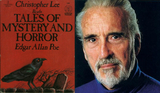
But Lee made himself equally at home in projects involving the "better" classes of genre as well. His famous voice did supreme justice to the works of Edgar Allan Poe, the 19th-century writer whose work did so much to define modern horror literature. At the top of the post, you can hear Lee give a reading of Poe’s well-known 1845 poem "The Raven"; just below, we have the trailer for Raúl García’s animated adaptation of Poe’s 1839 story "The Fall of the House of Usher," over which Lee intones suitably ominous narration straight from the text.
//www.youtube.com/watch?v=gVzOve8T39w
If you’d like to hold your own tribute to the late Sir Lee, you’ll want to listen to all his Poe-related work, watch his performances in such films as the thoroughly cult-classic The Wicker Man and the founder-of-Pakistan biopic Jinnah (in which he played the title role, his personal favorite), and play aloud a selection from his stint as a heavy-metal Christmas vocalist. Most artists who began their careers in the 1940s got publicly categorized as "highbrow" or "lowbrow"; Lee’s career, with its many forays right up to the end into the conventional and unconventional, the straight-ahead and the bizarre, existed in a reality beyond brows — the one, in other words, that we all live in now.
Related Content:
Christopher Lee Narrates a Beautiful Animation of Tim Burton’s Poem, Nightmare Before Christmas
Horror Legend Christopher Lee Presents a Heavy Metal Version of The Little Drummer Boy
Edgar Allan Poe’s "The Raven," Read by Christopher Walken, Vincent Price, and Christopher Lee
Colin Marshall writes on cities, language, Asia, and men’s style. He’s at work on a book about Los Angeles, A Los Angeles Primer, and the video series The City in Cinema. Follow him on Twitter at @colinmarshall or on Facebook.
Christopher Lee (R.I.P.) Reads Edgar Allan Poe’s "The Raven," and From "The Fall of the House of Usher" is a post from: Open Culture. Follow us on Facebook, Twitter, and Google Plus, or get our Daily Email. And don't miss our big collections of Free Online Courses, Free Online Movies, Free eBooks, Free Audio Books, Free Foreign Language Lessons, and MOOCs.
The post Christopher Lee (R.I.P.) Reads Edgar Allan Poe’s "The Raven," and From "The Fall of the House of Usher" appeared first on Open Culture.
Open Culture
.
Blog
.
<span class='date ' tip=''><i class='icon-time'></i> Aug 26, 2015 03:32pm</span>
|
|
Artist: Helen Sanderson
If you love something give it away.
If it doesn’t come back to you, it was never really yours…
Or, it’s a labor of love you created under the auspices of the Brooklyn Art Library, with the full knowledge that giving it away is a cost of participation.
Every year, thousands of artists, from the experienced to the fledgling, pay a nominal fee to fill a 5×7 sketchbook with a custom barcode. Upon completion, the books are to be mailed back to the one room Art Library, to become part of the permanent collection, currently over 34,000 volumes strong (17,000 of which appear online). Visitors receive free library cards that allow them to view as many volumes as they like in-house, three at a time.
Artists willing to cough up a slightly more substantial fee can have their book digitized for online viewing at The Sketchbook Project.
Artist: Tim Oliveira
In their virgin state, the sketchbooks are uniform. From there, anything goes, provided they retain their original height and width, and swell to no more than an inch thick. (Messy, gooey books might face rejection, in part because they threaten to contaminate the herd.)
Dip in at random and you will find an astonishing array of finished work: messy, meticulous, intimate, inscrutable, self-mocking, sincere, abstract, narrative, carefully plotted, utterly improvisational, accomplished, amateur - rendered in a wide variety of media, including ball point pen and collage.
Artist: Estella Yu
My favorite way to browse the collection, whether in person or online, is by selecting a theme, just as the artists do when signing up for the annual project. 2016’s themes include "sandwich," "great hopes and massive failures," and "Ahhh! Monster!"
("I’ll choose my own theme" is a perennial menu offering.)
The theme that guided the artists whose work is published herein is "Things Found on Restaurant Napkins." Would you have guessed?
Artist: Christopher Moffitt
You can also search on specific words or mediums, artists’ names, and geographic locations. To date, The Sketchbook Project has received sketchbooks by creative people from 135+ countries.
Those ready to take the Brooklyn Art Library’s Sketchbook Project plunge can enlist here. Don’t fret about your qualifications—co-founders Steven Peterman and Shane Zucker have made things democratic, which is to say uncurated, by design.
Artist: Betty Esperanza
via The New Yorker
Related Content:
New York Public Library Puts 20,000 Hi-Res Maps Online & Makes Them Free to Download and Use
Download 422 Free Art Books from The Metropolitan Museum of Art
LA County Museum Makes 20,000 Artistic Images Available for Free Download
Ayun Halliday is an author, illustrator, and Chief Primatologist of the East Village Inky zine. Her 2011 sketchbook, "I’m a Scavenger" is housed in the Brooklyn Art Library. Follow her @AyunHalliday
The Sketchbook Project Presents Online 17,000 Sketchbooks, Created by Artists from 135 Countries is a post from: Open Culture. Follow us on Facebook, Twitter, and Google Plus, or get our Daily Email. And don't miss our big collections of Free Online Courses, Free Online Movies, Free eBooks, Free Audio Books, Free Foreign Language Lessons, and MOOCs.
The post The Sketchbook Project Presents Online 17,000 Sketchbooks, Created by Artists from 135 Countries appeared first on Open Culture.
Open Culture
.
Blog
.
<span class='date ' tip=''><i class='icon-time'></i> Aug 26, 2015 03:30pm</span>
|
|
//www.youtube.com/watch?v=GuVax7iMM6Y
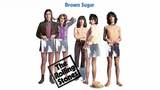
Has there ever been a more entertaining song containing-as critic Robert Christgau enumerated— "slavery, interracial sex, cunnilingus, and less distinctly, sadomasochism, lost virginity, rape and heroin" as the Rolling Stones’ 1971 "Brown Sugar"? The song’s lyrics lay in wait for those who hear it in passing on classic rock radio, like an un-PC land mine. And you’ll only step on one when you’re dancing.
Last week, the Rolling Stones promoted the re-release/remaster/repackage of their 1971 album Sticky Fingers with an alternative take of the song, featuring Eric Clapton on slide guitar, and a sloppier, more festive sound. It’s the first official release of a version long since bootlegged.
Unlike many alternative versions found on deluxe editions, this recording came after the classic track was recorded, but the path of Sticky Fingers was a convoluted one.
For starters, it was Mick Jagger, not Keith Richards, who came up with the opening riff, something he wrote while in Australia filming Tony Richardson’s Ned Kelly as a way of rehabilitating his hand after injuring it. Jagger says he had Freddy Cannon’s rough-around-the-edges 1959 "Tallahassee Lassie" in mind, though you might be hard pressed to hear the influence.
The Stones recorded "Brown Sugar" at the Muscle Shoals Sound Studios in Sheffield, Alabama in early December, 1969. It was just a few days after the release of their epochal Let It Bleed, and a week after the New York and Baltimore concerts recorded for Get Yer Ya-Ya’s Out!. Brian Jones was nearly half a year dead. Guitarist Mick Taylor was new.
And Muscle Shoals was not yet a studio of legend. It had been the home of one hit: R.B. Greaves’ humping-the-secretary single "Take a Letter, Maria." Memphis was nearby and had better studios, but the Stones wanted to check out this new place.
On the first night, they recorded a cover of "You Gotta Move" by Mississippi Fred McDowell that ends side one of the album. The next day, they recorded "Brown Sugar." Mick Jagger told a reporter upon entering the studio: "I’ve got a new one myself. No words yet, but a few words in my head - called Brown Sugar - about a woman who screws one of her black servants. I started to call it Black Pussy but I decided that was too direct, too nitty-gritty."
Jim Dickinson, Muscle Shoals producer and session piano player, is quoted in Keith Richard’s 2010 book Life, "I watched Mick write the lyrics. It took him maybe forty-five minutes; it was disgusting. He wrote it down as fast as he could move his hand. I’d never seen anything like it. He had one of those yellow legal pads, and he’d write a verse a page, just write a verse and then turn the page, and when he had three pages filled, they started to cut it. It was amazing!" Many years later Marsha Hunt, Jagger’s secret girlfriend at the time and mother of his first child Karis, would reveal the song was indeed about her, which makes the taboos of slavery and rape in the lyrics all that more disturbing.
The next day, the band focused on another new song called "Wild Horses" and then they were back on the road, premiering "Brown Sugar" at the disastrous concert at the Altamont Speedway where several people died.
The band wanted to release the song, but contractual problems with former label ABKCO halted their plans.
A year later, while the majority of Sticky Fingers had been recorded, the group celebrated Keith Richards’ birthday at Olympic Studios in London. The alternative version above comes from that party and features Al Kooper on piano and Eric Clapton on slide. Richards preferred this version, but it never made the cut, and listening to it now the official version sounds like the obvious choice: the sound of Muscle Shoals is undeniable.
Related Content:
Mick Jagger Tells the Story Behind ‘Gimme Shelter’ and Merry Clayton’s Haunting Background Vocals
The Rolling Stones Release a Soulful, Never-Heard Acoustic Version of "Wild Horses"
Watch the Rolling Stones Write "Sympathy for the Devil": From Jean-Luc Godard’s ’68 Film One Plus One
Gimme Shelter: Watch the Classic Documentary of the Rolling Stones’ Disastrous Concert at Altamont
Ted Mills is a freelance writer on the arts who currently hosts the FunkZone Podcast. You can also follow him on Twitter at @tedmills, read his other arts writing at tedmills.com and/or watch his films here.
Open Culture
.
Blog
.
<span class='date ' tip=''><i class='icon-time'></i> Aug 26, 2015 03:29pm</span>
|
|
//www.youtube.com/watch?v=9mLdo4uMJUU
Those who know the name Marcel Proust, if not his work itself, know it as that of the most solitary and introspective of writers—a name become an adjective, describing an almost painfully delicate variety of sensory reminiscence verging on tantric solipsism. Proust has earned the reputation for writing what Alain de Botton above tells us in his Proust introduction is "officially the longest novel in the world," A la recherché du temps perdu (In Search of Lost Time). The book—or books, rather, totaling double the number of words as Tolstoy’s War and Peace—recounts the mainly contemplative travails of a "thinly veiled" version of the author. It is, in one sense, a very long, masterfully stylized diary of the author’s loves, lusts, likes, moods, and tastes of every kind.
Those who know the iPhone app, "Proust"—a far fewer number, I’d wager—know it as a game that harnesses the combined power of social networking, instant online opinion, and survey technology in a relentlessly repetitive exercise in faceless collectivity. These two entities are perhaps vaguely related by the Proust questionnaire, but the distance between them is more significant, standing as an ironic emblem of the distance between Proust’s refined literary universe and that of our contemporary mass culture.
Proust, a constitutionally fragile elitist born to wealthy Parisian parents in 1871, concluded that a life worth living requires the uniquely sensitive, finely-tuned appreciation of everyday life that children and artists possess, uncolored by the spoils of habit and deadening routine. "Proust" the game—as the host of its viciously satirical video proclaims in an ambiguously European accent—concludes "It’s fun to judge"… in identical, rainbow-colored screens that reduce every consideration to a vapid contest with no stakes or effort. It too represents, through parody, a kind of philosophy of life. And one might broadly say we all live somewhere in-between the hyper-aestheticism of Proust the writer and the mindless rapid-fire swipe-away trivializing of Proust the app.
De Botton, consistent with the mission of his very missionary School of Life, would like us to move closer to the literary Proust’s philosophy, a "project of reconciling us to the ordinary circumstances of life" and the "charm of the everyday." As he does with all of the figures he conscripts for his lessons, De Botton presumes that Proust’s primary intent in his interminable work was to "help us" realize this charm—and Proust did in fact say as much. But readers and scholars of the reclusive French writer may find this statement, its author, and his writing, much more complicated and difficult to make sense of than we’re given to believe.
Nonetheless, this School of Life video, like many of the others we’ve featured here, does give us a way of approaching Proust that is much less daunting than so many others, complete with clever cut-out animations that illustrate Proust’s theory of memory, occasioned by his famed, fateful encounter with a cup of tea and a madeleine. The teatime epiphany caused Proust to observe:
The reason why life may be judged to be trivial, although at certain moments it seems to us so beautiful, is that we form our judgment ordinarily not on the evidence of life itself, but of those quite different images which preserve nothing of life, and therefore we judge it disparagingly.
We may take or leave De Botton’s interpretation of Proust’s work, but it seems more and more imperative that we give the work itself our full attention—or as much of it as we can spare.
Related Content:
Watch Monty Python’s "Summarize Proust Competition" on the 100th Anniversary of Swann’s Way
Marcel Proust Fills Out a Questionnaire in 1890: The Manuscript of the ‘Proust Questionnaire’
What Are Literature, Philosophy & History For? Alain de Botton Explains with Monty Python-Style Videos
Josh Jones is a writer and musician based in Durham, NC. Follow him at @jdmagness.
An Introduction to the Literary Philosophy of Marcel Proust, Presented in a Monty Python-Style Animation is a post from: Open Culture. Follow us on Facebook, Twitter, and Google Plus, or get our Daily Email. And don't miss our big collections of Free Online Courses, Free Online Movies, Free eBooks, Free Audio Books, Free Foreign Language Lessons, and MOOCs.
The post An Introduction to the Literary Philosophy of Marcel Proust, Presented in a Monty Python-Style Animation appeared first on Open Culture.
Open Culture
.
Blog
.
<span class='date ' tip=''><i class='icon-time'></i> Aug 26, 2015 03:28pm</span>
|
|
View image | gettyimages.com
At 24, some five years before publishing his breakout book, Hell’s Angels, and nearly a decade before branding himself a "gonzo journalist," the young Hunter S. Thompson was an anonymous freelancer looking to make a name for himself. The year was 1962. Fidel Castro had marched into Havana three years earlier, and the story of the decade — the expanding frontier of the Cold War — was playing out in Latin America. It occurred to Thompson that a hungry cub reporter could build a reputation covering it.
Thompson’s epiphany coincided with the launch of the National Observer, a mildly experimental weekly newspaper published by the Dow Jones Company. Thompson sent a letter introducing himself, said he was headed to South America, and got an invite to submit any stories he wrote along the way. He arrived in Colombia in May of 1962 and, over the course of the next year, traveled through Ecuador, Peru, Bolivia, Paraguay, Argentina, Uruguay, and Brazil. The Observer published some 20 of his stories from or about South America, most of which focused on the continent’s culture and politics, and on how these were affected by a Cold War-era U.S. foreign policy centered around aid and containment.
Six of Thompson’s South America pieces were anthologized in his 1979 collection The Great Shark Hunt (some in a slightly altered form); the rest have been essentially lost for more than 50 years, readable only in a few libraries’ microform collections of the Observer, which folded in 1977. I dug up the whole series while researching my book, The Footloose American: Following the Hunter S. Thompson Trail Across South America (get a copy here). From the outset, I intended to post the articles online somewhere following the book’s publication, so that other readers and researchers can easily access them — and now that the book’s been on shelves for a year, it seemed like time to make good.
As I write in the book — and as I’ve described in The Atlantic and elsewhere — Thompson’s South American reportage offers a glimpse at his emerging style. This is sharp, witty participatory journalism with a keen eye for the absurdities of South American life in the 1960s . The pieces are a mix of straightforward news reporting and more narrative, feature-style articles. The depth of insight into Cold War foreign policy is impressive, and the stories contain some memorable prose: the taxis in Quito, Ecuador, "rolled back and forth like animals looking for meat." Asuncion, Paraguay, is "an O. Henry kind of place . . . about as lively as Atlantis, and nearly as isolated." La Paz, Bolivia, meanwhile, offers "steep hills and high prices, sunny days and cold nights, demonstrations by wild-eyed opposition groups, drunken Indians reeling and shouting through the streets at night — a manic atmosphere."
The Community Texts collection at archive.org now hosts a document with 18 of Thompson’s National Observer stories from South America, as well as hosting each piece for individual reading or download. Find them all right below.
Note: If you find that the font is small, just click the plus (+) sign at the bottom of the screen to increase the font size.
1) ‘Leery Optimism’ at Home for Kennedy Visitor (June 24, 1962)
A profile of Colombia’s U.S.-friendly president-elect.
2) Nobody is Neutral Under Aruba’s Hot Sun (July 16, 1962)
On the divisive politics of sunny Aruba.
3) A Footloose American in a Smuggler’s Den (August 6, 1962)
Thompson is marooned in Guajira, Colombia, smuggling capital of the Caribbean.
4) Democracy Dies in Peru, But Few Seem to Mourn Its Passing (August 27, 1962)
On the results of a surprising Peruvian election — and the military takeover that followed.
5) How Democracy is Nudged Ahead in Ecuador (September 17, 1962)
A day in the life of the American propaganda bureau in Ecuador.
6) Ballots in Brazil Will Measure the Allure of Leftist Nationalism (October 1, 1962)
On a pivotal Brazilian election and the lure of the populist left.
7) Operation Triangular: Bolivia’s Fate Rides With It (October 15, 1962)
On tin miners’ graveyards, violent strikers, and Bolivia’s crippling reliance on resource extraction.
8) Uruguay Goes to the Polls with Economy Sagging (November 19, 1962)
The Blancos and Colorados clash at the polls in South America’s most developed democracy.
9) Chatty Letters During a Journey From Aruba to Rio (December 31, 1962)
A selection of Thompson’s (sometimes desperate) letters from South America to his editor.
10) Troubled Brazil Holds Key Vote (January 7, 1963) - Text 1 - Text 2
Brazilians vote with the specter of revolution on the horizon.
11) It’s a Dictatorship, But Few Seem to Care Enough to Stay and Fight (January 28, 1963)
Reporting on the beleaguered opposition to Paraguay’s dictator, Alfredo Stroessner.
12) Brazilian Soldiers Stage Raid in Revenge (February 11, 1963)
Reporting on a grudge, a rogue military, and a murder in a Rio de Janeiro bar.
13) Leftist Trend and Empty Treasury Plague the Latin American Giant (March 11, 1963)
Hyperinflation, labor strikes, and growing instability in Brazil.
14) A Never-Never Land High Above the Sea (April 15, 1963)
On madness, paranoia, and bizarre happenings in the streets of La Paz.
15) Election Watched as Barometer Of Country’s Economic Trend (May 20, 1963)
Reporting on the military junta from gloomy Lima.
16) He Haunts the Ruins of His Once-Great Empire (June 10, 1963)
On the plight — and latent political power — of indigenous Andeans.
17) Why Anti-Gringo Winds Often Blow South of the Border (August 19, 1963)
On cynicism and disillusionment (and drinking) among American expats in South America.
18) Can Brazil Hold Out Until the Next Election? (October 28, 1963)
Hyper-inflation threatens to sink the Brazilian government.
This is a guest post from Brian Kevin, a writer based in Maine and the author of The Footloose American. Follow him on Twitter at @BrianMT.
Related Content:
Hunter S. Thompson, Existentialist Life Coach, Gives Tips for Finding Meaning in Life
Read 10 Free Articles by Hunter S. Thompson That Span His Gonzo Journalist Career (1965-2005)
Hunter S. Thompson Interviews Keith Richards
Read 18 Lost Stories From Hunter S. Thompson’s Forgotten Stint As a Foreign Correspondent is a post from: Open Culture. Follow us on Facebook, Twitter, and Google Plus, or get our Daily Email. And don't miss our big collections of Free Online Courses, Free Online Movies, Free eBooks, Free Audio Books, Free Foreign Language Lessons, and MOOCs.
The post Read 18 Lost Stories From Hunter S. Thompson’s Forgotten Stint As a Foreign Correspondent appeared first on Open Culture.
Open Culture
.
Blog
.
<span class='date ' tip=''><i class='icon-time'></i> Aug 26, 2015 03:28pm</span>
|
|
//www.youtube.com/watch?v=R3U30wSAV4Q
Isaac Asimov, one of the most prolific creators in science-fiction history, wrote or edited more than 500 books in his lifetime, including the high-profile ones we all recognize like I, Robot and the Foundation series (hear a version dramatized here). But which piece of this massive body of work did Asimov himself consider his favorite? Always a fan of clarity, the man didn’t leave that issue shrouded in mystery: the honor belongs to "The Last Question," which first appeared in the November 1956 issue of Science Fiction Quarterly. It’s now available in Isaac Asimov: The Complete Stories, Vol. 1.
"Why is it my favorite?" Asimov later wrote. "For one thing I got the idea all at once and didn’t have to fiddle with it; and I wrote it in white-heat and scarcely had to change a word. This sort of thing endears any story to any writer." But it also had, and continues to have, "the strangest effect on my readers. Frequently someone writes to ask me if I can give them the name of a story, which they ‘think’ I may have written, and tell them where to find it. They don’t remember the title but when they describe the story it is invariably ‘The Last Question.'"
//www.youtube.com/watch?v=rjqjSP7kOO4
You certainly won’t forget who wrote the story if you listen to it in Asimov’s own voice in the video at the top of the post. Alternatively, you can hear it read by Leonard Nimoy, surely the most distinctive sci-fi narrator of our time, in the video just above. Nimoy first read "The Last Question" aloud for an adaptation staged at Michigan State University’s Abrams Planetarium in 1966, a production that first moved Asimov himself to consider ranking its source material among his best works. Of course, the story would have received none of this retrospective attention, from its author or others, if not for its intellectual content, which comes through vividly no matter how you take it in.
Look past the more entertainingly dated elements — expressions like "for Pete’s sake," enormous central computers that print all their output on paper slips, an early reference to "highballs" — and you find plenty of elements that qualify as eternal: the ever more rapid expansion of humanity, the ever more rapid progress of technology, and the seemingly ever-faltering ability of the former to maintain dominance over the latter. Within the story’s nine pages, Asimov even digs into scientific concepts like entropy and the heat death of the universe as well as philosophical concepts like the true nature of "forever" and the origin of life, the universe, and everything. If you read only one of Asimov’s stories, he’d surely approve if you made it "The Last Question." (And if you read two, why not "The Last Answer"?). Find these readings added to our collection, 630 Free Audio Books: Download Great Books for Free.
Related Content:
Isaac Asimov Predicts in 1964 What the World Will Look Like Today — in 2014
Free: Isaac Asimov’s Epic Foundation Trilogy Dramatized in Classic Audio
Isaac Asimov Explains the Origins of Good Ideas & Creativity in Never-Before-Published Essay
Isaac Asimov Explains His Three Laws of Robots
Leonard Nimoy Reads Ray Bradbury Stories From The Martian Chronicles & The Illustrated Man (1975-76)
Colin Marshall writes on cities, language, Asia, and men’s style. He’s at work on a book about Los Angeles, A Los Angeles Primer, and the video series The City in Cinema. Follow him on Twitter at @colinmarshall or on Facebook.
Isaac Asimov’s Favorite Story "The Last Question" Read by Isaac Asimov— and by Leonard Nimoy is a post from: Open Culture. Follow us on Facebook, Twitter, and Google Plus, or get our Daily Email. And don't miss our big collections of Free Online Courses, Free Online Movies, Free eBooks, Free Audio Books, Free Foreign Language Lessons, and MOOCs.
The post Isaac Asimov’s Favorite Story "The Last Question" Read by Isaac Asimov— and by Leonard Nimoy appeared first on Open Culture.
Open Culture
.
Blog
.
<span class='date ' tip=''><i class='icon-time'></i> Aug 26, 2015 03:27pm</span>
|
|
//www.youtube.com/watch?v=rtNtYvfXPwA
Akira Kurosawa’s Seven Samurai (1954) might be over three hours long but you never feel bored. The action scenes never fail to thrill and the characters are so well developed that you genuinely grieve when they die. The epic is so brilliantly realized that it’s no surprise that filmmakers everywhere took note. In The Magnificent Seven (1960), a direct remake of Seven Samurai, Hollywood swapped out katanas for six-shooters and recast the movie as a Western. Other films from The Guns of Navarro to the Bollywood blockbuster Sholay to even Pixar’s A Bug’s Life have drawn heavily from Kurosawa’s masterpiece.
Add to this list Toshifumi Takizawa’s 26-episode animated TV series Samurai 7. The set up is identical to the original — masterless samurais are hired to protect a village from a ruthless gang of bandits — and many of the characters in the animated series have the same names as characters in the original film. But the total running time of the TV show is three times longer than that of Kurosawa’s film, so Takizawa took a few liberties.
The show’s opening scene, for instance, features a massive interstellar battle involving lasers and spaceships. There’s a rusting, elephantine megalopolis straight out of Blade Runner. And also there are robots. The bandits, as it turns out, are more metallic than human, and Kikuchiyo, who was played brilliantly as a drunken wild man by Toshiro Mifune, is in this iteration a grumpy, poorly-constructed cyborg who wields a chainsaw-like sword. The series even has Kirara, a cow-eyed teenaged priestess who sports a midriff-baring kimono.
Either the story elements above sound completely preposterous or totally awesome. If you’re in the former category, you can watch the trailer for Kurosawa’s film below. If you’re in the latter category - and the show is a lot of fun - then you can watch episode 1 above, and catch the rest on Youtube.
//www.youtube.com/watch?v=MwvpUtc1hBU
Related Content:
Akira Kurosawa’s List of His 100 Favorite Movies
How Akira Kurosawa Used Movement to Tell His Stories: A Video Essay
Akira Kurosawa & Francis Ford Coppola Star in Japanese Whisky Commercials (1980)
Jonathan Crow is a Los Angeles-based writer and filmmaker whose work has appeared in Yahoo!, The Hollywood Reporter, and other publications. You can follow him at @jonccrow. And check out his blog Veeptopus, featuring lots of pictures of vice presidents with octopuses on their heads. The Veeptopus store is here.
Open Culture
.
Blog
.
<span class='date ' tip=''><i class='icon-time'></i> Aug 26, 2015 03:26pm</span>
|
|
//www.youtube.com/watch?v=EeBPNQ4M-xM
I recently talked with a friend who’s planning to schedule a screening of Blade Runner at her film festival. We discussed the important decision that anyone who wants to show Ridley Scott’s Philip K. Dick-adapting masterpiece faces: which Blade Runner? Seven different official cuts exist: many would instinctively choose the 2007 "final cut," some might prefer the 1992 "director’s cut," and a curious minority might even like to see the cut originally released in U.S. theaters in 1982, featuring the Harrison Ford voiceover and happy ending that fans now consider ruinous.
But now we have yet another cut of Blade Runner, perhaps the most unusual of them all: a "new" version made out of shots that, even if you’ve seen every official cut of the film, you may never have seen before. "Some enterprising souls have compiled a B-roll cut of the film, using all of the excised footage that was not incorporated in the previous cuts," writes Nerdist’s Joseph McCabe. "There’s so much here that most Blade Runner fans have not seen before that it’s absolutely required viewing. I found it worth watching all forty-five minutes just to hear Edward James Olmos’ gruff Gaff hilariously exclaim, ‘I spit on metaphysics!'" Not to mention all the new views of the picture’s still-striking production design.
That running time, over an hour shorter than every other cut, effectively condenses Blade Runner into a short film. It doesn’t play quite like any of the widely seen versions of the film, even though it retains the hated narration and incongruous Hollywood ending of the American theatrical cut. But the elements that feel clunky, over-explanatory, and audience-distrusting in a two-hour Blade Runner somehow work better in this briefer rendition. (Certainly Ford’s voiceover, awkward though it always sounds, helps this trimmed-down story cohere.) You haven’t really seen Blade Runner, so many who love the movie feel, until you’ve seen every Blade Runner — but even now, I don’t think we’ve seen the last of them.
via Nerdist
Related Content:
The Art of Making Blade Runner: See the Original Sketchbook, Storyboards, On-Set Polaroids & More
The Blade Runner Promotional Film
Blade Runner: The Pillar of Sci-Fi Cinema that Siskel, Ebert, and Studio Execs Originally Hated
The Blade Runner Sketchbook: The Original Art of Syd Mead and Ridley Scott Online
Philip K. Dick Previews Blade Runner: "The Impact of the Film is Going to be Overwhelming" (1981)
Watch an Animated Version of Ridley Scott’s Blade Runner Made of 12,597 Watercolor Paintings
The City in Cinema Mini-Documentaries Reveal the Los Angeles of Blade Runner, Her, Drive, Repo Man, and More
Colin Marshall writes on cities, language, Asia, and men’s style. He’s at work on a book about Los Angeles, A Los Angeles Primer, and the video series The City in Cinema. Follow him on Twitter at @colinmarshall or on Facebook.
Blade Runner Recut with the Sci-Fi Masterpiece’s Unused Original Footage is a post from: Open Culture. Follow us on Facebook, Twitter, and Google Plus, or get our Daily Email. And don't miss our big collections of Free Online Courses, Free Online Movies, Free eBooks, Free Audio Books, Free Foreign Language Lessons, and MOOCs.
The post Blade Runner Recut with the Sci-Fi Masterpiece’s Unused Original Footage appeared first on Open Culture.
Open Culture
.
Blog
.
<span class='date ' tip=''><i class='icon-time'></i> Aug 26, 2015 03:26pm</span>
|
|
Two years ago, in a post on the pioneering composer of the original Doctor Who theme, we wrote that "the early era of experimental electronic music belonged to Delia Derbyshire." Derbyshire—who almost gave Paul McCartney a version of "Yesterday" with an electronic backing in place of strings—helped invent the early electronic music of the sixties through her work with the Radiophonic Workshop, the sound effects laboratory of the BBC. She went on to form one of the most influential, if largely obscure, electronic acts of the decade, White Noise. And yet, calling the early eras of the electronic music hers is an exaggeration. Of course her many collaborators deserve mention, as well as musicians like Bruce Haack, Pierre Henry, Kraftwerk, Brian Eno, and so many others. But what gets almost completely left out of many histories of electronic music, as with so many other histories, is the prominent role so many women besides Derbyshire played in the development of the sounds we now hear all around us all the time.
In recognition of this fact, musician, DJ, and "escaped housewife/schoolteacher" Barbara Golden devoted two episodes of her KPFA radio program "Crack o’ Dawn" to women in electronic music, once in 2010 and again in 2013. She shares each broadcast with co-host Jon Leidecker ("Wobbly"), and in each segment, the two banter in casual radio show style, offering history and context for each musician and composer. Recently highlighted on Ubu’s Twitter stream, the first show, "Women in Electronic Music 1938-1982 Part 1" (above) gives Derbyshire her due, with three tracks from her, including the Doctor Who theme. It also includes music from twenty one other composers, beginning with Clara Rockmore, a refiner and popularizer of the theremin, that weird instrument heard in the Doctor Who intro, designed to simulate a high, tremulous human voice. Also featured is Wendy Carlos’s "Timesteps," an original piece from her A Clockwork Orange score. (You’ll remember her enthralling synthesizer recreations of Beethoven’s 9th Symphony from the film).
The second show, above, fills in several gaps in the original broadcast and "could easily be six hours" says co-host Leidecker, given the sheer amount of electronic music out there composed and recorded by women over the past seventy years. This show includes one of our host Golden’s own compositions, "Melody Sumner Carnahan," as well as music from Laurie Anderson and musique concrete composer Doris Hays. These two broadcasts alone cover an enormous range of stylistic and technological ground, but for even more discographical history of women in electronic music, see the playlist below, compiled by "Nerdgirl" Antye Greie-Ripatti for Women’s Day, 2014. Commissioned by Club Transmediale Berlin, the mix includes such well-known names as Yoko Ono, Bjork, and M.I.A., as well as foremothers Derbyshire and Carlos, and dozens more.
In lieu of the radio-show chatter of Golden and Leidecker, we have Greie-Ripatti’s post detailing each artist’s time period, country of origin, and contributions to electronic music history. Many of the composers represented here worked for major radio and film studios, scored feature films (like 1956’s Forbidden Planet), invented and innovated new instruments and techniques, wrote for orchestras, and passed on their knowledge as educators and producers. Greie-Ripatti’s page quotes a Danish electronic producer and performer saying "there is a lot of women in electronic music… invisible women." Thanks to efforts like hers and Golden’s, these pioneering creators need no longer go unseen or, more importantly, unheard.
via Ubuweb
Related Content:
Meet the Dr. Who Composer Who Almost Turned The Beatles’ "Yesterday" Into Early Electronica
Mr. Rogers Introduces Kids to Experimental Electronic Music by Bruce Haack & Esther Nelson (1968)
Thomas Dolby Explains How a Synthesizer Works on a Jim Henson Kids Show (1989)
Josh Jones is a writer and musician based in Durham, NC. Follow him at @jdmagness.
Open Culture
.
Blog
.
<span class='date ' tip=''><i class='icon-time'></i> Aug 26, 2015 03:25pm</span>
|
|
//www.youtube.com/watch?v=aeZrRENgXmY
Last Friday, after we marked the passing of Christopher Lee by featuring his reading of Edgar Allan Poe’s 1845 narrative poem "The Raven," we stumbled, by chance, upon Lee’s reading of another Poe classic-"The Tell-Tale Heart." Operating with the theory that there’s no such thing as too much Edgar Allan Poe, and certainly no such thing as too much Christopher Lee reading Edgar Allan Poe, we’ve featured that second reading above. It’ll be added to our collection of 630 Free Audio Books…
via the Edgar Allan Poe Facebook Page
Dan Colman is the founder/editor of Open Culture. Follow us on Facebook, Twitter, Google Plus and LinkedIn and share intelligent media with your friends. Or better yet, sign up for our daily email and get a daily dose of Open Culture in your inbox.
Open Culture
.
Blog
.
<span class='date ' tip=''><i class='icon-time'></i> Aug 26, 2015 03:24pm</span>
|