Blogs
|
In case you missed any of these great posts last week - here's a recap of what the top stuff was from eLearning Learning.Top Posts The following are the top posts from featured sources based on social signals. Twitter Cheat Sheet version 1.1 is up- Adventures in Corporate Education, April 18, 2009European training survey shows HR and training holding back change- Clive on Learning, April 22, 2009Social Learning Designer- eLearning Technology, April 22, 2009Overcoming Top 10 Objections to Social Learning- Social Enterprise Blog, April 24, 2009Love The Conversation- Blogger in Middle-earth, April 17, 2009Learning With A Webcam- Blogger in Middle-earth, April 22, 2009Who Needs to Be on Your 3D Development Team?- Kapp Notes, April 20, 2009Fantastic File Converter- eLearning Acupuncture, April 24, 2009Throw away your powerponits, simply use Prezi- Ignatia Webs, April 21, 2009Learning Tools: for the Educator/Teacher- Don't Waste Your Time, April 20, 2009 Top Other Items The following are the top other items based on social signals. Enterprise: List of 40 Social Media Staff Guidelines, April 23, 2009Twitter As a Learning Tool. Really. - 2009 - ASTD, April 21, 2009The Web: Design for Active Learning, April 17, 2009Do Learning Styles exist? - Home, April 22, 2009How to make e-learning work!, April 23, 2009The (changed) information cycle, April 17, 2009The Semantic Web and E-learning, April 18, 2009Weblogg-ed " New Reading, New Writing, April 23, 2009Leveraging the human network, April 17, 2009cathellis13: Ten Commandments of eLearning, April 21, 2009 Top Keywords Twitter (38)Virtual Learning Environment (3)Learning Management System (8)Coaching (8)LinkedIn (13)Microphone (4)Social Network Analysis (2)VLE (3)Conversation (18) eLearning Technology
Browse eLearning Content
Tony Karrer
.
Blog
.
<span class='date ' tip=''><i class='icon-time'></i> Jul 14, 2015 01:52pm</span>
|
|
by Jennie Ruby
This week's confusing words pop up often in writing about training, creating a minefield of potential spelling errors.
First, let's look at lead versus led. Lead is a toxic element formerly found in gasoline and other products. It is also the common term for the graphite in pencils. As a verb, lead means to go first and show the way, so many of us lead classes. But if we did that yesterday, we led the class--the past-tense form of the verb to lead.
Peek, pique, and peak all three may appear in writing about training. A peek is a quick look. The verb pique means to arouse or cause something, typically interest or anger. As a noun, it means anger. Peak can be a verb or a noun, and always indicates a pinnacle or high point.
Select the right word in each sentence (watch for additional problems in the same sentence)!
I need a lead/led pencil to mark this answer key.
Who is the lead/led instructor for Friday's class?
Who lead/led last week's discussion session?
This instructor-lead/instructor-led training is offered monthly.
The training room does not have any lead-based/led-based paint.
We hope this preview of our training will peek/pique/peak your interest.
This training comes just as the interest in gamification reaches its/it's peek/pique/peak.
Here is a quick peek/pique/peak into the topic of next month's/months conference.
The unhappy, stressed-out student left in a fit of peek/pique/peak.
The participant-lead/participant-led workshop peeked/piqued/peaked the interest of several conference attendees/attendee's.
When ready, please post your answers as comments below.
***
Answers to the Confusing Words for 500 challenge are brought to you by Chris Zimmel
The director asked me to keep her appraised/apprised of the project status.
We later met to flush out/flesh out the details of the project.
During the buyer's walk-through, some squirrels were fleshed out/flushed out of the attic.
Please appraise/apprise the seller of her rights regarding the negotiated price.
We need to appraise/apprise the governor of the details of the scam.
Can we flush out/flesh out this outline before we submit it to the client?
The plumber appraised/apprised me of the condition of the old iron pipes.
The main line needed to be fleshed out/flushed out to allow water to flow freely.
We met with the plumber to flesh out/flush out the plan for upgrading the pipes.
We need to appraise/apprise students of how toaccess/excess the supplemental material.
Other winners of Confusing Words for 500 challenge, approximately in order of receipt: Lynn Walpole, Sonia Verma,Melanie Elick, Tara Allen, Geri Moran, Michael Shepherd, Phyllis Muder, Patrick Brown, Tonya Bowles, Christine Pass, Lisset Vega,Karyn Highet, Kolja Fuchs, Irene McCoy, Kay Honaker, Vera Sytch,Lisa J Stumpf, Ginny Supranowitz, Tanya Davis, Stacey Edwards, and Denise Miller.
Fair warning... next time I will start counting missed additional problems later in the sentence against you!
***
If you love Jennie's articles, you'll love her classes. Check out some of Jennie's mini courses.
Icon Logic Blogs
.
Blog
.
<span class='date ' tip=''><i class='icon-time'></i> Jul 14, 2015 01:51pm</span>
|
|
Written by Chris Osborn Today's Q&A discusses the distinctions between training and development. Stay Up-to-Date on the Most Current Business Training Trends BizLibrary offers 7,000+ training videos in various business training topics, with new courses added every day. 10 Tips for Marketing Your Employee Training Program In this eBook we’ll discuss you'll learn 10 ways to improve the marketing of your online employee training program and boost employee engagement and participation. BizLibrary's Mobile Learning App meets the needs of today's digital learners. Employees no longer wait for training departments to push learning content to them. Employees are used to pulling information to themselves, when they need it, on their own terms and conditions, and on their own devices. Video Transcription Hi, Chris Osborn, VP of Marketing with today's Q&A. Yesterday's webinar was about barriers to training success, Yonette, an HR professional in a manufacturing company, and current client of BizLibray’s asked: Is there a difference between training and educating when we think of impact and application? Another participant offered a great place to start answering this question like this. Randall said, "Training is the "what" of learning and education is the "why." Randall’s explanation is close, and it’s a good place to start. Training is generally explained as teaching an employee to effectively perform a specific task. For instance, we "train" people to operate equipment, navigate through an application like our CRM or use a database. So the outcome of training is to advance some very specifically identified skill or to increase some specific area of knowledge. Education involves establishing a set of values to enable employees to make effective decisions. Now - by values - I am not referring to a set of personal values. Instead, I am referring to a set of benchmarks by which we can measure our decision making on behalf of the organization. So values in this content relate directly to organizational goals. With well crafted, clear, objective goals, we can make smart decisions, take appropriate risks and help the organization achieve its objectives. Education, therefore, involves training to ensure employees have the core or foundational skills to engage in the behaviors needed to reach those goals, but also explaining and teach the WHY behind the organizational goals to help employees put their own actions and day-to-day decision making into a broader context. So - training is important. This is the foundational teaching of important skills and competencies to the appropriate level of mastery each employee needs to effectively perform. Education goes further and helps employees place their roles in the organization into a proper context so decisions are well-grounded towards reaching organizational goals and supporting behaviors and appropriate levels of risk are maintained.
Chris Osborn
.
Blog
.
<span class='date ' tip=''><i class='icon-time'></i> Jul 14, 2015 01:51pm</span>
|
|
by AJ Walther
For some PowerPoint projects you may find that you would like to line up elements in a certain way and that having guides on the slide would be useful. In the steps that follow, I will show you how to make guides visible and (because there is only one horizontal and one vertical guide that intersect in the center by default) how to add extra guide lines.
Show the Guides & Ruler
Click the View tab and, from the Show area, select Guides. (Two guides appear on the slide by default, one vertical, the other horizontal.)
Select Ruler from the Show area of the View tab.
Most people who use the guides need things lined up at specific measurable spots on the slide. The Ruler will help with this.
Reposition a Guide
Click and hold one of the guides. (You will see a 0.00 indicating that the guide is in the center of the slide.)
Drag the guide one direction or the other to change its position.
Create a New Guide
Ensure the original guide is at its starting 0.00 position.
Press the [Ctrl] key on your keyboard and then click and hold the guide. (When you drag you will create a new guide.)
Place the new guide wherever you would like.Be sure to release the mouse button first and then the [Ctrl] key. If you release the [Ctrl] key first the original guide will not be duplicated but will be repositioned instead.Note: To delete a guide, simply drag it off the slide.
***
If you love AJ's articles, you'll love her Optimizing PowerPoint Design for eLearning & Presentations mini course.
Icon Logic Blogs
.
Blog
.
<span class='date ' tip=''><i class='icon-time'></i> Jul 14, 2015 01:50pm</span>
|
|
In talking with Jay Cross about the recent Learn Trends session and through experience in the #lrnchat, I've come to realize that there are easier personal disconnects for me with informal, social learning experiences and my personal learning goals. Let me provide some context … I'm an Infovore (sometimes called an Information Addict). As such, I have to be careful about not oversubscribing or falling prey to the myth of keeping up. I have various techniques that I use as part of my Information Radar where I specifically control the flow and try to improve filtering. I've worked a bit with Stedman Graham and a phrase he uses really sticks with me: We all have 24 hours in a day. What makes us different is how we choose to spend it. When you combine these two thoughts, I am conscious about making smart use of my time (my learning time). I try to make sure that the time I spend is directed towards my personal learning goals. This aligns with the concept of having a To Learn List. So, going back to the discussion that Jay and I were having around Learn Trends - we seem to have a difference in base philosophy about Learning Goals. Are we directed in our specific learning goals - I want to learn more about X that will help me solve Y? Or are we open to learning about just about anything within the overall topic? I'm sure there's language about this kind of difference in learning styles (?) somewhere. But just so I can refer to it in this post, let's call these: Directed Learning Goals - specific focus Flow Learning Goals - nonspecific, exploratory Each has it's place an purpose. There's not a right or wrong here. But I believe that it's important to be aware of this from both a learning design, learning style and learning comfort standpoint. Learning Goals, Expectation and Comfort Okay, so let me be candid. I generally seek out almost exclusively directed learning goal opportunities. In fact, take a look at my Top Down Strategy. It's a road map for turning almost everything into a directed learning goal. Do you actually have directed learning goals when you are reading the Sunday paper or visiting a museum? For me, it's okay if I don't, but I somewhat am aware of that. Yes, I know that's probably not the healthiest, but I still do read the Sunday paper and I recently spent a lot of time in DC at the wonderful museums. Now, when you take someone like me who's fairly far on the directed learning goal side of things and you put me into a learning event where it's primarily dialog and aimed at people who have more of a flow learning goal slant, I start to feel uncomfortable. I find myself trying to translate from the flow learning experience into a directed learning experience. I'm trying to figure out how it relates to my directed learning goals. I become frustrated if I can't connect it back to some of my directed learning goals. The bottom line is somewhat … That's great, but how am I going to use this? As long as someone is clear at the start of a learning experience that they plan to let things flow, then I guess I don't have much of a complaint. But … I will wonder if it was a good use of time, even though I probably will have learned a lot. Informal Learning and Directed Learning Goals I believe that this same issue plays out more broadly for learning organizations around informal learning. In Social Learning Measurement, I discuss various ways we can go about measuring the outcomes from social learning. My general suggestion was that we should be measuring the outcomes (business impacts or intermediate impacts). I generally moved away from talking about measuring specific learning outcomes. And it's going to be hard to deal with things like Online CEU Credits where those are based on time equivalents. Unlike formal learning, informal learning is generally not going to ensure that specific knowledge will be transferred. Instead, people will learn what they need in order to accomplish the ultimate objectives. We aren't sure what they will learn. You would think that someone like me, with a strong directed learning goals slant, would be uncomfortable with social learning solutions. Well it really depends. I rather like it when we can create systems that focus on the real business outcomes (see Data Driven) and allow the mechanisms to be figured out within it. Social learning (informal learning) within the context of directed learning goals feels very comfortable to me. I think there's something very important here to help make informal learning comfortable to people like me. You are still defining a purpose or direction for the learning. We may not agree on how we will get there or the specific topics or even the form. But we define what we believe we will be able to accomplish as an outcome. As a specific example, one of the sessions at the Learn Trends April Session, was - "Making informal learning concrete". Jay got me to be a time cop - i.e., keep the conversation moving. I learned something out of the experience. Jay and I should have established what the goals were for the session. I was thinking of concrete as a sidewalk. Jay was thinking of it inside a big truck, still wet and getting continually mixed. I have no idea what people in the session expected - and Jay and I didn't do much to set expectations. We could have likely made the session more comfortable for people with my slant by doing a better job setting a bit of context. I am very curious to hear thoughts around this. I hope you will comment. eLearning Technology
Browse eLearning Content
Tony Karrer
.
Blog
.
<span class='date ' tip=''><i class='icon-time'></i> Jul 14, 2015 01:50pm</span>
|
|
BizLibrary hosts the ALIGN Client Conference each year. This year's event starts Sept. 22nd and runs through Sept. 24th at the Hyatt at the Arch in downtown St. Louis, MO . ALIGN 2014 will be an exciting, informative event that facilitates information sharing, idea exchanges and collaboration. Partnership - You’ll have a unique opportunity to build stronger relationships with your Learning Consultant and the support teams that work with you regularly - amazing things happen as a result of bonds built. If you're not a BizLibrary client, you'll have the opportunity to see first-hand exactly why our practice of assigning a dedicated Learning Consultant sets our client service apart from any other training vendor on the market. Learn - Get the chance to hear from clients, industry experts and training professionals that will provide ideas, facts and share best practice information for you to take back to your organizations. People - Become a part of a diverse group of dedicated learning professionals from all over North America, multiple industries and varied backgrounds. You're going to find like-minded professionals will similar interests and expand your network and circle of influence. Influence - Interact with BizLibrary’s Executive Team and Staff - discuss your likes, dislikes, challenges and successes- we want to hear from you! Our success is dependent on you. Problem Solving - Ask questions! You will have the ability to receive answers to difficult or challenging questions that you have been considering. Over three days, you’ll have time to interact and brainstorm with people that can help. Inspiration - Come to be inspired. The energy, excitement and passion from the group of attendees will amaze you. You will have a new perspective on learning and bring back to your organizations ideas. Recognition - BizLibrary’s Award Luncheon is a spectacular event that will recognize top clients on remarkable programs that are producing exceptional results - learn from the best. Future Plans - Hear first-hand from our President, Dean Pichee on the growth of BizLibrary and the future direction of the organization - what you can expect to see from our Content, Technology and Service offerings. Professional Development - If you are an HR Professional, this conference is a MUST for you - earn up to 11 HRCI Credits. Fun - St. Louis is a fun town, we’re a fun group and we guarantee you a great time with all the events and activities planned as part of the conference. ALIGN is becoming a recognized conference in the Training Industry, attracting industry professionals- come join us and experience the greatness. Don’t miss out on the opportunity to grow with BizLibrary. Register today ! About ALIGN ALIGN brings together learning professionals and practitioners across industries to discuss best practices and trends within training, employee development and learning technology. Each day features meals, sessions and keynote presentations. We are also hosting two special events, a welcome reception at the Biergarten at Anheuser Busch Brewery and another event to be announced.
Chris Osborn
.
Blog
.
<span class='date ' tip=''><i class='icon-time'></i> Jul 14, 2015 01:50pm</span>
|
|
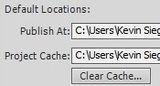
I've written about Captivate's Cache folder in the past. In case you aren't familiar with it, a cached version of your project is created in the Cache folder every time you save your Captivate project. The cached projects can make the process of opening, saving and working on a project faster than what one experienced with older versions of Captivate. However, with Captivate 8, developers are complaining about the increased size of the Cache folder.
Those folks aren't imagining things. It looks like Captivate is creating more folders of each project than before. Adobe is aware of the problem and you can expect an update to Captivate that will fix the issue. In the meantime, you should manually backup your projects (to an external drive) and clear the Cache folder at least once a month (by clicking the Clear Cache button).
Icon Logic Blogs
.
Blog
.
<span class='date ' tip=''><i class='icon-time'></i> Jul 14, 2015 01:49pm</span>
|
|
Saw a tweet this morning from @willrich45 (Will Richardson):Reading: "Why Most Twitter Users Give Up" Interesting how edTwitterers use it for learning, unlike most, it seems.This is a big meme right now based on a Nielsen study that resulted in the blog post: Twitter Quitters Post Roadblock to Long-Term Growth.I'm not surprised to see that there are lots of people who sign up and then leave. Contrary to what Will implies in his tweet, I'm not sure that among edTwitterers there's really that much of a difference in the effect for people who use it as a learning tool.I enrolled about a year ago (Twitter Status) and I've personally struggled a bit with the purpose, value, etc. If you look across a broader set of eLearning bloggers discussing twitter you likely will find similar challenges. A big part of this directly relates to my recent post Learning Goals -Twitter is more for flow learning than directed learning.The bigger challenge and my claim in Twitter as Personal Learning and Work Tool:Twitter is Not for People New to Social LearningConsidering what I saw when I looked at following Twitter Learning Professionals - quickly I decided Twitter Mass Follow - Never Mind. My concern about twitter is that it will be too random for most people, especially those who have not established any relationships / understanding of the people they are following. Thus, my opinion is: Twitter is not a tool for people who are new to social media and the use of social media for personal learning and work.There is one exception to this. If you are going to a conference or evening event where attendees will be using Twitter in a group fashion, then that's likely a good opportunity to try out the tool.I would guess that among edTwitterers, you likely will also get high drop out rates. Maybe it's less than other audiences - but I'm not so sure.Thoughts? eLearning Technology
Browse eLearning Content
Tony Karrer
.
Blog
.
<span class='date ' tip=''><i class='icon-time'></i> Jul 14, 2015 01:49pm</span>
|
|
View and download the webinar slides. View the webinar recording. ADDITIONAL RESOURCES: The Top 5 Pain Points in Performance Reviews via TLNT.com State of the American Workplace 2013 - Gallup Study
Chris Osborn
.
Blog
.
<span class='date ' tip=''><i class='icon-time'></i> Jul 14, 2015 01:49pm</span>
|
|
by Jen Weaver
This week, let's explore some common cultural facts about the Japanese and their expectations when it comes to training and development. If you're reading after business hours, you may enjoy this post alongside a meal of sake and sushi to get you in the appropriate mood.
Test your Knowledge of Japanese Culture
True or False. The Japanese are known for strong displays of affection and emotion.
True or False. In Japan, the head of the government is the emperor.
Quick Tips for Training & Development in Japan1:
Japanese is the official language of Japan--go figure--and this language contains extensive nuances and subtleties. Students begin learning English at a young age but are typically more proficient in reading English than in speaking English. You will be well served to have all training materials in Japanese--both for learner comprehension and as a sign of consideration and respect.
The Japanese do not like being "lumped into" or related to other Asian cultures. Be careful when selecting images for your training materials that you do not assume Chinese models or visuals will play well in a Japanese audience.
Foreigners are not readily accepted in Japan, and Japanese people tend to be protective of their culture and heritage. Do your best to demonstrate respect towards their society and practices whenever possible.
Mistakes are expected to be followed by an apology, whether from an individual or a corporation. To neglect to offer an apology will diminish your credibility and has the potential to seriously damage your company's brand.
Decision-making tends to be subjective while still adhering to traditional values. Consensus is of great value, so individuals may suddenly change their opinion for the sake of maintaining harmony within the group. Seek to build group buy-in as quickly as possible. On a related note, offer praise and recognition to a group as a whole, rather than singling out individuals.
Given the culture's somewhat collectivistic perspective, individual actions are a reflection upon the group and family.
"Saving face" is huge in Japanese culture, so you'll want to avoid the risk of embarrassing your Japanese counterparts at all costs.
Negatively phrased questions will result in miscommunication. For example, the question "Doesn't this product sound amazing?" will be answered as "no", meaning the product does indeed sound amazing, rather than with a "yes" response as expected in the States.
The workplace is a serious environment. Humorous stories or jokes in your training materials will be seen as out of place or misunderstood entirely.
The American "okay" sign means "money" in Japan, so be intentional with its usage in your materials. Better yet, remove it entirely, as this image is problematic in many cultures.
Trivia Answers to the Questions Above
False. You're much better off using a "poker face" as a demonstration of self-control. Maintain a slight smile even if you are upset, and don't be afraid of silence in a conversation, especially when negotiating.
False. The emperor is the chief of state, and the prime minister is the head of the government.
References:
1Morrison, Terri, & Conaway, Wayne A. (2006). Kiss, bow, or shake hands (2nd ed.). Avon: Adams Media.
***
Developing international training and development materials? Contact Jen at Carmazzi Global Solutions. And if you love Jen's articles, check out her new, live and online Localization mini courses.
Icon Logic Blogs
.
Blog
.
<span class='date ' tip=''><i class='icon-time'></i> Jul 14, 2015 01:49pm</span>
|