Blogs
|
I recently had the pleasure of being interviewed by Anthony Salcito, Vice President - Worldwide Education at Microsoft, for his Daily Edventures.
Click here for the full interview and Anthony’s post about it, or watch the video, below.
http://www.youtube.com/watch?v=By-aFhd30Og
Angela Maiers
.
Blog
.
<span class='date ' tip=''><i class='icon-time'></i> Jul 16, 2015 09:28am</span>
|
|
This is a guest post by Jessica Parsons, a teacher with the Habitudes.
"[People] love to wonder and that is the seed of science. "
- Ralph Waldo Emerson
Ok, so I’m not trying to overdo it by using Emerson quotes each time I guest post, but they summarize the topic so perfectly! My 7th grade life science classes began a current event research project connecting personal topics of interest to any aspect in the Life Science curriculum. But some students didn’t know where to begin. This alerted me to the need to discuss what drives science or scientific research — curiosity and pursuit of the unknown! Angela Maiers emphasizes the importance of curiosity and the skills of questioning in Habitudes, Chapter 3.
When students are learning "how to do school," they seem to forget how to ask their own questions and continue their sense of wonder. A few years ago, I introduced a classroom learning project, called iWonder, adapted from Alan November’s Digital Learning Farm. It worked well during lectures (which I try to keep brief) for encouraging students to ask curiosity questions and to find reputable, reliable answers. Instead of me responding to their questions, one student would act as the researcher by looking up questions on the iPad, while a peer recorded the answers in our class iWonder notebook. The students enjoyed looking back at what other students would ask and find. But that is just the starting point!
In cultivating curiosity and scientific inquiry, I felt it was important for students to understand the levels of questions in relation to higher-order thinking. Edna Sackson (What Ed Said) shares this anecdote:
"When Isidore Rabi, a winner of the Nobel Prize for Physics, was asked why he became a scientist, he replied that his mother unknowingly influenced this development. Instead of asking the typical question, "What did you do in school today," she would ask, "What good questions did you ask?"
By being intentional, I wondered if I could develop my students’ skills of asking good questions. I turned to the conversations and resources in Classroom Habitudes, Chapter 3: Lesson 3 to encourage "thinking like Einstein." Angela Maiers notes that students tend to put the importance on answers versus the skill of questioning (something they learned in school, perhaps?).
We first discussed increasing the level of difficulty by observing the verbs used in Costa’s Leveled Questions. Then, to offer a chance for guided practice, I asked students to design their own quiz questions using Costa’s House of Questions as prompts. We would often make note of which level the questions would fit into while evaluating lab questions, quiz questions and homework. Most recently, I displayed the "Genius Questions" on the Smart Board and asked students to write genius questions about the circulatory system. This started each class in a great conversation as we conjectured what would happen if…the veins had no valves? or the systemic and pulmonary pathways went in the opposite direction? or we had an open versus a closed circulatory system? I look forward to continuing the conversation with Lesson 4: Asking the right questions at the right time as well as reflecting on their habits as curious learners!
Angela Maiers
.
Blog
.
<span class='date ' tip=''><i class='icon-time'></i> Jul 16, 2015 09:28am</span>
|
|
I am blessed to receive many emails from my readers around the world. One of the more interesting notes recently came from Andy Vasily, who teachers Physical Education at the Nanjing International School in China and blogs at PYPPEWithAndy (PYP = Primary Years Program).
Andy wanted to create a PE-focused model of the 7 Habitudes. I asked Andy to send me a guest blog; this is his response:
"A lot of my research and work of late has been focused on finding a better way to teach PE. I have been downloading a number of Kindle books in order to find research that is relevant to a new model of instruction I am trying to create and test out. This often requires me to go outside the realm of PE in order to find excellent ideas or models that I can then transfer over to the arena of physical education.
As I read Angela’s book the ‘Classroom Habitudes’, I realized that much of what she writes about is immediately applicable in PE. Revolutionizing education, especially as we move forward in the 21st century, can only be made possible if we put greater emphasis on the development of the whole child. Subject area boundary lines should be blurred and enduring concepts such as Angela’s 7 Habitudes should be embedded within all of the learning experiences that we have our students engage in.
As a PE practitioner with over 15 years of experience, I believe it to be critical to initiate change now. Giving our students a clear, concise, and consistent way of describing and defining success is paramount within any PE program and this often means that we must teach outside the box of sport. We must foster and build upon our students’ abilities to think critically, to find problems/obstacles, and to overcome these challenges. Arming students with the skills necessary to conquer adversity is what being successful in sport is all about.
More importantly, teaching the skills necessary to overcome adversity not only helps our students in PE and in sport, but better prepares them for life, both in and out of school. If this isn’t our ultimate aim as educators, I am not sure what is!
The teaching of the 7 Habitudes is such a natural fit, not only with PE, but within any subject that we teach. I am excited to take forward what I have learned in Angela’s book and will share this journey on my own website that I regularly blog on here.
Angela Maiers
.
Blog
.
<span class='date ' tip=''><i class='icon-time'></i> Jul 16, 2015 09:28am</span>
|
|
EDIT: Peter was deeply impacted by the tragedy in Boston yesterday; his business is there, and his twin brother Paul was close to the explosion and shaken up. See the bottom of the post for the brilliant poster that Peter created in response to the tragedy, and share it with your students and loved ones, and indeed everyone.
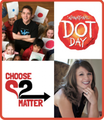
Last week I have the privilege of speaking with Peter Reynolds, award-winning author of The North Star, The Dot and Ish. As an elementary school teacher, I adored Peter’s work and was thrilled to make a personal connection to him a few years ago. Peter’s company, Fablevision, and Choose2Matter came together last September 15 to celebrate Dot Day, with the combined theme of "Make Your Mark Matter."
On the Hangout, we discussed the connection between the key messages of the Dot - bravery and the importance of making a mark - and the Quest2Matter.
As Peter says, a DOT is really the beginning of so many things, and when it comes to Choosing 2 Matter, it all begins with finding the courage to just GET STARTED - to starting small, dreaming big, and DOING.
http://www.youtube.com/watch?v=X9vgc2UWEsc
Angela Maiers
.
Blog
.
<span class='date ' tip=''><i class='icon-time'></i> Jul 16, 2015 09:27am</span>
|
|
At a time when what it means to be a teacher is being defined by everyone except teachers, we need to remind ourselves of these two undeniable words:
Teachers matter.
After the tragedy in Newtown, CT, I published what became my most-read blog post ever; it generated so much traffic that my blog server crashed several times. Teachers all over the world wanted to know how they were going to address their students on Monday morning; what would teachers say, how would they act, would they show their own fears?
My prescription was quite simple: you will teach. As I wrote, "Thank God for teachers. Thank God you know what to do. Thank God you do what you do."
This week, teachers once again were called to help children cope with a tragedy in New England, as a bomb blast took the life of an 8 year-old boy and two young women at the Boston Marathon. I didn’t feel the need to republish my post, because I know that teachers would know what to do: they would teach.
Teachers don’t just do what they do in moments of global tragedy; they do it every day, helping students deal with whatever problems, big or small, are holding them back. Our partner, findingDulcinea, presents some real-life examples in this post on the importance of great educators, and some famous examples in this post on how teachers empower students by expecting more of them.
Last week I spoke at the iPad Summit in Atlanta, GA. I knew I would be facing 1,200 educators who were struggling with what it means to be a teacher at a time when our profession is under attack from all sides. My job was to inject them with a passion for teaching, and tips for re-creating passion in their students. Jen Carey did a terrific job live blogging my talk.
The night before, I put my head on the pillow and began to form my final thoughts about my presentation. A thought came to me; even though I am no longer in the classroom and don’t have to worry about politicians or standardized test scores or helicopter parents, my job is far from easy. I travel more than I should, I battle the same intransigence that teachers encounter, and there are times I wonder why I do what I do.
Laying in bed well past my bedtime, I decided to lay that on the line the next day: I, too, suffer from self-doubt about whether I am in the right profession and whether I can continue with it. I, too, deal with frustrating people, who fight for their own limitations, every single day.
But unlike the 1,200 educators who were looking only at me for insight and wisdom, I had a much better vantage point: I was looking out at 1,200 educators, and finding inspiration in every single one of them. I told them that, as difficult as things could be from one day to the next, I knew I had all of them walking alongside me, and with them I could not fail.
After my presentation, a young man approached me and said, "This is my first year of teaching. I had pretty much made up my mind that this would be also be my last year of teaching. I now realize that teachers matter, and there is no way I’m giving up a job that matters."
Teachers matter.
Angela Maiers
.
Blog
.
<span class='date ' tip=''><i class='icon-time'></i> Jul 16, 2015 09:27am</span>
|
|
Photo Credit:Jônatas Cunha http://www.flickr.com/people/jonycunha/
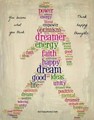
"If we cannot see the possibility, we cannot achieve the outcome. Imagination is our mind’s eye and gives us the capacity to jump from present facts to future possibilities. Our capacity to dream, hope, and plan for the future is influenced and impacted by the control and understanding of imagination’s remarkable power."
- Chapter Two, Imagination, from Classroom Habitudes: Teaching Habits and Attitudes for 21st Century Learning
Angela Maiers
.
Blog
.
<span class='date ' tip=''><i class='icon-time'></i> Jul 16, 2015 09:27am</span>
|
|
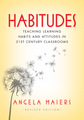
Most books have one shot at success. If they don’t have strong initial sales, typically they are relegated to obscurity forever. However, we published the Classroom Habitudes nearly five years ago, and it is getting more attention now than ever.
Years ago, I was thrilled whenever a teacher told me her or she was reading it. These days, I hear nearly every day of an entire school, district or even province full of teachers reading the book. Several schools told me they have modeled entire programs around the book.
For example, Melissa Storms and Dave Neese are leading a Habitudes book study with middle school teachers in the Lakota Middle School in Washington. I’ve also been thrilled to be invited to keynote many "tech" conferences by presenting the Habitudes.
This Thursday afternoon, I’ll be presenting, on behalf of edWeb.net, a webinar titled, "Classroom Habitudes: Teaching 21st Century Skills to Brains Wired in the Digital Age." The webinar is presented as part of a community devoted to the Brain and Learning, one of my favorite subjects.
Please join us!
Angela Maiers
.
Blog
.
<span class='date ' tip=''><i class='icon-time'></i> Jul 16, 2015 09:27am</span>
|
|
Mimi and Eunice, CC-BY-SA Nina Paley
Near the beginning of my "You Matter" presentation, I say, "This is not an ego thing - it’s a DNA thing. Human beings were created for significance, and the most dangerous feeling they can have is the feeling that they don’t matter."
What did I mean?
Simply that the need to feel we matter is something we’re all born with, and that feeling as though we don’t matter is a dangerous condition.
How dangerous?
Numerous research studies show that the feeling that we matter is associated with academic success, healthy self-esteem and self-confidence, and many other factors that contribute to emotional and mental health.
The absence of a feeling that we matter is associated with a parade of horribles.
This is why I often say that your goal should not be to seek success; it should be to seek significance.
For more, reading "The Science of Mattering" on Choose2Matter.org.
Please consider making a small donation to support Choose2Matter on Indiegogo!
Angela Maiers
.
Blog
.
<span class='date ' tip=''><i class='icon-time'></i> Jul 16, 2015 09:27am</span>
|
|
After 14 years in the classroom, I became a consultant, speaker and author. I gave up my own classroom to dedicate my life to making it easier for other teachers to work effectively in theirs.
At the root of everything I do is a profound respect and appreciation for teachers and the challenges they face.
In honor of Teacher Appreciation Week, here are my five favorite posts on why teachers matter:
Teachers Matter
12 Things Kids Want from Their Teachers
There is No Lesson Plan for Tragedy - Teachers, You KNOW What to Do
The Courage to Teach
Celebrating Teachers - A Collection of Online Resources
Angela Maiers
.
Blog
.
<span class='date ' tip=''><i class='icon-time'></i> Jul 16, 2015 09:27am</span>
|
|
For more than a year now, we’ve been working to launch Choose2Matter, a global movement whose mission is to challenge people to solve problems that break their hearts.
Everything that we have accomplished to date has been done through perspiration and inspiration of a few committed volunteers. We’ve recently been blessed with offers of help from many people who want to become part of this mission, so we’ve put together this page on our website which describes ways in which you can become involved. We will be updating the page frequently so please check it several times over the next few weeks.
We have some urgent, short-term needs that require very little time, and some longer-term needs for which we need people who want to become passionately involved.
Below I listed some of our short-term needs; the longer-term opportunities can be found on our website.
Fundraising
Everything we’ve accomplished thus far has been done with funds from our own pockets or through pro bono efforts of our marvelous partners.
We have resisted offers from companies that want to become co-branded partners of Choose2Matter, as it must remain independent of undue corporate influence.
We want the bulk of our funding to come from small donations from individuals.
Please help us create Choose2Matter by making a small donation to our fundraising page, and asking others to do so.
Ambassador Program
Nothing is more effective than in-person outreach. We invite educators to become Choose2Matter ambassadors who present our movement wherever they have the opportunity to do so - whether one-on-one with another educator, at a school assembly, at a local conference, or to local news media. If you would like to join our team, please email Mark Moran at MarkMoranMES@Gmail.com
Encourage Students in Your School to Enter the Quest2Matter
The Quest2Matter is the first embodiment of Choose2Matter. It is an initiative that invites students to submit completed Quests or well-developed ideas to solve a problem. We hope to encourage a large number of students to participate in the Quest to validate our belief that today’s youth form the most compassionate generation this world has ever known.
Please encourage your students to participate in the Quest2Matter by submitting a quest.
Social Media Outreach
Please LIKE our Facebook page and ask Facebook friends to do the same.
Please follow us on Twitter and encourage your Twitter followers to do the same.
Angela Maiers
.
Blog
.
<span class='date ' tip=''><i class='icon-time'></i> Jul 16, 2015 09:27am</span>
|