Blogs
|
This post was original featured on Smartblogs on Education in Inspiring Others
"Nothing great in the World has been accomplished without passion." — Georg Wilhelm Friedrich Hegel, German philosopher, 1832
I recently spoke at the Dell Innovation in Education Panel at the Texas Association of School Administrators 2013 Conference in Austin.
When we were invited to sum up at the end, I realized that one guest had not been invited to the table: Passion. I was the first to interject this word, saying that "passion should not be the number one thing on the agenda, it IS the agenda."
The #TASA13 hashtag on Twitter, which had been moving moderately, exploded, with several dozen tweets supporting my statement.
At any other conference in any other industry, passion is on the lips of nearly every participant, but at some education conferences, you are far more likely to hear the words "assessment," "standardize," "common core" and "pedagogy" than you are to hear the word "passion."
There is a passion gap in education, and students are falling through it and drowning in ennui.
This is not to say that students are never passionate at school. As a teacher at the K-2 level for 14 years, I had the privilege of spending each day with children eager to learn and explore. Yet this begins to change somewhere around the fourth grade.
Why does passion matter? What are the real-world implications of an education system that discourages passion?
In a recent column in The New York Times, Thomas Friedman explained that "we need everyone to be innovating new products and services to employ the people who are being liberated from routine work by automation and software. The winners won’t just be those with more I.Q. It will also be those with more P.Q. (passion quotient) and C.Q. (curiosity quotient) to leverage all the new digital tools to not just find a job, but to invent one or reinvent one, and to not just learn but to relearn for a lifetime."
When Bill Gates appeared on "The Colbert Report," Colbert asked Gates whether data or passion was more important to him in pursuing his foundation’s aims. Gates response? "I think passion is probably the most important…backing scientists who have great ideas."
So if passion is so essential in the work world, how do we invite passion to stay in school past fourth grade? How do we bridge the passion gap between school and the rest of life?
Schools mistake passion for an emotion, as something kids like to do in their spare time. Those are hobbies. Passion is what you must do, even if you have to suffer to do it. Passion is the genius of all geniuses. It’s discipline at a level we can’t comprehend. To release a passion, a student may need above all else a role model. It may be a parent, an aunt, a neighbor, a coach, but as often as any of these, it is a teacher.
To lay the groundwork for students to develop passion, teachers must do two things - greet students — by name — when they walk in and hug them (either physically or metaphorically) when they leave. Whatever happens in between, students will remember that you notice them and they mean something to you. Teachers must let students know that they expect that students will accomplish great things. All of this may sound trite, but it is derived from the responses we received when we asked 500,000 students last year, "What would make you run to school?" These responses are not confined to the young; they mirror the results when a similar question was asked of 7,000 adults.
Sir Ken Robinson writes, "Passion is a deep attraction. It can be for someone else or for a process: music, maths, cooking, sport, entrepreneurship, teaching… whatever fires your imagination and stokes your energy. We all have different aptitudes and we have unique passions. The challenge is to find them because it’s in the fusion of both that we live our best lives."
When will your school declare that its mission is to help students find the fusion of their aptitudes and passions to live their best lives?
Angela Maiers
.
Blog
.
<span class='date ' tip=''><i class='icon-time'></i> Jul 16, 2015 09:29am</span>
|
|
Words matter.
I encourage people to choose their words wisely, because the words we choose have a powerful effect on other people. As this post showed, the words we choose matter not only for teachers, but for anyone else who plays an important role in someone’s life.
Some decry "political correctness" when a class of people seeks to change the words we use when referring to them. But as Aimee Mullins, a world-class athlete, actress and activist discussed in a 2009 TEDMED talk titled, "The Opportunity of Adversity," we must think carefully about the values our words convey.
Mullins read from a decades-old thesaurus the synonyms for "disabled." They were hideous, and conveyed low value and little hope for any human being pinned with this label. Before anyone could dismiss these values as relics of a less-enlightened era, Mullins read from a modern thesaurus, and the words had not changed much.
Here is the current thesaurus.com entry for disabled:
broken-down, confined, decrepit, disarmed, hamstrung, handicapped, helpless, hurt, incapable, infirm, laid-up, lame, maimed, out-of-action, out-of-commission, paralyzed, powerless, run-down, sidelined, stalled, weakened, worn-out, wounded, wrecked
What upset Mullins, she said, weren’t the words themselves, but rather "the values behind the words and how we construct those values."
For a child to overcome the low expectations set by labels or value constructs, Mullins said,
"all you really need is one person to show you the epiphany of your own power and you’re off. If you can hand somebody the key to [her] own power, the human spirit is so receptive, if you…open a door for [people] at a crucial moment, you are educating them in the best sense. You are teaching them to open doors for themselves."
If empowering students to reach their true potential is the root of education, how do educators do so?
If we choose our words wisely, our language can help students envision success, stretch their thinking, and advance independent behaviors and actions.
Like any skill, the careful choosing of words develops over time, and takes practice. The following tips can help build your awareness of the words you use and help you harness the power of our words.
Hit Record! - With free recording tools such as Audacity, it is easy to record the actual words you use in the classroom. Record, and play them back to yourself. Hear the words you speak, as well as the tone and context of that dialogue.
Lesson Language - While lesson planning, take a few minutes to think through the language you are going to use with students. Often we think we are modeling skills and strategies for students when we are really just telling and assigning, The few minutes we spend thinking through our language can impact the flow and dynamics of the instruction.
Repeat, Repeat, Repeat - Phrases - Keep your radar up for repeated words and phrases. These mantras resonate in students independent work. Be alert to the language not advancing student independence. Ask a colleague to listen in as it helps to have two ears at work.
Breathe - Before speaking, take a few seconds to plan words carefully. Think about what we could say that would encourage, stretch, challenge, and acknowledge our students thinking and contributions.
Build Collective Intelligence - Invite colleagues to join in. Great things can come out of a brainstorming session. Here are notes from one five minute conversation I held with educators about the language we use:
Angela Maiers
.
Blog
.
<span class='date ' tip=''><i class='icon-time'></i> Jul 16, 2015 09:29am</span>
|
|
One of the challenges of learning today is that it depends on the contributions of other people. Scholars of the past could lock themselves in a room, read the printed literature on a topic, consult with a few mentors, and emerge with a product that builds upon the historic work of others.
This isn’t an option for today’s researcher. While there are many famous instances of collaboration throughout history, none rise to the level of what’s possible today. Now, dozens or hundreds or thousands of people from around the world can work collaboratively on a project around the clock and produce extraordinary results in a short timeframe. As Clay Shirky says, today most people "over estimate the value of access to information and underestimate the value of access to each other."
This is why I wrote a few weeks ago that we all must invite to our "table" individuals who can influence our thinking, challenge our ideas, and demonstrate the behaviors and attitudes we seek to emulate. Today’s "tables" are not roundtables of writers in a smoky hotel bar; no, today’s tables consist of hundreds or thousands of mostly virtual contacts around the world and across all ages groups and professions.
How can our students learn to begin to invite people to their table? By being part of a classroom that reaches out to passionate leaders, experts and eyewitnesses to history who can demonstrate first-hand what it means to learn directly from another person.
This is why I have long been an advocate of Skype in the Classroom, which has a passionate commitment to supporting educators as they venture, virtually, with their students out into the world. This past week, at SXSW Edu, Skype announced that it was offering free group calling, formerly a premium service, which will enable classrooms to connect with multiple other parties at once.
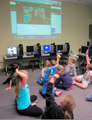
Author Katie Davis speaks with studentsin Van Meter, Iowa, via Skype.
Rather than write on and on about the benefits of using Skype to connect with the world, I will instead share two recent presentations that share actual examples of incredible learning experiences that a Skype connection has fostered.
The first is an article from one of my favorite sites, findingDulcinea, that synthesizes the experiences of more than a dozen classrooms that used Skype to reach out to authors, politicians and eyewitnesses to history. The last category includes World War II veterans, civil rights activists, East Germans who lived behind the Berlin Wall, and first responders on September 11.
The second is a Google doc created by Louise Morgan, a second grade teacher at Sycamore Elementary School in Fort Worth, Texas. The document collects (and thus by itself is an excellent example of the power of collaboration) and shares the experiences of classrooms around the world who have learned to use Skype to appreciate the value of access to each other.
Angela Maiers
.
Blog
.
<span class='date ' tip=''><i class='icon-time'></i> Jul 16, 2015 09:29am</span>
|
|
Tessa Hardiman is the author of Surviving and Thriving: 21 Tips for First Year Teachers. You can find out more about the online community for first year teachers by visiting the website: Surviving Your First Year.
When I was in college, my professors warned my classmates and me about teacher burnout. They quoted the haunting statistics right and left. It was like they were saying, "None of you will ever make it for longer than five years."
I know the statistics on new teachers remaining in the profession aren’t great, and teachers today face greater obstacles than ever before. Even in these tough times, there are ways to avoid feeling burned out.
1) Realize you can’t do it all. You are given a finite amount of instructional time. It’s hard enough to squeeze in the required curriculum, much less implement some new tool or website you found. This can be frustrating to many new teachers. You want to share the next great resource that your kids will love. One suggestion: start an idea folder for next year. When you stumble upon a great resource you want to use, write it down and put it away. Just make sure you remember where the folder is next school year.
2) Don’t sign up for everything. In an effort to prove to the administration you are a valuable asset to the school, you will be tempted to sign on as yearbook sponsor, debate club leader, scholar’s bowl sponsor, and the underwater basket weaving head coach. These activities will leave you with less time to refresh and recharge after a long day at school, which is where your focus should be when trying to avoid burnout. Transitioning into full-time teaching is hard. You are going to need opportunities to reenergize for your students. Give yourself a break the first year around.
3) Solicit the help of expert teachers. Many new teachers avoid this step because they don’t want to appear ignorant or dumb. When you ask an expert teacher for help, they won’t think you’re stupid. They’ll think you are trying to get better at your job. The teacher of the year is a great place to start. Sit by him or her at the lunch table or at faculty meetings. Carry a notepad with you to jot down ideas they mention. Visit their classroom to see how it is arranged. Make note of the procedures and policies. Chances are if they’ve been using them for years, then they must be doing the trick.
Teaching is a difficult profession. It can be time-consuming and frustrating at times. That’s why it’s helpful to be prepared for your first year on the job. It’s different than anything you may have experienced in college. Accept the fact that you won’t be able to do everything. No one expects you to. They want you to teach and do it well. If you remember the above tips, then you’re well on your way to thriving as a first year teacher.
Angela Maiers
.
Blog
.
<span class='date ' tip=''><i class='icon-time'></i> Jul 16, 2015 09:29am</span>
|
|
What would happen if we gave kids one hour a week to work on anything they wanted? Would you expect to find a classroom completely out of control? Or worse, a classroom, where students choose to do as little as possible for that one hour?
What if I told you, that if you gave your students an hour a week to pursue what they’re interested in, your classroom would be transformed into a room full of passion-driven learning? That you’d find what Hugh McDonald, one of four teachers behind "Genius Hour Manifesto," found when he started genius hour in his classroom:
"The learning atmosphere felt amazing. I could walk down the hall and ask Gallit [a fellow teacher] a question and return to see them all still on task, questioning, driving their own learning, and having fun being curious. It was an amazing feeling as a teacher to see your students excited about learning."
Denise Krebbs, a middle school teacher also behind "Genius Hour Manifesto", highlights her students’ reflections after they have completed their genius hour projects. During a three-hour block of genius hour, one of Mrs. Krebbs’ students, Jason, built a city out of cardboard, paper and toy cars, complete with an airport, mall and even a Sears! Jason explains why genius hour works, "Genius hour is important because it allows us to learn in our own way. My advice to new genius hour students would be to plan ahead and be ready on time."
What will your students learn when they are following their passion?
Angela Maiers
.
Blog
.
<span class='date ' tip=''><i class='icon-time'></i> Jul 16, 2015 09:28am</span>
|
|
The heart of education is an education of the heart.
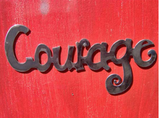
The root of the word "courage" is the Latin word "cor," meaning "heart." The English word "core" comes from the same Latin root. So at its core, effective teaching is about developing courage.
As the world changes at an ever-accelerating pace, leaving some of us experiencing Future Shock, one act of courage that is essential for all teachers to make is to admit that we don’t know it all, and that this is becoming more so every day.
As Pat Hensley, a teacher and instructor with Furman University, so eloquently explains in her blog Successful Teaching,
"It also takes courage to know that I don’t know everything. It is alright if I learn some new things from my students. It is alright to even let my students know that I don’t know everything. It takes courage to learn new things and open up to possible failures. My students will learn that I am making an effort to learn and they will also learn from me how I handle the results."
Students can be our greatest teachers. But, like Pat says, it takes courage to know that we don’t know everything and that is one of the most important parts of teaching. The courage to keep learning with an open mind and heart is what teaching is about. As teachers, we don’t have to have all the answers, we just have to be open to learning in our own classrooms.
Mary Bieglow, a teacher and blogger for the National Science Teachers Association, wrote in her post "What Teachers Can Learn From Students" that by being open to not knowing all the right answers or questions, she got more out of her students. "After a unit test, [a student] looked very dejected. When I asked her what was wrong, she replied, ‘I know a lot about this, but you asked the wrong questions.’ That stopped me in my tracks. I was the teacher—the one supposed to have all of the questions and answers … She was right—for her I didn’t ask enough of the right questions. She taught me the value of providing a variety of ways for students to share what they know and can do."
The heart of teaching is the teaching of the heart. In order to teach, we need courage to overcome our fear of admitting that we don’t know it all. Consider and reflect on the following statements of courage.
We must have the courage to…
ask brave and genius questions
learn new, complex things and relish in the journey of the unknown and yet to be discovered
yield trust and control to students by listening, honoring, and recognizing their unique contributions.
engage in discussions that challenge our deepest convictions and ignite our hidden passions
play with purpose and passion
know YOU MATTER!
Angela Maiers
.
Blog
.
<span class='date ' tip=''><i class='icon-time'></i> Jul 16, 2015 09:28am</span>
|
|
I recently spoke with Nicholas Provenzano and Timothy Gwynn on #Nerdycast and Hooked! on BAM Radio Network. CLICK HERE TO LISTEN.
Nicholas and Timothy are passionate teachers so I loved speaking with them about the importance of letting students know their contribution is valued.
"If we do not secure their hearts, we do not have a shot at their brains."
Nicholas and Tim asked me to introduce the work I do with You Matter. I explained it is, like teaching, a labor of love.
"The root word of passion … is to suffer. To be willing to suffer through any challenge because the work that you’re doing and the pledge that people are making to you and you’re making back to them is so sacred there is nothing that breaks it. It’s that binding and that’s what we need to cultivate in our classrooms."
Students need to know they matter; the need to know that one matters is in our DNA-it’s that important.
Last year we asked a half million kids, "What would you pledge yourself to?" and "What would make you run to school?" It boiled down to twelve things, such as "I want to be noticed, I want you to smile at me, I want you to say my name." The need to hear one’s own name is why two hundred million people are sending Tweets everyday, because someone’s noticing them.
"My job is to teach, not to be their friend."
Nicholas said that he’ll often hear teachers in the faculty room say that they are not their students’ friend. I responded:
"Anybody who teaches pledges to change lives … give me a year of your life and I promise you that you will walk out of here better, stronger, smarter, more confident, more beautiful. So anybody who does that kind of work would never ever pledge that they want to be your friend because there’s no way that you can grow without the appropriate conditions and feedback. Cultivating genius is a really difficult endeavor."
For fellow teachers, I’d love to hear from you and start a conversation about the following questions:
What kind of pledge do we make to our students when we begin the school year or even every class?
Do you think that you can be your students’ friend and teacher?
How do you make your students feel that they matter?
How do you make your students feel noticed everyday? In every class?
Angela Maiers
.
Blog
.
<span class='date ' tip=''><i class='icon-time'></i> Jul 16, 2015 09:28am</span>
|
|
When we teach history, it usually focuses on a geographical area; students learn US History, European History, Russian History, Canadian History, etc.
Most schools offer World History as well, but tend to skim through major events around the world over the course of several centuries.
Thus, students of US History study the Roaring 20s, the Great Depression, and then World War II, usually while taking little note of the troubles of the Weimar Republic and rise of the Nazi party in Germany, the rise of fascism in Italy, the Spanish Civil War, or the second Sino-Japanese War.
The Linetime App shows users the course of modern history on a timeline. Users can drill down into each century, decade or year. The app is populated with content from the Library of Congress’ American Memory and findingDulcinea’s On This Day, and Wikipedia entries are used to fill in gaps.
The app helps students look at history in a way that textbooks never could. With the right content, the LineTime App has the potential to enable students to see what was happening all over the world in a particular decade, year, month or day.
The app’s search function also enables students to trace history through a single word. Search on "earthquakes," "assassination" or "treaty" and you’ll find a list of every entry in the app that contains those words. Students can then tab through these entries and see history through yet another lens.
Watch this video to see LineTime 1.5 in action!
Angela Maiers
.
Blog
.
<span class='date ' tip=''><i class='icon-time'></i> Jul 16, 2015 09:28am</span>
|
|
I will be presenting next week at the 4th Annual Iowa 1:1 Institute (I11I).
The conference will be held on Thursday, April 4, 2013 at the Iowa Events Center in Des Moines. Administrators, teachers, media specialists, technology staff, and other educators are all encouraged to attend.
In a "mini-keynote" titled "What Happens When a Million Kids Share Their Genius With the World?, I’ll be previewing the Quest2Matter, which launches on April 15. This is a five-week initiative to spread the "You Matter" message to millions of students and inspire them to act to change our world.
Also, I’ll be co-presenting for the first time with my new colleague, Mark Moran of Dulcinea Media, publisher of findingDulcinea and SweetSearch. Mark has been working with me on Choose2Matter and we are co-authoring a book on digital literacy that is approaching a publication date.
Our presentation is on "Digital Literacy: Lessons for Leaders and Learners." We’ll be examining the reasons students lack adequate online research skills, the habitudes of genius web researchers, and discussing how all learners should learn from other people online.
This conference is near and dear to my heart, because it’s in my backyard and hosted by some of my closest colleagues. At the first Iowa 1:1 in 2010, I had the privilege of giving the opening keynote, and I led the "Web 2.0 Smackdown" the past two years. I’m looking forward to seeing familiar faces and meeting new passion-driven educators!
Angela Maiers
.
Blog
.
<span class='date ' tip=''><i class='icon-time'></i> Jul 16, 2015 09:28am</span>
|
|
The group behind the Bammy Awards announced today plans for its second annual awards ceremony, to be held in Washington DC on September 21.
At a time when politicians, philanthropists and members of the media are lining up to criticize educators, the Bammys launched last year to honor them.
The Bammys are presented by the Academy of Education Arts and Sciences,
comprised of 211 influential education leaders and organizations,
The Academy accepts nominations in dozens of categories, such as superintendent, teacher, school nurse and education journalist, and brings together the entire education community to recognize the honorees at a red-carpet, black-tie awards event.
The Academy has started accepting nominations today at www.bammyawards.org.
Angela Maiers
.
Blog
.
<span class='date ' tip=''><i class='icon-time'></i> Jul 16, 2015 09:28am</span>
|