Blogs
|
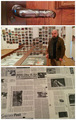
Slovenian author Evald Flisar will be giving a series of readings and talks, including one on June 23, in the U.S. Library of Congress. The event starts at 12 noon at the European Division Reading Room, LJ-250, 2nd Floor, Thomas Jefferson Building. Flisar will be responding to questions and will discuss the importance of literature in today's world.
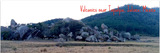
Slovenia, the land of
Susan Smith Nash
.
Blog
.
<span class='date ' tip=''><i class='icon-time'></i> Jul 16, 2015 09:35am</span>
|
|
Suzanne Barton is a "Teacher with Habitudes." Suzanne, a fifth grade Language Arts teacher at Woodward Academy, has a passion for helping her students become powerful 21st century communicators who are motivated to move beyond their own "small" worlds to touch the lives of others in a positive way.
After reading Angela’s book Habitudes last winter, I decided that I would begin this school year by introducing the habitude of imagination. In each of my three fifth grade English classes, I wrote the word imagination inside a circle on the white board. Each class was unique in its responses, and a student from each class captured them for us. I was impressed by the ideas my students expressed so easily, and one idea quickly led to another. The activity had them fully engaged!
After introducing the idea of imagination and talking about it among ourselves, the next day I asked my students to close their eyes and think about all of the ways they have used their imaginations throughout their childhood. Then each student brainstormed different imaginary experiences they have enjoyed, writing them down in a simple list. After they had written their lists, I asked them to choose one imaginary experience and write about it.
Their paragraphs were rich in descriptions of their imaginary play: several secret agents, a world-traveling sailor, an energetic gymnast, a toy doctor obsessed with Band-aids, a Power Ranger, an air-kicking ninja, a librarian who reads to little kids, a brilliant inventor, a robotic vacuum cleaner engineer, an invisible fairy, a beautiful fairy, a construction dude, an amazing stuntman, a one-room schoolhouse teacher, a disappearing magician, several fabulous chefs, an owner of exotic pets, Spider Man, President Obama debating Hilary Clinton, the world’s greatest actor, a best-selling author, a gifted fashion designer, a charming tea-party hostess, a spell-casting wizard, Captain America, and a fighter of evil aliens. After completing their final copies in the computer lab, the students searched the net (Go to pics4learning.com for pictures that require no attribution.) for pictures to illustrate their imaginary experiences. The printed, illustrated paragraphs were proudly displayed on our bulletin boards for all to enjoy!
Much of what my students learned from this writing experience is obvious. They were engaged writers because they were writing about something that was important to them, and they were writing for an audience of their peers. Beyond that, however, was the potential for much more. As a result of our conversations and writings about imagination, I hope that my students were able to visualize that if they can imagine such creative, exciting ideas as children, certainly they can do the same as they grow into adulthood. As one of my students exclaimed during our discussion, "The world is but a canvas to our imagination." (He had discovered the Thoreau quotation on his iPad during our discussion.) I hope that as a result of this experience, my students will see themselves as people who can envision something exceptional in their futures, something that has never been imagined before, and perhaps they will be the ones to accomplish great feats that have not yet been achieved. They are our future, and what they eventually do (or do not do) with their imaginations will influence not only the microcosms of their own lives but also the world we all inhabit.
Angela Maiers
.
Blog
.
<span class='date ' tip=''><i class='icon-time'></i> Jul 16, 2015 09:35am</span>
|
|
Blended learning can help overcome the limitations of face-to-face delivery. Blended learning can take many forms, and is easily adapted to specific needs and technical requirements. Incorporating elearning and mlearning (including synchronous and asynchronous), blended (often referred to as "hybrid") courses can include face to face elements as well as a blend of different technologies and
Susan Smith Nash
.
Blog
.
<span class='date ' tip=''><i class='icon-time'></i> Jul 16, 2015 09:35am</span>
|
|
A common problem with field courses is the fact that safety is often viewed as a checklist and there can be a certain level of complacency. Given the ever-changing nature of field conditions and also the fitness levels of the participants, it is very important to develop an approach to safety that heightens engagement and also becomes collaborative and participatory. The result would be an
Susan Smith Nash
.
Blog
.
<span class='date ' tip=''><i class='icon-time'></i> Jul 16, 2015 09:34am</span>
|
|
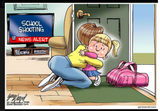
How did I address this tragedy in class? I hugged every last child in my classroom as he/she left for the weekend and told them that they matter, that I love them, and that they make this world better by being in it. They left smiling, believing, and feeling validated. #partofthesolution
Jolie Barker- Passionate Educator
As the world watches in horror and tries to process the day’s events, every parent in the country waits for their child to come home just so they can hug them a little bit tighter or tell them a little bit louder how much they matter, and love them.
Families and communities will come together in hopes of finding a way through this tragedy, and we will see the best of humanity emerge as we work to support and comfort all those who experienced this senselessness first hand.
And come Monday morning, these students will arrive in your classroom with the following questions going through their minds:
Am I safe?
Could this happen here?
Could this happen to me?
What if someone came to our school?
What if you cannot protect me?
Why do things like this happen?
Am I going to be okay?
Are we going to be okay?
There is no lesson plan for that. There is no magic strategy or super app that can look children in the face and assure them that the world will be well again.
Thank God for teachers. Thank God you know what to do. Thank God you do what you do.
You have just been reminded of why we are indispensable and why no one can simply walk in off the street and do our work. You are in this position of privilege to do one thing like no other person on earth can do: TEACH
You touch hearts every day.
You will look into their eyes, and they will see in yours that you love them.
You will be the voice of reason and hope. The words you share and the silence your endure will be the catalyst for the healing ahead.
You will assure them with your poise and presence that the world is a beautiful place.
You will remind them as you speak about this horrific and unspeakable event that there is a giving and loving community ready to ban together in force to ensure this never happens again.
You will calm their fears by showing them a great school filled with wonderful teachers, leaders, parents and students who are willing to protect and preserve its every member.
You will be human with them. Allowing yourself to mourn along side of them demonstrating how strong and secure one can be in the midst of our hearts breaking.
You will TEACH. You will not need a lesson plan, a reminder of that standard it covers, or any special technology.
You will do what you are born to do. You will do what you are called to do. You will do what students need you to do.
YOU WILL TEACH.
You touch hearts every day.
You change lives every day.
Monday is no different.
The people who will have the biggest influence on how our country will heal and whole will bear the biggest responsibility for making it whole again are sitting right in front of you.
They need you.
You are their teacher.
You know exactly what to do.
YOU MATTER.
Resources to Help:
Talking to Kids About Scary Things
How to Talk to Kids About a School Shooting
Helpful Tips on Talking to Your Kids
Talking to Children About Violence
Image Credit: GaryVarvel.com
Angela Maiers
.
Blog
.
<span class='date ' tip=''><i class='icon-time'></i> Jul 16, 2015 09:34am</span>
|
|
I love Hed Kandi’s chill and house mixes and eagerly look for them. They evoke a beach and surf vibe and even if I’m squeezed into an economy seat on a sold-out regional jet flight, I am immediately transported to gorgeous places and climates.
For example, I imagine Sayulita, a bohemian coastal village in the Nayarit Riviera in Mexico close to Puerta Vallarta, famed for its surf and Stand Up
Susan Smith Nash
.
Blog
.
<span class='date ' tip=''><i class='icon-time'></i> Jul 16, 2015 09:34am</span>
|
|
As I look back on this fantastic year of conversations and learning, I feel so blessed to be in this conversation with you all.
You have helped me grow as a learner, leader and human being. It is both insightful and inspiring to see the posts that most resonated with you and our community as a whole.
These ideas and themes will guide us as we move your suggestions and insights into action. I am so looking forward to all the blessings 2013 will bring.
Thank you for taking the time to share your time and talents with me.
I am smarter because of you.
Top Posts 2013
12 Things Kids Wants from Their Teachers
There Is No Lesson Plan For Tragedy - Teachers YOU Know What To Do
12 Most Genius Questions in the World
TO BE List for Aspiring Leaders
The YOU MATTER Manifesto
12 Most Must-Have Habitudes for Social Media Success
Living Our Story Means Embracing Our Imperfections
The New Habitudes
The 5 C’s of Passion Driven Leadership
Forget About NCLB-Leave No Genius Behind
I am looking forward to continuing the journey with you in 2013… ’till then remember #YOUMATTER.
With Love,
Angela
Angela Maiers
.
Blog
.
<span class='date ' tip=''><i class='icon-time'></i> Jul 16, 2015 09:34am</span>
|
|
Design for Learning focuses on how to transform existing educational situations into desired situations where it is easier to achieve learning outcomes (Guislandi & Raffaguelli, 2015). The emphasis is on quality, and in doing so, the approach links the vision of how quality should be enacted in a program to the actual activities and procedures that are built into the learning program.In the
Susan Smith Nash
.
Blog
.
<span class='date ' tip=''><i class='icon-time'></i> Jul 16, 2015 09:34am</span>
|
|
Walk into an English teacher’s classroom, and you might be able to guess how long they’ve been there. Take a look at the classroom library. It takes time to collect hundreds of books for your kids to read, and veteran teachers have worked for years to amass those giant collections.
Luckily, modern technology gives us an alternative: extend your classroom library with free eBooks. There are literally thousands of free eBooks available for your students to read, and with free apps your students can turn their smartphones or tablets into eReaders.
The biggest logistical problem is turning that vast digital catalog into something more personal. You need to use a tool to collect a small number of books that you think your students will be interested in, and then put those books in front of them.
Today, we’ll look at three methods for creating and sharing a digital classroom library with your students. In all three cases, I’m going to assume that you have a source of free eBooks (Amazon’s Free Popular Classics, Google’s Play Store Top Free Books, or Project Gutenberg) and an app to read those books (Amazon’s Kindle app, Google’s Play Books app, Aldiko for Android, or iBooks for iOS).
Option 1: Create a Simple List with Linkli.st
There are a number of websites that allow you to create and share lists of URLs. Many of them could be appropriate, but I like Linkli.st for it’s simplicity.
You can create a list right from the homepage. Give it a title, and then find a free Kindle book on Amazon. Copy the URL of the book into the form on Linkli.st and click "Add."
Presto! Instant list. Your list will be created with a shortlink that you can write on the board, put on a handout, or e-mail to your students. Of course, you’ll want to add a few more books to the list before you do that.
This isn’t going to give you much organizational power, so you’ll want to keep your list short - a few dozen books at most. This might be a good way to share a short reading list, like the options for an independent project or for summer reading.
Option 2: Create a Library with Springpad
Springpad is a web clipping app, similar to Diigo and Evernote. I found it in the Chrome Web Store, and I love it. You create a "notebook," and then you can make entries into it called "springs." The visuals are strong and appealing, but there’s a flexible tagging structure to help you organize things, and there’s awesome integration with Amazon.
First, you’ll need to create an account and create a new notebook. Make sure that you leave the "Public" option selected, so that other people can view your notebook. Then add a new link, and copy and paste the URL of a free kindle eBook.
Springpad will recognize it’s a book, grab the thumbnail image, and grab the description. It’ll also create a "Buy on Amazon" link that takes you right back to the book’s listing. Of course, "Buy" is a loose term. You’re "Buy"ing that free eBook for $0.00.
After you add a book, you should tag it in some way. These tags will allow your students to sort and filter the books. For example, you could tag each book by genre (Fantasy, Science Fiction, Romance). Or, you could tag it by mood (Happy, Funny, Tragic). It’s up to you; just make it intuitive.
Since the tags will help you keep organized, this is a much better choice for creating a larger library. The only thing I don’t like is that Springpad doesn’t seem to recognize the Gutenberg or Play Store books very well. This works great with Amazon, but not with other sources of free eBooks.
Option 3: Integrate It Into Your Classroom Blog
Let’s say you already had a classroom blog with a service like WordPress. You could create a digital library and integrate it there.
Maybe you wanted to create a complete library with a hundred or two hundred books. I would create a set of pages, titled by genre. On each page, create a bullet list with the title of the book, the author, a description, and a link back to the source.
For example, you might create a "Science Fiction Books" page and add The Time Machine by H. G. Wells as your first book.
This is going to be your most time consuming option, and it requires a larger skill set than either the simple list or the Springpad notebook. However, you’ll be rewarded with greater flexibility in how you include and display the books. This makes the most sense if you already have a classroom blog, because you won’t need to go through the added hassle of sharing another external link or service.
Choose an Option and Build a Library
At the end of the day, all three options are viable choices. They fulfill our main objective: creating a list of links to free eBooks and sharing that list with our students.
So choose the option that best fits your needs, and go make your own classroom library. I’d be interested to hear what books you include, so let me know in the comments!
Brian Rock is a high school social teacher in New Jersey and a graduate student at Rutgers University. He publishes Tech and Teaching, a blog about educational technology. He is currently researching the relative merits of tablets and Chromebooks in a one to one school setting. You can connect with him on Google Plus.
Angela Maiers
.
Blog
.
<span class='date ' tip=''><i class='icon-time'></i> Jul 16, 2015 09:34am</span>
|
|
Problem-based learning has proved to be highly effective for careers and industries in which a great deal of hands-on learning / skills-based practice is required and also in team environments.
Examples include petroleum exploration and development, pipeline construction, manufacturing / processing, construction, medicine, pharmaceutical sales, allied health industries, and hospitality /
Susan Smith Nash
.
Blog
.
<span class='date ' tip=''><i class='icon-time'></i> Jul 16, 2015 09:34am</span>
|